
Note: This article contains affiliate links. If you click on these links and make a purchase, we may earn a small commission at no extra cost to you. This helps support our research and content. Read our full affiliate disclosure here.
A 1-HP meat grinder is a workhorse-level appliance that handles regular home processing needs without the bulk of commercial units. If you make sausages, grind large batches of burger, or want better control over meat texture, choosing the right grinder affects end results, safety, and long-term reliability. This guide shortlists the top 1-HP meat grinders for home kitchens and explains the most important specs and features buyers should weigh. Read on for practical evaluation criteria and concise guidance to match a grinder to your typical batch size and workflow.
Top Picks at a Glance
| Best Overall The best all-around choice for most situations | Pro-Cut KG-22-W Meat Grinder |  |
| Best Quality Built to a higher standard if you want something more solid | ARINOO Commercial Meat Grinder 1.0HP |  |
| Best Value The sweet spot between price and what you get | ARINOO #12 Meat Grinder |  |
| Best Budget The cheapest option that still gets the job done reliably | VEVOR #12 Meat Grinder HC-12D |  |
| Top Rated A top-rated pick with lots of positive feedback | LEM BigBite #22 Meat Grinder |  |
| Most Popular A crowd favorite that many people choose with confidence | Weston #12 Electric Meat Grinder | 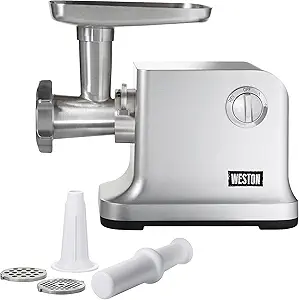 |
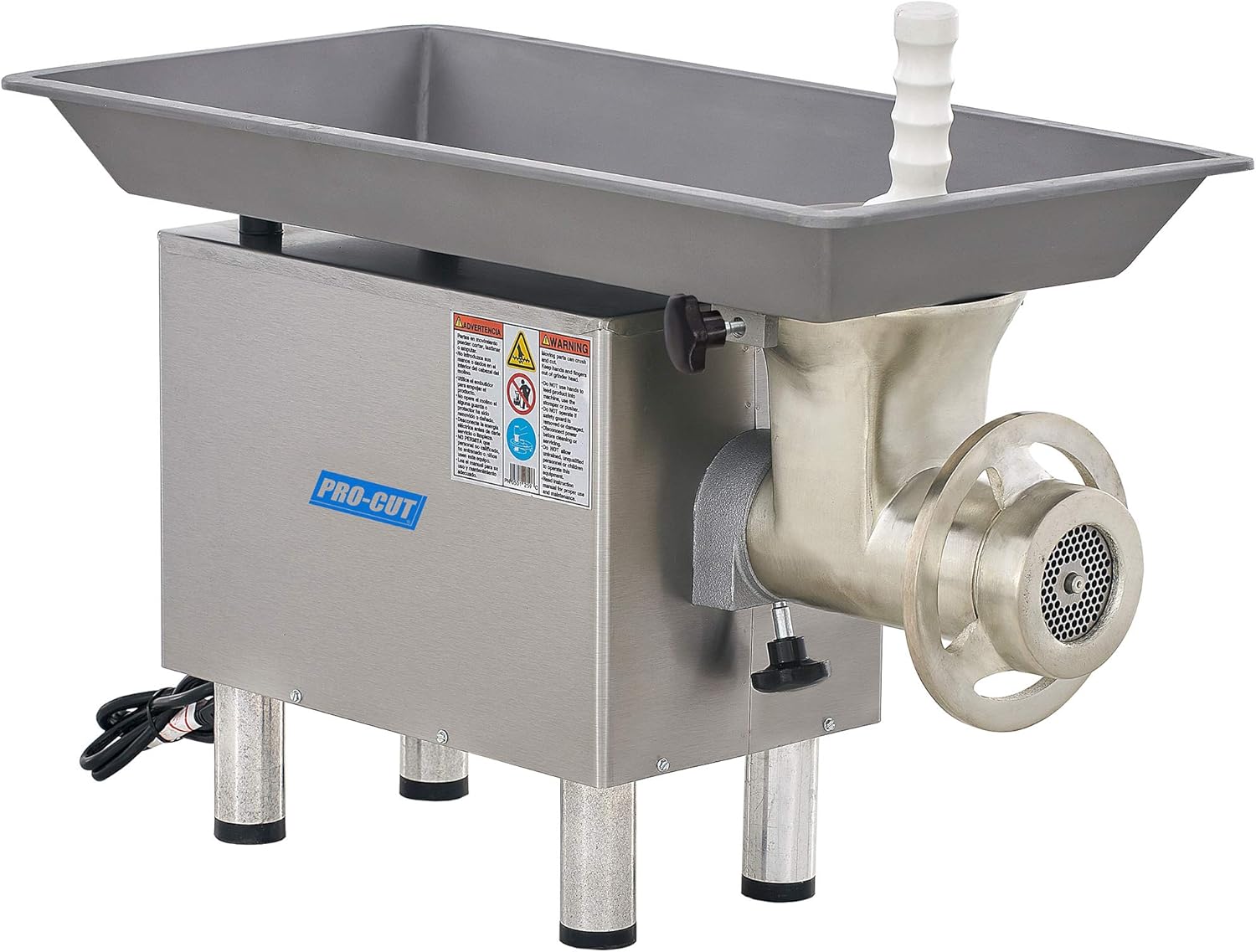
Pro-Cut KG-22-W Meat Grinder
| Wattage | 750 watts |
|---|---|
| Voltage | 110 volts |
| Capacity | 28.7 pounds |
| Recommended Uses For Product | Commercial |
The Pro-Cut KG-22-W is a #22 commercial meat grinder built for frequent use in small butcher shops, restaurants, or serious home processors. Its 1 HP motor and gear-driven, oil-bathed transmission deliver steady power and can process large volumes on the first pass using the included 3/16" plate, while the washerless grinding system cuts maintenance and keeps output consistent. The polished stainless steel cabinet and easily removable headstock make cleanup and sanitation straightforward, and the extra-large stainless tray speeds workflow by holding more product. The grinder is robustly constructed with tin-plated cast iron grinding parts for durability and corrosion resistance, and safety features include an attached guard and included stomper. Limitations to note are its heavy, commercial footprint and the need to buy additional plates or sausage attachments separately to get different textures or sausage-making capability.
Best for: Buyers who want a durable, commercial-capable grinder that handles frequent high-volume use and prioritizes easy cleaning and long-term reliability.
Less Ideal for: Those who need a compact, lightweight countertop grinder for occasional home use or who want multiple grinding textures out of the box without buying extra plates.
- 1 HP motor with gear-driven oil-bathed transmission for consistent, high-volume grinding
- Washerless grinding system reduces parts and maintenance while keeping output uniform
- Polished stainless steel cabinet and removable headstock for easier cleaning and sanitation
- Includes a 3/16" plate, knife, stomper and an extra-large stainless tray for efficient processing
- Heavy commercial build and large footprint make it less suitable for casual home kitchens
- Additional grinding plates and sausage-making accessories are sold separately
Verdict: Choose the KG-22-W when you need a rugged, 1 HP commercial grinder that delivers reliable, high-volume performance and easy sanitation.
ARINOO Commercial Meat Grinder 1.0HP

| Wattage | 750 watts |
|---|---|
| Voltage | 110 volts |
| Capacity | 550 pounds |
This ARINOO commercial meat grinder pairs a powerful 1.0 HP (1100W) motor with a stainless steel build to handle large batches of meat quickly. It is intended for continuous runs and the listing claims up to 550 lb per hour capacity and four-hour continuous operation, which makes it suitable for home butchering, hunters processing game, or small-scale sausage production. The unit ships with two cutting plates (6mm and 8mm), two stainless blades, three stuffing tubes, and a pusher, so you can make fine grind for burgers or baby food and coarser grind for sausages without sourcing accessories. The all-stainless contact surfaces and detachable parts simplify cleaning and support food-safety needs. Expect a robust machine that excels at volume and durability, though its 43 lb weight and commercial footprint mean it is less convenient for occasional countertop use or storage. Buyers should also plan for basic maintenance and careful cleaning to keep stainless parts performing over time.
Best for: Buyers who prioritize high throughput and reliable performance for regular large-batch grinding, such as small-farm processors, hunters, or home butchers preparing sausage and bulk ground meat.
Less Ideal for: Casual cooks who only grind small amounts occasionally or those who need a lightweight, compact countertop appliance.
- High-power 1.0 HP (1100W) motor built for sustained grinding and large batch throughput
- 304 stainless steel construction on food-contact surfaces for durability and easier cleaning
- Includes two grinding plates, two blades, and three stuffing tubes for immediate sausage and grind options
- Designed for continuous operation up to several hours to support small commercial or farm processing
- Heavy and bulky at about 43 pounds, making it less portable for occasional countertop use
- Large-capacity commercial design may be overkill for light home use
Verdict: Choose this ARINOO 1.0 HP grinder when you need a robust, stainless-steel machine built to grind large volumes reliably for sausage making or small-scale processing.
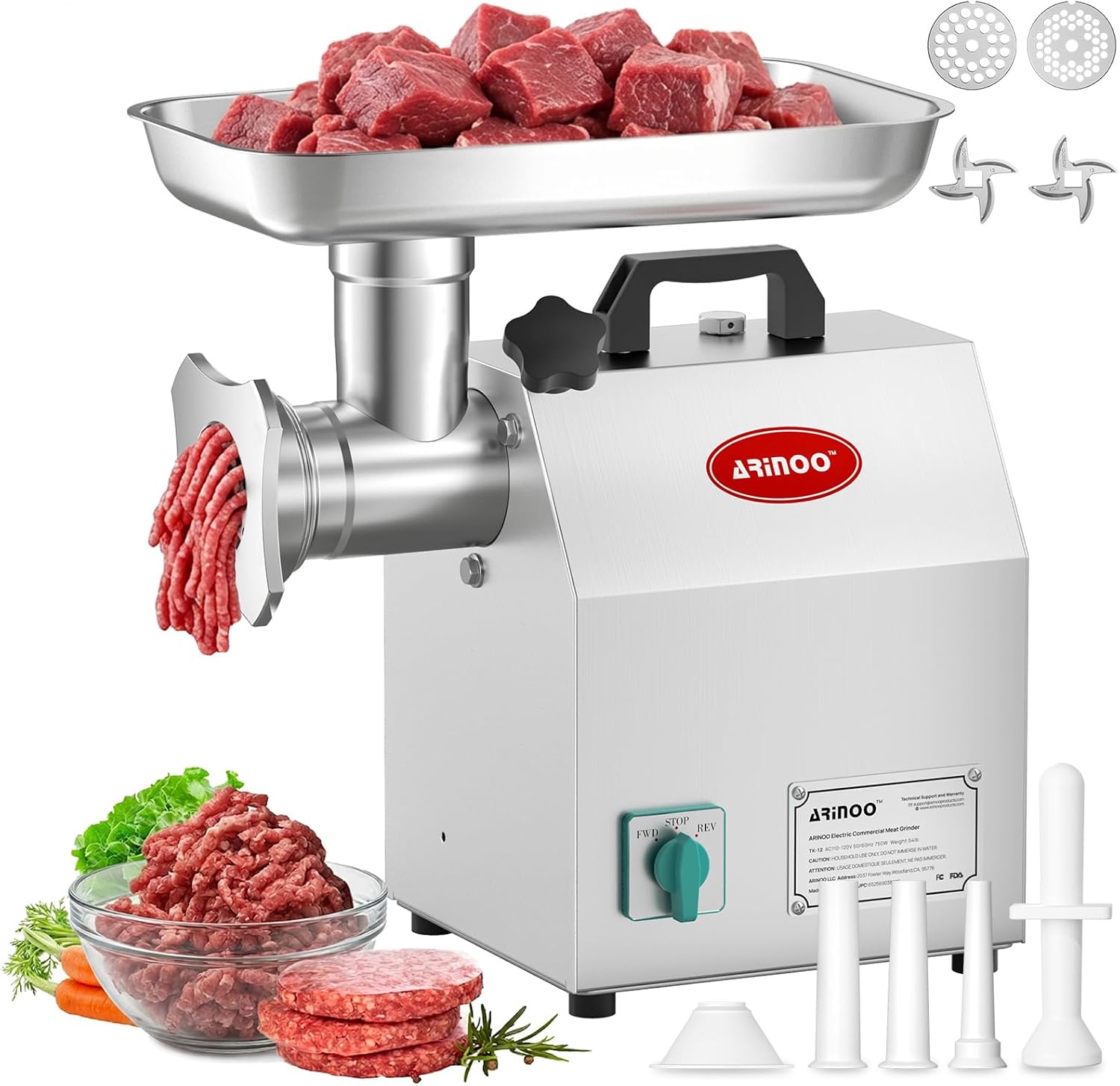
ARINOO #12 Meat Grinder
| Wattage | 750 watts |
|---|---|
| Voltage | 110 volts |
| Capacity | 330 pounds |
| Material Type | Stainless Steel |
| Included Components | 2 blades, 2 plates, 3 sausage tubes |
The ARINOO #12 is a workhorse 1.0 HP electric meat grinder built for frequent use in home kitchens, small restaurants, and farm operations. It uses a high-torque pure copper motor rated 750W (1,100W peak) to grind boneless beef, pork, lamb, and venison at up to roughly 330 pounds per hour, and includes 6mm and 8mm plates plus extra blades and three sausage stuffing tubes for burgers, meatballs, and sausage making. The all 304 stainless steel housing, tray, and detachable parts make cleanup straightforward and durable for repeated use, and a reverse function with a removable auger helps clear jams. Practical buyers will appreciate the solid build, included accessories, and the 5‑year factory warranty and spare part support. Note that this model is not designed to grind bones or very soft poultry bones, and its weight and size make it best suited to a dedicated counter spot rather than frequent repositioning.
Best for: Buyers who want a durable, high‑output grinder for frequent home or small commercial use and prioritize throughput, included accessories, and service support.
Less Ideal for: If you need a lightweight, portable grinder or require bone‑grinding capability, choose a different specialty model or a smaller portable unit.
- 1.0 HP high‑torque motor with 750W rated and 1,100W peak power for fast, consistent grinding
- 304 stainless steel construction for durability and easier cleaning
- Includes multiple grinding plates, extra blades, and three sausage stuffing tubes for versatile recipes
- Reverse function and removable auger reduce clogging and make jams easier to clear
- 5‑year factory warranty and available replacement parts for long‑term use
- Not suitable for grinding bones, including soft poultry bones
- Heavy and bulky, requiring a dedicated workspace
Verdict: A solid, factory‑quality 1.0 HP grinder for buyers who need reliable high‑volume boneless meat processing and durable stainless steel construction.
VEVOR #12 Meat Grinder HC-12D

| Motor power | 750W / 1 HP |
|---|---|
| Capacity | 552 lbs/h |
| Material Type | Aluminum |
| Power Source | electric |
This VEVOR #12 meat grinder pairs a 750W/1 HP copper motor with a three-stage auger and cross-sharp blade to produce steady, consistent mince for burgers, sausages, and other ground preparations. It ships with two grinding plates (6 mm and 8 mm), three sausage stuffing tubes, a kibbe kit, meat pusher, and two cross blades so you can move from grinding to stuffing without buying extras. The metal housing, anti-vibration feet, and a rapid cold-air cooling system make extended runs more stable and help prevent overheating in busy batches. Most removable components are dishwasher-safe for faster cleanup, though the main motor housing must only be wiped. The unit is not rated for bones or frozen meat, so you will need to trim or thaw product before feeding it, and its 36.6 lb weight means it is best placed on a dedicated counter spot rather than moved often. ETL listing adds a level of safety confidence for kitchen use.
Best for: Buyers who want a full-featured 1 HP grinder for regular home or small-shop use on a budget and prefer a machine that includes accessories to start sausage making right away.
Less Ideal for: People who need a lightweight, highly portable grinder or those who plan to process bones or frozen blocks should consider different equipment.
- Powerful 750W/1 HP pure copper motor suitable for frequent grinding
- Includes two plates, three stuffing tubes, kibbe kit, and spare blade for versatile use
- Sturdy metal body with anti-vibration feet for stable operation during long runs
- Most removable parts are dishwasher-safe for easier cleaning
- ETL listed and has a cooling system to reduce overheating risk
- Not suitable for bones or frozen meat
- Relatively heavy at 36.6 pounds, limiting portability
Verdict: A cost-conscious way to get a 1 HP #12 grinder with a complete accessory set and stable, commercial-style performance.
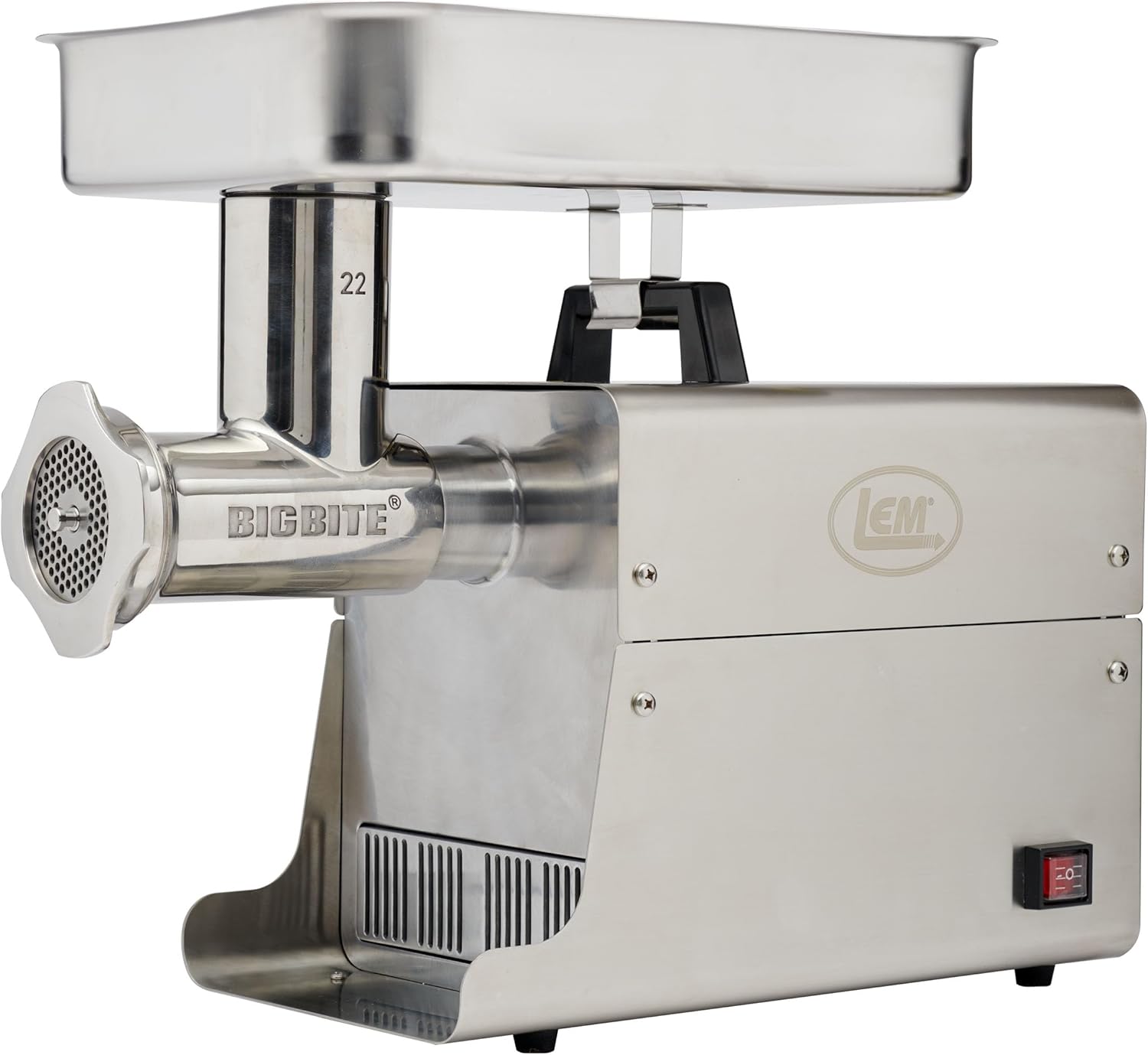
LEM BigBite #22 Meat Grinder
| Horsepower | 1.0 HP |
|---|---|
| Capacity | 13 pounds per minute |
| Material Type | Stainless Steel |
| Power Source | Corded Electric |
The LEM BigBite #22 is built like a small commercial grinder and is aimed at buyers who want dependable, repeated performance. Its 1.0 HP motor and large-diameter throat let the auger pull in big portions quickly, and the package includes a stainless steel knife, auger, large meat pan, coarse and fine plates, stuffing plate with three tubes, and a stomper. It can process a wide range of meats including beef, pork, lamb, venison and even raw chicken bones, with a claimed throughput up to 13 pounds per minute and a noise-dampening design for quieter operation. The stainless construction and permanently lubricated motor make disassembly and cleaning straightforward and reduce routine maintenance. This is a heavy unit intended for frequent grinding and sausage-making; it occupies substantial space and is overkill for casual or infrequent users. If you need steady, repeatable grinding for batches or game processing, this model delivers the robust build and parts set to match professional-style tasks.
Best for: Hardworking home cooks, hunters, or small-batch processors who prioritize long-term reliability and need a machine that handles frequent, heavy grinding and sausage making.
Less Ideal for: Casual users who only grind small amounts occasionally or those with limited kitchen space should consider smaller, lighter models instead.
- Commercial-grade stainless steel construction for durability and easy cleaning
- 1.0 HP motor and BigBite throat for fast, efficient feeding and grinding
- Includes knife, auger, coarse and fine plates, stuffing plate with three tubes, and stomper for sausage making
- Noise-dampening design and permanently lubricated motor reduce maintenance and operational interruptions
- Storage drawer for plates and accessories keeps parts organized during use
- Large and heavy unit that requires significant counter or storage space
- Designed for frequent/heavy use so it may be more capacity than needed for occasional home cooks
Verdict: Buy this if you need a rugged, pro-grade 1.0 HP grinder that reliably handles frequent heavy batches and sausage making.
Weston #12 Electric Meat Grinder

| Wattage | 750 watts |
|---|---|
| Capacity | 5 pounds |
| Voltage | 120 volts |
| Included Components | 2 stainless steel grinding plates, cutting blade, sausage stuffing funnel, stomper |
The Weston #12 Electric Meat Grinder is a heavy-duty countertop unit built around a 750 watt (1 HP) motor that grinds roughly 4 to 5 pounds per minute and includes a sausage stuffing funnel and two stainless steel plates. It is designed for regular home use and small-batch commercial tasks where speed and durability matter; the die-cast aluminum body, metal gears, cam-action headlock, and reverse function reduce jams and make assembly straightforward. Two speeds let you run a slower setting for stuffing sausages and a faster setting for bulk grinding, while the included cutting blade and stomper cover the basics so you can turn whole cuts into ground beef, pork, turkey, or game. Expect a solid, stable machine that handles frequent use without feeling flimsy, though the unit is fairly large and requires counter space and cleaning after each use. For buyers who want a step up from hobby grinders, it delivers robust performance and practical sausage-making accessories at a household scale.
Best for: Buyers who want a reliable, heavy-duty home grinder for frequent use or small-scale sausage making and who value proven construction and performance backed by many user reviews.
Less Ideal for: People who need an ultra-compact or lightweight grinder for occasional use or those seeking a pro-commercial unit with higher throughput and expanded accessory sets.
- Powerful 750 W (1 HP) motor that grinds about 4–5 lb per minute
- Die-cast aluminum body with metal gears for durability
- Two speeds plus reverse to reduce jams and allow sausage stuffing
- Includes stainless steel grinding plates, cutting blade, sausage funnel, and stomper
- Relatively heavy and large, requiring dedicated counter or storage space
- Basic accessory set without specialty plates or advanced attachments
Verdict: A solid, well-built 1 HP-class grinder that handles regular home grinding and sausage making with reliable power and durable construction.
Choosing the Right 1-HP Meat Grinder: Key Factors to Consider
Throughput and Duty Cycle
Throughput determines how much meat the grinder can process per minute and directly affects how long batch work will take. For home users who grind larger quantities for meal prep or sausage making, a measured throughput number lets you estimate runtime and cooling pauses.
Duty cycle and motor cooling design are equally important. A 1-HP motor can produce significant heat under continuous load, so units with better ventilation, thermal cutouts, or rated duty cycles give safer, more reliable performance during multi-pound jobs.
Build Materials and Finish
Parts that contact meat should resist corrosion and be easy to sanitize. Stainless or well-sealed plated feed tubes, cutting plates, and augers prevent pitting and bacterial traps. Heavy, well-machined housings reduce vibration and misalignment that can stress gears.
Consider how exposed fasteners and seams are designed: fewer crevices and smooth transitions speed cleaning and reduce long-term wear when moisture and salt are present in meat.
Cutting System and Grind Options
The quality of the cutting knife, plate fit, and auger geometry dictates grind consistency. Look for tight plate-to-knife tolerances and multiple plate sizes to control coarse-to-fine textures. A reverse function or accessible knife removal makes switching plates and sharpening easier.
Sausage funnels and attachment options expand capability, but the core cutting system determines the uniformity of the grind and how cleanly fat and connective tissue are handled.
Sanitation and Ease of Cleaning
Frequent disassembly without tools and smooth surfaces speed post-use cleanup and lower bacterial risk. Removable headpieces, detachable augers, and dishwasher-safe accessories simplify maintenance. Also assess how easy it is to access the knife and plates for sharpening or replacement.
Look for units whose cleaning steps are intuitive and that include clear manufacturer guidance on safe sanitation practices for meat-contact components.
Stability and Mounting
A heavier base and non-slip feet reduce vibration during operation, which improves cutting accuracy and reduces wear on gears and motor mounts. If you plan to work on countertops, check footprint and balance so the unit stays steady during large batches.
Some grinders provide clamp or bolt-down options for permanent setup. Consider whether portability or anchored stability is more important for your kitchen layout.
Accessory Compatibility and Replacement Parts
Availability of common plates, stuffing funnels, and replacement knives matters for long-term use. Standardized attachment fittings let you replace worn components without special-order parts.
Also consider whether the manufacturer or parts ecosystem offers sharpening services or easy-to-source spares, because staying operational between maintenance intervals improves the grinder's practical value.
How Motor Design Affects Real-World Performance
Motor design influences how the grinder behaves during extended runs. Two units with similar horsepower can differ in cooling efficiency, torque delivery at low speeds, and resilience to frequent use. For home grinders, steady torque at low RPMs helps push fatty or sinewy meat through without stalling.
Look for explicit guidance on duty cycles and protective features such as thermal cutouts or automatic shutoffs. These features prevent overheating and protect internal components when processing heavier loads.
- Continuous vs intermittent duty ratings indicate recommended operating patterns.
- Thermal protection reduces risk of motor damage during prolonged use.
- Higher torque at low speed is preferable for handling tough grinds.
Sanitation Best Practices for Home Grinding
Safe meat processing requires consistent cleaning routines. Disassemble the meat path promptly after use, wash all meat-contact parts in hot soapy water, and dry immediately to prevent corrosion. Follow any manufacturer recommendations about dishwasher safety for non-electrical components.
Sanitizing between different meat types or after grinding poultry reduces cross-contamination risk. Regular sharpening of blades and careful inspection of plates for pitting also reduce bacterial harborage points.
- Work in small batches and refrigerate meat before grinding to limit smear.
- Rinse components quickly after use to prevent residue hardening.
- Inspect seals and screws for food traps during each cleaning cycle.
Sausage Making and Attachment Use
If you plan to make sausages, confirm that the grinder accepts common stuffing funnels and offers a stable feed method for ground meat. The combination of plate size, auger feed, and funnel diameter influences how smoothly casings fill and how uniform links become.
Practice a short test batch to dial in grind coarseness and casing tension. Properly chilled meat and well-lubricated funnels reduce tearing and sticking while ensuring consistent link formation.
- Use a coarser plate for initial grind before a finer finish when making smooth sausage.
- Chill meat and equipment for cleaner cuts and reduced smear.
- Keep spare funnels and plates on hand to adjust for different sausage styles.
Noise, Vibration, and Kitchen Fit
A 1-HP grinder can generate notable noise and vibration compared with smaller models. Consider where you will operate the unit in the home and whether sound levels or table movement will be an issue. Units with heavier bases and vibration-dampening feet improve comfort and accuracy.
Plan for bench space and airflow. Good ventilation around the motor helps cooling and prolongs component life during batch work.
- Measure available countertop space against the grinder footprint before buying.
- Non-slip feet or a bolting option reduces movement during heavy use.
- Allow clearance for air vents to prevent thermal throttling.
When to Consider Professional Servicing
Routine maintenance such as blade sharpening and part replacement can often be done at home. However, if you notice unusual noises, persistent overheating, or gear slippage, seek professional inspection rather than continuing to run the unit. Early servicing prevents more costly internal damage.
Keep a basic kit of spare blades, plates, and appropriate tools so you can address common wear items quickly and minimize downtime between sessions.
- Sharpen or replace blades at first sign of ragged cuts.
- Address gear or bearing noise promptly to avoid cascading failures.
- Follow manufacturer service intervals for heavy-use scenarios.
How We Chose the Best 1-HP Meat Grinder
We focused on features that matter for sustained home use of a 1-HP meat grinder. Primary evaluation criteria included grind throughput and motor cooling to measure how quickly the unit processed meat without overheating, build materials and corrosion resistance for long-term durability, and gear/train robustness for reliable mechanical performance under repeated loads. We also weighed ease of cleaning and disassembly since sanitation is critical for meat handling, plus accessory compatibility for common tasks like sausage stuffing and fine grinding. We excluded underpowered hobby grinders and full commercial machines intended for continuous industrial use. Units that required specialized electrical setups beyond typical home outlets were also removed. Our final shortlist favors balanced designs that perform well across throughput, durability, and sanitation while remaining practical for residential kitchens.
Our full evaluation process is outlined in our review methodology.
FAQ
Is a 1-HP motor overkill for occasional home use?
A 1-HP motor is larger than entry-level hobby grinders but gives headroom for larger batches and tougher cuts. If you grind only small amounts occasionally, the size and noise may be more than needed, but the motor offers faster throughput and greater durability for frequent users.
How many pounds can a typical 1-HP grinder handle per hour?
Throughput depends on grind plate size, meat condition, and duty cycle, but a 1-HP unit commonly processes multiple pounds per minute under intermittent use. Consult the stated throughput and plan cooling pauses for extended batches to protect the motor.
Can I use a 1-HP grinder on a standard household outlet?
Most 1-HP home grinders are designed for standard household circuits, but you should verify the electrical specifications and ensure your outlet and circuit can handle the load, especially if other appliances share the same circuit.
How important are spare plates and knives?
Spare plates and knives are important because they wear with use and affect grind consistency. Having replacements on hand means less downtime and the ability to switch textures quickly for different recipes.
What maintenance keeps a grinder running reliably?
Regular cleaning after each use, prompt drying to prevent corrosion, routine blade sharpening or replacement, and periodic inspection of gears and seals keep a grinder functional. Addressing unusual sounds or motor heat quickly prevents major repairs.
Final Verdict
Choosing the right 1-HP meat grinder comes down to matching throughput, duty cycle, and build quality to your workload. Prioritize motors and cooling systems if you will run extended batches, and favor corrosion-resistant parts plus easy disassembly if sanitation is a regular concern. Balance accessory needs and spare-part availability against footprint and noise for the most practical fit. For reliable home use, focus on grinders that provide steady low-end torque, straightforward cleaning, and accessible replacement parts. That combination delivers consistent texture and long-term value for home meat processing.