
Note: This article contains affiliate links. If you click on these links and make a purchase, we may earn a small commission at no extra cost to you. This helps support our research and content. Read our full affiliate disclosure here.
If you need a compact fridge that fits tight spaces without sacrificing usable storage, a 10-cubic-foot refrigerator is a practical choice. These units work well in small apartments, dorms, second kitchens, or as supplemental food storage where floor space is limited. Choosing the right compact refrigerator matters because usable shelf design, temperature control stability, and energy consumption vary widely even among similar-sized models. This guide presents seven shortlisted 10-cubic-foot refrigerators that stood out for usable capacity, interior layout, and energy efficiency. Below we explain the evaluation criteria and help you weigh tradeoffs so you can pick the model that fits your space and daily routine. Read on for buying factors, setup tips, maintenance notes, and answers to common buyer questions.
Top Picks at a Glance
| Best Overall The best all-around choice for most situations | Frigidaire 10 cu ft Top-Mount Refrigerator |  |
| Best Quality Built to a higher standard if you want something more solid | Dometic DMC4101 10 cu ft Refrigerator | 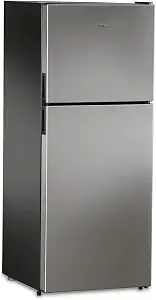 |
| Best Value The sweet spot between price and what you get | ARCTIC CHEF RFR1085 10 cu ft Refrigerator |  |
| Best Budget The cheapest option that still gets the job done reliably | ARCTIC CHEF 10 cu ft Refrigerator |  |
| Top Rated A top-rated pick with lots of positive feedback | Galanz Retro Refrigerator GLR10TBEEFR |  |
| Most Popular A crowd favorite that many people choose with confidence | Avanti 10.0 cu. ft. Refrigerator |  |
| Best Seller A high-volume bestseller chosen again and again | RecPro 10 Cu Ft RV Refrigerator |  |
Frigidaire 10 cu ft Top-Mount Refrigerator

| Capacity | 10 cubic feet |
|---|---|
| Freezer Capacity | 2 cubic feet |
| Configuration | Freezer-on-Top |
| Defrost System Type | Frost Free |
| Cooling Method | Compressor |
This Frigidaire 10 cu ft top-mount refrigerator is a straightforward apartment-size fridge with a 2 cu ft freezer on top and 8 cu ft of fresh-food space below. It uses a compressor cooling system and a frost-free defrost design so you do not need to manually defrost the freezer, and practical touches like slide-out shelves, adjustable shelf positions, adjustable feet, a built-in lamp, and a reversible door keep daily use flexible. The adjustable thermostat makes it easy to dial in temperatures for beverages or perishables, and the electronic lock option adds security if needed. Expect basic, reliable cooling rather than premium features such as smart controls or specialized humidity-managed crispers. Installation is freestanding and the unit has modest annual energy consumption for its class. If you want a simple, no-frills 10 cu ft fridge that balances usable interior layout and everyday convenience, this model covers the essentials without extra complexity.
Best for: Buyers seeking a practical, no-frills 10 cu ft refrigerator for apartments or small kitchens who prioritize straightforward reliability and flexible interior configuration.
Less Ideal for: Shoppers who want advanced smart controls, premium cooling features, or the highest possible energy efficiency should look at higher-end models instead.
- Frost-free top-freezer design eliminates manual defrosting
- Adjustable slide-out shelves and adjustable feet for flexible interior layout
- Reversible doors increase placement options in tight spaces
- Built-in lamp and adjustable thermostat for easier daily use
- Lacks smart features and advanced humidity-controlled crispers common on higher-end models
- Modest annual energy consumption relative to the smallest, most efficient compact refrigerators
Verdict: A practical, frost-free 10 cu ft top-freezer refrigerator that delivers reliable, flexible storage for apartment-sized kitchens.
Dometic DMC4101 10 cu ft Refrigerator
| Capacity | 10 cubic feet |
|---|---|
| Cooling Method | Compressor |
| Defrost System Type | Automatic |
| Compressor Type | rotary_screw |
| Installation Type | Freestanding |
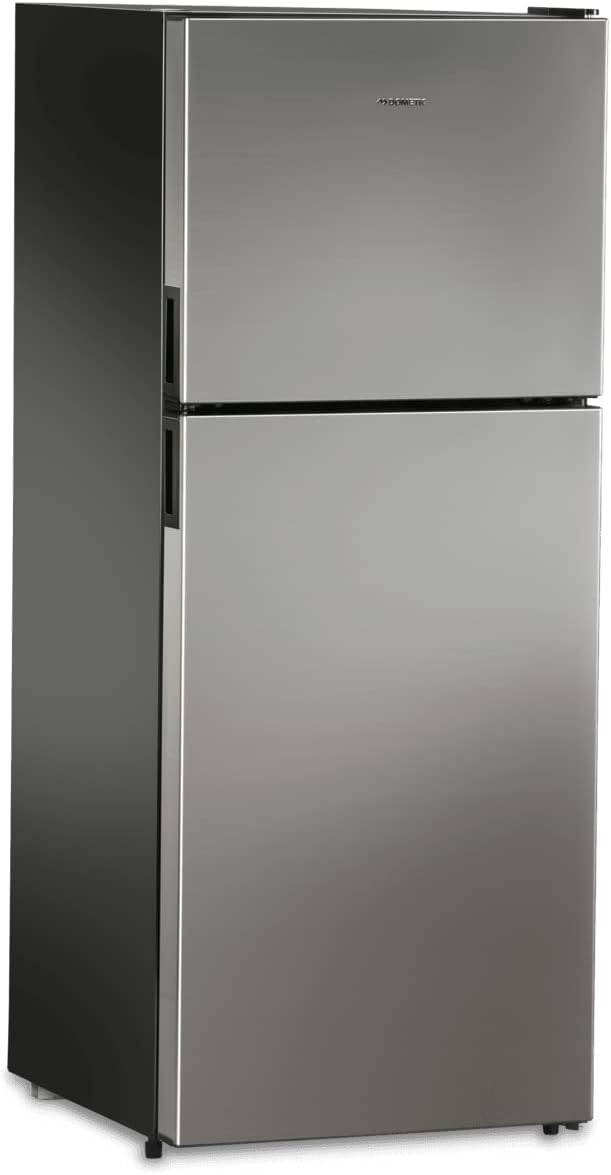
The Dometic DMC4101 is a compact 10 cubic foot compressor refrigerator built for mobile living in RVs and similar installations. It uses a variable-speed rotary compressor and automatic defrost to maintain consistent temperatures while improving efficiency on DC power, and digital controls make it easy to balance cooling performance against energy use. Interior features include five glass shelves, clear door bins, dual crisper drawers, and LED illumination for organized storage and visibility. The unit is freestanding but sized to fit a typical RV cutout and offers a stainless steel exterior with a right-hinged door and an electronic lock option. Practical benefits include reliable compressor cooling that handles warm ambient temperatures better than absorption models and flexible temperature control for longer trips. Trade-offs are its substantial weight and large physical depth for a 10 cu ft fridge, which can complicate installation in tighter RVs, and it requires DC power wiring suitable for compressor loads rather than simple 12V accessories.
Best for: Buyers who prioritize reliable, performance-oriented cooling in an RV and need a fridge that holds stable temperatures in warm conditions while offering adjustable digital controls.
Less Ideal for: Users with very limited installation depth or who need a lightweight, ultra-low-power cooler for solar-only setups should consider alternative, smaller, or more energy-minimal units.
- Compressor cooling with variable-speed compressor for steady temperatures and improved efficiency
- Automatic defrost and digital temperature controls for easy, low-maintenance operation
- Interior layout with five glass shelves, dual crispers, and clear door bins for organized storage
- LED illumination and electronic lock option enhance usability and security
- Designed to fit a 10 cu ft RV cutout while delivering residential-style appearance
- Heavy and deep cabinet can be difficult to install in cramped RV spaces
- Requires proper DC power wiring and may draw more current than non-compressor units
Verdict: Choose the Dometic DMC4101 when you want a robust, compressor-driven 10 cu ft RV refrigerator that prioritizes steady performance and efficient temperature control.
ARCTIC CHEF RFR1085 10 cu ft Refrigerator

| Capacity | 10 cubic feet |
|---|---|
| Freezer Capacity | 3.3 cubic feet |
| Defrost System Type | Frost Free |
| Door Orientation | Reversible |
| Voltage | 120 volts |
The ARCTIC CHEF RFR1085 is a midsize freestanding refrigerator with a top freezer that aims to balance usable storage and straightforward features for everyday use. It provides a total 10.0 cubic feet of capacity with a 3.3 cu ft freezer and adjustable glass shelving that slides out for cleaning and flexible shelf arrangement. The unit is frost-free, so it automatically defrosts to cut down on maintenance, and the reversible door makes placement easier in tight kitchens or apartments. Practical touches include a full-width door bin, a clear vegetable crisper, an interior light, and electronic lock control. The compressor-based cooling with selectable refrigerants (R600A or R134A) supports typical household performance, while the matte white finish keeps a low profile. Downsides are a heavier unit weight and a basic feature set compared with higher-end compact fridges, and energy use is moderate at about 200 kWh/year. For buyers seeking simple, no-frills cold storage with easy servicing and flexible placement, this fridge delivers predictable performance without advanced smart or premium insulation features.
Best for: Buyers who prioritize practical, roomy cold storage in a compact footprint and want a low-maintenance, easy-to-place refrigerator for an apartment, smaller kitchen, or secondary fridge.
Less Ideal for: Those who need the highest energy efficiency, smart home integration, or premium insulation and cooling performance should consider higher-end models instead.
- True 10.0 cu ft total capacity with a 3.3 cu ft freezer for separate frozen storage
- Frost-free defrost system reduces manual maintenance and ice buildup
- Adjustable, removable glass shelves and a clear crisper simplify cleaning and organization
- Reversible door and included front leveling legs/rear castors make placement and installation flexible
- Electronic lock and interior light add convenience and security
- Energy consumption is moderate at about 200 kWh/year compared with some high-efficiency models
- Feature set is basic with no smart controls or advanced temperature zoning
Verdict: A straightforward, frost-free 10 cu ft refrigerator that gives practical, flexible storage and easy placement for buyers wanting reliable midsize cold storage.
ARCTIC CHEF 10 cu ft Refrigerator

| Capacity | 10 cubic feet |
|---|---|
| Number of Doors | 2 |
| Defrost System Type | Manual |
| Cooling Method | Compressor |
| Voltage | 120 volts |
The ARCTIC CHEF 10 cu ft refrigerator is a compact two-door unit with a top freezer that aims to deliver basic, no-frills cooling for small kitchens and apartments. It uses a reciprocating compressor with manual defrost and adjustable thermostat, and includes spill-proof glass shelves, a full-width freezer shelf and bright incandescent interior lighting for visibility. Practical touches such as reversible doors, adjustable feet and an electronic lock add placement flexibility and simple security. Because it is a basic, compressor-driven model without inverter technology, it is best when used for routine household storage of beverages, snacks and weekly groceries rather than heavy freezer use or continuous heavy cycling. Energy use is modest for the size but not optimized for highest efficiency. Installation is straightforward since it is freestanding and ETL listed. If you want a straightforward, retro-styled apartment refrigerator that covers essential needs without advanced features, this unit is a reasonable pick; buyers seeking quieter, more energy-efficient or frost-free operation should look elsewhere.
Best for: Buyers on a tight budget who need a simple, space-saving refrigerator for an apartment, garage, or small household and value straightforward functionality over advanced efficiency features.
Less Ideal for: People who prioritize low noise, highest energy efficiency, or a frost-free freezer should consider alternative models with inverter compressors or automatic defrost.
- Compact 10 cu ft capacity suitable for apartments and small kitchens
- Reversible doors and adjustable feet allow flexible placement
- Spill-proof glass shelves and slide-out shelf simplify cleaning and organization
- Built-in lamp and bright interior lighting improve visibility
- Includes basic safety features like an electronic lock
- Manual defrost requires periodic thawing to remove ice buildup
- Reciprocating compressor with no inverter may be louder and less energy-efficient than inverter models
Verdict: A budget-friendly, compact 10 cu ft refrigerator that delivers essential cooling and flexible placement for apartments and small spaces.
Galanz Retro Refrigerator GLR10TBEEFR
| Capacity | 10 cubic feet |
|---|---|
| Freezer Capacity | 2.42 cubic feet |
| Defrost System Type | Frost Free |
| Refrigerant | R-600A |
| Installation Type | Freestanding |
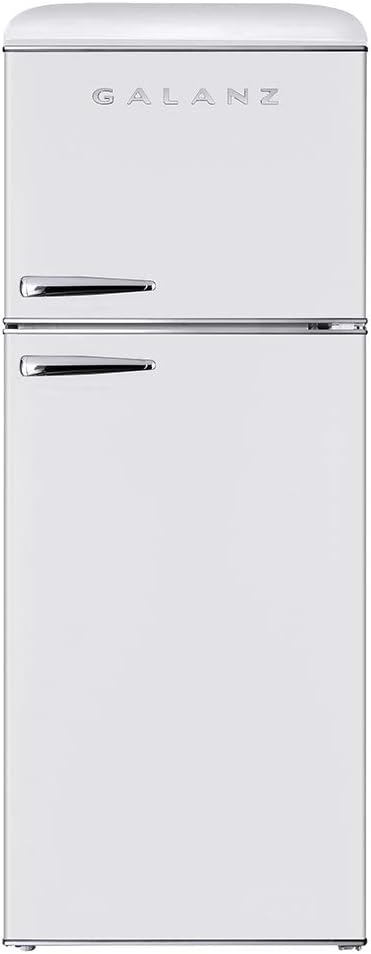
The Galanz Retro GLR10TBEEFR is a 10-cubic-foot freestanding refrigerator with a top-mount freezer that blends a vintage look with modern basics. It cools with an R-600A compressor and offers a manual dial thermostat for simple temperature control across a refrigerator compartment and a 2.42 cu ft freezer. Interior glass shelving is removable and slide-out, which makes organizing platters, produce, and taller bottles straightforward, while door bins hold gallons and cans. The unit is frost-free, includes an interior light, adjustable front leveling legs, and meets Energy Star specification for lower annual energy use. Noise is reported as low, so it fits kitchens where quiet operation matters. Expect straightforward mechanical controls rather than smart features and allow for standard installation clearance since it is a full-height, heavy unit. If you want a reliable, no-frills 10 cu ft fridge with retro styling and practical storage, this model covers the essentials well.
Best for: Buyers who prioritize straightforward, reliable cooling and low energy use in a compact full-height refrigerator and prefer simple mechanical controls over advanced tech.
Less Ideal for: Shoppers who need precise digital temperature control, smart connectivity, or a built-in/under-counter form factor should consider other options.
- Energy Star rated with relatively low annual energy consumption
- Frost-free top freezer for hands-off defrosting
- Removable slide-out glass shelves and multiple door bins for flexible organization
- Simple manual thermostat and low-noise compressor for reliable everyday operation
- Manual dial controls lack precision of digital thermostats
- No smart features or connectivity for remote monitoring
Verdict: A reliable, energy-efficient 10 cu ft fridge that delivers straightforward cooling, ample organization, and retro styling without modern smart features.
Avanti 10.0 cu. ft. Refrigerator

| Capacity | 10 cubic feet |
|---|---|
| Freezer Capacity | 2.7 cubic feet |
| Defrost System | Automatic |
| Cooling Method | Compressor |
| Voltage | 110 volts |
The Avanti 10.0 cu. ft. refrigerator is a compact, freestanding unit aimed at apartment kitchens, dorms, or offices that need full-size usability in a smaller footprint. It pairs a top-mounted freezer with a frost-free defrost system and a compressor cooling method for consistent temperatures and minimal manual defrosting. Inside, two adjustable glass shelves, two clear-view crispers with glass lids and full-width door bins make organizing beverages, produce, and gallon bottles straightforward. Electronic temperature control and an interior LED light simplify daily use. Practical benefits include easy maintenance thanks to frost-free operation and flexible storage layout for mixed groceries and drinks. Important limitations are the modest overall capacity compared with standard household fridges and the basic feature set—there are no advanced freshness systems or multi-zone controls. Build and finish are utilitarian rather than premium, so buyers seeking quieter, high-efficiency or feature-rich models may look elsewhere.
Best for: Buyers who want a straightforward, space-saving apartment refrigerator that reliably stores mixed groceries and large bottles without frequent defrosting and prefer products with an established review history.
Less Ideal for: Households that need large-capacity refrigeration, premium fits and finishes, or advanced features like multi-zone temperature control or connected controls should consider larger or more feature-rich models.
- Frost-free defrost system reduces manual maintenance and ice buildup
- Adjustable glass shelves and clear-view crispers enable flexible organization
- Full-width door bins accommodate 2-liter and gallon bottles
- Compressor cooling provides consistent temperature control for fresh and frozen items
- Basic feature set with no advanced cooling zones or smart controls
- Utilitarian finish and construction rather than premium materials
Verdict: A practical, frost-free 10 cu ft apartment refrigerator that balances usable storage and low-maintenance operation for buyers prioritizing reliable everyday performance.
RecPro 10 Cu Ft RV Refrigerator

| Capacity | 10 cubic feet |
|---|---|
| Voltage | 12 volts |
| Defrost System Type | Frost Free |
| Cooling Method | Compressor |
| Refrigerant | R-134A |
This RecPro 10 cu ft RV refrigerator is a compressor-driven 12V unit designed for mobile use and off-grid camping where low power draw matters. It provides a full fridge with a top freezer in a free-standing form factor, uses frost-free defrosting to eliminate manual scraping, and offers adjustable shelving and an electronic lock for security while traveling. The compressor cooling system keeps temperatures steady compared with absorption-style RV fridges and the reversible stainless steel door gives flexibility during installation. Practical benefits include quieter, more consistent cooling, a modest fresh-food area for weekly grocery runs, and a design aimed at energy efficiency for battery or solar setups. Important limitations are that it runs on 12V DC only (so you need a proper battery/solar setup or inverter) and the unit is fairly heavy and requires a generous opening for installation, which may complicate retrofits in small cabinets.
Best for: Buyers who prioritize reliable, steady cooling and low-maintenance operation in a 10 cu ft RV fridge and who prefer a factory-style compressor unit for occasional boondocking or extended trips.
Less Ideal for: People with very tight cabinet openings, minimal electrical support for 12V appliances, or who need a lightweight retrofit solution for compact camper spaces.
- Compressor cooling for steady, reliable temperatures in mobile conditions
- Frost-free design removes need for manual defrosting
- Reversible door and adjustable shelves improve installation flexibility and storage layout
- Designed for 12V operation and energy-efficient use suitable for battery or solar power
- Operates on 12V DC only, so requires compatible power setup or inverter for some rigs
- Large and heavy which may complicate installation in smaller RV openings
Verdict: Choose this 10 cu ft RecPro if you want a low-maintenance, compressor-powered RV fridge that delivers steady cooling and energy-conscious 12V operation for reliable camping use.
Choosing the Right 10-Cubic-Foot Refrigerator: Key Factors to Consider
Usable Internal Volume
Nominal cubic-foot rating is a starting point, but actual usable volume depends on shelf thickness, door bin size, and the space taken by the evaporator and insulation. Measure the items you expect to store, especially tall bottles or platters, and compare their dimensions to the interior clearances. Adjustable or removable shelves can significantly increase practical capacity by letting you create tall zones for pitchers or stackable containers.
Also consider how the freezer compartment is configured. In many compact refrigerators the freezer occupies a disproportionate share of the total volume; if you rarely use frozen storage, a model with a smaller freezer pocket and more refrigerator shelf area will be more useful. Think about how you organize food day to day and choose a layout that minimizes awkward gaps or wasted vertical space.
Temperature Control and Performance
Consistent temperatures are essential for food safety and longevity. Look for models with clear temperature dials or digital controls and the ability to maintain steady internal temps under typical loading. Some compact units cycle more aggressively, which can cause temperature swings that affect freshness. Consider whether the unit has separate controls for the freezer and refrigerator sections to fine-tune both compartments.
Performance also depends on airflow design. Models with a dedicated internal fan will distribute cold air more evenly and recover temperature faster after the door is opened. If you plan to store perishable items, prioritize models tested or specified for stable temperature control rather than those intended only for beverages or short-term chilling.
Energy Use and Operating Cost
Because compact refrigerators run continuously, energy consumption is an important long-term cost. Check published energy use figures and look for efficient compressors and good insulation. Units with modern compressor designs and tighter cabinet insulation typically draw less power and reduce the risk of heat transfer from nearby appliances or walls.
Placement affects efficiency too. Avoid installing the refrigerator in direct sunlight or extremely hot rooms, and leave the recommended clearance around the cabinet for proper heat dissipation. If energy use is a priority, favor models with documented low daily kilowatt-hour consumption or an efficiency certification from an independent program.
Door Swing, Hinges, and Fitment
A compact fridge may seem portable, but door swing and hinge type determine where it can live. Check the clearance needed for the door to open fully and whether the hinge is reversible. Reversible hinges increase placement flexibility, letting you position the unit against a wall or in a tight corridor without reworking the layout.
Also verify whether the unit requires extra clearance for venting at the back or top. Some compact refrigerators pull air from the front and can be built into alcoves more easily, while others need a few inches of rear clearance for compressor cooling. Taking door swing and venting into account prevents surprises during installation.
Storage Flexibility and Organization
Look for adjustable shelving, removable door bins, and clear crisper or deli compartments that let you tailor the interior for different uses. Wire shelves are lighter but can make storage less stable for small items; glass or solid shelves provide a flatter surface and are easier to clean. Fold-down shelf features or half-width shelves help accommodate tall items while preserving shelf area for smaller containers.
If you plan to use the refrigerator for mixed storage, prioritize models with versatile door bin sizes and a variety of shelf positions. Good organization options reduce food waste by making items easier to see and reach.
Maintenance and Serviceability
Routine maintenance includes gasket cleaning, drip pan access, and occasional manual defrosting for some older-style units. Choose a model with easily removable shelves and door bins to simplify cleaning. Check that the door gasket is replaceable and that common service points such as the condenser coil or drip pan are accessible without moving the entire fridge.
Also consider filter or water line needs if the unit includes a dispenser. Compact refrigerators rarely include built-in water supplies, but if a model has a plumbed feature, factor in filter replacement and connection complexity. Simpler designs often mean fewer maintenance tasks and lower long-run hassle.
Sizing and Measuring for a Tight Space
Measure the installation footprint carefully before you buy. Account for width, depth, and height, and add the recommended clearance for ventilation plus the door swing radius. If the fridge will sit in an alcove, measure the opening at multiple heights to catch floor or trim variations that might block the unit.
Also think vertically. Some compact refrigerators allow you to remove legs or adjust the height to slide under counters, while others need the full height to operate correctly. Consider the route for moving the appliance into place, including stair turns and doorway widths, to avoid delivery or fitting issues.
- Measure door swing and required clearance before selecting placement.
- Confirm elevator or stair access for delivery and installation.
- Allow space for service access to the rear and compressor area.
Installation Tips and Ventilation Best Practices
Place the refrigerator on a level surface to maintain proper door alignment and gasket sealing. If the unit requires rear clearance for heat dissipation, leave the manufacturer-specified gap and avoid enclosing the top if the compressor vents there. For built-in looks, choose models that vent from the front or have low rear clearance requirements.
Avoid locating the appliance next to heat sources such as ovens or direct sunlight. Higher ambient temperatures force the compressor to work harder, reducing efficiency and increasing internal temperatures. If you must place it in a warm spot, allow extra clearance and expect a modest efficiency penalty.
- Keep vents clear of dust and debris to maintain efficient cooling.
- Level the unit to prevent door misalignment and gasket gaps.
- Allow manufacturer-recommended clearance for heat dissipation.
Organizing a Small Refrigerator for Maximum Usability
Good organization makes a compact refrigerator feel larger. Use clear, stackable containers to maximize shelf space and keep similar items together. Reserve door bins for condiments and narrow items to free up flat shelf area for larger containers.
Consider a shallow tray near the front to corral small items that otherwise get pushed to the back. Labeling shelves or containers can cut down on repeated door openings while searching, which helps maintain steady internal temperatures.
- Use stackable containers to make the most of vertical space.
- Place frequently used items at eye level for quick access.
- Keep raw meats on the lowest shelf to prevent cross-contamination.
Defrosting and Cleaning Practices
Some compact refrigerators are frost-free, while others require occasional manual defrosting. If manual defrost is necessary, plan to remove contents and allow ice to melt on a tray or towel to protect floors. Regularly wiping interior surfaces and cleaning door gaskets prevents odors and maintains an airtight seal.
Clean condenser coils and vent openings periodically if accessible. Dust buildup reduces efficiency and can shorten compressor life. Simple maintenance like wiping spills quickly and rotating food before it expires keeps the unit hygienic and functioning well.
- Defrost manually when frost exceeds the suggested thickness.
- Clean gaskets with mild detergent to preserve sealing.
- Vacuum accessible coils annually to maintain efficiency.
Common Tradeoffs With Compact Refrigerators
Compact units save space but force compromises. Freezer size, shelf adjustability, and temperature stability are the main tradeoffs. A slightly smaller freezer often yields more refrigerator space, which benefits everyday food storage for most users. Conversely, if you rely on frozen food storage, expect the refrigerator compartment to be smaller.
Another tradeoff is noise versus cooling capacity. Smaller compressors can be noisier when running at higher duty cycles, especially in warm environments. If the refrigerator will sit in a living area or bedroom, factor in noise level expectations when choosing a model.
- Smaller freezers mean bigger refrigerator shelves and vice versa.
- Higher efficiency models may have slightly less aggressive cooling but lower operating costs.
- Noise levels can vary; test or check specs if the unit will live in a quiet area.
How We Chose the Best 10-Cubic-Foot Refrigerator
We focused on the practical attributes that affect day-to-day ownership of a 10-cubic-foot refrigerator. Key evaluation criteria included usable interior layout, temperature control and consistency, energy efficiency and footprint, build quality and materials, and installation and maintenance ease. Each candidate had to provide clear interior measurements, adjustable shelving or compartment flexibility, and documented energy consumption or ENERGY STAR-style performance figures. We excluded units that lacked clear capacity specs, had limited cooling control (single unreliable thermostat), or were designed solely as portable coolers rather than household refrigerators. We also filtered out models with construction or finish choices that impair longevity in household use, such as thin plastic shelving with no adjustable options. Our scoring emphasized dimensions that matter to buyers: how much truly usable food space exists after accounting for door bins and evaporator clearance, how steady the temperature holds under normal loading, and how easy routine maintenance is, including defrosting and gasket cleaning. We flagged units with straightforward installation requirements and reasonable clearance needs. This approach mirrors what matters to people fitting a compact refrigerator into constrained spaces while expecting reliable everyday performance.
Our full evaluation process is outlined in our review methodology.
FAQ
How much will a 10-cubic-foot refrigerator hold for a small household?
A 10-cubic-foot refrigerator typically holds the essentials for one to two people, including fresh produce, dairy, and a modest freezer section. Actual capacity depends on shelf configuration and how efficiently you organize items.
Can I install a compact refrigerator under a counter?
Some 10-cubic-foot models can be installed under counters if their height and ventilation requirements match the cabinet opening. Verify whether the model allows front ventilation and confirm clearance and electrical access before planning an under-counter install.
Do compact refrigerators use a lot more energy than full-size models?
Compact refrigerators often use less total power than full-size units, but efficiency varies widely between models. Look at published daily or annual energy consumption figures; efficient compact units can have very low operating costs compared with older full-size refrigerators.
Are frost-free systems common in 10-cubic-foot refrigerators?
Some compact refrigerators include automatic defrost features, but many rely on manual defrost to save cost and complexity. If automatic defrost is important, confirm the feature as part of your selection criteria.
What should I do if the refrigerator door does not seal tightly?
First check that the unit is level and that the gasket is clean and undamaged. Reversible hinges sometimes need minor adjustment after installation. If the gasket is warped or torn, it should be replaceable to restore a proper seal and prevent efficiency loss.
Final Verdict
When choosing a 10-cubic-foot refrigerator, prioritize usable interior layout and consistent temperature control above nominal cubic-foot ratings. Balance freezer needs against refrigerator shelf space, and consider energy consumption and ventilation requirements based on where the unit will live. Pay attention to door swing, hinge reversibility, and ease of cleaning to avoid installation or maintenance headaches. Choose a model that matches how you store food daily rather than the highest advertised capacity. That approach ensures the compact refrigerator performs reliably and fits your space and routine with minimal compromise.