
Note: This article contains affiliate links. If you click on these links and make a purchase, we may earn a small commission at no extra cost to you. This helps support our research and content. Read our full affiliate disclosure here.
If you only need one or two cups of coffee each day, a full-size machine wastes space, time, and maintenance. A 2-cup coffee maker is built to deliver a concentrated, fresh brew without the fuss of large carafes or complex programming. You get faster heat-up, less leftover coffee, and a smaller footprint on your counter. This guide covers our shortlisted 2-cup coffee makers and explains why they made the cut. We focused on real-world factors like extraction consistency, brew time, and cleaning practicality to help you pick the right compact brewer. Read on for what matters and how each type of 2-cup machine performs against those criteria.
Top Picks at a Glance
| Best Overall The best all-around choice for most situations | Vaolvpant 2-Cup Moka Pot |  |
| Best Quality Built to a higher standard if you want something more solid | Vaolvpant 2-Cup Moka Pot |  |
| Best Budget The cheapest option that still gets the job done reliably | Moss & Stone 2-Cup Mini Drip Coffee Maker |  |
| Top Rated A top-rated pick with lots of positive feedback | Bialetti Moka Induction 2-Cup |  |
| Most Popular A crowd favorite that many people choose with confidence | DITOSH 2-Cup Moka Pot |  |
Vaolvpant 2-Cup Moka Pot
| Capacity | 2 cups |
|---|---|
| Material | Stainless Steel |
| Coffee Maker Type | Moka Pot |
| Filter Type | Reusable |
| Operation Mode | Manual |
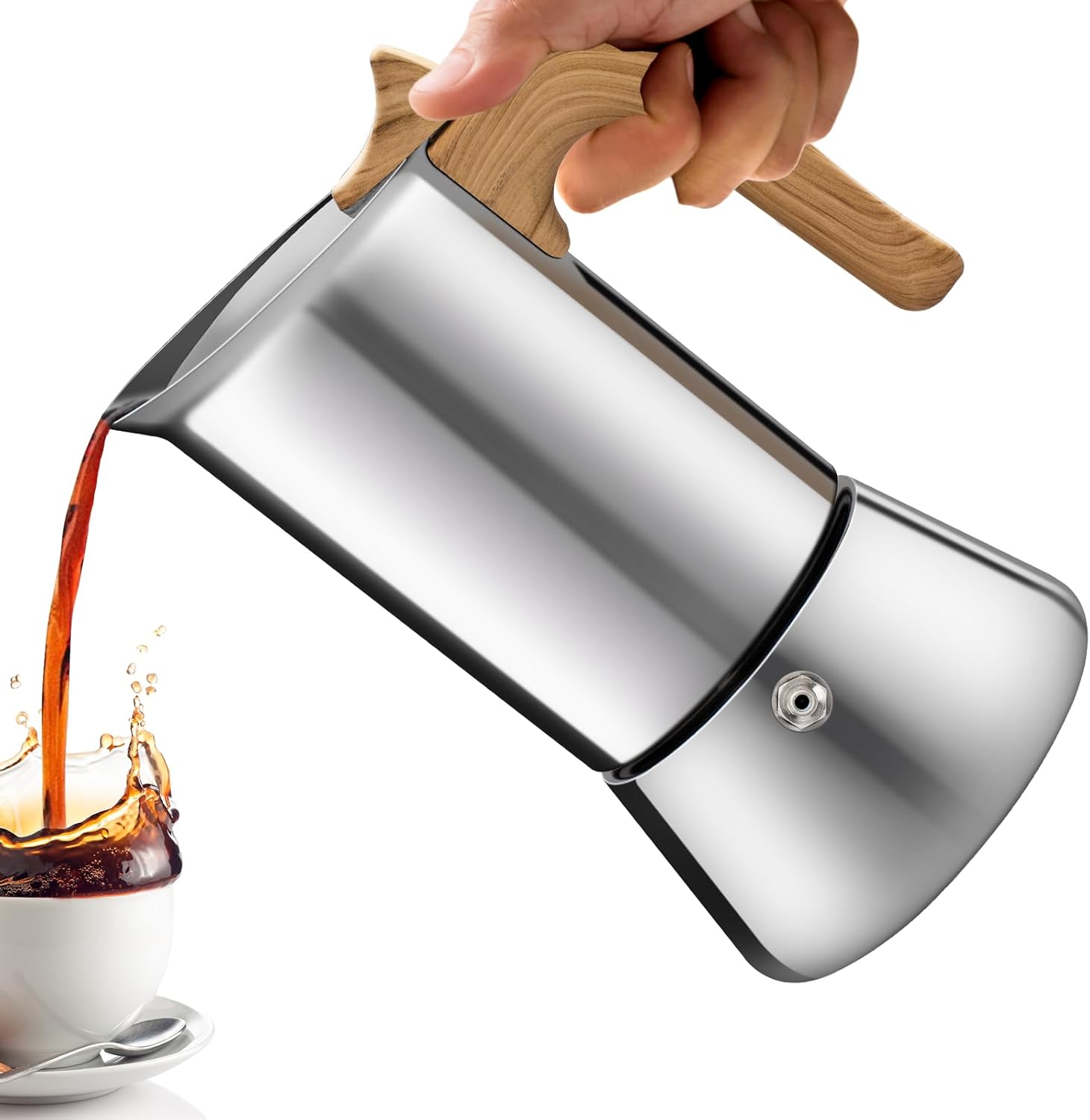
This compact 2-cup moka pot is built from 304 stainless steel and makes stovetop espresso-style coffee using ground coffee and manual operation. It consists of the usual three-part design: a bottom water chamber, a filter basket for grounds, and a top collector; you heat it on gas, electric, induction, or ceramic cooktops and coffee is forced up through the funnel by steam pressure. The all-stainless interior and upper chamber avoid coated surfaces and promise durability and straightforward cleaning, and the manufacturer highlights rapid, even heating that can produce a small pot in roughly five minutes. Practical benefits include portability for travel or small kitchens and compatibility with multiple stove types. Important limitations are the small 100 ml capacity—suitable for one to two small espressos but not larger servings—and the need for moderate heat control to avoid scorching the base; routine cleaning and correct tightening of the parts are necessary to prevent handle stress and to keep the unit in good condition over time.
Best for: Buyers who want a durable, compact stovetop brewer for single small espresso-style servings and value stainless steel construction and multi-cooktop compatibility.
Less Ideal for: Anyone who frequently makes larger servings, needs automatic or programmable machines, or prefers drip/large-capacity brewers for multiple cups at once.
- 304 stainless steel construction for durability and uncoated interior
- Compact 2-cup capacity suitable for single-serve espresso-style drinks
- Compatible with gas, induction, ceramic and electric cooktops
- Reusable metal filter—no paper filters required
- Quick extraction time—about five minutes to a small pot of coffee
- Limited 100 ml capacity only suitable for very small servings
- Requires careful heat control to avoid bottom discoloration or scorching
Verdict: A rugged, all-stainless 2-cup moka pot that delivers quick, concentrated stovetop espresso for single-serve coffee lovers.
Vaolvpant 2-Cup Moka Pot

| Material | Aluminum |
|---|---|
| Capacity | 3.4 ounces |
| Coffee Maker Type | Moka Pot |
| Compatible Cooktops | Gas and Ceramic |
| Filter Type | Reusable |
This octagonal aluminum moka pot brews small, concentrated stovetop espresso by forcing steam through finely ground coffee in a three-piece percolator design. It is used on gas and ceramic cooktops and operates entirely manually: fill the lower chamber with water, add ground coffee to the funnel filter, assemble, and heat until the extraction sound signals completion (about 3–5 minutes). The octagonal cast-aluminum body delivers quick, even heat transfer so extraction is fast and yields a rich, traditional moka flavor. The pot includes a reusable filter and a heat-resistant knob and handle for safer pouring. Practical benefits include compact footprint for two servings, durable lightweight construction, and straightforward maintenance since the top unscrews for cleaning and internal parts are dishwasher-safe. Important limitations are aluminum construction, which can discolor with heat and may require hand-washing to preserve appearance, and the small 3.4-ounce capacity that only suits single or couple servings rather than larger households. The unit is fully manual, so consistent results depend on grind size, heat control, and timing.
Best for: Buyers who prioritize extraction speed and classic stovetop espresso flavor in a compact brewer and who enjoy controlling grind, heat, and timing for consistent results.
Less Ideal for: Anyone who wants larger batch brewing, induction-compatibility, or a hands-off/automatic espresso solution should consider other options.
- Fast, even heat transfer from cast aluminum for brisk extraction
- Compact 2-cup capacity ideal for one to two servings
- Reusable funnel filter reduces waste and saves replacement costs
- Works on gas and ceramic stovetops for broad stovetop compatibility
- Removable top and dishwasher-safe internal parts simplify cleaning
- Aluminum body can discolor with heat and may need hand washing to maintain finish
- Not suitable for induction cooktops
- Very small 3.4 oz capacity limits serving size
Verdict: If you want a compact, performance-focused stovetop moka pot that delivers fast, traditional espresso-style brews for one to two people, this aluminum 2-cup model is a strong pick.
Moss & Stone 2-Cup Mini Drip Coffee Maker

| Wattage | 450 watts |
|---|---|
| Operation Mode | Fully Automatic |
| Coffee Input Type | ground_coffee, loose_tea |
| Filter Type | Paper (permanent reusable filter included) |
| Capacity | 5 ounces |
This Moss & Stone mini drip coffee maker is a small, no-frills machine designed to brew two 5-ounce servings at a time and comes with two ceramic mugs. It uses a single on/off button and a removable filter basket that accepts a permanent reusable filter or paper filters, so setup and cleanup are straightforward. With 450 watts of power it heats quickly for travel, dorm, office, or camping use where counter space is limited. You can brew ground coffee or loose tea through the included sieve, but the small 5-ounce capacity means you get modest cups and must refill frequently for multiple people. Build materials are ceramic and plastic with a matte finish, and the included mugs are a handy addition; however the compact size limits water reservoir capacity and there are no advanced features like programmability or strength control. For someone after a low-cost, space-saving brewer that reliably produces two small cups, this is a practical basic option, but it is not intended for larger-volume brewing or feature-rich customization.
Best for: Buyers seeking an inexpensive, space-saving brewer that makes two small cups quickly for personal use, travel, or a tiny household.
Less Ideal for: Anyone who needs larger servings, multi-cup brewing without refills, or advanced brew customization should look for a larger, feature-rich machine.
- Compact footprint ideal for small countertops, dorms, or travel
- Comes with two ceramic mugs so you can brew and serve immediately
- Simple one-button operation and a removable filter basket for easy cleaning
- Accepts ground coffee and loose tea, offering basic versatility
- Very small 5-ounce cup capacity requires frequent refilling for multiple servings
- No programmability, strength settings, or advanced brewing controls
Verdict: Choose this compact two-cup brewer if you want an affordable, simple machine that reliably makes small servings and includes mugs for immediate use.
Bialetti Moka Induction 2-Cup

| Capacity | 100 ml |
|---|---|
| Coffee Maker Type | Moka Pot |
| Filter Type | Reusable |
| Power Source | Induction Hob |
The Bialetti Moka Induction is a compact stovetop Moka pot designed for reliable daily espresso-style brewing on any hob, including induction. It follows the classic manual Moka process: fill the stainless steel boiler with water, pack the reusable filter with ground coffee, assemble and heat until the pot gurgles, then remove from heat. Notable features include a stainless steel base for induction compatibility and an aluminum upper chamber that preserves the traditional Moka appearance and heat behavior, plus a reusable filter that eliminates paper waste. In practice it delivers consistent short, concentrated coffee if you use a fine grind and follow the recommended fill-and-heat steps. The small 100 ml capacity is perfect for one or two cups but means you will brew frequently for more drinkers. Cleaning is simple with a rinse-only recommendation, though the pot is not dishwasher-safe. The construction feels factory-quality and the classic design is familiar to longtime Moka users, making it a dependable choice for someone who wants a compact, manual stovetop brewer for everyday espresso-style shots.
Best for: Buyers who want a durable, no-frills stovetop brewer that reliably produces espresso-style coffee and works on induction hobs, with an emphasis on consistent performance over bells and whistles.
Less Ideal for: People who need larger batch brewing, one-touch or automatic espresso machines, or a dishwasher-safe brewer for low-effort cleanup should consider other options.
- Induction-compatible stainless steel boiler for use on all hobs
- Reusable metal filter eliminates need for paper filters
- Compact 100 ml capacity suited for one to two espresso cups
- Simple manual operation with familiar Moka brewing steps
- Not dishwasher-safe and must be rinsed only to avoid affecting coffee taste
- Small capacity requires frequent brewing for multiple servings
Verdict: A compact, factory-quality two-cup Moka pot built for dependable everyday espresso-style brewing on induction and other hobs.
DITOSH 2-Cup Moka Pot

| Material | Aluminum |
|---|---|
| Capacity | 2 cups |
| Power Source | Stovetop Heat |
| Filter Type | Reusable |
| Operation Mode | Manual |
The DITOSH 2-Cup Moka Pot is a small stovetop espresso maker that brews concentrated, espresso-like coffee using ground coffee and stovetop heat. It is built from cast aluminum with an octagonal, classic shape and a heat-resistant handle and lid knob, and it produces a strong, aromatic cup in roughly 3 to 5 minutes when used with controlled heat. Setup and use are straightforward: fill the lower chamber with water, pack the filter basket with ground coffee, and place on a gas or ceramic cooktop until the coffee pushes up into the top chamber. The reusable filter and removable top make routine cleaning easy, and the compact 100 ml capacity is useful for single users or shared short servings. Limitations include its small capacity that is best for one or two espresso cups and the aluminum body which can discolor on the bottom with high heat and needs gentle hand washing to preserve the finish. Also it is not suitable for induction cooktops. For buyers who value a quick, low-tech way to get a rich stovetop espresso without electric machinery, this delivers solid results.
Best for: Buyers who want a low-tech, compact stovetop espresso maker that delivers strong, aroma-forward coffee with a simple manual workflow and visible social proof of reliable performance.
Less Ideal for: Anyone who needs larger batch output, induction cooktop compatibility, or a fully electric espresso machine with pressure-based extraction.
- Compact 2-cup capacity fits single users and small servings
- Cast aluminum construction provides even heat transfer for concentrated extraction
- Reusable filter and removable top make cleaning straightforward
- Heat-resistant handle and lid knob improve safe pouring
- Aluminum body can discolor or scorch if exposed to high heat
- Not compatible with induction cooktops
Verdict: A compact, no-frills stovetop moka pot that reliably produces strong espresso-style coffee for single users who prefer a simple, proven brewing method.
Choosing the Right 2-Cup Coffee Maker: Key Factors to Consider
Brew Temperature and Consistency
Coffee extraction depends heavily on temperature stability. Machines that reach and sustain water between about 195°F and 205°F produce more consistent flavor and extraction. For a 2-cup coffee maker, look for evidence of rapid, consistent heating rather than relying on residual heat from a large reservoir.
In practice, this affects how bright or flat the cup tastes and whether you get evenly extracted coffee across both servings. Temperature control also influences how the machine handles different grind sizes or roast levels, so prioritize units with reliable thermal performance when tasting clarity matters.
Brew Speed and Convenience
A primary advantage of a 2-cup brewer is speed. Faster heat-up and short brew cycles get you out the door without waiting for a full carafe to warm. Consider how long the device takes from power-on to finished pour and whether pre-infusion or pause-brew features change the total time.
Speed matters most for daily routines. However, extreme speed should not sacrifice extraction quality. The best options balance quick startup with a brew profile that still extracts oils and solubles uniformly across a small dose.
Ease of Cleaning and Maintenance
Small machines can accumulate coffee oils and mineral buildup quickly if they are difficult to service. Choose a design with removable brew baskets, accessible water reservoirs, and straightforward pathways for rinsing. Dishwasher-safe parts or simple snap-out filters save minutes each week.
Maintenance also includes descaling access and how often the machine requires it. If the unit is hard to disassemble, you may end up with stale flavors and reduced lifespan. For a 2-cup setup, ease of cleaning often outweighs marginal gains in pure extraction performance because regular care preserves flavor.
Countertop Size and Storage
A 2-cup coffee maker is often chosen for small kitchens, dorm rooms, or offices, so physical dimensions matter. Measure the counter area where the brewer will live and compare with the machine's footprint plus clearance for the water reservoir and pour path.
Also consider how easy it is to store when not in use. Slim profiles, vertical storage capability, or collapsible drip trays make the device more adaptable to limited spaces. Portability can be a factor if you move the brewer between rooms or travel with it occasionally.
Water Capacity and Refill Frequency
Although designed for two servings, water reservoir size affects how often you need to refill between uses. Extremely small reservoirs mean refilling every brew, which can be fine for single users but inconvenient for two people brewing back-to-back.
Also consider the ease of access to the reservoir and whether you must remove the whole unit to refill from the sink. A well-placed, easy-fill reservoir reduces spills and makes morning routines smoother.
Brewing Flexibility and Dose Control
Not all 2-cup machines brew the same strength. Look for options that let you adjust the dose, brew time, or cup size so you can make a strong 8-ounce pour or a milder 12-ounce serving. Simple controls or multiple pour presets increase versatility for different taste preferences.
Flexibility matters when multiple users share the same machine. If controls are too basic, you might end up re-brewing or diluting, which undermines the convenience of a compact brewer.
Common 2-Cup Brewing Methods
Two-cup coffee makers use a few distinct brewing approaches: short-run drip, concentrated pour-over style, and compact pod-free percolation. Each method yields a different mouthfeel and concentration level. Short-run drip mimics a full-size machine on a smaller scale and is simple to use. Concentrated pour-over styles emphasize manual control and clarity. Compact percolators can produce robust, full-bodied cups but may require more attention to grind size and timing.
Understanding the brewing method helps set expectations for flavor and maintenance. Short-run drip machines typically require the least effort, while pour-over style devices reward careful dosing and water flow with more nuanced cups.
- Short-run drip: fast, automated, low maintenance
- Pour-over style: more control, clearer flavors, manual steps
- Compact percolation: bold extraction, needs attention to grind
How Grind and Dose Affect Small-Batch Brews
When brewing one or two cups, small changes in grind size or dose have a bigger impact than with larger batches. Finer grinds extract faster and can intensify bitterness if the machine's flow rate is not matched. Coarser grinds under-extract and taste weak. Start with the recommended grind for drip-style brewing and adjust in small increments.
Weighing grounds and measuring water by volume or weight produces the most repeatable results. Because a 2-cup brewer uses less water, aim for consistent dosing so each cup tastes the same day to day.
- Small dose changes create noticeable flavor shifts
- Use a kitchen scale for repeatable results
- Adjust grind gradually to tune extraction
Maintenance Routines That Keep Flavor Fresh
Routine cleaning prevents oil buildup and mineral scaling, both of which dull flavor. Rinse removable parts after every use and run a monthly descaling cycle if you use hard water. Wiping the heating plate and emptying spent grounds promptly avoids stale tastes.
Simple habits extend machine life: empty and rinse the filter basket daily, dry parts before reassembly to prevent mildew, and use filtered water to reduce mineral accumulation. Regular maintenance ensures the compact brewer keeps producing a bright cup.
- Rinse removable parts after each use
- Descale monthly with recommended solution if water is hard
- Use filtered water to slow mineral buildup
Sizing Up Capacity Versus Use Case
A 2-cup machine is ideal if you consistently make one or two servings. If guests or variable routines mean you sometimes need more, consider whether a small carafe or larger reservoir is worth the tradeoff. Think about how often you want to brew and whether rapid back-to-back brewing is required.
If you frequently prepare two cups at once, a model with a slightly larger reservoir or the ability to brew back-to-back without cooldown will be more convenient. Conversely, solitary brew routines benefit most from the smallest, quickest machines.
- Single users: prioritize smallest footprint and fastest warm-up
- Two users: prefer larger reservoir or quick successive brews
- Occasional guests: evaluate flexibility versus space tradeoffs
How We Chose the Best 2-Cup Coffee Maker
We selected compact 2-cup coffee makers using criteria that reflect daily use and long-term convenience for people who brew one or two servings. First, brew consistency: we prioritized machines that reliably reach brewing temperature and maintain even extraction so each cup tastes balanced. Second, speed and efficiency: quick heat-up and short brew cycles matter for single-cup routines. Third, ease of cleaning and maintenance: accessible water paths, removable filters, and minimal crevices reduce time spent on upkeep. Fourth, footprint and build quality: small physical size, sturdy construction, and logical control layouts make a device practical on tight counters. Fifth, flexibility and dose control: units that allow some control over cup size or strength offer better fit for varied preferences. We excluded large-capacity drip machines, espresso-only devices requiring separate grinders, and machines that rely on single-use proprietary pods. The final list favors models that balance extraction performance, time-to-brew, and straightforward maintenance—dimensions buyers can verify from specifications and hands-on use.
Our full evaluation process is outlined in our review methodology.
FAQ
Is a 2-cup coffee maker strong enough to make espresso-like coffee?
Usually not. Most 2-cup coffee makers use drip or percolation methods that produce brewed coffee rather than true espresso. You can achieve a more concentrated cup by using finer grind and less water, but it will not match the pressure-extracted crema and intensity of espresso.
How often should I descale a 2-cup brewer?
It depends on water hardness and frequency of use. For daily use with hard water, monthly descaling is common. With softer water or filtered supply, schedule maintenance every two to three months. Regular rinsing between uses reduces the need for frequent descaling.
Can I use a 2-cup coffee maker for tea or other hot beverages?
Yes. Many compact brewers can heat water for tea or instant drinks, but residual coffee oils may affect flavor. Run a clean-water cycle or rinse thoroughly between uses to avoid flavor transfer.
Will a 2-cup coffee maker save energy compared with a full-size machine?
Often it will use less energy because it heats a smaller water mass and has shorter brew cycles. However, differences depend on standby features and how frequently you brew. Turning the machine off between uses maximizes energy savings.
Do 2-cup machines require special filters or pods?
Many use standard paper filters or integrated reusable baskets. Some compact devices are designed for proprietary capsules, but those are not universal. Check the filter type and whether reusable options are available if you prefer to avoid single-use waste.
Final Verdict
A 2-cup coffee maker is a practical solution when you consistently brew one or two servings and want faster heat-up, smaller footprints, and easier maintenance than full-size machines. Prioritize temperature stability, quick brew cycles, and ease of cleaning for the best daily experience. Consider reservoir size and dose control if multiple people will use the machine, since those tradeoffs affect refill frequency and flavor flexibility. Focus on the criteria that matter most for your routine and kitchen space. That approach will help you choose a compact brewer that reliably delivers enjoyable coffee with minimal fuss.