
Note: This article contains affiliate links. If you click on these links and make a purchase, we may earn a small commission at no extra cost to you. This helps support our research and content. Read our full affiliate disclosure here.
A 3-cubic-foot mini fridge can be the difference between cluttered counters and a neat, refrigerated spot for drinks, snacks, and meal prep items. You want a compact cooler that fits tight footprints without sacrificing usable shelving, temperature stability, or quiet operation. This guide covers seven shortlisted mini fridges that balance interior organization, energy efficiency, and user-friendly features for dorm rooms, home offices, and studio apartments. Below we summarize how each unit performs on practical points like usable capacity, cooling consistency, and noise, then explain the criteria we used so you can match a model to your living situation.
Top Picks at a Glance
| Best Overall The best all-around choice for most situations | Frigidaire Retro 3.2 Cu Ft Refrigerator |  |
| Best Quality Built to a higher standard if you want something more solid | Midea 3.1 cu ft Mini Fridge |  |
| Best Value The sweet spot between price and what you get | Erivess Beverage Refrigerator 3.2 Cu Ft |  |
| Best Budget The cheapest option that still gets the job done reliably | Stopsad Beverage Refrigerator HA207B |  |
| Top Rated A top-rated pick with lots of positive feedback | Stopsad 3.2 Cu Ft Mini Fridge |  |
| Most Popular A crowd favorite that many people choose with confidence | Upstreman BR321 3.2 Cu Ft Mini Fridge |  |
| Best Seller A high-volume bestseller chosen again and again | Frostorm Mini Fridge BC-90 |  |
Frigidaire Retro 3.2 Cu Ft Refrigerator
| Capacity | 3.2 cubic feet |
|---|---|
| Freezer Capacity | 0.2 cubic feet |
| Cooling Method | Compressor |
| Defrost System Type | Manual |
| Door Orientation | Reversible |
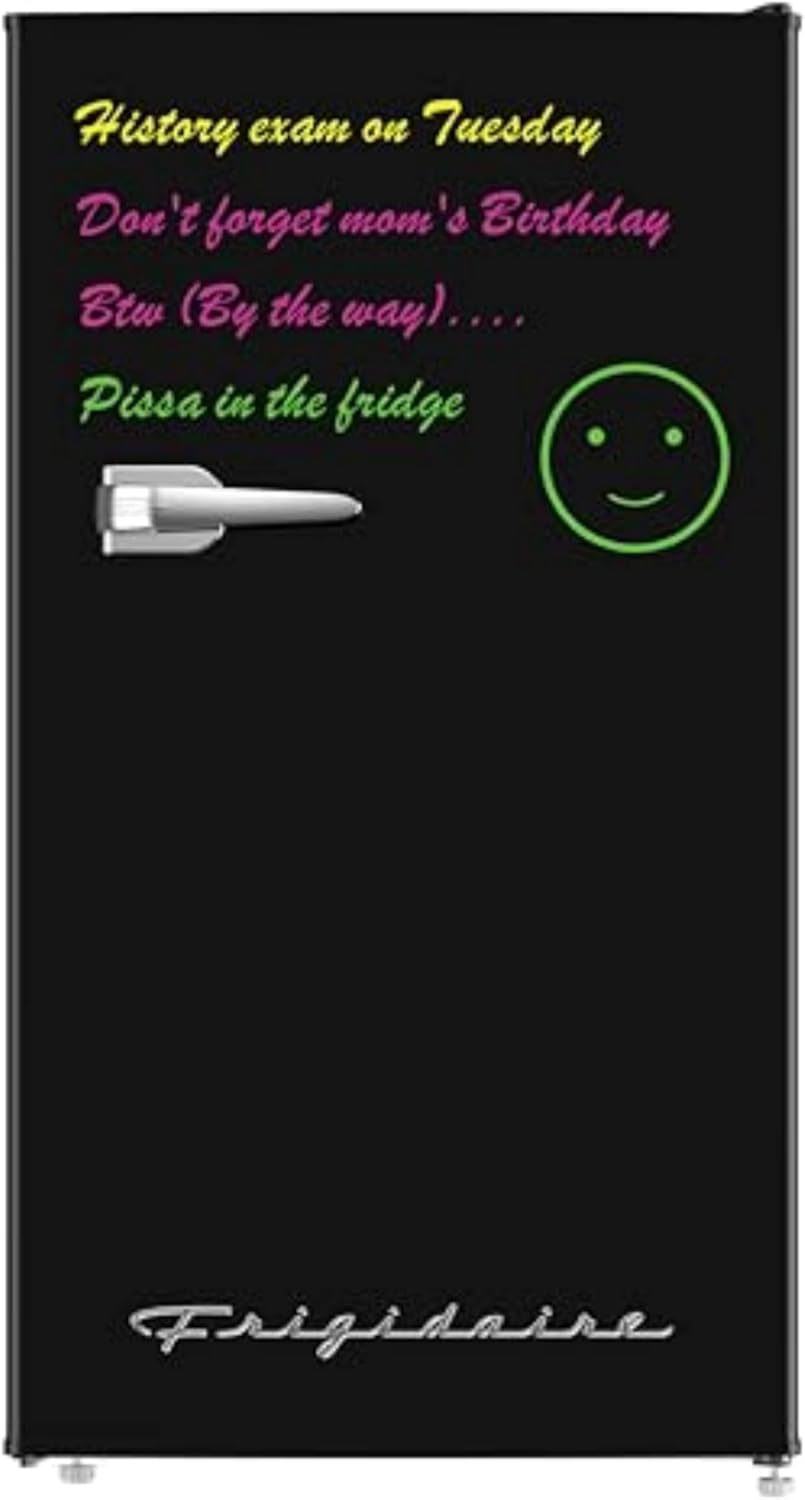
The Frigidaire Retro 3.2 Cu Ft refrigerator is a compact, compressor-cooled mini fridge designed for dorms, offices and small apartments where style and basic functionality matter. It offers a 3.2 cu ft interior with a 0.2 cu ft freezer compartment, two adjustable shelves and a door shelf that accommodates a 2L bottle, plus a built-in can dispenser for organized storage. The compressor cooling and manual defrost keep temperatures steady compared with thermoelectric units, and the reversible door and flush-back design make placement flexible. A quirky writable blackboard front and side bottle opener add personality and practical convenience. Trade-offs are the manual defrost freezer and a modest annual energy use figure, so it is not the most energy-efficient option available and it lacks inverter or advanced temperature features. For buyers wanting a combination of retro looks, usable interior space and straightforward cooling in a small footprint, this fridge covers the essentials well.
Best for: Buyers who want a balance of usable interior space, dependable compressor cooling and a retro look for a dorm, office, or compact apartment where placement flexibility and style matter.
Less Ideal for: Shoppers who prioritize the lowest possible energy consumption, automatic defrosting, or advanced temperature controls should consider other models.
- Compact 3.2 cu ft capacity with a 0.2 cu ft freezer for basic frozen storage
- Compressor cooling provides more consistent cooling than thermoelectric mini fridges
- Adjustable interior shelves and door storage for organized placement of bottles and cans
- Reversible door and flush-back design allow flexible placement in small spaces
- Writable blackboard front adds a customizable, decorative touch
- Manual defrost freezer requires occasional maintenance and cannot auto-defrost
- Annual energy consumption (200 kWh) is higher than some modern high-efficiency mini fridges
Verdict: A solidly equipped 3.2 cu ft mini fridge that pairs compressor cooling and flexible placement with a retro writable front, making it a great all-round choice for small living spaces.
Midea 3.1 cu ft Mini Fridge

| Capacity | 3.1 cubic feet |
|---|---|
| Freezer Capacity | 0.92 cubic feet |
| Annual Energy Consumption | 270 kilowatt hours per year |
| Cooling Method | Compressor |
| Defrost System Type | Manual Defrost |
The Midea 3.1 cu ft mini fridge is a small two-door refrigerator with a top freezer that balances usable interior space and energy efficiency for tight rooms. It uses a compressor with R600A refrigerant and is Energy Star certified, which keeps annual energy draw relatively low and helps reduce running costs compared with older compact units. The interior includes two removable shelves, a crisper drawer, LED lighting, a 2L bottle rack in the door, and a reversible door for flexible placement. Temperature is set via simple mechanical thermostats that cover typical fridge and freezer ranges, and the unit operates at a modest noise level suitable for bedrooms or dorms. Practical limitations are its manual defrost freezer, which needs occasional maintenance, and the small freezer volume that restricts long-term frozen storage. The plastic and wire shelving layout is functional but not optimized for very tall items without shelf removal. For buyers prioritizing steady cooling, modest energy use, and a compact footprint, this model delivers solid day-to-day performance in small living spaces.
Best for: Buyers who want a compact, energy-conscious mini fridge that provides reliable cooling and a separate freezer for dorms, small apartments, or offices where steady performance and low running cost matter.
Less Ideal for: Those needing a larger freezer, precise temperature control for specialty foods, or full frost-free convenience should consider bigger or feature-rich models instead.
- Energy Star certified with low annual energy consumption
- Top freezer plus separate fridge gives organized two-zone storage
- Removable shelves and crisper drawer for flexible interior layout
- Reversible door and compact footprint fit varied room layouts
- LED interior light for easy visibility in low light
- Freezer is small and uses manual defrost requiring periodic maintenance
- Mechanical thermostat lacks precise digital control
Verdict: Choose this Midea 3.1 cu ft mini fridge if you want a compact, energy-efficient two-door unit that provides dependable cooling and a usable top freezer for small spaces.
Erivess Beverage Refrigerator 3.2 Cu Ft

| Capacity | 3.2 cubic feet |
|---|---|
| Cooling Method | Compressor |
| Voltage | 110 volts |
| Number Of Shelves | 3 |
| Installation Type | Freestanding/Countertop/Built-in |
The Erivess beverage refrigerator is a freestanding 3.2 cu ft cooler designed to store cans and bottles and display them behind a glass front. It uses a compressor with a small convection fan for steady cooling down to 37°F and includes a digital touch control and large display for quick temperature adjustments. Inside there are four adjustable and removable chrome shelves and an LED interior light, which makes organizing and finding drinks simple; the unit holds up to 126 standard soda or beer cans. Practical features include a reversible door, auto-defrost with an extra temperature sensor, and a keyed lock for secured storage. The compressor is described as whisper-quiet and the unit is suitable for under-counter or freestanding installation. Limitations are that it is single-zone only so it cannot refrigerate both bottles and foods at different temperatures, and it is intended for beverages rather than fresh food storage.
Best for: Buyers who want a display-style beverage cooler that maximizes canned storage and fits under a counter while offering simple digital controls and low noise.
Less Ideal for: People who need multi-zone cooling, a freezer compartment, or a refrigerator for fresh food and meal storage should look elsewhere.
- Spacious 3.2 cu ft interior that fits up to 126 standard cans
- Adjustable and removable chrome shelves for flexible organization
- Digital touch controls and large display for easy temperature setting
- Auto-defrost and additional temperature sensor reduce maintenance
- Single-zone cooling so you cannot store items at different temperatures
- Not intended for fresh food storage, only beverages
Verdict: Choose this Erivess 3.2 cu ft beverage fridge when you want a quiet, high-capacity under-counter cooler that neatly displays and chills a large can collection.
Stopsad Beverage Refrigerator HA207B

| Capacity | 3 cubic feet |
|---|---|
| Capacity (cans) | 105 cans |
| Cooling Method | Compressor |
| Defrost System Type | Frost Free |
| Number Of Shelves | 3 |
The Stopsad HA207B is a compact compressor beverage fridge designed to store drinks neatly in a 3.0 cubic foot interior that fits up to about 105 cans. It uses a low-noise compressor and a digital thermostat so you can set and monitor temperatures precisely from the front display, while the glass door makes it easy to see contents without opening. Three removable stainless steel shelves let you mix cans and bottles and rearrange storage for taller items. The unit is frost free and intended for built-in or freestanding placement with a grounded power cord included. On the downside the finish is glossy stainless-style which may show fingerprints, and the unit is a basic single-zone cooler without advanced features like Wi-Fi or dual temperature zones. For buyers wanting a simple, energy-conscious mini fridge that prioritizes visible storage and straightforward temperature control, this model covers those needs reliably.
Best for: Buyers seeking a no-frills, space-saving beverage fridge that maximizes visible storage and straightforward temperature control on a budget.
Less Ideal for: People who need multi-zone cooling, smart connectivity, or a premium fingerprint-resistant finish should consider other models.
- Compact 3.0 cu ft capacity holds roughly 105 cans for significant beverage storage in a small footprint
- Digital display and adjustable thermostat for straightforward temperature control
- Glass front door provides quick visibility of contents without opening
- Three removable stainless steel shelves for flexible can and bottle organization
- Compressor cooling with frost free operation keeps temps stable and runs quietly
- Glossy stainless finish can show fingerprints and smudges
- Single-zone cooling lacks separate compartments for different drink types
Verdict: A practical, budget-friendly 3.0 cu ft beverage refrigerator that delivers visible storage and reliable compressor cooling for buyers who want simple, energy-conscious performance.
Stopsad 3.2 Cu Ft Mini Fridge

| Capacity | 3.2 cubic feet |
|---|---|
| Freezer Capacity | 0.3 cubic feet |
| Cooling Method | Compressor |
| Defrost System Type | Automatic |
| Power Source | Corded Electric |
This Stopsad 3.2 cu ft mini fridge provides basic cold storage with a 0.3 cu ft freezer and 2.9 cu ft refrigerator area in a compact footprint for dorms, offices, or bedrooms. It uses a compressor cooling method with an adjustable thermostat offering three temperature settings for both compartments, and two removable glass shelves let you reconfigure the interior for bottles, snacks, or meal prep. The unit is designed for low noise operation around 38 dB and modest energy use, making it suitable for quiet environments, and reversible doors plus leveling legs help with placement. Practical limits include the small freezer space that only handles light frozen goods and the manual temperature control that lacks precise digital readout. Buyers should also allow the recommended 24-hour rest period before first use to ensure optimal performance. For straightforward, no-frills refrigerated storage in a tight space, this model covers the essentials reliably.
Best for: Buyers who prioritize a steady, no-frills refrigerator for a small room and value quiet, energy-efficient operation will appreciate this model.
Less Ideal for: Anyone needing substantial freezer space, precise temperature control for sensitive items, or high-capacity food storage should consider larger or feature-rich alternatives.
- Compact double-door layout with a dedicated freezer for ice cream and frozen items
- Adjustable thermostat with three settings for simple temperature control
- Removable glass shelves allow flexible interior organization
- Designed for low noise operation suitable for bedrooms or studies
- Reversible door and leveling legs ease placement in tight spaces
- Freezer capacity is very small and not suitable for bulk frozen storage
- Temperature control is manual without a precise digital display
Verdict: A compact, quiet compressor mini fridge that delivers reliable everyday cooling and a small freezer in tight living spaces.
Upstreman BR321 3.2 Cu Ft Mini Fridge

| Capacity | 3.2 cubic feet |
|---|---|
| Freezer Capacity | 0.3 cubic feet |
| Defrost System Type | Manual Defrost |
| Cooling Method | Compressor |
| Voltage | 115 volts |
The Upstreman BR321 is a compact compressor mini fridge built for bedrooms, dorms, and offices where space is limited but basic refrigeration is required. It offers a 3.2 cubic foot interior split into a 0.3 cu ft freezer and 2.9 cu ft fresh-food area, two adjustable glass shelves, three door bins, and a crisper drawer for small produce. Temperature is controlled via a five-step adjustable thermostat rated from roughly 32°F to 50°F, and the rotary scroll compressor aims to deliver steady cooling while keeping noise down to about 38 dB. Practical touches include a reversible door, leveling feet, a tight door seal, and a manual defrost design that keeps maintenance simple. Trade-offs are the manual defrost and modest freezer space that cannot hold ice cream or large frozen items, and the unit's glossy finish and plastic door parts prioritize cost over premium materials. For buyers prioritizing quiet, efficient cooling and flexible shelf layout in a compact footprint, the BR321 covers essential needs without unnecessary complexity.
Best for: Buyers who want a quiet, energy-conscious compact fridge backed by many user reviews and prefer a straightforward, no-frills appliance for dorms, offices, or small apartments.
Less Ideal for: People who need significant freezer space, advanced temperature control for long-term food storage, or a premium-finish refrigerator should look at larger or higher-end models.
- True compressor cooling for reliable temperature control
- Compact 3.2 cu ft capacity with adjustable glass shelves for flexible storage
- Low reported noise around 38 dB suitable for bedrooms and offices
- Reversible door and leveling feet allow flexible placement
- Energy-efficient design with ETL listing and low annual consumption noted
- Freezer is very small and not suitable for ice cream or large frozen items
- Manual defrost requires occasional user maintenance
Verdict: A quiet, energy-efficient 3.2 cu ft compressor mini fridge that delivers reliable everyday cooling for small spaces and risk-averse buyers seeking proven, simple performance.
Frostorm Mini Fridge BC-90

| Capacity | 3.2 cubic feet |
|---|---|
| Freezer Capacity | 0.35 cubic feet |
| Defrost System Type | Automatic |
| Voltage | 115 |
| Annual Energy Consumption | 210 kilowatt hours per year |
The Frostorm BC-90 is a compact 3.2 cubic foot refrigerator with a built-in 0.35 cu ft upright freezer, designed for small living spaces. It cools using a mechanical thermostat with settings 1–5 and an internal freezer that reaches typical ice-making temperatures, while two adjustable glass shelves and door bins let you organize drinks, snacks, and meal prep items. The unit is freestanding with a reversible door and automatic defrost for the main compartment, and it runs on standard 115V power with ETL certification. Energy use is modest at roughly 0.6 kWh per day, which keeps operating costs low. Practical limits are its modest freezer volume and single-door layout, so it is better suited to short-term frozen storage rather than bulk freezing, and its manual-style controls lack digital precision. Build quality and a one-year warranty match expectations for a value-oriented compact fridge, and the reversible door helps fit tight layouts.
Best for: Buyers who prioritize a reliable, energy-conscious compact refrigerator for a bedroom, office, or dorm and want simple, no-frills operation with flexible placement options.
Less Ideal for: Anyone needing a larger freezer footprint, precise digital temperature control, or a built-in ice maker for heavy frozen food storage.
- Generous 3.2 cu ft total capacity for a mini fridge class
- Separate upright freezer compartment suitable for ice and short-term frozen items
- Reversible door increases placement flexibility in small rooms
- Adjustable glass shelves and door bins for customizable organization
- Relatively low energy consumption at about 0.6 kWh per day
- Freezer space is small and not intended for long-term bulk freezing
- Mechanical thermostat offers less precise temperature control than digital units
Verdict: A practical, energy-efficient 3.2 cu ft mini fridge with a small upright freezer and reversible door that suits risk-averse buyers who want simple reliable cooling for small spaces.
Choosing the Right 3-Cubic-Foot Mini Fridge: Key Factors to Consider
Usable Capacity and Shelf Layout
Rated volume is a starting point, but usable capacity depends on shelf placement, door storage, and how the freezer compartment is arranged. Adjustable shelves let you make room for taller bottles or meal-prep containers, while removable bins simplify cleaning and reconfiguration.
Think about the items you store most often. If you keep tall water bottles or a few meal containers, choose a layout that allows one or two shelves to be removed. Also consider the presence and size of a small freezer compartment if you need limited frozen storage for ice packs or single-serve items.
Temperature Control and Cooling Consistency
Stable temperature is important for food safety and beverage enjoyment. Check whether the unit offers a simple mechanical dial or an electronic thermostat with set temperatures. Electronic controls typically hold a tighter band of temperature, but mechanical controls are reliable and easy to use.
Also consider how well the fridge maintains temperature when room conditions change. Models with better insulation and a responsive compressor or thermoelectric system will keep contents cooler during hot afternoons or when the door is opened frequently.
Energy Use and Operating Cost
A small refrigerator runs continuously, so power draw affects monthly energy use. Look at the appliance's energy rating or listed wattage and consider estimated annual kilowatt-hours. Energy-efficient compressors and good insulation result in lower operating costs over time.
If you plan to run the fridge in a dorm or off-grid environment, prioritize low continuous power consumption. Also check for features like automatic defrost or energy-saving modes that can reduce wasteful cycling.
Noise Level and Compressor Type
Noise matters when a fridge sits in a bedroom or workspace. Compressor-based models will generally cool more strongly but can produce intermittent noise during cycles. Thermoelectric units are quieter but offer weaker cooling and struggle in warm ambient temperatures.
Review decibel ratings when available and consider placement relative to sleeping or working areas. Vibration isolation feet and quieter compressor designs make a noticeable difference in everyday comfort.
Size, Footprint, and Door Swing
Measure the available space before buying. Depth and door swing determine whether the fridge door can open fully in tight corners or beside furniture. Some compact models have reversible doors which can be essential for fitting in specific layouts.
Also factor in ventilation clearance requirements; many compact refrigerators need a few inches of space at the back and sides for proper airflow. If installation will be in a tight alcove, choose models with clear manufacturer guidance on minimum clearances.
Maintenance, Cleaning, and Warranty
Easy-to-clean interiors and removable components reduce upkeep time. Look for shelves and door bins that detach without tools, and interiors with smooth, stain-resistant finishes. A manual defrost freezer is common in this size and is easy to maintain, but check whether the drain and access points are user-friendly.
Warranty length and what it covers matters for a small appliance you expect to use daily. Confirm warranty terms on sealed systems, compressor coverage, and parts to estimate potential long-term service needs.
Where a 3-Cubic-Foot Mini Fridge Fits Best
A 3-cubic-foot mini fridge is ideal for single users or as a secondary fridge for snacks and drinks. It provides more usable interior space than smaller 1.7- or 2.0-cubic-foot models while remaining compact enough for dorm rooms, home offices, and small kitchens.
This size works well when you need balanced storage between chilled drinks and small meal components. It is not intended to replace a full-size kitchen refrigerator but can reduce trips to the main fridge for frequently accessed items.
- Dorm rooms and student apartments with limited floor space
- Home offices where easy access to cold drinks is desired
- Studio apartments or guest rooms as secondary storage
Thermoelectric Vs Compressor Cooling
Two common cooling methods appear in compact fridges. Compressor-based systems are essentially scaled-down versions of standard refrigerators and provide stronger cooling performance, especially in warmer ambient temperatures. They tend to recover temperature faster after door openings.
Thermoelectric units are quieter and have no moving refrigerant, but they are less effective in hot rooms and can struggle to reach and maintain low refrigerator temperatures. For bedroom or office use where quiet operation is crucial and ambient temperatures stay moderate, a thermoelectric model can be acceptable. For consistent food safety and a wider range of room conditions, choose a compressor-based design.
- Compressor: better cooling, faster recovery, more noise potential
- Thermoelectric: quieter, less cooling capacity, limited performance in heat
Organizing a Small Interior for Maximum Use
Make the most of limited space by prioritizing adjustable shelving and split-level storage. Remove shelves you do not need to fit tall bottles upright and use door bins for cans and condiments. Small crisper drawers or a modest freezer shelf can help separate different food types and reduce odor transfer.
Think about what you reach for most and design the interior layout to keep those items at eye level. Adding thin storage bins or stackable containers can increase usable volume and make contents easier to access without excessive rummaging.
- Use door bins for canned beverages and condiments
- Reserve middle shelves for ready-to-eat items
- Store frozen goods in the small freezer shelf if present
Placement, Ventilation, and Installation Tips
Place the fridge on a level surface and allow recommended clearance at the back and sides for airflow. Avoid tight enclosures that trap heat, which forces the compressor to run more and can shorten lifespan. Keep the unit away from direct sunlight and heat sources to minimize workload.
Check door swing direction and ensure there is enough clearance for the door to open fully. If space is limited, a model with a reversible door can solve fitment problems without compromising access.
- Leave manufacturer-specified clearance behind the unit
- Avoid placing the unit near heat sources or in direct sun
- Consider a reversible door for tight layouts
Simple Ways to Reduce Energy Use
Lower continuous power usage by minimizing frequent door openings and by setting the thermostat to a moderate, stable temperature. Stocking the fridge with a few items helps thermal inertia and reduces the compressor cycle frequency compared with an empty unit.
Regularly defrost manual-freeze models and keep seals clean and tight to prevent cool-air loss. If you plan to run the fridge for extended periods in a rental or dorm setting, choose models with higher energy efficiency ratings to reduce operating costs.
- Keep door openings brief and organized
- Defrost periodically if the unit has a manual freezer
- Maintain clean door gaskets for best sealing performance
How We Chose the Best 3-Cubic-Foot Mini Fridge
We focused on features and performance aspects that matter to everyday mini fridge owners. Key evaluation criteria included usable interior layout and shelving flexibility, because a rated volume only matters if shelves and door bins let you organize bottles, meal containers, and produce. Cooling consistency and temperature control were assessed to ensure safe beverage and food storage over varied room temperatures. Energy consumption was reviewed using manufacturer-rated power draws and efficiency features to estimate operating cost and environmental impact. Noise level and compressor type were considered for bedrooms and offices where quiet operation is important. Build quality and warranty coverage were included to gauge long-term reliability and serviceability. We excluded units that fell outside the 3-cubic-foot physical capacity or that were specialty appliances (such as clear-front beverage merchandisers or built-in undercounter models) because they serve different use cases. The shortlist favors compact freestanding models with versatile interiors and straightforward temperature controls. These filters helped us pick models that suit students, single-person households, and anyone needing a small, dependable secondary refrigerator.
Our full evaluation process is outlined in our review methodology.
FAQ
Can a 3-cubic-foot mini fridge hold tall water bottles?
Often yes, but it depends on shelf configuration. Many models have at least one removable shelf or adjustable positions to accommodate tall bottles. Check the interior shelf spacing before assuming full upright capacity.
Is a small freezer compartment useful in this size?
A compact freezer is handy for ice packs and single-serving frozen items. It will be limited in volume, so it is best for short-term storage rather than bulk freezing of groceries.
How noisy are 3-cubic-foot models typically?
Noise varies by compressor design. Compressor-based fridges produce intermittent sound during cooling cycles and can be audible in quiet rooms, while thermoelectric models tend to be quieter but have weaker cooling. Look for decibel ratings when noise is a critical factor.
Do these mini fridges need special ventilation?
They do need some clearance for airflow. Most manufacturers specify a few inches of space at the back and sides. Avoid enclosing the unit in a tight cabinet unless the model is rated for built-in or enclosed use.
How often should I defrost a manual-freeze mini fridge?
Defrost when frost buildup exceeds a few millimeters or when airflow is noticeably impeded. For many users this is once or twice a year, but frequency depends on humidity and usage patterns.
Can I run a mini fridge in a hot room?
Compressor-based models handle warmer ambient temperatures better than thermoelectric units. However, in very hot rooms the fridge will run more often and energy use will increase, so ensure good ventilation and consider a model rated for higher ambient temperatures.
Final Verdict
When choosing a 3-cubic-foot mini fridge, prioritize usable interior layout, reliable temperature control, and energy performance for your intended placement. Balance the need for a small freezer against the space you need for bottles and meal containers, and select a compressor or thermoelectric system based on how warm or quiet the room is. Focus on models with adjustable shelving, solid door seals, and clear ventilation guidance to avoid surprises at installation. By weighing these tradeoffs you can confidently pick a compact refrigerator that fits your daily habits and space constraints.