
Note: This article contains affiliate links. If you click on these links and make a purchase, we may earn a small commission at no extra cost to you. This helps support our research and content. Read our full affiliate disclosure here.
If you make small batches of sushi at home, a dedicated 3-cup rice cooker for sushi rice can make the process simpler and more consistent. The right cooker helps you get the sticky, glossy texture sushi rice needs by offering accurate temperature control, gentle steaming, and predictable water absorption for short-grain rice. This guide presents six shortlisted 3-cup rice cookers designed with sushi-style rice in mind. We judged options on factors like temperature regulation, rice texture consistency, ease of cleaning, and handling for small batches. Read on to find a cooker that fits your routine and delivers repeatable sushi-grade results.
Top Picks at a Glance
| Best Overall The best all-around choice for most situations | Zojirushi NS-LHC05 Rice Cooker |  |
| Best Quality Built to a higher standard if you want something more solid | Tiger JNP-S55U 3-Cup Rice Cooker |  |
| Best Value The sweet spot between price and what you get | GreenLife Rice Cooker 1.5QT |  |
| Best Budget The cheapest option that still gets the job done reliably | AROMA ARC-363NG 6-Cup Rice Cooker |  |
| Top Rated A top-rated pick with lots of positive feedback | Zojirushi 3-Cup Rice Cooker NHS-06 |  |
| Most Popular A crowd favorite that many people choose with confidence | Aroma 3-Cup Rice Cooker ARC-743-1NG |  |
Zojirushi NS-LHC05 Rice Cooker

| Capacity | 6 ounces |
|---|---|
| Wattage | 450 watts |
| Power Source | Corded Electric |
| Voltage | 120 volts |
The Zojirushi NS-LHC05 is a small Micom rice cooker and warmer designed to take the guesswork out of making consistently good rice. It cooks up to 3 cups uncooked and offers menu presets for white/sushi, mixed, porridge, sweet, brown, and quick cooking so you can select the program best suited to sushi-style rice. Heat comes from a triple-heater system at the bottom, side, and lid for more even cooking, and the unit includes a detachable washable inner lid, retractable cord, measuring cup, and spatula for daily use. Practical features like interchangeable melody and beep signals and a gentle keep-warm function make it convenient for frequent rice cooks. Limitations are its small capacity—best for singles, couples, or tight counter space—and the stainless steel exterior means it is not the lightest unit for moving between kitchens. For sushi rice specifically, the sushi/white mode and precise Micom control help produce the sticky, glossy texture that sushi requires, but plan portions around the 3-cup uncooked capacity.
Best for: Buyers who want a compact, reliable cooker that produces consistently textured sushi-style rice and prefer simple preset controls for everyday use.
Less Ideal for: People who regularly cook rice for large families, batch meal preppers, or those who need larger capacity for entertaining should choose a bigger cooker.
- Micom controls with multiple presets including a sushi/white setting for tailored rice textures
- Triple-heater design promotes even heating for consistent results
- Detachable and washable inner lid for easier cleaning
- Includes measuring cup and spatula and has a retractable cord for neat storage
- 3-cup uncooked capacity may be too small for families or meal prepping
- Stainless steel body adds weight compared with ultra-light plastic models
Verdict: Choose the NS-LHC05 if you want a compact Micom rice cooker that reliably produces sushi-ready rice in small batches.
Tiger JNP-S55U 3-Cup Rice Cooker

| Capacity | 0.7 liters |
|---|---|
| Wattage | 305 |
| Power Source | Corded Electric |
| Other Special Features | Non-Stick, Steam Vent |
The Tiger JNP-S55U is a simple, no-frills 3-cup rice cooker built for reliable everyday rice cooking. You add the measured rice and water using the included cup, press the single cook control, and the cooker automatically finishes and switches to keep-warm for up to 12 hours. The nonstick inner pot makes scooping and cleaning easier, and the removable steam vent and retractable cord add small conveniences. At 305 watts it brings gentle, even heat suitable for short- and medium-grain rice used in sushi, though it lacks advanced fuzzy-logic or pressure features that can further refine texture. The included spatula and measuring cup help ensure consistent results when you follow the package instructions. If you want a compact, reliable cooker that produces consistent sticky rice without fuss, this model does the job; if you need precise program control, extended functions, or a dedicated sushi setting, look to higher-end models.
Best for: Buyers who prioritize consistent, fuss-free rice cooking for small batches and want a compact, reliable cooker that produces sticky rice without complex controls.
Less Ideal for: People who need precise texture adjustments, multiple cooking modes, or professional-level sushi calibration should consider more advanced rice cookers.
- Automatic keep-warm for up to 12 hours maintains serving temperature
- Nonstick inner pot for easy scooping and straightforward cleaning
- Compact 3-cup capacity suits small households and portion control
- Includes measuring cup and spatula for consistent rice-to-water ratios
- No fuzzy-logic, pressure, or dedicated sushi program for fine texture control
- Basic single-button operation offers limited cooking customization
Verdict: A compact, dependable 3-cup cooker that reliably produces sticky rice with minimal fuss, ideal for small-batch sushi prep.
GreenLife Rice Cooker 1.5QT

| Capacity | 6 cups |
|---|---|
| Wattage | 300 watts |
| Power Source | Corded Electric |
| Material | Ceramic |
This GreenLife rice cooker is a straightforward countertop unit built for everyday rice without fuss. It cooks up to 3 cups uncooked (6 cups cooked) using a removable PFAS-free ceramic nonstick pot and a simple one-switch control for white or brown rice, then automatically shifts to Keep Warm. The glass lid and interior measuring lines help with consistent water-to-rice ratios, while cool-touch handles and a low-wattage 300 W design make it safe and energy-efficient for small kitchens. Dishwasher-safe parts and the removable bowl speed cleanup, and the compact footprint suits apartments or tight counters. Limitations are its basic control set — there are no advanced modes, timers, or fuzzy-logic cooking for specialty textures — so achieving perfect sushi rice may require trial with water ratios and rinsing. For cooks who value healthy nonstick surfaces and low-maintenance operation, this cooker reliably delivers fluffy rice for weeknight meals and small gatherings.
Best for: Buyers who want a simple, healthy-surface rice cooker that reliably makes family-sized batches without complicated controls and who prioritize easy cleanup and compact design.
Less Ideal for: If you need programmable settings, precise texture control for specialty rice techniques, or built-in timers, look for a more advanced model with fuzzy-logic features and multiple cooking programs.
- PFAS-free ceramic nonstick removable pot for easy release and safer cooking surface
- One-touch operation with automatic Keep Warm simplifies everyday use
- Compact, low-wattage design fits small kitchens and uses less energy
- Dishwasher-safe removable parts and clear measuring lines make cleanup and portioning easy
- No advanced cooking modes or fuzzy-logic controls for precise texture tuning
- Basic controls require manual adjustment of water ratios for specialty rice like sushi
Verdict: Choose this GreenLife cooker when you want a compact, low-maintenance rice maker with a PFAS-free ceramic pot that delivers reliable everyday results.
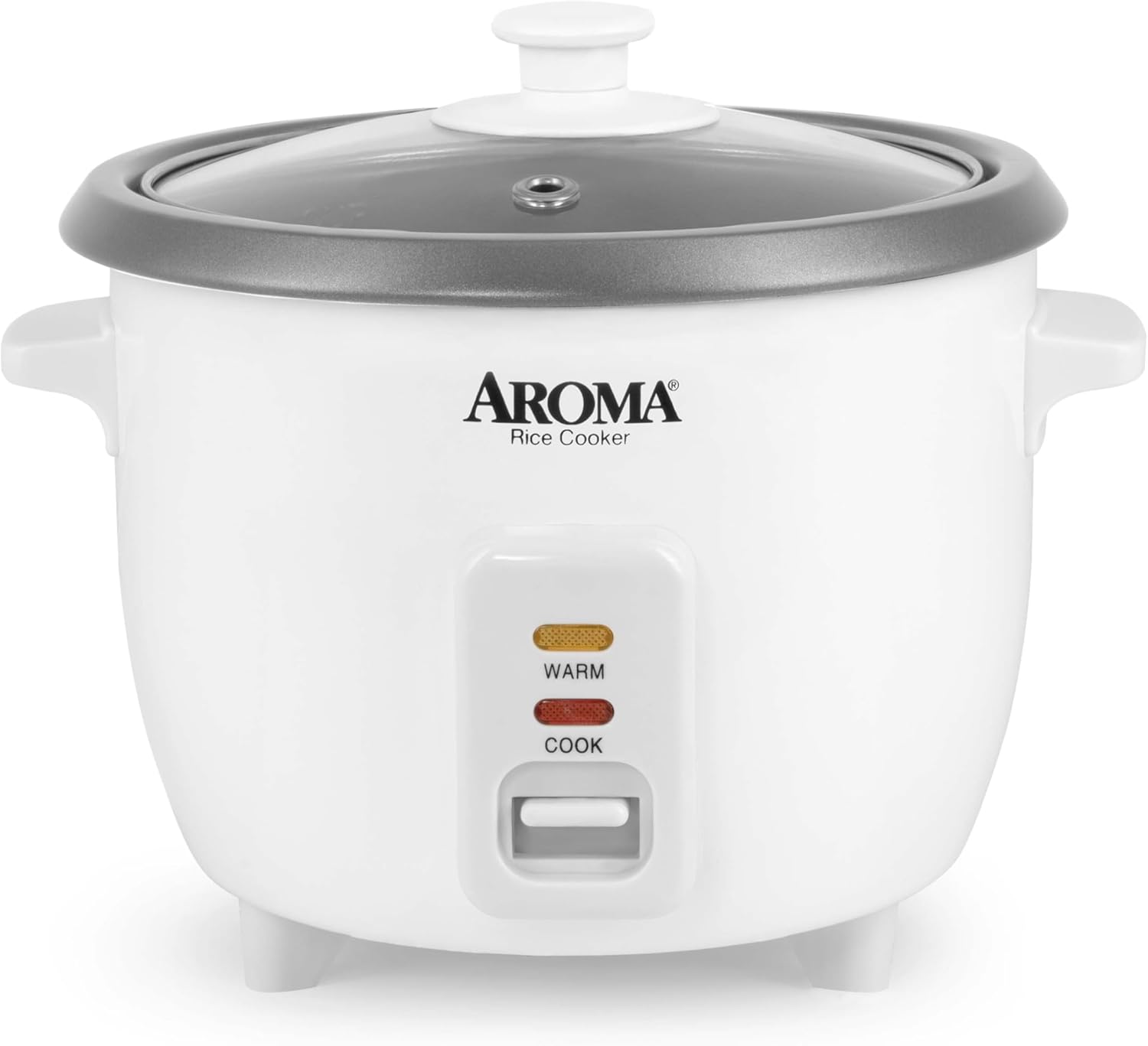
AROMA ARC-363NG 6-Cup Rice Cooker
| Capacity | 6 cups |
|---|---|
| Wattage | 500 watts |
| Power Source | Corded Electric |
| Lid Material | Tempered Glass |
The Aroma ARC-363NG is a simple, compact rice cooker intended for everyday home use when you need reliable cooked rice without fuss. You fill the inner pot, press the single control, and the cooker brings rice to a done state then flips to an automatic Keep Warm mode, which is handy for meal prep or serving. The tempered glass lid lets you monitor progress and the included measuring cup and spatula make portioning and serving straightforward. At 500 watts it heats quickly for small batches and the removable inner pot and accessories clean easily by hand or in the dishwasher. Because it is a basic pot-style cooker with one-touch operation, it lacks advanced cycle choices or precise texture controls that specialty cooks might want for sushi rice, but its compact capacity and predictable results make it a practical, no-frills option for budget-minded kitchens that mostly need plain steamed rice, oatmeal, or simple one-pot dishes.
Best for: Buyers looking for an inexpensive, no-fuss rice cooker that reliably produces small batches of steamed rice and keeps it warm for serving.
Less Ideal for: Serious home sushi makers or cooks who need precise texture control and programmable rice settings should consider a model with dedicated sushi or fuzzy-logic cycles.
- One-touch operation with automatic Keep Warm for hands-off cooking
- Compact 6-cup cooked capacity fits singles, couples, or small families
- Tempered glass lid lets you check progress without removing it
- Includes inner pot, measuring cup, and serving spatula for immediate use
- No specialized sushi or fuzzy logic program to fine-tune rice texture
Verdict: A low-cost, compact one-touch cooker that reliably makes small batches of steamed rice and keeps them warm, ideal for budget-minded kitchens.
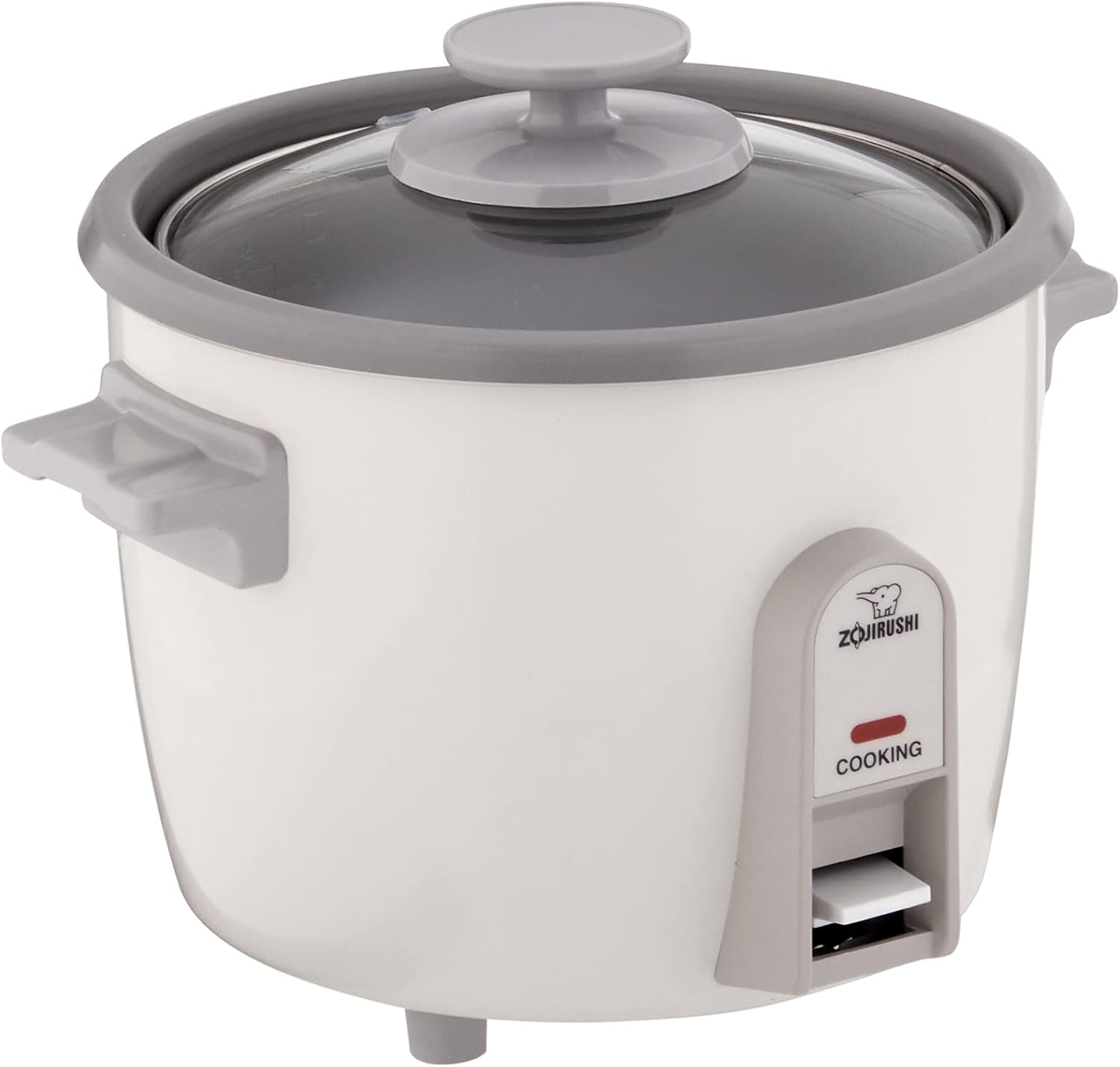
Zojirushi 3-Cup Rice Cooker NHS-06
| Capacity | 3 cups |
|---|---|
| Wattage | 300 watts |
| Power Source | Corded Electric |
| Material | Stainless Steel |
| Lid Material | Glass |
The Zojirushi NHS-06 is a simple, reliable 3-cup rice cooker built for everyday use. It cooks white or brown rice by pushing a single switch, then automatically switches to keep-warm for up to five hours so you can time meals flexibly. The removable nonstick inner pan and included spatula and measuring cup make portioning and cleanup straightforward, and the glass lid lets you monitor progress without lifting it. Stay-cool handles and a compact footprint make it easy to move and store in a small kitchen. With a 300-watt corded electric design and straightforward controls there is little to learn, which is ideal if you want consistent results without fiddly settings. Limitations are the basic feature set: there is no fuzzy-logic programming, delay timer, or multi-menu functions, so advanced rice profiling for sushi-style texture will rely on technique rather than machine presets. For cooks who prioritize a dependable, no-frills cooker that consistently steams small batches, this model performs well.
Best for: Buyers who want a small, dependable cooker that consistently produces steam-cooked rice with minimal setup and maintenance.
Less Ideal for: Those seeking programmable controls, multiple cooking presets, or advanced texture tuning for professional sushi preparation should consider higher-end models.
- Compact 3-cup capacity ideal for small households or single-batch sushi rice
- Simple single-switch operation with automatic keep-warm for hands-off cooking
- Removable nonstick inner pan and included spatula and measuring cup for easy serving and cleaning
- Glass lid and stay-cool handles for safe monitoring and transport
- No advanced cooking modes, timers, or fuzzy-logic controls for fine-tuning texture
- Basic feature set may not satisfy users wanting programmable or multi-function appliances
Verdict: A straightforward, compact rice cooker that reliably steams small batches of rice for cooks who value durability and simplicity.
Aroma 3-Cup Rice Cooker ARC-743-1NG

| Power Source | Corded Electric |
|---|---|
| Wattage | 300 watts |
| Voltage | 120 volts |
| Capacity | 3 cups |
The Aroma ARC-743-1NG is a small, no-frills rice cooker that reliably handles everyday rice and simple one-pot meals. You load the nonstick inner pot, add water using the included measuring cup, press the single control and the unit cooks rice automatically, switching to keep-warm when finished. The tempered glass lid and steam tray let you check progress and steam vegetables or seafood while rice cooks below, which is handy for quick meals or preparing components for sushi. Cleanup is straightforward because the inner pot and accessories are dishwasher safe, and the 300-watt corded design is energy efficient for its capacity. Limitations include minimal temperature control and no advanced rice settings for precise sushi-style textures, so achieving optimal stickiness may require learning water ratios and rinse technique rather than relying on program presets. For kitchens needing a compact cooker that covers rice, steaming, and simple soups without complexity, this model is a practical choice.
Best for: Buyers who want a compact, easy-to-use cooker that reliably prepares small batches of rice and can steam sides with minimal fuss and learning curve.
Less Ideal for: Users seeking a programmable cooker with precise sushi-specific settings or multiple texture presets should look at higher-end digital models.
- Compact pot-style design cooks up to 3 cups uncooked (6 cups cooked), suitable for small households
- One-touch operation with automatic keep-warm makes it truly set-and-forget
- Includes removable steam tray to steam vegetables or seafood while rice cooks
- Inner pot and accessories are dishwasher safe for easy cleanup
- Tempered glass lid allows monitoring without releasing heat
- No specialized rice settings or temperature controls for precise sushi rice textures
- Basic feature set means manual adjustment of water and rinsing is needed to perfect stickiness
Verdict: Aroma's ARC-743-1NG is a straightforward, compact cooker that makes small batches of rice and simultaneous steaming simple for everyday sushi prep with a bit of hands-on rice technique.
Choosing the Right 3-Cup Rice Cooker for Sushi Rice: Key Factors to Consider
Capacity and Batch Size
Three-cup cookers are designed to produce small, manageable portions suitable for home sushi making. Choosing the right capacity ensures the cooker can heat the rice evenly; too large a pot can leave some grains undercooked while too small a pot can crowd the rice and affect steam circulation.
Think about how many rolls or portions you usually prepare. A true three-cup cooked-rice capacity gives you enough rice for two to four sushi rolls depending on filling and portioning. Small capacity also shortens cooking cycles and reduces wasted leftovers when you want fresh, just-made rice for each session.
Temperature Control and Cooking Programs
Precise temperature control is the single most important factor for sushi rice. Sushi rice benefits from a controlled soak, an even boiling phase, then a gentle simmer and resting period. Cookers with multi-stage or adjustable programs make it easier to replicate this sequence and produce consistent stickiness without overcooking.
Look for models that allow different rice settings or a programmable timer. Even simple distinctions between white-rice and sushi modes can indicate internal logic tailored to short-grain rice behavior. Consistent internal temperature across the pot minimizes hot spots that break the rice grains and affect texture.
Inner Pot Design and Coating
The shape, weight, and coating of the inner pot influence heat transfer and rice release. A thicker base helps distribute heat evenly across the small volume, while gently sloped sides can make fluffing and scooping rice easier. Nonstick coatings reduce sticking but should be durable and free of roughness that traps rice.
Also check for clear water-level markings that match rice-measurement cups and for a removable inner pot that withstands regular washing. A pot that is lightweight but rigid will balance easy handling with stable cooking performance.
Steam Venting and Condensation Control
Managing steam and condensation matters for sushi rice because excess moisture can make rice gummy while insufficient steam can leave grains underdeveloped. Effective steam vents and lids that channel condensation away from the rice prevent soggy patches and help maintain uniform moisture content.
Features like a detachable steam cap or a lid with a condensation channel make post-cook moisture control easier. For sushi rice, look for designs that keep drips off the rice surface during the rest phase and that stabilize internal humidity during the final steam-off period.
Ease of Cleaning and Maintenance
You will likely wash the inner pot and lid frequently when making sushi. A design that disassembles easily, has dishwasher-safe components, or features a smooth nonstick finish will save time and reduce wear on the pot surface. Fewer crevices and a removable steam cap reduce trapped starch and bacterial hotspots.
Also consider how easy it is to reach seals and gaskets for cleaning. Cookers that allow you to remove and rinse these parts help maintain hygiene and prolong the life of the appliance. Durable materials that tolerate regular washing will keep performance consistent over time.
User Interface and Controls
Sushi preparation benefits from repeatable settings more than a long list of fanciful modes. Simple, clearly labeled buttons or a small digital display with a timer is often more useful than complex menus. Look for models with dedicated rice modes or memory functions that let you repeat a preferred program.
Tactile controls and a quick-access start/keep-warm function make short cooking sessions easier. Audible signals that mark the end of cooking and the start of the resting phase help you move efficiently through sushi assembly without guessing.
Why a Dedicated 3-Cup Cooker Helps With Sushi Rice
Small-capacity cookers reach and stabilize target temperatures faster than larger appliances, which improves the consistency of short-grain rice. That quick thermal response is useful for sushi rice, where precise timing during soak, cook, and rest phases affects the final texture.
A dedicated small cooker also reduces wasted leftovers and encourages making rice fresh for each session. The compact footprint fits small kitchens and keeps the essential controls within easy reach while you prepare sushi vinegar and fillings.
- Faster heat-up and cooldown cycles
- More consistent steam distribution in small batches
- Smaller footprint for counter or storage
How Water Ratios and Rinsing Affect Final Texture
Water ratio and the thoroughness of rinsing have an outsized effect on sushi rice. Short-grain rice should be rinsed until the water runs mostly clear to remove excess surface starch that causes clumping. The right water ratio depends on rice age and dryness, so small adjustments are normal.
Using the inner-pot markings and sticking to the same rice cup each time reduces variability. When testing a new cooker, keep notes on the cup-to-water measurement and any soak time used so you can reproduce the result.
- Rinse until residue is minimal to avoid gummy rice
- Note water-to-rice ratios and adjust by tablespoons if needed
- Allow a short rest after cooking before adding vinegar
Maintenance Tips to Keep Performance Consistent
Regular cleaning of the inner pot, lid, and any removable steam caps prevents starch buildup that can alter heat transfer. Inspect seals and gaskets periodically and remove food residue after each use to avoid odors and bacterial growth.
If your cooker has a nonstick inner pot, avoid metal utensils and harsh scouring pads. Replace worn silicone parts according to the manufacturer schedule to preserve steam management and safety.
- Rinse and dry removable parts after each use
- Hand-wash nonstick surfaces with soft sponges
- Check steam vents and caps for trapped residue
Techniques for Achieving Traditional Sushi Rice Texture
After cooking, transfer rice to a wooden or wide nonmetal bowl and gently fold in seasoned vinegar while fanning to cool. The goal is to coat grains without smashing them. Use a gentle cutting motion with a rice paddle to combine ingredients while helping moisture evaporate.
Timing matters. Allowing the rice to rest a few minutes post-cook before vinegar application can improve texture. A small-capacity cooker that signals the end of its cycle reliably helps you keep this timing consistent.
- Use a wooden paddle and bowl if available
- Fan rice during vinegar folding to achieve gloss
- Avoid overmixing to keep grains intact
Countertop Placement and Vent Clearance
Small cookers still require space for steam to vent safely. Place the unit on a heat-resistant surface with a few inches of clearance behind and above the steam outlet to avoid damage to cabinet surfaces. Avoid enclosed spaces during operation to prevent moisture buildup in the kitchen.
For repeated sushi sessions, keep rice seasonings and tools nearby so you can move rice promptly from cooker to mixing bowl. A stable, flat surface reduces the risk of spills when handling a hot inner pot.
- Allow a few inches of clearance around the steam outlet
- Keep mixing bowl and vinegar nearby to transfer rice quickly
- Use a trivet or heat pad under the cooker if needed
How We Chose the Best 3-Cup Rice Cooker for Sushi Rice
We focused on features that matter for small-batch sushi rice preparation and applied strict filters to narrow the field. First, capacity was limited to true three-cup cooked-rice volume to ensure even heat distribution for short-grain rice. We prioritized models offering precise temperature or multi-stage cooking modes that allow a controlled soak, gentle cook, and proper resting phase. Key evaluation criteria included temperature control fidelity, consistency of water absorption and final rice texture, steam-handling and condensation management, and inner-pot surface and shape for easy washing and gentle rice release. We also considered build quality, user interface simplicity for repeated sushi recipes, and available accessories that aid rinsing, measuring, or shaping rice. We excluded multi-capacity or large-volume cookers and any model without a selectable or programmable rice/porridge mode. Units lacking clear inner-pot markings or with non-removable inner linings were also filtered out. The result is a set of small-format cookers that excel on the dimensions sushi cooks care about most.
Our full evaluation process is outlined in our review methodology.
FAQ
Can a 3-cup rice cooker make enough rice for several sushi rolls?
Yes. A true three-cup cooked capacity typically yields enough rice for two to four standard sushi rolls depending on portion sizes and fillings. It is ideal for small households or single-session sushi making.
Should I use a special sushi setting on the cooker?
A sushi or white-rice setting that includes a soak and gentle final steam phase is helpful but not essential. The important part is controlled temperature and a proper rest period after cooking to let moisture distribute evenly.
How important is rinsing the rice before cooking?
Rinsing is very important. Removing surface starch prevents excessive clumping and helps each grain remain distinct after seasoning. Rinse until the water runs mostly clear for best results.
Can I use vinegar seasoning while the rice is still hot?
You should apply vinegar while the rice is hot but after a brief rest so it is warm, not steaming wet. Gently fold and fan the rice so the vinegar is absorbed evenly and moisture evaporates to create a glossy finish.
How do I prevent my sushi rice from becoming soggy?
Control water ratios, rinse properly, and ensure the cooker handles steam effectively. Avoid adding vinegar while the rice is overly wet and allow a short rest after cooking so excess moisture can redistribute.
Is a nonstick inner pot necessary for sushi rice?
A nonstick pot makes scooping and cleaning easier but is not strictly necessary. What matters more is even heat distribution and a clean surface free of residue. If you use nonstick, protect it from scratches to maintain performance.
Final Verdict
For home sushi-making, prioritize a 3-cup rice cooker that delivers steady temperature control, reliable steam management, and an inner pot that is easy to clean. Those features have the biggest impact on rice texture and repeatability when working with short-grain rice. Accept tradeoffs like fewer extra modes in favor of straightforward controls and consistent cooking behavior. Choose the cooker that best matches the way you prepare and portion sushi so you can produce even, sticky rice with minimal fuss.