
Note: This article contains affiliate links. If you click on these links and make a purchase, we may earn a small commission at no extra cost to you. This helps support our research and content. Read our full affiliate disclosure here.
If you want small-batch rice without a Teflon-coated pot, choosing the right 3-cup rice cooker matters for consistent results and easier upkeep. A good non-Teflon cooker cooks evenly, prevents sticking through material and design rather than coating, and simplifies cleanup without worrying about scratched surfaces. This guide shortlists the top 3-cup rice cookers without Teflon that meet practical home cooking needs. We evaluated options against real-world criteria like cooking consistency, pot material, durability, and maintenance to help you pick the best fit. Read on to see how we assessed each model and which features matter most for small household rice cooking.
Top Picks at a Glance
| Best Overall The best all-around choice for most situations | AROMA 6-Cup Pot-Style Rice Cooker ARC-813CGT |  |
| Best Value The sweet spot between price and what you get | GreenLife 3-Cup Rice Cooker |  |
| Best Budget The cheapest option that still gets the job done reliably | BLACK+DECKER 3-Cup Rice Cooker RC503E |  |
| Top Rated A top-rated pick with lots of positive feedback | Zojirushi Micom 3-Cup Rice Cooker | 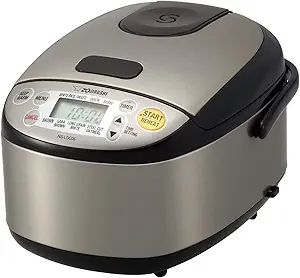 |
| Most Popular A crowd favorite that many people choose with confidence | AROMA Select Stainless Rice Cooker ARC-753SG |  |
| Best Seller A high-volume bestseller chosen again and again | Hamilton Beach Compact Multi Cooker 37524 |  |
AROMA 6-Cup Pot-Style Rice Cooker ARC-813CGT

| Capacity | 1.5 quarts |
|---|---|
| Power | 350 watts |
| Power source | Corded Electric |
| Voltage | 120 volts |
This compact Aroma rice cooker is a straightforward, pot-style unit that delivers fluffy rice with minimal fuss. You start cooking with a single touch and the cooker automatically switches to Keep Warm when done, while an included tempered glass lid lets you monitor progress without lifting it. The CoreCoat ceramic inner pot provides a natural nonstick surface without PFAS, so rice and grains lift cleanly and the bowl is easy to wash by hand. Practical extras include a rice measuring cup, spatula, and clear water lines inside the pot to help get consistent results. At 350 watts it uses low power and the terracotta styling and cool-touch handles add a bit of retro charm. Limitations are its small 1.5-quart capacity, which makes it best for singles or small households, and the inner pot requires hand washing rather than being dishwasher safe.
Best for: Buyers who want a simple, reliable small cooker that produces consistent, nonstick rice without Teflon and prefer straightforward one-button operation for everyday meals.
Less Ideal for: Those who regularly cook for large families or need dishwasher-safe cookware should look for a larger-capacity or dishwasher-friendly model.
- PFAS-free CoreCoat ceramic inner pot for nonstick cooking and easier cleanup
- One-touch operation with automatic Keep Warm for simple everyday use
- Tempered glass lid lets you check progress without losing heat
- Includes measuring cup and spatula for accurate portions and serving
- Small 1.5-quart capacity limits servings to about six cups cooked
- Inner pot is hand-wash only, not dishwasher safe
Verdict: Choose this compact Aroma cooker if you want an easy one-touch rice cooker with a PFAS-free ceramic inner pot for clean, nonstick cooking.
GreenLife 3-Cup Rice Cooker

| Capacity | 6 cups cooked |
|---|---|
| Power | 300 watts |
| Material | Ceramic |
| Voltage | 120 volts |
The GreenLife 3-cup (uncooked) rice cooker is a straightforward countertop cooker aimed at everyday grain cooking. You add rice and water, flip the one-touch switch for white or brown rice, and the unit cooks then automatically shifts to Keep Warm so rice is ready when you are. Its PFAS-free ceramic nonstick removable pot eases release and cleanup, and the removable parts are dishwasher-safe for low-effort maintenance. The cool-touch exterior and wood-print handles make it safe to move and keep on a small counter, while the glass lid lets you check progress without lifting. At 300 watts it is energy efficient but not fast compared with higher-watt models, and the simple controls mean no advanced settings for porridge or mixed grains. This cooker is best when you want reliable, healthy nonstick performance and minimal fuss for daily rice or simple grains, though power users who want multiple cooking programs or faster cycles may find it basic.
Best for: Buyers who prioritize a healthy, low-maintenance rice cooker that reliably produces fluffy rice with minimal controls and countertop footprint.
Less Ideal for: If you need fast cooking, multiple programmable modes, or a multifunction grain appliance, look for higher-powered or feature-rich alternatives.
- PFAS-free ceramic nonstick removable pot for healthier, easy-release cooking
- One-touch operation with automatic Keep Warm for hands-off cooking
- Dishwasher-safe removable parts simplify cleanup
- Compact footprint fits small counters and includes cool-touch handles for safe transport
- Limited to basic rice functions with no advanced cooking programs
- Lower 300W power means longer cook times compared with higher-watt models
Verdict: Choose this compact GreenLife cooker if you want a simple, PFAS-free ceramic rice cooker that delivers easy cleanup and reliable daily results.
BLACK+DECKER 3-Cup Rice Cooker RC503E

| Capacity | 3 cups |
|---|---|
| Power Source | Corded Electric |
| Other Special Features of the Product | Automatic Keep Warm |
| Lid Material | Tempered Glass |
The BLACK+DECKER 3-Cup Rice Cooker is a small, straightforward countertop cooker aimed at everyday home use. You add rinsed rice and water, press the single Cook button and the unit automatically finishes the cycle and flips to Keep Warm so rice stays ready for serving. The removable PFAS-free ceramic-coated pot is marketed as more durable than standard nonstick and has cool-touch handles for safe carrying, while the tempered glass lid and included measuring cup and serving spoon make portioning and serving simple. Its compact size is convenient for small households, meal prep, or tight counters, and the pot and lid are dishwasher safe for easy cleanup. Limitations are its small 3-cup capacity—unsuited for larger families or batch cooking—and the cooker offers only basic Cook and Keep Warm modes with no programmable or texture controls. For those wanting a simple, non-Teflon option that minimizes clutter, this handles the essentials cleanly.
Best for: Buyers seeking a simple, low-maintenance rice cooker without Teflon who cook for one to two people and prioritize countertop compactness and dishwasher convenience.
Less Ideal for: Households that need to cook large batches, want advanced cooking controls, or plan to prepare multiple rice varieties to precise textures.
- PFAS-free ceramic nonstick removable pot for easy release and safer cooking
- Automatic one-touch cook that switches to keep-warm so rice stays ready
- Compact 3-cup capacity that fits small kitchens and saves counter space
- Dishwasher-safe pot and tempered glass lid for straightforward cleanup
- Only two basic settings with no programmable or texture options
- 3-cup capacity is too small for large families or batch cooking
Verdict: A compact, budget-friendly non-Teflon rice cooker that delivers reliable one-touch cooking and easy cleanup for small households.
Zojirushi Micom 3-Cup Rice Cooker

| Capacity | 3 cups |
|---|---|
| Wattage | 450 watts |
| Power Source | Corded Electric |
| Material | Stainless Steel |
The Zojirushi Micom 3-cup rice cooker is a compact, everyday cooker that uses microcomputer controls to handle a range of grains and routines from white and long-grain rice to brown rice and steel-cut oatmeal. It is typically used by singles or couples who want consistently cooked rice without babysitting a pot; you select the menu, press start, and the cooker adjusts time and temperature automatically before switching to keep-warm. Notable features include a stainless steel inner construction with a non-stick finish, specialized menu settings (long-grain white, brown/GABA, steel-cut oatmeal), and a fold-down handle plus built-in retractable power cord for simple transport and storage. In practice the cooker delivers reliably fluffy rice and the brown/GABA activation provides a convenient way to boost brown rice nutrition, while the steel-cut oatmeal program shortens cook time versus a porridge cycle. Trade-offs are its small 3-cup capacity, which limits batch size for larger households, and the need to hand-wash parts rather than using a dishwasher.
Best for: Buyers who prioritize a dependable, small-footprint cooker that produces consistent results and want durable, no-frills performance for daily rice and grain cooking.
Less Ideal for: People who regularly cook for large households, entertain frequently, or need a larger-capacity cooker for batch meal prep should choose a bigger model.
- Microcomputer (micom) settings for consistent, hands-off cooking
- Dedicated menu programs for long-grain white, brown/GABA rice and steel-cut oatmeal
- Compact, easy-to-transport design with fold-down handle and retractable power cord
- Stainless steel construction with non-stick inner surface for easier cooking and cleaning
- 3-cup capacity is too small for larger families or batch cooking
- Requires hand washing of components rather than dishwasher-safe parts
Verdict: Choose this compact Zojirushi if you want a reliable, small-capacity rice cooker that consistently delivers well-cooked rice without Teflon coating.
AROMA Select Stainless Rice Cooker ARC-753SG

| Capacity | 6 cups (cooked) |
|---|---|
| Wattage | 500 watts |
| Power Source | Corded Electric |
| Lid Material | Glass |
The Aroma Select Stainless ARC-753SG is a simple, one-touch rice cooker that cooks up to 3 cups uncooked rice (6 cups cooked) and automatically switches to Keep Warm when finished. Its food-grade 304 stainless steel inner pot avoids nonstick coatings and cleans easily in the dishwasher, while the tempered glass lid lets you monitor cooking without releasing heat. Use it for all rice varieties as well as oatmeal, soups, stews, and one-pot meals—the single lever control makes operation foolproof. At 500 watts it heats quickly for small households and the included measuring cup and spatula make portioning and serving straightforward. There are no digital presets or advanced fuzzy-logic controls, so you should expect a straightforward cook cycle rather than smart timing adjustments for tricky grains. If you want a compact, durable cooker without Teflon-style coatings and with reliable automatic keep-warm, this model does the job affordably; if you need multi-programmed or large-capacity cooking, look elsewhere.
Best for: Buyers who prioritize a compact, reliable cooker without nonstick coatings and who want a simple, low-maintenance appliance backed by many user reviews.
Less Ideal for: People who need programmable, multi-function cookers or larger capacity machines for frequent big-batch cooking should consider other models.
- Food-grade 304 stainless steel inner pot eliminates nonstick coatings
- One-touch operation with automatic Keep Warm for set-and-forget cooking
- Tempered glass lid lets you monitor cooking without opening
- Removable pot and accessories are dishwasher safe for easy cleanup
- No digital controls or advanced cooking presets for specialized grains
- Small capacity limited to 3 cups uncooked, not suited for large families
Verdict: Choose this compact stainless-steel rice cooker if you want a simple, reliable no‑coating cooker that delivers set-and-forget rice for small households.
Hamilton Beach Compact Multi Cooker 37524

| Capacity | 1.5 liters |
|---|---|
| Wattage | 350 watts |
| Power Source | Corded Electric |
| Materials | Metal, Plastic |
The Hamilton Beach Compact Multi Cooker is a small, versatile countertop appliance designed for one to two people and for kitchens with limited space. It cooks rice (up to 6 cups cooked/3 cups uncooked), steams vegetables or eggs using the included tray, and offers low and high slow-cook settings for stews and soups. The cooker is programmable and runs at 350 watts on standard household power, and its metal inner pot is PFAS-free nonstick so you avoid Teflon coatings. Practical touches include a stainless steel lid, dishwasher-safe parts, and a measuring cup and rice paddle in the box. The compact 1.5 quart capacity and modest power mean cook times are appropriate for small batches but not for large families, and the simplified controls favor reliability over advanced customization. For buyers who want a small, no-nonsense multi-use cooker that skips Teflon, this model delivers straightforward performance with easy cleanup.
Best for: Buyers seeking a compact, reliable cooker that avoids Teflon and handles basic rice, steaming and slow-cook tasks for one to two people will appreciate this model.
Less Ideal for: Those who regularly cook for larger households or need faster, high-capacity rice cooking should choose a bigger, higher-power cooker.
- Multi-function design handles rice, steaming, slow cooking and eggs in one compact unit
- PFAS-free nonstick inner pot reduces exposure to Teflon coatings
- Dishwasher-safe parts and included measuring tools make cleanup simple
- Programmable controls offer hands-off cooking for predictable results
- Small 1.5 quart capacity limits batch sizes to about 1–2 servings
- Lower 350 watt power means longer cook times compared with higher-watt models
Verdict: A compact, Teflon-free multi cooker that reliably handles small rice, steam and slow-cook jobs for risk-averse buyers who prioritize safe, simple appliances.
Choosing the Right 3-Cup Rice Cooker Without Teflon: Key Factors to Consider
Inner Pot Material and Finish
The inner pot material determines how rice cooks and how easy the cooker is to maintain. Stainless steel and ceramic pots transfer heat differently from coated pans; stainless steel tends to be very durable and resists scratching, while ceramic provides a naturally nonstick surface when used and seasoned properly.
Also consider the pot's finish and wall thickness. Thicker walls and an even finish reduce hotspots and sticking. If you expect to rinse and scrub the pot frequently, choose a material that tolerates abrasive cleaning without degrading.
Heat Distribution and Cooking Algorithm
Even heat distribution is essential for producing uniformly cooked rice, especially in small-capacity cookers where the grain-to-pot ratio affects thermal dynamics. Look for designs with even-contact heating elements or diffused heat plates that minimize burning along the bottom and hotspots at the center.
The cooker's algorithm or control logic also matters. Basic single-switch units can work well for white rice, but if you cook mixed grains or brown rice, a model with dedicated cycles or adjusted timings will yield better texture and fewer undercooked cores.
Capacity and Real-World Yield
A 3-cup rice cooker is sized for small households, but '3-cup' usually refers to uncooked rice volume. Consider how much cooked rice you actually need per meal and whether the internal pot shape supports even steaming when cooking small volumes. A shallow, wide pot behaves differently from a taller, narrow one in terms of evaporation and texture.
Also think about extras such as a small steaming tray. If you plan to steam vegetables while cooking rice, confirm the tray fits without overflowing or interfering with the rice bed.
Ease of Cleaning and Maintenance
Without a Teflon coating, cleaning depends on material and design. Removable inner pots with smooth seams are easier to wash by hand. Look for pots that tolerate soaking and mild abrasion, and check whether lids have removable seals or trays that trap starch.
Maintenance also includes gasket replacement and whether the cooker's lid hinge and steam vent can be disassembled for cleaning. A design that minimizes hidden crevices reduces the buildup of residue and odor over time.
Control Interface and Safety Features
The control interface should be intuitive for the cooking cycles you use most. Simple one-touch cooking with a clear keep-warm mode is often sufficient, but models with separate brown-rice or porridge settings add versatility. Clear indicator lights or audible alerts help you time serving.
Safety features matter because small cookers heat quickly. Reliable auto shutoff, overheat protection, and a secure locking lid reduce the chance of accidents. A cool-touch exterior and stable rubber feet also improve everyday safety.
Durability and Serviceability
Durability affects long-term cost of ownership. Check how well the cooker's exterior, handles, and electrical cord are built. Heavy-duty hinges and a sturdy lid mechanism prevent wobble and leaks over time. Serviceability includes the availability of replacement inner pots, gaskets, and user-replaceable parts.
A model constructed with common, repairable parts will be easier and cheaper to keep working for years. Consider warranties and the simplicity of internal design when evaluating likely longevity.
Why Choose a 3-Cup Cooker Without Teflon
Cookers without Teflon appeal to buyers who prefer uncoated cooking surfaces for health, environmental, or durability reasons. Alternative inner-pot materials can offer robust scratch resistance and avoid the worry of a flaking coating over time.
For small households or anyone who regularly prepares single-pot meals, a 3-cup cooker without Teflon delivers precise small-batch results while simplifying maintenance. The absence of a nonstick coating shifts the emphasis to pot material, heat design, and cleaning habits to prevent sticking.
- Often uses stainless steel, ceramic, or hard-anodized pots
- Requires proper water-to-rice ratios and occasional soaking for best release
- Better long-term surface integrity when maintained correctly
How Inner-Pot Materials Affect Texture
Different non-coated materials change how starch gelatinizes and sets during cooking. Stainless steel transfers heat quickly and tends to brown or form a light crust if water is minimal; ceramic retains heat well and can produce a tender, evenly cooked grain when used with correct water ratios.
Understanding these material behaviors helps you adjust water, soak time, and cook cycles for the texture you prefer.
- Stainless steel: durable, responsive to heat
- Ceramic: gentler heating, often less sticking when seasoned
- Hard-anodized metal: good thermal conduction with increased scratch resistance
Practical Tips to Prevent Sticking Without Coatings
Rinsing rice until the water runs clear reduces surface starch that causes clumping and sticking. Use the recommended water ratios for your rice type and allow short rests after cooking to let steam redistribute. Avoid scraping the pot while it is hot because thermal shock can make residue adhere.
A light oiling of the inner pot or a brief preheat with a small amount of water can reduce sticking for some grains. For sticky or short-grain rice, slightly less water and a short resting time after the cooker switches to keep-warm often gives better texture and easier release.
- Rinse rice thoroughly before cooking
- Adjust water ratios by grain type
- Let the rice rest after cooking before opening or scooping
Small-Kitchen Considerations and Storage
A 3-cup cooker is compact and easy to store in tight kitchens. Consider the unit footprint and cord length so it fits your countertop or a cabinet shelf. Lightweight units are convenient but ensure they still have solid build quality.
Stackable steam trays and compact accessories help maximize utility without adding storage hassle. If worktop space is limited, a cooker with vertical design and a secure lid is easier to stow away.
- Measure cabinet or shelf space before buying
- Check whether accessories nest inside the cooker
- Choose a compact footprint for small counters
Cleaning Routines That Extend Service Life
Regular cleaning prevents buildup that can alter flavors and reduce performance. Remove and wash the inner pot after each use, clean the steam vent periodically, and wipe seals with a damp cloth. For stuck starch, soak the pot in warm water before scrubbing to protect the finish.
Avoid aggressive metal scouring on ceramic or specialty finishes. Replace gaskets or silicone seals if they show wear to maintain steam control and safety.
- Soak before scrubbing to remove baked-on starch
- Use nonabrasive scrubbers on ceramic or finished metals
- Dry parts thoroughly to prevent odors
How We Chose the Best 3-Cup Rice Cooker Without Teflon
We focused on attributes that directly affect everyday performance and longevity for 3-cup rice cookers without Teflon. Primary evaluation criteria included cooking consistency, assessed by how evenly the cooker heats and how reliably it produces fully cooked rice without hot spots; pot material and coating alternatives, looking for stainless steel, ceramic, or hard-anodized inner pots that avoid PTFE-based coatings; and build quality and durability, covering hinge and lid construction, gasket resilience, and the longevity of electrical and safety components. We also weighed ease of cleaning and maintenance, including whether residues release easily and whether parts are removable for thorough washing. Energy efficiency and cook cycle versatility formed another criterion, noting how effectively the cooker uses power across white-rice, brown-rice, and keep-warm modes. Finally, user safety and control features such as secure latches, reliable auto shutoff, and intuitive controls were included. We excluded models with PTFE or Teflon-style nonstick coatings and any cookers that do not specify their inner-pot material. We prioritized options that balance consistent cooking performance with low-maintenance care and robust construction. The scoring criteria below mirror these priorities so readers can compare tradeoffs at a glance.
Our full evaluation process is outlined in our review methodology.
FAQ
Will rice stick more in a cooker without Teflon?
Sometimes sticking can be more noticeable without a nonstick coating, but proper rinsing, the correct water ratio, and letting the rice rest after cooking greatly reduce sticking. The inner-pot material and even heat distribution play a larger role in release than the presence of a coating alone.
Are ceramic inner pots safe for everyday use?
Ceramic inner pots are generally safe for daily cooking and offer a naturally smooth surface, but they can be more fragile than stainless steel. With gentle cleaning and avoiding sudden temperature shocks, ceramic pots last long and perform well for routine rice preparation.
How do I clean burnt rice from a non-coated pot?
Soak the pot in warm water with a mild detergent to loosen burnt starch, then use a nonabrasive scrubber to lift residue. For stubborn areas, a short soak with a baking soda paste can help without damaging most stainless or ceramic finishes.
Can I steam vegetables in a 3-cup cooker while cooking rice?
Many 3-cup cookers include a small steaming tray that fits above the rice bed. Steaming works best with modest vegetable portions so steam reaches both layers evenly. Check the capacity and tray fit to avoid crowding that could affect rice texture.
How long do non-coated inner pots typically last?
Lifespan depends on material and care. Stainless steel pots can last many years with normal use, while ceramic may chip if mishandled. Regular cleaning, avoiding metal utensils, and proper storage prolong service life.
Final Verdict
When choosing a 3-cup rice cooker without Teflon, prioritize inner-pot material and even heat distribution because those factors determine texture and sticking more than coatings. Balance ease of cleaning and durability with the control features you use most, such as dedicated grain settings or a reliable keep-warm mode. Accept small tradeoffs: some non-coated pots require a bit more attention to water ratios and cleaning, but they deliver long-term surface integrity and predictable performance. Focus on the cooking consistency and serviceability metrics discussed here to pick a small-cooker that fits your routine with confidence.