
Note: This article contains affiliate links. If you click on these links and make a purchase, we may earn a small commission at no extra cost to you. This helps support our research and content. Read our full affiliate disclosure here.
A correctly sized 9,000-BTU air conditioner can deliver steady, efficient cooling for medium rooms without wasting energy or creating excessive noise. If you live in an apartment, a bedroom, or a small living area, choosing the right unit affects comfort, electricity use, and how often you need maintenance. This guide summarizes the top shortlisted 9,000-BTU air conditioners suited for typical home setups. We evaluated units across practical criteria like cooling performance, energy efficiency, and sound output so you can quickly identify models that match your space and usage. Read on to compare features and decide which unit fits your priorities.
Top Picks at a Glance
| Best Overall The best all-around choice for most situations | DELLA Vario 9,000 BTU Mini Split |  |
| Best Quality Built to a higher standard if you want something more solid | Temprium Mini-Split 9K | 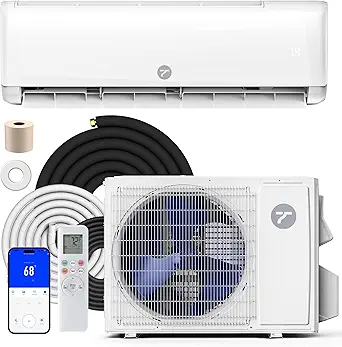 |
| Best Value The sweet spot between price and what you get | Midea 9,000 BTU Portable Air Conditioner |  |
| Top Rated A top-rated pick with lots of positive feedback | COSTWAY 9000 BTU Mini Split |  |
| Most Popular A crowd favorite that many people choose with confidence | Senville LETO Mini Split 9000 BTU |  |
| Best Seller A high-volume bestseller chosen again and again | BLACK+DECKER Portable Air Conditioner BPACT08WT |  |
DELLA Vario 9,000 BTU Mini Split

| Cooling power | 9,000 BTU/h |
|---|---|
| Heating capacity | 10,000 BTU/h |
| SEER2 | 20 |
| Voltage | 230 volts |
| Recommended room size (up to) | 400 Sq.Ft |
The Della Vario 9,000 BTU mini split is a ductless inverter heat pump meant to cool and heat mid‑size rooms up to roughly 400 square feet. It uses a rotary scroll compressor with DC inverter technology and a 20 SEER2 rating to improve seasonal efficiency and reduce run time compared with fixed-speed units. The system ships pre-charged with a 16.4 ft line set and includes a full installation kit, but it requires professional line-set vacuuming and install to ensure correct refrigerant charge. Controls include app-based Wi‑Fi and Alexa voice support so you can schedule, monitor, and change modes remotely, and the indoor unit offers multi-directional 4D airflow plus sleep, turbo, dehumidify, and energy-saving modes. Noise is low at about 29 dB in typical operation. Expect strong, even airflow and faster temperature changes thanks to the turbo function, while the main practical limits are the need for pro installation and attention to line-set length if you alter piping. The unit also runs on 230V and uses about 750 watts when active.
Best for: Buyers who want an efficient, app-controlled ductless system to heat and cool a single mid-size room and who prefer a low-noise, energy-conscious solution backed by a full installation kit.
Less Ideal for: People looking for a DIY-install mini split, those who need cooling for much larger areas than 400 sq ft, or buyers who cannot access professional HVAC installation.
- High seasonal efficiency with 20 SEER2 for lower operating costs compared with lower-SEER alternatives
- Pre-charged 16.4 ft line set and complete installation kit reduce missing-part issues during install
- Wi‑Fi and Alexa support with app control for remote scheduling and voice operation
- Quiet indoor operation around 29 dB and multi-directional airflow for even room coverage
- Professional HVAC installation and line-set vacuuming are required, so DIY setup is not practical
- If you change line-set length you must adjust refrigerant, which adds installer complexity
Verdict: Choose this 9,000 BTU mini split if you want a quiet, energy-efficient, Wi‑Fi controllable ductless system for reliably heating and cooling a single 400 sq ft room.
Temprium Mini-Split 9K
| Cooling Power | 9000 BTU |
|---|---|
| Heating Capacity | 9,500 BTU |
| SEER2 | 22 |
| Voltage | 115 volts |
| Refrigerant | R-32 |
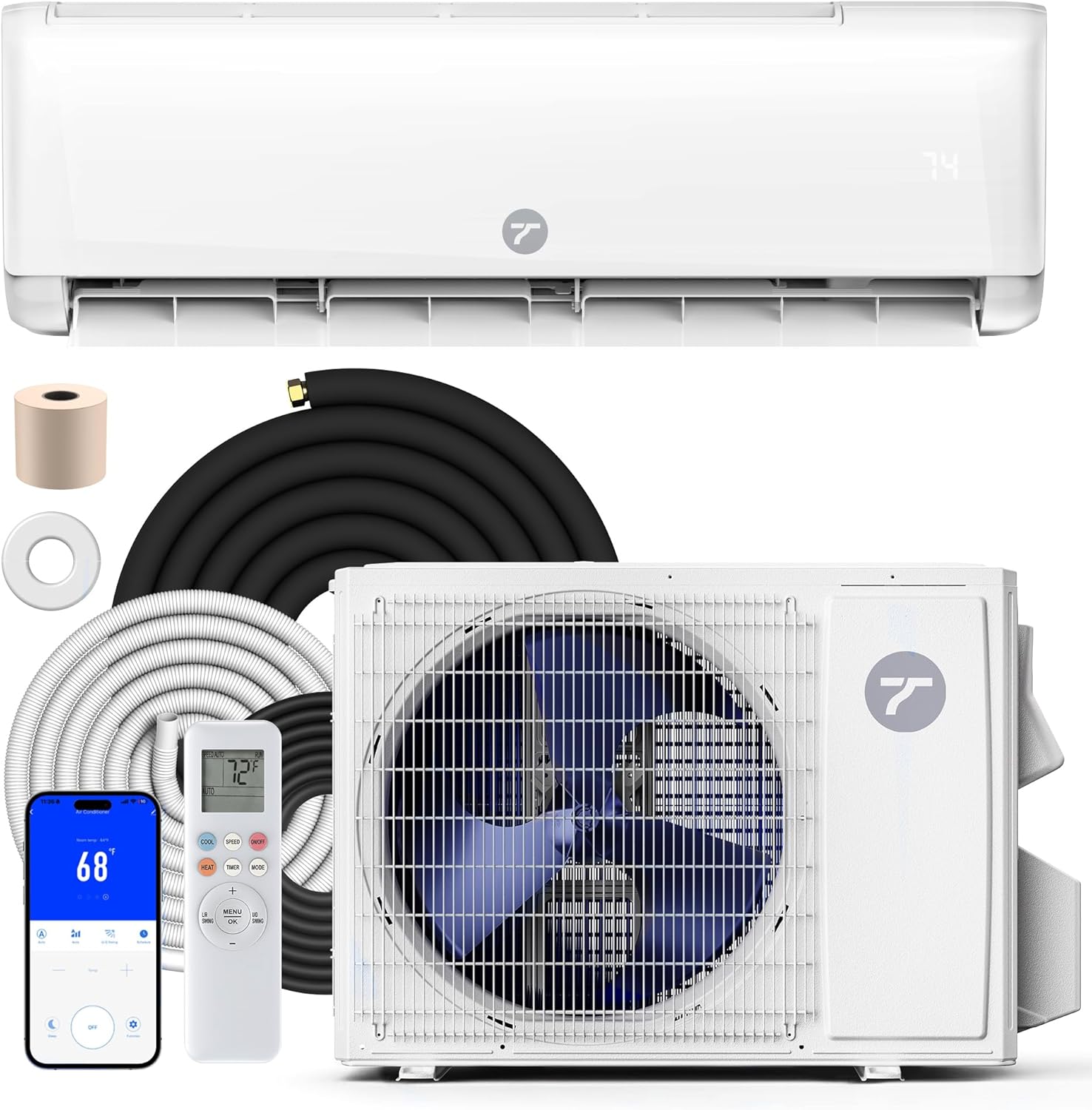
The Temprium 9,000 BTU mini-split is a ductless heat pump designed to cool or heat single rooms up to about 450 sq ft with inverter-driven variable-speed operation. It delivers quiet performance down to 23 dB and smart controls via app, remote, or voice assistants for scheduling and remote adjustments. Notable features include a 22 SEER2 rating for strong energy efficiency, R32 refrigerant, multiple operating modes (Cool/Heat/Dry/Fan/Sleep/ECO), a washable filter, self-cleaning high-temperature cycle, and an installation kit for setup. In practice this unit provides fast temperature changes and steady comfort without the frequent on/off cycling of conventional compressors, which helps lower power draw on 115V circuits. Expect very low noise in bedrooms or offices and convenient zone control through the Follow-Me sensor and Turbo mode, but professional installation is recommended for optimal refrigerant routing and performance. The one-year manufacturer warranty and included app controls are useful, though buyers should plan for installation costs and confirm compatibility with their electrical supply.
Best for: Buyers focused on strong cooling/heating performance and energy efficiency who want a quiet, smart-controlled zone solution for a single room up to about 450 sq ft.
Less Ideal for: People who need a DIY plug-and-play portable AC or who cannot hire professional installers should consider other simpler options.
- High 22 SEER2 efficiency for lower running costs compared with standard split units
- Inverter compressor provides stable temperature control and reduced cycling
- Very quiet indoor operation down to 23 dB suitable for bedrooms or offices
- WiFi, app, remote, and voice control plus Follow-Me sensor for convenient zoning and scheduling
- Self-cleaning cycle and washable filter reduce routine maintenance
- Requires professional HVAC installation for best performance and safe refrigerant handling
- One-year manufacturer warranty is relatively short compared with some competitors
Verdict: Choose this unit if you want a high-efficiency, quiet 9,000 BTU mini-split with smart controls and inverter performance for a single-room zone.
Midea 9,000 BTU Portable Air Conditioner

| Cooling Power | 9000 BTU (ASHRAE) |
|---|---|
| Floor Area | 250 square_feet |
| Control Method | App, Remote, Voice |
| Noise | 51 db |
| Refrigerant | R-32 |
This Midea portable AC delivers straightforward cooling, dehumidifying and fan functions for rooms up to about 250 sq ft using its 9,000 BTU ASHRAE (6,000 BTU SACC) rating. Setup is simple: roll the unit to the window, attach the included 5 ft exhaust hose and adjustable window kit, plug in and choose cooling, dry or fan mode from the LED controls, remote or the SmartHome app with voice assistant support. Practical touches include a washable reusable filter, a 24-hour timer and three fan speeds, and the unit reports typical roomside airflow around 330/277 CFM. Expect typical portable-AC compromises: a noise level around 51 dB that is noticeable in quiet rooms and modest energy efficiency compared with larger systems, and it is single-hose non-inverter design so it will run continuously to maintain set temperature. For everyday spot cooling, temporary rooms or renters who need a no-frills smart-controlled unit, this Midea covers the basics reliably and is easy to install.
Best for: Buyers who want a practical, easy-to-install portable AC with smart controls for spot-cooling bedrooms, home offices, or rented spaces and who prioritize convenience and straightforward operation.
Less Ideal for: People seeking the quietest operation or the highest energy efficiency for continuous whole-room cooling should consider inverter or dual-hose alternatives instead.
- Smart controls via app, remote, and voice assistants for convenient scheduling and remote adjustments
- Includes exhaust hose and adjustable window kit for tool-free installation
- Washable reusable air filter for simple maintenance and extended filter life
- Three-in-one operation (cooling, dehumidify, fan) plus 24-hour timer for flexible use
- Single-hose non-inverter design limits long-term energy efficiency compared with inverter or dual-hose units
- Noise around 51 dB can be noticeable in quiet environments
Verdict: A straightforward, smart-controlled 9,000 BTU portable AC that is easy to install and maintain for practical spot cooling needs.
COSTWAY 9000 BTU Mini Split

| Cooling power | 9000 BTU |
|---|---|
| Heating capacity | 10000 BTU |
| SEER2 | 19 |
| Voltage | 115 volts |
| Compressor type | rotary_scroll |
This COSTWAY 9,000 BTU mini-split is a single-zone wall-mounted inverter unit that cools and heats small-to-mid sized rooms and includes a matching outdoor condensing unit. It uses inverter compressor technology and R32 refrigerant to vary output for steady temperature control and improved efficiency, and the 19 SEER2 rating indicates above-average seasonal efficiency for its class. The indoor unit supports multiple modes (auto, cool, heat, dry, fan, sleep, ECO), four fan speeds, 4D auto swing for wider air distribution, a 24-hour timer, and a remote control for straightforward operation. Practical benefits include quieter low-speed operation, self-clean cycles to reduce maintenance, and a heat pump function that adds heating capacity. Important limitations are that the system requires a new outdoor unit and professional installation, and the listed annual energy consumption number and real-world efficiency will depend on installation quality and usage patterns. For buyers prioritizing consistent, reliable temperature control in a dedicated room, this mini-split delivers competent performance with energy-minded features.
Best for: Buyers who want a dependable single-zone mini-split that maintains steady temperatures and lowers cycling wear through inverter operation for a dedicated room or finished space.
Less Ideal for: People needing a portable or window solution, or those who want a DIY-install option that avoids installing an outdoor condenser.
- Inverter compressor with 19 SEER2 improves steady temperature control and efficiency
- Includes both indoor and outdoor units and supports heating via heat pump
- Multiple operating modes, 4 fan speeds, and 4D auto swing for flexible comfort
- Quiet low-speed operation and self-clean function reduce noise and maintenance burden
- Requires professional installation and a new outdoor unit, adding to total cost and setup time
- Annual energy consumption and real-world efficiency depend heavily on correct installation and sizing
Verdict: Choose this mini-split if you want a reliable, energy-conscious 9,000 BTU wall-mounted system that provides steady inverter-driven cooling and heating for a single room.
Senville LETO Mini Split 9000 BTU

| Cooling Power | 9000 BTU |
|---|---|
| Capacity | 0.75 tons |
| Floor Area | 400 square_feet |
| SEER | 21.2 |
| Control Method | App, Voice Control |
The Senville LETO 9000 BTU mini split is a wall-mounted ductless heat pump designed to cool, heat, dehumidify, and circulate air in a single room or open area. It pairs an indoor air handler with an outdoor condenser and includes a remote plus a 16 ft line set pre-charged for up to 25 ft, so a professional installer can complete the system quickly. The inverter compressor and rotary scroll design deliver quiet operation (listed at 24 dB) and high efficiency (SEER 21.2), which helps reduce running costs compared with non-inverter units. Smart features include app control, voice control compatibility with Alexa, and geo-fencing routines for automated on/off. Practical benefits are multi-mode operation for year-round use and a comprehensive parts and compressor warranty backed by technical support. Important limits are that it requires professional installation to validate the warranty, it operates on 208/220V power which may need electrical work, and the indoor capacity is sized for roughly a 400 sq ft room so it is not suited to larger spaces.
Best for: Buyers who want a quiet, energy-efficient single-room heating and cooling solution with smart control and documented performance that is supported by many positive user reviews.
Less Ideal for: People who need whole-home cooling, who prefer plug-and-play window units, or who cannot accommodate a 208/220V hardwired installation should consider other options.
- True heat pump functionality for heating and cooling year-round
- High efficiency inverter with a SEER of 21.2 to lower operating costs
- App and voice control with Alexa and geo-fencing for remote automation
- Comes with indoor unit, outdoor condenser, remote and 16 ft pre-charged line set
- Requires professional installation to keep the warranty valid
- 208/220V electrical requirement may need an electrician for some homes
- Built and rated for a single-room capacity (~400 sq ft), not for large open plans
Verdict: A quiet, high-efficiency 9,000 BTU mini-split that delivers year-round heating and cooling with smart app and voice control, ideal for a single room.
BLACK+DECKER Portable Air Conditioner BPACT08WT

| Cooling Power | 9000 BTU (5,300 SACC) |
|---|---|
| Wattage | 935 watts |
| Refrigerant | R-32 |
| Filter Type | Washable filter |
| Floor Area | Up to 400 sq. ft. |
This BLACK+DECKER portable air conditioner is a compact 3-in-1 unit that cools, dehumidifies, and circulates air for small to medium rooms. It is intended for temporary window or wall venting using the included installation kit and casters make it easy to roll between bedrooms, home offices, or living spaces. The unit offers 9,000 BTU (5,300 SACC) rated cooling, three fan speeds, a 24-hour timer, sleep mode, and a full-function remote with a Follow Me thermostat feature for more precise local temperature sensing. Practical benefits include a washable filter, self-evaporating operation that reduces the need to drain water in typical cooling use, and an LED control panel for straightforward operation. Important limitations are modest energy efficiency relative to high-end inverter models and a single compressor design, which means it may run louder and use more power under heavy load; it also needs a suitable window or wall opening for venting and occupies some floor space compared with through-the-wall or mini-split options.
Best for: Buyers who prioritize a reliable, easy-to-install portable cooling solution that can be moved between rooms and controlled remotely, and who value straightforward operation and factory-included installation hardware.
Less Ideal for: People seeking the quietest, most energy-efficient long-term cooling for large open-plan spaces or those who cannot or will not install a vented exhaust through a window or wall.
- Three-in-one function: air conditioner, dehumidifier, and fan for seasonal versatility.
- Includes window installation kit and exhaust hose for straightforward venting out of a window or wall.
- Follow Me remote control acts as a localized thermostat for better temperature control where you sit or sleep.
- Self-evaporating operation and washable filter reduce routine maintenance hassle.
- Casters and side handles allow easy movement between rooms.
- Uses a non-inverter rotary compressor so it can be noisier and less energy efficient than inverter models.
- Requires a compatible window or wall opening for venting and storage space when not in use.
Verdict: A dependable, easy-to-install 9,000 BTU portable AC that suits risk-averse buyers who want immediate, movable cooling with simple controls and included venting hardware.
Choosing the Right 9,000-BTU Air Conditioner: Key Factors to Consider
Room Size and Layout
Matching a 9,000-BTU air conditioner to the correct room size is the single most important factor. BTU rating estimates how much heat a unit can remove per hour; a 9,000-BTU unit is typically best for medium-sized rooms. If the space has high ceilings, an open-plan layout, or receives direct sun for much of the day, the effective cooling load increases and you may need to favor higher airflow or a unit with stronger short-term capacity.
Pay attention to room insulation, window area, and typical occupancy. A well-sized unit cools more efficiently and cycles less frequently, which reduces energy use and wear. Conversely, an undersized unit will run continuously and may not reach comfortable temperatures.
Energy Efficiency and Running Cost
Energy efficiency affects long-term operating cost and environmental impact. Look for published EER or SEER values and use them to estimate typical electricity consumption for your climate and usage pattern. Units with higher efficiency can cost more up front but often save money over a season of regular use.
Also consider programmable modes like sleep timers or eco settings that reduce runtime during low-demand periods. A model with variable fan speeds or a thermostat that avoids excessive cycling will typically be more efficient in real-world use than one with only on/off controls.
Noise Levels During Operation
Noise is a key comfort factor for bedroom or living-room installations. Check manufacturers' decibel ratings at different fan speeds and, when available, third-party measurements. Lower dB ratings on low and medium fan settings help ensure the unit is unobtrusive during sleep or conversation.
Keep in mind that perceived noise depends on placement and the room's acoustics. Units with softer fan profiles and vibration-dampening mounts are generally more tolerable in quiet environments. Balance desired cooling speed with acceptable noise for your typical use times.
Installation Type and Fit
Consider whether you need a window-mounted, through-the-wall, or portable 9,000-BTU air conditioner and confirm fitment dimensions and installation hardware. Window units should list the supported sash heights and provide adjustable panels for different window widths. Through-the-wall installations require a compatible sleeve and accurate wall opening dimensions.
Ease of installation matters if you plan to move the unit seasonally. Lightweight, well-documented units with clear instructions and included brackets reduce installation errors. Also check whether the unit requires professional electrical work or if it plugs into a standard outlet.
Controls, Features, and Convenience
Controls influence daily usability. A clear display, a reliable thermostat, and a remote or mobile control option can make operation simple. Useful features include multiple fan speeds, an auto mode that maintains target temperature, programmable timers, and washable filters for lower maintenance.
Additional conveniences like a sleep mode, dehumidification-only setting, or a smart thermostat interface add versatility. Prioritize the combination of features that matches how you use the unit most often rather than chasing every available option.
Maintenance and Durability
A unit designed for easy maintenance will cost less to own over time. Removable, washable filters, accessible drain channels, and straightforward access to the condenser coil simplify routine upkeep. Check whether replacement parts or filters are readily available and whether the unit design minimizes moisture buildup and mold risk.
Durability factors include the quality of the cabinet, corrosion-resistant coils, and vibration control. A sturdier unit will better handle seasonal installation and storage cycles without developing leaks or mechanical issues.
Sizing a 9,000-BTU Unit for Your Specific Room
Determine the square footage you need to cool and then consider modifiers. For a typical room, multiply length by width to get the area. Use that area alongside notes about sun exposure, ceiling height, and occupancy to decide whether a 9,000-BTU capacity is enough or if you should adjust expectations for performance during peak heat.
If your room has large windows facing direct sunlight or poor insulation, plan for a higher cooling load. Conversely, shaded rooms with good insulation will allow a 9,000-BTU unit to reach and maintain set temperatures more comfortably. Also factor in the number of heat-generating appliances and typical occupancy when estimating expected performance.
- Measure floor area and ceiling height for rough load estimates
- Add capacity margin for sun-exposed or poorly insulated rooms
- Consider occupant count and electronics that add heat
Understanding Efficiency Ratings and What They Mean
Look for EER or SEER figures and compare them across similar capacity units. These ratings are standardized measures of a unit's efficiency under specific test conditions and help you predict running costs. Higher ratings translate to lower energy consumption for the same cooling effect.
Also review features that reduce runtime, such as accurate thermostats, variable fan speeds, and programmable schedules. Even a moderately efficient unit with good controls can perform better in practice than a higher-rated model that lacks usable scheduling or a precise thermostat.
- EER and SEER give standardized efficiency comparisons
- Controls and thermostat accuracy influence real-world efficiency
- Estimate seasonal energy use based on local climate and runtime
Placement, Venting, and Installation Best Practices
Proper placement affects both cooling performance and noise. For window units, center the unit if possible and avoid blocking airflow with curtains or furniture. Ensure the exhaust side has unobstructed airflow outdoors so heat is expelled effectively.
When installing, follow manufacturer guidelines for tilt angle to allow proper drainage and use vibration-absorbing pads or mounts to minimize noise. Check seals around the installation to prevent hot air infiltration and reduce short-cycling caused by heat leaks.
- Keep intake and exhaust unobstructed
- Use recommended tilt and drainage setup
- Seal gaps around installation to prevent heat infiltration
Managing Noise and Nighttime Comfort
If the unit will run while you sleep, prioritize models with low-decibel ratings at the lower fan speeds. Look for features such as a dedicated sleep mode that gradually reduces fan speed and raises the temperature setpoint slightly to save energy while keeping noise down.
Consider supplemental sound mitigation measures like weatherstripping, window seals, or a foam gasket to reduce rattles and outside noise. Proper installation and anti-vibration mounts can noticeably reduce noise transmitted into the room.
- Check dB ratings for low and medium fan speeds
- Use sleep modes and program timers for night use
- Install anti-vibration mounts and use sealing to reduce rattles
Seasonal Maintenance and End-of-Season Storage
Routine upkeep keeps a unit performing well year after year. Clean or replace filters regularly, clear the condenser fins of debris, and ensure drain channels are unobstructed. At the end of the cooling season, follow recommended procedures for winter storage if applicable.
If you remove a window unit for winter, dry it thoroughly to prevent mold and wrap or store it in a climate-controlled area. For permanently installed through-the-wall units, schedule a basic inspection before the cooling season to check seals, drain lines, and electrical connections.
- Clean or replace filters regularly
- Inspect and clear condenser and drain channels
- Dry and store or winterize units properly
How We Chose the Best 9,000-BTU Air Conditioner
We focused on features and performance attributes that matter most to people buying a 9,000-BTU air conditioner for home use. Primary evaluation criteria included measured cooling capacity versus room size, energy efficiency ratings and estimated seasonal energy use, operational noise levels at typical fan speeds, controls and user convenience, and build quality related to durability and ease of maintenance. We also considered installation flexibility, such as window fit range and included hardware, plus any additional features that improve year-round value like dehumidification modes or programmable timers. Units were excluded if they were underspecified for sustained cooling of medium rooms, lacked published efficiency or noise figures, or required specialized installation beyond standard window or through-the-wall setups. We prioritized models that balance practical cooling performance with everyday usability and documented operating specs. The result is a shortlist of units that together represent the best practical options within the 9,000-BTU capacity class based on the concrete criteria above.
Our full evaluation process is outlined in our review methodology.
FAQ
Will a 9,000-BTU air conditioner cool my bedroom effectively?
Often. A 9,000-BTU unit is typically sized for medium bedrooms. Effectiveness depends on room area, ceiling height, insulation, and sun exposure. For noisy or sun-drenched rooms, consider placement and models with higher airflow or better insulation measures.
How loud are 9,000-BTU units usually, and what is acceptable for sleeping?
Noise varies, but many units run between low to mid decibel ranges on their quiet settings. For sleeping, look for models with dB ratings on lower fan speeds and features like a sleep mode. Installation and anti-vibration mounts also significantly affect perceived noise.
Are 9,000-BTU air conditioners expensive to run?
It depends on efficiency and usage. Higher EER or SEER ratings reduce energy use per hour of cooling. Run time, thermostat settings, and local electricity rates determine total cost. Using programmable schedules and avoiding excessive cooling can keep operating costs reasonable.
Can I install a 9,000-BTU unit myself?
Many window units are designed for DIY installation and include mounting hardware and instructions. Through-the-wall installations or any work requiring electrical circuit changes may need professional help. Always follow installation guidelines to ensure safe operation and proper drainage.
How often should I clean or replace filters?
Filters should be checked monthly during heavy use and cleaned or replaced as needed, typically every 1 to 3 months depending on dust and pet hair levels. Regular maintenance improves airflow, efficiency, and indoor air quality.
Final Verdict
Choosing the right 9,000-BTU air conditioner comes down to matching capacity to room size, prioritizing efficiency and acceptable noise, and confirming that installation fits your window or wall opening. Balance features like programmable controls and dehumidification against ease of maintenance and durability. Focus on accurate sizing first, then compare efficiency ratings and real-world noise performance to narrow choices. With those priorities in mind you can select a unit that delivers consistent comfort while minimizing energy use and upkeep.