
Note: This article contains affiliate links. If you click on these links and make a purchase, we may earn a small commission at no extra cost to you. This helps support our research and content. Read our full affiliate disclosure here.
Picking the right air conditioner for 1,000 sq ft matters because underpowered units struggle to maintain temperature while oversized units cycle inefficiently. You want steady, even cooling without high energy bills or noisy operation. This guide shortlists the top options that suit a roughly 1,000-square-foot space and explains the practical tradeoffs that matter at installation and in everyday use. We evaluated capacity, efficiency, noise, and installation considerations so you can pick an option that fits your layout and comfort goals. Read on for the top picks and the decision factors you should weigh before buying.
Top Picks at a Glance
| Best Overall The best all-around choice for most situations | Whirlpool 18,000 BTU Window AC | 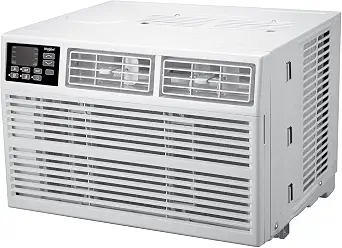 |
| Best Quality Built to a higher standard if you want something more solid | DELLA Econo 17K Mini Split |  |
| Best Value The sweet spot between price and what you get | Amana 18,000 BTU Window Air Conditioner |  |
| Best Budget The cheapest option that still gets the job done reliably | Midea 18,000 BTU Smart Inverter Window AC |  |
| Top Rated A top-rated pick with lots of positive feedback | Bonnlo Window AC-Heat 18,000 BTU |  |
| Most Popular A crowd favorite that many people choose with confidence | DELLA Vario 18,000 BTU Mini Split |  |
| Best Seller A high-volume bestseller chosen again and again | LG 18,000 BTU Window AC LW1824RD |  |
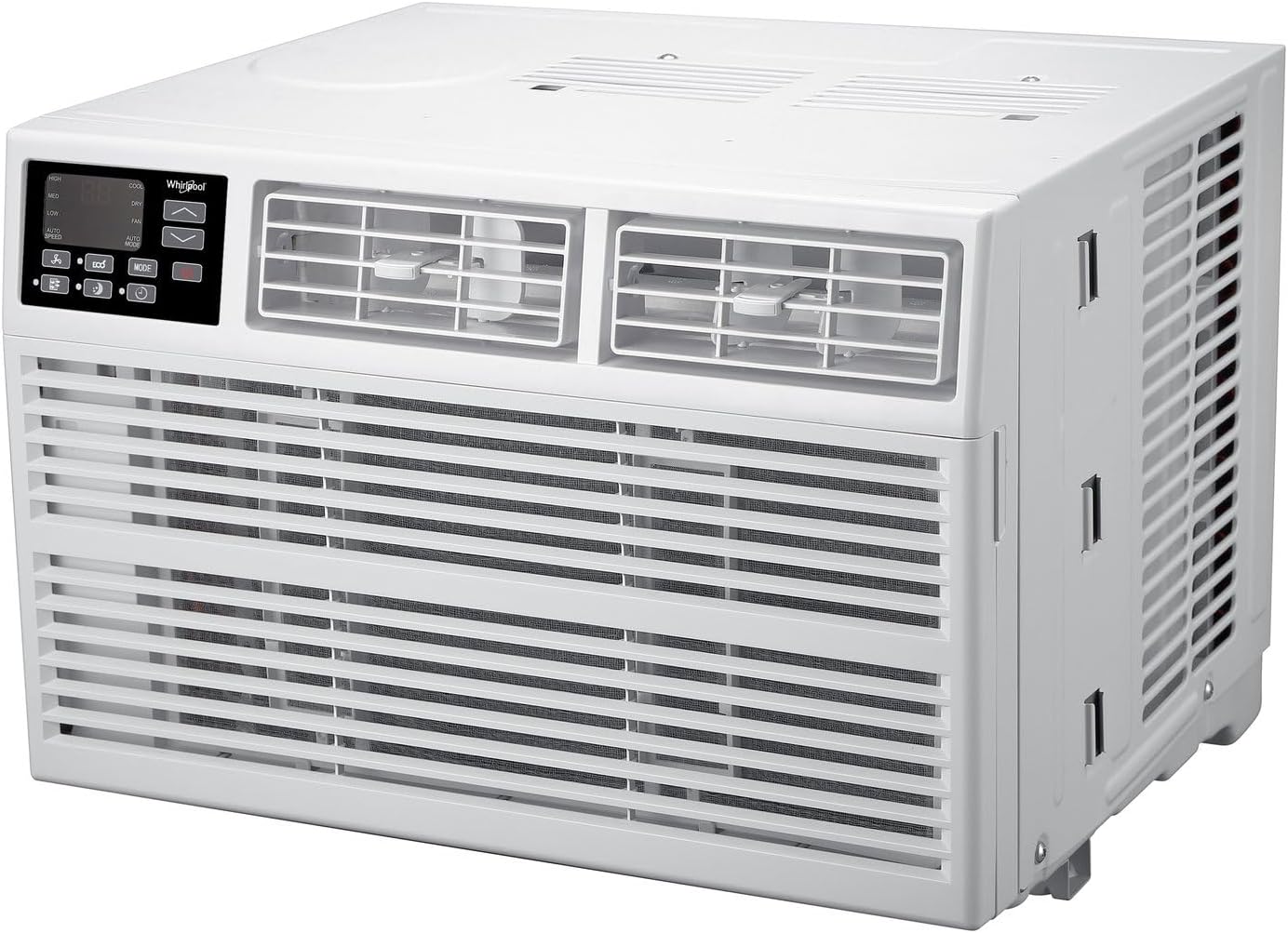
Whirlpool 18,000 BTU Window AC
| Cooling Power | 18000 BTU |
|---|---|
| Power Voltage | 230 volts |
| Wattage | 1513 watts |
| Operating Mode | Cooling, Dehumidifying |
| Floor Area | 1000 square_feet |
This Whirlpool 18,000 BTU window air conditioner is built to cool large rooms quickly while also removing moisture, making it a practical single-unit solution for open living rooms, large bedrooms, or apartments up to about 1,000 square feet. It offers three fan speeds plus Eco and Sleep modes, an electronic control panel with a digital display, 8-way louvers for directing airflow, and a programmable 24-hour on/off timer; the included remote makes day-to-day adjustments easy from across the room. The unit uses R-32 refrigerant, has a washable mesh filter with a filter-clean reminder, and a dehumidification rate listed as 4.75 pints per hour. Expect noticeable noise at higher settings given the 60 dB spec, and this model requires a 230V circuit rather than a standard 115V outlet, which may need a dedicated electrical connection. Installation is straightforward with the supplied mounting kit, but its weight and window size requirements mean you should confirm fit and electrical compatibility before purchase.
Best for: Buyers who want a single powerful window unit that cools and dehumidifies large rooms and value programmable controls and simple maintenance.
Less Ideal for: People who lack a 230V circuit in the intended room or those who prioritize ultra-quiet operation for small bedrooms.
- High 18,000 BTU cooling capacity suitable for spaces up to 1,000 sq ft
- Built-in dehumidifier and multiple operating modes including Eco and Sleep
- Programmable 24-hour timer and remote control for convenient scheduling
- Removable washable mesh filter with filter light reminder for simple maintenance
- Requires a 230V electrical outlet so it will not run on standard 115V household outlets
- Operates around 60 dB at higher settings, which can be noticeable in quiet rooms
Verdict: Choose this Whirlpool 18,000 BTU window AC when you need a powerful, programmable unit that reliably cools and dehumidifies open spaces up to 1,000 square feet.
DELLA Econo 17K Mini Split

| Cooling power | 17000 BTU/h |
|---|---|
| Heating capacity | 16500 BTU/h |
| SEER2 | 17 |
| Voltage | 230 volts |
| Refrigerant | R-32 |
The DELLA Econo 17K is a ductless mini split system built to cool and heat rooms up to roughly 1,000 square feet using inverter-driven compressor technology. It delivers 17,000 BTU cooling and about 16,500 BTU heating, supports 4D airflow and multiple modes (cooling, heating, dry, sleep, turbo), and pairs with the DELLA app plus Alexa for remote and voice control. The system is pre-charged and includes a standard installation kit with 16.4 ft line set length, but professional HVAC installation and vacuuming of the line set are required. Practical benefits include relatively high efficiency for the class (17 SEER2), quiet operation around 32–33 dB, and features like an infrared "I feel" sensor that lets the remote measure room temperature for more personalized comfort. Expect standard trade-offs for a budget-oriented mini split: it requires a 230V supply and a 20A fuse, installation labor is additional, and while the unit advertises energy savings it is not the highest SEER2 available in DELLA's lineup. For buyers prioritizing strong heating/cooling performance, smart controls, and low sound in a single-zone 1,000 sq ft application, this model is a practical choice.
Best for: Buyers who need a strong single-zone heating and cooling solution for about 1,000 sq ft and value quiet operation plus smart app and voice control for everyday comfort management.
Less Ideal for: Customers who want the absolute highest SEER2 efficiency, need a multi-zone system, or prefer a unit that can be safely installed as a simple DIY project.
- High nominal capacity for single-zone use with 17,000 BTU cooling and 16,500 BTU heating
- Inverter compressor for smoother and more efficient operation and up to 30% claimed power savings
- Wi‑Fi and Alexa support plus app control for remote scheduling and voice commands
- Quiet operation around 32–33 dB suitable for living spaces and bedrooms
- Requires professional HVAC installation and line-set vacuuming; not a DIY drop-in
- Runs on 230V with a 20A fuse requirement which may need electrical work
- SEER2 rating of 17 is solid but not top-tier compared with higher-efficiency models
Verdict: A capable, quiet single-zone mini split that delivers strong heating and cooling for ~1,000 sq ft with convenient Wi‑Fi and Alexa control, ideal for buyers focused on performance and smart features.
Amana 18,000 BTU Window Air Conditioner

| Cooling Power | 18000 BTU |
|---|---|
| Voltage | 230 volts |
| Wattage | 1513 watts |
| Operating Mode | Cooling, Dehumidifying |
| Seasonal Energy Efficiency Ratio (SEER) | 11.9 |
This Amana 18,000 BTU window air conditioner provides strong, straightforward cooling for large rooms up to 1,000 square feet and also removes moisture at about 4.75 pints per hour. It installs in a standard vertical window with the included mounting kit and requires a 230V circuit, so it is intended for homes or spaces with that electrical supply. Controls include a digital touch panel and a remote, three fan speeds, eco and sleep modes, a 24-hour programmable timer, and 8-way louvers to direct airflow. Maintenance is simple thanks to a washable filter and a filter light reminder. Performance is powered by a rotary compressor using R-32 refrigerant; SEER is modest at 11.9, so it is not the most energy-efficient option in its class. The unit is relatively loud at about 54 dB and is heavy, which affects installation handling. If you need reliable high-capacity cooling with basic smart features and easy upkeep for a large room, this unit delivers; if low operating cost or 115V compatibility is required, look elsewhere.
Best for: Buyers who need a robust, no-frills window AC to cool a large single room and prioritize straightforward controls, dehumidification, and easy maintenance over lowest possible energy consumption.
Less Ideal for: People without access to a 230V outlet or those seeking the quietest or most energy-efficient inverter-style solution should consider other models.
- High cooling capacity suitable for rooms up to 1,000 sq ft
- Integrated dehumidification to improve comfort in humid conditions
- Digital controls plus remote and a 24-hour timer for convenient scheduling
- Washable filter with reminder makes maintenance simple
- Multiple modes including eco and sleep for flexible operation
- Requires a dedicated 230V outlet and will not run on standard 115V circuits
- Moderate SEER rating indicates higher energy use compared with more efficient models
- Relatively loud operation around 54 dB and heavy unit complicates installation
Verdict: Choose this unit if you need powerful, easy-to-use window cooling and dehumidification for a 1,000 sq ft room and have a 230V circuit available.
Midea 18,000 BTU Smart Inverter Window AC

| Cooling Power | 18000 BTU |
|---|---|
| Floor Area | 1000 square_feet |
| Noise | 48 db |
| SEER | 15 |
| Power Source | 230 volts |
The Midea 18,000 BTU Smart Inverter Window AC is a high-capacity window unit designed to cool large rooms up to about 1,000 square feet while offering smart controls and energy-saving operation. It uses inverter technology and a rotary scroll compressor to vary compressor speed for steadier temperatures and improved efficiency, and the unit supports app, remote, and voice control for convenient adjustment from anywhere. Practical features include dehumidifying and eco modes, three fan speeds, a 24-hour timer, auto-swing louvers for more even air distribution, and a washable front filter for basic maintenance. The unit is billed as relatively quiet at around 48 dB and runs on 230V power, so installation requires a compatible outlet and appropriate window opening. Trade-offs to consider are the weight and bulk typical of 18,000 BTU window units and the need for a 230V circuit, which may require electrical work in some homes. For buyers focused on cooling coverage and ongoing energy costs, the inverter design and SEER 15 rating help reduce consumption versus older fixed-speed units.
Best for: Buyers who need a cost-conscious solution for reliably cooling a single large room or open-plan area and who prioritize lower running costs over the lowest upfront price.
Less Ideal for: People without access to a 230V circuit or those who need a compact, lightweight unit for frequent moving or temporary installations.
- Powerful 18,000 BTU output suited for spaces up to 1,000 sq ft
- Inverter compressor for steadier temperatures and better energy efficiency
- Multiple control options including app, remote, and voice assistants
- Built-in dehumidifier, eco mode, and auto-swing louvers improve comfort distribution
- Relatively low operating noise around 48 dB for a unit this size
- Requires 230V power source, not compatible with standard 115V outlets
- Large and heavy unit that may need two people for installation
- No heat mode included; cooling-only operation limits year-round use
Verdict: If you need efficient, high-capacity cooling for a 1,000 sq ft space and want smart controls plus inverter savings, this Midea 18,000 BTU window unit is a practical choice.
Bonnlo Window AC-Heat 18,000 BTU

| Cooling Power | 18000 british thermal units |
|---|---|
| Heating Power | 8600-10600 BTU |
| Floor Area | 1000 square_feet |
| Noise | 56 db |
| Power Source | Corded Electric (230V/60Hz) |
This Bonnlo window unit combines 18,000 BTU cooling with an 8,600–10,600 BTU heating mode to provide year-round comfort for rooms up to about 1,000 square feet. It installs in a standard window with the included installation kit and offers three control methods: touch panel, remote, and app with Alexa or Google voice control, which makes scheduling and remote adjustments convenient. Practical features include an eco energy-saving mode, a washable filter for low maintenance, and a 24-hour programmable timer. The unit is rated at about 56 dB, so it runs relatively quietly for a high-capacity window AC. It uses a non-inverter rotary/scroll compressor and runs on 230V/60Hz power, so expect steady performance but not the variable-speed efficiency of inverter models. For buyers prioritizing dependable, simple operation and smart controls in a large room or open-plan space, this unit delivers strong cooling and usable heating without complicated setup, though it will draw standard window-AC power and lacks inverter-style variable output.
Best for: Buyers who want a high-capacity, fuss-free window unit that reliably cools or heats a large room and appreciates smart controls and straightforward maintenance.
Less Ideal for: People seeking the highest possible energy efficiency or precise variable-speed temperature control should consider inverter-style alternatives.
- High capacity 18,000 BTU cooling and 8,600–10,600 BTU heating for year-round use
- Wi‑Fi and voice control plus remote and touch panel for flexible operation
- Includes installation kit and washable filter for easy setup and maintenance
- Energy-saving eco mode and 24-hour timer to reduce runtime and utility use
- Relatively quiet operation around 56 dB for a unit of this size
- Uses a fixed-speed rotary/scroll compressor rather than an inverter for variable efficiency
- Requires 230V power which may need an appropriate outlet or circuit
Verdict: A robust, smart-controlled window AC that reliably cools or heats rooms up to 1,000 sq ft for buyers prioritizing dependable year‑round performance.
DELLA Vario 18,000 BTU Mini Split

| Cooling Power | 18000 BTU/h |
|---|---|
| SEER2 | 21 |
| Capacity | 1.5 tons |
| Recommended Room Size (Up to) | 1000 Sq.Ft |
| Voltage | 230 volts |
The DELLA Vario 18,000 BTU mini-split is a ductless inverter heat pump intended to cool and heat a single-zone space up to roughly 1,000 square feet. It uses DC inverter technology and a 21 SEER2 rating to improve seasonal efficiency while offering features like app and Alexa control, a remote, dehumidify mode, multiple fan speeds, turbo mode and a 24-hour timer. The system ships pre-charged with an installation kit and 16.4 ft line set length, but professional HVAC installation and line-set vacuuming are required for correct refrigerant charge and warranty eligibility. In real use this model delivers rapid temperature changes thanks to turbo and multi-directional airflow and can operate in cold climates down to about -4°F. Noise is reasonably low for a mini-split and the included smart-sensor remote helps maintain comfort where people are. Trade-offs are the need for a 230V circuit and professional install plus the dependence on a licensed installer for enhanced lifetime parts coverage, so expect installation time and trade paperwork before you see the efficiency benefits.
Best for: Buyers who value energy-efficient, app-enabled single-zone heating and cooling for about 1,000 sq ft and who prefer a factory-prepared mini-split installed by a professional for reliable performance and warranty support.
Less Ideal for: People seeking a DIY-friendly window or portable unit, or anyone without access to a 230V circuit or professional installer for refrigerant line work.
- High seasonal efficiency (21 SEER2) for lower running costs compared with non-inverter units
- Wi‑Fi and Alexa compatibility plus app and remote control for convenient scheduling and voice operation
- Pre-charged system with included installation kit and 16.4 ft line set for typical single-zone installs
- Heat pump capability down to about -4°F lets the unit provide heating in cold conditions
- Requires 230V circuit and professional HVAC installation to ensure correct refrigerant charge and warranty coverage
- Some buyers may need longer line-set length than the included 16.4 ft for specific layouts
Verdict: A high-efficiency, smart-enabled 1.5-ton mini-split built for professional installation that reliably cools and heats single-zone spaces up to 1,000 sq ft.
LG 18,000 BTU Window AC LW1824RD

| Cooling Power | 18000 british thermal units |
|---|---|
| Voltage | 230 volts |
| Refrigerant | R-32 |
| SEER | 11.8 |
| Noise | 61 db |
The LG LW1824RD is a window-mounted air conditioner aimed at cooling medium to large rooms up to about 1,000 square feet. It delivers 18,000 BTU cooling power, three fan and cooling speeds, and a 24-hour timer so you can schedule runtime. The unit includes a remote for convenient adjustments, four-way air deflection to direct airflow, a washable filter with a check-filter alert, and an auto-restart feature that restores settings after a power outage. It runs on 230/208V and uses R-32 refrigerant; LG lists a noise level around 61 dB and a SEER of 11.8. Practical benefits include strong cooling capacity for large rooms and easy maintenance from the removable filter, while features like the timer and remote add day-to-day convenience. Trade-offs to consider are the non-inverter compressor design, which may use more energy under heavy load, and the reported noise level that is noticeable in quiet environments.
Best for: Buyers who prioritize a proven, full-capacity window unit that reliably cools large single rooms and value simple controls, straightforward maintenance, and features that restore operation after power interruptions.
Less Ideal for: People seeking the highest energy efficiency, the quietest operation, or variable-speed inverter performance should consider other technologies or models.
- 18,000 BTU capacity suitable for cooling rooms up to 1,000 sq ft
- Remote control and electronic controls make adjustments simple
- Washable filter with check-filter alert for straightforward maintenance
- Auto-restart restores operation and settings after power outages
- Non-inverter compressor may be less energy efficient than inverter models
- Listed noise level around 61 dB can be noticeable in quiet rooms
Verdict: A strong, easy-to-use window AC that reliably cools up to 1,000 sq ft and is a solid choice for buyers who want straightforward, dependable performance.
Choosing the Right Air Conditioner for 1,000 Sq Ft: Key Factors to Consider
Correct Cooling Capacity
Getting the right cooling capacity is central to comfort. A unit rated too low will run continuously and fail to reduce humidity effectively. A unit rated too high will short-cycle, causing temperature swings and increased wear.
For a 1,000 sq ft space you must consider not only square footage but ceiling height, window area and orientation, insulation, and typical occupancy. These factors change the effective cooling load and should be combined with the unit's rated capacity to choose a model that runs efficiently without excessive cycling.
Energy Efficiency Ratings
Energy efficiency drives long-term operating cost. Look for seasonal efficiency ratings that reflect real-world performance rather than just peak output. Higher efficiency can mean higher upfront cost, but it also reduces monthly energy use, particularly during prolonged warm periods.
Consider how often and how long the system will run in your climate. If the unit will be used heavily, prioritize models with stronger efficiency numbers and features like variable-speed compressors that modulate output to save energy.
Noise and Comfort
Noise level affects perceived comfort, particularly in bedrooms and open-plan living areas. A quieter unit improves sleep quality and overall satisfaction with the system.
Check documented operating decibel levels at typical fan speeds and look for designs that isolate compressor vibration and use multi-speed or variable fans. Keep in mind installation location and mounting method will also influence how much noise you actually hear inside the living space.
Installation Type and Flexibility
How and where the unit installs matters for performance and cost. Window, wall, through-the-wall, and split-type installations each have different requirements for structural support, through-wall sleeves, or outdoor condenser placement.
Assess whether your residence allows the needed penetration, whether you will require professional installation, and whether the unit supports typical mounting hardware. Flexible installation options let you place the unit in the best location for airflow and efficiency.
Controls, Zoning, and Smart Features
Control features determine how precisely you can manage comfort and energy use. Programmable or smart thermostats, variable fan speeds, and zoning capability let you tailor operation to occupancy patterns and save energy.
If you plan to integrate the unit with a home automation system or want remote scheduling, confirm compatibility and the quality of the control interface. Simple, reliable controls are preferable for users who do not need advanced remote features.
Maintenance and Serviceability
Regular maintenance keeps an air conditioner efficient and reliable. Accessible filters, straightforward coil access, and widely available replacement parts reduce long-term hassle.
Consider how easy it will be to clean or replace filters, access service panels, and obtain common maintenance parts. Units with clear service procedures and good documentation typically cost less to own over time.
Sizing Tips for a 1,000-Square-Foot Home
Instead of relying strictly on square footage, estimate the cooling load by factoring in ceiling height, window area and direction, insulation quality, and sun exposure. Rooms with high glass area or strong afternoon sun require extra capacity, while shaded or well-insulated spaces may need less.
A practical approach is to start with a baseline capacity appropriate for 1,000 sq ft and then adjust upward or downward based on those variables. When in doubt, pick a unit with modest modulation capability so it can match the load without constantly cycling.
- Account for ceiling height higher than 8 feet by adding capacity.
- Add capacity for large, sun-facing windows or glass doors.
- Reduce estimated load for well-insulated, shaded areas.
Placement and Airflow Considerations
Correct placement improves efficiency and temperature uniformity. Place the air intake away from direct sunlight and the supply air path where it can move across the main living area without obstruction.
Avoid placing the unit where furniture or curtains block airflow. For split or multi-part systems, ensure the condenser has adequate clearance and airflow to prevent heat buildup and efficiency loss.
- Keep outlets clear of obstructions to prevent dead zones.
- Ensure outdoor component clearance per installation recommendations.
- Locate unit to minimize duct or conduit runs where applicable.
Noise Management Strategies
If noise is a priority, look at the unit's decibel ratings at different fan speeds and prioritize variable-speed fans and inverter compressors. Sound-dampening mounts, foam pads, or isolators can reduce vibration transmitted through wall or window frames.
Also consider runtime patterns. A unit that runs longer at low speed is often quieter overall than one that frequently cycles on and off at high power.
- Mount on vibration isolators to reduce structure-borne noise.
- Choose placement that distances bedroom areas from noisy components.
- Use lower fan speed settings during quiet hours to reduce perceived noise.
Power Supply and Electrical Requirements
Confirm that your electrical circuit and breaker capacity match the unit's requirements. Some units need dedicated circuits or a higher-voltage supply, and improper wiring can cause performance issues or safety hazards.
If electrical upgrades are required, factor those installation costs and timelines into your decision. Proper wiring and surge protection extend equipment life and reduce the chance of nuisance trips.
- Check amp draw and recommended breaker size before purchase.
- Consider surge protection for areas with unstable power.
- Plan for professional electrical work if you lack a dedicated circuit.
Seasonal Use and Humidity Control
In humid climates, dehumidification performance is as important as raw cooling capacity. Units with better moisture removal prevent clammy indoor conditions even when temperatures are controlled.
Look for operational modes that separate temperature and humidity control or for systems that can run a dehumidification cycle without overcooling the space. This preserves comfort while avoiding unnecessary energy use.
- Prefer systems with proven dehumidification capability in humid regions.
- Use lower fan speeds for better moisture removal when needed.
- Combine with ventilation strategies to manage indoor humidity effectively.
How We Chose the Best Air Conditioner for 1,000 Sq Ft
We focused on the technical and practical dimensions that most strongly affect comfort and long-term ownership for a 1,000 sq ft living area. Primary evaluation criteria included rated cooling capacity relative to a 1,000 sq ft load, seasonal energy efficiency metrics, and expected daily operating cost under typical conditions. We also weighed noise levels during operation, installation flexibility for common mounting types, and thermostat or control features that enable precise temperature management. Durability and serviceability were considered by reviewing typical component quality, warranty coverage structures, and ease of access for routine maintenance. We excluded units clearly sized for much smaller or much larger spaces and products designed only for very specialized environments. Models lacking basic energy efficiency ratings or clear installation guidelines were also filtered out. The shortlist therefore reflects options that balance capacity, efficiency, noise, and long-term cost for a typical 1,000 sq ft residence.
Our full evaluation process is outlined in our review methodology.
FAQ
What size air conditioner do I need for exactly 1,000 sq ft?
Exact needs depend on ceiling height, insulation, window area, and sun exposure. Use a baseline sized for about 1,000 sq ft and adjust up or down for those variables. When uncertain, choose a unit with modulation ability rather than a single fixed output.
Can one unit cool a 1,000 sq ft open-plan space effectively?
Often yes if the unit is properly sized and placed to promote even airflow. You may need to position the supply and intake to avoid dead zones and consider multiple smaller units or fans if the layout prevents uniform circulation.
How much does noise vary between models for a 1,000 sq ft solution?
Noise varies with compressor type, fan speed, and mounting. Variable-speed compressors and multi-speed fans are generally quieter at typical settings. Decibel ratings give a baseline, but placement and mounting also affect perceived noise.
Do I need a professional for installation?
Professional installation is recommended when the job involves through-wall work, electrical upgrades, or outdoor condenser placement. DIY installation may be feasible for simple window mounts, but improper installation can compromise efficiency and warranty coverage.
Will a more efficient unit save money for a 1,000 sq ft home?
Higher efficiency reduces energy use, especially during long cooling seasons. Savings depend on local electricity rates and runtime. For heavy use, efficiency improvements typically pay back sooner than in light-use scenarios.
Final Verdict
For a 1,000 sq ft home, prioritize a unit whose rated capacity matches your adjusted cooling load and that offers good seasonal efficiency. Balance quieter operation and flexible controls against installation constraints and the expected runtime in your climate. Choosing a model with modulation capability, accessible maintenance features, and appropriate installation options will deliver the most consistent comfort and lower operating cost over time. Focus on the tradeoffs described here to select the best option for your space and usage pattern.