
Note: This article contains affiliate links. If you click on these links and make a purchase, we may earn a small commission at no extra cost to you. This helps support our research and content. Read our full affiliate disclosure here.
Driving with stale air, pollen, or lingering odors can make daily commutes and long trips unpleasant or even unhealthy. Picking the right air purifier for a car matters because cabin volume, power availability, and noise levels affect real-world performance more than lab specs alone. This guide lists seven shortlisted air purifiers specifically for cars, chosen for their filtration approach, airflow relative to small cabins, and practicality for vehicle use. You will see the evaluation criteria used to compare models and quick notes on usability, power, and maintenance. Read on to find an option that fits your driving habits and cabin needs.
Top Picks at a Glance
| Best Overall The best all-around choice for most situations | Levoit Core Mini-P |  |
| Best Quality Built to a higher standard if you want something more solid | IQAir Atem Car |  |
| Best Value The sweet spot between price and what you get | ALIENONE Car Air Purifier AP-C1-D |  |
| Best Budget The cheapest option that still gets the job done reliably | AIRFEEL Car Air Purifier F011 |  |
| Top Rated A top-rated pick with lots of positive feedback | DREO Air Purifier 338 (DR-HAP008) |  |
| Most Popular A crowd favorite that many people choose with confidence | Pure Enrichment PureZone Mini |  |
| Best Seller A high-volume bestseller chosen again and again | Hadlook Ozone Generator 48,000mg |  |
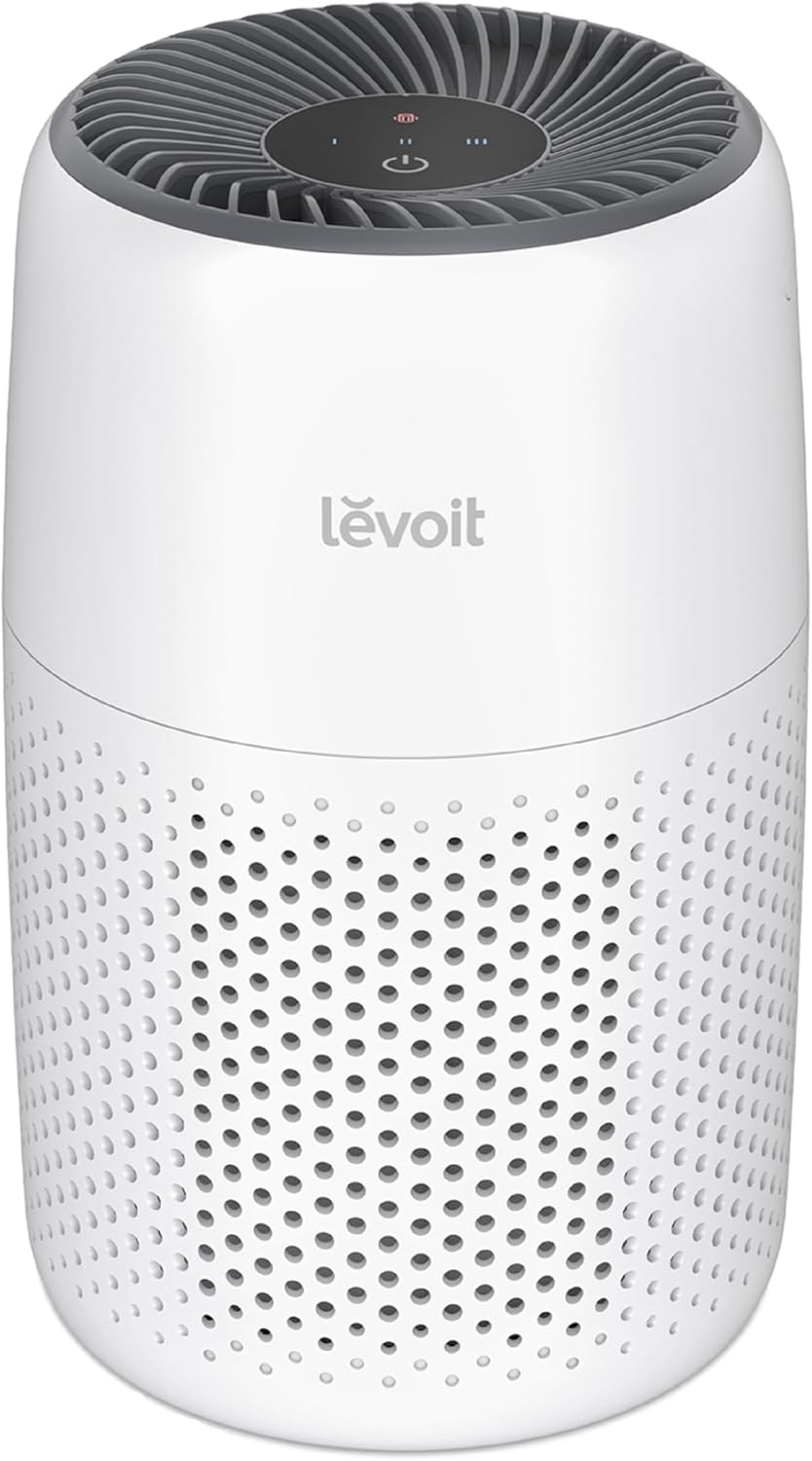
Levoit Core Mini-P
| Rated Power | 7W |
|---|---|
| Noise Level | 27-45dB |
The Levoit Core Mini-P is a small, plug-in air purifier aimed at personal spaces where low noise and portability matter. It combines a pre-filter and main HEPA-style filter to trap lint, pet hair, dander, smoke, and fine particles, and includes a small fragrance sponge for light aromatherapy. With rated power around 7W and noise levels listed from about 27 to 45 dB, it runs quietly enough for bedrooms, offices, or vehicle use when you need a low-profile unit. Controls include a sleep mode and an auto-off display that reduce interruptions during rest, and the internal adapter keeps the footprint tidy. Practical limits are its compact coverage and modest airflow, so it works best for single-seat zones or small cabins rather than whole-car cleaning on its own. Filter replacements and careful use of only a few drops of essential oil keep the unit functioning as intended. For buyers who need unobtrusive, energy-efficient air cleaning in tight spaces, this model delivers sensible performance without complicated setup.
Best for: Buyers who want a low-noise, energy-efficient purifier to improve air quality in a single-seat zone or small car cabin and value portability and simple operation.
Less Ideal for: Drivers needing rapid whole-vehicle air exchange or owners who expect industrial-strength removal of heavy smoke or strong odors should look at larger, higher-flow models.
- Compact, lightweight design for easy placement in small spaces
- Captures common pollutants including pet dander, smoke, and dust with a pre-filter and main filter
- Very low power draw (around 7W) for energy-efficient continuous use
- Quiet operation with a sleep mode and low noise floor suitable for night use
- Small coverage area means it cannot quickly purify larger cabins or entire vehicles
- Limited airflow reduces effectiveness in moving or heavily polluted air
Verdict: A compact, low-power purifier that offers quiet, effective particulate removal for small cabins and single-seat car use.
IQAir Atem Car

| Manufacturer | IQAir |
|---|---|
| Item model number | 250.0C.20.02 |
| Filters particles to | 0.003 microns |
| Noise | Ultra quiet filtration technology |
The IQAir Atem Car is a purpose-built portable air purifier for vehicle cabins and travel that combines HyperHEPA particle filtration with gas and odor adsorption in a small, quiet package. It mounts to headrests or sits on a surface to create a cleaned air zone around occupants and is designed to remove dust, pollen, smoke, exhaust gases, odors, and ultrafine biological particles down to 0.003 microns. The unit is notably quiet and offers app or Bluetooth control to check filter life and change fan settings, making it simple to run while driving without distraction. Practical benefits include strong pathogen and fine-particle capture thanks to the HyperHEPA media and gas-phase filtration for smells and VOCs, plus portability for use in cars, hotel rooms, or small offices. Limitations are typical of vehicle-focused purifiers: coverage is tailored to a single cabin or very small room so it will not replace a whole-house system, and the premium HyperHEPA design is reflected in a higher purchase cost compared with basic car purifiers.
Best for: Buyers who prioritize top-tier particle removal and gas-phase filtration for cleaner cabin air while commuting or traveling and who value quiet, app-controlled operation.
Less Ideal for: People who need to purify large rooms or an entire home or who want a minimal-budget car purifier with basic particle filtration.
- HyperHEPA filtration captures ultrafine particles down to 0.003 microns
- Gas-phase filtration reduces odors, smoke, and common vehicle VOCs
- Quiet operation suitable for use while driving
- Bluetooth/app control for monitoring filter life and fan speeds
- Portable design that mounts to headrests or is usable in travel settings
- Designed for a single vehicle cabin or small space, not whole-house coverage
- Higher cost than basic car/portable purifiers
Verdict: Choose the Atem Car when you want a high-performance, portable cabin purifier that removes ultrafine particles and odors with quiet, app-enabled control.
ALIENONE Car Air Purifier AP-C1-D

| Item model number | AP-C1-D |
|---|---|
| Filtration | 3-in-1 (Pre-filter, H13 True HEPA, Photocatalyst Cotton) |
| Air intake | 360° |
| Noise level | Approximately 30 dB |
The ALIENONE AP-C1-D is a compact car air purifier designed to sit in a cup holder and continuously clean the cabin air with a 3-in-1 filtration stack: pre-filter, H13 True HEPA, and photocatalyst cotton. It draws air 360 degrees around the cylinder and pushes filtered air out to help reduce common in-car pollutants such as dust, smoke, and pet dander during commutes or road trips. Operation is simple: a single-button control with an LED indicator and whisper-quiet output reportedly as low as 30 dB, so it runs unobtrusively for drivers and passengers. The unit is clearly optimized for space-limited interiors and for users who want a low-effort solution rather than a heavy-duty room purifier; filter replacement and long-term filter life are the main ongoing costs. Performance is constrained by the small form factor, so while it improves local air quality inside a vehicle it will not match the CADR of full-size home purifiers for very smoky or heavily polluted environments. For everyday driving use it offers a practical, low-noise way to keep cabin air fresher.
Best for: Drivers who want a compact, low-effort way to reduce everyday cabin pollutants during commutes, rideshares, and road trips and prioritize ease of use and quiet operation.
Less Ideal for: People who need rapid removal of heavy smoke, chemical vapors, or industrial pollutants in large vehicles should consider higher-capacity purifiers instead.
- True H13 HEPA filter captures fine particles like dust and pet dander
- Compact cup-holder design fits most vehicles and saves space
- 360° air intake promotes more uniform airflow in the cabin
- Single-button operation and LED make it easy to use while driving
- Whisper-quiet noise level suitable for passengers and sleeping children
- Small form factor limits overall airflow and purification speed in larger vehicles
- Ongoing cost and maintenance required for periodic filter replacement
Verdict: A space-saving, quiet car purifier with H13 HEPA filtration that offers practical cabin air improvement for everyday driving.
AIRFEEL Car Air Purifier F011

| Filter type | H13 True HEPA |
|---|---|
| Power | DC 5V 1A |
| Model | F011 |
| Replacement filter ASIN | B0D5Y74JG9 |
The AIRFEEL Car Air Purifier F011 is a small cup-holder-style unit that pulls cabin air through an H13 true HEPA filter while offering a built-in scent platform for essential oils. It plugs into a 5V USB outlet and is designed to sit in a car cup holder with an upward-facing air outlet to distribute filtered air and fragrance. In practice the unit handles fine dust and odors better than passive fresheners thanks to the fan-driven flow, and the aroma tray provides a quick way to add scent without separate diffusers. Construction is lightweight with a carbon-fiber wrap and the manufacturer recommends a specific replacement filter after about six months of use. Expect modest airflow and noise typical of travel-size purifiers, and remember it is not a fan and has limited coverage compared with larger cabin purifiers; you will need to keep the USB powered for continuous operation. The device is easy to install and suited to short trips or daily commuting where space is tight and simple odor control is the priority.
Best for: Drivers who want an inexpensive, compact purifier to reduce dust and smells during commutes or short trips and value easy installation and a built-in scent option.
Less Ideal for: People seeking high air-change rates, coverage for larger vehicles, or medical-grade filtration for severe allergies should consider larger or more powerful cabin purifiers instead.
- H13 true HEPA filter for particle removal
- Built-in aroma/perfume tray for quick scenting
- Cup-holder design for stable, space-saving placement
- USB 5V power for plug-and-play use
- Limited airflow and room coverage compared with larger car purifiers
- Requires replacement filter after extended use and continuous USB power
Verdict: A compact, budget-friendly car purifier that combines H13 HEPA particle removal with a built-in aroma tray for simple odor control on short drives.
DREO Air Purifier 338 (DR-HAP008)

| CADR (AHAM) | 115 CFM |
|---|---|
| Filtration | Pre-filter + HEPA + Activated carbon |
| Coverage (1 ACH) | Up to 856 sq. ft. |
| PM2.5 Monitor | Yes, LED AQI 0–999 |
The DREO Air Purifier 338 is a compact HEPA purifier designed to remove particles, pollen, smoke, and odors in indoor spaces while reporting air quality in real time. It uses a 3-in-1 filter (pre-filter, true HEPA, activated carbon) to capture up to 99.97% of 0.3 μm particles and a PM2.5 sensor with a four-color LED AQI display so you can see changes at a glance. AHAM-verified CADR of 115 CFM and a 360° spiral intake help it refresh air faster than many small units, and Auto, Turbo, Sleep, and Normal modes plus four speeds make it flexible for different conditions. HyperSilent motor technology keeps noise down to around 18 dB on the lowest setting, and an aroma box adds scent capability. Important limitations: the listed coverage numbers vary by calculation method and the unit is intended for rooms rather than vehicle cabins, so airflow patterns and effective coverage will be reduced in a car environment. Replacement filters and periodic sensor checks are required to maintain the factory-level performance.
Best for: Buyers who prioritize dependable, independently verified filtration and want a purifier that reports real-time air quality so they can set it-and-forget it with confidence.
Less Ideal for: People needing a purpose-built in-vehicle purifier or a permanently installed automotive solution should look for products specifically engineered for car cabins rather than a room air purifier adapted for occasional car use.
- True HEPA filtration (captures up to 99.97% of 0.3 μm particles) plus activated carbon for odors
- AHAM-verified CADR of 115 CFM with 360° spiral intake for faster air exchange
- Built-in PM2.5 sensor with LED AQI indicator for real-time air quality feedback
- Multiple modes and four fan speeds including Auto and Sleep for flexible, low-noise operation
- Designed and rated for rooms so performance and airflow will be reduced in small or irregular spaces like cars
- Requires periodic filter replacement and sensor maintenance to keep AHAM performance
Verdict: Choose this model when you want a compact, AHAM-verified HEPA purifier with real-time air quality readout and quiet operation for reliable indoor air cleaning.
Pure Enrichment PureZone Mini

| Filtration | 2-Stage (Activated Carbon + True HEPA) |
|---|---|
| Runtime | Up to 12 hours (low) |
| Fan Settings | 3 speeds |
| Battery | Rechargeable lithium-ion |
The PureZone Mini is a travel-focused, cordless air purifier built to clean a very small personal area such as a car seat, desk, or bedside. It uses a two-stage system with an activated carbon pre-filter for odors and gases and a True HEPA stage that captures fine particles down to 0.3 microns, and the manufacturer says it removes 99.97% of common allergens. The unit runs on a rechargeable lithium-ion battery and offers three fan speeds, with up to about 12 hours of runtime on the lowest setting, so you can use it plugged in or on the go. Its lightweight design and adjustable handle let you position it upright, on its side, or remove the handle for low-profile placement in a cup holder or on a dashboard. Practical benefits include quieter low-speed operation for overnight or commute use and a small footprint that fits most vehicle interiors. Limitations are expected: coverage is very small (personal zone only), so it will not purify an entire cabin quickly, and replacement filters are required over time which adds ongoing cost.
Best for: Buyers who prioritize a compact, proven filtration option for their personal space and want reassurance from established user feedback and product reliability.
Less Ideal for: Drivers seeking a unit to rapidly clean an entire vehicle or larger shared spaces should choose a higher-capacity car purifier instead.
- True HEPA plus activated carbon two-stage filtration for particles and odors
- Cordless rechargeable operation with up to 12 hours runtime on low
- Three fan speeds for adjustable airflow and a usable low-noise setting
- Compact, lightweight design with adjustable handle for flexible placement
- Purifies a very small personal area and is not intended to clean whole car cabins
- Requires periodic filter replacements which add running cost
Verdict: A lightweight, cordless personal purifier that provides reliable HEPA filtration and portable convenience for cleaning the air in a car's immediate seating area.
Hadlook Ozone Generator 48,000mg

| Ozone output | 48,000 mg/h |
|---|---|
| Coverage | up to 4,000+ sq. ft |
| Model | CQ-48g |
This compact ozone generator produces a very high ozone output intended to neutralize strong odors by chemically altering odor molecules rather than filtering them. You set a mechanical timer or switch it to continuous "HOLD" and leave the vehicle or room while it runs; after the cycle you must ventilate the space for 30 to 60 minutes before re-entry. The unit is portable and straightforward to operate, making it practical for treating cars, small rooms, basements, and other enclosed spaces where smells from smoke, pets, or cooking persist. Important safety constraints apply: ozone is hazardous to people, pets, and plants while the machine runs and it produces a pungent smell during treatment, so it is only appropriate for unoccupied spaces and requires airing out afterward. The high output can cover large areas, but that power also means strict adherence to the safety and ventilation guidance is essential.
Best for: Buyers who prioritize powerful odor removal for vehicles or enclosed spaces and who will strictly follow safety steps and ventilation after each treatment.
Less Ideal for: People seeking an air-cleaning solution safe for occupied vehicles or those who prefer filtration-based purifiers that can run while people or pets are present.
- Very high ozone output rated to treat large spaces rapidly
- Simple mechanical timer and a continuous "HOLD" setting for easy operation
- Portable, compact form factor suitable for cars and tight spaces
- Effective against entrenched odors that filters struggle to remove
- Must be used only in unoccupied, well-sealed spaces and followed by ventilation
- Produces a strong, pungent ozone smell during and immediately after treatment
Verdict: Choose this unit if you need a compact, high-output ozone treatment for cars or closed spaces and are prepared to use it only in unoccupied areas with proper ventilation afterward.
Choosing the Right Air Purifier for Cars: Key Factors to Consider
Filtration Technology
Different filtration methods target different contaminants. True HEPA filtration captures fine particles such as pollen, dust, and many aerosols that commonly circulate in a car cabin. Activated carbon layers reduce odors and volatile organic compounds produced by interior materials, exhaust ingress, or food and drink. Some devices add prefilters to trap hair and larger debris, which extends the life of finer filters.
Understanding the combination of filters matters because cars concentrate both particles and odors in a small enclosed space. A unit with only an ionizer or ozone generator offers limited particle removal and can create undesirable byproducts. Prioritize verified particulate filtration and a carbon stage if odors or smoke are concerns.
Airflow Relative to Cabin Size
A car cabin is a small but fast-moving environment. A purifier must move enough air to cycle the cabin several times per hour. Look for CADR-equivalent figures or manufacturer airflow specs and compare them to your vehicle's approximate interior volume. Higher airflow shortens the time to clean particles but can increase noise and power draw.
Balance airflow with intended use. If you mostly drive alone or with one passenger in a compact car, moderate airflow that keeps noise low may be preferable. For larger SUVs or when carrying multiple passengers with allergies, choose units rated for higher circulation to maintain cleaner air throughout the cabin.
Power Options and Consumption
Power availability in vehicles varies by model. Many car purifiers run from a 12V accessory plug or USB power; some include rechargeable batteries for cordless runtime. Confirm that the unit's power draw is compatible with common ports and that it will not overload the vehicle circuit if used with other accessories. Battery-powered units add flexibility but require attention to runtime and recharge intervals.
Lower power consumption extends battery-backed operation, but extreme low power often means reduced airflow. Consider whether you need continuous operation while the engine is off, or if you will only run the device when the vehicle is on, and choose a power arrangement that fits that pattern.
Noise and User Comfort
Sound level is a major usability factor because car interiors amplify noise and drivers are sensitive to distracting tones. Noise ratings, where provided, should be considered alongside speed settings. A quiet low-speed mode that still provides meaningful air changes is ideal for long drives. Some models use variable-speed fans and sleep modes to balance cleaning with comfort.
Also consider the character of the noise. Low-frequency hums are less intrusive than high-pitched whines. If you make phone calls, use voice commands, or frequently drive with children or sleeping passengers, prioritize units with proven low-noise performance.
Mounting, Footprint, and Stability
A purifier for a car must stay secure while driving. Compact footprints fit in cup holders or on the center console, and dedicated mounting clips or straps can attach devices to headrests or vents. Stability prevents tipping that could block intakes or spill any attached liquid containers. Consider the device orientation required for optimal airflow and whether it interferes with seat movement or passenger comfort.
A well-designed base or non-slip surface helps keep the purifier in place across stops and turns. Also check if the unit blocks visibility or access to controls when positioned for best performance.
Maintenance and Filter Replacement
Filters need periodic replacement to maintain performance. Look for easily accessible filter compartments and clear replacement intervals. Replacement filters are a recurring cost, so consider filter lifespan and availability when comparing long-term ownership costs. Some units use washable prefilters to trap hair and large particles, which reduces the frequency of more expensive filter changes.
Also confirm whether replacement filters are standardized or proprietary. Clear labeling and straightforward user-replaceable parts reduce maintenance hassle, especially for drivers who prefer low-touch upkeep.
Where to Place an Air Purifier in Your Car
Placement affects how well a purifier circulates cabin air. Common locations include cup holders, the center console, the rear shelf of sedans, or clipped to a headrest. Aim for a position that allows unobstructed intake and exhaust and keeps the unit stable during driving.
Avoid placing the unit directly under a seat or tightly wedged between objects. The purifier should be accessible for filter changes and controls. If you have a multi-passenger vehicle, place the purifier near the center of the cabin for more even distribution.
- Cup holder placement works for compact units and keeps them within reach.
- Center console or rear shelf gives more central airflow in sedans.
- Headrest or vent mounting can localize clean air to passengers but may reduce whole-cabin circulation.
Dealing With Smoke and Strong Odors
Tobacco smoke, wildfire smoke, or strong cooking odors require both particle filtration and a robust activated carbon stage to absorb volatile compounds. Units with only particle filters often struggle to eliminate smell even if particles are reduced.
For heavy-smoke environments, run the purifier at higher fan settings while minimizing fresh-air intake from outside until the worst of the odor clears. Afterward, switch to lower-speed continuous operation to maintain air quality without excessive noise or power draw.
- Combine HEPA and activated carbon for best smoke and odor control.
- Use higher airflow for initial clearing, then lower speeds for maintenance.
Maintenance Tips to Keep Performance High
Inspect prefilters and HEPA/carbon filters regularly and follow the manufacturer's replacement schedule. A visibly dirty prefilter often indicates it is trapping hair and larger debris and should be cleaned or replaced to protect the finer filters.
Keep intake and exhaust openings free from dust and obstructions. If your unit has a washable prefilter, rinse and dry it on a regular cadence rather than relying solely on replacements to extend the life of finer filters.
- Set a calendar reminder for filter checks and replacements.
- Turn off and unplug before performing any cleaning or filter swaps.
Powering Your Purifier Safely
Use the power options designed for vehicle use. If the purifier is rated for USB-C or USB-A, verify the cable and port rating to avoid voltage mismatch. For 12V plugs, ensure the accessory socket supports continuous draw and is not switched off with the ignition if you need operation when the car is off.
If using a battery-powered unit, account for recharge intervals and consider carrying a charging cable for long trips. Avoid running high-draw accessories from the same outlet to prevent blown fuses or drained batteries.
- Prefer devices designed for automotive power or that include appropriate adapters.
- Check fuse ratings if you plan long-term usage without the engine running.
Common Misconceptions About Car Purifiers
Some buyers expect rapid elimination of all contaminants the moment a unit is switched on. In a small enclosed cabin, meaningful reduction takes time and depends on airflow and filter efficiency. A purifier reduces levels gradually and works best when run continuously at a sensible setting.
Ionizers and ozone-producing devices are often marketed for 'cleaner air' but they do not remove particles the way HEPA filters do and can introduce harmful byproducts. Prioritize mechanical filtration for particles and carbon stages for odors when possible.
- Expect gradual improvement rather than instant elimination.
- Mechanical filtration is the reliable method for particles; carbon helps with odors.
How We Chose the Best Air Purifier for Cars
We focused on features and metrics that matter for in-vehicle use rather than general room units. Selection prioritized compact designs sized for small cabin volumes, proven filtration methods such as HEPA and activated carbon for particles and odors, and power options compatible with typical vehicle outlets. We also weighed airflow relative to cabin size, measured by CADR-equivalent or documented circulation rates, and considered noise output because drivers need quiet background levels. Mounting and stability, ease of filter replacement, and available runtime on USB or 12V power were included to ensure real-world convenience. Units were excluded if they were designed solely for home use and lacked vehicle power options, if they required complex installation, or if they relied only on ionization without adequate filtration for particles and gases. The final shortlist balances filtration effectiveness, portability, low noise, and practical vehicle power and mounting options to reflect typical buyer priorities for car air purifiers.
Our full evaluation process is outlined in our review methodology.
FAQ
How often should I replace filters in a car air purifier?
Replacement intervals vary by use and environment but typically range from three to twelve months. Check prefilters monthly and replace HEPA or carbon stages according to manufacturer guidance or when performance noticeably declines.
Can a car air purifier run while the engine is off?
Many units can run from USB or internal batteries while the engine is off, but runtime depends on battery capacity and power draw. Continuous use with the engine off can drain the vehicle battery if the unit draws power from the 12V system without the engine running.
Will a small car purifier remove wildfire smoke?
A purifier with true HEPA filtration and an adequate carbon stage will reduce fine smoke particles and some odors, but complete removal takes time and higher airflow. For heavy smoke exposure, running the unit at higher speeds and reducing outside air intake helps accelerate clearing.
Are ozone or ionizing purifiers safe for cars?
Ionizers and ozone generators can reduce some odors but do not reliably remove particles and may produce byproducts that are harmful at certain concentrations. Mechanical filters with HEPA and carbon stages are generally safer and more effective for passenger cabins.
Where is the best place to put a purifier in a multi-row vehicle?
Place the unit centrally when possible, such as on the center console or a rear shelf, to encourage even circulation. If you have multiple passengers in different rows, consider portable units that mount to headrests or use multiple smaller units to cover separate zones.
Final Verdict
Choosing a car air purifier means balancing filtration performance, airflow appropriate for your cabin size, and practical considerations such as noise, power, and maintenance. Prioritize true particulate filtration and a carbon stage if you need odor control or smoke mitigation. Consider how you will power and mount the unit and whether you prefer continuous low-noise operation or occasional high-speed cleaning. Focus on the factors that match your typical driving patterns and cabin layout. With a clear idea of filtration needs, airflow requirements, and maintenance commitments, you can pick a car air purifier that delivers noticeable improvement in cabin air quality without introducing new inconveniences.