
Note: This article contains affiliate links. If you click on these links and make a purchase, we may earn a small commission at no extra cost to you. This helps support our research and content. Read our full affiliate disclosure here.
If you are dealing with mold or worry about mold spores in your home, picking the right air purifier makes a measurable difference in indoor air quality and allergy symptoms. An air purifier for mold focuses on high-efficiency particle filtration, strong airflow to move room air quickly, and filters that capture and retain fungal spores and associated allergens. This guide highlights the top shortlisted options for mold control and explains the performance, maintenance, and room-size factors that matter. Use the evaluation notes to match a purifier to the size of the affected space, expected dust and humidity levels, and your tolerance for maintenance and noise. The product picks below are the top-rated devices we considered for mold concerns and related air-quality improvements.
Top Picks at a Glance
| Best Overall The best all-around choice for most situations | COWAY Airmega Mighty2 AP-1512N |  |
| Best Quality Built to a higher standard if you want something more solid | AIRDOCTOR AD3500 |  |
| Best Value The sweet spot between price and what you get | Clorox Turbo Air Purifier 11070 |  |
| Best Budget The cheapest option that still gets the job done reliably | VOOPNU H13 HEPA Air Purifier DH-JH12 |  |
| Top Rated A top-rated pick with lots of positive feedback | ECOSELF HAP609 Air Purifier |  |
| Most Popular A crowd favorite that many people choose with confidence | Levoit Core 300-P |  |
| Best Seller A high-volume bestseller chosen again and again | Levoit Vital 200S-P Air Purifier |  |
COWAY Airmega Mighty2 AP-1512N
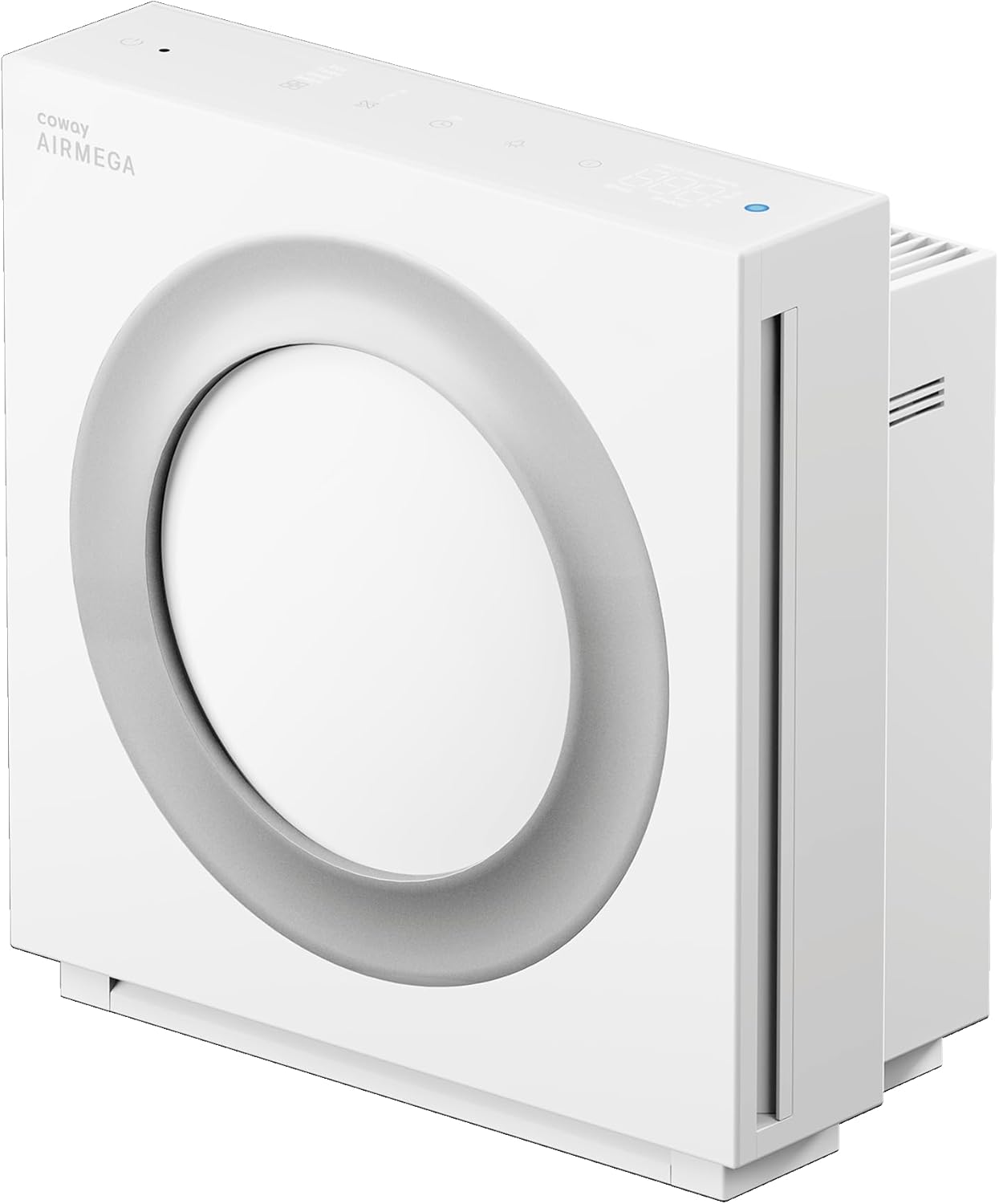
| Max coverage (1 hr) | 1,800 sq. ft. |
|---|---|
| CADR (Smoke/Dust/Pollen) | 240 / 242 / 249 |
| Noise level | 19 dB – 50 dB |
| Power consumption | 56 W |
The Coway Airmega Mighty2 (AP-1512N) is a next-generation mid-size air purifier that uses a three-stage system — washable pre-filter, IEST-certified HEPA, and an activated carbon Max2 layer — to remove particulate matter, allergens, and many gases and VOCs. It is typically used in living rooms, bedrooms, or basements where mold spores and airborne allergens are a concern, and the MegaScan laser sensor reports PM1/2.5/10 levels in real time while an LED color ring and numeric display make air quality easy to read. Smart Mode automatically adjusts fan speed and switches to Eco or Sleep modes to save energy and run quietly (as low as 19 dB) at night. Practical benefits include fast coverage (up to 900 sq ft in 30 minutes or 1,800 sq ft in 60 minutes), clear filter-life indicators for both pre-filter and Max2 filter, and a washable pre-filter that reduces waste and upkeep cost. Limitations are that chemical and gas removal performance is lab-validated and can vary in real environments, and replacement Max2 filters are a consumable item that require periodic purchase.
Best for: Buyers who want a balanced, well-rounded purifier that combines strong particulate capture with active carbon odor and VOC reduction and easy, mostly hands-off operation.
Less Ideal for: People who need hospital-grade or specialized commercial mold remediation equipment or those who want a purifier that removes all gases instantly under any real-world conditions.
- IEST-certified HEPA filter captures 99.97% of 0.3μm particles for reliable particulate removal
- Activated carbon Max2 layer targets odors, VOCs, and some harmful gases with lab-tested reduction
- MegaScan laser sensor provides real-time PM1/2.5/10 readings and an intuitive LED air-quality indicator
- Smart Mode and Eco/Sleep automatic settings balance performance, quiet operation, and lower energy use
- Washable pre-filter and digital filter-life display make maintenance straightforward and predictable
- Gas and VOC reduction results are lab-based and may not match real-world performance in all settings
- Replacement Max2 filters are consumables that add ongoing operating cost
Verdict: A balanced, easy-to-use purifier that pairs certified HEPA particulate removal with an activated carbon filter and smart sensing, making it a strong all-around choice for improving indoor air and addressing mold spores in home spaces.
AIRDOCTOR AD3500

| Model | AD3500 |
|---|---|
| Filtration | Pre-Filter, Activated Carbon, UltraHEPA |
| Particle removal rating | 0.003 microns |
| Coverage | Up to 2,520 ft2 per hour |
The AirDoctor AD3500 is built for heavy-duty air cleaning in large spaces, using a three-stage system that pairs a Pre-Filter with a premium activated carbon filter and a hospital-grade UltraHEPA that the brand says captures down to 0.003 microns. It is intended for continuous home use in living rooms, kitchens, and bedrooms and can cycle air quickly — the manufacturer rates coverage up to 2,520 ft2 per hour and 630 ft2 in 15 minutes — while on auto mode the onboard PM2.5 sensors and Halo indicator adjust fan speed as air quality changes. The carbon stage targets gases, VOCs, and odors from cooking, pets, or wildfire smoke, and filter replacement cadence (carbon ~6 months, UltraHEPA ~12 months) is straightforward for maintenance. In real-world use you get quiet operation suitable for night use and clear visual feedback on air quality, but the unit is a sizable floor tower that requires dedicated floor space and periodic filter purchases to maintain peak performance. For buyers focused on rigorous contaminant removal, the AD3500 emphasizes filtration power and sensor-driven control rather than minimal footprint or lowest ongoing cost.
Best for: Buyers who prioritize scientifically backed, high-performance filtration and sensor-driven automatic control for thorough removal of fine particles and airborne contaminants in large rooms.
Less Ideal for: People looking for a lightweight, ultra-compact purifier for small rooms or budget shoppers who want minimal recurring filter expenses.
- UltraHEPA filter rated to capture particles as small as 0.003 microns for high-efficiency particle removal
- Premium activated carbon filter with potassium permanganate for reducing gases, VOCs, and strong odors
- Covers large rooms quickly with stated capacity up to 2,520 ft2 in one hour and rapid cleaning for 630 ft2 in 15 minutes
- Auto mode with PM2.5 sensors and Halo visual monitor that adjusts fan speed based on real-time air quality
- Designed for quiet operation suitable for overnight use
- Large and relatively heavy tower design requires floor space and is less portable than compact purifiers
- Replacement filters are required on a schedule, adding ongoing maintenance cost
Verdict: If you need a high-capacity purifier that pairs hospital-grade particle capture with a heavy-duty carbon stage and smart sensors for large-room mold and pollutant control, the AD3500 is a top performance choice.
Clorox Turbo Air Purifier 11070

| Coverage area | 1,000 sq. ft. (max listed); best performance in ~215 sq. ft. |
|---|---|
| Filter stages | 3-stage (pre-filter, True HEPA, activated carbon) |
| Particle capture | 99.97% of particles down to 0.1 microns |
| Speeds | 4 fan speeds |
| Timer | Turbo Timer: 10, 20, 30 minutes |
The Clorox Medium Room Turbo is built for fast, room-scale air cleaning using a 3-stage 360° filter pack that includes a pre-filter, True HEPA, and activated carbon layer. It draws air from all directions and offers four fan speeds plus a Turbo Timer (10, 20, 30 minutes) for quick bursts of high flow to cut smoke, cooking odors, and elevated allergen loads. The unit is intended for medium rooms and can circulate air up to five times per hour in a ~215 sq ft space and still provide some cleaning in much larger rooms. Controls include speed selection and a display brightness option with a whisper-quiet low setting for night use. The practical strengths are fast short-term cleaning and multi-layer filtration that also targets odors and VOCs, while limitations are that it lacks an air quality sensor or auto mode and filter life will vary with local conditions, so you must monitor replacements yourself.
Best for: Buyers who prioritize efficient, manual control over room air cleaning and want a unit that delivers fast bursts of high airflow and multilayer filtration to reduce mold spores, smoke, and odors in medium rooms.
Less Ideal for: Users who want fully automatic operation with sensors and auto-adjusting fan speeds or those who need continuous monitoring and management of indoor air quality without manual intervention.
- True HEPA filter captures 99.97% of particles as small as 0.1 microns
- Three-stage 360° filtration includes pre-filter and activated carbon for odors and VOCs
- Turbo Timer with short high-speed cycles for rapid clearing of smoke and odors
- Four fan speeds including a whisper-quiet low setting suitable for nighttime
- No built-in air quality sensor or automatic fan control
- Filter life depends on local air quality and must be monitored and replaced manually
Verdict: Choose this Clorox Turbo unit if you want a medium-room purifier that delivers fast, manual turbo cleaning with True HEPA filtration and odor reduction for improved mold and smoke control.
VOOPNU H13 HEPA Air Purifier DH-JH12

| Filter type | H13 True HEPA triple-layer |
|---|---|
| Coverage claim | Up to 1,076 ft² |
| Noise level | 22 dB (low) |
| Speeds | 3 fan speeds |
The VOOPNU DH-JH12 is a small, simple air purifier designed to remove airborne particles with an H13 True HEPA triple-layer filter and a 360 degree intake. It is intended for everyday use in bedrooms, living rooms, or smaller open-plan spaces and has a one-touch control panel with three fan speeds, a timer, and an essential oil tray for light scenting. Laboratory numbers and listing claims position it to clean roughly 250 ft² every 15 minutes, which the brand translates to a coverage figure up to 1,076 ft²; that makes it useful for frequent air circulation in rooms where mold spores, pollen, pet dander, and smoke are a concern. The unit runs quietly — the low setting is advertised at about 22 dB — and carries several safety and emissions certifications. Trade-offs are its compact physical footprint and budget positioning: filter replacements and true performance in very large or highly contaminated rooms will depend on continuous operation and regular filter changes, and the small chassis limits large-volume air handling compared with bigger, higher-CADR models.
Best for: Buyers seeking an inexpensive, easy-to-use purifier for routine reduction of mold spores and airborne allergens in bedrooms and small to medium living spaces who prefer a quiet, low-maintenance unit.
Less Ideal for: People needing a heavy-duty solution for large, very damp basements or rooms with active mold growth should consider higher-capacity units or targeted mold remediation instead.
- H13 True HEPA filtration captures 99.97% of particles for effective particulate removal
- 360° surround intake promotes even room circulation
- Very quiet operation down to ~22 dB for bedroom or night use
- Compact, lightweight design that is easy to place or move
- Simple one-touch controls and timer make daily use straightforward
- Coverage and cleaning rate are based on laboratory claims and require continuous run time to match advertised area
- Small form factor limits maximum airflow compared with larger purifiers for big rooms
- Replacement filter schedule is necessary to maintain effectiveness and adds ongoing cost
Verdict: A budget-friendly, quiet HEPA purifier that is a practical choice for reducing mold spores and allergens in bedrooms and small to medium rooms.
ECOSELF HAP609 Air Purifier

| Model | HAP609 |
|---|---|
| Coverage | Up to 1800 Ft² |
| Noise level | 20 dB (Sleep Mode) |
| Display | PM2.5 real-time readout and color ring |
| Timer | 1–24 hours |
The ECOSELF HAP609 is a small, user-friendly HEPA air purifier built to reduce airborne particles like dust, pollen, smoke, and pet dander in medium to large rooms. It pulls air from all directions with a 360° intake and uses a three-stage filtration system implied by HEPA classification to capture fine particulates; a built-in PM2.5 sensor and color ring display give real-time feedback so the unit can auto-adjust fan speed when pollution spikes. Practical features include an adjustable 1–24 hour timer and a dedicated Sleep Mode that dims lights and lowers sound to about 20 dB for overnight use. For mold-related needs, the continuous sensing and auto boost help respond to sudden increases in spores or humidity-driven particulates, while the compact footprint makes it easy to place near problem areas. Limitations are typical for portable purifiers: performance depends on room layout and continuous operation for best results, and no explicit CADR or filter replacement interval is listed on the product page, so plan for regular filter checks and replacements as part of maintenance.
Best for: Buyers who prioritize a reliable, low-noise purifier that monitors indoor particle levels and can run continuously in bedrooms or living spaces to keep airborne mold spores and allergens lower.
Less Ideal for: People needing certified CADR numbers, documented filter life, or whole-house HVAC-level mold remediation should consider systems with published performance metrics or integrated whole-home solutions.
- 360° air intake for more even room circulation
- Real-time PM2.5 sensor with color display for instant air-quality feedback
- Auto mode that increases fan speed when pollutants rise
- Very quiet Sleep Mode at about 20 dB and an adjustable 1–24 hour timer
- No CADR value or explicit filter life listed on the product page
- Effectiveness depends on continuous placement and room airflow rather than point treatment
Verdict: A quiet, sensor-driven HEPA purifier that reliably monitors and reacts to rising particle levels, making it a practical choice for reducing airborne mold spores in bedrooms and living rooms.
Levoit Core 300-P

| Filter Type | 3 in 1 Filtration |
|---|---|
| Noise Level | 24 db |
| Particle Retention Size | 0.3 micron |
| Wattage | 56 watts |
| Contaminant Filtration Capability | Cigarette Smoke, Dust, Odors, Pet Dander, Pollen, VOCs |
The Levoit Core 300-P is a small, user-friendly air purifier that uses a 3-in-1 original filter with H13 True HEPA-grade performance to capture particles down to 0.1 to 0.3 microns and remove common indoor contaminants like dust, pollen, pet dander, smoke, and odors. It is typically placed in bedrooms, living rooms, or offices and runs on a 56W motor with multiple manual fan speeds plus a near-silent Sleep Mode that drops noise to about 24 dB for undisturbed nights. The unit is AHAM verified for CADR performance and includes practical features such as a timer, display dimming, and a filter check indicator; Levoit recommends replacing filters every 6 to 8 months and using genuine replacements for best results. Because the Core 300-P lacks Auto Mode and smart connectivity, you will need to select fan speeds manually and monitor room conditions yourself, but that simplicity also means reliable, straightforward operation without extra setup. Its coverage claims make it useful for single rooms or small open areas rather than whole-house cleaning.
Best for: Buyers who value proven, tested filtration and quiet nighttime operation and who want a straightforward, well-reviewed purifier for bedrooms or small living areas.
Less Ideal for: People who need automated air-quality sensing, Wi-Fi control, or a unit sized to continuously clean very large or multiple connected rooms.
- H13 HEPA-grade 3-in-1 filter captures 99.97% of 0.1–0.3μm particles
- AHAM verified CADR with documented performance for smoke, dust, and pollen
- Very quiet Sleep Mode rated around 24 dB for bedroom use
- Simple controls with timer and display-dimming for night operation
- No Auto Mode or smart connectivity, requiring manual fan speed adjustments
- Designed for single-room coverage rather than whole-house purification
Verdict: A compact, AHAM-verified HEPA purifier that reliably removes fine particles and smoke in single rooms while staying quiet enough for overnight use.
Levoit Vital 200S-P Air Purifier

| Floor Area | 1875 square_feet |
|---|---|
| Noise Level | 27 db |
| Particle Retention Size | 0.1 micrometer |
| Power Source | Corded Electric |
| Wattage | 51 |
The Levoit Vital 200S-P is a smart air purifier built to handle whole-room cleaning in larger spaces. It uses a three-stage filter stack including a washable pre-filter and activated carbon stage plus a HEPA-class filter to capture fine particles down to 0.1 micrometers, and AHAM-verified CADR scores indicate strong performance for smoke, dust, and pollen. The unit has app and button controls, an integrated air quality monitor, and a sleep mode that runs quietly at about 27 dB for night use. Practical benefits include fast circulation for rooms up to the stated coverage and swap-in replacement filters tailored to smoke, pet allergies, or VOCs. Trade-offs are typical for high-capacity purifiers: it is a larger, heavier tabletop floor unit and replacement filters are required periodically to maintain performance. The included washable pre-filter helps reduce replacement frequency, and the smart controls make monitoring and scheduling convenient for continuous use in living rooms, basements, or bedrooms where mold spores and allergens are a concern.
Best for: Buyers who prioritize proven, high-capacity air cleaning and want straightforward smart controls and monitoring for continuous protection against allergens and mold spores.
Less Ideal for: Those needing a very compact or ultra-portable purifier for travel or small personal spaces should consider smaller models instead.
- AHAM-verified performance with strong CADR for smoke, dust, and pollen
- Three-stage filtration including washable pre-filter and activated carbon for odors and VOCs
- App control plus built-in air quality monitor for automatic or scheduled use
- Quiet sleep mode at about 27 dB suitable for bedrooms
- Designed filter options for smoke, pet allergies, and toxins to match specific needs
- Large footprint and heavier than compact travel purifiers
- Requires periodic replacement of middle/HEPA and specialty filters to sustain effectiveness
Verdict: Choose the Vital 200S-P when you want a proven, app-controlled purifier that handles large rooms and specific contaminants like mold, smoke, and pet allergens effectively.
Choosing the Right Air Purifier for Mold: Key Factors to Consider
Filtration Type and Efficiency
True HEPA filtration is the most reliable method to capture mold spores because it is rated to trap 99.97 percent of particles 0.3 microns in size and larger. While mold spores vary in size, many fall within the particle range that HEPA filters can capture, making filter class and verified efficiency the single most important spec.
Pay attention to whether the unit uses a prefilter to capture larger debris, and whether any activated carbon stage is present for odors and volatile compounds often associated with damp, moldy spaces. Avoid devices that rely primarily on ionization or ozone output as their main removal mechanism because those do not reliably remove particles and can create indoor air chemistry concerns.
Clean Air Delivery Rate and Room Size
CADR and airflow specs tell you how quickly a purifier can exchange and clean the air in a room. For mold concerns, faster turnover reduces the time mold spores remain suspended and available to spread. Match the device's stated CADR or recommended room size to the square footage and ceiling height of the area where mold is present.
Run calculations for continuous operation rates: a unit that lists a suitable room size at a low fan speed might still be too slow on its quiet setting. Choose a purifier with sufficient high-speed CADR for the worst-case scenario, then consider whether its lower speeds are quiet enough for continuous daytime or nighttime use.
Filter Maintenance and Total Cost of Ownership
How often filters need replacement and how much replacements cost materially affects whether a purifier will stay effective over time. Mold-prone areas often load filters faster, so verify recommended filter-replacement intervals and whether prefilters are washable to extend main filter life.
Also check whether replacement filters are easy to source and whether the unit supports tool-free access for quick swaps. Hidden or proprietary filter assemblies can increase long-term cost and create downtime if replacements are backordered.
Operating Noise and Usability
A purifier might have excellent filtration but be impractical if its operating noise prevents continuous use. Look at measured decibel levels across fan speeds and whether the unit offers sleep or night modes with reduced power draw.
Controls and indicators also affect usability in mold situations: clear filter-change lights, simple fan-speed selection, and programmable timers help keep the unit running consistently. Remote or app-based control is useful but not essential; robust physical controls ensure operation if connectivity is unreliable.
Durability and Performance in Humid Conditions
Mold problems often occur in spaces with higher humidity. While air purifiers are not dehumidifiers, components and finishes that resist mold buildup and corrosion improve longevity. Sealed filter housings, drive motors with protective casings, and washable exterior surfaces reduce the chance of mold colonizing the unit itself.
Consider whether the manufacturer recommends using the purifier in damp locations; units designed with water-resistant casings or elevated intakes are preferable for basements and laundry areas where humidity spikes are common.
How an Air Purifier Helps With Mold
Air purifiers reduce the concentration of airborne mold spores, which is one part of controlling mold in indoor environments. By capturing spores before they settle on surfaces, a purifier lowers the likelihood of new colonies forming and reduces exposure for people with allergies or asthma.
Remember that purifiers only treat airborne particles. They do not address the root causes of mold growth such as leaks, condensation, or high relative humidity. Use a purifier as part of a broader remediation strategy that includes moisture control and surface cleaning.
- Removes spores from the air to decrease spread
- Reduces allergen load even if surface mold remains
- Works best as part of humidity and moisture control
Where to Place a Purifier in Mold-Prone Spaces
Position the purifier where it can draw air from the affected area without obstruction. Avoid placing units inside cabinets or behind furniture where airflow is restricted. In larger rooms, place the purifier near the source of spores or between the source and common living areas to limit spread.
Keep the unit elevated slightly off the floor if the mold patch is at floor level so it does not draw in heavier settled dust only. For basements and laundry rooms, ensure the purifier is on a stable, dry surface and clear of splash zones.
- Place near the mold source when possible
- Avoid blocked intakes and ensure 360-degree airflow if applicable
- Elevate unit slightly if source is at floor level
Using Purifiers with Other Mold-Control Steps
An air purifier reduces airborne spores but should be paired with moisture mitigation to stop regrowth. Use dehumidification, fix leaks, improve ventilation, and clean visible mold with appropriate cleaners before relying on air filtration alone.
For active remediation, run a purifier continuously at higher fan speeds during and shortly after cleaning to capture stirred-up spores. After remediation, maintain a moderate continuous airflow to reduce recurrence and keep filters inspected more frequently during the first weeks.
- Combine with dehumidifiers or improved ventilation
- Run at higher speed during cleaning and remediation
- Increase filter inspections after active mold removal
Common Mistakes to Avoid
Relying solely on an air purifier without addressing moisture issues is a common error. Purifiers can lower airborne spores but will not prevent mold from growing on wet surfaces.
Another mistake is undersizing the purifier for the room. A unit rated for a small bedroom will be inadequate in a large basement or open-plan area. Also avoid running a purifier only intermittently; inconsistent operation allows spores to build up again.
- Do not ignore humidity and leaks
- Avoid undersized units for the space
- Keep a regular maintenance schedule to retain effectiveness
When to Call a Professional
If visible mold covers large areas, has penetrated structural materials, or returns despite moisture control and filtration, consult a remediation professional. A purifier is a supportive tool but not a substitute for structural repairs or professional mold abatement.
Professionals can assess hidden moisture sources, test air and surface samples if needed, and recommend targeted remediation tactics that reduce long-term recurrence. Use purifier recommendations from this guide to support follow-up indoor-air cleaning after professional work.
- Large or recurrent infestations need professional assessment
- Purifiers help during and after remediation but are not a fix-all
- A professional can identify hidden moisture drivers
How We Chose the Best Air Purifier for Mold
We prioritized features that specifically affect a unit's ability to reduce airborne mold spores and the practical costs of running a purifier in typical homes. Primary evaluation criteria included filtration efficiency for submicron particles, clean air delivery rate relative to room size, and the availability of true HEPA or equivalent filters capable of capturing fungal spores. We also weighed airflow and CADR because strong circulation reduces the time spores remain airborne, and long-term maintenance factors such as filter life, replacement cost, and ease of filter access. Noise and usable fan speeds were assessed to ensure the device could run continuously in living spaces or bedrooms. We considered construction and safety aspects that affect use in damp or humid areas, such as sealed filter chambers and simple exterior cleaning. Units were excluded if they relied solely on ionizers or ozone-generating technologies, lacked verified particle filtration, or were intended only for smoke or odor control without HEPA-class filtration. The result is a shortlist focused on measurable particle removal, practical operation, and sustainable upkeep for mold-prone environments.
Our full evaluation process is outlined in our review methodology.
FAQ
Will an air purifier remove mold from walls and surfaces?
No. Air purifiers remove airborne spores but cannot remove established mold growing on surfaces. Address the moisture source and clean or remove contaminated materials to eliminate surface mold.
How often should I change filters if I have mold concerns?
Filter replacement depends on load, but expect more frequent changes in mold-prone areas. Check prefilters monthly and main HEPA filters per the manufacturer's guidance, increasing frequency if you see visible dust buildup or notice reduced airflow.
Can I use a purifier in a basement or laundry room where humidity is high?
Yes, but choose a unit with durable construction and keep it on a dry, elevated surface. Combine the purifier with humidity control because high moisture reduces the effectiveness of filtration and can accelerate filter loading.
Are ionizers or ozone devices safe for mold control?
Ionizers and ozone generators are not recommended as primary mold-control devices. Ozone can be harmful at effective concentrations and ionization does not reliably remove particles in the same way a HEPA filter does.
What CADR or room-size rating should I look for?
Select a purifier whose CADR or recommended room size matches or exceeds the square footage and ceiling height of the affected space. For active remediation, opt for a higher CADR so the unit can run at effective speeds while still being tolerable for occupants.
Final Verdict
For mold concerns, prioritize true HEPA-class filtration, sufficient CADR matched to the room, and durable construction suited to humid areas. Balance filtration performance with manageable noise and reasonable filter-replacement intervals to keep a unit running continuously when needed. Use an air purifier as part of a broader plan that includes moisture control and surface remediation. Choose the model that best matches the size and humidity profile of the affected space, and commit to regular maintenance to sustain performance over time.