
Note: This article contains affiliate links. If you click on these links and make a purchase, we may earn a small commission at no extra cost to you. This helps support our research and content. Read our full affiliate disclosure here.
When indoor mold contamination or dampness is a concern, choosing the right air purifier can help reduce airborne mycotoxin-carrying particles and improve indoor air quality. You want a unit that captures very small particles, provides enough clean-air flow for the rooms you use most, and minimizes secondary emissions. This guide rounds up seven shortlisted air purifiers selected for addressing mycotoxin risk factors. We focus on real-world performance metrics like particle capture, airflow, and emissions control so you can pick a unit that fits your space and health priorities. Read on for the evaluation criteria and practical takeaways before the product list.
Top Picks at a Glance
| Best Overall The best all-around choice for most situations | COWAY Airmega Mighty2 AP-1512N |  |
| Best Quality Built to a higher standard if you want something more solid | Airpura C700 DLX |  |
| Best Value The sweet spot between price and what you get | Winix 5510 Air Purifier |  |
| Best Budget The cheapest option that still gets the job done reliably | MOOKA PR1 Air Purifier |  |
| Top Rated A top-rated pick with lots of positive feedback | ECOSELF HAP603 Air Purifier |  |
| Most Popular A crowd favorite that many people choose with confidence | Levoit Core 300-P |  |
| Best Seller A high-volume bestseller chosen again and again | LEVOIT Vital 200S-P |  |
COWAY Airmega Mighty2 AP-1512N
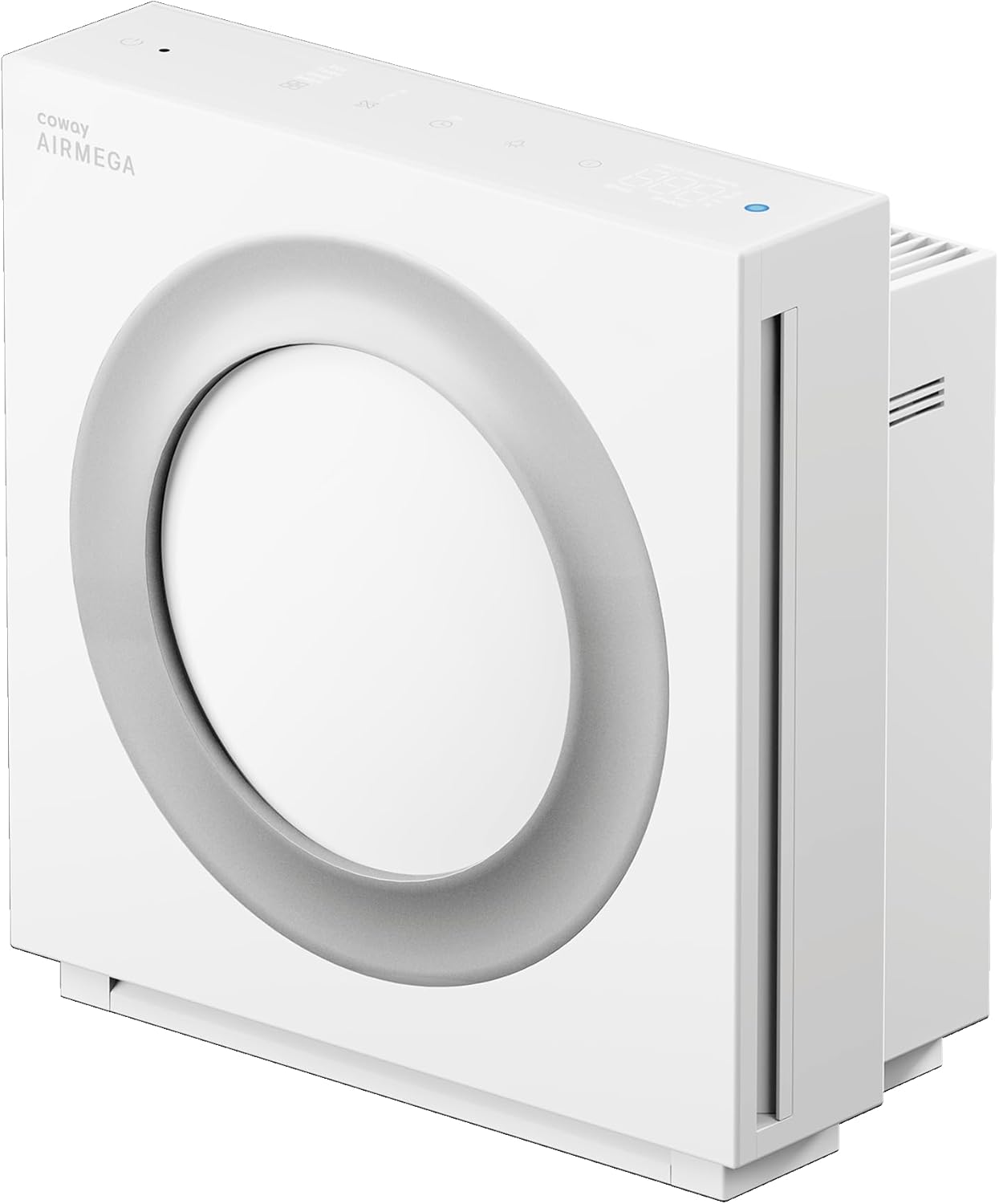
| Max coverage (1 hr) | 1,800 sq. ft. |
|---|---|
| CADR (Smoke/Dust/Pollen) | 240 / 242 / 249 |
| HEPA effectiveness | 99.97% of 0.3μm particles |
| Noise level | 19 dB – 50 dB |
| Power consumption | 56 W |
The Coway Airmega Mighty2 (AP-1512N) is a three-stage air purifier that combines a washable prefilter with an IEST-certified HEPA and activated carbon Max2 filter to tackle particles, odors, and a range of gases. It is typically used in living rooms or whole-floor open areas where rapid turnover is needed; Coway claims it can clean up to 900 ft² in 30 minutes or 1,800 ft² in an hour. Notable features include a laser particle sensor that reports PM1/2.5/10 in real time, a four-color LED air quality indicator, Smart/Auto/Eco/Sleep modes that reduce power use and noise (as low as 19 dB), and a digital filter-life readout for both prefilter and Max2 filter. Practically, that means strong removal of allergens, smoke, and many VOCs and odor molecules, with easy maintenance via the washable prefilter and clear replacement prompts for the combined HEPA/carbon cartridge. Limitations are that the primary gas and VOC reduction comes from the combined Max2 cartridge so heavy or specialized chemical loads may need more dedicated activated carbon capacity or additional source control, and replacement filter cost and eventual uptime for very contaminated spaces should be considered.
Best for: Buyers seeking a balanced, ready-to-run purifier that removes fine particles and reduces common VOCs across large rooms while offering smart sensing and low-noise operation.
Less Ideal for: Users facing extreme chemical contamination, industrial solvents, or specialized mycotoxin remediation who need high-capacity dedicated carbon adsorption or professional-grade air-cleaning systems.
- IEST-certified HEPA filter that captures 99.97% of 0.3 μm particles for strong particulate removal
- Combined activated carbon Max2 filter tested to reduce many VOCs, odors, and certain gases
- Laser sensor reporting PM1/2.5/10 with real-time numeric display and LED air quality indicator
- Smart modes with Eco and Sleep reduce noise and power use down to 19 dB and 56 W max
- Washable pre-filter and digital filter-life indicators make maintenance straightforward
- Combined HEPA/carbon cartridge limits the volume of dedicated activated carbon for heavy chemical loads
- Replacement Max2 filter is a single consumable item so long-term running costs can add up
Verdict: A versatile, low-noise purifier with certified HEPA and tested activated carbon that is a strong all-around choice for reducing particulates and common mycotoxin-associated gases in large living spaces.
Airpura C700 DLX

| CFM | 635 CFM |
|---|---|
| HEPA efficiency | 99.97% at 0.3 microns |
| Coverage | Up to 2,000 sq. ft (based on 8-foot ceilings) |
| Filtration media | Carbon filter plus HEPA |
The Airpura C700 DLX is a heavy-duty room air purifier built for serious contaminant removal in large spaces. It combines a deep carbon filter rated for broad chemical adsorption with a true HEPA barrier that captures 99.97% of particles down to 0.3 microns, and a reported high airflow (635 CFM) for faster air exchanges. In practice this means the unit can perform multiple air exchanges per hour in open-plan living areas, basements, or workshops where VOCs, smoke, or mold-related spores and byproducts are a concern. The 360 degree intake and distribution helps ensure roomwide circulation rather than one-directional flow. Trade-offs include the unit's substantial weight and size, which make it less convenient to move frequently, and the need to replace large filters that are heavier and pricier than those in consumer-grade purifiers. Noise is reported to be relatively low for the delivered airflow, but expect noticeable sound at higher fan speeds. For targeted removal of mycotoxin-laden particles and airborne chemicals, this model emphasizes airflow and chemical adsorption over small, portable convenience.
Best for: Buyers who prioritize powerful, faster air exchanges and strong chemical adsorption in large rooms and who want a unit built for persistent airborne contaminants rather than a portable convenience solution.
Less Ideal for: People who need a lightweight, compact purifier for small bedrooms, or those who prefer a low-cost, low-maintenance consumer unit for occasional use.
- High reported airflow (635 CFM) for rapid air exchanges in large rooms
- Deep carbon filter designed to adsorb a wide range of chemicals and VOCs
- True HEPA filtration capturing 99.97% of particles down to 0.3 microns
- 360 degree air distribution for more even room coverage
- Quieter operation relative to units with similar airflow at comparable settings
- Heavy and bulky, making relocation or storage difficult
- Replacement filters are large and likely more expensive than consumer models
- Designed for large spaces so performance may be overkill in small rooms
Verdict: Choose the Airpura C700 DLX when you need industrial-strength airflow and chemical adsorption to rapidly clean large indoor spaces of particles and VOCs.
Winix 5510 Air Purifier

| Item model number | 5510 |
|---|---|
| AHAM Verified coverage | 1,882 sq ft in 1 hour |
| Noise (lowest speed) | 23.5 dB |
| Smart features | WiFi / Alexa / Google Home |
| Filtration stages | 4-Stage |
The Winix 5510 is a 4-stage air purifier built to handle large rooms quickly while giving users automated control and remote monitoring. It combines a washable pre-filter, True HEPA filtration that captures ultrafine particles down to 0.01 microns, and an advanced carbon deodorization stage to reduce odors and some VOCs, plus Winix's PlasmaWave technology for additional pollutant reduction. Smart sensors and an AQI LED let the unit adjust fan speeds in Auto Mode and the Winix app adds remote control and scheduling. Sleep Mode dims lights and lowers noise for overnight use, and the machine is AHAM verified and UL certified for performance and safety. For buyers focused on reducing mold-related particles and the odors associated with dampness, the HEPA plus carbon stages and strong room coverage make this a practical choice, but it does not replace professional mold remediation or address structural moisture sources. Expect periodic filter replacements and the usual limits of carbon filters for some VOCs and gaseous mycotoxins depending on concentration.
Best for: Buyers who prioritize automated, high-coverage particle removal and want app control to manage indoor air quality in large living spaces, especially to reduce airborne mold spores and associated odors.
Less Ideal for: People needing a solution for active mold infestations, structural moisture problems, or guaranteed removal of gaseous mycotoxins should pursue remediation or specialist filtration systems instead.
- Four-stage filtration with True HEPA captures ultrafine particles as small as 0.01 microns
- Activated carbon stage reduces odors and some volatile compounds
- Smart sensors and Auto Mode adjust fan speed based on real-time air quality
- Winix Smart App, AQI indicator, and Sleep Mode improve convenience and nighttime operation
- Carbon filters vary in effectiveness for different gases and may not remove all mycotoxin vapors
- Requires regular filter replacements to maintain performance
Verdict: Choose the Winix 5510 if you want a smart, high-coverage purifier that combines True HEPA and carbon filtration to reduce airborne mold particles and odors in large rooms.
MOOKA PR1 Air Purifier

| Filter type | True H13 HEPA, activated carbon, washable pre-filter |
|---|---|
| Coverage claim | Up to 2200 sq ft |
| Noise level | Sleep mode as low as 26 dB |
| Fan speeds | 6 modes (Sleep/I/II/III/Auto/Pet) |
The MOOKA PR1 is a full-room air purifier built around a True H13 HEPA filter and a four-stage system that targets particles, odors, and pet hair in larger living spaces. It is typically placed in bedrooms, living rooms, or offices and runs either in Auto mode—where a PM2.5 sensor adjusts fan speed—or in one of six manual fan settings including a quiet 26 dB sleep mode and a Pet mode tuned for animal dander and odors. Practical touches include a washable pre-filter to capture hair, an activated carbon stage for smells, an aroma pad, a child lock, timer, and a filter-replace reminder. The unit claims coverage up to 2200 sq ft with increased side intake and an extra-large fan for faster air changes, which helps clear airborne particulates more quickly in open layouts. Limitations are that long-term mycotoxin removal depends on source control and filtration runtime, and replacement filters are recommended every 3 to 6 months for best performance; the built-in sensor placement can also affect initial readings until stabilized.
Best for: Buyers seeking an affordable, feature-rich purifier for large living spaces who prioritize particle and pet dander reduction on a budget and want straightforward controls and low-noise night operation.
Less Ideal for: People needing validated medical-grade mycotoxin elimination or laboratory-level testing should consider specialist equipment and professional remediation instead of a consumer room purifier.
- True H13 HEPA filtration for particles down to 0.3 microns
- PM2.5 sensor with real-time air quality display and Auto mode
- Washable pre-filter reduces hair buildup and extends filter life
- Multiple modes including a low-noise 26 dB sleep mode and a Pet mode for dander and odors
- Filter reminder, child lock, timer, and aroma pad add convenience
- Manufacturer coverage claim may depend on room layout and ventilation
- Replacement filters need regular purchase and periodic replacement to maintain effectiveness
Verdict: A budget-friendly large-room purifier with H13 HEPA, pet-specific tuning, and a quiet sleep mode that makes it a practical choice for homes with pets and open living spaces.
ECOSELF HAP603 Air Purifier

| Item model number | HAP-603 |
|---|---|
| Coverage (manufacturer) | Up to 2400 ft² |
| Noise level (sleep) | 22 dB |
| PM2.5 display | Yes |
The ECOSELF HAP603 is a tower-style air purifier intended for large living spaces, using a 2X-power filtration system and a True HEPA (H13) grade filter to capture fine particles and airborne contaminants. It is typically placed in a central room or near pollution sources to cycle air for areas the manufacturer rates up to 2400 ft², using a PM2.5 display and infrared sensor to trigger Auto Mode and adjust fan speed. Notable features include a visibly updated AQI/PM2.5 readout, a very quiet 22 dB sleep mode, an aromatherapy slot, timer and lock controls, and a filter indicator to simplify upkeep. Practical benefits are strong particle capture for smoke, dust, and pet dander, hands-off operation via smart sensing, and unobtrusive nighttime use thanks to low noise. Limitations are that the unit's large-area coverage claim depends on room layout and airflow and that aromatic function and non-filter maintenance details are minimal; optimal long-term performance also requires buying the brand's replacement filters.
Best for: Buyers who prioritize dependable particle removal in larger living spaces and want a mostly hands-off purifier with clear air-quality feedback and quiet nighttime operation.
Less Ideal for: People who need verified mycotoxin-specific testing or quantified CADR numbers for clinical remediation should look for units with lab-verified mycotoxin or gas-phase adsorption performance and published CADR figures.
- H13 True HEPA filtration for high-efficiency particle capture
- Real-time PM2.5/AQI display and infrared sensor for automatic fan adjustments
- Very low-noise 22 dB sleep mode suitable for bedrooms
- Filter indicator and simple controls reduce maintenance guesswork
- Large coverage design intended to cycle air across big living areas
- Coverage and CADR not specified numerically on the listing so real-world performance may vary by room layout
- Aromatherapy feature is decorative and does not replace filtration needs
Verdict: Choose the HAP603 if you want a quiet, sensor-driven HEPA purifier built to run continuously in large rooms and give clear real-time air-quality feedback.
Levoit Core 300-P

| Filter Type | 3 in 1 Filtration |
|---|---|
| Floor Area | 1073 square_feet |
| Noise Level | 24 db |
| Particle Retention Size | 0.3 micron |
| Wattage | 56 watts |
The Levoit Core 300-P is a small, portable air purifier built to remove fine particulates like pollen, dust, pet dander, smoke, and other airborne contaminants using a three-stage Levoit original filter and HEPA-grade filtration down to 0.1–0.3 μm. It uses a 56W motor with a CADR that refreshes air in a typical 222 ft² room multiple times per hour and can handle larger spaces at reduced exchange rates, making it practical for bedrooms, home offices, and living areas. Controls are touch-based and include a Sleep Mode that drops noise to about 24 dB and lets you turn off display lights and set a 2/4/6/8 hour timer for overnight use. The unit is AHAM verified and meets CARB and ETL safety standards, and Levoit recommends using its genuine replacement filters every 6 to 8 months for best performance. Limitations include manual speed control on this model (no Auto Mode) and the need to buy replacement filters to maintain certified CADR performance rather than using generic substitutes.
Best for: Buyers who prioritize proven, independently tested filtration and quiet overnight operation and who prefer products with strong customer feedback and certifications for everyday home use.
Less Ideal for: People who want a smart or automatic purifier that adjusts fan speed based on sensors, or those needing continuous high-rate air exchanges for very large open spaces.
- HEPA-grade three-stage filter captures particles down to 0.1–0.3 μm with 99.97% efficiency
- AHAM verified CADR ratings and multiple safety certifications provide independently tested performance
- Very quiet Sleep Mode (~24 dB) and dimmable/turn-off display for undisturbed nighttime use
- Compact, portable design that fits bedrooms and small living spaces and includes a timer
- No Auto Mode — fan speed must be adjusted manually
- Best performance depends on using Levoit original replacement filters
Verdict: Choose the Core 300-P when you want a compact, AHAM-verified HEPA purifier that quietly delivers proven particulate removal for bedrooms and everyday home spaces.
LEVOIT Vital 200S-P

| Filter Type | 3-Stage Filter |
|---|---|
| Floor Area | 1875 square_feet |
| Noise Level | 27 db |
| Particle Retention Size | 0.1 micrometer |
| Wattage | 51 |
The LEVOIT Vital 200S-P is a smart air purifier built to clean large rooms quickly using a 3-stage filtration system that includes a washable pre-filter and an activated carbon layer. It is AHAM verified with strong CADR figures for smoke, dust, and pollen, and it captures particles down to 0.1 micrometer, which helps remove airborne allergens, pet hair and many fine particulates. Typical use is placing the unit in living rooms or bedrooms and running at higher fan speeds when air quality dips or on a continuous low setting overnight; the integrated air quality monitor and app control make scheduling and remote operation convenient. The unit is relatively quiet at low speeds for bedroom use and provides targeted filters such as pet allergy, toxin absorber, and smoke-remover options for specific concerns. Trade-offs include a need to replace specialty filters over time and the size and weight that make it less portable than compact models, and while it reduces airborne particles associated with mold spores and mycotoxin-laden dust, dedicated HVAC or remediation solutions are still important for severe mold problems.
Best for: Buyers who prioritize proven, easy-to-use whole-room air cleaning and want a monitored, app-managed purifier for allergy and pet-related indoor air concerns.
Less Ideal for: People needing a lightweight, truly portable purifier for small rooms or travel, or those seeking a standalone solution for extensive mold remediation without professional cleanup.
- AHAM verified with high CADR ratings for smoke, dust, and pollen
- Three-stage filtration with washable pre-filter plus activated carbon for odors
- App control and built-in air quality monitor for remote scheduling and feedback
- Captures particles down to 0.1 micrometer, useful against fine allergen and smoke particles
- Replacement specialty filters are required for targeted contaminants and add ongoing cost
- Larger and heavier than compact travel-size purifiers, limiting portability
Verdict: A reliable, AHAM-verified whole-room purifier with smart controls and tight particle capture that suits cautious buyers seeking proven air cleaning for large spaces.
Choosing the Right Air Purifier for Mycotoxins: Key Factors to Consider
Filtration Efficiency at Submicron Sizes
Mycotoxin particles and fungal fragments can be very small, often under one micron. A purifier's ability to capture submicron particles is critical because larger-particle filters may miss the fragments that carry toxins.
Look for HEPA-class filtration with manufacturer data or independent testing that specifies removal efficiency at 0.3 microns or smaller. Filtration media construction and seal quality matter too because leaks around the filter will reduce effective capture regardless of rated efficiency.
Airflow and Effective Room Coverage
A high-efficiency filter is only useful if enough air passes through it. Clean air delivery rate or stated room coverage helps estimate how quickly a unit can exchange and filter the air in a given space.
Consider the size of the rooms where exposure is most likely and choose a purifier rated for those square footage values at sensible fan speeds. Multiple smaller units can sometimes outperform a single undersized unit for whole-home coverage and targeted source control.
Gas-Phase Adsorption for Fungal Volatiles
Mycotoxins and fungal metabolites can attach to airborne particles and also exist as volatile compounds that cause odors or off-gassing. Activated carbon or specialized sorbent beds help remove these compounds from the air.
Evaluate the volume and quality of carbon or other adsorbents. More media and higher surface area improves capacity, but design and contact time with the airflow determine real-world effectiveness. Replaceable sorbent modules are preferable for long-term maintenance.
Emissions, Ozone, and Safety Features
Some air-cleaning technologies produce byproducts like ozone which can irritate the lungs and complicate indoor air concerns. For mycotoxin mitigation, avoid devices that rely on ozone generation or unproven ionization as primary cleaning mechanisms.
Check for independent emissions testing or certifications indicating low or negligible ozone output. Safety features such as child locks, tip-over protection, and certified electrical safety ratings also matter for home use.
Noise, Placement, and Daily Use
A purifier must be usable in occupied spaces for many hours a day. Fan noise at the speeds required to achieve adequate air changes will affect where and how long you can run the device.
Review typical decibel ratings at low, medium, and high speeds. Consider placement: units with bottom or rear intakes need clearance to perform. Ease of moving the unit and intuitive controls improve the likelihood it will be used consistently.
Filter Maintenance and Long-Term Costs
Filter replacement frequency and cost influence long-term effectiveness because dirty or clogged filters reduce airflow and capture efficiency. Knowing filter life and the availability of replacement media helps plan ongoing maintenance.
Look into how filters are accessed and whether prefilters extend the life of primary HEPA and carbon elements. Units with widely available filter replacements and straightforward filter-change indicators are easier to keep operating at peak performance.
How Mycotoxins Move Through Indoor Air
Understanding how fungal fragments and mycotoxins travel indoors helps set realistic expectations for air cleaning. Mycotoxin-bearing particles can be released from moldy materials during disturbance, or they can become airborne attached to dust and fine particles through resuspension.
Air purifiers work by continuously passing room air through filtration media. This reduces the concentration of airborne particles over time but does not remove toxins already embedded in building materials. Addressing moisture sources and contaminated surfaces is a necessary complement to air cleaning.
- Particles can be submicron or larger depending on the release mechanism
- Air cleaning reduces airborne load but not contaminated surfaces
- Source control and remediation remain essential alongside filtration
Placement Strategies for Best Results
Place purifiers where contaminated air is most likely to accumulate or where people spend the most time. Common locations include bedrooms, living rooms, or rooms adjacent to known moisture issues.
Avoid tucking a unit into a corner or behind furniture where intake and outlet flow is impeded. For multiroom coverage, consider running a purifier in each frequently used space at a lower fan speed rather than a single unit at maximum output.
- Center units in the room for more even circulation when possible
- Keep 12 to 24 inches clearance from walls and large furniture
- Use multiple units for distributed coverage across several rooms
Maintaining Indoor Air Quality Beyond the Purifier
A purifier is one tool in a broader plan. Fixing leaks, drying wet materials, and replacing contaminated insulation or drywall are primary remediation steps that reduce ongoing mycotoxin sources. Regular cleaning to limit dust buildup also reduces carriers for mycotoxin fragments.
Ventilation with outdoor air can dilute indoor contaminants when outdoor conditions are favorable. However, in humid or mold-prone climates, ventilation needs to be balanced with moisture control to avoid introducing new problems.
- Address moisture and mold sources first
- Regular vacuuming with a HEPA-rated vacuum reduces settled particulate load
- Consider professional assessment for widespread contamination
Interpreting CADR, ACH, and Manufacturer Specs
Clean Air Delivery Rate, air changes per hour, and manufacturer room-size ratings are different ways to estimate a purifier's throughput. CADR gives a standardized removal rate for specific particle sizes, while ACH indicates how many times per hour a unit can theoretically exchange the air in a room.
Use CADR or ACH together with your room dimensions to choose a unit that achieves at least a few air exchanges per hour at a comfortable noise level. Be cautious when manufacturers list maximum coverage without noting the fan speed required to reach that figure.
- CADR is particle-specific and useful for comparing filtration throughput
- ACH helps translate performance into expected clearance times for your room
- Always check performance at realistic fan speeds for everyday use
When to Seek Professional Remediation
Air purifiers can reduce airborne particles, but they are not a substitute for professional mold remediation when contamination is extensive. Visible mold growth over large areas, recurrent water intrusion, or ongoing health symptoms after using a purifier are signs that a specialist should evaluate the property.
Professionals can identify hidden sources, remove contaminated materials safely, and advise on combined strategies that include containment, cleaning, and targeted air cleaning during and after remediation.
- Large or hidden contamination requires professional assessment
- Persistent odors or symptoms after using purifiers suggest unresolved sources
- Remediation paired with ongoing filtration yields the best outcome
How We Chose the Best Air Purifier for Mycotoxins
We focused on features that directly affect a purifier's ability to reduce airborne mycotoxin exposure. Primary evaluation criteria included particle filtration efficiency at submicron sizes, airflow and room coverage expressed as clean air delivery rate or equivalent, and the presence of activated carbon or other sorbents for adsorbing volatile fungal metabolites. We also assessed emissions and safety, ensuring units either had verified low ozone output or no ozone-generating components. Noise levels at typical operating speeds were included to gauge real-world usability in living spaces. Durability and filter maintenance requirements were reviewed to estimate ongoing upkeep. Excluded were units that lacked clear filtration specification for submicron particles, devices that rely solely on ionization without HEPA-class filtration, and purifiers with unverified or high ozone output. The resulting list balances capture performance, airflow, gas-phase adsorption, and practical daily use factors.
Our full evaluation process is outlined in our review methodology.
FAQ
Can an air purifier remove mycotoxins completely?
Air purifiers reduce airborne mycotoxin-bearing particles but do not remove toxins embedded in building materials. Effective mitigation combines source remediation, moisture control, surface cleaning, and continuous air filtration.
Do I need activated carbon to address mycotoxins?
Activated carbon or other sorbents help adsorb volatile fungal metabolites and odors. For mycotoxin-related odors and gaseous byproducts, a purifier with a substantive adsorbent stage is beneficial in addition to HEPA filtration.
Is ozone generation effective against mycotoxins?
Ozone is not a recommended method for indoor mycotoxin control because it can be harmful to occupants and has limited proven effectiveness at safe concentrations. Choose units with negligible ozone output and documented safety.
How often should I run an air purifier for mycotoxin concerns?
Continuous operation at a moderate fan speed is often advisable to maintain lower airborne levels. Increase fan speed temporarily during and after disturbance events like cleaning or renovation to accelerate particle removal.
Will a purifier help if I have visible mold on surfaces?
A purifier can lower airborne dispersal during remediation, but visible mold on surfaces requires cleaning or material removal. Purification is a complementary step and not a replacement for addressing the infestation directly.
Final Verdict
Prioritize units that combine proven HEPA-class capture of submicron particles, adequate airflow for the rooms you occupy, and meaningful gas-phase adsorption capacity. Balance noise and maintenance needs so you can run the unit consistently at effective speeds. Remember that air purifiers reduce airborne load but do not replace source remediation. Use targeted filtration alongside moisture control and surface cleanup to achieve the best results for reducing mycotoxin exposure in the home.