
Note: This article contains affiliate links. If you click on these links and make a purchase, we may earn a small commission at no extra cost to you. This helps support our research and content. Read our full affiliate disclosure here.
If you keep rats as pets, indoor air quality matters for both their health and yours. Small rodents produce dust, dander, and cage odors that can aggravate breathing for sensitive pets and people. The right air purifier reduces particulates and controls smell without stressing animals with loud fans or bright displays. This guide highlights the top air purifiers suited for rat habitats and small animal rooms. We shortlisted models that balance filtration efficiency, quiet operation, and manageable maintenance. Below you will find the selection rationale and the criteria we used to evaluate each option before the product list.
Top Picks at a Glance
| Best Overall The best all-around choice for most situations | SIESEAN AP-400 Air Purifier |  |
| Best Quality Built to a higher standard if you want something more solid | Winix 5510 Air Purifier |  |
| Best Value The sweet spot between price and what you get | MOOKA PR1 Air Purifier |  |
| Best Budget The cheapest option that still gets the job done reliably | Purivortex PX500 Air Purifier |  |
| Top Rated A top-rated pick with lots of positive feedback | Levoit Vital 200S-P Air Purifier |  |
| Most Popular A crowd favorite that many people choose with confidence | Levoit Core 300-P |  |
| Best Seller A high-volume bestseller chosen again and again | VOOPNU HEPA Air Purifier DH-JH12 |  |
SIESEAN AP-400 Air Purifier
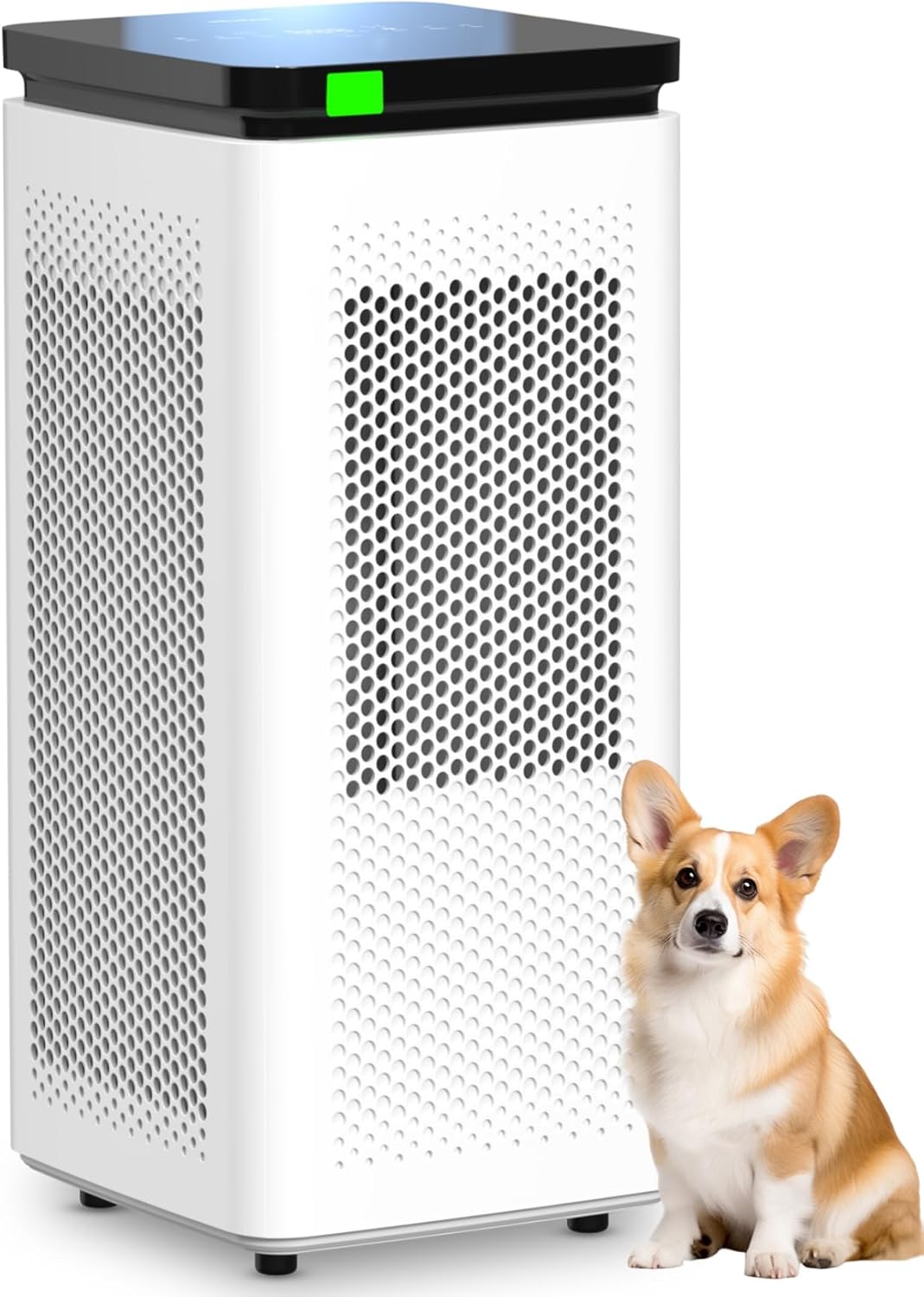
| CADR | 235 CFM |
|---|---|
| Particle retention size | 0.1 micron (H13 True HEPA, 99.97%) |
| Sq Ft coverage | Up to 3500 sq ft |
| Sleep mode noise | 30 dB |
| Energy use | As low as 0.66 kWh/day (ENERGY STAR test) |
The SIESEAN AP-400 is a large-room air purifier built around an H13 True HEPA filter plus activated carbon and a dual-sided intake to speed circulation. It is intended for living rooms, open plans, basements, or other large spaces where dust, pet dander, smoke, odors, and VOCs are concerns. Key conveniences include a PM2.5 air quality display and an Auto Mode that raises or lowers fan speed as air quality changes, a timer, child lock, and a dimmable control panel for nighttime use. At 235 CFM CADR the unit can move air quickly; the dual-inlet design is claimed to clean a 500 sq ft space in about 15 minutes and to cover up to 3500 sq ft for lower-level maintenance. Sleep Mode drops noise to roughly 30 dB, making overnight use feasible. Filters have a replacement indicator and the manufacturer recommends swapping filters every 3 to 4 months with genuine replacements. The main compromises are its size and need for periodic filter purchases, and that maximum coverage figures assume continuous operation at varying speeds rather than sustained peak flow in very large or irregular spaces.
Best for: Buyers who want strong, measurable filtration and automatic air-quality control for a main living area or basement and value quiet overnight operation and family-friendly controls.
Less Ideal for: People who need a compact, portable purifier for small rooms, travel, or occasional spot use should consider a smaller, lighter model instead.
- H13 True HEPA plus activated carbon captures 0.1 micron particles and reduces odors and VOCs
- 235 CFM CADR with dual-sided airflow for faster room circulation
- Built-in PM2.5 display and Auto Mode provide real-time feedback and automatic speed adjustment
- Very quiet sleep mode (~30 dB) and dimmable controls for nighttime use
- Child lock, timer, and filter-replacement indicator simplify daily family use
- Large footprint and weight make it less convenient to move between rooms
- Requires regular replacement filters to maintain performance
- Coverage and clean-air times are based on optimal conditions and may be longer in cluttered or atypical spaces
Verdict: Choose the AP-400 if you need high-flow H13 HEPA plus carbon filtration and quiet, automatic operation for cleaning air in large living spaces and basements.
Winix 5510 Air Purifier

| Filtration stages | 4-Stage |
|---|---|
| Coverage | Up to 1882 sq ft in 1 hour (AHAM verified at 392 sq ft) |
| Noise (low) | 23.5 dB |
| Smart features | WiFi, Alexa, Google Home, Winix Smart App |
| Particle capture | Captures particles as small as 0.01 microns |
The Winix 5510 is a four-stage tower air purifier built to clean large rooms quickly while offering smart controls and quiet operation. It combines a washable pre-filter, True HEPA that captures particles as small as 0.01 microns, and an advanced odor-control carbon filter to reduce pet and cooking smells and some VOCs. Built-in air quality sensors feed an LED indicator and power an Auto Mode that adjusts fan speed in real time, and the unit links to the Winix Smart App and voice assistants for remote monitoring. PlasmaWave technology is included as an additional air treatment step, and Sleep Mode cuts noise when the room is dark. Practical benefits include high reported CADR-style coverage for fast turnover in big spaces, reduced visible allergens and odors, and straightforward filter replacement notifications. Limitations for a rat-keeping context: the unit reduces airborne dander and odors but will not eliminate strong ammonia sources from dirty cages, and filters require periodic replacement to maintain performance; PlasmaWave may be less desirable for those who prefer pure mechanical filtration only.
Best for: Buyers who prioritize fast, high-performance particle removal and active odor reduction in large rooms with pets and want smart controls to automate air cleaning.
Less Ideal for: People who expect a purifier to fully remove strong ammonia from heavily soiled cages or those who prefer no electronic augmentation beyond mechanical filtration.
- True HEPA filtration capturing very small particles down to 0.01 microns
- Advanced carbon filter for odor and VOC reduction useful around pet areas
- Smart sensors with Auto Mode and LED air-quality indicator for hands-off operation
- Winix Smart App and voice assistant support for remote control and monitoring
- Washable pre-filter extends main filter life and simplifies maintenance
- Will not neutralize strong ammonia odors at the source; proper cage cleaning still required
- Requires periodic HEPA and carbon filter replacements to sustain performance
Verdict: A high-performance, app-connected purifier that rapidly removes allergens and reduces odors in large rooms, making it a strong choice for pet owners managing airborne dander and smells.
MOOKA PR1 Air Purifier

| Item model number | PR1 |
|---|---|
| Filter type | True H13 HEPA |
| Noise level (sleep mode) | 26 dB |
| Sensor | PM2.5 laser sensor with AQI display |
The MOOKA PR1 is a large-room air purifier built around a True H13 HEPA filter and a multi-stage system that targets smoke, pollen, pet dander, odors, and other particles down to 0.3 microns. It pulls air through a wider side inlet to increase intake and has a laser PM2.5 sensor with a digital AQI readout so you can monitor air quality in real time. Typical use is continuous in living areas, bedrooms, or spaces with small animals where odor and dander are concerns; Auto mode adjusts fan speed based on sensor readings while Sleep mode drops noise to about 26 dB for overnight use. The unit also offers a dedicated Pet mode, six fan speeds, a washable pre-filter to capture hair, an aroma pad for optional scenting, and a filter-replacement reminder. Trade-offs are that effective coverage claims (up to 2200 sq ft) depend on room layout and ACH, and replacement filters are recommended every 3 to 6 months to maintain performance, which adds running costs over time.
Best for: Buyers who want a practical, sensor-driven purifier for larger rooms that reduces dander and odors from small pets and rodents while offering quiet overnight operation and straightforward maintenance.
Less Ideal for: People seeking a permanently cost-free solution or those needing guaranteed whole-home air exchange should consider more powerful HVAC-integrated options instead.
- True H13 HEPA filtration captures particles 0.3 microns and larger
- Integrated PM2.5 sensor and digital AQI display for real-time monitoring
- Multiple modes including Auto, Pet, and a very quiet Sleep mode (~26 dB)
- Washable pre-filter reduces hair buildup and extends filter life
- Child lock, timer, and filter-replacement reminder for low-maintenance operation
- Stated large coverage depends on room layout and air changes per hour rather than guaranteed whole-house performance
- Requires periodic replacement of main filter every 3 to 6 months, increasing operating cost
Verdict: The MOOKA PR1 is a sensible, sensor-equipped choice for reducing dander and odors in large rooms housing small pets or rodents while staying quiet enough for night use.
Purivortex PX500 Air Purifier

| Coverage | Up to 880 sq.ft |
|---|---|
| Filtration | Pre-filter + HEPA + Activated carbon |
| Decibel | 20 db |
| Timer settings | 4H/8H/12H |
The Purivortex PX500 is a tabletop air purifier built around a three-layer filtration stack — pre-filter, HEPA filter, and activated carbon — and is intended to remove dust, pollen, smoke, pet dander, and light odors from indoor air. It is sized to handle spaces up to 880 sq ft per hour (about 215 sq ft in roughly 15 minutes) and offers four fan speeds plus a sleep mode and three timer settings for scheduled use. Notable practical features include a taller 6-inch filter that increases filtration media volume compared with many compact units, CARB and ETL safety listings, and a small footprint that fits on nightstands or shelves. The carbon layer helps reduce small pet and cage odors, while the HEPA captures very small particles down to 0.1 microns. Trade-offs are typical for compact purifiers: it relies on replacing the larger proprietary filter periodically, and while the unit is relatively quiet, active high-speed operation is needed for the fastest room turnover. For budget-minded buyers focused on improving bedroom or small-room air quality around pets or rodent cages, the PX500 balances filtration performance and features in a small package.
Best for: Buyers on a tight budget who need a compact, effective purifier for bedrooms or rooms near small pet enclosures and prioritize fast particle removal over advanced smart features.
Less Ideal for: Homes that need whole-house HVAC integration, continuous heavy odor removal from large animal rooms, or those wanting app-connected smart controls should consider other solutions.
- Three-layer filtration including HEPA and activated carbon for particulate and light odor removal
- Rated to purify up to 880 sq ft per hour with fast turnover in smaller rooms
- Compact footprint and quiet sleep mode suitable for bedrooms
- Larger 6-inch filter increases filter media capacity for longer effective filtration
- Uses a proprietary multi-inch filter that requires periodic replacement
- Top fan speeds are louder and use more power than low/sleep modes
Verdict: The PX500 delivers strong HEPA-plus-carbon filtration and fast room turnover in a compact, budget-friendly package ideal for improving air around small pet areas.
Levoit Vital 200S-P Air Purifier

| Floor Area | 1875 square_feet |
|---|---|
| Filter Type | 3-Stage Filter |
| Particle Retention Size | 0.1 micrometer |
| Noise Level | 27 db |
| Wattage | 51 |
The Levoit Vital 200S-P is a smart air purifier built to clean large rooms quickly using a three-stage filtration system and an extra U-shaped inlet to help capture pet hair and odors. It pairs with a mobile app for remote control and offers button controls and a washable pre-filter plus an activated carbon stage for odors and VOCs. Rated with AHAM-verified CADR numbers, the unit is sized to move air for rooms up to about 1875 square feet and runs quietly enough for bedrooms at its low setting. Practical benefits include strong particle capture down to 0.1 micrometer, dedicated replacement filter options for pets, smoke, or toxins, and an integrated air quality monitor to guide fan speed. Trade-offs are typical for high-capacity purifiers: the unit is fairly large and not as portable as small tabletop models, and replacement specialized filters add to ongoing costs. Noise and power are reasonable for its output but will increase at higher speeds when rapid clearing is needed.
Best for: Someone prioritizing a dependable, tested purifier that runs unattended to keep air consistently clean in homes with pets or odor sources.
Less Ideal for: If you need a compact, highly portable unit for small rooms or travel, a smaller desktop purifier would be a better choice.
- AHAM-verified CADR for smoke, dust, and pollen supporting fast whole-room cleaning
- Three-stage filtration with washable pre-filter and activated carbon for odors and VOCs
- Smart app control plus onboard air quality monitor for automated adjustments
- Dedicated replacement filter options tailored for pets, smoke, or toxins
- Large footprint makes it less convenient to move between rooms
- Specialty replacement filters increase ongoing maintenance cost
Verdict: Choose the Vital 200S-P when you want a proven, whole-room purifier with smart controls and dedicated filters that reliably handle pet hair, odors, and fine particles.
Levoit Core 300-P

| Power Source | Corded Electric |
|---|---|
| Filter Type | 3 in 1 Filtration |
| Floor Area | 1073 square_feet |
| Noise Level | 24 db |
| Wattage | 56 watts |
The Levoit Core 300-P is a small, well-built HEPA air purifier meant for bedrooms and living rooms where quiet, continuous filtration is needed. It uses a three-stage original filter (pre-installed) and a 56W motor to deliver AHAM-verified CADR performance that refreshes medium rooms quickly; the unit is rated to filter smoke, dust, pollen, pet dander, odors, VOCs, and similar airborne contaminants down to 0.3 microns. Controls are touch-based and there is a near-silent Sleep Mode that drops noise to about 24 dB and turns off the display for undisturbed nights. Practical benefits include certified safety listings, a check-filter indicator, and a timer for scheduled runtimes, and the manufacturer recommends using genuine replacement filters every 6 to 8 months for best results. Limitations are that this model lacks smart connectivity or an automatic sensor-driven Auto Mode, so you must adjust fan speeds manually and monitor filter replacement yourself, and its stated coverage and CADR figures apply when operated with Levoit original filters.
Best for: Buyers who prioritize proven performance and quiet operation backed by broad positive user feedback will appreciate a compact purifier that reliably removes fine particles and common household contaminants.
Less Ideal for: People who want smart features, automatic air-quality sensing, or a hands-off, connected experience should consider models with built-in Auto Modes and Wi‑Fi instead.
- True HEPA-grade three-stage filtration that captures particles down to 0.3 microns with 99.97% efficiency
- AHAM-verified CADR and multiple safety certifications provide measurable performance and compliance
- Very quiet Sleep Mode at about 24 dB and an option to turn off display lights for nighttime use
- Touch controls, timer (2/4/6/8 hours), and filter change indicator for straightforward operation
- No smart connectivity or Auto Mode, so fan speed and runtime must be managed manually
- Optimal coverage and CADR are specified for use with Levoit original filters only
Verdict: Choose the Core 300-P when you want a compact, AHAM-verified HEPA purifier that quietly removes fine particles and odors in bedrooms and similar rooms.
VOOPNU HEPA Air Purifier DH-JH12

| Filtration | H13 True HEPA triple-layer |
|---|---|
| Coverage claim | Up to 1,076 ft² (lab: 250 ft² per 15 min) |
| Noise level | 22 dB (lowest) |
| Fan speeds | 3 speeds |
The VOOPNU DH-JH12 is a small, user-friendly air purifier built around an H13 true HEPA triple-layer filter and 360 degree intake to remove common indoor pollutants. It is meant for daily, continuous use in bedrooms, offices, or small living areas and the manufacturer claims laboratory-tested coverage rates equivalent to cleaning 250 ft² every 15 minutes. Controls are simple with three fan speeds and a timer, and the unit runs quietly down to about 22 dB for overnight operation. A washable pre-filter and optional aroma tray add convenience for pet owners or light odor masking. Certifications from DOE, ETL, FCC, CARB, CE and RoHS indicate it meets common safety and emissions standards. Important limits are its small footprint and implied replacement filter interval of a few months, so expect ongoing filter costs for persistent animal odors or heavy particulate loads; heavy contamination may require a higher-capacity unit. For buyers who prioritize easy setup, verified filtration, and low noise, this purifier delivers reliable day-to-day performance in smaller spaces.
Best for: Buyers seeking a low-risk, easy-to-use purifier for bedrooms or small rooms who value verified filtration, quiet operation, and straightforward controls over advanced smart features.
Less Ideal for: People who need to treat large rooms, whole-house coverage, or intense odor and dander from many rodents should choose a higher-capacity purifier or multiple units instead.
- H13 true HEPA triple-layer filter captures 99.97% of airborne particles at fine sizes
- 360 degree intake design and lab-tested coverage to clean 250 ft² every 15 minutes
- Very quiet operation down to 22 dB suitable for bedroom use
- Simple control panel with three speeds and timer for easy, continuous operation
- Built-in aroma tray and washable pre-filter add convenience for pet or odor situations
- Compact unit intended for small to medium rooms and may struggle with large open areas
- Requires periodic filter replacements which add ongoing operating cost
Verdict: A quiet, easy-to-use HEPA purifier that provides reliable particulate removal for small rooms and conservative buyers who want proven filtration without complexity.
Choosing the Right Air Purifier for Rats: Key Factors to Consider
Filtration Type and Efficiency
High-efficiency particulate filters capture the fine dust and dander that rats produce. True HEPA filters trap very small particles that can carry allergens and can reduce airborne dust from bedding, which matters in enclosed cages or smaller rooms. For odor control, an active carbon stage or specialized odor-adsorbing media is important because particulate filters alone do not remove ammonia or cage smells.
When evaluating filtration, consider both the minimum particle size the filter captures and whether the purifier has a dedicated prefilter to catch larger hair and lint. A layered system reduces load on the main filter and lengthens service intervals, lowering ongoing maintenance time and cost.
Noise Level and Animal Comfort
Rats are sensitive to sudden loud sounds and continuous high-frequency noise. Look for purifiers with low-decibel low-speed settings and a predictable noise curve across fan speeds. Quiet operation is especially important at night if the cage is in a bedroom or small living area, because chronic noise can increase stress and disrupt sleep patterns.
Check whether controls allow a silent or sleep mode and whether fan speeds ramp smoothly. Physical indicators like bright LEDs or chimes can also disturb animals, so units with dimmable displays or the ability to mute alerts are preferable.
Room Coverage and Placement
Match the purifier's recommended coverage to the size of the room where the cage is located. A unit rated for small bedrooms may be adequate for a desktop or single-cage setup, while larger rooms need higher clean air delivery rates. Proper placement matters: avoid obstructed airflow behind furniture or directly over the cage where drafts could stress animals.
Consider how many air changes per hour the unit provides; more frequent air exchange reduces lingering odors and keeps airborne particulates lower. Also account for portability if you plan to move the purifier between rooms.
Filter Life and Ongoing Costs
Filter replacement frequency affects convenience and total cost of ownership. Units with easy-to-replace, widely available filters simplify maintenance. Prefilters that capture hair and large debris extend the life of the main HEPA and carbon filters, reducing replacement frequency.
Also check whether the purifier has clear filter-replacement indicators and whether filters are reusable, washable, or entirely disposable. Longer filter life and straightforward replacement procedures reduce the chance of lapses in protection.
Safety, Controls, and Physical Design
An appliance placed near animal enclosures should be physically stable and have safety features like a secure grille over the intake and exhaust. Child and pet-safe controls prevent accidental changes to settings. Avoid units with exposed heating elements or accessible moving parts.
Design details such as a smooth exterior that is easy to wipe down, and a compact footprint that fits beside a cage, improve usability. Also consider whether the unit's electrical cord and switch placement allow safe routing away from curious pets.
Where to Place an Air Purifier for a Rat Cage
Placement impacts performance more than many buyers expect. Position the purifier so its intake is not blocked by walls or furniture and so the exhaust is not blowing directly into the cage. Aim for unobstructed airflow on at least two sides to maximize air draws through the unit.
If the cage is in a bedroom, place the purifier near the cage but off the floor if possible to avoid hair and larger debris clogging the intake. For multi-cage rooms, place the purifier centrally or use a model with higher coverage to ensure even air exchange.
- Keep at least several inches of clearance around intakes and exhausts.
- Avoid placing the unit directly above food or bedding where debris could fall into the intake.
- Use quieter, lower-speed settings overnight and higher speeds during cleaning or when odors spike.
Managing Cage Odor Without Over-Reliance on Technology
Air purifiers help control airborne odor but are most effective when combined with routine cage maintenance. Regular cleaning, spot removal of soiled bedding, and improved ventilation within the room reduce the load on the purifier and keep filtration sustainable.
Consider layered odor control: a mechanical filter stage for particulates and a carbon stage for gases. For persistent ammonia smells, increasing air exchanges and more frequent bedding changes will be more effective than any single purifier alone.
- Do a full cage clean on a regular schedule and spot-clean daily.
- Use unscented bedding and avoid perfumed products that can mask odors while adding VOCs.
- Run the purifier on a moderate continuous setting rather than short, intense bursts for steadier odor control.
Keeping Filters Working When Hair and Dust Are Constant
Rats shed fur and kick up litter that can quickly coat prefilters. A washable or easy-to-vacuum prefilter will reduce the load on the primary HEPA media. Check filters weekly when you first start using a purifier in a cage room to establish a replacement schedule based on real-world loading.
Also inspect the intake grille and fan housing periodically for hair buildup. Regular maintenance avoids reduced airflow and noisy operation. If a unit has a washable prefilter, clean it promptly and allow it to dry fully before reinstalling.
- Vacuum or brush the prefilter at least once every 1 to 2 weeks in high-shed situations.
- Rotate to higher-capacity filters if you notice frequent clogging or rapid decline in airflow.
- Record filter changes so you can predict maintenance intervals accurately.
Noise Management Strategies
Even quiet air purifiers can become disruptive if set to maximum speed. Use lower fan speeds for overnight and sustained running. Reserve higher speeds for short periods like after cleaning or when odors spike.
If available, set the unit to a sleep mode or choose a purifier with an ultra-quiet setting. Locate the purifier so that its quieter side faces the cage and the louder exhaust is directed away from sleeping areas.
- Test different fan speeds to find a balance between quiet operation and adequate air exchange.
- Consider timers or smart controls to increase airflow during activity and reduce it overnight.
- Use sound-absorbing placement, such as on a rug or shelf, to dampen vibrations.
Maintenance Checklist for Rat Owners
Establish a simple maintenance routine to keep the purifier performing reliably. Weekly checks of the intake, prefilter, and basic airflow will prevent surprises. Replace sealed HEPA or carbon filters according to manufacturer guidance or sooner if you notice reduced performance or persistent odor.
Keep spare filters on hand if the model uses a common size. If filter-change indicators are present, reset them only after checking that the new filter is properly seated.
- Weekly: inspect prefilter and intake for hair, vacuum or wash as needed.
- Monthly: check airflow and run in high mode briefly to clear any accumulated dust.
- When odor persists: replace carbon filter or increase cleaning frequency of the cage.
How We Chose the Best Air Purifier for Rats
We focused on features that directly matter in rooms with pet rats and small animal enclosures. First, filtration capability was essential: we prioritized true HEPA or equivalent particulate capture for fine dander and dust, combined with activated carbon capacity for odor control. Second, we weighed noise output across typical fan speeds because loud airflow can stress small mammals. Third, airflow and room coverage were assessed to ensure adequate air exchanges for typical cage or bedroom sizes. Fourth, maintenance and filter availability were considered to keep long-term upkeep straightforward. Finally, safety and physical footprint were important for placement near cages and in smaller rooms. We excluded units that lack particulate filtration or that rely solely on ionization without a particulate filter. High-maintenance specialty units with rare filters or risky ozone emissions were also omitted. Our shortlist reflects devices that balance measurable filtration performance with practical, pet-friendly operation and reasonable upkeep.
Our full evaluation process is outlined in our review methodology.
FAQ
Do I need a HEPA filter to reduce rat dander?
Often yes. True HEPA or equivalent particulate filters capture the fine dander and dust that contribute to airborne allergens. Filters labeled as HEPA capture very small particles that basic electrostatic or fabric filters may miss.
Will an air purifier remove ammonia from urine odors?
Partially. Activated carbon stages and specialized gas-adsorbing media reduce volatile ammonia and odor molecules, but heavy ammonia buildup is best addressed by more frequent cleaning and better ventilation in addition to filtration.
How loud is too loud for rats?
Rats tolerate low continuous sound better than sudden loud noises. Aim for low-speed noise ratings in the quieter decibel ranges and avoid units with high-frequency buzzes. If the unit causes observable stress behaviors, lower the speed or move it further from the cage.
Can I run the purifier continuously?
Usually yes. Continuous moderate operation maintains steady air quality and often uses less energy than frequent high-speed bursts. Ensure filters are checked regularly to prevent clogging from constant running in dusty environments.
Where should I keep the purifier during cage cleaning?
Run the purifier at a higher speed while cleaning to capture airborne dust and bedding particles, then reduce to a moderate continuous setting. Keep it positioned so intake captures airborne debris kicked up during cleaning rather than blowing directly over the cage.
Final Verdict
Prioritize a purifier that combines effective particulate filtration with an activated carbon stage and quiet operation. Balance the unit's coverage area with your room size and choose models with easy-to-maintain prefilters to handle fur and bedding debris. Expect tradeoffs between maximum airflow and noise; for most rat owners a quieter unit with adequate air changes will be the best daily solution. Focus on consistent cleaning and appropriate placement as much as filter specs. With those priorities in mind, you can select an air purifier that noticeably reduces dander and odors while keeping animals calm and breathing easier.