
Note: This article contains affiliate links. If you click on these links and make a purchase, we may earn a small commission at no extra cost to you. This helps support our research and content. Read our full affiliate disclosure here.
If you want cleaner indoor air without the hassle of swapping disposable filters, an air purifier without filter can be a low-maintenance option. These units typically rely on technologies such as electrostatic collection, ionization, or photocatalytic oxidation to remove particles and some gases from room air. Choosing the right filterless purifier matters because different technologies have tradeoffs in sound, filtration speed, and ongoing upkeep. This guide shortlists six top options in the filterless category and evaluates them across practical criteria like cleaning effectiveness, noise, and maintenance. Read on to see which style fits your room size, tolerance for sound, and desired level of hands-off operation.
Top Picks at a Glance
| Best Overall The best all-around choice for most situations | AirTamer A310W Personal Air Purifier |  |
| Best Quality Built to a higher standard if you want something more solid | Ionic Pro Turbo TA500 |  |
| Best Value The sweet spot between price and what you get | Plixio PLX50 Ionic Air Purifier |  |
| Best Budget The cheapest option that still gets the job done reliably | QWUE Plug-In Air Ionizer 2-Pack |  |
| Top Rated A top-rated pick with lots of positive feedback | Aukuu Plug-In Air Ionizer 4-Pack |  |
| Most Popular A crowd favorite that many people choose with confidence | Clarifion Air Ionizer GL-139 | 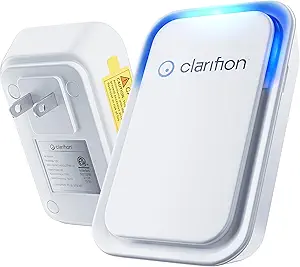 |
AirTamer A310W Personal Air Purifier

| Item model number | A310 White |
|---|---|
| Batteries | 1 Lithium Polymer (included) |
| Runtime | 150+ hours |
| Coverage | 3-foot orbit of protection |
The AirTamer A310W is a compact wearable air purifier designed to create a small sphere of cleaner air around the user by emitting negative ions. It is worn on an adjustable conductive lanyard or placed nearby and runs silently because it has no fan, making it unobtrusive during travel, commuting, office work, or sleep. Notable features include an included USB charging cable, a metal travel case, and a long single-charge runtime rated at 150+ hours, which makes it convenient for extended use without frequent recharging. The unit is lab tested against certain viruses and marketed to reduce particles quickly within its close-proximity zone. Because it uses electrostatic ionization instead of mechanical filtration, there are no filters to replace, simplifying maintenance. Limitations are its very localized coverage — the purifier affects only the immediate breathing zone rather than whole-room air — and ionizers work differently than HEPA filters, so they do not capture particles on a visible filter and their effectiveness can vary with environment and placement.
Best for: Buyers who want a low-maintenance, highly portable personal purifier for travel, commuting, or desk/nightstand use and prioritize convenience and quiet operation.
Less Ideal for: People seeking whole-room purification, allergen removal with HEPA-grade capture, or quantitative particle removal across larger spaces should choose a room air purifier instead.
- Long rechargeable runtime of 150+ hours on a single charge
- Silent operation with no fan or moving parts
- No filters to replace, lowering upkeep and running cost
- Includes adjustable conductive lanyard and metal travel case for portability
- Cleans only a small, close-range breathing zone rather than entire rooms
- Uses ionization rather than mechanical filtration so particles are not captured on a filter
Verdict: Choose the AirTamer A310W if you want a silent, rechargeable personal purifier with long battery life and minimal upkeep for close-proximity use.
Ionic Pro Turbo TA500

| Filter Type | Electrostatic |
|---|---|
| Floor Area | 600 square_feet |
| Noise Level | 27 db |
| Wattage | 9 watts |
| Contaminant Filtration Capability | Dust, Pet Dander, Pollen, Pollutants, Smoke |
The Ionic Pro Turbo TA500 is a tower-style, filterless air purifier that uses ionic/electrostatic collection to capture dust, pet dander, pollen and smoke in medium to large rooms. It is typically placed in a living room, bedroom, or office and run continuously on one of three purification settings; the unit is fan-free and relies on ionization and electrostatic blades to collect particles on removable collection plates that wipe clean. Practical benefits include very low power consumption at roughly 9 watts, near-silent operation and no recurring filter replacement costs since the collection blades are washable. Important limitations are that it relies on ionization rather than mechanical HEPA filtration, which changes how and which particles are removed and can produce a mild ozone odor for some users, and it requires regular cleaning of the collector blades and internal ionizer to maintain quiet operation and performance. The slim tower footprint fits into corners and the push-button controls keep operation simple for everyday use.
Best for: Buyers who prioritize continuous, low-energy air cleaning for larger rooms and want minimal maintenance costs and near-silent operation.
Less Ideal for: People who need certified HEPA-level particle capture or who are sensitive to ozone or ionization byproducts should consider mechanical-filter alternatives.
- Filterless electrostatic collection eliminates ongoing replacement filter costs
- Very low energy use at about 9 watts for continuous operation
- Quiet, fan-free design suitable for night use or quiet rooms
- Washable removable collection blades are quick to clean
- Uses ionic purification rather than HEPA, so particle removal mechanisms differ
- Can produce a noticeable "clean" scent from ozone production for some users
Verdict: Choose the TA500 if you want a low-power, filterless purifier that quietly covers large rooms while avoiding recurring filter replacements.
Plixio PLX50 Ionic Air Purifier

| Item model number | PLX50 |
|---|---|
| Ozone output | 10-50 mg/hr |
| Power consumption | Less than 7 watts |
| Recommended coverage | Up to 100 sq ft |
The Plixio PLX50 is a compact, filterless ionic air purifier designed for spot use in very small rooms and travel. It plugs into power and uses adjustable ozone/ion output (10–50 mg/hr) to neutralize odors from pets, smoke, bathrooms and kitchens without a filter to replace. The unit is whisper quiet, consumes under seven watts, and its small footprint makes it easy to place in closets, dorms, laundry rooms or on a desk. Operation is simple: a dial controls the purification intensity so you can choose a low, quiet setting or higher output for stubborn smells. Cleaning is minimal since there is no filter, though ionic devices rely on ozone chemistry rather than mechanical particle capture, so they are best for odor control rather than HEPA-level particle removal. Each unit is recommended for about 100 sq ft and multiple units are suggested for larger areas. If you want a tiny, low-energy, no-filter option to cut odors in confined spaces, the PLX50 is practical and unobtrusive; it is not a substitute for filter-based purifiers when particulate removal or allergy relief is the priority.
Best for: Buyers who prioritize a low-maintenance, energy-efficient device for eliminating odors in small, poorly ventilated rooms and want a portable, no-filter solution.
Less Ideal for: People seeking true particle filtration for allergies, asthma, or larger rooms should choose a HEPA or filter-based purifier instead.
- Filterless design requires no replacement filters
- Adjustable ozone/ion output dial for simple intensity control
- Very low power use and near-silent operation suitable for overnight or office use
- Compact, lightweight and easy to place or transport
- Uses ozone/ions rather than mechanical filtration so it does not reliably remove fine particulates or allergens
- Effective coverage is limited to very small spaces (about 100 sq ft)
Verdict: A tiny, energy-efficient filterless unit that quietly reduces odors in very small spaces without the need for replacement filters.
QWUE Plug-In Air Ionizer 2-Pack

| Item model number | PH0012_2 |
|---|---|
| Power consumption | 2W |
| Units per pack | 2 |
| Manufacturer | QWUE |
These compact plug-in ionizers use negative-ion generation rather than a fan or filter to clump airborne particles so they settle out of the breathing zone, making them a zero-maintenance option for small spaces. Each unit plugs directly into a wall outlet and runs quietly and at very low power, so you can leave them operating 24/7 in bedrooms, bathrooms, offices, or near litter boxes. A touch control toggles between a warm night-light mode and the air-freshening mode, and the filterless design eliminates replacement costs and routine cleaning beyond an occasional wipe. Practical benefits include silent operation, low energy draw (about 2W), and simple placement without cords or filters. Important limitations are that ionizers do not actively remove particles from a room the way HEPA-equipped purifiers do and that settled dust still needs manual cleaning; they are best for supplemental odor reduction and light particle control in small areas rather than as the sole solution for allergy or smoke removal.
Best for: Buyers looking for an inexpensive, set-and-forget supplemental air fresher for small rooms who prioritize low running cost and minimal maintenance over maximum particle removal.
Less Ideal for: People who need robust removal of smoke, mold spores, or allergens for an entire living space should choose a fan-based HEPA purifier instead.
- Filterless design requires no replacement filters or ongoing consumable costs
- Very low power draw (about 2W) makes continuous use inexpensive
- Ultra-quiet operation suitable for bedrooms and nurseries
- Touch control with warm night light combines simple lighting and air freshening
- Does not actively capture particles like HEPA filters so effectiveness is limited for heavy smoke or allergy-level particle removal
- Works best in small, localized areas and may not noticeably change air quality in larger rooms
Verdict: A very affordable, maintenance-free plug-in ionizer two-pack that delivers silent, low-cost odor and light particle control for small rooms.
Aukuu Plug-In Air Ionizer 4-Pack

| Item model number | 115 |
|---|---|
| Product Dimensions | 1 x 1 x 1 inches; 5.28 ounces |
| Date First Available | July 9, 2026 |
This plug-in air ionizer generates negative ions to reduce odors, pet dander, dust and airborne particles without using replaceable filters. It is a tiny, lightweight unit intended to sit in a standard wall outlet for continuous, near-silent operation, which makes it convenient for bedrooms, offices, bathrooms and basements where you want low-maintenance background air freshening. The filterless design eliminates replacement costs and keeps upkeep to a minimum, while the small footprint and plug-and-play setup mean you can deploy several units around a home to cover multiple rooms. Practical limitations are typical of ionizers: it does not actively filter or capture large volumes of particulates the way HEPA machines do, and its effect is strongest in small, enclosed areas near the outlet rather than open-plan spaces. Expect subtle improvements in odors and light particle reduction rather than dramatic allergy-grade purification.
Best for: Buyers who prioritize a low-maintenance, always-on air freshening solution for small rooms and who value quiet, simple devices over high-output filtration.
Less Ideal for: People seeking medical-grade allergen or smoke removal for large open spaces should choose a mechanical-filter purifier instead.
- No filters to buy or replace, lowering maintenance and running costs
- Very compact plug-in design that is easy to install and move between rooms
- Quiet continuous operation suitable for bedrooms and offices
- Limited particle removal compared with HEPA or active-filter purifiers
- Effective coverage is modest and depends on room layout and outlet placement
Verdict: Choose this plug-in ionizer when you want a quiet, maintenance-free way to reduce odors and light airborne particles in small rooms without dealing with filters.
Clarifion Air Ionizer GL-139
| Item model number | GL-139 |
|---|---|
| Date First Available | October 2, 2019 |
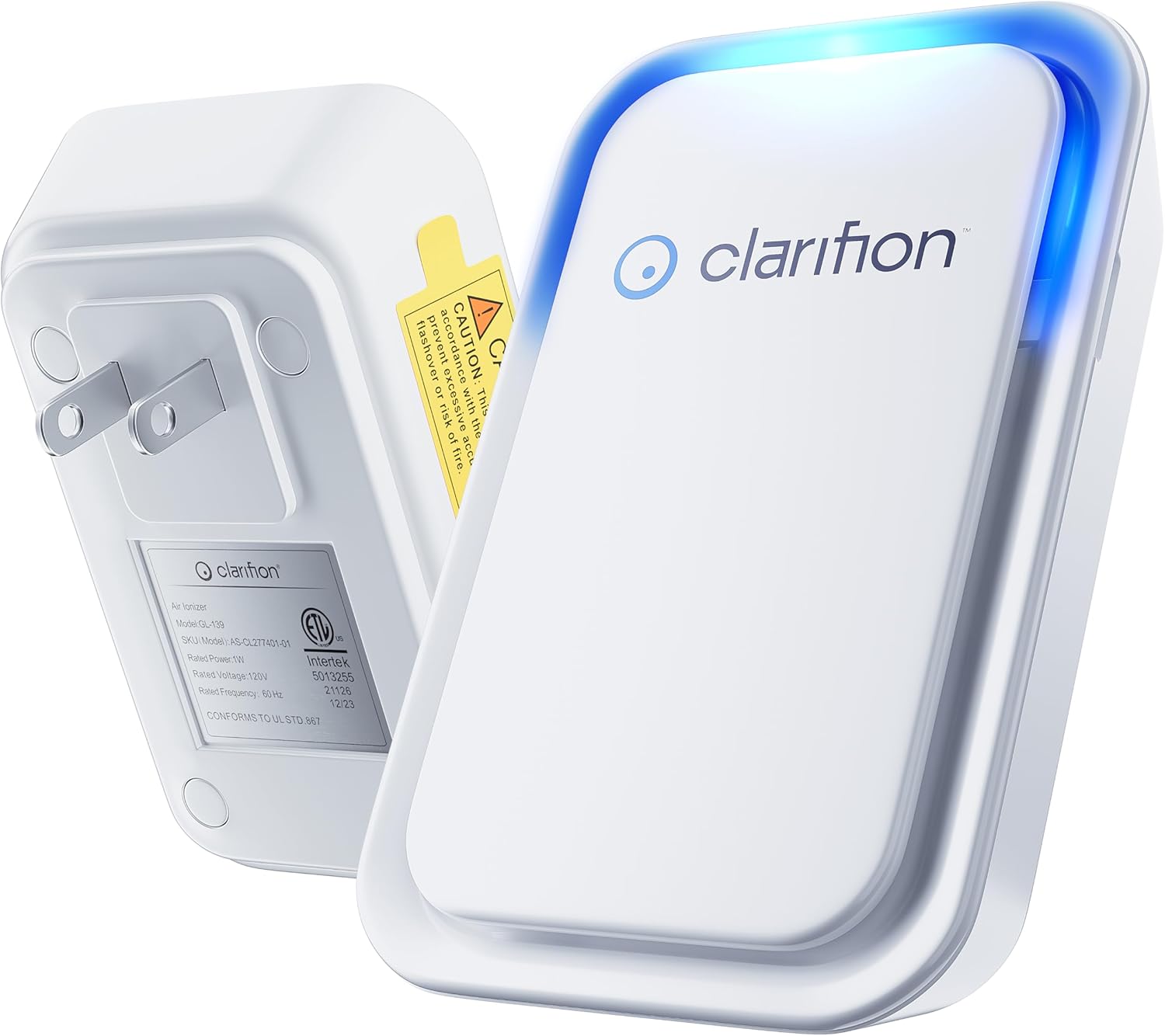
The Clarifion GL-139 is a small, plug-in negative ion generator designed to reduce airborne particulates and odors in rooms without using a HEPA or carbon filter. It starts working as soon as it is plugged into a standard outlet and is intended for continuous, quiet operation; the unit also includes a low-intensity blue nightlight. Typical use is wall-mounted or plugged into an outlet in bedrooms, offices, bathrooms, and other small living spaces where a discreet air treatment is desired. Because it uses negative ions to weigh down particles rather than trapping them, there are no replacement filters to buy or maintain, which keeps running costs low and setup simple. Limitations are inherent to ionizer technology: it does not actively filter or capture particles the way a HEPA purifier does, and effectiveness can vary with room airflow and pollutant type. The Clarifion is best viewed as a low-maintenance, odor-reducing supplement in small spaces rather than a full replacement for high-performance filtered air purifiers.
Best for: Buyers who want a low-maintenance, easy-to-use air treatment for small rooms and prioritize simplicity, low running cost, and quiet operation supported by many user reviews.
Less Ideal for: People seeking certified particulate removal for allergy relief or those who need whole-room HEPA-grade filtration should choose a true filtered air purifier instead.
- Plug-and-play design that operates from any standard outlet
- Filterless negative ion technology eliminates replacement filter costs
- Compact, lightweight and portable for use in multiple rooms
- Very quiet operation with a discreet nightlight
- Does not capture or remove particles like a HEPA filter does
- Performance depends on room airflow and may be inconsistent across pollutant types
Verdict: Choose the Clarifion GL-139 if you want a quiet, maintenance-free plug-in ionizer that freshens small rooms without replacement filters.
Choosing the Right Air Purifier Without Filter: Key Factors to Consider
Filtration Technology and How It Works
Different filterless purifiers use different physical or electrochemical principles to reduce airborne contaminants. Electrostatic precipitators charge particles and capture them on collector plates, while ionizers release charged ions that cause particles to clump and settle. Photocatalytic systems use light-activated catalysts to break down certain volatile compounds.
Understanding the underlying technology matters because each method targets different contaminants and produces different side effects. For example, some ionizing approaches are good at reducing fine particles but less effective on gases. Knowing the mechanism helps you match a unit to your primary concern, whether that is dust and pollen or odor and VOC reduction.
Effectiveness on Particles Versus Gases
Filterless designs tend to perform differently on solid particles compared with gaseous pollutants. Particle capture is often measurable through particle-count reduction rates, while gas and odor removal typically require catalytic action or adsorption media, which many filterless units lack.
If your main worry is fine dust, smoke, or pet dander, focus on performance metrics and room coverage. If odors or volatile organic compounds are the issue, confirm that the technology used specifically addresses gases or consider pairing the unit with other odor-control strategies.
Room Size and Placement
Airflow and room coverage determine whether a purifier will meaningfully lower particle counts in your space. Manufacturers often state a suggested room size or provide an airflow figure. Match that recommendation to your actual room area and account for furniture layout and obstructions.
Placement affects circulation. Position units where air can flow freely, away from corners and heavy furniture. Larger open areas may need multiple units or a single purifier rated for higher coverage to achieve the same reduction in particle counts.
Noise and Daily Use
Many people run purifiers continuously, so operational noise is a major usability factor. Filterless technologies can be quiet at low speeds but louder when maximizing airflow. Evaluate reported decibel levels across modes and consider whether you will use the unit in bedrooms, living rooms, or home offices.
Look for adjustable fan speeds, sleep modes, or auto settings that reduce noise when immediate filtration intensity is not required. The tradeoff is that lower speeds reduce cleaning rate, so think about when you need intense cleaning and when quiet operation is preferable.
Maintenance and Cleaning Requirements
Although these purifiers do not need replaceable filters, they still require regular maintenance. Electrostatic collectors and ionizers accumulate particles on plates or internal surfaces and need periodic cleaning to restore performance. Some units have washable collection cells or detachable components designed for simple upkeep.
Check how easy it is to access and clean collector surfaces, whether parts are dishwasher-safe, and how often cleaning is recommended. Maintenance frequency affects the real convenience advantage of a filterless unit and can influence long-term effectiveness.
Byproducts and Safety Considerations
Some filterless technologies can generate byproducts that are undesirable in indoor settings. For example, certain ionization or photocatalytic systems can produce trace ozone or reactive species if not properly designed and controlled. Ozone exposure has health implications, especially for people with respiratory sensitivities.
Review any manufacturer guidance on emissions, and prefer units with explicit low-ozone ratings or independent testing. Understanding potential byproducts helps you balance the convenience of filterless operation against indoor air chemistry and occupant health.
How Filterless Technologies Compare to Filter-Based Units
Filterless purifiers use electrical, ionic, or surface-chemical methods to remove contaminants rather than trapping them on a disposable media. That can mean lower ongoing material costs and less waste, but it also introduces differences in what is removed and how maintenance is handled.
Filter-based units physically capture particles on HEPA or carbon media and typically offer predictable particle capture rates. Filterless options may excel at continuous operation with minimal consumables but require routine cleaning of internal collectors to maintain peak performance.
- Filterless: lower ongoing costs, periodic surface cleaning, potential emission considerations
- Filter-based: predictable particle capture, recurring filter replacement, less frequent user cleaning
Placement Tips to Maximize Cleaning Speed
For best results, place a filterless purifier in a central, elevated location where it can draw air from across the room. Avoid tucking units behind couches or inside shelving where airflow is restricted.
If you have multiple rooms to cover, spread smaller units rather than relying on a single device placed far away. Doing so shortens the time to reach lower particle counts in occupied areas.
- Keep at least 12 inches of clearance from walls
- Avoid direct placement near humidity sources like open sinks
- Use multiple smaller units for zoned coverage
Maintaining a Filterless Purifier Safely
Regular maintenance is essential to sustain performance. Unplug the unit before cleaning collector plates or internal surfaces, and follow manufacturer cleaning intervals. Collectors can often be wiped or rinsed; ensure all parts are fully dry before reassembly.
For devices that recommend electrode cleaning, use the suggested tools and avoid abrasive methods that could damage surfaces. Keep a log of cleaning intervals if the unit is run continuously to avoid performance degradation.
- Unplug before servicing
- Follow drying recommendations to prevent electrical faults
- Use manufacturer-recommended cleaners or plain water
When to Choose Filterless Versus Filter-Based
Choose a filterless unit if you prioritize low ongoing costs and dislike replacing cartridges. They are a good fit for people who are comfortable with periodic cleaning and whose main concerns are particulate reduction rather than heavy odor control.
Opt for a filter-based purifier if you need consistent HEPA-grade particle capture or strong VOC and odor removal. Filter-based systems are often favored in allergy management scenarios because their performance is more directly measurable.
- Filterless: best for low-maintenance particle control
- Filter-based: best for high-capture particle and gas removal needs
Energy Use and Continuous Operation
Many filterless purifiers are designed for continuous operation and can be energy-efficient at moderate fan speeds. Look for clear power consumption figures so you can estimate daily operating cost and compare across models.
If you plan to run a unit 24/7, prioritize energy efficiency and quieter low-speed performance. Energy-efficient fans and motors reduce electricity draw and operating expense over time.
- Check watts at typical fan speeds
- Consider smart timers or occupancy sensors to reduce run time
- Lower power does not always mean lower cleaning effectiveness
How We Chose the Best Air Purifier Without Filter
We prioritized products that deliver consistent airborne particle reduction without requiring replaceable filters. Selection centered on measurable cleaning performance, validated engineering approaches, and real-world usability. Our evaluation criteria emphasized particle removal effectiveness in typical home conditions, explicit room-size recommendations, and runtime consistency across fan speeds. We also assessed noise across operating modes because many users run purifiers continuously. Energy efficiency and daily operating cost were included to reflect long-term ownership impact. Ease of maintenance and hygienic cleaning procedures were considered since filterless systems still need periodic surface cleaning or electrode maintenance. We excluded units that rely on disposable HEPA or carbon cartridges, hybrid models that require periodic media replacement, and devices with ambiguous manufacturer performance claims. The final shortlist favors units with clear specs, documented airflow or CADR-like figures, and straightforward upkeep procedures that align with real home use.
Our full evaluation process is outlined in our review methodology.
FAQ
Do air purifiers without filters really remove fine particles?
Many filterless purifiers can reduce fine particles through electrostatic collection or ionization, but effectiveness varies by design and room conditions. Look for published particle reduction rates or airflow specifications to gauge likely performance.
How often do I need to clean a filterless purifier?
Cleaning frequency depends on usage and indoor particle load but commonly ranges from every few weeks to a few months. High-dust or smoky environments require more frequent maintenance to keep performance steady.
Are there any health risks with filterless air purifiers?
Some technologies can produce trace amounts of ozone or reactive byproducts if not properly controlled. Choose units with low-ozone ratings and follow safety guidance, particularly if household members have respiratory sensitivities.
Can a filterless purifier handle odors and VOCs?
Most filterless designs focus on particles rather than gases, so they are generally less effective on odors and volatile organic compounds unless they include specific catalytic or adsorption features. For persistent odors, additional strategies may be needed.
Will a filterless unit save me money long term?
You may save on recurring filter purchases, but factor in the time required for maintenance and potential differences in energy use. Long-term savings depend on how often you would have replaced filters and how much time you spend cleaning collector elements.
Are filterless purifiers suitable for allergy sufferers?
They can help reduce airborne allergens, but people with severe allergies often prefer HEPA-based filtration because of its well-documented capture efficiency. Consider your sensitivity level and whether the device provides measurable particle reduction.
Final Verdict
When considering an air purifier without filter, focus on matching the technology to your primary needs: particle reduction, odor control, or low maintenance. Pay attention to claimed particle removal rates, recommended room coverage, and noise at typical operating speeds. Accept the tradeoff that filterless units require periodic cleaning and may be less effective on gases. If you prioritize minimal consumables and are willing to perform routine cleaning, a filterless purifier can be a convenient choice for continuous background air cleaning. Otherwise, prioritize measurable capture performance and gas-handling capability when that is more important to your household.