
Note: This article contains affiliate links. If you click on these links and make a purchase, we may earn a small commission at no extra cost to you. This helps support our research and content. Read our full affiliate disclosure here.
Living in a tiny house means every square inch counts, and your laundry appliance has to deliver full cleaning and drying performance without taking over the floor plan. An All-in-One Washer Dryer Combo for Tiny House combines washing and drying in a single footprint so you can handle regular loads, avoid trips to laundromats, and keep utility use reasonable. This guide covers the top shortlisted all-in-one washer dryer combos for tiny-house living and explains the criteria we used to evaluate them, including capacity, efficiency, venting needs, and installation flexibility. Read on to find compact, efficient options that suit limited space and modest household laundry needs.
Top Picks at a Glance
| Best Overall The best all-around choice for most situations | BLACK+DECKER BCW27MW Washer Dryer Combo |  |
| Best Quality Built to a higher standard if you want something more solid | LG WM3555HWA All-In-One Washer/Dryer |  |
| Best Value The sweet spot between price and what you get | Splendide Washer Dryer Combo WDV2200XCD |  |
| Best Budget The cheapest option that still gets the job done reliably | Equator EZ 4600 Combo Washer Dryer |  |
| Top Rated A top-rated pick with lots of positive feedback | Midea Washer Dryer Combo 2.7 cu ft |  |
| Most Popular A crowd favorite that many people choose with confidence | COMFEE' 2.7 cu.ft Washer Dryer Combo |  |
| Best Seller A high-volume bestseller chosen again and again | GE GFQ14ESSNWW Washer Dryer Combo |  |
BLACK+DECKER BCW27MW Washer Dryer Combo

| Capacity | 2.7 cubic feet |
|---|---|
| Voltage | 120 volts |
| Maximum Rotational Speed | 1300 rpm |
| Number of Washing Cycles | 16 |
| Number of Drying Cycles | 3 |
This BLACK+DECKER BCW27MW combines a front-load washer and ventless dryer in a single 2.7 cu ft cabinet to save space in small homes. You pick from 16 wash cycles including Quick Wash, Delicates, and Heavy Duty, set and store a favorite with My Cycle, or pause to add a garment mid-cycle. The dryer runs on 120V with Auto Dry and Timed Dry modes and offers Normal, Extra and Delicate dryness levels, though expect longer dry times compared with 240V dryers. The machine has a 1300 rpm spin to reduce drying load, a stainless steel wash tub, LED display with child lock, and a transparent lid so you can monitor loads. Practical benefits include simple installation on standard household power without venting and a compact footprint that fits kitchens or tiny-house laundry areas. Important limitations are the modest drying capacity relative to the wash capacity and potentially long dry cycles on large or heavy loads, so plan to split wet loads for best results.
Best for: Buyers who need a compact, install-anywhere laundry solution for a tiny house or small apartment and prioritize convenience and cycle variety over fast drying.
Less Ideal for: Households that routinely need to dry large bedding or heavy loads quickly should consider a separate full-size dryer or higher-voltage option instead.
- Space-saving all-in-one design eliminates the need for separate washer and dryer units
- Wide selection of 16 wash cycles including programmable My Cycle for repeat use
- Runs on standard 120V and is ventless so no external exhaust is required
- Stainless steel tub and 1300 rpm max spin help with cleaning and water extraction
- Dryer is ventless and runs on 120V so drying times can be significantly longer than full-size 240V dryers
- Dry capacity is smaller than wash capacity, often requiring smaller or split loads for complete drying
Verdict: Choose this unit if you need a compact, ventless 120V all-in-one washer dryer that fits tiny-house spaces and offers versatile wash programs.
LG WM3555HWA All-In-One Washer/Dryer

| Capacity | 2.4 cubic feet |
|---|---|
| Number of Washing Cycles | 14 |
| Number of Drying Cycles | 1 |
| Controls Type | Knob |
| Annual Energy Consumption | 120 kilowatt hours per year |
The LG WM3555HWA combines a washer and ventless dryer into a single, space-saving front-load unit designed for tight laundry areas. It offers 14 wash cycles, one drying cycle with Sensor Dry, and steam-powered Allergiene for deeper cleaning and allergen reduction, while the stainless steel drum and TrueBalance system aim to protect fabric and reduce vibration. Built-in Wi‑Fi and the ThinQ app let you start and monitor cycles remotely, which is handy for busy households or tiny-home setups. The 2.4 cu ft capacity is well suited to singles, couples, or small families but will require smaller loads than a separate full-size pair. Because it is an all-in-one ventless design, dry times can be longer than vented dryers and capacity for drying is inherently limited. For buyers prioritizing space-saving performance and smart controls, this LG delivers practical cleaning features and modern controls in a compact footprint.
Best for: Buyers who need a performance-focused, space-saving laundry solution for a tiny house or small apartment and want smart controls and solid wash options over large capacity.
Less Ideal for: Households that routinely wash large or bulky items or who need fast, high-capacity drying should consider a separate washer and vented dryer instead.
- All-in-one ventless washer and dryer saves floor space in tiny homes
- Wi‑Fi with ThinQ app allows remote start, monitoring, and notifications
- 14 wash cycles plus steam Allergiene for allergen reduction and fabric care
- Stainless steel drum and TrueBalance reduce vibration and improve durability
- 2.4 cu ft capacity limits load size compared with full-size machines
- Ventless drying can take longer and may not dry bulky loads thoroughly
Verdict: If you need a compact, performance-minded washer/dryer combo for a tiny house that offers smart controls and strong wash options, this LG is a top practical choice.
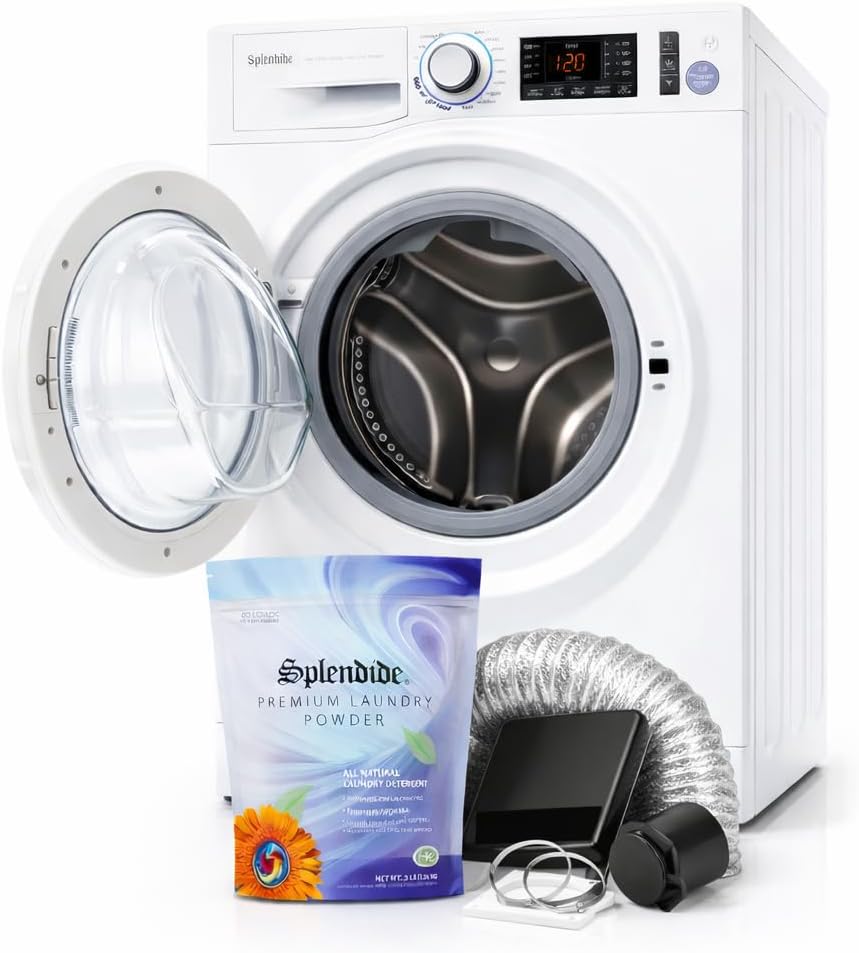
Splendide Washer Dryer Combo WDV2200XCD
| Capacity | 15 pounds |
|---|---|
| Voltage | 120 volts |
| Access Location | Front Load |
| Number of Washing Cycles | 9 |
| Number of Drying Cycles | 3 |
This Splendide all-in-one combo packs a full wash and vented dry cycle into a compact unit made for tight spaces like tiny houses and RV closets. You can run any of nine wash programs or three drying cycles and move straight from wash to dry without handling wet loads, which saves time and simplifies laundry routines. Practical touches include an extra-wide door and EasyGrip handle for loading, an automatic detergent/bleach/softener dispenser for correct dosing, and a digital display paired with a classic cycle knob for straightforward controls. The dual-rotating drum and variable spin speeds help reduce wrinkles and improve drying efficiency, and a self-cleaning lint filter plus a clean cycle keep the drum fresh. Expect good performance for regular household loads, but note this is a vented dryer and requires a vent installation and adequate space for air exhaust; it is also a heavy, built-for-durability unit that may need professional installation. For a tiny house that can accommodate venting, this delivers near full-size capability in a space-saving footprint.
Best for: Buyers optimizing limited living space who want a near full-size, single-unit laundry solution that simplifies chores and minimizes hands-on steps.
Less Ideal for: People who cannot accommodate a vent or need a lightweight, easily moved laundry unit should consider non-vented or portable alternatives.
- Compact all-in-one design lets you wash and dry without transferring loads
- 15 pound capacity handles full household loads for a tiny home
- Automatic dispenser releases detergent, bleach, and softener at the right time
- Dual-rotating drum and variable spin reduce wrinkles and improve drying efficiency
- Self-cleaning lint filter and clean cycle help maintain drum freshness
- Vented dryer requires a duct/vent installation and space for exhaust
- Heavy unit that may require professional handling and installation
Verdict: A space-saving, near full-size vented combo that streamlines laundry for tiny homes when venting can be accommodated.
Equator EZ 4600 Combo Washer Dryer

| Capacity | 1.62 cubic feet |
|---|---|
| Voltage | 110 volts |
| Spin Speed | 1400 rpm |
| Wash Cycles | 6 |
| Drying Cycles | 2 |
The Equator EZ 4600 is a space-saving all-in-one washer and dryer designed for apartments, RVs, tiny homes and other locations where a separate washer and dryer will not fit. It washes and dries up to about 15 pounds per load using six wash cycles and two drying modes, and you can choose vented or condensing drying depending on whether ducting is available. The unit includes practical features such as a PET cycle for removing embedded pet hair, a high-speed 1400 rpm spin to cut drying time, an LED touch display, delay start and a child lock. The stainless steel drum and automatic dispenser simplify regular use, while a winterize cycle helps prepare the machine for seasonal storage. Expect the usual limitations of a compact combo: capacity is modest so bulky items and large loads will need separate treatment, and drying in condensing mode is slower than a vented dryer. For tight installations the convertible venting and compact footprint make it a convenient single-machine laundry solution.
Best for: Buyers who prioritize saving space and want a single, practical laundry machine for a tiny house, studio or RV where separate appliances are not an option.
Less Ideal for: Households that need to wash large loads, bulky bedding, or that prefer faster full-size dryer performance should consider a larger separate washer and dryer instead.
- Convertible vented or ventless drying fits spaces with or without ducting
- Compact footprint tailored for apartments, RVs and tiny homes
- 1400 rpm spin speed improves water extraction to reduce drying time
- PET cycle targets embedded pet hair before drying
- Stainless steel drum with automatic dispenser for durable, low-maintenance use
- Modest 1.62 cu ft capacity limits load size and bulky items
- Condensing drying mode is slower than full-size vented dryers
Verdict: A compact, convertible venting all-in-one combo that delivers practical laundry capability for tiny homes and other space-constrained living situations.
Midea Washer Dryer Combo 2.7 cu ft

| Capacity | 2.7 cubic feet |
|---|---|
| Maximum Rotational Speed | 1400 rpm |
| Number of Washing Cycles | 14 |
| Number of Drying Cycles | 2 |
| Voltage | 120 volts |
The Midea Washer Dryer Combo is a space-saving all-in-one front-load washer and ventless dryer aimed at apartments, RVs, or small households. It washes and dries in a single cycle so you do not need to move loads between machines, and offers 14 wash programs plus two drying cycles to handle delicate, heavy duty, steam care, quick wash, and overnight wash-and-dry needs. The unit runs on a standard 120V outlet and uses a BLDC inverter motor designed for quieter, more efficient operation; annual energy consumption is listed at 90 kWh. Controls are push-button style with a concise panel and practical options like add-garment and child lock. Because it is ventless, installation is simpler where external venting is not possible, though dryer times are longer than vented dryers and combined cycles can take several hours. The 2.7 cu ft drum suits small to medium loads but will be tight for bulky bedding. For buyers who prioritize convenience and minimal installation, this provides a capable, energy-conscious single-unit solution.
Best for: Buyers who need a simple, space-saving laundry solution for small homes or rentals and who prefer low-installation, energy-conscious appliances with versatile cycle options.
Less Ideal for: Large households that need frequent big loads, heavy bedding, or fast drying performance should consider separate washer and vented dryer setups instead.
- Washer and dryer in one unit eliminates transferring loads
- Ventless design works without external venting
- Wide range of programs including steam care and quick wash
- Runs on 120V outlet for easy installation
- BLDC inverter motor for efficient, quieter operation
- Combined wash-and-dry cycles and ventless drying take longer than separate vented machines
- 2.7 cu ft capacity may be small for bulky or large household loads
Verdict: A compact, easy-to-install all-in-one washer and ventless dryer that fits small spaces and eliminates moving loads while offering energy-conscious operation.
COMFEE' 2.7 cu.ft Washer Dryer Combo

| Capacity | 26 pounds (wash), 13 pounds (dry) |
|---|---|
| Voltage | 120 volts |
| Maximum Rotational Speed | 1400 rpm |
| Annual Energy Consumption | 90 kilowatt hours per year |
| Number of Washing Cycles | 8 |
This COMFEE' combo combines a 2.7 cu.ft washer and integrated ventless dryer so you can wash and dry in one uninterrupted cycle, which is useful for small households or tight spaces. It offers 8 wash cycles plus a dedicated dry cycle, steam care to reduce allergens and wrinkles, a wool setting, quick 36-minute wash, delay start and a child lock for convenience. The inverter brushless motor is marketed for quieter, more energy-efficient operation and the machine supports adding garments mid-cycle. Practical features like overnight wash-and-dry and a timed dry option make it easy to set laundry before bed and have it ready by morning without moving loads. Limitations to consider are the moderate 26 lb wash / 13 lb dry capacity that makes it better suited to smaller or partial loads rather than a full family week of laundry, and the single drying cycle option limits flexibility for delicate or heavy items. Buyers should also note the unit is relatively heavy and requires proper installation and removal of transport bolts before use.
Best for: Practical buyers who need a space-saving, energy-conscious laundry solution that can handle frequent small to medium loads and streamline chores for a busy household.
Less Ideal for: Large families who need to dry large loads at once or users who require separate full-size washer and dryer cycles for heavy bedding or substantial weekly laundry volumes.
- All-in-one wash and ventless dry cycle eliminates moving clothes between machines
- Steam care reduces allergens and helps cut wrinkles and odors
- Brushless inverter motor for quieter, more energy-efficient operation
- Multiple programs including quick wash, wool care, delay start and add-garment function
- Drying capacity is smaller than washing capacity, limiting full-load drying
- Only one drying cycle choice reduces control over drying intensity and fabric-specific care
Verdict: Buy this if you want a compact, energy-conscious all-in-one that washes and dries small to medium loads overnight to simplify laundry for a busy household.
GE GFQ14ESSNWW Washer Dryer Combo

| Capacity | 2.4 cubic feet |
|---|---|
| Voltage | 120 volts |
| Number of Washing Cycles | 14 |
| Number of Drying Cycles | 1 |
| Access Location | Front Load |
This GE combination washer-dryer packs a full laundry workflow into a single 24-inch unit that requires no external venting, making it suitable for tight spaces like closets or under counters. You load, wash, and dry in the same drum using 14 wash cycles and an automatic Auto Wash + Dry function that selects an appropriate dry cycle based on the wash selection. Practical features include dispensers for detergent, bleach, and fabric softener, steam wash for better stain removal, five soil and temperature settings for fabric care, and an Add a Garment button to pause and add items mid-cycle. The unit runs on a standard 120V plug and includes fill and drain hoses and an attached power cord, simplifying installation. Because it is a combined machine, drying capacity and cycle times are more limited than a separate dryer and very large loads may need splitting, and the single drying cycle option reduces flexibility for specialty dry needs. Noise and cycle length can be longer than separate machines, but for space-limited budgets this unit delivers a capable, compact ventless laundry solution.
Best for: Buyers who need a space-saving, no-vent laundry solution on a budget and prioritize convenience and compact installation over separate washer and dryer performance.
Less Ideal for: Households that do very large or frequent loads, need fast turnaround, or require advanced drying options should choose separate washer and dryer units instead.
- Ventless condenser design fits in closets or under counters with a standard 120V plug
- 2.4 cu. ft. capacity lets you wash larger items less often than very small combos
- Auto Wash + Dry automatically matches drying to the chosen wash cycle for convenience
- Steam wash and multiple soil/temperature settings improve stain removal and fabric care
- Includes dispensers for detergent, bleach, and fabric softener for hands-off dosing
- Single drying cycle option limits flexibility compared with standalone dryers
- Combined wash-dry machines typically have longer cycle times and smaller effective dry loads than separate units
Verdict: A compact, ventless all-in-one that delivers convenient wash-and-dry performance for budget-minded shoppers who need a closet- or under-counter laundry solution.
Choosing the Right All-in-One Washer Dryer Combo for Tiny House: Key Factors to Consider
Physical Footprint and Installation Options
Measure the space where the unit will sit, and compare that to the appliance's external dimensions. Tiny houses often have alcoves, stacked closets, or under-counter bays that require precise fit. Pay attention to door swing clearance, panel depth, and any required service access.
Consider installation options like stacking, under-counter fitting, or recessed installations. Some all-in-one units need additional clearance behind the machine for hoses and ventilation. Also check floor load limits and whether a pedestal or platform is necessary.
Wash and Dry Capacity Relative to Drum Size
Nominal capacity numbers can be misleading in combo units where drying capacity is often smaller than washing capacity. Evaluate usable drum volume and recommended dry load sizes so you know how much laundry you can process in one cycle. Smaller drums mean more frequent cycles or smaller loads, which affects daily convenience.
Think about your household laundry habits. If you plan to wash bedding or bulky items, look for units with higher usable drum dimensions. For typical tiny-house two-person households, a modest capacity that handles frequent small loads is usually preferable to a larger, rarely full drum.
Energy Use and Water Consumption
Efficient machines lower utility demands and reduce operating costs, which is especially important for tiny houses that may be off-grid or on limited electrical service. Compare energy consumption per cycle and look for heat-pump or inverter-driven technologies that maintain lower electricity draw.
Water use matters too. Front-load combos typically use less water than top-loads. If your tiny house has a water catchment or limited supply, prioritize models with low gallons-per-cycle figures and effective soil removal to avoid repeat rinses.
Drying Method and Venting Requirements
All-in-one units may use condensation, vented, or heat-pump drying. Vented dryers require ducting to the exterior and may not be feasible in tightly sealed tiny homes. Condensation drying vents hot, moist air into a reservoir or drain, which is easier to install but can be slower and less efficient.
Heat-pump dryers are the most efficient and gentle on fabrics, though they can be pricier and may extend cycle times. Match the drying method to your installation constraints and energy priorities, and check whether the unit requires a dedicated drain or condensate pump.
Noise Levels and Cycle Duration
Because living spaces in tiny houses are compact, laundry noise can be disruptive. Look for published decibel ratings for wash and spin cycles and consider machines with variable-speed inverters and quiet motor designs. Longer cycles can be acceptable if they run quietly, but loud spin cycles may be bothersome.
Also factor in cycle duration for combined wash-and-dry programs. Faster cycles increase throughput but sometimes at the cost of higher energy use or wetter loads that need additional time to dry. Balance noise comfort with practical cycle times for your routine.
Sizing the Unit to Your Tiny House Layout
Start by sketching the exact spot where the appliance will live and note nearby walls, cabinets, and doorways. Include clearance for plumbing, hose bends, and an electrical connection.
If you expect to tuck the unit under a countertop or inside a closet, validate both height and door swing. Some units offer reversible doors or slightly reduced clearance requirements designed for tight installations.
- Measure height, width, and depth at the installation location
- Account for door swing and service access
- Plan for hose routing and any required condensate drain
Plumbing and Electrical Considerations
Verify available water pressure, hot-water supply, and the type of electrical circuit at the installation point. Some combos operate on standard 120V circuits while others recommend higher-voltage connections to speed drying.
Confirm whether your tiny-house plumbing can handle the washer's drain flow and whether a condensate pump is needed for condensation drying models. Low water pressure or a nonstandard drain location can require modifications.
- Check water pressure and hot-water hookups
- Determine circuit amperage and outlet placement
- Plan for condensate pumps or external drains if required
Maintenance and Longevity in a Small Space
Regular maintenance keeps compact combos running smoothly. Clean filters, check seals for mold or residue, and run a maintenance wash per manufacturer guidance. In tiny houses, easy access to filters and service panels reduces downtime.
Consider how parts replacement or service visits will be handled in a tight layout. Units with simpler user-serviceable components and clear diagnostics save time and hassle when maintenance is needed.
- Locate lint and water filters for routine cleaning
- Check accessibility of hoses and service panels
- Look for clear error codes and user diagnostics
Laundry Workflow and Load Management
Adapt your laundry routine to a combo unit's realistic throughput. Plan smaller, more frequent loads or use wash-only cycles when you need faster turnaround. Separate bulky items to avoid overloading the dryer portion of a combo unit.
Use mesh bags for delicates and sort loads to match recommended dry capacities. Pre-treat stains and use the appropriate detergent dosing to avoid repeat cycles, which is especially important when water and energy are limited.
- Prefer smaller, regular loads for consistent drying
- Use recommended detergent amounts to prevent residue
- Avoid mixing heavy and lightweight items in the same load
Off-Grid and Low-Power Operation Strategies
If your tiny house uses limited electrical capacity or runs off-grid, choose units with lower peak draw and the ability to run on an inverter-friendly load. Stagger laundry to times when solar production or battery reserves are higher.
Consider drying alternatives like line-drying or partial drying to finish loads using minimal electricity. Some combos offer low-power maintenance cycles that keep clothes fresh without a full dry cycle.
- Track peak power draw of wash and dry cycles
- Time laundry to align with renewable generation
- Use partial or air-only cycles to reduce energy use
How We Chose the Best All-in-One Washer Dryer Combo for Tiny House
We focused on features and specifications that matter in tiny-house installations where space, utilities, and noise are often constrained. Our evaluation prioritized compact external dimensions and installation flexibility so units will fit common tiny-house layouts and tight alcoves. We assessed effective wash and dry capacity relative to the external footprint, since usable drum volume determines how often you need to run cycles. Energy and water efficiency were key filters because tiny-house systems often use limited electricity or rely on conservation-minded utility setups. We also considered drying method and venting options, as non-vented or heat-pump drying can simplify installation in off-grid or small homes. Noise levels and cycle times were included to reflect everyday liveability inside close quarters. Durability and serviceability were weighted to favor units with straightforward maintenance and accessible parts. We excluded any models that require a full-size clothes dryer footprint or complex ducting incompatible with typical tiny-house construction. Units missing clear efficiency or capacity specs were also omitted. The final shortlist reflects compact, well-documented options that match the constraints and practical needs of tiny-house laundry.
Our full evaluation process is outlined in our review methodology.
FAQ
Can an all-in-one combo be installed under a countertop in a tiny house?
Often yes, but you must confirm the unit's height and ventilation requirements. Under-counter installation works best when the machine's door can open fully and there is access for hoses and service. Check clearance for any condensate connections and allow space for routine maintenance.
Are heat-pump drying systems worth it for a tiny house?
Heat-pump dryers are more energy-efficient and produce less waste heat, which can benefit a small, well-insulated living space. They often run longer than vented drying but reduce electrical demand and moisture in the home, making them a strong option for tiny-house setups.
How should I manage venting if my tiny house is tightly sealed?
In tightly sealed homes, venting hot, moist air to the exterior can compromise insulation and indoor humidity control. Non-vented condensation or heat-pump drying options are typically better because they do not require ducting through the building envelope.
What noise level is acceptable for laundry in a tiny house?
Acceptable noise depends on your tolerance and where the machine is located relative to living and sleeping areas. Look for lower decibel ratings and quieter spin cycles if the unit will be near sleeping spaces. Evening use may require extra attention to noise performance.
Do all-in-one combos require special detergents or maintenance?
Most combos use standard detergents, though high-efficiency formulas are commonly recommended to limit suds and residue. Regular cleaning of seals, filters, and drain areas helps prevent odors and maintains performance.
Final Verdict
Choose an all-in-one washer dryer combo that fits the physical constraints of your tiny house and matches your household laundry habits. Prioritize footprint and installation flexibility first, then weigh usable capacity, drying method, and efficiency to align with your energy and water setup. Expect tradeoffs between capacity, cycle time, and energy use. For most tiny-house owners, a compact, energy-efficient unit with condensation or heat-pump drying and accessible maintenance features will provide the best balance of convenience and performance.