
Note: This article contains affiliate links. If you click on these links and make a purchase, we may earn a small commission at no extra cost to you. This helps support our research and content. Read our full affiliate disclosure here.
If you want freshly ground espresso without the fuss of separate grinders, a bean-to-cup coffee maker can simplify mornings while improving coffee quality. Choosing the right machine matters because extraction consistency, grinder performance, and maintenance demands directly affect the taste you get and how often the machine requires attention. This guide shortlists the top bean-to-cup coffee makers under $500 and explains the criteria we used to evaluate them, including brewing consistency, grinder quietness, and ease of cleaning. Use the short summaries and scorecards below to find a machine that suits your routine and space. Read on to see the picks and what to consider before buying.
Top Picks at a Glance
| Best Overall The best all-around choice for most situations | Philips 2200 Series EP2220/14 |  |
| Best Quality Built to a higher standard if you want something more solid | Philips 3300 Series EP3326/90 |  |
| Best Value The sweet spot between price and what you get | Gevi Grind-and-Brew Drip Coffee Maker | 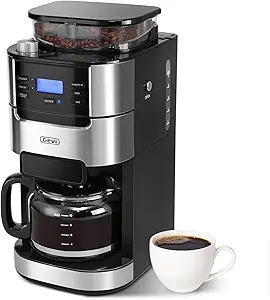 |
| Best Budget The cheapest option that still gets the job done reliably | Mixpresso 5-Cup Drip Coffee Maker |  |
| Top Rated A top-rated pick with lots of positive feedback | Gevi 10-Cup Grind & Brew |  |
| Most Popular A crowd favorite that many people choose with confidence | Breville Grind Control BDC650BSS |  |
| Best Seller A high-volume bestseller chosen again and again | Cuisinart Grind & Brew DGB-550BK |  |
Philips 2200 Series EP2220/14
| Operation Mode | Fully Automatic |
|---|---|
| Human Interface Input | Touchscreen |
| Coffee Input Type | whole_beans |
| Wattage | 1500 |
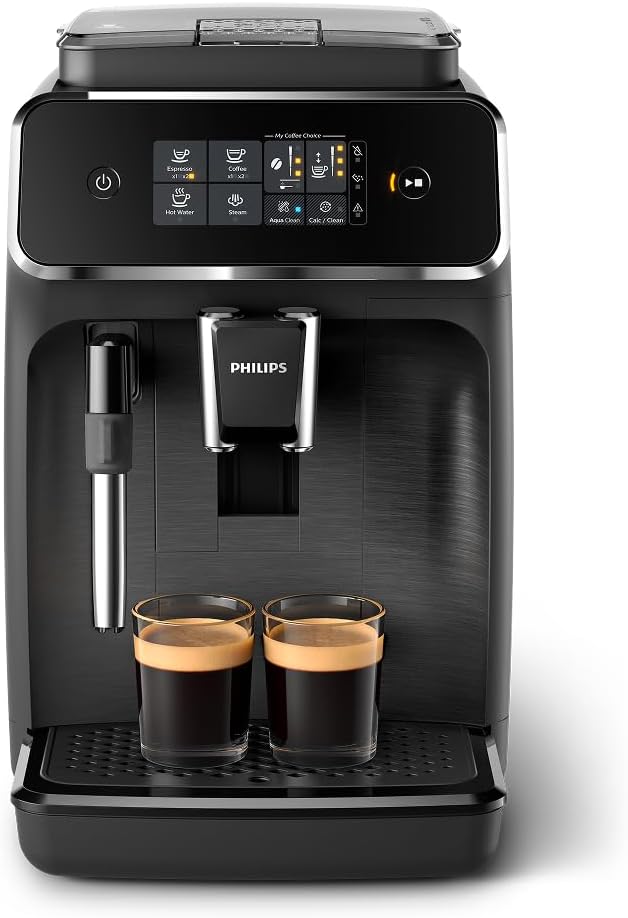
The Philips 2200 Series EP2220/14 is a user-friendly super-automatic espresso machine that grinds whole beans, tamps, brews and dispenses espresso or coffee at the touch of a button. Typical daily use is straightforward: load beans, select one of the three presets or customize strength and cup size via the intuitive touchscreen, and steam or froth milk with the classic milk frother for lattes or cappuccinos. Notable features include a 100% ceramic grinder for consistent extraction, a 15-bar pump for proper pressure, a removable brew group for easy rinsing, and the AquaClean filter which can reduce descaling frequency. Practical benefits are consistent drink quality from fresh beans, easy maintenance thanks to the removable brew group and filter prompts, and simple one-touch operation for repeatable results. Limitations are modest menu depth with only three presets (so power users may miss advanced customization) and a basic plastic exterior rather than premium materials, which keeps cost and weight down but gives it a less upscale look and feel.
Best for: Buyers who want a reliable, easy-to-use bean-to-cup machine that delivers consistent café-style espresso and simple milk drinks with minimal fuss and maintenance.
Less Ideal for: People who prioritize deep customization, a metal premium finish, or advanced multi-drink programs should consider higher-end models instead.
- Integrated ceramic grinder provides consistent grind settings and durability
- One-touch touchscreen operation with adjustable strength and cup size
- Classic milk frother easily steams and froths dairy and plant-based milks
- Removable brew group and AquaClean filter simplify cleaning and reduce descaling
- Limited preset variety and fewer customization options for advanced users
- Mostly plastic exterior that feels less premium than metal-bodied machines
Verdict: A straightforward, maintenance-friendly bean-to-cup espresso machine that makes consistent espresso and simple milk drinks with minimal effort.
Philips 3300 Series EP3326/90
| Operation Mode | Fully Automatic |
|---|---|
| Output Pressure | 15 bar |
| Wattage | 1500 watts |
| Coffee Input Type | coffee_beans |
| Capacity | 1.8 liters |
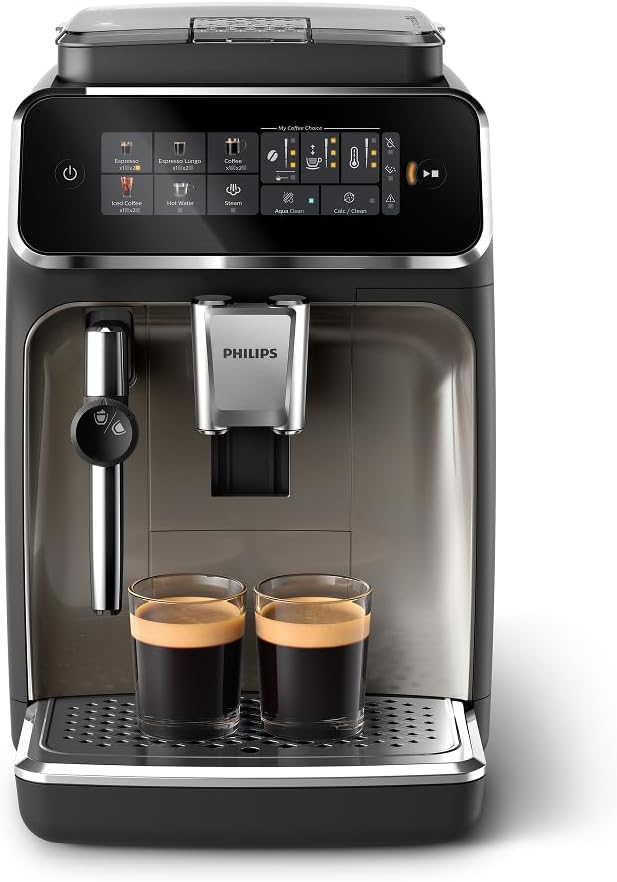
The Philips 3300 Series EP3326/90 is a fully automatic bean-to-cup espresso machine that grinds, tamps and brews at the push of a button, then steams or froths milk with its classic milk frother. You use the color touchscreen to choose from five presets including espresso, lungo, regular coffee and iced coffee, and you can fine-tune strength and volume for consistent results. The built-in grinder and Aroma seal keep beans fresh between uses, while SilentBrew technology reduces operational noise by about 40% versus prior models, which is useful for early mornings. The AquaClean filter cuts down on descaling frequency when replaced as prompted, simplifying maintenance. Practical limits include a 1.8 liter water capacity that still requires periodic refills for heavy daily use and a conventional milk frother that needs manual cleaning and technique to match latte-shop microfoam. For buyers focused on reliable, repeatable café-style drinks at home, this machine covers the essentials with straightforward controls and useful maintenance features, but advanced milk specialists may prefer a dedicated automatic milk system for faster hands-off frothing.
Best for: Buyers who prioritize straightforward, repeatable bean-to-cup performance and quiet operation for daily at-home espresso and milk-based drinks.
Less Ideal for: Those who want fully automatic hands-off milk steaming or need a very large-capacity machine for heavy entertaining should consider alternatives.
- Integrated grinder and one-touch presets for consistent bean-to-cup brewing
- SilentBrew technology reduces operating noise during grinding and extraction
- AquaClean filter extends time between required descaling when replaced as directed
- Touchscreen interface lets you adjust strength and volume quickly
- Included milk frother steams and froths dairy and plant-based milk for lattes and cappuccinos
- Milk frother is manual-style and requires cleaning and user technique to produce cafe-grade microfoam
- 1.8 L water tank will need refilling with frequent multiple daily brews
Verdict: Choose the Philips 3300 Series if you want a quiet, dependable bean-to-cup machine that delivers consistent espresso and milk drinks with minimal fuss.
Gevi Grind-and-Brew Drip Coffee Maker
| Capacity | 1.5 liters |
|---|---|
| Wattage | 900 watts |
| Coffee Input Type | ground, whole bean |
| Operation Mode | Fully Automatic |
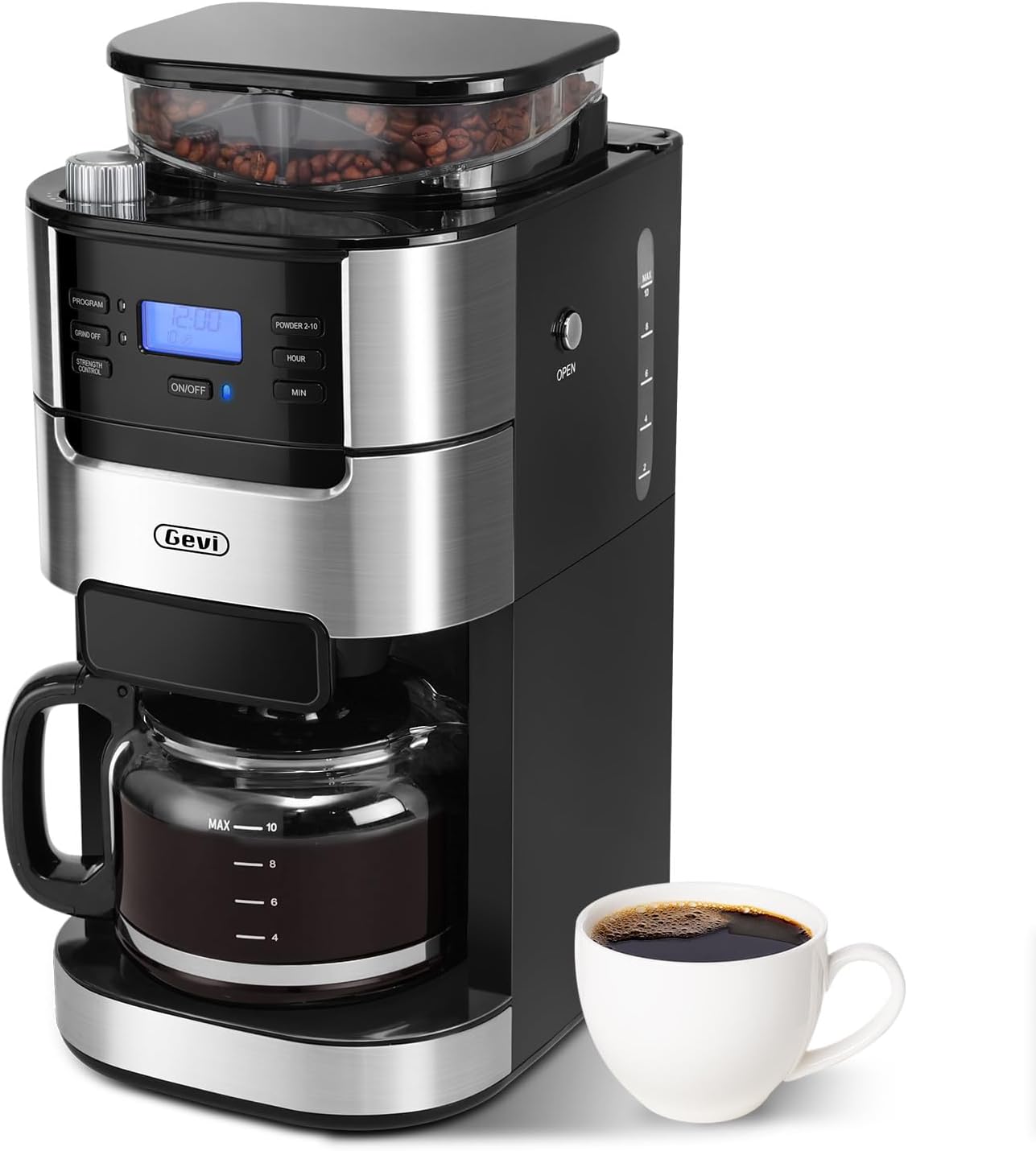
This Gevi Grind-and-Brew combines a burr grinder and drip brewer into one countertop unit for daily fresh-coffee convenience. You load whole beans into the hopper, pick one of eight grind settings and three strength levels, and use the POWDER 2–10 control to automatically scale water-to-coffee for between two and ten cups. The machine uses pre-brew saturation to improve extraction, includes a durable reusable filter, and keeps brewed coffee warm with a two-hour keep-warm function. Practical features like a programmable timer and a 1.5 L water tank make it easy to set up a morning brew. Expect useful customization and fewer trips for paper filters, but plan on regular cleaning of the grinder and grounds area to avoid oil build-up with darker roasts. The unit is moderately tall for a drip machine, so check cabinet clearance before buying.
Best for: Buyers who want a compact bean-to-cup solution that simplifies daily brewing with adjustable grind and strength settings and values convenience over separate machines.
Less Ideal for: People who need a very compact, low-profile brewer for tight cabinet spaces or users who prefer manual pour-over control and no integrated grinder.
- Built-in burr grinder with eight grind settings for fresher flavor
- Automatic powder-to-water scaling for 2–10 cup brewing makes portioning simple
- Three strength levels and pre-brew saturation improve extraction and taste control
- Reusable permanent filter reduces waste and ongoing filter purchases
- Programmable timer and two-hour keep-warm add everyday convenience
- Requires routine cleaning of grinder and grounds compartment to prevent bean oil buildup
- Relatively tall profile may not fit under all cabinets
Verdict: A practical all-in-one grind-and-brew machine that delivers customizable fresh coffee and everyday convenience for buyers optimizing flavor and ease.
Mixpresso 5-Cup Drip Coffee Maker

| Wattage | 650 watts |
|---|---|
| Voltage | 110 volts |
| Coffee Input Type | ground, whole bean |
| Capacity | 1.6 pounds |
The Mixpresso 5-Cup Drip Coffee Maker combines an integrated grinder with a small drip brewer so you can use whole beans or preground coffee and brew fresh each morning. You load beans into the hopper, the machine grinds them before brewing, and the 25 oz water tank produces roughly 2 to 5 cups into the included glass carafe. The unit offers a programmable 24-hour delay timer and an LCD for simple scheduling, plus an auto shut-off and an anti-drip valve to avoid messes. A non-stick warming plate keeps coffee warm for short periods, and the removable mesh filter and scoop simplify maintenance. Expect modest noise from grinding and a basic control set made of push buttons rather than advanced touchscreen controls. Capacity and compact size make it best for small households or a single-user kitchen rather than large offices, and build quality and feature depth reflect an entry-level price point rather than prosumer performance.
Best for: Buyers on a tight budget who want fresh-ground coffee at home and need a compact, programmable machine for one to two people.
Less Ideal for: Those who need large daily output, long hot-holding times, or the durability and features of higher-end automatic espresso or commercial machines should look elsewhere.
- Built-in grinder lets you brew from whole beans for fresher flavor
- Programmable 24-hour delay lets you wake to freshly brewed coffee
- Compact footprint suitable for small counters or apartments
- Removable mesh filter and included scoop simplify cleaning and setup
- Small 25 oz tank limits output to about 2–5 cups per brew
- Glass carafe and basic warming plate are less effective than thermal carafes for long-term heat retention
- Entry-level controls and construction won’t match higher-end bean-to-cup machines
Verdict: A budget-friendly bean-to-cup style drip maker that delivers fresh-ground coffee in a compact, programmable package for small households.
Gevi 10-Cup Grind & Brew

| Capacity | 1.5 liters |
|---|---|
| Wattage | 900 watts |
| Voltage | 120 volts |
| Coffee Input Type | ground, whole bean |
| Filter Type | Permanent Filter |
The Gevi 10-Cup Grind & Brew combines a conical burr grinder and drip brewer into a single countertop unit designed for daily use. You load whole beans into the hopper, choose grind and strength settings, and program a delay timer for automatic brewing up to 24 hours in advance. Notable features include pre-brew extraction to improve flavor, a permanent reusable filter that reduces waste, and a keep-warm plate that maintains serving temperature after brewing. Practical benefits are straightforward controls for 2–10 cup flexibility, an integrated grinder that avoids buying separate equipment, and easy maintenance with included scoop and manual guidance. Important limitations are its reliance on lighter or medium roast beans for consistent bean flow, a plastic-plus-stainless construction rather than full metal, and a 900 W heater that produces typical drip coffee rather than espresso-strength shots. For buyers prioritizing a dependable bean-to-cup drip maker under $500, this model delivers consistent, freshly ground coffee with programmable convenience, while those seeking espresso or heavier-duty commercial hardware should look elsewhere.
Best for: Buyers who want a single, reliable machine that grinds beans and brews fresh coffee automatically each morning and value ease of use and consistent results.
Less Ideal for: People seeking espresso shots, steam-based milk frothing, or a heavy-duty commercial machine for continuous high-volume use should consider other appliance types.
- Built-in conical burr grinder for fresher grounds at brew time
- Programmable 24-hour timer for automatic morning brewing
- Reusable permanent filter that reduces paper-waste and ongoing costs
- Pre-brew extraction technology to improve flavor and aroma
- Flexible 2–10 cup brewing range for households of different sizes
- Bean hopper can have trouble with very oily dark roasts so lighter roasts work best
- Mostly plastic exterior and components rather than full-metal construction
- Produces drip-style coffee only, not espresso or milk-based specialty drinks
Verdict: A dependable all-in-one grind-and-brew drip maker that delivers fresh, programmable daily coffee without needing separate grinder equipment.
Breville Grind Control BDC650BSS

| Wattage | 1100 watts |
|---|---|
| Power Source | Electricity |
| Coffee Input Type | whole beans, pre-ground |
| Filter Type | Reusable |
| Capacity | 3.8 pounds |
The Breville Grind Control BDC650BSS combines a built-in adjustable burr grinder with a programmable drip brewer so you can grind whole beans immediately before brewing. It uses Steep and Release technology to extract flavor and dispenses into a 12-cup dual-wall stainless steel thermal carafe, tall cup, or travel mug, while an LCD shows grind setting, grind time and cup selection. You can choose from eight strength settings or use pre-ground coffee, and the reusable gold tone filter reduces ongoing filter costs. Practical benefits include one-touch programmability for auto-start, precise grind-size control for different beans, and a thermal carafe that keeps coffee hot without a hot plate. Trade-offs are a relatively large counter footprint, a 1/2 lb hopper that limits how many beans you can load at once, and a more complex cleaning routine than basic drip machines because of the grinder components. For buyers seeking fresher drip coffee with built-in grind control and flexible cup options, this makes brewing specialty-style coffee at home straightforward.
Best for: Buyers who want fresher-tasting drip coffee at home and value built-in grind control and programmable brewing over the simplicity of a basic brewer.
Less Ideal for: People who need a compact, lightweight machine for tight counters or who prefer a maintenance-free brewer with no grinder parts to clean.
- Integrated adjustable burr grinder lets you grind beans immediately before brewing
- Programmable auto-start and clear LCD for timed brewing and grind settings
- Steep and Release technology for balanced extraction into a thermal carafe
- Multiple strength settings and option to use pre-ground coffee
- Includes reusable gold tone filter and 12-cup dual-wall thermal carafe
- Hopper holds only about 1/2 pound of beans, requiring frequent refills for heavy use
- Larger footprint and heavier unit than basic drip brewers
- Grinder adds cleaning complexity compared with simple drip machines
Verdict: If you want a programmable drip brewer that grinds beans for fresher, specialty-style coffee at home, this Breville pairs precise grind control with convenient thermal delivery.
Cuisinart Grind & Brew DGB-550BK

| Capacity | 12 cups |
|---|---|
| Wattage | 1100 watts |
| Operation Mode | Fully Automatic |
| Coffee Input Type | Whole Bean |
| Filter Type | Reusable |
The Cuisinart DGB-550BK combines a built-in grinder and a 12-cup drip brewer into a single, programmable unit for everyday household use. You fill the bean hopper, select grind-and-brew or brew-only, set the 24-hour timer if you want coffee ready in the morning, and the machine grinds fresh beans and brews into a glass carafe. Notable features include a permanent reusable filter, a water filter, and simple button controls for straightforward operation. The 1100-watt heater delivers typical drip brewing speed and the stainless steel brushed exterior is durable in a busy kitchen. Practical benefits are fresher-tasting coffee from the on-board grinder, fewer separate parts to manage than a separate grinder plus brewer, and programmability for routine convenience. Limitations are the glass carafe instead of a thermal carafe so coffee cools faster, and the integrated grinder is a blade-style unit on this model family which may give less consistent grind size than higher-end burr grinders. For buyers who prioritize reliable, simple daily brewing with fresh-ground beans, this is an easy-to-use option under $500.
Best for: Buyers who want a dependable, low-fuss bean-to-cup solution that delivers fresher coffee without managing separate appliances and who prefer straightforward programmable features.
Less Ideal for: Users who need long-term heat retention or who demand café-quality grind consistency from a dedicated burr grinder should consider alternatives.
- Integrated grinder and brewer for one-step fresh-ground brewing
- 24-hour programmable timer for ready-at-wake-up convenience
- Reusable permanent filter and water filter reduce ongoing paper filter costs
- Stainless steel exterior offers durable, kitchen-friendly finish
- Simple button controls make operation intuitive for nontechnical users
- Glass carafe does not keep brewed coffee hot for long
- Integrated grinder in this model family is not a high-end burr grinder
Verdict: A practical, user-friendly grind-and-brew coffeemaker that delivers fresher daily coffee with minimal fuss.
Choosing the Right Bean-to-Cup Coffee Maker: Key Factors to Consider
Grinder Type and Grind Consistency
The integrated grinder is the core advantage of a bean-to-cup machine. Look for conical or flat burrs rather than blade grinders because burrs produce a uniform grind that leads to stable extraction. Consistent particle size reduces channeling in the puck and yields better crema and flavor clarity.
Adjustable grind settings are important because different roast levels and recipes need different grind sizes. Finer settings suit espresso while coarser settings work for long espresso-style drinks. A stepped or stepless adjustment mechanism affects how precisely you can dial in the grind for your beans.
Brewing Temperature and Pressure Stability
Espresso extraction is sensitive to both temperature and pressure. Machines that hold brew temperature within a narrow range and sustain appropriate pump pressure produce more repeatable shots and balanced flavors. Features like PID control or a stable thermoblock/boiler design are relevant signals, even on budget machines.
Also consider pre-infusion and pressure profiling options where available. These help wet the puck before full pressure is applied, improving extraction uniformity for a wider range of beans and roast profiles.
User Controls and Programmability
Controls determine how easily you can get the drink you want without battle-testing the machine. Simple, reliable presets let you pull consistent single or double shots with minimal fuss. Intermediate controls such as shot volume programming, adjustable brew strength, and pre-infusion time give you room to refine the cup.
Clear menus, tactile buttons, and intuitive icons reduce mistakes and speed up daily routines. When evaluating models, think about who will use the machine and whether they need one-touch convenience or deeper tweakability.
Milk-Frothing Performance
If you drink milk-based espresso drinks, assess the machine's frothing system. Some bean-to-cup machines include a steam wand that requires manual technique, while others use automatic milk systems. Manual wands offer more control but need practice; automated systems give consistent microfoam with less skill but add complexity to cleaning.
Frothing power, steam stability, and the design of milk containers or pipes are practical considerations. Evaluate how easy it is to create textured milk suitable for lattes and cappuccinos, and whether the system supports hot milk drinks without long delays.
Maintenance, Cleaning, and Access
Everyday upkeep affects how long the machine stays reliable and how often you need to intervene. Removable brew groups, simple waste container access, and user-serviceable water filters make routine maintenance straightforward. Machines that require frequent descaling or have sealed, hard-to-reach internals will increase ongoing hassle.
Check what cleaning cycles are automated and how easy it is to wipe down milk pathways. Availability of replaceable parts like water filters and user-changeable seals improves long-term ownership experience.
Size, Water Capacity, and Noise
Counter footprint and reservoir size determine whether the machine fits your kitchen and how often you refill. A larger water tank reduces trips to the tap but increases the machine size. Also consider bean hopper capacity, which affects how often you top up beans.
Noise levels, especially from the grinder and pump, matter for morning routines and shared living spaces. Look for models with sound-damping designs if quiet operation is a priority.
How Bean-to-cup Machines Simplify Daily Routines
Bean-to-cup machines combine grinding, dosing, tamping, and extraction into a single automated flow, which reduces the time and skill required to make espresso-style drinks. For many users this means consistent beverages with minimal setup and less manual cleanup compared with separate grinder and espresso machine workflows.
The convenience extends to preset drinks and one-touch options that produce espresso, lungo, or milk-based beverages with repeatable results. That predictability is valuable for busy mornings or for households where multiple people share barista duties.
- Integrated workflow reduces the number of manual steps
- Programmable presets help maintain consistent drink quality
- Automated dosing limits wasted beans and inconsistent shots
Installation, Footprint, and Kitchen Placement Tips
Measure counter depth and clearances before buying. Many bean-to-cup machines sit deep because of hopper and water tank placement. Leave space above the machine if the hopper or lid opens upward and plan for a water fill point that is easy to reach.
Also consider ventilation and noise. Place the machine where grinder noise and steam venting are not disruptive, and avoid enclosed cabinetry unless the manufacturer explicitly supports built-in installation. Keep a cleaning kit nearby to handle daily milk-line wipes and weekly deeper cleaning.
- Allow clearance for hopper lid and water tank removal
- Position near a sink for easy refills and drain access
- Avoid enclosed cabinets to reduce heat and moisture buildup
Milk Systems: Choosing Between Steam Wands and Automatic Frothers
Manual steam wands give you the greatest control over milk texture and allow for latte art once you master the technique. They are straightforward to clean by purging and wiping the wand after each use, but they depend on user skill to create consistent microfoam.
Automatic milk systems are simpler for daily use and can produce reliable textured milk at the touch of a button. The tradeoff is more plumbing and components that require regular cleaning cycles or removable parts that need rinsing.
- Steam wand: more control, requires technique
- Automatic frother: consistent results, more maintenance
- Consider how often you make milk drinks before choosing a system
Bean Selection and Freshness for Best Results
Even the best machine cannot compensate for stale or poorly roasted beans. Choose freshly roasted beans suited to espresso extraction and store them in an airtight container away from heat and light. Grind adjustments will be necessary when you change beans or roast levels.
If you prefer darker roasts, you may need slightly coarser settings than for lighter roasts. Tweak grind size and shot volume to balance sweetness and acidity, and note that humidity and seasonality can alter optimal settings over time.
- Use freshly roasted beans for best flavor
- Adjust grind with roast level and climate changes
- Keep hopper capped to limit oxidization
Troubleshooting Common Issues
If shots pull too slowly or taste under-extracted, try a finer grind or increase dose if the machine allows. Conversely, if extraction is too fast or bitter, coarsen the grind or reduce dose. Check for clogs in the brew path and ensure the machine is properly descaled according to the schedule.
For milk issues like poor foam or weak steam, verify steam pressure and purge the wand or milk circuit before use. Regular cleaning of milk lines and replacement of worn gaskets will prevent leaks and degraded frothing performance.
- Adjust grind and dose to tune extraction
- Descale on the manufacturer-recommended interval
- Purge and clean milk lines to avoid clogs and off-flavors
How We Chose the Best Bean-to-Cup Coffee Maker
We focused on machines that deliver authentic espresso-style extraction starting from whole beans while staying under the $500 cap. Selection prioritized measurable performance characteristics that matter for everyday use: grind uniformity and burr type, extraction temperature and pressure stability, programmable brew settings and shot control, build quality and reliability indicators, and how easy the machine is to clean and maintain. We also evaluated convenience features such as integrated milk frothing, water reservoir capacity, warm-up time, and footprint for typical kitchen counters. Products were excluded if they relied on pre-ground-only extraction, required complex professional-level calibration beyond consumer expectations, or exceeded the stated price limit. We filtered out machines with unclear maintenance paths or lacking access to common replaceable parts. The resulting shortlist balances brew quality, ease of ownership, and features that improve daily use.
Our full evaluation process is outlined in our review methodology.
FAQ
How often should I descale a bean-to-cup machine?
Descale frequency depends on local water hardness and use level, but many households descale every 2 to 3 months. Use a manufacturer-approved descaling cycle and monitor flow and heating performance for early signs that descaling is needed.
Can I use pre-ground coffee in a bean-to-cup machine?
Some machines accept pre-ground coffee via a bypass chute, which is useful for decaf or when you run out of beans. However, bypass use bypasses the grinder benefits and may require different grind size to avoid channeling or clogging.
Are bean-to-cup machines noisy?
Grinder and pump noise varies by model. Machines with sound-dampened hoppers or quieter burr sets are noticeably less intrusive, but you should expect some noise during grinding. If noise is a concern, consider placement away from sleeping areas.
How long do integrated grinders typically last?
Grinder longevity depends on build quality and usage. With regular cleaning and avoiding oily beans, many consumer-grade burr sets last several years. Replaceable burr kits or serviceable grinder assemblies extend useful life.
Do automatic milk systems require special cleaning?
Yes. Automatic milk frothers usually need a daily rinse cycle and periodic deeper cleaning of pipes or containers to prevent buildup. Follow the recommended cleaning schedule to avoid hygiene issues and degraded performance.
Final Verdict
When choosing a bean-to-cup coffee maker under $500, prioritize grind consistency, extraction stability, and ease of maintenance. These factors determine how close the machine will get you to repeatable, satisfying espresso without daily frustration. Balance milk-system convenience against cleaning demands based on how often you make milk drinks. Focus on models that offer accessible service points and clear programmability so you can adapt the machine to your beans and routines with minimal hassle.