
Note: This article contains affiliate links. If you click on these links and make a purchase, we may earn a small commission at no extra cost to you. This helps support our research and content. Read our full affiliate disclosure here.
Picking the right beverage refrigerator matters if you want reliably cold drinks, flexible shelving, and efficient use of space. Whether you plan to keep cans, bottles, or mixed drink supplies, the right unit affects cooling consistency, noise, and how well it fits into your home or entertaining area. This guide covers seven carefully shortlisted beverage refrigerators that represent the best balance of temperature accuracy, usable capacity, and convenience features. Below you will find the criteria we used to evaluate each option and clear explanations to help you match a model to your needs.
Top Picks at a Glance
| Best Overall The best all-around choice for most situations | Feelfunn 3.2 Cu.Ft Beverage Refrigerator |  |
| Best Quality Built to a higher standard if you want something more solid | PremiumLevella PRF90DX 9 Cu Ft |  |
| Best Value The sweet spot between price and what you get | Manastin Beverage Refrigerator MRBRN2 |  |
| Best Budget The cheapest option that still gets the job done reliably | Feelfunn Beverage Refrigerator FWC008-11 | 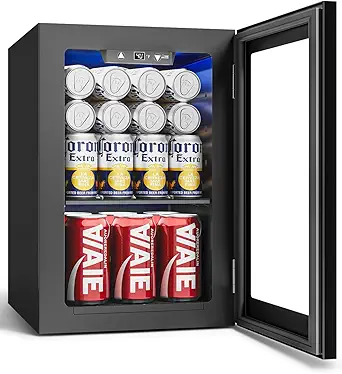 |
| Top Rated A top-rated pick with lots of positive feedback | hOmeLabs Beverage Refrigerator HME030065N | 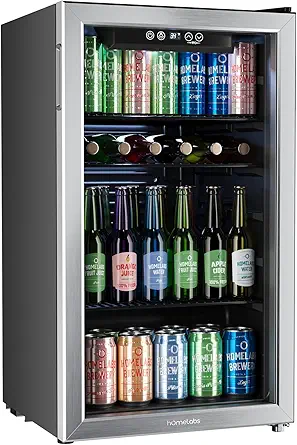 |
| Most Popular A crowd favorite that many people choose with confidence | EUHOMY BR013-110 Beverage Refrigerator |  |
| Best Seller A high-volume bestseller chosen again and again | Electactic Beverage Refrigerator JC-90 |  |
Feelfunn 3.2 Cu.Ft Beverage Refrigerator

| Capacity | 3.2 cubic feet |
|---|---|
| Temperature Range | 34–64°F |
| Cooling Method | Compressor |
| Included Shelves | 4 removable adjustable shelves |
| Installation Type | Under-Counter/Freestanding |
The Feelfunn 3.2 Cu.Ft beverage refrigerator is a compact, compressor-cooled mini fridge designed to store cans, bottles and mixed drinks for entertaining or everyday use. It holds up to 126 cans across four adjustable, removable shelves and uses a digital temperature control with a 34–64°F range so you can set different chill levels for soda, beer or wine. The unit uses 3D air circulation and a rotary scroll compressor to keep temperatures even, and a double-layer low-E glass door plus interior blue LED lighting makes contents easy to see. Practical touches include a reversible door, adjustable feet for under-counter or freestanding placement, and a frost-free defrost system. Expect quiet operation around 36 dB, but note the fridge has no lock and requires upright placement before initial use. Energy consumption is listed and it comes with a one-year accessory service. For buyers wanting a straightforward, visible beverage cooler for kitchens, bars, dorms or offices, this model balances capacity, temperature control and noise performance well.
Best for: Buyers who want a roomy, quiet beverage cooler with reliable compressor cooling and visible glass-door storage for home bars, kitchens, dorms or offices.
Less Ideal for: People who need a lockable or ultra-energy-efficient display fridge or who prioritize the absolute smallest footprint.
- Large 3.2 cu.ft capacity fits up to 126 cans with four adjustable shelves for flexible storage
- Digital temperature control with a 34–64°F range lets you set chill levels for different beverages
- Compressor cooling with 3D air circulation provides more consistent temperatures throughout the cabinet
- Reversible glass door and interior LED lighting make contents visible and support under-counter or freestanding placement
- Quiet operation (~36 dB) suitable for bedrooms, offices and entertainment areas
- No built-in lock for secured storage
- Listed annual energy consumption may be higher than smaller thermoelectric units
Verdict: A roomy, quiet compressor beverage fridge that balances capacity, visible glass-door display and precise temperature control for everyday entertaining and home use.
PremiumLevella PRF90DX 9 Cu Ft

| Capacity | 9 cubic feet |
|---|---|
| Configuration | Freezerless |
| Defrost System Type | Manual Defrost |
| Number Of Shelves | 4 |
| Power Source | Corded Electric |
The PremiumLevella PRF90DX is a freestanding, glass-door beverage merchandiser built to store and show drinks in small commercial spaces or a home bar. It uses a compressor cooling system with a front-bottom compressor housing, manual defrost, and a thermostat and light switch located at the top inside the cabinet for simple temperature and lighting adjustments. The interior has four adjustable wire shelves so you can fit cans and bottles in different arrangements, and the reinforced double-layer glass door preserves temperature while keeping contents visible. A keyed lock on the handle secures inventory after hours and the top lightbox is removable for custom branding. Practical downsides are manual defrosting and a relatively high annual energy consumption figure, so it is best where display and access control matter more than absolute energy efficiency. Installation is straightforward because it is freestanding and ships with basic tools.
Best for: Buyers who prioritize visible, secure beverage display and easy interior access for small commercial spaces or a dedicated home bar and value simple manual controls over advanced automation.
Less Ideal for: People seeking the most energy-efficient or low-maintenance refrigeration solution for continuous heavy-duty use should consider other high-efficiency or auto-defrost models.
- Visible double-layer glass door keeps contents on display while helping maintain temperature
- Adjustable wire shelves let you configure storage for cans and taller bottles
- Front-mounted compressor with attractive grill cover simplifies servicing access
- Locking door handle secures beverages for retail or household use
- Customizable top lightbox for branding or signage
- Manual defrost requires occasional user maintenance
- Annual energy consumption (913 kWh) is relatively high compared with more efficient models
Verdict: Choose this merchandiser when you need a secure, customizable glass-door display refrigerator for visible beverage storage in a small commercial or home setting.
Manastin Beverage Refrigerator MRBRN2

| Capacity | 3.2 cubic feet |
|---|---|
| Temperature range | 35–65°F |
| Cooling method | Compressor with fan circulation |
| Number of shelves | 3 |
| Defrost system type | Frost Free |
The Manastin 3.2 cu ft beverage refrigerator is a freestanding cooler aimed at keeping drinks at serving temperatures for home bars, offices, or dorms. It uses a compressor plus an internal fan for even cooling and a digital thermostat with a 35–65°F range and Fahrenheit/Celsius toggle, so you can set precise temperatures for soda, beer, or light wine storage. The glass door and soft blue LED lighting display contents clearly, while three removable wire shelves and multiple slot positions let you store cans flat or bottles upright. It is frost free and designed to run quietly with minimal vibration, and a key lock adds basic security. Trade-offs include a modest total capacity relative to full-size units and a single door/right-hinge layout that limits placement options; the unit is meant for supplemental drink storage rather than bulk cold storage or long-term wine aging.
Best for: Buyers who want a compact, display-ready fridge to keep a curated selection of drinks at precise serving temperatures and prioritize efficient use of limited space.
Less Ideal for: People needing large-capacity cold storage, full wine cellaring, or a built-in installation should look at larger or purpose-built models instead.
- Digital thermostat with 35–65°F range for precise temperature control
- Compressor and fan circulation for even, quiet cooling
- Adjustable removable wire shelves accommodate cans and bottles
- Glass door with LED lighting showcases contents and aids selection
- Frost-free operation and freestanding installation for flexible placement
- 3.2 cu ft capacity is limited for larger households or parties
- Right-hinged single door may restrict installation orientation
Verdict: A space-efficient, display-oriented beverage fridge that delivers precise, even cooling for a modest stash of cans and bottles.
Feelfunn Beverage Refrigerator FWC008-11
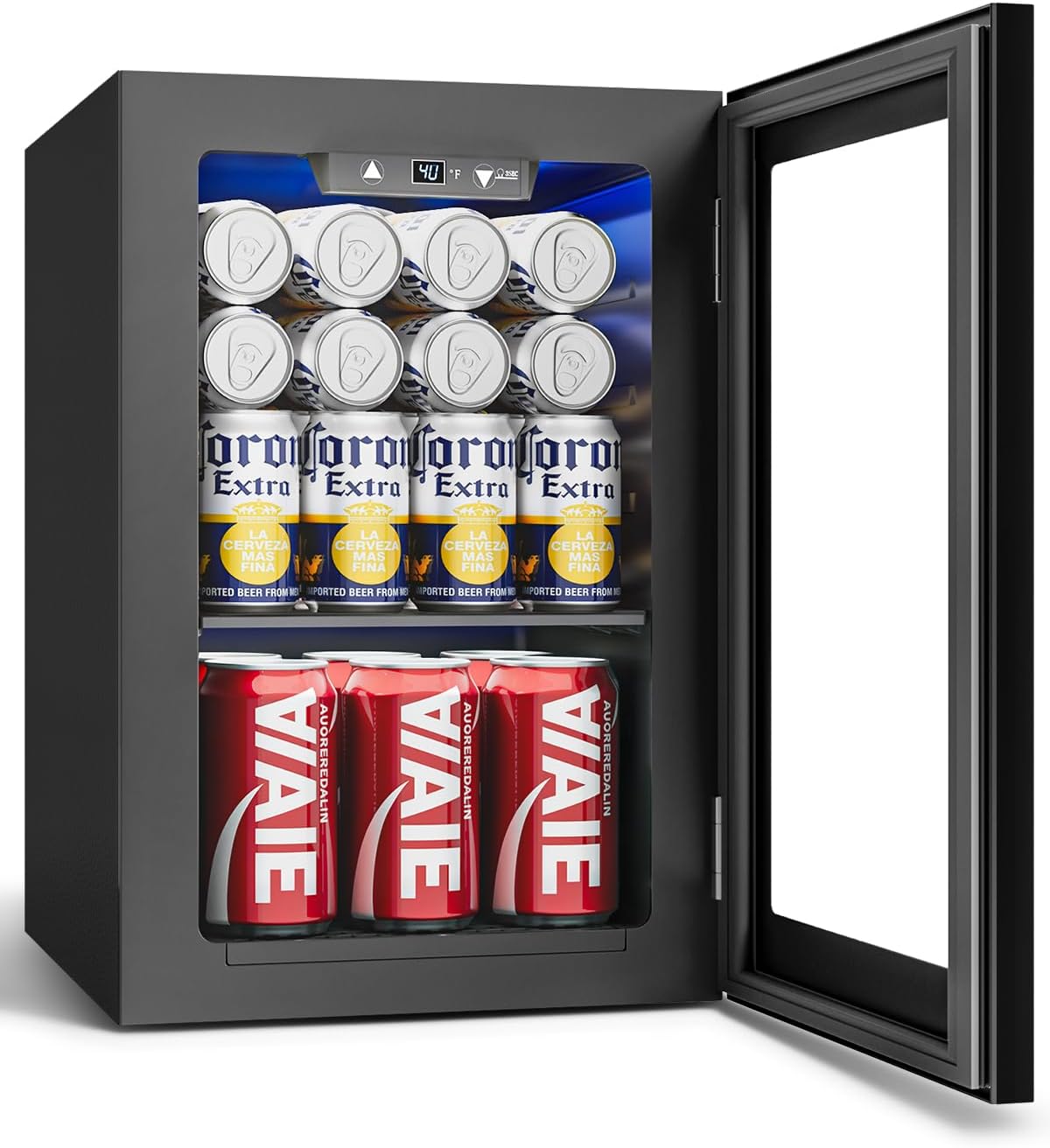
| Capacity | 0.6 cubic feet |
|---|---|
| Temperature Range | 40-61°F |
| Cooling Method | Compressor |
| Power Source | Corded Electric |
| Noise Level | ≤38 dB |
The Feelfunn 24-can beverage refrigerator is a compact compressor mini-fridge aimed at keeping drinks chilled without taking much space. It cools between 40 and 61°F using a 3D circulating air system and an internal compressor for faster, more even cooling than simple thermoelectric models, and a removable shelf lets you switch between cans and a few upright bottles. Controls are touch-style with a clear LED readout and an interior LED light that can be activated for visibility. The unit runs quietly at or below 38 dB, so it is suitable for bedrooms, dorms, or offices, and adjustable feet help level it on uneven surfaces. Expect manual defrosting and a small footprint, so storage is limited to snacks and a couple dozen drinks rather than bulk beverage stock. Energy consumption is moderate for a compressor fridge and the product carries a one-year warranty. For budget buyers this model balances cooling performance and compact convenience, but it is not meant as a full secondary refrigerator for large gatherings.
Best for: Buyers on a tight budget who need a reliable, space-saving fridge for a small collection of drinks in a dorm, office, or apartment and prioritize cooling performance over capacity.
Less Ideal for: Anyone wanting to store large quantities of beverages, long-term bulk cooling, or a secondary full-size fridge for parties should choose a larger-capacity model instead.
- Compressor cooling with 3D air circulation for faster, more even cooling than thermoelectric units
- Compact footprint fits on desks, in dorms, or under counters
- Adjustable temperature range (40–61°F) suitable for sodas and serving wines
- Quiet operation (≤38 dB) so it can run in shared or sleeping spaces
- Removable shelf and interior LED improve usability and flexibility
- Very small 0.6 cu ft capacity limits storage to about 24 cans or a few bottles
- Manual defrost requires occasional maintenance
- Annual energy consumption is relatively high for a mini unit compared with some low-power alternatives
Verdict: A budget-friendly compact compressor fridge that delivers better cooling and quiet operation for small drink collections.
hOmeLabs Beverage Refrigerator HME030065N

| Capacity | 3.2 cubic feet |
|---|---|
| Storage | Holds up to 120 cans |
| Temperature range | 34°F to 50°F |
| Cooling method | Compressor |
| Defrost system | Automatic |
This hOmeLabs beverage refrigerator is a compact, freestanding cooler designed to store drinks for a home bar, office, or dorm room. It uses a compressor-based cooling system with a whisper-quiet compressor and a touch-button digital thermostat that can reach as low as 34°F, so you can keep cans and bottles consistently chilled. The reinforced glass door and internal LED light make it easy to see inventory without opening the door, and three removable chrome wire shelves let you reconfigure the interior for taller bottles or organized rows of cans. Setup is straightforward for standalone placement or under-counter installation, and the reversible door and adjustable feet add placement flexibility. Expect steady, quiet cooling rather than ultra-low temperatures, and note the unit consumes a moderate amount of energy compared with full-size refrigerators. For buyers prioritizing long-term reliability, the simple compressor design and automatic defrost reduce maintenance points, though this model does not include inverter technology.
Best for: Buyers who want a dependable, straightforward beverage cooler for home or small commercial spaces and value quiet, consistent cooling and easy maintenance.
Less Ideal for: People who need the absolute lowest energy use or an ultra-efficient inverter-driven fridge for variable power conditions should consider other options.
- Compressor cooling with whisper-quiet compressor for consistent cold and low noise
- Digital touch temperature control down to 34°F for precise beverage chilling
- Reinforced glass door with LED interior light for easy visibility
- Three removable chrome wire shelves and adjustable feet for flexible placement
- Reversible door allows left or right swing to fit different spaces
- Annual energy consumption is relatively high for a compact unit
- No inverter technology, so it may be less efficient during heavy load conditions
Verdict: A reliable, quiet compressor beverage refrigerator with precise digital controls and flexible shelving built for consistent everyday use.
EUHOMY BR013-110 Beverage Refrigerator

| Capacity | 3.2 cubic feet |
|---|---|
| Temperature range | 37°F to 61°F |
| Cooling method | Compressor |
| Number of shelves | 5 |
| Defrost system type | Frost Free |
The EUHOMY BR013-110 is a compact compressor beverage fridge built for home or office use and sized to hold cans and bottles without a freezer compartment. It uses a compressor cooling system with an internal circulation fan to keep temperatures steady across the cabinet and offers precise digital control from 37°F to 61°F on a touch panel. Five removable shelves and five shelf positions let you rearrange space for tall bottles or stacked cans, and the reversible double-layer glass door with UV-blocking helps protect contents while showing them off. The unit is designed for freestanding placement, runs quietly at about 36 dB, and is relatively energy efficient at roughly 0.69 kWh per day. Important limitations are its modest capacity compared with larger beverage coolers and the basic one-year support; buyers who need undercounter install or specialty wine features should look elsewhere. For everyday beverage storage where visibility, flexible shelving, and predictable cooling matter, this model is a sensible compact option.
Best for: Buyers who prioritize reliable, visible beverage storage with flexible shelving and accurate temperature control for home, office, or small entertaining spaces and who value units backed by many customer reviews.
Less Ideal for: People who need an undercounter built-in cooler, a larger high-capacity display fridge, or specialized wine-preserving features for long-term aging should consider other models.
- Precise digital temperature control from 37°F to 61°F for accurate beverage chilling
- Compressor cooling with circulation fan provides consistent temperatures throughout the interior
- Five removable shelves and multiple shelf positions allow flexible storage layouts
- Reversible double-layer glass door with UV blocking combines visibility and protection
- Quiet operation around 36 dB suitable for kitchens, offices, or bedrooms
- Modest 3.2 cu. ft. capacity may be small for large parties or heavy entertaining
- Only a one-year product support period is included
Verdict: Choose this compact compressor beverage fridge when you want visible, steady cooling and flexible shelving in a quiet unit ideal for home or office beverage storage.
Electactic Beverage Refrigerator JC-90

| Capacity | 3.1 cubic feet |
|---|---|
| Cooling Method | Compressor |
| Number of Shelves | 5 |
| Temperature Range | 37°F–61°F |
| Installation Type | Freestanding |
The Electactic 3.1 cu ft beverage refrigerator is a compact compressor-cooled unit meant for home bars, garages, or under-counter installation. It holds roughly 130 cans across five removable wire shelves that can be repositioned or removed to fit tall bottles, and a reversible glass door with LED interior lighting makes drink selection easy in low light. Temperature is set with a touch digital control and the range targets beverage-appropriate temperatures between about 37 and 61°F, while the compressor-based system provides steadier, quieter cooling than thermoelectric alternatives. The unit is freestanding, ETL listed, and uses manual defrost. Practical limitations include a modest usable volume compared with full-size fridges and wire shelves that can allow smaller cans to tip unless carefully arranged. The fridge claims low noise below 38 dB and an annual energy estimate is provided, but buyers should allow space for ventilation if planning built-in installation.
Best for: Buyers who prioritize reliable, factory-quality cooling and a straightforward, low-risk appliance for home bars or small kitchens and who prefer a proven compressor system over cheaper alternatives.
Less Ideal for: Those needing large-capacity refrigeration for family food storage or users who want soft-close shelving and fully integrated built-in cabinet installation features.
- Compressor cooling for consistent, effective temperature control
- Digital touch temperature control and display for precise setpoints
- Five removable wire shelves let you rearrange or remove shelving for tall bottles
- Glass door with interior LED lighting makes contents easy to see
- Reversible door and freestanding installation offer flexible placement
- Manual defrost requires occasional maintenance
- Wire shelving may allow smaller cans to tip without additional supports
Verdict: A compact, compressor-cooled beverage fridge that gives dependable, restaurant-style chilling and simple digital control for anyone who wants a reliable small beverage center.
Choosing the Right Beverage Refrigerator: Key Factors to Consider
Temperature Range and Accuracy
The temperature range and how accurately a unit holds set points determine whether your drinks are stored safely and served at the right chill. For beverage refrigerators, look for models that offer a lower bound cold enough for beer and a higher setting suitable for wine or mixers. Accuracy matters because frequent temperature swings can affect carbonation and flavor.
Stability is equally important. A refrigerator that rapidly cycles between cold and warmer states can create condensation and uneven cooling across shelves. Features such as digital thermostats, interior sensors, and well-insulated cabinets improve both range and accuracy. If you plan to store different drink types, a unit with a wider, reliable range gives you greater flexibility.
Usable Capacity and Shelf Configuration
Rated capacity in liters or cubic feet is only part of the story. How the interior is arranged determines how many cans, bottles, or mixed containers you can actually store. Fixed shelves limit layout options, while adjustable or removable shelving and sliding racks make it easier to store taller bottles or bulk packages.
Consider depth and shelf spacing as much as total capacity. Shallow but tall interiors may fit wine bottles but not stacks of cans, while wider shelves allow efficient stacking. For entertaining, count how many standard cans or 750 ml bottles you expect to store and compare that to the effective layout offered by the refrigerator.
Noise Levels and Vibration
Noise output matters when the refrigerator is placed in living rooms, home bars, or office spaces. Look for models with low-decibel ratings or compressor designs advertised for quiet operation. Vibration from compressors can disturb carbonation and create noise that feels louder than the spec suggests.
If the unit will sit near seating areas, prioritize low-vibration designs and review placement options that mitigate sound, such as rubber feet and stable shelving. Quiet operation also contributes to perceived quality and reduces the chance you will need to relocate the unit after purchase.
Energy Use and Operating Cost
Energy efficiency reduces operating cost and heat output, which can be important in small or enclosed spaces. A more efficient beverage refrigerator runs less frequently to maintain temperature, which also tends to reduce noise and wear on components.
Check rated power consumption or estimated yearly energy use when comparing options. Energy-efficient models often include improved insulation, variable-speed compressors, or better door seals. While efficiency may add upfront cost, it lowers lifetime operating expenses and helps keep ambient room temperatures more stable.
Door Type, Seal, and Access
Door design affects both usability and efficiency. Solid doors provide better insulation while glass doors are useful for display and quickly locating specific items. Whichever you choose, a strong, even door seal is essential to prevent warm air infiltration and condensation.
Consider hinge design and handle placement for the installation location, especially if the unit will be built into cabinetry or placed in a corner. Reversible doors increase placement flexibility. For glass doors, look for UV protection and interior lighting options that minimize heat contribution while improving visibility.
Installation, Venting, and Fit
Where and how you install a beverage refrigerator affects performance and longevity. Some models are designed for freestanding use while others are intended for built-in installation with front-venting. Proper clearances for airflow prevent overheating and maintain cooling performance.
Measure the intended space and factor in door swing, ventilation requirements, and the need for a dedicated circuit if the unit draws more power. If you plan to install under a counter, confirm whether the model supports that use and whether it vents from the front or top to avoid blocking airflow.
Sizing Your Beverage Refrigerator for Different Uses
Think about how you will use the refrigerator most often. For occasional entertaining, a compact unit that holds two dozen cans may be sufficient. For regular hosting or larger households, choose a taller or wider model with flexible shelving to handle mixed drink sizes and extras.
Also factor in stocking habits. If you shop in bulk, prioritize usable capacity and shelf depth. If you rotate specialty beverages, a unit with adjustable shelves or dedicated bottle racks makes organization easier and reduces the need for additional refrigeration space.
- Measure the items you expect to store to check real fit.
- Consider seasonal needs when selecting capacity.
- Favor adjustable shelving when storing varied bottle heights.
Built-In Versus Freestanding Placement
Built-in models often require front ventilation and flush mounting. These integrate neatly with cabinetry but need careful planning to ensure airflow. Freestanding units are more flexible in placement but may need side or rear clearance.
If placement is near heat sources such as ovens or sunlight, choose a unit with stronger cooling capacity and consider additional insulation or shading to maintain consistent temperatures.
- Confirm ventilation requirements before installation.
- Allow adequate clearance for door swing and airflow.
- Avoid placing the unit in direct sunlight or next to heat-producing appliances.
Maintenance and Cleaning Tips
Regular maintenance preserves cooling performance and prevents odors. Clean removable shelves and wipe interior surfaces with a mild detergent. Check the door gasket for cracks or debris that could compromise the seal.
Periodically vacuum any exposed condenser coils or air intakes if accessible. Keep the interior dry to avoid mildew and consider using a charcoal odor absorber in units that store both beverages and mixers.
- Defrost or drain according to the manufacturer instructions.
- Clean spills promptly to prevent sticky buildup.
- Inspect seals and hinges during seasonal cleaning.
Temperature Zoning and Dual-Control Options
Some beverage refrigerators offer multiple zones or separate compartments with independent temperature controls. This is useful when you want to store different drink types at optimal serving temperatures in one cabinet.
If you frequently store both beers and wines, prioritize models with distinct zones or reliable settings that let you maintain cooler and warmer sections without cross-contamination of temperatures.
- Use zoning to optimize beverage taste and carbonation.
- Check for clear readouts and easy-to-adjust controls.
- Consider airflow patterns that keep zones stable over time.
Lighting, Display, and Aesthetics
Interior lighting and exterior finishes influence how a beverage refrigerator fits into a room visually. LED lighting is common and provides bright, low-heat illumination for display without warming the contents.
Glass-door models provide a showcase effect but require attention to UV exposure if storing light-sensitive drinks. Choose a finish and handle style that complements the space while still meeting functional needs like reversible doors or recessed handles for tight spots.
- Prefer LED lighting for low heat output.
- Select glass doors with low-UV coatings for delicate items.
- Match handle and finish style to surrounding cabinetry for built-in installs.
How We Chose the Best Beverage Refrigerator
We evaluated candidates based on features that directly affect how well a beverage refrigerator performs in everyday use. Core evaluation criteria included temperature control accuracy and range, because stable temperatures matter for drink freshness and serving preferences; usable storage capacity and shelf configuration, since real-world capacity depends on shelf layout and bottle orientation; noise and vibration levels, which affect placement options in living spaces; energy efficiency and operating cost, to estimate ongoing utility impact; and build quality plus door seal performance, to limit temperature loss and prolong service life. We prioritized units with clear temperature displays or digital thermostats and flexible shelving that accommodates cans and taller bottles. Exclusions included general-purpose refrigerators without beverage-focused shelving or units intended strictly for commercial walk-in use. Our selection favored models that combine consistent cooling, sensible storage layouts, and quiet operation suitable for residential settings.
Our full evaluation process is outlined in our review methodology.
FAQ
What temperature should I set a beverage refrigerator to for beer and soda?
For most beers and sodas, keeping the unit between 36 and 40 degrees Fahrenheit provides a crisp serving temperature. Lighter beers and sparkling beverages can be slightly colder, while ales and some craft beers may taste better a few degrees warmer.
Can a beverage refrigerator store wine long term?
Beverage refrigerators are designed for short- to medium-term storage and serving. They lack the humidity control and long-term stability of dedicated wine cellars, so they are best for chilling and short-term holding rather than long-term aging.
How important is vibration control in a beverage refrigerator?
Vibration control matters if you store carbonated beverages or delicate wines. Excess vibration can disturb sediment in wine and increase perceived noise. Models with low-vibration compressors or vibration-dampening components are preferable for display areas and sensitive contents.
Do glass-door beverage refrigerators use more energy than solid-door models?
Glass doors can allow more heat transfer than solid insulated doors, which may lead to slightly higher energy use. However, modern glass doors often include double-pane construction and low-emissivity coatings that reduce energy loss, narrowing the gap.
Is it okay to stack cans in a beverage refrigerator?
Stacking cans is fine if shelves are sturdy and ventilation is not blocked. Arrange stacks to allow air circulation and avoid overpacking tight spots that could create warm zones. Use removable racks or trays to keep stacks stable and accessible.
Final Verdict
Prioritize temperature control, usable interior layout, and quiet operation when choosing a beverage refrigerator. Decide whether you need zoning or adjustable shelving for mixed drink types and confirm the unit suits your planned placement and ventilation needs. Balancing capacity against size and noise tradeoffs will lead to a practical choice that keeps drinks at ideal serving temperatures and integrates well with your space.