
Note: This article contains affiliate links. If you click on these links and make a purchase, we may earn a small commission at no extra cost to you. This helps support our research and content. Read our full affiliate disclosure here.
If you plan to puree soups, make hot sauces, or emulsify warm ingredients, choosing a blender designed for hot liquids matters for safety and texture. A blender that handles heat can prevent steam buildup, tolerate thermal shock, and produce smooth, consistent results without splattering. This guide covers the seven best blenders for hot liquids we shortlisted for home kitchens. We evaluated each option for heat tolerance, sealing and venting, ease of cleaning, and how well it preserves texture in hot blends. Read on to find a model that suits your cooking style and countertop workflow.
Top Picks at a Glance
| Best Overall The best all-around choice for most situations | Vitamix VX1 Blender 64 oz |  |
| Best Quality Built to a higher standard if you want something more solid | Vitamix 5200 Blender |  |
| Best Value The sweet spot between price and what you get | NutriBullet Rx N17-1001 |  |
| Best Budget The cheapest option that still gets the job done reliably | Amazon Basics Countertop Blender BL1409AM |  |
| Top Rated A top-rated pick with lots of positive feedback | Ninja Professional Plus BN701 |  |
| Most Popular A crowd favorite that many people choose with confidence | Magic Bullet MBR-1101 |  |
| Best Seller A high-volume bestseller chosen again and again | Ninja Nutri-Plus BN301 |  |
Vitamix VX1 Blender 64 oz

| Capacity | 64 fluid ounces |
|---|---|
| Wattage | 1440 watts |
| Number of Speeds | 10 |
| Control Type | Variable |
| Power Source | ac |
The Vitamix VX1 is a straightforward, high-performance blender built for everyday kitchen tasks and hot-liquid blending. Its powerful motor and laser-cut stainless-steel blades create strong shear and friction heat, so you can make steaming-hot soups in minutes without transferring to a pot. The 64-ounce classic container is shaped to promote a fast vortex for even blending and handles both single servings and larger batches. Controls are simple: a variable speed knob plus a pulse function lets you dial texture from silky purées to chunkier salsas, and a self-cleaning program rinses the container in under a minute. Practical benefits include durable blades that resist dulling, a robust motor that pulverizes fibrous ingredients, and a design meant to last with a five-year warranty. Trade-offs are minimal but include a sizable footprint and typical blender noise during heavy loads, and the unit lacks preset programs beyond the self-clean cycle. For cooks who want reliable hot-soup performance and precise manual control, the VX1 delivers consistent, restaurant-quality results.
Best for: Buyers who want a dependable, pro-level blender that can make hot soups and handle tough ingredients while offering precise manual control and everyday reliability.
Less Ideal for: People who need ultra-quiet operation or a compact, travel-friendly blender should consider smaller or quieter models instead.
- Powerful motor and stainless-steel blades that create friction heat for hot soups
- 64-ounce container designed to form a strong vortex for even blending
- Variable speed control plus pulse for precise texture adjustments
- Self-cleaning program for fast, no-disassembly cleanup
- Durable construction with a 5-year limited warranty
- Large footprint may not suit small countertops
- Produces noticeable noise under heavy loads
Verdict: If you want a durable, high-performance blender that reliably makes steaming-hot soups and smooth blends, the Vitamix VX1 is a practical pro-grade choice.
Vitamix 5200 Blender

| Container capacity | 64 Oz |
|---|---|
| Motor power | 2 HP Motor |
| Speed settings | 10 variable speeds + High switch |
| Blade material | Stainless‑steel blades |
| Warranty | 7‑year limited warranty |
The Vitamix 5200 is built to handle heavy blending jobs like smoothies, soups, nut butters, and purées for meals needing very smooth textures. Its high‑torque motor and laser‑cut stainless‑steel blades power through fibrous produce and ice, while the 64‑ounce container creates a strong vortex so ingredients cycle toward the blades rather than getting stuck. The simple control layout combines a continuously variable speed knob with a High‑speed switch so you can ramp to a fine purée without complex programs, and the included tamper helps keep thick mixtures moving. Practical touches include a fast self‑clean cycle that uses warm water and a drop of soap and a long 7‑year limited warranty. Trade offs are that it is a countertop workhorse that requires counter space and some care when processing very small single servings, and it lacks preset programs for baby food or purees, so achieving consistent results depends on technique and speed control.
Best for: Caregivers and home cooks who need reliable, professional‑level blending to produce smooth, lump‑free purees and soups for elderly or texture‑modified diets and who prioritize performance over compact size.
Less Ideal for: People who need a compact or travel‑friendly blender or those who prefer automatic preset programs for repeatable single‑serve purees.
- Very powerful motor and stainless‑steel blades that break down fibrous vegetables and frozen fruit
- Large 64‑oz container creates an efficient vortex for even purées
- Continuously variable speed plus High switch offers precise control over texture
- Included tamper speeds up processing of thick mixtures and keeps ingredients moving
- Quick self‑clean cycle simplifies cleanup
- Large footprint that takes significant counter or storage space
- Not optimized with preset pureeing programs so technique affects consistency
Verdict: Choose the Vitamix 5200 when top‑tier power and precise manual speed control are needed to produce consistently smooth purees for elderly meal preparation.
NutriBullet Rx N17-1001

| Wattage | 1700 watts |
|---|---|
| Capacity | 1000 ml |
| Power Source | Corded Electric |
| Control Type | Automatic |
The NutriBullet Rx is a hands-free smart blender built to make silky smoothies, soups, sauces, and hot beverages using a 1700 watt motor and a dedicated heating cycle. It is supplied with a 1 liter SouperBlast pitcher plus a 30 oz cup and extractor blade, so you can switch between single-serve drinks and family-sized hot blends without transferring containers. The smart Auto Start/Stop control and the 7-minute heating program let the unit heat ingredients into soup consistency while blending, which simplifies one-pot prep for lunches or weeknight dinners. Cleanup is straightforward since the cups are top-rack dishwasher safe and the extractor blade rinses easily. Trade-offs include a single speed control that limits manual speed adjustments and a fairly large footprint for small kitchens, so users who want multi-speed precision or a compact unit may prefer other designs. For hot-liquid tasks this blender delivers reliable power and a convenient heating option that turns raw ingredients into ready-to-eat soups and sauces quickly.
Best for: Buyers who want a practical, time-saving countertop blender that can both blend and heat in one appliance for regular hot-liquid meals like soups and sauces.
Less Ideal for: Those who need precise multi-speed control or have very limited counter space should consider different models.
- Very powerful 1700W motor handles tough ingredients and creates smooth textures.
- Built-in 7-minute heating cycle for making hot soups and sauces without a stove.
- Includes both a 1L pitcher and 30 oz cup for single-serve and family-sized blending.
- Hands-free smart Auto Start/Stop control simplifies operation and lets you walk away while it runs.
- Dishwasher-safe cups and easy-to-rinse blade make cleanup low-effort.
- Only a single speed/control setting limits manual speed adjustment.
- Relatively large footprint compared with personal-size blenders.
Verdict: If you want a no-nonsense, high-power blender that also heats soups and sauces, the NutriBullet Rx delivers fast hot-liquid results with minimal fuss.
Amazon Basics Countertop Blender BL1409AM
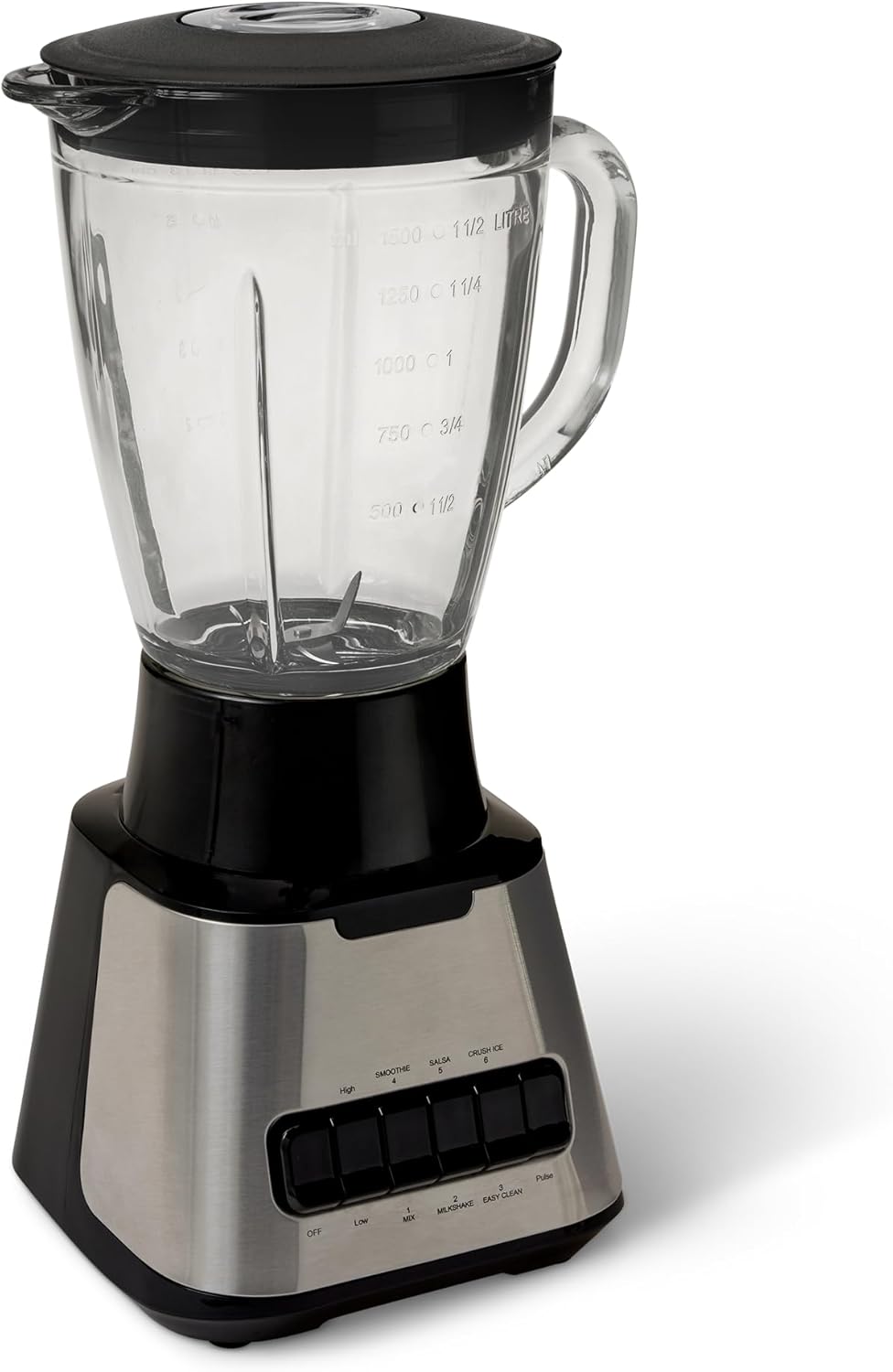
| Wattage | 700 watts |
|---|---|
| Number of Speeds | 6 |
| Capacity | 52.79 fluid ounces |
| Power Source | Corded Electric |
This Amazon Basics blender is a straightforward countertop unit aimed at everyday use like smoothies, milkshakes, salsas, and crushed-ice drinks. The 700W peak motor (500W rated) and stainless steel Sabre ice blades handle fruit, ice, and frozen ingredients without fuss, and the 50‑ounce glass jar makes multiple servings easy for families or meal prep. Controls are simple push-button functions with six preset modes plus pulse, which keeps operation intuitive but limits fine-grain speed control for users who want more precision. The glass container and stainless blades feel durable compared with all-plastic alternatives, though the base is mostly plastic. It runs on corded power and is compact enough for most countertops, but the 230V listing may reflect regional specs. For a budget-focused shopper this blender delivers practical performance and decent capacity, though power and control are not as refined as higher-end models with variable-speed dials or specialized smoothie programs.
Best for: Buyers prioritizing a low-cost, no-frills blender that reliably makes smoothies and crushed-ice drinks for families or meal prep.
Less Ideal for: Users who need professional-level power, highly precise speed control, or advanced blending programs for heavy-duty use should consider higher-end models.
- 700W peak motor and stainless steel blades handle ice and frozen fruit reliably
- 50‑ounce glass jar supports multiple servings and avoids plastic taste
- Six preprogrammed functions plus pulse make common tasks quick and simple
- Compact footprint fits most countertops and is easy to store
- Push-button presets limit precise speed control compared with variable-speed blenders
- Base construction is primarily plastic, which feels less premium than metal alternatives
Verdict: A capable, budget-friendly countertop blender that delivers reliable ice crushing and multi-serving capacity for everyday use.
Ninja Professional Plus BN701

| Wattage | 1400 watts |
|---|---|
| Capacity | 72 fluid ounces |
| Number of Speeds | 4 |
| Other Special Features of the Product | Dishwasher Safe, Pre-Programmed, Pulse Technology |
The Ninja Professional Plus BN701 is a powerful countertop blender built to handle tough blending tasks like crushing ice, smoothies, and batch recipes. Its 1400 peak-watt motor and six-blade Total Crushing assembly turn ice and firm ingredients into smooth textures quickly, while the full-size 72 oz pitcher makes it easy to prepare hummus or dips for a crowd. Auto-iQ offers three preset programs that combine timed pulsing and blending so you can get consistent results without manual guesswork, and four manual speeds plus pulse give basic control when you need it. The pitcher and stacked blade assembly are top-rack dishwasher safe for easier cleanup after processing beans and oils, and the BPA-free plastic pitcher is marked with a 64 oz max fill to prevent overfilling. Expect a sturdy, loud machine that excels at pureeing and crushing, but note its larger footprint and weight compared with compact personal blenders, so it suits a kitchen counter rather than frequent transport or tiny storage spaces.
Best for: Buyers who prioritize powerful, reliable performance for making smooth hummus, dips, and large batches and want preset programs to simplify consistent pureeing.
Less Ideal for: Those who need a compact, lightweight blender for single servings or frequent travel should consider smaller personal models instead.
- Very strong 1400 peak-watt motor for fast pureeing and ice crushing
- Large 72 oz pitcher for making hummus or dips in family-size batches
- Total Crushing 6-blade assembly produces smooth, consistent textures
- Auto-iQ presets simplify repeatable blending programs
- Dishwasher-safe pitcher and blade assembly for easier cleanup
- Bulky and heavier than small personal blenders, takes counter space
- Plastic pitcher may retain odors over time when processing strongly scented foods
Verdict: Choose this blender if you want a high-power, full-size unit that reliably purees chickpeas and makes smooth hummus for family-sized batches.
Magic Bullet MBR-1101
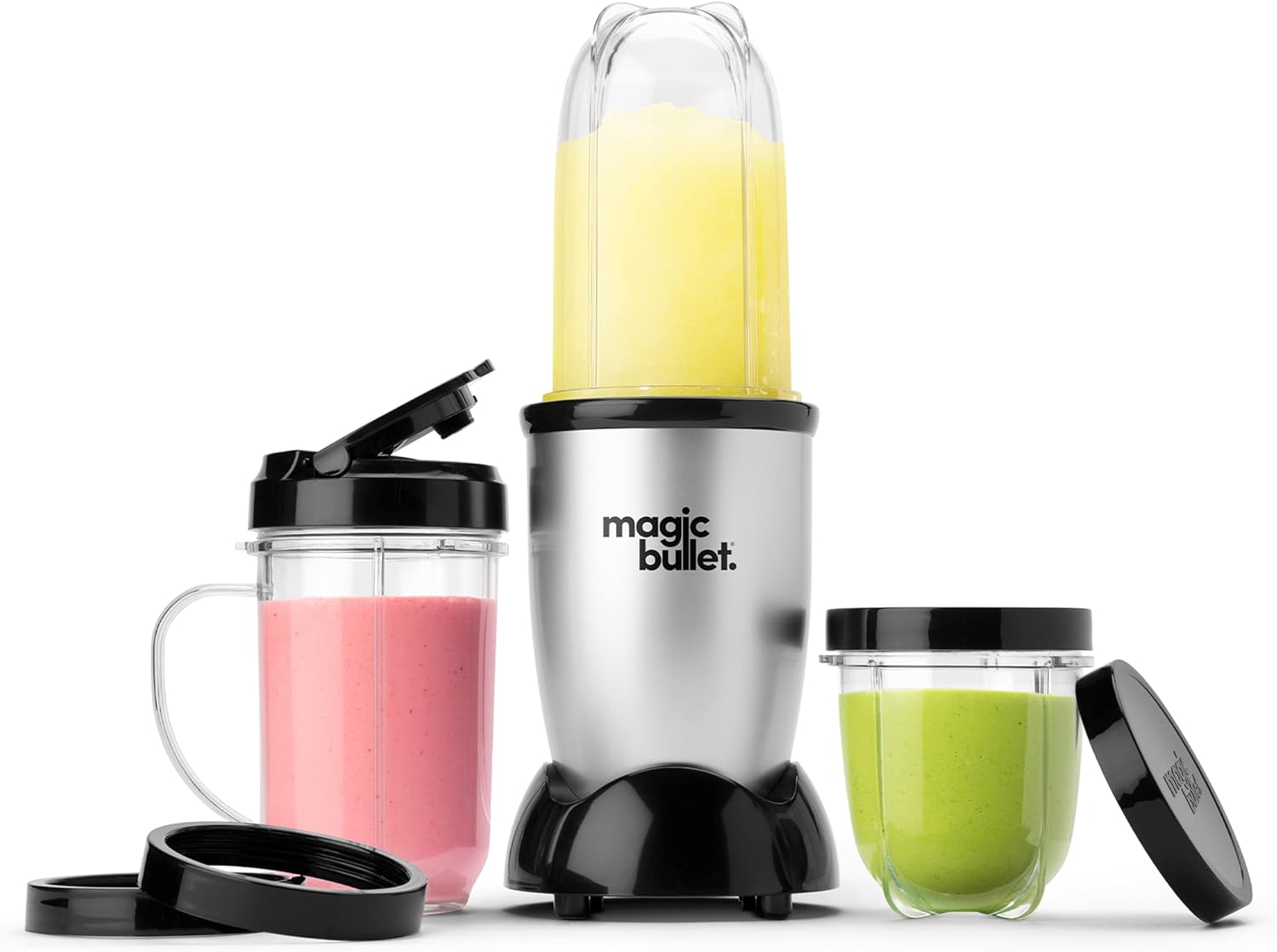
| Wattage | 250 watts |
|---|---|
| Number of Speeds | 6 |
| Power Source | Corded Electric |
| Capacity | 22 fluid ounces |
The Magic Bullet MBR-1101 is a compact personal blender that handles single-serve smoothies, sauces, dips, and small food‑prep tasks quickly. It uses a 250W corded motor with a cross blade and twist-on cups so you load ingredients, attach the blade, and press the base to run short bursts or continuous blends. The kit includes tall and short cups, a party mug, resealable lids, and a recipe guide, and most plastic parts are top-rack dishwasher safe which keeps cleanup simple. Its short run times and pulse-style operation make it good for soft fruits, leafy greens, nut butters in small batches, and chopping herbs or nuts. Limitations are predictable: the 250W motor is far less powerful than full‑size blenders, so it struggles with large frozen blocks, very fibrous roots, or continuous high-volume blending, and capacity is limited to the provided cups. If you want a space‑saving, easy daily blender for single servings and quick prep, it delivers consistent, no‑frills performance at a low footprint.
Best for: Buyers who prioritize compact, proven products with lots of user feedback and want a simple single‑serve blender for daily smoothies, sauces, and small prep tasks.
Less Ideal for: Those who need a high-power blender for frequent large batches, heavy-duty crushing of ice or hard roots, or family‑size blending should consider full‑size models instead.
- Compact footprint saves counter space and stores easily
- Includes multiple cups, lids, and a cross blade for versatile single‑serve prep
- Top-rack dishwasher safe parts simplify cleaning
- Simple push-button/twist operation is quick and easy for everyday use
- Low 250W motor limits ability to pulverize large frozen or very tough ingredients
- Small cup capacity restricts batch size for families or meal prep
Verdict: A compact, widely adopted single‑serve blender that reliably handles quick smoothies and small food‑prep tasks while saving counter space.
Ninja Nutri-Plus BN301

| Wattage | 900 watts |
|---|---|
| Number of Speeds | 3 |
| Power Source | Corded Electric |
| Material Type Free | BPA Free |
The Ninja Nutri-Plus BN301 is a single-serve countertop blender built around a 900-peak-watt push-to-blend motor and Pro Extractor blade assembly, designed for smoothies, frozen drinks, and small-batch purees. You blend directly in one of the included 20 oz to-go cups, then swap on a spout or storage lid for quick transport or fridge storage, which cuts cleanup and saves counter space. The extractor blades break down ice, whole fruits, and softer vegetables efficiently, so it will handle chickpea blends for hummus if you pre-soften beans or use canned chickpeas and add enough liquid and oil. Controls are simple push-to-blend pulses rather than variable speeds, which makes operation straightforward but limits fine speed control for very thick recipes. Most removable parts are top-rack dishwasher safe, easing maintenance. Because it is a personal blender, capacity is limited to single servings and heavy, continuous batching for large hummus quantities will require doing multiple cycles. For buyers wanting a reliable, compact machine that simplifies small-batch hummus and spreads, the BN301 delivers predictable, easy results.
Best for: Buyers who want a compact, easy-to-use personal blender for reliable small-batch hummus, smoothies, and on-the-go servings without complex controls.
Less Ideal for: Those who need to make large volumes of hummus or who want precise, multi-speed control for very thick recipes should consider a larger countertop blender.
- 900-peak-watt motor with Pro Extractor blades that crush ice and break down soft solids
- Includes three 20 oz to-go cups with spout and storage lids for blending, transport, and storage
- Push-to-blend pulses are simple and reduce risk of over-processing
- Top-rack dishwasher safe cups, lids, and blade assembly for easy cleaning
- Compact footprint that fits small kitchens, dorms, and limited counters
- Single-serve capacity requires multiple cycles for larger batches of hummus
- No adjustable speed settings for fine control on very thick or textured blends
Verdict: A compact, dependable single-serve blender that makes small batches of hummus and other spreads with minimal fuss and easy cleanup.
Choosing the Right Blender for Hot Liquids: Key Factors to Consider
Heat Tolerance and Jar Material
A blender intended for hot liquids should use materials rated for higher temperatures. Glass jars usually resist thermal shock better than basic plastics, and some engineered plastics are formulated to withstand repeated exposure to near-boiling temperatures. Knowing the jar material helps you predict how it will hold up when you pour very warm stocks or transfer just-boiled soup.
Thermal limits also affect long-term durability. Repeated cycles of hot-to-cold exposure can warp or weaken some synthetic jars. Choosing a container with clear manufacturer guidance on temperature limits reduces the chance of cracking or premature wear.
Venting, Lid Design, and Pressure Management
Blending hot liquids creates steam and pressure inside a closed jar. A proper venting system in the lid prevents sudden splatter and makes blending safer. Look for lids with dedicated vents, removable caps, or a two-piece design that lets steam escape gradually while blending.
The lid should also seal securely around the jar to avoid leaks when you pulse or run at high speed. A well-designed vent reduces the need to hold the lid down, which improves usability and safety during longer blends.
Motor Power and Sustained Load Performance
Hot blends like thick soups or legumes can be dense and place sustained load on the motor. A motor with stable torque and good heat dissipation will maintain consistent performance without overheating. Consider motors that are designed for longer run times rather than models intended for quick, cold-only tasks.
Higher wattage alone is not the only factor. Look for descriptions of continuous-duty capability, cooling systems, or long-run ratings. These design details affect how reliably the blender handles heavy hot mixtures without thermal cutoff or loss of speed.
Blade Geometry and Texture Results
Blade design influences how well a blender breaks down fibers and creates a smooth texture from hot ingredients. Blades with a combination of sharp cutting edges and aggressive profiles can shear hot vegetables and proteins cleanly, reducing the need for additional straining.
Consider whether the blender supports extra processing steps such as tamping or pulse modes that help manage thick or fibrous hot blends. Consistent texture outcomes save time and reduce cleanup after cooking.
Ease of Cleaning After Viscous Blends
Hot soups and sauces often leave sticky residues that solidify as they cool. A blender with removable blades or dishwasher-safe components simplifies cleanup. Smooth jar interiors, minimal crevices in the lid, and accessible seals reduce trapped food and make sanitation easier.
Also consider whether the jar can be rinsed safely while still warm. Some materials tolerate warm-water cleaning better than others. Ease of disassembly matters when you prepare frequent hot batches.
Safety Features and User Controls
Safety features such as lid locks, interlock systems, and clear maximum fill lines help you avoid overfilling hot liquids and reduce the risk of burns. Variable speed controls with soft-start or pulse functions improve control when beginning to blend hot ingredients and lessen the chance of sudden splatter.
Controls that let you start slowly and ramp up to full speed are particularly useful for integrating hot liquids into emulsions or for finishing delicate purees without creating steam-driven eruptions.
Why You Need a Hot-Liquid–Capable Blender
Not all blenders are equal when it comes to warm or boiling liquids. Using a blender designed for cold smoothies on very hot soups can lead to lid failure, scalding splatter, or even cracked jars. A hot-liquid–capable model reduces those risks through appropriate materials and venting.
Beyond safety, the right blender preserves texture and flavor. Proper heat handling prevents cooked ingredients from changing texture unpredictably and supports more consistent emulsions and silky purees.
- Prevents steam buildup and splatter
- Maintains consistent texture for soups and purees
- Reduces risk of jar or lid failure under thermal stress
How to Use a Blender Safely with Hot Ingredients
Start with low speeds and use a vent or removable center cap to allow steam to escape. Never fill the jar above the recommended maximum line when blending hot liquids. If a recipe calls for very hot or boiling ingredients, let them cool slightly before processing and blend in batches if needed.
Hold the lid gently in place until you are sure the venting is adequate, and avoid sudden high-speed starts. For very thick hot mixtures, pause periodically to let steam escape and to check the lid seal.
- Begin blending at low speed and increase gradually
- Keep fill level well below the maximum line
- Use the vent or removable cap to release steam
Jar Choices: Glass Versus Heat-Rated Plastic
Glass jars generally resist staining and do well with thermal shock when they are tempered. They offer a neutral surface that does not retain odors and often provide clearer visual cues to prevent overfilling. However, glass can be heavier and more fragile if dropped.
High-grade plastic jars that are specifically rated for hot liquids are lighter and more shatter-resistant. Confirm the temperature limits and look for BPA-free, food-safe resins. Consider how each material affects weight, durability, and routine handling in your kitchen.
- Glass: better thermal shock resistance and low odor retention
- Plastic: lighter and more impact-resistant if heat-rated
- Check manufacturer temperature ratings before use
Maintenance Tips After Blending Hot Foods
Rinse components promptly with warm water to prevent thick residues from hardening. Use a soft brush for seals and crevices, and run dishwasher-safe parts according to the manufacturer guidance. If your blender has removable blades, clean them carefully to avoid dulling or damage.
Allow parts that were warm during blending to cool before tightening or storing. Regular inspection of seals and gaskets helps detect wear that could lead to leaks under steam pressure.
- Rinse immediately while warm to avoid residue buildup
- Clean seals and crevices with a brush
- Inspect gaskets and replace if showing wear
Recipes and Uses That Benefit From Hot Blending
Hot-capable blenders are ideal for smooth soups, bisques, hot sauces, and silky purees. They can rapidly finish blended stocks into velvety textures and are useful for hot emulsions like certain dressings or warm nut-based sauces.
They also simplify single-pot workflows by allowing you to puree directly without transferring to another container, which saves time and reduces dishwashing.
- Pureed soups and veloutés
- Hot pan sauces and gravy finishes
- Warm nut spreads and emulsified sauces
How We Chose the Best Blender for Hot Liquids
We focused on features that matter specifically for blending warm ingredients and finished hot preparations. Key evaluation criteria included heat tolerance and thermal-safe materials, venting and lid design to prevent pressure buildup, motor stability during longer hot blends, and jar construction that resists thermal shock. We also weighed ease of cleaning after viscous or starch-thickened hot mixtures, plus accessory versatility for tasks like chopping or pureeing hot foods. We excluded blenders that lack any clear hot-liquid design features such as vented lids, heat-rated jars, or manufacturer-specified thermal limits. We also filtered out models intended strictly for cold-only tasks and compact personal blenders that do not offer reliable sealing under steam. Our selection process emphasized practical kitchen performance and user safety rather than niche specialty features. Ultimately, choices were driven by documented heat-handling features, user-focused safety design, and how straightforward maintenance and cleanup are after hot blending sessions.
Our full evaluation process is outlined in our review methodology.
FAQ
Can I pour boiling liquids directly into a blender?
Usually you should let boiling liquids cool slightly before blending. Very high temperatures increase steam pressure and the risk of splatter. If the blender is rated for hot liquids, pour carefully, leave space below the max fill line, and use the lid vent.
How much should I fill the jar when blending hot items?
Keep the fill level well below the maximum line to leave room for steam expansion. Filling to only half or two-thirds capacity is a safer practice for hot blends, especially for ingredients that foam or expand when agitated.
Are glass jars always better for hot blending?
Glass can offer good thermal resistance and low odor retention, but not all glass jars are equal. Tempered glass rated for thermal use is preferable. Heat-rated plastics may be a lighter, more impact-resistant alternative if properly specified.
What lid features matter most when blending hot liquids?
Look for a vented lid or removable center cap that permits steam release. Secure sealing around the rim is also important to prevent leaks. A lid that can be monitored or partially opened safely during blending improves control.
How do I avoid texture problems like foaming or separation?
Start at low speeds and increase gradually to minimize vigorous agitation that traps air. For emulsions, add hot liquids slowly while blending and use pulse control to integrate ingredients gently.
Final Verdict
When selecting a blender for hot liquids, prioritize heat-rated materials, a vented lid design, and a motor that can handle sustained, viscous loads. Think about jar material tradeoffs between glass and heat-rated plastics, and choose controls that let you start slowly to avoid splatter. Focus on safety features and ease of cleaning as much as raw power. By matching venting, thermal limits, and cleanup needs to how you cook, you can pick a blender that reliably produces smooth hot soups, sauces, and emulsions without unnecessary risks.