
Note: This article contains affiliate links. If you click on these links and make a purchase, we may earn a small commission at no extra cost to you. This helps support our research and content. Read our full affiliate disclosure here.
If you want to make your own flour at home, picking the right blender matters more than you might think. A good blender for making flour will grind whole grains into a steady particle size without overheating, and it should be easy to clean and maintain for frequent use. This guide shortlists seven top-performing blenders that balance motor strength, blade design, and container durability to handle dry milling tasks. Below we explain the features that separate capable flour-making blenders from ordinary appliances and summarize the evaluation criteria used to assemble the shortlist. Read on to find a model that matches the volume, texture, and upkeep needs you have in the kitchen.
Top Picks at a Glance
| Best Overall The best all-around choice for most situations | Vitamix Ascent X5 Blender |  |
| Best Quality Built to a higher standard if you want something more solid | Blendtec Designer 90oz WildSide+ |  |
| Best Value The sweet spot between price and what you get | Ninja BlendBOSS DB351ST |  |
| Best Budget The cheapest option that still gets the job done reliably | Hamilton Beach Wave Crusher 54221 |  |
| Top Rated A top-rated pick with lots of positive feedback | Vitamix 5200 Blender |  |
| Most Popular A crowd favorite that many people choose with confidence | BLACK+DECKER PowerCrush BL1230SG |  |
| Best Seller A high-volume bestseller chosen again and again | Cleanblend Commercial Blender 64oz |  |
Vitamix Ascent X5 Blender

| Wattage | 1500 watts |
|---|---|
| Number of Speeds | 10 |
| Capacity | 48 fluid ounces |
| Control Type | Manual with Automatic Programs |
| Power Source | ac |
The Vitamix Ascent X5 is a high-performance countertop blender built for everyday and advanced kitchen use. It uses a 2.2‑horsepower (1500W) motor and laser-cut stainless steel blades to pulverize fibrous ingredients, ice, and nuts, which makes it capable of producing very smooth textures like hummus, nut butters, and soups. Ten automatic blending programs plus variable speed and pulse let you choose between hands-off presets and manual control, and an on-screen tamper indicator helps with thick mixtures so you can push dense batches through without guessing. The 48‑ounce BPA‑free container is sized for small to medium batches and the SELF‑DETECT feature lets the base recognize compatible containers and adjust settings. A self-cleaning program speeds cleanup and the included tamper and recipe book are practical additions. The trade-offs are the blender's weight and size for countertop storage and that the 48‑ounce container limits very large batches, so households that make hummus in bulk may need to blend in multiple cycles.
Best for: Home cooks who want a reliable, powerful blender that produces restaurant‑smooth hummus and other purees without needing professional training or constant manual intervention.
Less Ideal for: Those who routinely make very large batches in a single go or need an ultra-compact, lightweight model for tight storage or travel.
- Very powerful 1500W motor and laser-cut stainless steel blades deliver smooth, uniform texture for hummus and nut pastes.
- Ten preset programs plus variable speed and pulse provide both automated and manual control for different recipes.
- On-screen tamper indicator and included tamper make processing thick blends easier and more consistent.
- Self-cleaning program simplifies cleanup after oily or sticky blends.
- 48‑ounce container is convenient for small to medium batch preparation and everyday use.
- 48‑ounce container may require multiple batches for large-volume recipes.
- Countertop footprint and weight make it less portable and harder to store in small kitchens.
Verdict: If you want a dependable, powerful blender that consistently produces smooth, restaurant-quality hummus in small to medium batches, the Vitamix Ascent X5 is an excellent choice.
Blendtec Designer 90oz WildSide+

| Capacity | 90 fluid ounces |
|---|---|
| Number of Speeds | 8 |
| Controls Type | Touch |
| Blade Material | Stainless Steel |
The Blendtec Designer pairs a powerful commercial-grade motor with a wide WildSide+ 90 oz jar and a touchscreen slider for precise speed control, which makes it well suited to demanding kitchen jobs like grinding grains into flour. Use the blunt stainless steel blade and high speeds to pulverize small batches of wheat, oats, or rice into fine flour; the jar design pulls material toward the blade so you get even processing without a tamper. Six preprogrammed cycles and a variable speed slider let you start on a pulse or low speed and ramp up to a fine grind, and the friction heat feature means hot blends are possible but is irrelevant when making dry flour. Practical benefits include a large capacity for batch processing, dishwasher-safe Tritan jar, and easy cleanup with the clean cycle, while the blender's size and relatively heavy motor noise are trade-offs to consider in a home kitchen. The Designer is built for longevity with factory-quality components and an eight-year warranty, but note it is intended for residential use and the manufacturer cautions against commercial service conditions.
Best for: Home cooks who prioritize performance and want a blender that can handle intensive tasks like milling small batches of flour and making nut flours with precise speed control.
Less Ideal for: Users who need continuous commercial-scale milling or a dedicated grain mill for very large batches should choose a purpose-built mill instead.
- Powerful commercial-grade motor capable of high-speed pulverizing
- Large 90 oz WildSide+ jar supports decent batch sizes for flour
- Blunt stainless steel blade designed for thorough pulverization without a tamper
- Touchscreen slider and preprogrammed cycles allow precise control over grind texture
- Tritan jar is dishwasher-safe and material is free of BPA and common harmful chemicals
- Manufacturer advises against commercial use which may limit heavy continuous batches
- Wider jar and powerful motor produce noticeable noise during high-speed grinding
Verdict: If you want a high-performance countertop blender that can reliably mill small to medium batches of flour, the Blendtec Designer’s powerful motor and WildSide+ jar make it a top home-kitchen choice.
Ninja BlendBOSS DB351ST

| Capacity | 26 fluid ounces |
|---|---|
| Wattage | 1100 watts |
| Power Source | ac_dc |
| Number of Speeds | 3 |
| Control Type | Pre-set Programs |
The Ninja BlendBOSS DB351ST is a single‑serve blender built around a 1200‑peak‑watt motor and a 26‑oz leakproof travel tumbler, designed to crush ice and make smoothies quickly without a lot of fuss. It uses a stainless steel CrushBlade and three Auto‑iQ one‑touch programs (Smoothie, Ice Crush, Blend) that combine pulsing and blending patterns so you can get consistent results without manual speed control. The tumbler locks to the compact motor base for blending and then doubles as a handled, cupholder‑friendly travel bottle with a chug spout and detachable straw, which makes transitions from countertop to commute effortless. Parts are BPA‑free and dishwasher safe, so cleanup is straightforward. Limitations include the single‑serve format and fixed presets, which reduce control for fine tasks like grinding very dry ingredients into flour or handling larger batches, and the compact base may be noisy under heavy ice loads. For everyday frozen drinks, smoothies, and quick purees it is fast and convenient, but it is not a replacement for larger multipurpose blenders or dedicated grain mills when you need finely milled flour or big batch capacity.
Best for: Buyers who prioritize compact, reliable single‑serve blending and want a travel‑ready tumbler that produces consistent smoothies and crushed‑ice drinks with minimal setup.
Less Ideal for: People who need to mill grains or make flour regularly, or who require flexible speed control and larger batch capacity for multi‑serving recipes should consider a larger blender or dedicated grinder instead.
- Powerful 1200‑peak‑watt motor and stainless steel CrushBlade for efficient ice crushing and smooth blends
- One‑touch Auto‑iQ programs simplify blending without manual adjustments
- Leakproof tumbler with chug spout and detachable straw for on‑the‑go use
- Dishwasher‑safe, BPA‑free parts make cleanup quick and hygienic
- Single‑serve capacity limits batch size and makes grinding large amounts impractical
- Preset controls offer limited manual speed or pulse customization for precise milling tasks
Verdict: Choose the Ninja BlendBOSS if you want a powerful, travel‑ready single‑serve blender that crushes ice and makes consistent smoothies with one‑touch simplicity.
Hamilton Beach Wave Crusher 54221

| Capacity | 40 fluid ounces |
|---|---|
| Number of Speeds | 14 |
| Wattage | 385 watts |
| Power Source | Corded Electric |
The Hamilton Beach Wave Crusher is a budget-friendly countertop blender that uses a Wave Action system and stainless steel Ice Sabre blades to push ingredients down into the blade for consistent blending. It is typically used for smoothies, shakes, purees, and ice-crushing tasks, and the 14 functions make it easy to choose settings for different textures. The 40 oz glass jar and removable blades are dishwasher-safe, which simplifies cleanup after grinding or wet blending. For making small batches of flour from dried grains, the powerful peak motor and ice-crushing blades can process brittle items like rice or oats into coarse meal, though it is not a dedicated grain mill and will produce a less uniform, slightly gritty flour compared with purpose-built grinders. The unit is built for durability and Hamilton Beach rates the motor for many cycles and backs it with a three-year warranty, but long continuous runs of hard, dry grains could stress the motor. Overall, it offers solid everyday performance for users who want a capable, inexpensive blender that can handle occasional home flour attempts alongside standard blending tasks.
Best for: Home cooks on a budget who want a reliable, multipurpose blender that can also tackle occasional small-batch grain grinding and general kitchen blending tasks.
Less Ideal for: Bakers or home millers who need consistently fine, uniform flour from large volumes of hard grains should choose a dedicated grain mill instead.
- Wave Action system helps circulate ingredients for more even blending
- Stainless steel Ice Sabre blades able to crush ice and brittle grains
- 40 oz glass jar is thermal-shock resistant and dishwasher-safe
- 14 preset functions simplify choosing the right texture
- Backed by a three-year limited warranty for durability
- Not a dedicated grain mill so flour texture can be inconsistent
- Peak wattage listed is higher than continuous watt rating which may limit heavy dry grinding
Verdict: If you want an affordable, durable blender that doubles for occasional small-batch flour grinding and everyday smoothies, this Hamilton Beach Wave Crusher is a practical choice.
Vitamix 5200 Blender

| Container capacity | 64 Oz |
|---|---|
| Motor power | 2 HP Motor |
| Speed settings | 10 variable speeds + High switch |
| Blade material | Stainless‑steel blades |
| Warranty | 7‑year limited warranty |
The Vitamix 5200 is built to handle heavy blending jobs like smoothies, soups, nut butters, and purées for meals needing very smooth textures. Its high‑torque motor and laser‑cut stainless‑steel blades power through fibrous produce and ice, while the 64‑ounce container creates a strong vortex so ingredients cycle toward the blades rather than getting stuck. The simple control layout combines a continuously variable speed knob with a High‑speed switch so you can ramp to a fine purée without complex programs, and the included tamper helps keep thick mixtures moving. Practical touches include a fast self‑clean cycle that uses warm water and a drop of soap and a long 7‑year limited warranty. Trade offs are that it is a countertop workhorse that requires counter space and some care when processing very small single servings, and it lacks preset programs for baby food or purees, so achieving consistent results depends on technique and speed control.
Best for: Caregivers and home cooks who need reliable, professional‑level blending to produce smooth, lump‑free purees and soups for elderly or texture‑modified diets and who prioritize performance over compact size.
Less Ideal for: People who need a compact or travel‑friendly blender or those who prefer automatic preset programs for repeatable single‑serve purees.
- Very powerful motor and stainless‑steel blades that break down fibrous vegetables and frozen fruit
- Large 64‑oz container creates an efficient vortex for even purées
- Continuously variable speed plus High switch offers precise control over texture
- Included tamper speeds up processing of thick mixtures and keeps ingredients moving
- Quick self‑clean cycle simplifies cleanup
- Large footprint that takes significant counter or storage space
- Not optimized with preset pureeing programs so technique affects consistency
Verdict: Choose the Vitamix 5200 when top‑tier power and precise manual speed control are needed to produce consistently smooth purees for elderly meal preparation.
BLACK+DECKER PowerCrush BL1230SG

| Wattage | 700 watts |
|---|---|
| Number of Speeds | 4 |
| Capacity | 6 cups |
| Power Source | AC adapter |
The BLACK+DECKER PowerCrush BL1230SG is a straightforward countertop blender built for everyday kitchen tasks like smoothies, purees, and ice crushing. Its 700W peak motor and four-tip QuadPro stainless steel blade create a strong vortex in the 6-cup glass jar, which helps pull grains and seeds toward the blades when you pulse or run higher speeds. Typical use is simple: choose one of four push-button speeds or pulse for short bursts, then pour from the molded spout. Removable parts are dishwasher-safe and the jar's glass construction resists staining and odor. Practical benefits include reliable ice-crushing power for cold dough or small batches of flour-like crumbs and the programmable-like controls for repeatable results. Limitations are that the motor rating describes a short peak output, so for extended high-load grinding of large quantities of hard grains you may want a heavier-duty grinder or high-speed blender; the 6-cup capacity also limits batch size. For occasional small-batch flour-making and general kitchen blending, it is a capable, easy-to-use option.
Best for: Buyers who want a reliable, easy-to-use countertop blender for occasional small-batch flour-making and everyday blending tasks, and who prioritize proven performance over heavy-duty commercial power.
Less Ideal for: Those who need to grind large amounts of hard grains into fine flour regularly or want a purpose-built grain mill should consider a high-speed blender or dedicated grain grinder instead.
- 700W peak motor and QuadPro stainless steel blade produce a strong blending vortex
- 6-cup glass jar resists stains and allows easy pouring with molded spout
- Dishwasher-safe removable parts simplify cleanup
- Four speed and pulse controls give reasonable control for texture and small-batch grinding
- Peak watt rating is brief so continuous heavy grinding of hard grains can strain the motor
- 6-cup capacity limits batch size for making flour in larger quantities
Verdict: A practical, easy-to-clean blender that can handle occasional small-batch flour and everyday blending without requiring commercial power.
Cleanblend Commercial Blender 64oz
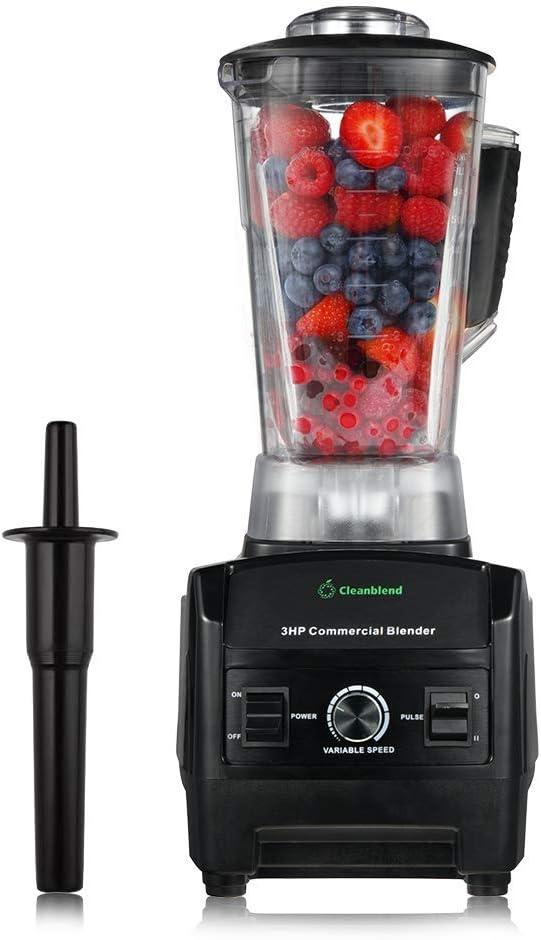
| Wattage | 1800 watts |
|---|---|
| Power Source | 120 V Power Cord |
| Capacity | 64 fluid ounces |
| Material | Stainless Steel |
| Warranty Type | 5-year warranty |
The Cleanblend commercial blender pairs a 3 HP, 1800-watt motor with a 64-ounce BPA-free stainless steel container to handle large batches and tough ingredients. It uses a multi-blade stainless steel system and variable knob or push-button controls to crush ice, puree, grind, and emulsify, which makes it effective for dense mixtures like hummus where you need a smooth, consistent texture. The sealed blade bearings and sturdy motor mean it can run for longer cycles without bogging down, and the large capacity reduces the need to work in small batches. Practical downsides are its relatively large footprint and heavier weight, and it runs louder than small household blenders, so it is less ideal for quiet, light daily use. For people making hummus regularly or in larger quantities, its power and capacity deliver smoother, creamier results than most single-serve blenders.
Best for: Home cooks who prioritize efficiency and batch production and want a durable blender that can routinely process dense mixes like hummus to a very smooth consistency.
Less Ideal for: Casual users who only make small single-serve mixes or need a compact, quiet appliance for limited counter space should consider smaller, quieter models instead.
- Very powerful 1800W motor suited for grinding chickpeas and tahini into a smooth hummus
- Large 64 oz container lets you make batch quantities without repeated blending
- Stainless steel blades and sealed bearings designed for heavy use and durability
- Variable controls (knob or push button) provide fine speed control for texture adjustment
- Bulkier and heavier than typical home blenders, taking more counter space
- Louder operation during high-speed or prolonged blending cycles
Verdict: If you make hummus often or in larger batches, this high-power, large-capacity blender delivers the consistent, ultra-smooth texture you need.
Choosing the Right Blender for Making Flour: Key Factors to Consider
Motor Power and Torque
Motor power and torque determine whether a blender can convert whole grains into fine flour without stalling. Higher wattage and robust torque let the blades maintain speed when they hit dense material, which shortens grind time and reduces stress on components.
For frequent flour-making, a motor rated for sustained high loads matters more than peak horsepower ratings. Look for units with cooling designs that keep the motor from overheating during repeated short runs. Insufficient power can lead to uneven particle size and accelerated wear.
Blade Geometry and Material
Blade shape, thickness, and steel grade influence how effectively kernels break apart. Blades with a combination of slicing and crushing edges tend to create fewer large fragments and reach a finer end texture quicker. Hardened stainless steel blades resist dulling and chipping when they encounter hard grains.
Blenders with removable or replaceable blades simplify long-term maintenance. Pay attention to how blades are mounted and sealed, because a loose or corroded blade assembly can change performance and increase safety risks.
Container Shape and Capacity
Jar design affects particle circulation during milling. Tall, narrow containers promote vortexing that draws grains toward the blades, while wide, shallow jars may require more manual shaking or pulse control to achieve even grinding. Capacity matters too: grinding small batches can be inefficient, but very large batches may overload the motor or produce uneven results.
Match container volume to the batch sizes you expect to grind most often. Also check material durability; thick, food-grade plastic or tempered glass resist abrasion from grain dust and are less likely to retain odors.
Grind Consistency and Control
Consistent particle size is critical for baking performance and texture. Blenders that offer variable speed settings and pulse functions provide better control over how coarse or fine the flour becomes. Reproducible control helps when you need the same texture across multiple batches.
Expect some experimentation: milling speed, batch volume, and run time interact to determine final texture. Models that enable short bursts and gradual progression to high speeds make it easier to reach a uniform grind without overheating the flour.
Thermal Management and Flavor Preservation
Heat build-up during grinding can alter the flavor and nutritional profile of freshly milled flour. Good thermal management—through motor cooling, short-pulse operation, and airflow around the container—helps keep temperatures low during milling.
If you plan to make flour often, choose a blender that allows you to mill in short intervals or has design features that dissipate heat. Cooler milling preserves volatile oils in whole grains and yields a fresher tasting final product.
Ease of Cleaning and Maintenance
Grain dust and fine flour can accumulate in seals, blade housings, and crevices, so easy disassembly and straightforward cleaning reduce the chance of cross-contamination or odors. Dishwasher-safe parts save time, but ensure seals and blade mounts are dried thoroughly to prevent corrosion.
Consider how often you will grind and how comfortable you are with routine maintenance. Designs that minimize tiny nooks and promote simple hand-washing can extend service life and keep performance consistent.
Dry Milling Best Practices
Successful flour-making from whole grains requires a few procedure tweaks compared with wet blending. Start with small, controlled batches to see how your chosen blender handles the grain and how quickly it reduces particle size. Overfilling the jar is a common cause of uneven milling and motor strain.
Use short pulse bursts rather than continuous long runs. Pulsing breaks kernels into smaller pieces without generating as much heat, and it lets you check texture between bursts. Allow the motor to cool between longer sessions to protect internal components.
Sifting after grinding helps remove larger fragments and yields a more uniform flour for delicate baking. Save coarse leftovers for second-pass milling or for whole-grain recipes that tolerate a coarser texture.
- Grind in small batches to reduce load
- Use pulse mode to control heat and texture
- Sift and regrind coarse bits for consistent results
- Let motor cool between longer sessions
Which Grains Work Best
Most common cereal grains such as wheat, rice, oats, and barley grind well in a high-power blender. Harder seeds like millet and sorghum require more power and may take longer to reach a fine consistency. Oilier seeds such as flax or chia can form pastes if ground too long, so use very short pulses and check texture frequently.
For gluten-sensitive baking, milling gluten-free grains at home allows you to control cross-contact and freshness. When switching between grain types, clean the container and blades thoroughly to avoid flavor transfer and ensure an uncontaminated final product.
- Hard grains need higher torque and longer milling
- Oily seeds risk paste formation if overprocessed
- Clean between different grain types to avoid cross-contamination
Maintenance Tips to Extend Lifespan
Regularly inspect blade assemblies and seals for wear or looseness. Tighten mounting hardware as recommended and replace seals if you notice leakage or grinding dust ingress. Keeping components in good condition preserves both performance and safety.
Dry debris can be removed with a soft brush before washing. Avoid submerging motor bases and always follow manufacturer cleaning instructions for removable parts. For long-term storage, keep jars and blades dry and separated to prevent trapped moisture and corrosion.
- Check blades and seals periodically
- Brush out dry flour before washing
- Follow recommended cleaning and storage procedures
Adjusting Recipes When Using Freshly Milled Flour
Freshly milled whole-grain flour absorbs liquid differently from refined store-bought flour, often requiring slight recipe adjustments. Start by adding a few percentage points more liquid and allow batters or doughs to rest so the bran can hydrate fully.
Because freshly milled flour retains more oil, expect a richer flavor and slightly denser crumb in baked goods. Test small batches when converting favorite recipes and note the hydration and mixing time changes for consistent results going forward.
- Increase liquid slightly and allow resting time
- Expect denser crumb and richer flavor
- Test recipes with small batches first
How We Chose the Best Blender for Making Flour
We focused on attributes that determine how well a blender performs when grinding dry grains into usable flour. Key criteria included motor power and torque, which affect the blender's ability to pulverize hard kernels without bogging down; blade geometry and materials, since shape and steel quality influence particle breakdown and wear resistance; container shape and sealing, which change circulation and prevent dust escape during high-speed milling. We also weighed grind consistency, because even particle size matters for baking performance, and thermal management to reduce heat transfer that can degrade flour flavor. We prioritized units with durable construction, straightforward cleanup, and user controls that allow short pulse bursts and high-speed runs. Units designed only for wet blending or single-use smoothies were excluded from the shortlist if they lacked sufficient motor specification or lacked a dry-capable jar and secure lid. Where available, we considered manufacturer specs and commonly reported real-world behavior to judge long-term reliability and suitability for regular flour production.
Our full evaluation process is outlined in our review methodology.
FAQ
Can I use a regular blender to make flour?
Often you can, but suitability depends on motor strength and blade design. Regular blenders with insufficient torque may struggle or produce uneven texture, while heavier-duty units designed to handle dry milling will yield better results.
How much grain should I grind at once?
It depends on jar capacity and motor capability, but smaller batches tend to grind more evenly and reduce strain on the motor. Start with half the jar volume and adjust upward only if performance remains consistent.
Will grinding heat up the flour and affect flavor?
Yes, prolonged continuous runs can raise temperature and slightly alter flavor. Short pulse bursts and allowing the motor to cool help preserve volatile oils and keep the flour tasting fresh.
Do I need to sift flour after blending?
Sifting is recommended to remove larger particles and achieve a finer, more uniform texture for baking. Coarser remnants can be reprocessed or used in recipes that tolerate a coarser meal.
How often should I clean the blender when making flour regularly?
Clean the jar and blade assembly after each flour-making session to prevent buildup and flavor transfer. Wiping out dry dust between uses helps avoid residue accumulation and reduces wear on seals.
Final Verdict
When choosing a blender for making flour, prioritize motor torque, blade quality, and a container that encourages steady circulation. Those factors determine how quickly and evenly grains reduce to flour and how well the unit holds up to repeated use. Balance batch size and thermal management against your desired texture and cleaning tolerance. If you focus on consistent grind control and maintenance, you can confidently pick a blender that produces reliable homemade flour for everyday baking.