
Note: This article contains affiliate links. If you click on these links and make a purchase, we may earn a small commission at no extra cost to you. This helps support our research and content. Read our full affiliate disclosure here.
If you make oats, oat flour, overnight oat smoothies, or blended oat porridge, the right blender makes the difference between gritty and silky texture. A blender for oats needs the torque to break down dry and cooked oats, a container shape that promotes circulation, and controls that let you dial in consistency. This guide covers seven shortlisted blenders that match those needs, each selected for their ability to handle common oat tasks from grinding oats into flour to making creamy oat-based beverages. Below you will find evaluation points on motor power, blade geometry, container design, ease of cleaning, and control precision to help you choose the best option for how you use oats at home.
Top Picks at a Glance
| Best Overall The best all-around choice for most situations | NutriBullet Blender Combo NBF50500 |  |
| Best Quality Built to a higher standard if you want something more solid | Vitamix 5200 Blender | 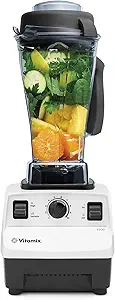 |
| Best Value The sweet spot between price and what you get | Oster Pro 1200 Blender |  |
| Best Budget The cheapest option that still gets the job done reliably | BELLA Rocket Blender 13.5 oz |  |
| Top Rated A top-rated pick with lots of positive feedback | Ninja Professional Plus BN701 |  |
| Most Popular A crowd favorite that many people choose with confidence | Hamilton Beach Power Elite 58148A |  |
| Best Seller A high-volume bestseller chosen again and again | Ninja Nutri-Plus BN301 |  |
NutriBullet Blender Combo NBF50500

| Wattage | 1200 watts |
|---|---|
| Number of Speeds | 3 |
| Capacity | 64 fluid ounces |
| Power Source | Corded Electric |
The NutriBullet Blender Combo pairs a full-size 64 oz pitcher with single-serve cups and a 1200 watt motor to handle everything from smoothies to hot soups and pureed food. It offers three variable speeds, a pulse control and an Extract program that runs a blending cycle designed to break down fruits, vegetables and soft proteins; the included tamper and cyclonic extractor blade help move ingredients toward the blade for smoother results. The pitcher and cups are dishwasher safe and the unit ships with to-go lids and an easy-twist extractor blade for quick switching between pitcher and single-serve use. For caregivers preparing batches of pureed meals the large pitcher shortens prep time while the single-serve cups are handy for portioning and transport. Limitations are that the controls are basic push buttons so you do not get precise speed increments, and very fibrous or stringy vegetables may need extra chopping or longer cycles to reach a velvety puree.
Best for: Caregivers or household optimizers who need a dependable, easy-to-use blender that can make both batch purees and single-serve portions with minimal fuss.
Less Ideal for: Users who need precise variable-speed control for advanced recipes or those who regularly process very large quantities beyond normal home batches should consider a commercial or higher-end variable-speed model.
- Powerful 1200W motor capable of handling soft-cooked vegetables and fruits for smooth purees
- Includes both a large 64 oz pitcher and smaller single-serve cups for batch or individual portions
- Extract program and tamper help create smoother blends with less manual intervention
- Dishwasher-safe pitcher and cups simplify cleanup after food prep
- Comes with multiple lids and an easy-twist extractor blade for versatile use and transport
- Basic push-button controls limit fine speed control compared with variable-dial models
- May require longer blending or pre-chopping for very fibrous or stringy ingredients
Verdict: Choose this NutriBullet combo when you want a practical, powerful home blender that quickly makes smooth batch and individual purees with minimal cleanup.
Vitamix 5200 Blender

| Wattage | 1380 watts |
|---|---|
| Number of Speeds | 10 |
| Capacity | 64 fluid ounces |
| Power Source | ac |
| Controls Type | Knob |
The Vitamix 5200 is built for heavy-duty kitchen use, delivering two-horsepower performance that easily pulverizes fibrous greens, frozen fruit, ice, and whole grains. It uses a 64-ounce Tritan container and laser-cut stainless blades to create a strong vortex for smooth, consistent purees and smoothies, and the tamper helps keep thick mixtures moving. Its rotary speed knob plus a High-Speed switch give precise control over texture, which is useful for turning oats into fine flour or silky oat milk without repeated pulses. The motor and metal drive are designed for long runs, and the container self-cleans in under a minute with water and soap. Trade-offs are that it is a full-size countertop unit that requires significant storage space and produces typical blender noise at high power, and there are no automated programs so it relies on manual control and user timing. For cooks who want consistent, restaurant-quality texture and the ability to process tough ingredients, the 5200 performs reliably.
Best for: Home cooks who prioritize raw power and precise manual control to get consistently smooth oat-based drinks, flours, and porridges at batch scale.
Less Ideal for: People seeking a compact, quiet, or fully automated blender for occasional single-serve blends should consider smaller, program-driven models instead.
- Very high-power 1380-watt motor for grinding and pulverizing tough ingredients
- Laser-cut stainless-steel blades deliver consistent texture and durability
- Large 64 oz BPA-free Tritan container handles full-batch blends and creates an effective vortex
- Variable speed knob plus High-Speed switch provides fine control over texture
- Self-cleaning action simplifies cleanup after thick or starchy blends
- No preset programs or automated cycles so blending requires manual control and attention
- Full-size footprint and weight make it less convenient for small kitchens or frequent countertop storage
Verdict: If you want professional-level power and manual control to turn oats into silky milk or fine flour, the Vitamix 5200 is a dependable, full-size choice.
Oster Pro 1200 Blender

| Wattage | 900 watts |
|---|---|
| Number of Speeds | 7 |
| Capacity | 6 cup |
| Container Material | Glass |
The Oster Pro 1200 is a countertop blender built for everyday use, from smoothies and milkshakes to grinding oats into flour. It pairs a powerful motor (marketed at 1200 peak watts, 900 watts ice-crushing) with a wide 3.5-inch blade system and dual-direction technology to move ingredients into the blade for faster, smoother results. Smart settings and seven speeds, including three pre-programmed cycles and a pulse button, make it easy to get consistent textures without guesswork. The 6-cup Boroclass glass jar is dishwasher safe and resists thermal shock, while the included 24-ounce to-go cup is convenient for single-serve blends. The all-metal Duralast drive promises long-term durability, but the unit is still a countertop appliance so it occupies typical counter space and is heavier than some personal blenders. For making oat-based drinks, batters, or oat flour, its blade design and motor deliver fine, consistent results, though very large dry-batch milling will take time and may require pausing to scrape down the jar.
Best for: Buyers who want a reliable all-purpose blender that turns oats into smooth drinks or fine flour with minimal fuss and predictable programmed settings.
Less Ideal for: People who need an ultra-compact personal blender for one-handed portability or those planning to mill large volumes of dry grain frequently.
- Powerful motor and dual-direction blades optimize blending of tough ingredients like oats and ice
- Smart settings and seven speeds simplify achieving consistent textures
- 6-cup Boroclass glass jar is dishwasher safe and resists thermal shock
- Includes 24 oz to-go cup for single-serve blends and convenience
- Heavier and bulkier than personal single-serve blenders, taking more counter space
- Large dry milling of grains may require pauses and stirring for fully even results
Verdict: A sturdy, programmable blender that reliably converts oats into smooth beverages or flour while offering dishwasher-safe glass and long-lasting all-metal drive durability.
BELLA Rocket Blender 13.5 oz

| Wattage | 240 watts |
|---|---|
| Capacity | 13.5 fluid ounces |
| Number of Speeds | 1 |
| Blade Material | Stainless Steel |
The BELLA Rocket Blender is a small, straightforward personal blender built for quick single-serve tasks like smoothies, oat blends, sauces, and salsas. It uses a 240-watt motor and a four-tip stainless steel blade to break down soft fruits, seeds, and ice; paired with the included 13.5 oz cups it is designed for on-the-go use. Operation is simple—fill, press, and twist—so it is convenient for busy mornings and travel. The kit includes a to-go lid and a storage lid, plus dishwasher-safe cups for easy cleanup and a cord wrap for compact storage. Because it has a single speed and a basic control scheme, it is best for straightforward blending rather than heavy-duty tasks or very large batches. The small capacity means you will need to blend in portions for thicker oat-based smoothies or soaked oats, and tougher jobs like very dense oat flour or large batches may tax the motor. For buyers who want a compact, affordable grinder for everyday oat smoothies and quick prep, it delivers good value in a minimal package.
Best for: Buyers looking for an inexpensive, compact blender to make single-serve oat smoothies and on-the-go drinks with minimal fuss and storage impact.
Less Ideal for: People who need to process large batches, grind oats into fine flour, or require variable speed control for precise texture tuning should choose a larger or more powerful model.
- Compact, stackable design saves countertop and cabinet space
- Includes two 13.5 oz BPA-free cups with to-go and storage lids for portability
- 240-watt motor and 4-tip stainless steel blade handle smoothies and crushed ice reliably for single servings
- Dishwasher-safe cups and simple base make cleanup quick and low-effort
- Single-speed control limits fine texture adjustments for very thick oat blends
- Small 13.5 oz capacity requires multiple batches for larger servings or family use
Verdict: A budget-friendly, space-saving personal blender that makes single-serve oat smoothies and portable drinks with minimal hassle.
Ninja Professional Plus BN701

| Wattage | 1400 watts |
|---|---|
| Capacity | 72 fluid ounces |
| Number of Speeds | 4 |
| Other Special Features of the Product | Dishwasher Safe, Pre-Programmed, Pulse Technology |
The Ninja Professional Plus BN701 is a powerful countertop blender built to handle tough blending tasks like crushing ice, smoothies, and batch recipes. Its 1400 peak-watt motor and six-blade Total Crushing assembly turn ice and firm ingredients into smooth textures quickly, while the full-size 72 oz pitcher makes it easy to prepare hummus or dips for a crowd. Auto-iQ offers three preset programs that combine timed pulsing and blending so you can get consistent results without manual guesswork, and four manual speeds plus pulse give basic control when you need it. The pitcher and stacked blade assembly are top-rack dishwasher safe for easier cleanup after processing beans and oils, and the BPA-free plastic pitcher is marked with a 64 oz max fill to prevent overfilling. Expect a sturdy, loud machine that excels at pureeing and crushing, but note its larger footprint and weight compared with compact personal blenders, so it suits a kitchen counter rather than frequent transport or tiny storage spaces.
Best for: Buyers who prioritize powerful, reliable performance for making smooth hummus, dips, and large batches and want preset programs to simplify consistent pureeing.
Less Ideal for: Those who need a compact, lightweight blender for single servings or frequent travel should consider smaller personal models instead.
- Very strong 1400 peak-watt motor for fast pureeing and ice crushing
- Large 72 oz pitcher for making hummus or dips in family-size batches
- Total Crushing 6-blade assembly produces smooth, consistent textures
- Auto-iQ presets simplify repeatable blending programs
- Dishwasher-safe pitcher and blade assembly for easier cleanup
- Bulky and heavier than small personal blenders, takes counter space
- Plastic pitcher may retain odors over time when processing strongly scented foods
Verdict: Choose this blender if you want a high-power, full-size unit that reliably purees chickpeas and makes smooth hummus for family-sized batches.
Hamilton Beach Power Elite 58148A
| Wattage | 700 watts |
|---|---|
| Capacity | 40 fluid ounces |
| Number of Speeds | 12 |
| Blade Material | Stainless Steel |
| Material | Glass |
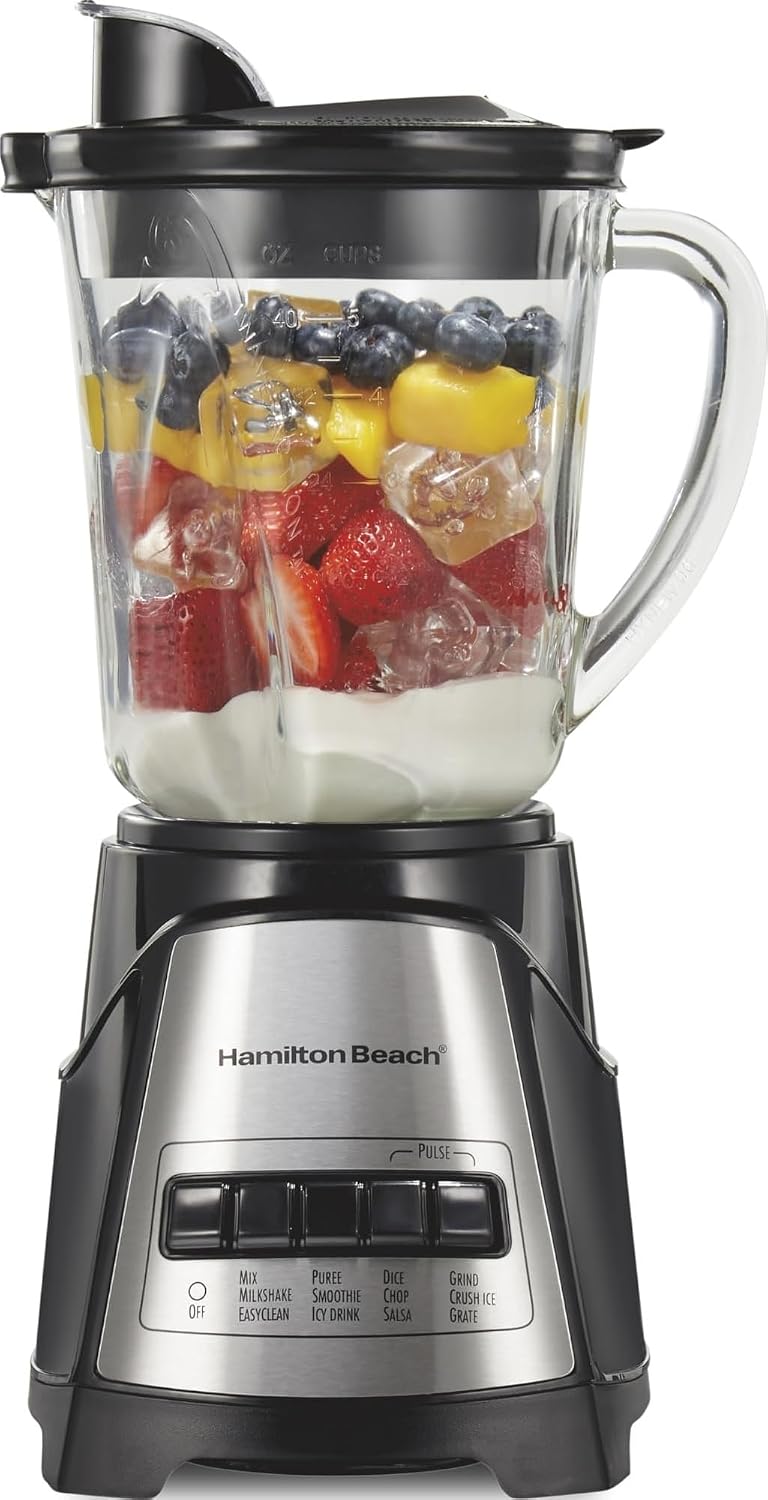
The Hamilton Beach Power Elite is a straightforward countertop blender aimed at everyday blending tasks like smoothies, purees, and crushed ice. Its 700-watt motor and stainless steel Ice Sabre blades work with the Wave Action system to pull ingredients down into the cutting zone, which helps produce smoother results without repeated stirring. The 40-ounce glass jar and pour spout make it easy to prepare and serve blended food, and the removable blades, jar, and lid are dishwasher safe for simpler cleanup. Controls are button-based with 12 functions accessed through five buttons, so you can pick a preset for pureeing, crushing, or mixing rather than guessing speeds. For blending for elderly diets the glass jar avoids plastic contact and the power handles soft solids and frozen fruit reliably when recipes include enough liquid. The unit is not a commercial machine, so very large batches or heavy-duty processing will be slower and you should follow the guideline to keep at least 1 cup of liquid to ensure smooth blending. Overall it is a practical, easy-to-use blender for home purees and daily smoothies.
Best for: Caregivers or home cooks who want a reliable, easy-to-use blender to make small-to-medium batches of smooth purees and shakes for elderly diets, with simple controls and dishwasher-cleanable parts.
Less Ideal for: Users who need commercial capacity or who regularly process large volumes of thick, heavy mixtures should consider a higher-powered, heavy-duty blender instead.
- 700-watt motor with Wave Action system helps pull food down for smoother purees
- Removable stainless steel blades and dishwasher-safe glass jar simplify cleaning
- 12 functions accessed via simple button controls for common blending tasks
- Glass jar reduces plastic contact and has a pour spout for mess-free serving
- Not designed for very large or continuous heavy-duty batches
- Requires at least 1 cup of liquid for best blending results
Verdict: A practical, easy-to-clean 700W blender that reliably produces smooth purees and shakes for everyday elderly meal prep.
Ninja Nutri-Plus BN301

| Wattage | 900 watts |
|---|---|
| Number of Speeds | 3 |
| Power Source | Corded Electric |
| Material Type Free | BPA Free |
The Ninja Nutri-Plus BN301 is a single-serve countertop blender built around a 900-peak-watt push-to-blend motor and Pro Extractor blade assembly, designed for smoothies, frozen drinks, and small-batch purees. You blend directly in one of the included 20 oz to-go cups, then swap on a spout or storage lid for quick transport or fridge storage, which cuts cleanup and saves counter space. The extractor blades break down ice, whole fruits, and softer vegetables efficiently, so it will handle chickpea blends for hummus if you pre-soften beans or use canned chickpeas and add enough liquid and oil. Controls are simple push-to-blend pulses rather than variable speeds, which makes operation straightforward but limits fine speed control for very thick recipes. Most removable parts are top-rack dishwasher safe, easing maintenance. Because it is a personal blender, capacity is limited to single servings and heavy, continuous batching for large hummus quantities will require doing multiple cycles. For buyers wanting a reliable, compact machine that simplifies small-batch hummus and spreads, the BN301 delivers predictable, easy results.
Best for: Buyers who want a compact, easy-to-use personal blender for reliable small-batch hummus, smoothies, and on-the-go servings without complex controls.
Less Ideal for: Those who need to make large volumes of hummus or who want precise, multi-speed control for very thick recipes should consider a larger countertop blender.
- 900-peak-watt motor with Pro Extractor blades that crush ice and break down soft solids
- Includes three 20 oz to-go cups with spout and storage lids for blending, transport, and storage
- Push-to-blend pulses are simple and reduce risk of over-processing
- Top-rack dishwasher safe cups, lids, and blade assembly for easy cleaning
- Compact footprint that fits small kitchens, dorms, and limited counters
- Single-serve capacity requires multiple cycles for larger batches of hummus
- No adjustable speed settings for fine control on very thick or textured blends
Verdict: A compact, dependable single-serve blender that makes small batches of hummus and other spreads with minimal fuss and easy cleanup.
Choosing the Right Blender for Oats: Key Factors to Consider
Motor Torque and Sustained Power
Oats, especially dry rolled or steel-cut varieties, require sustained torque rather than short bursts of high speed. A motor with adequate torque prevents stalling when the blade meets dense material and produces a finer, more consistent grind. Look for units that emphasize wattage and continuous torque ratings rather than only peak numbers.
Sustained power also reduces the need for repeated runs, which saves time and limits heat buildup that can alter oat flavor and texture. For frequent oat grinding, prioritize motors built for repetitive heavy use and robust cooling rather than lightweight motors meant only for smoothies.
Blade Geometry and Material
Blade shape, angle, and material determine whether a blender cuts and folds oat particles into a uniform slurry or just circulates them. Hardened stainless steel blades with an aggressive cutting profile and a slightly angled set tend to shear grains more effectively. Some blade assemblies include an additional lower or counter blade to assist with dry milling.
Blade durability matters because abrasive dry grinding can dull edges over time. Look for blades that are replaceable or reinforced and for designs that minimize dead zones where material can gum up and resist processing.
Container Shape, Height, and Volume
The jar or pitcher shape influences how ingredients circulate; a tall, narrow container can promote a centrifugal vortex for liquids but may struggle with thick oat pastes. Wide-based jars with a tapered neck often create better movement for viscous oat blends and help prevent stalling. Consider capacity relative to batch size: very large jars make small oat batches inefficient, while very small containers limit versatility.
Material and measurement markings matter too. BPA-free, heat-resistant containers let you blend warm cooked oats safely, and clear markings help reproduce recipes when converting between oats and liquid ratios.
Control Options and Variable Speeds
Texture control is essential for oat applications because some recipes call for coarse oat meal while others need ultra-fine oat flour. Variable speed dials, pulse settings, and preset functions for grinding or milling give you precise control over end texture. Pulse lets you break down clumps without over-processing, and ramping speeds can reduce foaming when blending oat-based beverages.
Intuitive controls reduce trial and error and help protect motor life by allowing short bursts rather than prolonged full-speed runs. Digital timers or presets can be useful for repeatable results when you develop oat-based recipes.
Ease of Cleaning and Maintenance
Oat starches are sticky and can cling to blades, gaskets, and seals, so easy disassembly matters. Dishwasher-safe components, removable blade assemblies, and wide openings for manual cleaning prevent residue buildup. Designs that minimize crevices and have smooth seals will reduce odors and microbial growth when working with cooked oats.
Consider how serviceable the unit is: accessible seals and replaceable parts extend usable life, and clear manufacturer guidance on cleaning avoids damage when removing stuck oat paste.
Noise, Heat, and Continuous Use Considerations
Grinding oats can be noisy and generate heat if the motor runs long. Noise levels matter if you use the blender early in the morning or in shared living spaces. Heat buildup can affect oat flavor and may require pauses between cycles for the motor to cool.
Models with built-in thermal protection and better acoustic damping are preferable for frequent use. If you plan repeated batches, check duty-cycle guidance to avoid premature motor stress.
How to Grind Oats Without Grit
Start with the right preparation. Dry rolled oats will grind to a fine flour more easily than steel-cut oats, which may need short pre-soaks or multiple passes. Use short pulses to break larger pieces first, then increase speed in increments to avoid overheating.
If you need ultrafine flour, sift in stages and reprocess any coarse bits. For wet recipes, add liquid gradually so the mixture becomes homogenous without forming globs around the blades.
- Pulse in 1- to 3-second bursts to prevent clumping
- Work in small batches for consistent results
- Sift and reblend coarse remnants for extra-fine flour
Best Practices for Blending Cooked Oat Porridge
Allow very hot porridge to cool slightly before blending to protect seals and avoid pressure buildup. Blend at low speed initially to loosen the mass, then increase speed to reach the desired smoothness. Use shorter run times and scrape down the container between cycles to ensure even texture.
If you want a creamier mouthfeel, add a small amount of liquid such as water, milk, or a milk alternative while blending rather than after. This helps the blades create a better emulsion and reduces foaming.
- Let boiling porridge rest for a few minutes before processing
- Start blending low, then ramp up speed
- Add liquid slowly for a smoother emulsion
Measuring Texture: From Coarse Oatmeal to Oat Flour
Decide the target texture before you start so you can use consistent techniques. Coarse oatmeal benefits from fewer, shorter pulses. For pancakes or baked goods that require oat flour, aim for a powder-like texture and consider passing the flour through a fine mesh to remove any husk remnants.
Be aware that over-processing wet oats can produce a gluey texture due to released starch. When making batters, blend just enough to combine ingredients and avoid excessive breakdown of oat structure.
- Use visual cues and a quick tactile test to judge grind level
- Avoid long continuous runs when processing wet oat mixtures
- Sift dry grindings for truly fine flour
Maintaining Your Blender After Oat Use
Clean immediately after use to prevent sticky residue from drying and clogging seals. Rinse the container and blades with warm water, then use a mild detergent and a soft brush to remove stuck starch. Run a short cycle with warm water and a drop of dish soap to dislodge residual particles before a final rinse.
Periodically inspect gaskets and blade seals for wear since abrasive dry grinding accelerates wear. Replace worn seals promptly to maintain suction and prevent leaks during wet blending.
- Rinse and run a soapy water cycle right after use
- Disassemble removable blades for a thorough clean
- Check seals regularly and replace if cracked or warped
Small-Batch Tips for Single-Serving Oat Drinks
Small servings can be inefficient in a very large jar because the blades may not contact enough material to create circulation. Use an appropriately sized container or a personal jar accessory when available. Add a little liquid to lift ingredients into the blade path and use pulse mode to prevent air pockets.
For portable oat beverages, blend directly in a travel cup if the unit supports it, and chill immediately to reduce bacterial growth from oat starches and dairy ingredients.
- Choose a jar size that matches batch volume
- Add a splash of liquid for better circulation in small batches
- Use pulse for controlled texture in single servings
How We Chose the Best Blender for Oats
We shortlisted blenders based on criteria that directly affect how well a blender handles oats in multiple preparations. Motor torque and wattage were used to identify units that sustain rotational force needed to pulverize both dry rolled oats and denser cooked oat mixtures. Blade geometry and material were assessed for how effectively they shear and fold oat particles rather than just spinning them. Container shape and volume were evaluated for flow dynamics with viscous oat blends and for small-batch grinding. Control options were reviewed to ensure variable speed or pulse functions for texture control. Durability and ease of cleaning were considered because oat starches can gum up seals and blades over time. Noise and heat buildup were also noted where they affect repeated use. We excluded single-purpose grinders and devices designed exclusively for liquids under low viscosity because those do not provide the torque or blade design needed for oat work. The final list focuses on versatile blenders that can handle dry grinding, wet blending, and reheated or cooked oat mixtures reliably.
Our full evaluation process is outlined in our review methodology.
FAQ
Can I grind both dry oats and cooked oats in the same blender?
Often yes. Many blenders designed for multipurpose use can handle both dry grinding and wet blending. You may need to adjust speed and use pulse mode for dry grinding, and allow cooked oats to cool slightly before processing.
Will blending oats make them lose nutrients or become gummy?
Blending does not remove nutrients, but overprocessing wet oats releases more starch, which can create a thicker, gluey texture. Shorter run times and proper liquid ratios help preserve a desirable mouthfeel.
How fine can I expect oat flour to be from a household blender?
Household blenders can produce flour fine enough for many baking uses, but results vary. Sifting after grinding and reprocessing coarse bits will improve fineness. Extremely fine pastry-level flour may require a dedicated grain mill.
Is it better to pre-soak steel-cut oats before blending?
Pre-soaking makes steel-cut oats easier to break down and reduces strain on the motor. Short soaking or partial cooking softens the grain and yields a smoother result with fewer passes.
How do I prevent odors or spoilage when storing blended oat mixtures?
Cool blended oat mixtures quickly, store them in airtight containers in the refrigerator, and consume within a few days. Rinse and dry the blender components promptly to avoid residual starch supporting microbial growth.
Final Verdict
Choosing the right blender for oats comes down to balancing motor torque, blade design, and container dynamics with the textures you want to achieve. If you plan to grind dry oats regularly, prioritize sustained torque and durable blades. For frequent cooked-porridge blending or oat beverages, focus on container shape, control precision, and ease of cleaning. Weigh the tradeoffs between a heavy-duty motor that handles everything and a more compact unit optimized for small batches. Prioritize the criteria that match your typical oat recipes so you can get consistent, repeatable results.