
Note: This article contains affiliate links. If you click on these links and make a purchase, we may earn a small commission at no extra cost to you. This helps support our research and content. Read our full affiliate disclosure here.
Making peanut butter at home requires more than bulk peanuts and patience. The right blender for peanut butter delivers steady torque, stays cool under heavy loads, and minimizes sticking so you get a smooth, spreadable texture without overworking the motor. Whether you plan to make small batches or regular weekly jars, choosing the proper blender affects texture, cleanup time, and long-term reliability. This guide shortlists the top options for home peanut-butter making and evaluates each on the performance traits that matter most to home cooks. Below you will find vetted picks and the evaluation criteria used to compare them, plus practical buying guidance to help you pick the blender that fits your routine. Read on for the factors we used to build the list and what to expect from each style of machine.
Top Picks at a Glance
| Best Overall The best all-around choice for most situations | ASTRALSHIP ASH01-B Pro Blender |  |
| Best Quality Built to a higher standard if you want something more solid | COZII Professional Blender ZM 5009 |  |
| Best Value The sweet spot between price and what you get | Hamilton Beach Wave Crusher 54221 |  |
| Best Budget The cheapest option that still gets the job done reliably | Bear 40oz Countertop Blender LLJ-B12K1 |  |
| Top Rated A top-rated pick with lots of positive feedback | Ninja Mega Kitchen System BL770 |  |
| Most Popular A crowd favorite that many people choose with confidence | NutriBullet Personal Blender NBR-0601WM | 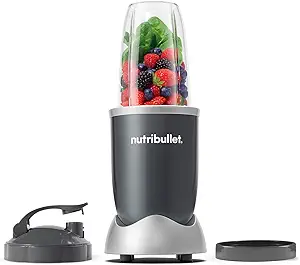 |
| Best Seller A high-volume bestseller chosen again and again | Ninja TWISTi Blender DUO SS151 |  |
ASTRALSHIP ASH01-B Pro Blender

| Wattage | 1500 watts |
|---|---|
| Number of Speeds | 9 |
| Controls Type | Touch |
| Capacity | 59 fluid ounces |
| Other Features | Heating, Keep Warm Setting |
This Astralship ASH01-B Pro is a heavy-duty countertop blender built around a 1500W motor and a heat-resistant borosilicate glass jar, so it handles both hot soups and tough blending tasks like nut butters. It offers 14 preset programs and nine adjustable speeds, plus a tamper to push dense ingredients into the blades, which helps when you are processing peanuts into peanut butter or making thick nut milks. The jar's anti-burst glass and stainless-steel blades make it suitable for hot blending and give the unit a durable, solid feel, while the Auto Clean and keep-warm settings reduce hands-on maintenance after sticky batches. The unit is tall and substantial, so plan for counter clearance and more careful handling because glass jars add weight. For very high-volume commercial use or those who prefer lighter polymer jars, the weight and glass construction may be a drawback, but for home cooks wanting reliable power and hot-blend capability, it delivers strong, consistent performance for nut butters and more.
Best for: Home cooks who want a powerful, versatile blender that can make smooth homemade peanut butter and also handle hot soups and nut milks with one machine.
Less Ideal for: Users who need a lightweight, travel-friendly blender or those who prefer polymer jars for reduced breakage risk should consider other options.
- Powerful 1500W motor capable of breaking down nuts and crushing ice for smooth nut butters
- Borosilicate glass pitcher rated for hot and cold use, safe for making hot soups and heated nut blends
- 14 preset programs plus 9 speeds let you switch between one-touch recipes and manual control
- Auto Clean and keep-warm functions simplify cleanup and let hot blends stay ready to serve
- Includes tamper to loft dense mixtures into the blades for even processing
- Heavy glass jar and tall assembled height make it bulky and less portable
- Glass pitcher increases breakage risk compared with plastic jars
Verdict: If you want a powerful home blender that makes silky peanut butter and can also cook and keep hot soups, this 1500W glass-jug model is a strong choice.
COZII Professional Blender ZM 5009

| Wattage | 2000 watts |
|---|---|
| Capacity | 1.85 liters |
| Number of Speeds | 8 |
| Power Source | ac |
| Controls Type | Touch |
This COZII Pro blender is built for heavy work: a 2000W motor and six stainless steel blades tackle frozen fruit, ice, and tough mixes like nut butters with short bursts of high power. It ships with a large 64 oz pitcher for batch blending plus a 21 oz to-go cup that locks to the base for single-serve jobs, and the touch control panel offers seven preset programs plus eight variable speeds for predictable results. The unit has an advanced self-cleaning option and dishwasher-safe parts, which makes cleanup straightforward after processing oily mixtures like peanut butter. The manufacturer warns against continuous runs longer than three minutes, so expect to blend in short pulses for thick nut butters to avoid overheating. Noise is reduced by a fan and motor design but it is still a powerful motor and will be audible during heavy loads. Overall it balances professional-level power and practical cleaning features for home cooks who make dense, high-resistance blends.
Best for: Home cooks who prioritize power and reliability when making dense blends like nut butters and frozen drinks and who want a combination of batch and portable single-serve options.
Less Ideal for: If you need an ultra-quiet kitchen appliance or require continuous long-run commercial blending, choose a quieter or commercial-grade machine instead.
- 2000W motor and six stainless steel blades for high-shear blending of tough ingredients
- Large 64 oz pitcher plus 21 oz to-go cup for batch and single-serve versatility
- Seven smart preset programs and eight speed settings for repeatable results
- Self-cleaning cycle and dishwasher-safe components simplify cleanup
- Manufacturer advises against continuous operation over three minutes, requiring pulsed blending for very thick mixes
- Strong motor produces noticeable noise under heavy loads
Verdict: A high-power home blender designed to handle dense blends like peanut butter while offering batch and to-go convenience.
Hamilton Beach Wave Crusher 54221

| Capacity | 40 fluid ounces |
|---|---|
| Number of Speeds | 14 |
| Wattage | 385 watts |
| Power Source | Corded Electric |
The Hamilton Beach Wave Crusher 54221 is a versatile countertop blender aimed at everyday blending tasks like smoothies, shakes, purees, and ice crushing. It uses a Wave Action system to circulate ingredients down into stainless steel Ice Sabre blades and offers 14 preset functions for one-touch operation. The removable 40 oz glass jar and dishwasher-safe lid, blades, and collar simplify cleanup after making nut butters, frozen drinks, or sauces. With 700 watts of peak power (385 W rated) the motor is designed to handle frozen fruit and ice reliably and is life-tested to blend thousands of frozen drinks. For denser jobs like making peanut butter from whole nuts you may need to run the motor in short bursts and scrape the jar occasionally since consumer blenders of this class can require extra time to reach a fully smooth nut butter. The control layout is simple push-button operation, and the glass container resists staining and odors better than plastic. It is a practical, durable option for people who want a reliable, easy-to-clean blender for daily smoothies and occasional nut processing.
Best for: Buyers who prioritize a durable, easy-to-clean everyday blender that handles smoothies, frozen drinks, and occasional nut processing with straightforward controls and reliable performance.
Less Ideal for: People who expect commercial-style, high-torque nut butter output or need a dedicated appliance for frequent large-batch nut butters should consider a specialty high-torque grinder instead.
- Wave Action system improves circulation for more even blending
- 700 watts peak power with stainless steel ice-crushing blades suitable for frozen fruit and thick shakes
- 40 oz glass jar and dishwasher-safe removable parts resist staining and are easy to clean
- 14 preset functions provide convenient one-touch blending for common tasks
- Not a specialized high-torque nut butter machine so making smooth peanut butter may take extra time and intermittent scraping
- Peak wattage differs from continuous wattage rating which can affect heavy continuous loads
Verdict: A practical, easy-to-clean blender that delivers reliable ice-crushing and smoothie performance and can make peanut butter in small batches with patience.
Bear 40oz Countertop Blender LLJ-B12K1

| Wattage | 700 watts |
|---|---|
| Number of Speeds | 3 |
| Capacity | 40 fluid ounces |
| Blade Material | Stainless Steel |
The Bear countertop blender is a straightforward small blender aimed at everyday smoothies, shakes, and simple food prep. Its 700W motor and six hardened stainless steel blades handle ice crushing, frozen fruit, and blending for single-serve to small-share batches in the 40-ounce jar. Controls are simple—three speeds plus a pulse—so it is easy to use without a learning curve, and the center lid insert lets you add ingredients while blending. Practical touches include a non-slip base for stability and a recommended self-clean cycle using soap and warm water for quick cleanup. Because the jar is plastic and the unit is modestly powered, it performs best on softer or partially thawed nuts and for making nut butters in small quantities rather than heavy continuous grinding. The design favors simplicity and value over high-end power or long heavy-duty runs, so expect moderate noise and occasional need to stop and scrape when processing dense mixtures.
Best for: Buyers who want an affordable, no-frills blender for smoothies, shakes, and occasional soft-nut or nut-butter prep without needing commercial power or advanced controls.
Less Ideal for: People who plan to make large batches of smooth, homemade peanut butter frequently or need a heavy-duty grinder for hard nuts should choose a higher-powered, purpose-built machine instead.
- 700W motor and six hardened stainless steel blades provide effective ice crushing and blending for smoothies and soft nut processing
- 40-oz BPA-free jar suits family servings or batch smoothies
- Simple three-speed plus pulse controls make operation intuitive
- Non-slip base increases stability during use
- Dishwasher-safe jar and simple self-cleaning option speed up cleanup
- Modest motor and plastic jar may struggle with continuous heavy-duty nut butter making
- No dedicated nut-butter or high-speed setting for fine grinding of hard nuts
Verdict: A budget-friendly blender that handles smoothies and light nut processing well, making it a sensible entry-level choice for occasional homemade peanut butter.
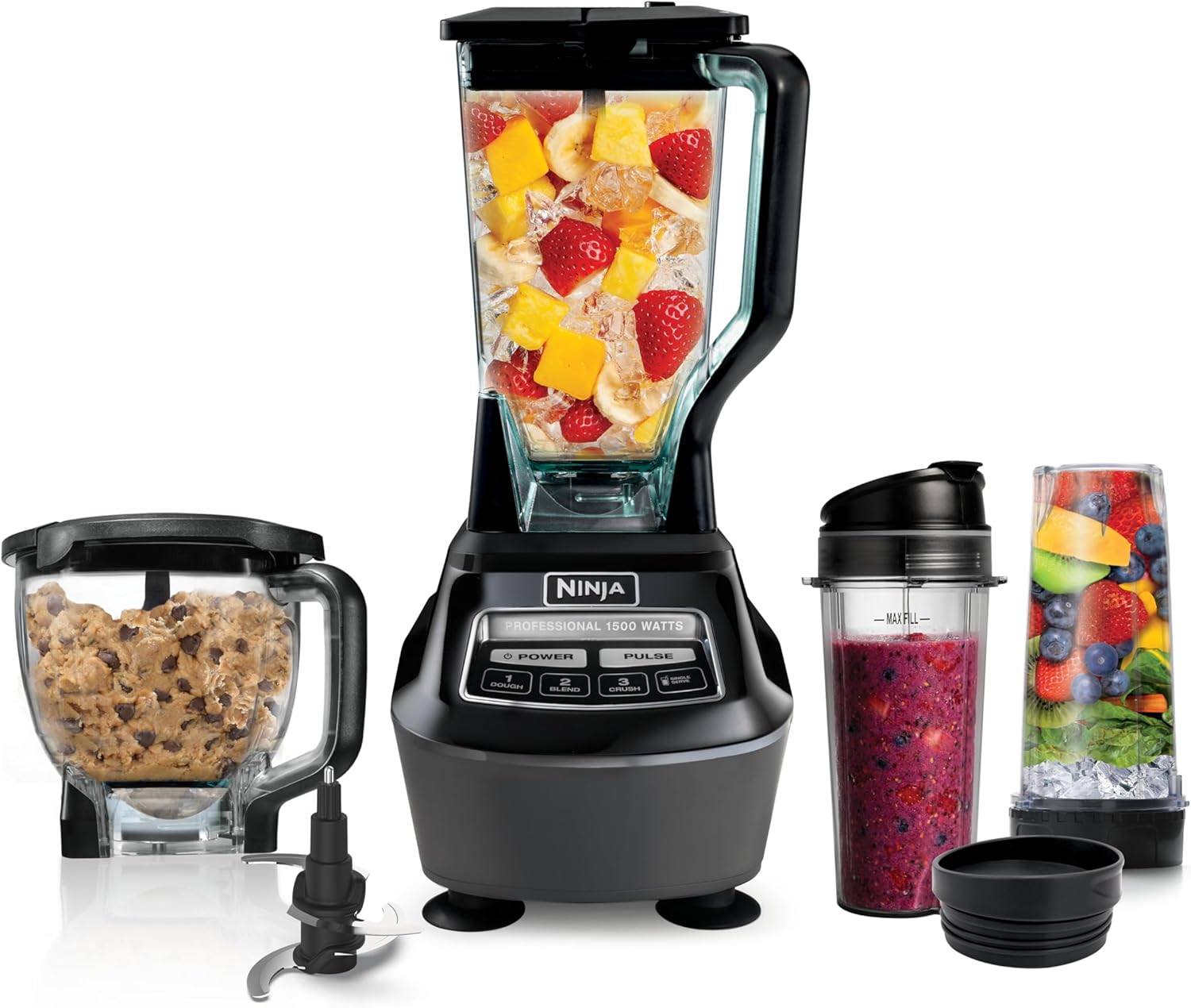
Ninja Mega Kitchen System BL770
| Wattage | 1500 watts |
|---|---|
| Number of Speeds | 5 |
| Capacity | 16 fluid ounces |
| Power Source | ac_dc |
The Ninja Mega Kitchen System BL770 combines a powerful 1500W motor with multiple containers and blade sets to handle most home kitchen tasks. You get an XL 72-oz pitcher with Total Crushing Blades for smoothies and ice crushing, an 8-cup food processor bowl with chopping and dough blades for vegetables and quick dough mixing, plus two 16-oz Nutri Ninja to-go cups for single-serve drinks. Controls are manual with five speeds and four main function modes that make it simple to switch between blending, mixing, crushing, and single-serve work. Most removable parts are dishwasher safe, and the stainless steel blades are effective on frozen fruit and ice. The unit is versatile for batch smoothies, meal prep, and small baking projects, but the motor base is fairly large and the system takes some counter space and storage room. Also, the manual controls lack presets, so you need to watch run times for delicate tasks like purees. For buyers wanting a single machine that covers blending and food processing jobs, it delivers strong performance and a useful accessory set.
Best for: Buyers who want one versatile countertop appliance that handles large-batch smoothies, food prep, and occasional dough mixing without buying separate machines.
Less Ideal for: People with very limited counter or storage space or those who prefer compact single-function appliances with automatic preset programs.
- 1500-watt motor provides strong ice crushing and blending power
- Includes XL 72-oz pitcher plus 8-cup processor and two 16-oz to-go cups for multiple uses
- Multiple specialized blades (total crushing, pro extractor, chopping, dough) cover blending and processing tasks
- Most removable parts are dishwasher-safe for easier cleanup
- Large footprint that requires significant counter or cabinet space
- Manual controls with no preset programs require more user attention for consistent results
Verdict: A powerful, multi-function blender and food processor combo that covers large-batch blending, chopping, and dough mixing for buyers seeking one versatile countertop machine.
NutriBullet Personal Blender NBR-0601WM

| Wattage | 600 watts |
|---|---|
| Capacity | 24 fluid ounces |
| Power Source | Corded Electric |
| Number of Speeds | 1 |
The NutriBullet Personal Blender is a straightforward single-serve unit built around a 600W motor and a 24-ounce cup for quick smoothies, shakes, and small food prep jobs. Use it by loading ingredients, attaching the extractor blade, and pressing the push-button control to blend in under a minute; the removable blade and dishwasher-safe cup make cleanup quick. The motor and sharp blades handle soft fruits, leafy greens, protein powders, and light ice crushing efficiently, and the included to-go lid and lip ring make it convenient for on-the-go servings. Because it is a compact, one-speed design, it is not meant for heavy-duty tasks like processing large batches, continuous use for thick nut butters, or grinding very hard ingredients. For everyday smoothies and simple blending, it delivers reliable, fast results and minimal fuss, but heavier blending jobs will require a more powerful, variable-speed machine.
Best for: Buyers who prioritize proven performance from a popular, well-reviewed personal blender for daily single-serve smoothies and portable prep will appreciate its simplicity and reliability.
Less Ideal for: If you need a machine for frequent heavy-duty blending, large batches, or making nut butters from whole nuts, choose a higher-power, variable-speed blender instead.
- Compact single-serve design that fits small kitchens and is easy to store
- 600W motor with sharp extractor blade that blends fruits, greens, and light ice quickly
- Dishwasher-safe cup and removable blade simplify cleaning
- Includes to-go lid and recipe book for portability and quick use
- Single speed limits control over texture for thick or finicky blends
- Not suited for heavy-duty or continuous use like making large batches or hard nut butters
Verdict: A compact, reliable personal blender that quickly makes single-serve smoothies and simple blends with minimal fuss.
Ninja TWISTi Blender DUO SS151

| Wattage | 1600 watts |
|---|---|
| Capacity | 34 fluid ounces |
| Number of Speeds | 5 |
| Power Source | Corded Electric |
The Ninja TWISTi Blender DUO is built around a power-dense 1600 peak-watt motor and hybrid-edge blades to break down tough ingredients like nuts and frozen fruit, and its built-in twist tamper keeps ingredients moving toward the blades for thick results such as nut butters and smoothie bowls. It offers five preset programs for Extractions, Smoothies, Frozen Drinks, Spreads, and Bowls, plus a drizzle cap to add liquids while blending. The 34-oz pitcher plus single-serve cups make it easy to blend both batch and on-the-go portions, and most removable parts are dishwasher-safe for straightforward cleanup. Because the motor is designed to maintain speed under heavy loads it handles dense mixtures without frequent stalling, but the compact pitcher size means very large batches require multiple cycles. The unit is manual with physical buttons and a twist tamper rather than touchscreen controls, which keeps operation simple and predictable for everyday use.
Best for: Buyers who want a reliable, easy-to-use blender that can power through nuts, frozen fruit, and other dense ingredients to make consistent nut butters and smoothie bowls without complex controls.
Less Ideal for: Those who regularly need very large batches of nut butter or want an ultra-lightweight travel blender should consider a larger commercial-style grinder or a dedicated portable unit instead.
- 1600 peak-watt motor and smartTORQUE design that sustain speed under heavy food loads
- Built-in twist tamper forces ingredients toward the blades for smoother nut butters and thick bowls
- Hybrid-edge stainless steel blades that handle frozen fruit, ice, nuts, and seeds
- Includes 34‑oz pitcher plus two to-go cups for batch or single-serve blending
- Most removable parts are dishwasher-safe for easy cleaning
- 34-oz pitcher is relatively small for very large nut-butter batches
- Unit is moderately heavy compared with compact single-serve blenders
Verdict: Choose this Ninja if you want a dependable, high-power blender that is specifically effective at making thick nut butters and smoothie bowls in small to medium batches.
Choosing the Right Blender for Peanut Butter: Key Factors to Consider
Motor Torque and Thermal Management
High torque is essential for breaking down peanuts into a smooth paste. A motor rated for sustained loads will keep turning through the dense mixture rather than stalling or overheating. Look for machines with motor designs and cooling systems that allow repeated short bursts or longer runs without thermal cutoff.
Thermal management affects longevity. Motors that overheat frequently will reduce lifespan and require rest periods that slow production. If you intend to make large batches, choose a blender with a proven cooling strategy and built-in protections to prevent damage during heavy use.
Blade Geometry and Agitation Pattern
Blades that combine slicing edges and angled fins help shear nuts while pulling the paste toward the center for even processing. Aggressive chopping blades alone can leave small chunks while producing heat. Effective blade setups create a vortex that folds solids into the center and prevents peanut butter from packing around the hub.
Pay attention to whether the jar design promotes circulation rather than dead zones. Some jars include tamper-friendly openings or layered blade assemblies that improve turnover and reduce the need for scraping during processing.
Jar Material and Seal Reliability
Jar material affects durability and how sticky ingredients behave. Glass jars resist staining and odor retention but are heavier and can break if dropped. High-quality BPA-free plastics are lighter and more impact-resistant but check for long-term odor retention and scratch resistance. Stainless jars are uncommon but offer excellent durability.
Seals and lids must handle oily mixtures without leaking. A secure lid and a tight base seal also make a difference when you pulse at high speeds. Replaceable or user-serviceable seals extend the useful life of the blender when you make thick nut butters regularly.
Capacity and Batch Size
Consider how much peanut butter you plan to produce in a single run. Large-capacity jars reduce the number of batches but require more powerful motors to process the increased mass. Small jars are efficient for single servings and reduce wasted food but may overwork a small motor if you try to process big quantities.
Also think about headspace. Dense mixtures benefit from some empty space to allow circulation. Choosing a jar with an appropriate capacity for your typical batch size helps achieve uniform texture without overtaxing the machine.
Controls and Speed Options
Variable speeds and pulse modes give you more control over texture. Lower speeds can crush and fold ingredients without overheating, while higher speeds finish emulsification. Pulse lets you break down larger pieces before committing to a continuous run, reducing stress on the motor and improving consistency.
Simplicity matters too. Intuitive controls let you make adjustments mid-process without stopping. Look for machines with clear speed ranges and a pulse function to manage sticky mixtures efficiently.
Ease of Cleaning and Maintenance
Nut butters are oily and can leave residues that are hard to remove. Removable blades, dishwasher-safe jars, or wide openings that allow easy scraping will save time and reduce buildup. Consider whether seals and blades are easily accessible for cleaning or require specialized tools.
Maintenance also includes how simple it is to replace wear items like seals or blades. Models with user-replaceable parts reduce long-term ownership costs and downtime when components wear from regular peanut-butter production.
Why Some Blenders Struggle with Nut Butters
Blending peanuts into butter is different from liquefying fruits or making smoothies. The process requires sustained shear to break down solids and emulsify oils. Machines designed only for thin liquids may stall, overheat, or produce uneven texture because they lack the torque and blade geometry to keep dense mixtures moving.
Heat buildup is another frequent issue. Excessive speed generates heat that can change the flavor and mouthfeel of the butter and strain motor components. Understanding these technical differences helps set realistic expectations about run times, duty cycles, and batch sizes when making peanut butter at home.
- Dense mixtures need torque more than top-end RPMs
- Poor circulation creates dead zones and uneven texture
- Overheating affects flavor and motor longevity
Jar Types: Pros and Cons for Peanut Butter
Glass jars resist odor and staining but are heavier and can be more fragile. They are a good choice if you want a clean transfer to storage and do not mind the extra weight during handling. Plastic jars are lighter and more impact-resistant, but some plastics retain oil smells over time. Consider dishwasher compatibility and abrasion resistance when evaluating jar materials.
Some jars include tamper-friendly openings or wider mouths that make scraping and manual mixing easier. These design details matter when you are working with sticky pastes that cling to vertical walls.
- Glass: low odor retention, heavier, fragile
- Plastic: lighter, impact resistant, may retain odors
- Wide-mouth jars simplify scraping and tamping
Techniques to Get Smoother Peanut Butter
Start with roasted peanuts at room temperature and small batches to allow even circulation. Pulse initially to break down larger pieces, then use short continuous runs, pausing to scrape the walls as needed. This reduces heat buildup and gives you control over texture.
Adding a small, neutral oil can speed up processing and give a looser spread, but only a little is needed. If you prefer no added oil, be prepared to run longer cycles and to scrape more frequently. Using a tamper where permitted helps push dense mixtures toward the blades without stopping the motor.
- Pulse to break down chunks, then blend in short bursts
- Scrape jar walls between cycles to avoid dead zones
- Add minimal neutral oil if you want a softer spread
Maintenance Tips to Keep Performance Consistent
Clean blades and seals immediately after use to prevent oil buildup and rancidity. Hand wash or use a dishwasher only if the manufacturer indicates the parts are dishwasher-safe. Dry seals and blades thoroughly before reassembly to avoid trapped moisture.
Inspect seals and blade assemblies periodically for wear. Replace worn seals promptly to prevent leaks and maintain suction. If the motor is running hotter than usual, reduce batch size and allow longer cooldown intervals to prevent premature wear.
- Wash and dry components after each use
- Check seals and blades regularly for wear
- Avoid continuous long runs; allow motor cooldowns
How We Chose the Best Blender for Peanut Butter
We focused on the attributes that matter when turning roasted peanuts into smooth, spreadable butter. Selection began with models designed to handle dense, oily pastes and excluded units intended only for light blending or single-serve smoothies. We prioritized motors and drivetrains that sustain torque under resistance, blade designs that shear and fold rather than only chop, and jar materials that tolerate repeated scraping and hot spots. Our evaluation criteria included sustained motor torque and cooling, blade geometry and agitation patterns, jar durability and seal performance, noise and vibration under load, and ease of cleaning and maintenance. We also looked at usable capacity and control options for pulse or variable speed work. Units with fragile jars, undersized motors, or lacking a meaningful warranty were excluded. The final shortlist balances machines that make smooth, uniform peanut butter reliably while minimizing downtime and cleanup. Each included blender meets minimum thresholds across the listed criteria so buyers can compare specific tradeoffs like capacity vs footprint and efficiency vs noise.
Our full evaluation process is outlined in our review methodology.
FAQ
Can any standard blender make peanut butter?
Often a standard blender can make peanut butter, but success depends on motor torque, blade design, and jar shape. Models meant only for thin liquids may struggle or overheat when processing dense nut pastes.
How much oil should I add when making peanut butter?
Usually only a tablespoon or two of neutral oil per cup of peanuts is enough to loosen the texture. The exact amount depends on desired consistency and peanut oil content; start small and add more if needed.
Why does my peanut butter come out grainy?
Graininess often results from inadequate blending time, low torque, or blade designs that do not promote circulation. Try pulsing first, then use repeated short blends while scraping the walls to achieve a creamier texture.
Is it okay to use a tamper while blending peanut butter?
A tamper is helpful when the jar design and manufacturer instructions permit it. It can push dense material toward the blades and reduce the need for stopping and scraping, improving efficiency and consistency.
How do I prevent my blender from overheating when making nut butters?
Prevent overheating by working in small batches, using pulse and short run intervals, and allowing cool-down periods between cycles. Choosing a unit with better thermal management also reduces the risk of thermal cutoff.
Final Verdict
Choosing the right blender for peanut butter comes down to balancing motor torque, blade and jar design, and ease of upkeep. Prioritize machines with sustained torque and jars that promote circulation so you can produce smooth spreads without repeatedly stopping to scrape. Be realistic about batch size and duty cycle. If you make peanut butter occasionally, a compact model with decent torque will suffice. For regular, larger batches, prioritize stronger motors, robust seals, and user-serviceable parts to keep performance consistent over time.