
Note: This article contains affiliate links. If you click on these links and make a purchase, we may earn a small commission at no extra cost to you. This helps support our research and content. Read our full affiliate disclosure here.
A bottom-freezer refrigerator with an ice maker gives you easy access to fresh food at eye level while delivering built-in ice without a separate dispenser or bulky top-mounted freezer. Choosing the right configuration matters because freezer layout, shelf flexibility, and ice performance affect everyday convenience and how well the unit integrates into your kitchen. This guide covers the top shortlisted options across common capacities and feature sets. We evaluated each refrigerator for storage flexibility, how reliably it produces and stores ice, energy use, and ease of installation and maintenance. Read on for the key points to help you pick the right bottom-freezer refrigerator with an ice maker for your home.
Top Picks at a Glance
| Best Overall The best all-around choice for most situations | Summit Appliance Bottom Freezer FFBF279SSXIMLHD |  |
| Best Quality Built to a higher standard if you want something more solid | Forno 30-Inch French Door Refrigerator | 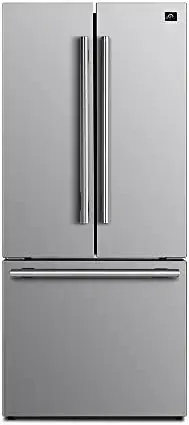 |
| Best Value The sweet spot between price and what you get | Antarctic Star French Door Refrigerator |  |
| Most Popular A crowd favorite that many people choose with confidence | BLACK+DECKER 18 Cu. Ft. French Door Refrigerator |  |
| Best Seller A high-volume bestseller chosen again and again | Kenmore 31" Bottom-Freezer Refrigerator |  |
Summit Appliance Bottom Freezer FFBF279SSXIMLHD

| Capacity | 14.6 cubic feet |
|---|---|
| Fresh Food Capacity | 10.74 cubic feet |
| Freezer Capacity | 3.86 cubic feet |
| Defrost Type | Frost Free |
| Door Swing | Left |
The Summit Appliance FFBF279SSXIMLHD is a space-efficient bottom-freezer refrigerator aimed at kitchens where width and depth are limited but full-sized storage is still needed. It provides a 14.6 cu.ft total capacity with 10.74 cu.ft for the fresh food section and a 3.86 cu.ft bottom freezer that includes a factory-installed icemaker, making drink prep convenient. The unit uses a compressor for cooling, has frost-free operation, and a digital thermostat for straightforward temperature adjustments. Interior LED lighting, adjustable glass shelves, full-width door racks, and a crisper drawer make organization simple, while stainless steel doors and a textured cabinet keep the look tidy. Practical benefits include under-27-inch depth for tighter spaces and a sealed back for easier cleaning. Trade-offs are typical for compact full-size designs: the freezer is modest in volume and the appliance has a 1-star BEE rating indicating higher energy use. Installation is freestanding with a left-hand door swing and keyed lock for security.
Best for: Buyers who want a near-full-size refrigerator that fits narrow kitchen footprints and value a built-in icemaker and simple, low-maintenance cooling.
Less Ideal for: Homes needing large freezer capacity or buyers prioritizing the most energy-efficient models should consider other options.
- Factory-installed icemaker for ready access to ice
- Frost-free compressor cooling with digital temperature control for low-maintenance operation
- Adjustable glass shelves and full-width door racks for flexible organization
- Compact depth and 14.6 cu.ft capacity make it suited to space-constrained kitchens
- Interior LED lighting improves visibility of stored items
- Relatively high annual energy consumption compared with more efficient models
- Freezer space is limited at under 4 cu.ft, so bulk frozen storage is constrained
Verdict: Choose this Summit bottom-freezer when you need full refrigeration features and a built-in icemaker in a narrow-depth footprint.
Forno 30-Inch French Door Refrigerator

| Configuration | French Door |
|---|---|
| Capacity | 17.5 cubic feet |
| Freezer Capacity | 5.1 cubic feet |
| Defrost System Type | hot gas defrost |
| Refrigerant | R-600A |
This Forno 30-inch French door refrigerator pairs a mid-size fresh food compartment with a bottom freezer and an integrated ice maker, aimed at buyers who need solid cooling performance in a compact footprint. It uses an inverter rotary_scroll compressor and multi-air flow cooling to keep temperatures steady, and the digital touch control with intelligence-chip temperature management makes adjusting modes and fast-freeze settings straightforward. Practical features include three adjustable glass shelves, spill-proof shelving, interior LED lighting, a door-ajar alarm, child lock and vacation modes, and a dual-drawer freezer that supports both solid and crushed ice from the built-in ice maker. Energy efficiency is reasonable for its class with estimated annual consumption listed, and the unit includes a replacement water filter and electronic lock controls. Trade-offs are its modest 17.5 cu ft total capacity which limits large-family use and the unit weight and size mean it is a permanent freestanding install rather than a portable option. Noise and long-term reliability are typical concerns with inverter compressors but the model includes standard safety certifications.
Best for: Buyers who prioritize steady cooling performance and convenient built-in ice production in a compact, permanent refrigerator for kitchens where space is limited.
Less Ideal for: Those needing maximum storage for large families, frequent bulk grocery shoppers, or anyone who needs a built-in cabinet-depth or fully integrated installation.
- Integrated ice maker producing both solid and crushed ice
- Inverter rotary_scroll compressor and multi-air flow for stable temperature control
- Digital touch control with fast-freeze, vacation mode, and door-ajar alarm
- Adjustable glass shelves and spill-proof shelving for flexible organization
- Energy-efficient LED lighting and replaceable water filter included
- Total capacity (17.5 cu ft) is limited for larger households
- Freestanding 30-inch form factor requires dedicated space and is not portable
Verdict: Choose this compact French door bottom-freezer if you want reliable inverter-driven cooling and a built-in ice maker in a space-saving freestanding refrigerator.
Antarctic Star French Door Refrigerator

| Capacity | 17.5 cubic feet |
|---|---|
| Freezer Capacity | 5.1 cubic feet |
| Defrost System Type | Automatic |
| Cooling Method | Compressor |
| Voltage | 115 volts |
This Antarctic Star French door refrigerator combines a 17.5 cubic foot fresh food section with a 5.1 cu ft bottom freezer and an integrated automatic ice maker for everyday convenience. The inverter compressor and multi-air flow system aim for faster cooling and more even temperatures across shelves and drawers, which helps preserve produce and chilled beverages. The bottom freezer keeps frozen items out of the main compartment and houses the hidden ice maker so ice is available without using fridge shelf space. A touch LED control panel and door-open alarm make basic adjustments and monitoring straightforward, and the 90 degree door swing plus reversible doors help in tighter kitchen layouts. Practical buyers should note the unit is freestanding and not compact, and annual energy consumption is listed as 560 watts which is higher than some efficient models. Installation will require space for the 70-inch-tall cabinet and a robust floor because of the unit weight.
Best for: Buyers who want a practical, space-aware bottom-freezer refrigerator with a built-in ice maker and even cooling performance for everyday household use.
Less Ideal for: People looking for the most energy-efficient or compact countertop-style units should consider other smaller or lower-consumption models.
- Built-in automatic ice maker in the bottom freezer keeps ice out of main compartment
- Inverter compressor with fast cooling for quicker temperature recovery
- Multi-air flow system promotes even cooling across shelves and drawers
- LED touch display and door-open alarm simplify control and monitoring
- Relatively high listed annual energy consumption at 560 watts
- Large and heavy unit requires adequate floor support and clearance
Verdict: A practical bottom-freezer French door refrigerator that delivers built-in ice production and even, fast cooling for everyday household needs.
BLACK+DECKER 18 Cu. Ft. French Door Refrigerator

| Capacity | 18 cubic feet |
|---|---|
| Fridge/Freezer split | 12.5 cu ft fridge / 5.4 cu ft freezer |
| Wattage | 470 watts |
| Door Orientation | Reversible |
| Voltage | 120 volts |
This BLACK+DECKER French door refrigerator pairs a 12.5 cu ft fresh-food compartment with a 5.4 cu ft bottom freezer drawer and an included ice maker that produces up to about 3.5 pounds of ice per day. It is set up as a freestanding, standard-depth unit intended for typical home kitchens and offers digital temperature controls, three interior shelves, LED lighting, frost-free operation, and adjustable leveling legs for an easier install. The bottom freezer uses two drawers that make frozen items easier to access than a single tall drawer, and the reversible door orientation gives flexibility during placement. Energy Star certification and a 470-watt rating indicate attention to operating efficiency, but the ice maker requires a cold-water hookup to function and the unit is relatively tall, so measuring clearances and delivery paths is important. For buyers who value accessible freezer storage and a built-in ice supply without a through-the-door dispenser, this fridge delivers straightforward performance at a midrange feature set.
Best for: Buyers who prioritize easy-access bottom-freezer organization and want a built-in ice maker in a standard-depth fridge with straightforward controls and energy-efficient operation.
Less Ideal for: Those who need an external water dispenser or very high daily ice production should consider other models with through-the-door features or larger commercial-style ice makers.
- Built-in ice maker producing up to ~3.5 lb/day with automatic shutoff when full
- Bottom-freezer layout with two drawers for easier access to frozen items
- Digital temperature controls for separate fridge and freezer settings
- Energy Star certification for better energy efficiency than non-certified models
- Standard-depth footprint and reversible doors simplify installation in many kitchens
- Ice maker needs a household cold-water connection to operate
- Tall unit may require door or drawer removal to fit through tight delivery paths
Verdict: A practical, Energy Star certified French door fridge with a bottom freezer and built-in ice maker that fits standard-depth kitchens and emphasizes accessible freezer storage.
Kenmore 31" Bottom-Freezer Refrigerator

| Capacity | 22.3 cubic feet |
|---|---|
| Freezer Capacity | 6.86 cubic feet |
| Ice Maker Dispensed Type | Cubed |
| Voltage | 115 volts |
| Specification Met | Energy Star, UL |
This Kenmore bottom-freezer model is designed to deliver roomy, organized cooling in a relatively compact 31-inch footprint. It uses an inverter compressor for steadier, quieter temperature control and better energy efficiency, and it is ENERGY STAR certified with an Eco Mode for lower consumption when you are away. Inside, full-width tempered glass shelves and five door bins let you rearrange storage for tall pitchers or party trays, while two crisper drawers keep produce separated. The built-in ice maker produces cube ice automatically (about 3.5 lb/day) so you do not need trays, and long-lasting LED lighting makes it easy to see contents. Practical benefits include a reversible door and fingerprint-resistant stainless steel for easier upkeep. Limitations to note are the mid-size freezer capacity and the standard-depth form factor, which may store less frozen bulk than deeper or larger models and could be tight for very large households. Installation requires a freestanding setup and the listed dimensions should be checked against your kitchen opening.
Best for: Buyers who prioritize dependable, energy-efficient cooling with an integrated ice maker and straightforward, flexible storage in a narrower 31-inch footprint.
Less Ideal for: Large households or anyone who needs extensive freezer space or the extra interior volume of deeper or wider refrigerators should consider larger-capacity alternatives.
- Built-in ice maker that produces cube ice automatically
- Inverter compressor for quieter, more consistent cooling and better energy efficiency
- Adjustable full-width tempered-glass shelves and multiple door bins for flexible organization
- ENERGY STAR certification and Eco Mode to reduce power use
- Fingerprint-resistant stainless steel finish for easier cleaning
- Freezer is mid-size and may be limiting for those who store a lot of frozen food
- Standard-depth design offers less overall storage than counter-depth or deeper full-size refrigerators
Verdict: Choose this Kenmore if you want a reliable, energy-efficient 31-inch bottom-freezer fridge with a built-in ice maker and flexible interior storage.
Choosing the Right Bottom-Freezer Refrigerator with an Ice Maker: Key Factors to Consider
Storage Layout and Shelf Flexibility
How shelving is arranged and whether shelves and bins are adjustable directly affects how you use the refrigerator. A flexible layout lets you store tall bottles, large platters, and awkward containers without blocking airflow.
Adjustable door bins, spill-proof shelves, and dedicated crisper and deli drawers make it easier to organize food so you can find items quickly. In bottom-freezer designs, consider how the freezer compartments open and whether the ice bin intrudes on usable storage. Ease of reconfiguring shelves also matters when your needs change, such as hosting a gathering or buying in bulk.
Ice Production Rate and Storage
Ice maker capacity and production rate determine whether the refrigerator can meet your household's daily needs. Look for specifications on how many pounds of ice the unit can produce in 24 hours and how much ice the storage bin holds.
Beyond raw numbers, consider reliability factors: how the ice maker handles partial fills, whether the dispenser or bin design minimizes jams, and how easy it is to access and clean the ice compartment. If you frequently entertain or rely on large quantities of ice, prioritize models with higher production and larger bins.
Temperature Control and Food Preservation
Stable internal temperatures extend the life of perishable foods and reduce spoilage. Effective temperature control depends on sensor placement, compressor performance, and internal airflow design.
Features such as dual evaporators or precise digital thermostats can help maintain separate zones for produce and frozen goods. For bottom-freezer layouts, pay attention to how cold air circulates between freezer and fresh-food compartments so that neither section is subject to wide swings in temperature when doors are opened frequently.
Energy Consumption and Efficiency
Energy efficiency affects ongoing operating costs and environmental impact. Look for measured energy consumption figures to compare models over a year of typical use.
Efficient compressors, good insulation, and thoughtful door seals keep power draw lower. Also consider features like LED lighting and energy-saving modes. While efficiency alone should not be the only deciding factor, a well-sealed, efficient refrigerator reduces electric bills and keeps food colder with less effort.
Noise, Vibration, and Overall Comfort
Noise level and vibration affect how comfortable the refrigerator is in open-plan kitchens or when placed near living areas. Some compressors and ice-maker mechanisms produce perceptible hums or clicks that can be annoying over time.
Check for models with quieter compressors and vibration-dampening mounts. Consider the placement of the ice maker relative to living spaces; an ice maker that cycles loudly or vibrates can become a nuisance. Balance noise preferences against other priorities like capacity and ice production.
Installation Needs and Serviceability
Bottom-freezer refrigerators with ice makers typically require a water line and standard electrical connections. Confirm that the unit will fit your kitchen opening, that door swing and clearance work with cabinetry, and that the water hookup is accessible.
Serviceability matters long term: easy-to-access filters, removable ice bins, and straightforward panel access for technicians reduce downtime and repair costs. Consider whether standard tools and common parts are used, and whether routine maintenance tasks are feasible without professional help.
Preparing Your Kitchen for a Bottom-Freezer Unit
Measure the intended space carefully, accounting for door clearance and ventilation. Bottom-freezer refrigerators need enough room to open the doors fully and to allow for airflow behind the cabinet. Check floor levelness because an uneven floor can affect door alignment and sealing.
Confirm water and electrical access before installation. Most integrated ice makers require a cold-water line and a grounded electrical outlet. If your current plumbing is distant from the refrigerator location, factor in the cost and complexity of running a new line.
- Leave at least an inch of clearance at the back for ventilation unless the manual specifies otherwise.
- Measure doorway and hallway widths to ensure the refrigerator can be delivered into the kitchen.
- Verify the water line connector type and accessibility for the ice maker.
Common Ice Maker Types and What to Expect
Built-in ice makers in bottom-freezer refrigerators generally use either modular or crescent-style molds. Modular makers often produce larger batches of ice quickly, while crescent or cube systems may make smaller cubes suited to compact bins.
Expect occasional maintenance such as cleaning the ice bin and checking the water filter. Hard water areas can cause scale buildup, so plan for periodic descaling or more frequent filter changes to keep ice tasting fresh.
- Modular ice makers: higher production, larger cubes.
- Crescent/cube ice makers: smaller cubes, often simpler bins.
- In hard water areas, replace or clean water filters more often.
Maximizing Usable Space in a Bottom-Freezer Layout
Because the freezer is on the bottom, the fresh-food compartment is typically more usable and at eye level. Use adjustable shelving and door bins to create zones for dairy, condiments, and leftovers. Store frequently used items at the front and heavier or bulk items on lower shelves.
In the freezer, consider whether the layout uses pull-out drawers or fixed baskets. Drawers can help access items without unstacking, while baskets may provide slightly more capacity. Keep a small inventory list on the freezer door to avoid long door-open times hunting for items.
- Use clear, stackable bins to organize frozen foods.
- Label shelves and bins to reduce search time and cooling losses.
- Keep an inventory sheet for deep-freeze items to minimize open-door time.
Water Filters and Ice Quality
Many integrated ice makers use replaceable water filters to improve taste and reduce particulate contamination. Check the filter replacement interval and ease of access when selecting a model. A filter that is simple to swap will increase the likelihood you maintain it on schedule.
If you live in an area with very hard water, consider additional water treatment at the source or more frequent filter changes. Poor water quality can cause cloudy or off-flavored ice and accelerate scale buildup inside the ice-making mechanism.
- Confirm filter lifespan and whether it is tool-free to replace.
- Consider local water hardness when planning maintenance frequency.
- Clean ice bins periodically to prevent odors and ice clumping.
Energy-Saving Habits for Longer Efficiency
Keep the refrigerator reasonably full but not overpacked; food mass helps stabilize temperatures, while blocking vents reduces airflow. Avoid frequent long door openings and defrost manually if you notice excessive frost buildup in the freezer compartment.
Set temperature controls to recommended ranges rather than the coldest settings. Using interior lighting sparingly and replacing door seals promptly when worn will maintain efficiency over the long term.
- Recommended temps: refrigerator 35 to 38 F, freezer 0 F.
- Replace damaged door gaskets to prevent cold air loss.
- Organize contents to reduce door-open duration.
How We Chose the Best Bottom-Freezer Refrigerator with an Ice Maker
We focused on features that directly affect daily use and long-term ownership for bottom-freezer refrigerators with integrated ice makers. Primary evaluation criteria included storage layout and shelving flexibility, because usable volume and adjustable shelves determine how well the unit fits different groceries and containers. Ice production and storage reliability were assessed to ensure the ice maker keeps up with typical household demand and avoids frequent refills or clogs. Energy efficiency and temperature control matter for operating cost and food preservation, so we prioritized models with stable compressors and sensible insulation design. Noise and vibration were considered, since quieter units are less intrusive in open-plan kitchens. Finally, installation and serviceability were evaluated to ensure the unit can be fitted into standard kitchen openings and that common maintenance tasks are straightforward. We excluded specialty or commercial refrigeration units, refrigerators without integrated ice makers, and non-bottom-freezer configurations. We also excluded models that rely on uncommon plumbing or electrical requirements. The result is a shortlist that balances real-world usability, consistent ice performance, and sensible operating characteristics relevant to most homeowners.
Our full evaluation process is outlined in our review methodology.
FAQ
How much ice can a typical bottom-freezer ice maker produce daily?
Production varies by model, but most integrated home ice makers produce between 2 and 10 pounds of ice per 24 hours. The actual amount depends on water pressure, ambient temperature, and how often ice is harvested.
Do bottom-freezer refrigerators with ice makers need a water line?
Yes. Built-in ice makers require a cold-water hookup to make ice. Some models may include options for filter placement or remote waterlines, but a standard water connection is typically necessary.
Will the ice maker affect freezer storage capacity?
Integrated ice makers occupy space in the freezer and can reduce usable volume. The design and placement of the ice bin determine how much capacity is lost, so check how the freezer layout balances bin size with storage needs.
How often should I change the water filter for ice makers?
Filter replacement intervals depend on usage and local water quality but commonly range from every 6 months to once a year. In areas with hard water or heavy ice use, change the filter more frequently to maintain taste and prevent buildup.
Can I turn off the ice maker when I do not need ice?
Most units include a simple on/off control for the ice maker or a mechanical shutoff to stop production. Turning it off reduces water usage and prevents ice from building up when you do not need it.
Final Verdict
Prioritize the features that matter most for your household. If frequent entertaining or heavy ice use is common, emphasize ice production and bin capacity. If food organization and daily convenience are more important, prioritize flexible shelving and door storage. Balance efficiency, noise, and installation needs against capacity and ice performance. With those tradeoffs in mind, you can confidently choose a bottom-freezer refrigerator with an ice maker that fits your kitchen and lifestyle.