
Note: This article contains affiliate links. If you click on these links and make a purchase, we may earn a small commission at no extra cost to you. This helps support our research and content. Read our full affiliate disclosure here.
If you need an affordable way to refresh carpets without wet shampoos or long dry times, a budget dry carpet cleaner can be an effective choice. These machines use dry powders, encapsulation compounds, or low-moisture methods to lift dirt and stains with minimal downtime, which is helpful in busy homes or rental units. This guide shortlists the top options in the budget category and explains the practical tradeoffs you should expect from lower-cost dry cleaners. We evaluate cleaning performance, ease of maintenance, and operating costs to help you pick a model that fits daily living and occasional deep-cleaning needs. Read on for our top picks and the criteria we used to choose them.
Top Picks at a Glance
| Best Quality Built to a higher standard if you want something more solid | HOST Dry Extraction Cleaner 40 oz |  |
| Best Value The sweet spot between price and what you get | Host Dry Carpet Cleaner 30 lb |  |
| Best Budget The cheapest option that still gets the job done reliably | Capture Carpet & Rug Dry Cleaner |  |
| Top Rated A top-rated pick with lots of positive feedback | Quality Chemical Premium Carpet Shampoo |  |
| Most Popular A crowd favorite that many people choose with confidence | Capture Dry Carpet Cleaner 2.5lb |  |
| Best Seller A high-volume bestseller chosen again and again | Resolve Pet Specialist Foam Cleaner |  |
HOST Dry Extraction Cleaner 40 oz

| Item Form | Liquid |
|---|---|
| Scent | Almond |
| Specific Uses For Product | Carpet |
| Surface Recommendation | Carpet |
| Special Features | Refillable |
HOST Dry Extraction Cleaner uses micro‑sponges in a low‑moisture formula to lift soils, spots, odors and common allergens from carpets, grouted tile and textured floors without soaking the backing or grout lines. You sprinkle or apply the compound, allow it to absorb and encapsulate dirt, then vacuum it up, which makes surfaces usable immediately after cleaning. The product is Green Seal certified and marketed as non‑toxic and biodegradable, so it is suitable for homes with people and pets where solvent‑based cleaners are undesirable. Its refillable shaker jar and ability to treat multiple floor types add convenience, but performance depends on mechanical agitation and vacuuming—very deep stains or set‑in grime may need repeated applications or a hot water extraction machine. For routine maintenance and allergen reduction on carpets and tile, it is an effective, low‑moisture option that avoids long dry times and residue build‑up.
Best for: Buyers who prioritize practical, fast‑drying carpet maintenance and allergen reduction on a budget and prefer a safer, low‑moisture cleaning method for everyday use.
Less Ideal for: Those needing one‑pass removal of very old, heavily soiled carpets or commercial high‑traffic restoration should choose professional hot water extraction or heavier duty cleaners.
- Low‑moisture micro‑sponge formula cleans without soaking backing or grout, enabling immediate use after vacuuming
- Biodegradable and Green Seal certified, suitable for homes with people and pets
- Versatile for carpets, grouted tile, and textured floors
- Refillable shaker jar makes application and storage convenient
- May not fully remove deep or set‑in stains compared with hot water extraction
- Effectiveness depends on thorough vacuuming and agitation; extra effort is required for best results
Verdict: A budget‑friendly, low‑moisture carpet cleaner that refreshes carpets and tile quickly while being safe for people and pets.
Host Dry Carpet Cleaner 30 lb

| Weight | 30 lb bucket |
|---|
Host Dry Carpet Cleaner is a powder formula designed for low-moisture carpet cleaning and spot restoration. You sprinkle or apply the powder to carpeted areas, work it in with a brush or machine, then vacuum it up to remove dirt that the formula dissolves and traps. The product emphasizes low moisture to prevent wicking and sticky residues that can cause resoiling, and it is labeled safe, nontoxic, biodegradable and WoolSafe approved so it is suitable for delicate fibers. In practice the powder is convenient for routine maintenance and quicker drying compared with wet extraction, and the fresh fragrance helps leave carpets smelling clean. Limitations are typical of dry powders: it requires thorough vacuuming to remove residues and may not penetrate as deeply into heavily soiled or greasy stains as hot-water extraction. The large 30 lb bucket suits frequent use or professional touch-ups but is bulky for occasional homeowners.
Best for: Buyers looking to cut cleaning time and maintenance costs with a low-moisture solution for routine carpet touch-ups or commercial light-restoration work.
Less Ideal for: People needing a heavy-duty deep-clean solution for set-in or greasy stains should prefer a hot-water extraction system or professional steam cleaning service.
- Low-moisture formula reduces drying time and prevents wicking back of spots
- Biodegradable, nontoxic formulation with WoolSafe approval for delicate fibers
- Works with brush-in or bonnet/machine application then vacuum removal
- Large 30 lb bucket is economical for frequent or professional use
- Less effective than hot-water extraction on deep, greasy, or set-in stains
- Requires thorough vacuuming to fully remove powder residue
Verdict: A practical, low-moisture powder cleaner that speeds drying and lowers upkeep costs for routine carpet maintenance and light restoration.
Capture Carpet & Rug Dry Cleaner

| Net weight | 16 ounces |
|---|---|
| Coverage | ~100 sq ft per pound |
| Manufacturer | Milliken Chemical |
Capture Carpet & Rug Dry Cleaner is a dry powder you sprinkle on soiled carpet, rug, upholstery or car interiors, let it sit, then vacuum to remove dirt and odors. The microscopic porous particles act like tiny sponges that lock onto grime and pet smells, so you avoid wet cleaning, long drying times, and wicking. It is typically used for traffic lanes, spots, and routine maintenance between deep cleanings; one pound claims coverage for about 100 square feet. The formula is marketed as safe on wool and sensitive fibers and contains no bleaches or harsh solvents, and using an optional pre-mist can help with stubborn stains. Practical benefits include quick application, no need for extraction equipment, and reduced downtime for rooms and vehicles. Limitations are that it is not a replacement for periodic professional steam cleaning for deep embedded soil and that heavily soiled or set-in stains may still require targeted stain removers or repeat treatments.
Best for: Buyers who want a low-cost, no-equipment way to refresh traffic areas, spot-clean pet accidents, and extend time between deep cleanings.
Less Ideal for: People needing a deep extraction clean for heavily soiled or water-safe rugs or those who prefer wet shampooing as their primary cleaning method.
- Works without water so carpets dry immediately
- Absorbent powder lifts dirt and reduces odors
- Safe for wool and many carpet types per manufacturer
- Simple sprinkle-wait-vacuum application works with a regular vacuum
- Not a substitute for professional deep steam cleaning on very soiled carpets
- May need pre-treatment or repeated use on set-in stains
Verdict: An inexpensive, no-water dry powder that quickly freshens carpets and neutralizes odors for budget-minded routine maintenance.
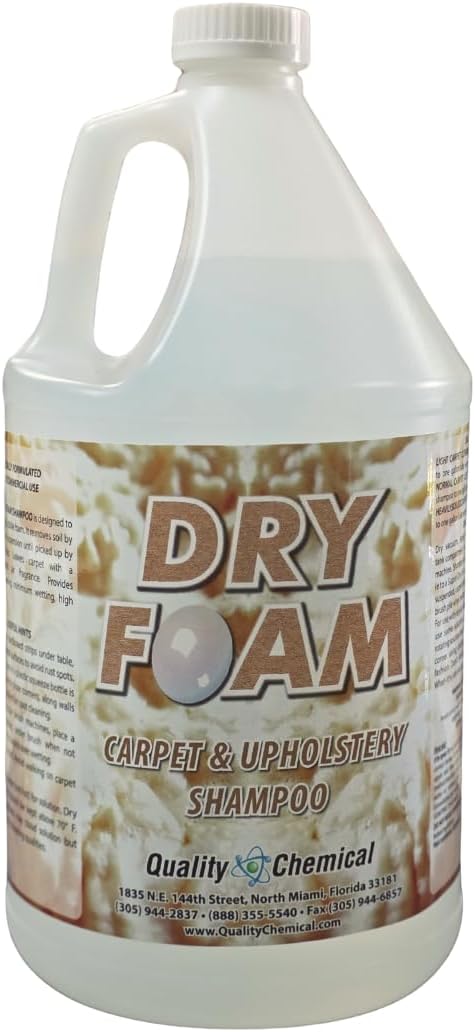
Quality Chemical Premium Carpet Shampoo
| Volume | 1 gallon (128 oz.) |
|---|---|
| pH | 8.6 |
| Use dilution | 4-16 oz per gallon |
This 1-gallon Premium Carpet Shampoo is a concentrated dry foam cleaner meant for deep cleaning carpets and upholstery in both commercial and residential settings. It is used diluted (4–16 oz per gallon) and applied as a dry foam so it cleans fibers without excessive moisture, which speeds drying and reduces the risk of over‑wetting. The formula targets embedded soils, stains, and odors and is described as safe for a variety of fabrics when used per instructions. Practical benefits include a large concentrated container that stretches across multiple jobs, a fresher scent after cleaning, and suitability for machine or manual foam application. Because it is industrial strength and alkaline (pH 8.6), it delivers noticeable soil removal but requires careful dilution and spot testing on delicate fibers; heavy use also means handling concentrated chemical safely and storing it properly. For budget-conscious buyers who need professional cleaning power in a gallon jug, this product balances performance and quantity, though it is not a ready-to-use spray and needs mixing and appropriate equipment for best results.
Best for: Buyers who prioritize a reliable, professional-strength cleaner on a budget and are comfortable mixing concentrated solutions for repeat or large-area carpet cleaning.
Less Ideal for: Casual users who want a ready-to-use spray or homeowners unwilling to mix chemicals or use cleaning equipment should consider simpler, pre-mixed options.
- Concentrated 1-gallon formula covers many cleaning jobs per container.
- Dry foam application reduces drying time compared with wet extraction.
- Formulated to remove tough stains and embedded odors.
- Suitable for commercial and residential use when diluted properly.
- Requires dilution and appropriate application equipment rather than being ready-to-use.
- Alkaline formula (pH 8.6) may need spot testing on delicate fabrics.
Verdict: A cost-effective, concentrated dry foam shampoo that delivers professional-grade stain and odor removal for buyers who need reliable results across multiple cleaning jobs.
Capture Dry Carpet Cleaner 2.5lb

| Net weight | 2.5 pounds |
|---|---|
| Cleans area | Up to 250 sq ft (kit guidance) |
| Scent | Fresh |
| Made in | USA |
Capture Carpet & Rug Dry Cleaner is a resealable tub of absorbent powder designed for quick, low-effort carpet maintenance. You sprinkle the powder over soiled or high-traffic areas (the brand recommends a pre-mist for heavy spots), brush it lightly into the fibers, then vacuum it away; the tiny porous particles act like sponges to lock on dirt and odors. The formula is safe on many fibers including wool and stain-resistant carpets and leaves a mild fresh scent. Because it is a dry process there is no drying time and no risk of wicking or shrinking from moisture, which makes it convenient for spot cleaning, upholstery, and car interiors as well as regular maintenance between deep cleans. Limitations are that very deep or oil-based stains may need pretreatment or wet cleaning and you will still need a good vacuum to remove all powder residue thoroughly. For routine upkeep and odor control this is an effective, easy-to-use budget option.
Best for: Buyers who want a low-cost, low-effort way to freshen carpets and remove surface soils and odors without wet cleaning and who value social proof and established product reviews.
Less Ideal for: People needing a heavy-duty solution for deep, oil-based, or long-set stains or those who prefer a single wet-cleaning product that removes embedded grime in one pass.
- Works without water so carpets dry immediately and no risk of wicking or shrinkage
- Absorbent microscopic particles capture dirt and neutralize odors
- Safe for a wide range of fibers including wool and stain-resistant carpets
- Simple, no-machine application suitable for spot cleaning, upholstery, and cars
- Not a replacement for deep steam cleaning on heavy or set-in stains
- Best results require vacuuming thoroughly to remove all powder residue
Verdict: A budget-friendly dry powder that quickly freshens carpets and removes surface soils and odors with no drying time, making it ideal for routine maintenance and spot cleanups.
Resolve Pet Specialist Foam Cleaner

| Net content | 22 oz (per can) |
|---|---|
| Pack | 2 Pack |
Resolve Pet Specialist Heavy Traffic Foam Carpet Cleaner is a spray-foam spot remover designed for pet messes and high-traffic areas. It sprays a foaming layer that breaks down feces, vomit, dirt and associated odors, claims to work on stains up to seven days old, and is safe for wool, nylon and stain-resistant carpets when used as directed. The foam is intended to trap and lift pet hair and dirt so it can be removed by vacuuming after about five minutes, which makes it a simple two-step routine for quick spot treatment. Practical benefits include targeted stain removal without wetting large areas and an odor-focused formula for pet owners. Limitations are that it is a spot cleaner rather than a deep shampoo system, so it will not replace a carpet cleaner machine for whole-room cleaning, and results depend on prompt treatment and proper vacuuming after use.
Best for: Careful buyers who want an easy, low-risk spot treatment for pet stains and odors and prefer a simple spray-and-vacuum routine over renting or using a full carpet cleaner.
Less Ideal for: Households that need whole-room deep cleaning, heavy soil remediation, or professional-grade restoration should choose a carpet shampooer or pro service instead.
- Foaming formula targets and lifts set-in pet stains and odors for focused spot cleaning
- Works on common carpet fibers including wool, nylon, and stain-resistant carpets when used as directed
- Short dwell time with recommended vacuuming after about five minutes speeds cleanup
- Designed to capture pet hair and dirt so vacuuming removes more residue than vacuuming alone
- Meant only for spot treatment and will not deep-clean entire rooms or replace a carpet shampooer
- Effectiveness varies with stain age and severity, so older or heavy-soil stains may need repeat treatments
Verdict: Choose this foam cleaner if you want a straightforward, pet-focused spot treatment that lifts stains and cuts odors quickly without using a machine.
Choosing the Right Budget Dry Carpet Cleaner: Key Factors to Consider
Cleaning Method and Chemistry
Different budget dry carpet cleaners use powders, encapsulation compounds, or low-moisture foam. The chosen method affects how soils lift from fibers and how much residue remains. Powders loosen and absorb dirt for vacuum pickup, while encapsulation uses polymers that surround soils and crystallize for vacuum removal.
Understanding the chemistry matters because some formulations work better on oily stains and others on particulate soil. Match the cleaning method to the kinds of messes you usually tackle to get the best results from a budget unit.
Brush and Agitation Design
Agitation is key for loosening embedded dirt. Brush type, rotation speed, and whether brushes are motorized or passive change how effectively a machine penetrates pile. Budget units often use simpler brush bars or pads, so look for designs that still provide consistent contact with the carpet without excessive fiber damage.
A gentler brush profile will preserve delicate fibers, while stiffer bristles work better on dense, looped carpets. Consider whether brushes are removable for cleaning or replacement, as this affects long-term performance.
Suction and Pickup Efficiency
Even dry cleaning relies on efficient pickup to remove loosened soils and powder residue. Good airflow paths and dust containment separate particles from the carpet and prevent re-deposition. On budget models, motor power and filter design determine how much of the loosened debris the machine actually collects.
Inspect dust bin capacity and filter types because small bins fill quickly during larger jobs. Filters that are washable or easy to replace reduce ongoing costs and maintain consistent suction.
Consumables and Operating Cost
Running cost matters for budget buyers. Consumables include cleaning powders, encapsulation solutions, replacement brushes, and filters. Some systems require proprietary compounds, while others permit generic products. The frequency of replacement and per-use cost will determine the real cost of ownership over months and years.
Estimate how often you will clean and check typical pack sizes and price points. Machines that use readily available, inexpensive consumables tend to be more economical in the long run.
Ease of Use and Maintenance
Simple controls, easy-access dust bins, and removable brush assemblies make routine upkeep less of a chore. Budget machines that require complex disassembly or specialized tools for cleaning will cost time and patience. Look for models with clear maintenance instructions and parts that can be cleaned without special solvents.
Regular maintenance intervals and straightforward procedures prolong lifespan and keep cleaning performance consistent across many uses.
Noise, Weight, and Storage
Low-cost cleaners can be louder or bulkier than premium models. Noise matters if you have children, pets, or need to run the machine during occupied hours. Weight affects portability and how easy it is to carry between rooms or up and down stairs.
Consider the available storage space in your home and whether the unit's footprint and cord management will fit into daily routines without becoming cumbersome.
How Dry Carpet Cleaning Works
Dry carpet cleaning systems work by loosening soils with chemistry or dry powders and then capturing the debris with suction or vacuum pickup. Because they use little to no water, carpets remain usable almost immediately after cleaning, which is useful in high-traffic areas or rental properties where quick turnaround is important.
The process typically involves applying a cleaning compound, agitating the carpet with brushes or pads, and then vacuuming up the residue. The most effective routines combine mechanical agitation and a pickup stage that prevents powder or crystallized residue from staying in the fibers.
- Low moisture means fast return to use
- Mechanical agitation breaks up embedded dirt
- Pickup stage removes detergent or powder residues
When Budget Dry Cleaners Make Sense
Budget dry carpet cleaners are ideal for routine maintenance, spot cleanups, and refreshing high-traffic areas without scheduling lengthy wet-cleaning sessions. They are a good choice when fast drying and convenience matter more than deep extraction.
If you encounter frequent light soiling, pet dander, or surface stains, a low-cost dry option can keep carpets looking acceptable between more intensive cleanings. For heavy, oily, or set-in stains, expect to combine dry cleaning with targeted pretreatment for improved results.
- Best for surface-soil removal and frequent touch-ups
- Not a substitute for occasional deep wet cleaning on greasy stains
- Useful for renters and property managers who need quick turnaround
Maintaining Performance Over Time
To keep a budget dry carpet cleaner performing well, follow a simple maintenance routine: empty dust bins after each large job, wash or replace filters per the manufacturer schedule, and clean brush heads to prevent matting. Ignoring these tasks reduces pickup efficiency and can leave residues behind on subsequent runs.
Store consumables in a dry location and label any opened packets to preserve potency. Periodically inspect brush bristles for wear and replace them when they no longer make full contact with the pile. Small, regular maintenance steps extend useful life and keep cleaning consistent.
- Empty and inspect dust bins frequently
- Clean or replace filters on a schedule
- Replace worn brushes to maintain agitation
Common Misconceptions About Dry Cleaning
One common misconception is that dry cleaners always equal inferior results. Modern dry systems can be surprisingly effective on many everyday soils when used correctly. The limitation is usually with heavy oil-based stains or deep embedded dirt where wet extraction performs better.
Another misconception is that dry cleaning leaves visible residues. Proper application and thorough pickup prevent residue; poor technique or over-application is typically the cause when powders or encapsulants remain in fibers.
- Not inherently inferior for routine maintenance
- Technique and pickup determine final results
- Complementary wet cleaning may still be necessary occasionally
Tips for Spot Treatment and Tough Stains
For localized stains, pre-treat the area with a suitable spot cleaner compatible with low-moisture methods, then use the dry cleaner to lift residual soils. Work from the outer edge of the stain toward the center to avoid spreading. Test any chemistry on an inconspicuous area first.
Repeat short, controlled passes rather than prolonged single passes. This approach reduces fiber stress and allows the cleaning compound to work between treatments. For particularly stubborn spots, alternate dry cleaning with a small amount of targeted wet treatment, then dry thoroughly before resuming low-moisture cleaning.
- Pre-treat stains and test cleaners on hidden patches
- Use multiple light passes instead of one long pass
- Combine targeted wet treatment sparingly for stubborn stains
How We Chose the Best Budget Dry Carpet Cleaner
We focused on machines that deliver measurable cleaning results while keeping purchase and operating costs low. The primary filters were cleaning effectiveness on common household soils, user-facing maintenance requirements, and the convenience of dry or low-moisture operation. We prioritized models with straightforward brush or pad systems that remove soil without long carpet-drying intervals and tools that work across typical carpet fibers. Durability and parts availability were considered to ensure a budget buy does not become high-cost upkeep. Noise levels and user ergonomics were also factored in because inexpensive units can vary widely in day-to-day comfort. Excluded items included wet-only systems, machines requiring professional servicing for routine maintenance, and specialty commercial extractors outside the budget scope. The dimensions we emphasized and tested conceptually were cleaning power on spot and high-traffic areas, frequency and ease of consumable replacement, suction or pickup efficiency, build quality for regular household use, and noise/ergonomics for routine operation. These editorial filters guided which budget dry carpet cleaners made the shortlist.
Our full evaluation process is outlined in our review methodology.
FAQ
How often should I use a dry carpet cleaner?
Often depends on foot traffic, but many households benefit from dry cleaning every 4 to 12 weeks for maintenance. High-traffic areas or homes with pets may need more frequent touch-ups.
Will dry cleaning remove pet odors?
Dry cleaning can reduce odor-causing soils and dander, especially when combined with an enzymatic pre-treatment. For deep or persistent odors from accidents, targeted wet treatments and thorough drying are sometimes necessary.
Are consumables easy to find for budget machines?
Usually yes. Many budget units use widely available powders or generic encapsulation products, but verify compatibility before buying. Choose machines that accept common formulas to keep operating costs lower.
Can dry cleaners harm carpet fibers?
They can if brushes are overly aggressive or if abrasive powders are overused. Use the recommended settings and brush types for your carpet fiber, and avoid excessive pressure during cleaning to prevent fiber fraying.
How long after cleaning will the carpet be usable?
One advantage of dry systems is quick return to use—most carpets are walkable immediately or within an hour. Dry times vary by compound and how thoroughly pickup is performed.
Final Verdict
When choosing a budget dry carpet cleaner, prioritize the cleaning method, pickup efficiency, and the real cost of consumables. Expect tradeoffs: lower upfront cost can mean simpler agitation systems and more frequent maintenance, but careful selection will yield a low-hassle machine that handles everyday soils effectively. Focus on models with replaceable brushes, easy-maintenance filters, and readily available consumables to maximize value and keep carpets looking fresh with minimal downtime.