
Note: This article contains affiliate links. If you click on these links and make a purchase, we may earn a small commission at no extra cost to you. This helps support our research and content. Read our full affiliate disclosure here.
Picking a budget mini fridge for a dorm is about more than price. You need a compact unit that fits limited space, uses minimal electricity, and holds the snacks, drinks, and a few small groceries you rely on during term time. Dorm rooms often have restricted outlets and tight alcoves, so size, quiet operation, and straightforward controls matter as much as internal layout. This guide lists seven shortlisted budget mini fridges that suit typical dorm layouts and student use. We'll explain the criteria used to evaluate each option and highlight the practical pros and cons you should consider before you buy.
Top Picks at a Glance
| Best Overall The best all-around choice for most situations | Upstreman BR321 3.2 Cu.Ft Mini Fridge |  |
| Best Quality Built to a higher standard if you want something more solid | Frigidaire Retro EFR331 |  |
| Best Value The sweet spot between price and what you get | Antarctic Star Mini Fridge 10L |  |
| Best Budget The cheapest option that still gets the job done reliably | Frestec 1.7 Cu Ft Mini Fridge |  |
| Top Rated A top-rated pick with lots of positive feedback | Midea Compact Refrigerator WHS-65LB1 |  |
| Most Popular A crowd favorite that many people choose with confidence | Cooluli Classic 4L Mini Fridge |  |
| Best Seller A high-volume bestseller chosen again and again | EUHOMY WC-6B Mini Fridge | 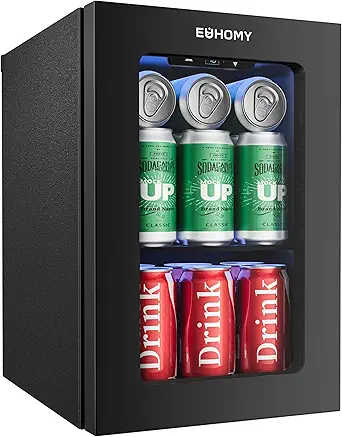 |
Upstreman BR321 3.2 Cu.Ft Mini Fridge

| Capacity | 3.2 cubic feet |
|---|---|
| Freezer Capacity | 0.3 cubic feet |
| Voltage | 115 volts |
| Defrost System Type | Manual Defrost |
| Compressor Type | rotary scroll |
The Upstreman BR321 is a compact 3.2 cu ft mini fridge built for small spaces like dorm rooms, offices, and bedrooms. It cools with a rotary scroll compressor and offers five adjustable temperature levels so you can tailor chilling for drinks, produce, and dairy while a small 0.3 cu ft freezer handles frozen staples. Interior flexibility comes from two adjustable glass shelves, a crisper drawer, and three door shelves that keep bottles and snacks organized. Practical touches include a reversible door, adjustable leveling feet, and a manual defrost system that simplifies maintenance. The unit is quiet at around 38 dB and carries ETL certification and an Energy Star style efficiency rating that keeps electricity use modest. Expect straightforward, mechanical controls rather than digital precision, and manual defrost means occasional upkeep to prevent frost build-up in the freezer. The fridge is freestanding and does not include a lock or advanced connectivity features, but for a budget-conscious buyer wanting reliable, efficient cooling in a compact footprint it performs well.
Best for: Buyers who want a reliable, energy-conscious mini fridge for a dorm room or small apartment and prioritize quiet operation, flexible shelving, and simple mechanical controls.
Less Ideal for: Users needing precise temperature control for sensitive foods, built-in installation, or advanced features like smart connectivity should look elsewhere.
- Compact 3.2 cu ft capacity with dedicated 0.3 cu ft freezer for small-space living
- Adjustable thermostat with five settings for flexible cooling needs
- Quiet compressor operation suitable for bedrooms and dorms
- Adjustable glass shelves and door bins provide configurable storage
- Reversible door and leveling feet for easier placement in tight spaces
- Manual defrost freezer requires periodic maintenance
- Controls are mechanical rather than precise digital settings
- No lock or smart/connectivity features
Verdict: A quiet, energy-efficient 3.2 cu ft mini fridge that balances practical storage and simple controls for dorms and small living spaces.
Frigidaire Retro EFR331

| Capacity | 3.2 cubic feet |
|---|---|
| Freezer Capacity | 0.2 cubic feet |
| Cooling Method | Compressor |
| Defrost System Type | Manual |
| Voltage | 110 volts |
The Frigidaire Retro EFR331 is a compact dorm-style refrigerator that pairs a 3.2 cu ft fresh food compartment with a 0.2 cu ft freezer and a writable eraser-board door for notes. It uses a compressor cooling system and has two adjustable interior shelves plus door storage sized for 2 L bottles and cans, which makes organizing beverages and basic groceries straightforward in a tight space. The reversible door and adjustable thermostat increase placement flexibility in a dorm or small apartment, and the manual defrost freezer keeps complexity low. Expect typical compact-fridge performance: it cools reliably for everyday drinks and leftovers but will not match a full-size fridge for capacity or heavy-duty freezing. The gloss finish and retro styling give it personality, and its simple controls are easy to use, though manual defrosting and modest freezer volume are practical limitations for buyers who need more frozen storage. For students seeking a compact, reliable unit with a fun writable door, this model balances style and basic function well.
Best for: Students or anyone outfitting a dorm or small living space who prioritize compact, reliable cooling with a removable-personality touch and easy placement options.
Less Ideal for: Households that need significant frozen storage, bulk food preservation, or a full-size refrigerator replacement.
- Writable eraser-board front for notes and personalization
- Compressor cooling with adjustable thermostat for steady cooling
- Two adjustable shelves and door storage sized for 2 L bottles
- Reversible door allows flexible placement in small rooms
- Very small freezer compartment at 0.2 cu ft not suited for much frozen storage
- Manual defrost requires occasional maintenance
Verdict: A compact, style-forward dorm fridge that delivers steady compressor cooling and a writable door for personalization, ideal when space and basic refrigeration are the priorities.
Antarctic Star Mini Fridge 10L
| Capacity | 10 liters |
|---|---|
| Cooling Method | Thermoelectric |
| Power Source | AC 110V / DC 12V |
| Defrost System Type | Manual |
| Specification Met | ETL |
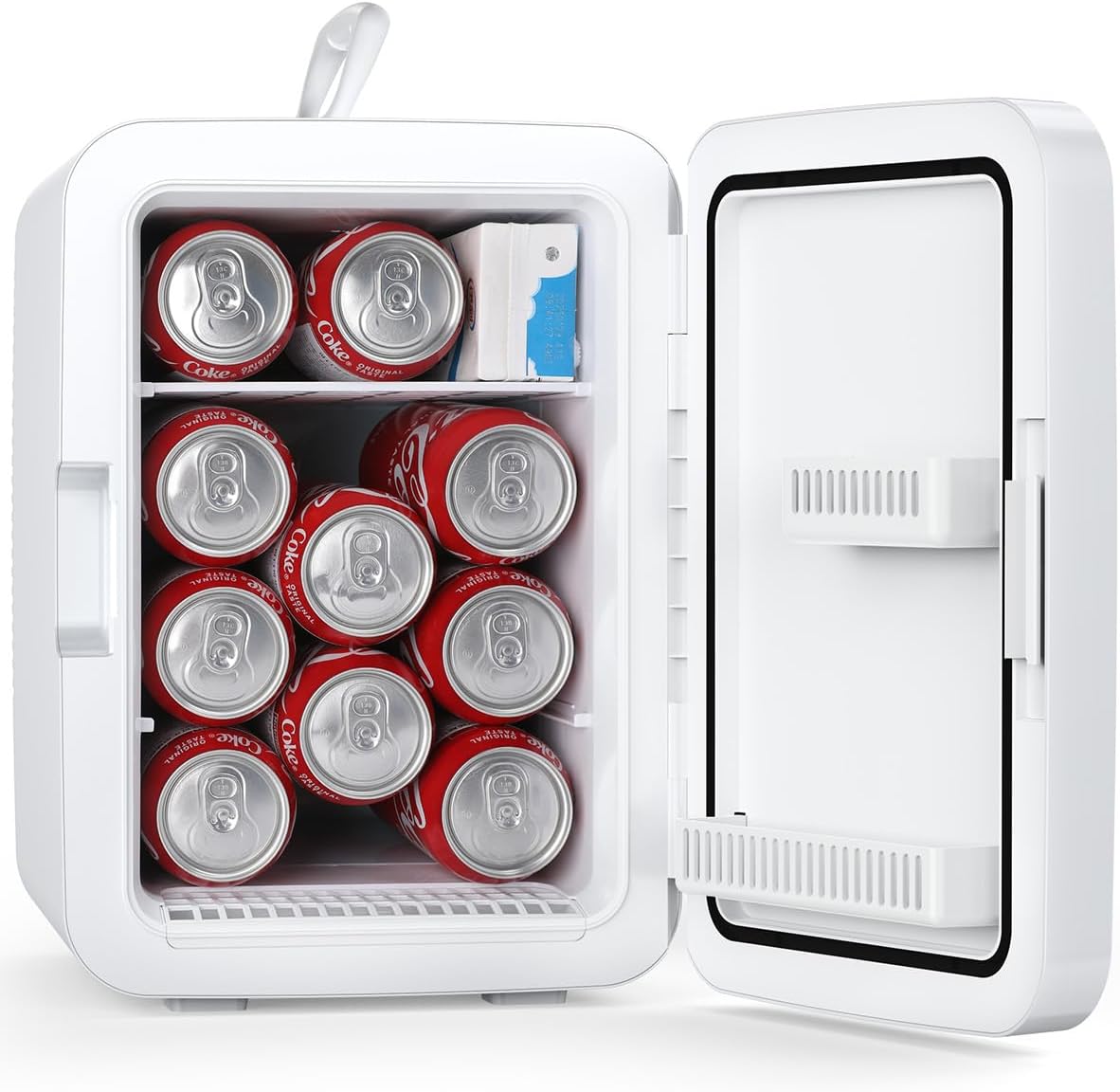
This 10L Antarctic Star mini fridge is a lightweight, freestanding cooler aimed at keeping a few drinks or skincare items chilled in small spaces. It uses thermoelectric cooling (no compressor) and can run from a household AC outlet or a 12V car socket, so you can use it on a dorm desk, in a car, or on a countertop. The removable shelf and two internal racks let you organize cans, small bottles, or jars, and the manufacturer claims it can reach about 32°F below ambient in stages over a few hours. It is ETL listed, rated for low noise operation, and listed annual energy use is 100 kWh, which helps with modest electricity bills. Expect limited capacity—this is truly a personal cooler not a full refrigerator—and thermoelectric systems cool more slowly and are less effective in hot rooms than compressor units. The manual defrost and plastic door mean basic construction but easier upkeep. For someone prioritizing portability, quiet operation, and simple cooling for dorm or personal use, this mini fridge is a practical budget choice.
Best for: Buyers who want a no‑frills, portable cooler for a dorm room, desk, or travel and prioritize quiet, energy‑lean operation and easy placement over large capacity.
Less Ideal for: Anyone needing full-size refrigeration, rapid cooling of large quantities, or reliable performance in hot rooms should choose a compressor mini fridge or larger unit instead.
- Very compact 10L capacity fits on desks and shelves
- Can run on AC or 12V DC power for dorm, car, or travel use
- Thermoelectric cooling provides quiet operation
- Removable shelf and multiple racks let you organize small items
- Thermoelectric cooling is slower and less effective in hot environments compared with compressor fridges
- Very limited storage volume suitable only for a few drinks or cosmetics
Verdict: A compact, quiet, energy‑lean personal cooler that delivers practical dorm‑room chilling and portability at a budget price.
Frestec 1.7 Cu Ft Mini Fridge

| Capacity | 1.7 cubic feet |
|---|---|
| Freezer Capacity | 0.2 cubic feet |
| Defrost System Type | Manual |
| Cooling Method | Compressor |
| Voltage | 115 volts |
This compact Frestec mini fridge is built for dorms, bedrooms, and offices where space and cost matter. It offers 1.7 cu ft total capacity with a 0.2 cu ft top freezer, a single removable glass shelf and three door bins so you can store drinks, snacks, and a few perishables. Cooling is compressor-based and temperature is adjusted with a 0–6 thermostat knob; manual defrosting is handled via a one-touch defrost control. The unit is freestanding, has a reversible door and adjustable feet to fit small layouts, and runs quietly at about 37 dB. Practical perks include a small interior light and low daily energy use reported around 0.55 kWh. Expect some limits: the freezer is tiny, manual defrost requires occasional maintenance, and the modest internal volume restricts bulk groceries. For tight quarters where affordability and basic refrigeration are the priority, this fridge covers essentials without extra frills.
Best for: Buyers seeking the cheapest practical refrigerator for a dorm room or small apartment who prioritize compact size, quiet operation, and low ongoing energy use.
Less Ideal for: Those who need significant frozen storage, large-capacity refrigeration for meal prep, or hands-off auto-defrost convenience should consider larger or higher-end models.
- Very compact footprint fits under desks or in small dorm rooms
- Includes a usable top freezer for ice and small frozen items
- Compressor cooling gives steady temperatures compared with thermoelectric units
- Reversible door and adjustable feet simplify placement in tight spaces
- Relatively quiet operation around 37 dB and low daily energy use
- Freezer capacity is very small and not suitable for bulk freezing
- Defrost system is manual so occasional maintenance is required
- Limited internal shelving reduces flexibility for taller items
Verdict: A no-frills, space-saving mini fridge that delivers reliable compressor cooling and low energy use for budget-conscious dorm or apartment living.
Midea Compact Refrigerator WHS-65LB1

| Capacity | 1.6 cubic feet |
|---|---|
| Annual Energy Consumption | 207 kilowatt hours per year |
| Defrost System Type | Automatic |
| Door Orientation | Reversible |
| Cooling Method | Compressor |
The Midea 1.6 cu ft compact refrigerator is a straightforward dorm- and office-friendly mini fridge that focuses on reliable daily cooling rather than bells and whistles. It uses an R600A compressor and is ENERGY STAR certified, so it runs efficiently and keeps annual energy use low. The unit has a small internal chiller compartment for quick cooling, one removable shelf for flexible storage, generous door racks sized for bottles and a 2 L rack, and a reversible door to fit different room layouts. Controls are mechanical and simple to use, with multiple temperature settings that reach as low as the mid-30s Fahrenheit. Practical benefits include quiet operation under 42 dB, easy maintenance with a removable shelf, and a compact footprint that fits tight dorm rooms. Limitations are inherent to its size: storage capacity is limited to a few beverages and small food items, the chiller is only for short-term cooling and will not freeze heavy items, and there are no advanced features like a digital thermostat or frost-free wide freezer. For buyers prioritizing dependable, energy-efficient cooling in a small package, this is a sensible choice.
Best for: Buyers who want a no-frills, energy-efficient mini fridge for a dorm room or small living space and value quiet, dependable cooling over extra features.
Less Ideal for: People who need significant frozen storage, large-capacity refrigeration, or digital/advanced controls should look at larger compact models instead.
- ENERGY STAR certified with low annual energy consumption (207 kWh/year)
- Reversible door and removable shelf for flexible placement and storage
- Quiet operation under 42 dB suitable for dorms and bedrooms
- Simple mechanical thermostat with multiple temperature settings
- Very limited interior capacity suitable only for beverages and small items
- Chiller compartment is for short-term cooling and cannot freeze or store heavy frozen foods
Verdict: A reliable, energy-efficient mini fridge built for quiet, everyday dorm and small-space use where compactness and low running costs matter most.
Cooluli Classic 4L Mini Fridge

| Capacity | 4 liters |
|---|---|
| Cooling Method | Thermoelectric |
| Power Source | AC/DC/USB |
| Voltage | 110 volts |
| Number Of Shelves | 2 |
The Cooluli Classic 4L is a compact thermo-electric cooler and warmer that holds about six cans or small skincare items and runs on AC, DC, or USB power. It cools roughly 20°–22°C (35°–40°F) below ambient and warms up to about 149°F, so it works for drinks, snacks, medications, and cosmetics. The unit is very lightweight with a molded handle, two wire shelves, and a one-switch mode change for cooling or warming, making it easy to move between dorm rooms, cars, and desks. Thermo-electric cooling is quiet and environmentally friendly because it uses no refrigerants, but it cannot reach deep-freeze temperatures and cooling performance depends on room temperature. The Classic includes AC and DC cords plus a USB cable for flexible power options, and its small footprint fits on most counters. Expect limited capacity and modest cooling compared with compressor mini fridges, so plan storage around small items rather than full meals.
Best for: Buyers who want an inexpensive, ultra-portable mini fridge for dorm rooms, desks, or car trips and value quiet operation and flexible power options backed by lots of user feedback.
Less Ideal for: People who need freezer temperatures, large-capacity cold storage, or consistent compressor-level cooling for perishable meals should look at larger compressor mini fridges instead.
- Very portable and lightweight with a built-in handle for easy transport
- Dual-mode cooling and warming with a simple switch
- Multiple power options: AC, DC, and USB for use at a desk, in a car, or on the go
- Quiet thermo-electric operation that uses no refrigerants
- Small 4-liter capacity limits what you can store
- Thermo-electric cooling is less powerful than compressor models and depends on ambient temperature
Verdict: A lightweight, budget-friendly portable mini fridge that’s ideal for dorm desks and travel when you need quiet, flexible cooling and warming for small items.
EUHOMY WC-6B Mini Fridge

| Capacity | 18 liters |
|---|---|
| Temperature range | 40°F to 61°F |
| Cooling method | Compressor |
| Voltage | 115 volts |
| Installation Type | Freestanding |
The EUHOMY WC-6B is a small compressor-driven mini fridge designed to hold cans and a few bottles on a countertop or in a dorm room. It cools between about 40°F and 61°F using a quiet compressor system, so it maintains a stable temperature better than many thermoelectric units and can keep drinks consistently chilled. Controls are digital and straightforward, and the interior includes a removable shelf to switch between cans and taller bottles, plus an internal LED light and a UV-protective door that helps reduce light exposure. At roughly 0.6 cubic feet it fits on tight surfaces and is light enough to move when needed. Expect basic manual defrosting and only a single door orientation, and the capacity is limited to about two dozen cans, so it is not suited for bulk storage. For a budget-conscious buyer wanting reliable compressor cooling and simple operation in a small space, this model covers the essentials without extra frills.
Best for: Someone furnishing a dorm room or small personal space who prioritizes a reliable, quiet mini fridge with compressor cooling and simple controls over larger capacity or advanced features.
Less Ideal for: If you need to store many beverages, larger bottles, or frozen food items, choose a larger-capacity refrigerator instead.
- Compressor cooling provides more stable temperatures than many thermoelectric mini fridges
- Digital temperature control with a 40°F–61°F range for predictable chilling
- Removable shelf allows switching between cans and taller bottles
- Operates quietly (advertised under 40 dB) suitable for dorm or bedroom use
- Very small capacity suitable for only a couple dozen cans or a few bottles
- Manual defrost means occasional maintenance to prevent frost buildup
Verdict: A compact, budget-friendly compressor mini fridge that gives dorm residents quiet, stable cooling in a very small footprint.
Choosing the Right Budget Mini Fridge for Dorm: Key Factors to Consider
Size and Footprint
Dorm rooms are typically tight on floor space and may have alcoves or shelving with limited clearance. Measure the intended spot before buying and allow extra room behind the unit for ventilation and the power cord. Consider not only width and height but depth with the door open to ensure drawers or shelving nearby are not blocked.
A lower-height, narrower cabinet often fits beneath a desk or in a closet shelf. If you plan to stack a microwave on top, confirm the fridge top is rated to support additional weight and that vents are not obstructed.
Internal Capacity and Organization
Gross liter or cubic-foot ratings do not tell the whole story. Look at shelf spacing, whether shelves are removable, and whether the door has bottle storage sized for tall drinks. A small dedicated freezer compartment can be useful for ice trays and frozen meals but reduces refrigerated space.
Think about what you store most: soda cans, meal-prep containers, fresh produce, or frozen entrees. Adjustable shelving and a roomy door bin increase day-to-day flexibility and make the fridge more useful over time.
Energy Use and Running Cost
A dorm budget fridge runs continuously, so energy efficiency directly affects monthly electricity costs. Check the unit's wattage or energy consumption estimate. Models with good insulation and efficient compressors tend to use less power. Thermoelectric designs may be quieter but can be less efficient in warmer rooms.
Even small differences in annual kilowatt-hours add up over a school year. If your dorm charges for electricity usage or if you want to minimize environmental impact, prioritize lower-rated energy consumption and look for clear energy documentation.
Noise and Vibration
Dorm rooms often double as study and sleep spaces, so audible operation matters. Compressor-based fridges are common and can be quiet, but some run cycles are noticeable. Look for user noise specifications where available and seek designs with vibration-damping feet or quieter compressors.
If you are sensitive to sound, lean toward models noted for low decibel ratings or that use more passive cooling features. Placing a fridge on a solid, level surface reduces rattling and prolongs compressor life.
Durability and Serviceability
A budget fridge still needs to survive a semester or several years of student use. Robust door hinges, quality seals, and a finish that resists scratches matter. Removable shelves and a simple interior make cleaning easier when spills happen.
Also consider warranty length and the availability of basic replacement parts like door gaskets. A fridge that is easy to service or that uses common components can save time and hassle if repairs are needed.
Practical Features and Safety
Small conveniences can make a big difference in daily use. Reversible doors allow flexible placement. A separate thermostat or temperature control knob helps keep food at safe temperatures. Interior lighting, adjustable feet, and a moisture-resistant finish are useful extras.
Safety features like a secure locking mechanism for shared rooms and clear labeling for cleaning instructions matter. Avoid models with hidden vents that are hard to clean because clogged pathways impair cooling efficiency.
Sizing Tips for Dorm Room Layouts
Before buying, map out the exact spot where the fridge will sit. Measure height, width, and depth and note nearby obstacles such as doors, radiator covers, beds, or shelving. Allow at least a couple of inches of clearance behind the unit for airflow and a few inches above if you plan to store items on top.
If you expect to put a microwave on top, confirm that the fridge top can bear the weight and that vents remain unobstructed. Also consider whether the door swing conflicts with adjacent furniture; reversible doors add placement flexibility.
- Measure depth with the door open to check clearance.
- Leave space behind for ventilation and cord routing.
- Choose reversible doors if placement is uncertain.
Maximizing Storage in a Small Fridge
Arrange items to take advantage of door bins for tall bottles and use stackable containers to conserve shelf space. Remove packaging from bulk items to reduce wasted volume. Small modular bins can keep produce separate and help you find snacks quickly.
If the unit has a convertible shelf or a small freezer, use the freezer for ice packs and single-serve frozen meals, and keep perishable items in the main compartment organized by frequency of use to avoid repeatedly opening the door.
- Use stackable containers and slim storage bins.
- Store tall bottles in the door and flat items on shelves.
- Designate one shelf for ready-to-eat items to reduce door openings.
Managing Noise and Electrical Limits
Check your dorm's policy on appliance wattage and shared circuits. Some residence halls limit what can be plugged into single outlets. Using an outlet near the desk may provide convenience but can overload circuits if multiple devices run at once. A low-wattage fridge reduces that risk.
To reduce noise transfer, place the fridge on a solid, level surface and add a thin anti-vibration pad if necessary. Keep the unit away from walls that amplify sound and avoid placing it directly under a bed.
- Confirm outlet availability and circuit limits in your dorm room.
- Use a level surface and anti-vibration pads to minimize rattling.
- Avoid stacking noisy appliances directly on the fridge.
Cleaning and Maintenance Basics
Regular cleaning extends the life of a small fridge and keeps food safe. Wipe spills immediately, defrost the freezer compartment as needed, and clean door gaskets to maintain a good seal. Remove shelves for thorough cleaning and dry components before reassembling.
Check vents and coils for dust buildup and vacuum gently if accessible. Follow the manufacturer's basic maintenance guidance to avoid voiding warranty protections.
- Wipe up spills promptly and clean removable shelves regularly.
- Defrost small freezers occasionally to maintain cooling efficiency.
- Keep vents free of dust to prevent overheating.
Energy-Saving Habits for Dorm Fridges
Small behavioral changes reduce running costs. Keep the door closed as much as possible and let hot foods cool to room temperature before placing them inside. Set the thermostat to a moderate setting that keeps food safe without overcooling empty space.
Avoid overpacking the fridge because poor airflow increases compressor runtime. If your unit includes a power-saving mode or eco setting, use it when ambient temperatures are moderate.
- Do not place hot items directly into the fridge.
- Keep the thermostat at a steady, moderate setting.
- Avoid blocking internal vents and allow airflow between items.
How We Chose the Best Budget Mini Fridge for Dorm
We focused on attributes that matter specifically for dorm-room use and budget-oriented buyers. Primary evaluation criteria included usable internal capacity and shelf layout, because how you can organize bottles and food determines daily convenience. Energy efficiency and estimated running cost were assessed to keep electricity use low on student budgets. Noise level and compressor or thermoelectric design were considered to ensure the unit will not disturb study or sleep. Build quality and simple controls were evaluated so the fridge holds up through a school year and is easy to operate. Finally, safety and basic features like reversible doors, a separate freezer compartment, and easy-to-clean interiors were part of the filters. We excluded large or full-size refrigerators, specialty beverage coolers that lack food storage, and units meant exclusively for outdoor use. We also filtered out models with very limited warranty protections or poorly documented energy information. The final shortlist reflects a balance of measured capacity, reasonable energy draw, quiet operation, practical internal layout, and straightforward durability for dorm living.
Our full evaluation process is outlined in our review methodology.
FAQ
What size mini fridge is best for a typical dorm room?
For most dorm rooms, a unit between 1.7 and 3.5 cubic feet balances compact footprint and usable storage. Choose based on how many beverages and fresh items you plan to keep and the available floor or shelf space.
Will a dorm mini fridge be noisy at night?
Noise varies by design and model. Many small compressor fridges run quietly, but some produce noticeable cycling sounds. Look for low noise specifications and place the unit on a stable surface to reduce vibration.
Can I put a microwave on top of a mini fridge?
Some fridges have tops rated to support a microwave, but you should confirm the manufacturer's guidance. Ensure vents are not blocked and that the combined weight does not strain the fridge structure.
How much power does a dorm mini fridge use?
Small fridges typically use far less power than full-size units, but exact consumption depends on efficiency and ambient temperature. Check the wattage or annual kilowatt-hour estimate to compare running costs.
Do mini fridges need regular defrosting?
If the unit has a manual freezer compartment, occasional defrosting prevents ice buildup that reduces efficiency. Frost-free models handle defrosting automatically but may be slightly more complex and costlier to run.
Is a thermoelectric mini fridge a good dorm choice?
Thermoelectric models are often quieter and lighter but can be less efficient in warm rooms and may struggle to keep very cold temperatures. They can work well in cooler dorms or for short-term beverage chilling.
Final Verdict
When choosing a budget mini fridge for a dorm, prioritize the combination of usable internal layout, energy efficiency, and quiet operation. Measure your space first, then match a unit that offers adjustable shelving, adequate door storage, and a small freezer if you need it. Expect tradeoffs between capacity and footprint and between noise and cooling power. Focus on units that document energy use, provide solid seals, and offer simple maintenance. With those priorities in mind, you can confidently pick a compact fridge that stays within a student budget while meeting daily storage and convenience needs.