
Note: This article contains affiliate links. If you click on these links and make a purchase, we may earn a small commission at no extra cost to you. This helps support our research and content. Read our full affiliate disclosure here.
Choosing the right built-in electric cooktop matters because it determines how evenly your food cooks, how simple the surface is to maintain, and how the unit integrates with your kitchen layout. Whether you cook daily family meals or entertain occasionally, the right cooktop affects speed, consistency, and safety. This guide shortlists the top options for built-in electric cooktops and evaluates the features that matter most to homeowners. Below we cover models that balance heat consistency, control ergonomics, surface durability, and installation considerations. Read on to see the evaluation criteria used and the practical tradeoffs to weigh before you pick a cooktop.
Top Picks at a Glance
| Best Overall The best all-around choice for most situations | Amzgachfktch 30" Electric Cooktop |  |
| Best Quality Built to a higher standard if you want something more solid | Cooksir 30-Inch Electric Cooktop |  |
| Best Value The sweet spot between price and what you get | AMZCHEF 30" Electric Cooktop |  |
| Best Budget The cheapest option that still gets the job done reliably | VBGK 12-Inch 2-Burner Electric Cooktop |  |
| Top Rated A top-rated pick with lots of positive feedback | Frigidaire 30-Inch Electric Cooktop |  |
| Most Popular A crowd favorite that many people choose with confidence | Karinear 30-Inch Electric Cooktop | 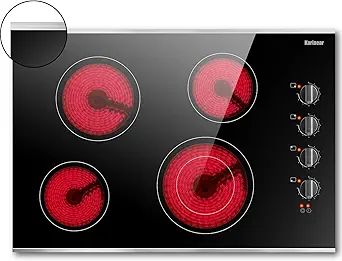 |
| Best Seller A high-volume bestseller chosen again and again | Karienvir 24" 2-Burner Electric Cooktop |  |
Amzgachfktch 30" Electric Cooktop

| Number of Heating Elements | 5 |
|---|---|
| Wattage | 9000 watts |
| Control Type | Knob |
| Heater Surface Material | Glass Ceramic |
| Installation Type | Drop-In |
This 30-inch Amzgachfktch electric cooktop is a built-in glass-ceramic radiant hob designed for straightforward everyday cooking. It offers five heating zones including a triple-ring center burner that expands to match cookware from small saucepans up to large pots, and the full 9000W system provides nine power levels across burners so you can simmer, boil, and sear without juggling multiple appliances. Controls are simple mechanical knobs, which suit users who want tactile, no-frills operation; safety is addressed with hot-surface indicators and an automatic shut-off. The ceramic surface cleans quickly and accepts all flat-bottom cookware, including non-magnetic pans, making it easy to switch from coil or induction. Important practical limits are that it requires 220V hardwiring and proper circuit sizing, and the glass-ceramic surface still needs care to avoid scratches or impact damage. For kitchens needing a capacious, visually low-profile built-in cooktop with flexible burner sizing, this model fits the bill.
Best for: Buyers who want a capable, no-frills built-in electric cooktop that balances power, flexible burner sizing, and easy cleaning for everyday multi-pot cooking.
Less Ideal for: Homes without a 220V circuit or buyers who need a cooktop with touch controls, induction-level efficiency, or extremely durable impact-resistant surfaces.
- Triple-ring expandable center burner adapts to cookware sizes from small saucepans to large pots
- Five burners and 9000W total power provide flexible heat distribution and faster boil times
- Glass-ceramic surface accepts all flat cookware, including non-magnetic pans, and wipes clean
- Simple knob controls with hot-surface indicators and automatic shut-off improve usability and safety
- Requires 220V hardwired installation and correct circuit capacity, which may need an electrician
- Glass-ceramic top can scratch or crack if struck and is less impact-resistant than some alternatives
Verdict: Choose this cooktop if you want a powerful, easy-to-clean built-in electric surface with an adaptable triple-ring burner for versatile everyday cooking.
Cooksir 30-Inch Electric Cooktop
| Number of Heating Elements | 4 |
|---|---|
| Additional Features | Automatic Shut-Off, Downdraft Exhaust, Hot Surface Indicator, Safety Lock, Timer |
| Heating Element | Radiant |
| Wattage | 7400 watts |
| Voltage | 220 volts_of_alternating_current |
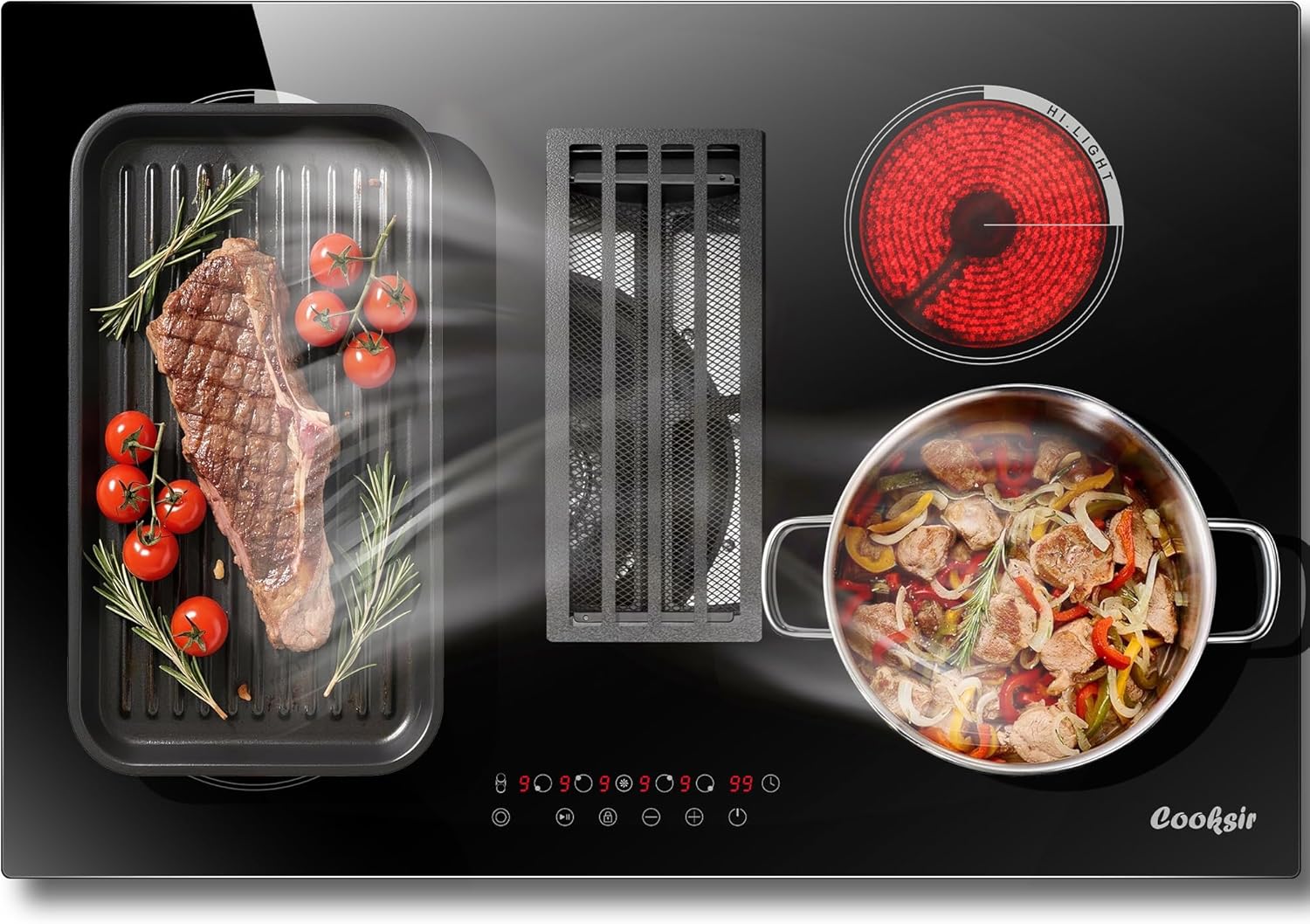
This Cooksir 30-inch cooktop pairs a glass-ceramic radiant surface with a built-in ductless downdraft, giving you a combined cooktop and venting solution for kitchens where routing ductwork is difficult. It offers four heating zones including a dual-ring burner for variable heat and a high-output bridge-style burner for large pans, which makes searing and high-heat cooking fast and responsive. Controls are touch-based and include a timer, safety lock, residual-heat indicators and an automatic shutoff for safer everyday use. The downdraft recirculating system filters fumes and returns air to the room, so you do not need an external vent, though suction is powered by a modest 135W blower rather than a full ducted hood. Installation is drop-in style for standard 30-inch openings and the unit runs on 220V hardwired power. Expect strong surface heating and space-saving integration, but plan for recirculation limits compared with ducted ventilation and for a fixed built-in electrical requirement.
Best for: Buyers who prioritize strong surface performance and a sleek, space-saving built-in that avoids running external ductwork for kitchens where a ducted hood is impractical.
Less Ideal for: Home cooks who need maximum venting power for heavy wok or high-smoke cooking or anyone who cannot accommodate a 220V hardwired installation should consider alternatives.
- Integrated ductless downdraft removes need for external ducting
- High total cooktop power with a high-output bridge burner for fast heating
- Dual-ring burner offers flexible heat control for different pan sizes
- Touch controls with timer, child lock and residual-heat indicators improve safety and precision
- Recirculating downdraft cannot match the extraction capacity of a ducted range hood
- Requires 220V hardwired connection and professional installation
Verdict: Choose this built-in if you want high-output electric surface cooking with a built-in recirculating downdraft to save space and avoid external ductwork.
AMZCHEF 30" Electric Cooktop

| Number of Heating Elements | 4 |
|---|---|
| Wattage | 7000 watts |
| Voltage | 240 volts |
| Heating Element | Radiant |
| Heater Surface Material | Glass Ceramic |
This AMZCHEF 30" electric cooktop is a straightforward built-in radiant cooktop aimed at everyday cooking. It has four burners arranged with reasonable spacing and independent knob controls so you can run multiple pots at once; two smaller 1200W elements and two larger 2300W elements combine for a stated 7000W maximum to cover simmering, boiling, and searing. The glass ceramic top cleans easily and the unit includes safety features such as overheating protection, hot-surface indicators, and pan detection that make unattended cooking less risky. Installation requires a 240V connection and the controls are purely mechanical knobs, which are simple and durable but lack timers or digital precision. The cooktop accepts any flat-bottom cookware, so you do not need specialty pans. Trade-offs are the basic control scheme and limited smart features, and buyers should factor in professional cutout sizing for a flush fit; otherwise it performs like a practical, no-frills built-in surface for kitchens that need reliable multi-burner capability.
Best for: Buyers who prioritize straightforward, reliable built-in cooking power and easy cleanup will appreciate this cooktop for everyday multi-burner tasks and meal prep efficiency.
Less Ideal for: If you want smart features, touch controls, or precise digital temperature settings, choose a model with electronic controls instead.
- Four independent burners with mixed power sizes for simultaneous multi-pot cooking
- Glass ceramic surface that wipes clean and looks integrated when installed
- Safety features including overheating protection, hot-surface indicator, and pan detection
- Simple knob controls that are easy to operate and repair
- No digital controls, timers, or precise temperature presets
- Requires 240V hardwired installation which may need an electrician
Verdict: A practical, no-frills 30-inch built-in cooktop that delivers reliable multi-burner performance and easy cleaning for kitchens that value straightforward functionality.
VBGK 12-Inch 2-Burner Electric Cooktop
| Number of Heating Elements | 2 |
|---|---|
| Wattage | 2100 watts |
| Power Source | Corded Electric |
| Control Type | Touch |
| Installation Type | Built-in and countertop |
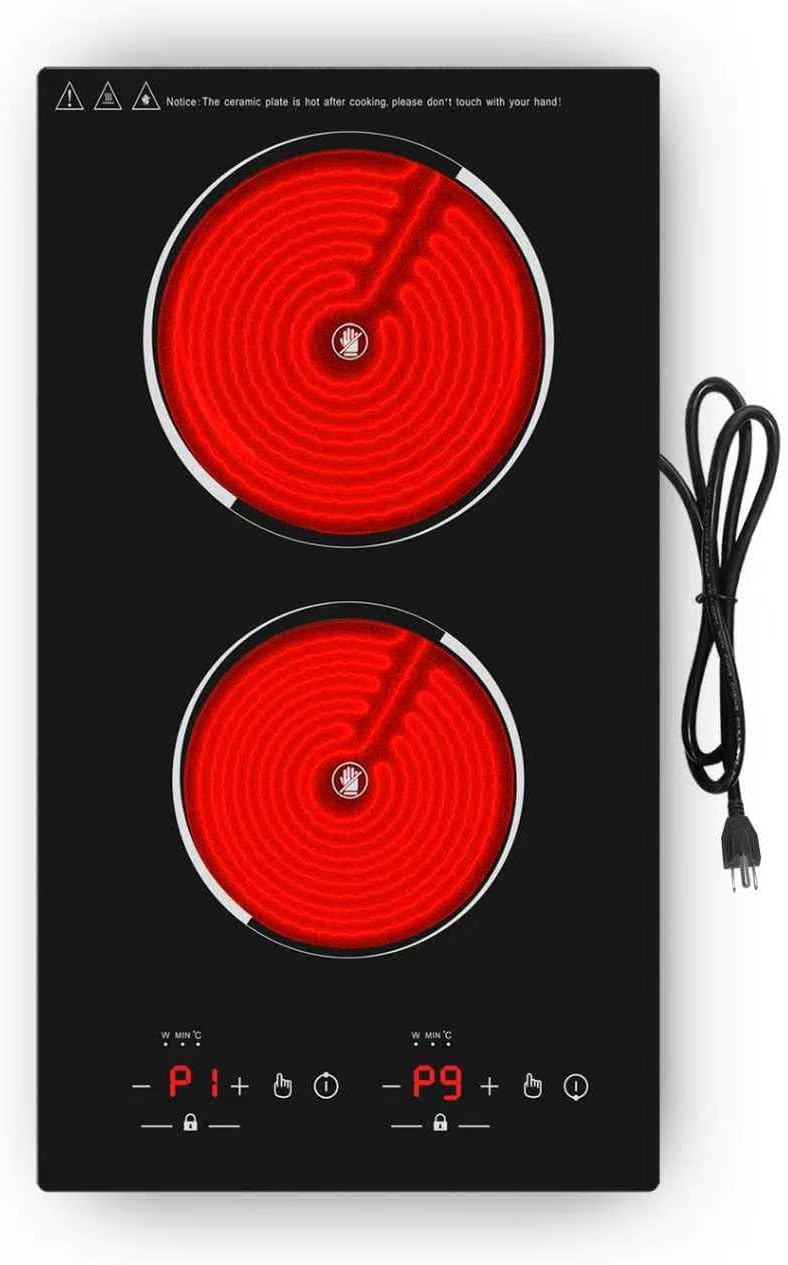
The VBGK 12-inch two-burner electric cooktop packs a lot of capability into a small unit intended for built-in or countertop use. It offers two independent radiant zones (1200W and 900W) with sensor touch controls, 9 power levels and up to 120 minutes of timer control so you can simmer, boil, fry, or keep food warm without standing over the stove. The smooth glass ceramic surface wipes clean easily and the cooktop includes child lock, auto-shutoff and overheat protection for safer daily use. Installation is straightforward for a 110–120V kitchen and the low-profile design saves countertop space. Be aware this model is a radiant electric plate rather than true induction, so it heats cookware by direct surface contact and can be slower to change temperature than induction cooktops, and it requires flat-bottomed pots for best results. For buyers prioritizing an affordable built-in look with decent heat control and safety features, this is a practical, space-saving option.
Best for: Buyers who want a compact, affordable built-in-style cooktop that prioritizes space savings, basic precision control, and household safety over the fastest heating technology.
Less Ideal for: Cooks who need rapid temperature changes, highest energy efficiency, or induction-level responsiveness should consider induction models instead.
- Two independent heating zones let you cook different dishes at once
- Sensor touch controls with 9 power levels and 120-minute timer for flexible temperature and time control
- Glass ceramic surface is easy to clean and resists scratches
- Built-in and countertop installation options save space and add versatility
- Safety features include child lock, auto shut-off and overheat protection
- Radiant heating rather than induction means slower temperature response and less energy efficiency
- Requires flat-bottomed cookware and direct contact for best performance
Verdict: A budget-friendly, space-saving built-in cooktop that delivers reliable two-zone electric cooking with useful safety and timer features.
Frigidaire 30-Inch Electric Cooktop

| Number of Heating Elements | 4 |
|---|---|
| Power Source | Corded Electric |
| Additional Features | 3,000W Quick Boil Element, SpaceWise Expandable Element, Hot Surface Indicator, Ready-Select Controls |
| Installation Type | Drop-In |
| Voltage | 240 volts |
This Frigidaire 30-inch smooth-top cooktop is a straightforward built-in electric cooktop aimed at everyday kitchen use. It features four radiant heating elements including a 3,000W quick boil element and a SpaceWise expandable element that adapts to different pot sizes, and Ready-Select knob controls make temperature adjustments simple. The glass-ceramic surface gives a seamless look and is easy to wipe clean, while hot-surface indicators improve safety by showing when zones remain hot. Installation is drop-in style for a flush, frameless appearance that suits modern kitchens. Practical benefits include fast boil power on one zone, flexible cooking area for larger cookware, and clear visual cues for residual heat. Limitations are that it uses standard knob controls rather than digital precise settings and radiant elements do not offer the instant on/off responsiveness of induction, so temperature changes are slower. It is a reliable, no-frills cooktop that prioritizes familiar operation and straightforward maintenance.
Best for: Buyers who want a proven, easy-to-use built-in electric cooktop that emphasizes straightforward operation, safety indicators, and low-maintenance ceramic surface for everyday cooking.
Less Ideal for: If you need rapid, highly responsive temperature control or the highest energy efficiency for professional-style cooking, an induction cooktop or commercial range would be a better choice.
- Includes a 3,000W quick boil element for faster heating on high-demand tasks
- SpaceWise expandable element adapts to different pot sizes for flexible cooking
- Glass-ceramic surface is easy to clean and provides a frameless built-in look
- Hot-surface indicators enhance safety by showing residual heat
- Radiant elements respond slower to temperature changes compared with induction
- Controls are basic knobs without digital precision settings
Verdict: A reliable, easy-to-clean built-in electric cooktop that delivers strong boil power and flexible element sizing for dependable everyday cooking.
Karinear 30-Inch Electric Cooktop

| Number of Heating Elements | 4 |
|---|---|
| Control Type | Knob |
| Installation Type | Built-In |
| Voltage | 240 volts_of_alternating_current |
| Wattage | 6700 watts |
This Karinear 30-inch cooktop is a drop-in radiant electric hob designed for straightforward everyday cooking. It has four cooking zones with a dual/expandable burner and nine knob-controlled power settings, which makes it easy to dial in low simmer or high-heat stir-frying without navigating touch menus. The glass-ceramic surface wipes clean when cool and the added metal frame provides extra edge protection against impacts. Safety features include residual-heat indicators and automatic over-temperature shutoff, and the unit is intended for hard-wired 220–240V installation. On the downside it requires professional wiring (no plug) and the knobs and radiant elements respond more slowly than induction for rapid temperature changes. For buyers who value simple physical controls and a classic ceramic surface, it delivers predictable performance, but those wanting faster heat response or plug-and-play installation should look elsewhere.
Best for: Buyers who prioritize straightforward, tactile controls and a durable ceramic surface for built-in kitchen installs and who prefer appliances with visible safety features and established user feedback.
Less Ideal for: Anyone seeking the fastest heat control or a plug-in countertop solution should consider induction or portable electric options instead.
- Four burners with a dual expandable zone for flexible cooking layouts
- Simple knob controls with nine power levels per burner for easy, intuitive use
- Glass-ceramic surface that is easy to wipe clean
- Built-in safety features including residual-heat indicators and automatic shutoff
- Protective metal frame around the glass to reduce risk of edge damage
- Requires 220–240V hard-wired installation, no standard plug included
- Slower heat response compared with induction cooktops
Verdict: A practical built-in ceramic cooktop for buyers who want simple knob operation, a protected glass surface, and reliable safety features.
Karienvir 24" 2-Burner Electric Cooktop

| Number of Heating Elements | 2 |
|---|---|
| Voltage | 110 volts_of_alternating_current |
| Wattage | 2000 watts |
| Control Type | Touch |
| Heater Surface Material | Tempered Glass |
This 24" Karienvir two-burner electric cooktop is a plug-in 110V unit designed for both drop-in and countertop use, offering a tempered glass cooktop with two radiant heating zones and touch controls. It is typically used where a simple built-in cooktop is needed but full 240V wiring is not available, or as a portable secondary stove for small kitchens, apartments, and occasional extra cooking. The unit provides eight preset cooking modes plus a timer up to 240 minutes and a child safety lock, which make repeatable results and safe unattended use easier. Power management limits total draw to 2000W and dynamically shifts output between burners so you can run both without tripping a standard circuit, though the smaller right burner is limited to lower maximum power when both burners run. The glass surface cleans easily but requires caution with heavy pans and impact. Installation is straightforward for a drop-in cutout and the included plug avoids hardwiring, but buyers expecting high-output professional performance should note the 110V/2000W cap.
Best for: Buyers who want a straightforward, safe built-in-style cooktop for kitchens without 240V wiring or for small-space cooking and who prioritize easy installation and predictable, low-risk operation.
Less Ideal for: Users who need high continuous power for professional-style cooking or those wanting a heavy-duty cooktop for large households and frequent high-heat use should consider higher-voltage models instead.
- Plug-and-play 110V design for easy installation without hardwiring
- Tempered glass radiant surface that cleans easily and looks integrated when dropped in
- Touch controls with 8 cooking modes and a 240-minute timer for precise, repeatable cooking
- Safety lock and automatic shut-off for added protection around children and pets
- Dynamic power distribution lets both burners run without exceeding a standard 110V circuit limit
- Total 2000W power limit reduces maximum simultaneous output compared with 240V built-in cooktops
- Glass surface is attractive but can be vulnerable to heavy impact or rough cookware
Verdict: Choose this model if you need a safe, easy-to-install 110V built-in-style cooktop that delivers predictable performance for everyday small-kitchen cooking.
Choosing the Right Built-In Electric Cooktop: Key Factors to Consider
Heat Consistency and Evenness
How uniformly a cooktop distributes heat across its burners or zones is central to predictable cooking. Uneven heat forces you to move pans or chase hot spots, which complicates tasks like simmering sauces or searing meat. Look for cooktops with well-engineered heating elements or induction-style zones that maintain stable temperatures under load.
Heat consistency also affects energy efficiency. A surface that holds steady requires fewer corrections and shorter overall cook times, which matters for both everyday use and more involved recipes. Consider how many different power levels the controls support and whether the cooktop can sustain low-simmer settings without fluctuation.
Control Layout and Responsiveness
Controls should be intuitive and repeatable so you can set and return to familiar settings. Physical knobs provide tactile feedback and quick adjustments, while touch or slider controls offer fine-grain increments and a clean aesthetic. Evaluate whether the layout groups frequently used burners logically and whether markings are legible when viewed from common cooking positions.
Responsiveness matters for timing and safety. Controls that lag or overshoot make it harder to maintain simmer or quickly drop heat in a pinch. Also consider whether controls allow for precise low-heat settings, which are important for delicate tasks like melting chocolate.
Surface Material and Ease of Cleaning
The cooktop surface type determines how easy it is to wipe away spills and how resistant the surface is to scratches and staining. Smooth glass-ceramic or induction surfaces wipe clean with minimal effort but can be vulnerable to abrasive cleaners and heavy impacts. Coil or sealed-element surfaces may hide spills but can accumulate grime in crevices.
Think about your typical cooking habits. Frequent high-heat frying creates more splatter, so surfaces that tolerate quick cleaning without special tools are advantageous. Also check for design features like raised edges or smooth transition zones that reduce trapped debris and simplify routine maintenance.
Installation Requirements and Fitment
Built-in cooktops must match countertop cutouts and local electrical service to avoid costly rework. Verify cutout dimensions, mounting options, and required clearances for ventilation and cabinetry. Electrical specs are critical: some cooktops need single- or multi-phase connections, dedicated circuits, or specific amperage ratings.
Consider how the cooktop will integrate with adjacent countertops, trim pieces, and downdrafts or ventilation hoods. If you plan to replace an existing unit, review whether the new cooktop fits the same cutout or if modifications will be necessary. Professional installation may be required for some electrical or structural changes.
Safety Features and Indicators
Built-in electric cooktops should include clear safety indicators and protections to reduce burn risks and accidental operation. Residual-heat indicators show which zones remain hot after use; automatic shutoff can disable a zone left on unintentionally; and child-lock features prevent accidental activation.
Safety considerations also extend to surface cooling behavior and the presence of bridgeable zones for larger cookware. Confirm how fast zones cool and whether indicator lights are visible from typical working positions. These features lower the chance of accidental burns and make the cooktop safer for households with children or elderly users.
Power and Burner Variety
A mix of high-power and simmer burners increases versatility. High-wattage zones are useful for rapid boiling and searing, while low-power zones provide steady low-heat for sauces and delicate work. Some cooktops offer expandable or bridged zones to accommodate larger pans and griddles, which adds flexibility without sacrificing individual burner control.
Assess how many burners you actually use at once versus the total available. More burners offer multitasking but may complicate control layouts. Consider the maximum power per zone and whether the cooktop supports power-sharing if multiple zones are used at high settings simultaneously.
Common Installation Pitfalls
Even when a cooktop matches the cabinet cutout, hidden issues can complicate installation. Inadequate countertop support, underestimated clearances for ventilation, or mismatched electrical service are common sources of delay. Confirm countertop material compatibility and whether additional reinforcement is needed for heavy ceramic surfaces.
Allow extra time to verify wiring access and mounting hardware. If a downdraft or specialized hood is part of the plan, coordinate measurements so the cooktop and ventilation system work together without interference.
- Measure cutout dimensions and countertop thickness before purchasing
- Check electrical panel capacity and circuit requirements
- Confirm ventilation clearances and airflow paths
Maintenance Tips to Prolong Surface Life
Routine cleaning with nonabrasive cleaners keeps glass and ceramic surfaces looking new and minimizes the chance of long-term staining. Wipe spills promptly once the surface has cooled to prevent baked-on residue. For tougher spots, use recommended scrapers designed for smooth cooktops to avoid scratching.
Avoid sliding heavy cookware across the surface and lift pots when repositioning. Periodically inspect sealant lines and mounting clips to ensure a tight fit and prevent moisture intrusion under the cooktop.
- Use soft cloths and nonabrasive cleaners for daily wipe-downs
- Clean up sugary spills quickly to prevent pitting
- Check mounting hardware during annual maintenance
Optimizing Cookware for Electric Surfaces
Selecting compatible cookware improves heat transfer and reduces energy waste. Flat-bottomed pans make the most contact with smooth electric zones, promoting even heating. For induction-capable electric cooktops, magnetic stainless steel or cast iron are required, and thinner pans may respond more slowly than heavier-bottomed cookware.
Avoid warped or heavily textured bottoms that can create hot spots or poor contact. If you frequently use large griddles, look for cooktops with bridged zones or continuous surfaces designed to distribute heat more evenly across wider cookware.
- Use flat-bottomed pans for best contact
- Favor heavier construction for steady low-heat work
- Match pan size to zone diameter for efficient heating
Energy Use and Operating Costs
Electric cooktops vary in how efficiently they convert electrical energy into useful cooking heat. Induction-style electric cooktops are typically more efficient because they transfer heat directly to magnetic cookware, while traditional radiant elements lose more heat to the surrounding air. Understand your typical cooking patterns to estimate relative operating costs.
Power-sharing circuitry can limit total available wattage when multiple zones run at high settings, which may affect long cooking sessions or simultaneous high-heat tasks. Review your household energy usage patterns when deciding how important peak power per zone is to your needs.
- Consider induction for higher transfer efficiency
- Check if the cooktop uses power-sharing between zones
- Estimate frequency of high-power versus low-power cooking
Design Integration and User Experience
A built-in cooktop is part of the kitchen aesthetic. Sleek glass surfaces create a modern look and can pair well with integrated ventilation, while classic coil or sealed elements offer a more utilitarian appearance. Think about how the cooktop's finish will interact with your countertops and cabinetry.
Ergonomics affect daily satisfaction. Controls placed at the front reduce reach, but some users prefer rear-mounted controls for a cleaner look and reduced accidental activation. Consider sight lines and whether indicator lights and markings are visible from your usual prep positions.
- Match surface finish to countertop material for cohesive design
- Decide on front versus rear control placement for safety and reach
- Verify indicator visibility from common standing positions
How We Chose the Best Built-In Electric Cooktop
We focused on practical, measurable criteria that matter in everyday kitchen use for built-in electric cooktops. Our selection prioritized heat consistency across the cooking surface, since even temperature distribution directly affects cooking results. We also evaluated control design and responsiveness because clear, repeatable settings reduce mistakes and speed up common tasks. Surface material and ease of cleaning were key filters; smooth, damage-resistant surfaces minimize maintenance time and prevent staining from spills. Installation and fitment options were considered to ensure compatibility with common cabinet cutouts and countertop thicknesses. Safety features, such as residual-heat indicators and automatic shutoff, were required for inclusion. We excluded units with limited documentation on electrical requirements or unclear installation specifications. We also filtered out cooktops with nonstandard control layouts that hinder usability. The list favors products that balance reliable performance, straightforward installation, and durable surfaces, and it leans toward options that offer clear operational controls and measurable heat output characteristics.
Our full evaluation process is outlined in our review methodology.
FAQ
Do built-in electric cooktops need a special electrical circuit?
Often they require a dedicated circuit with the correct amperage and voltage rating. Check the cooktop's electrical specifications and consult a licensed electrician to confirm your panel and wiring meet local codes.
Can I replace a gas cooktop with a built-in electric model in the same cutout?
Sometimes the cutout dimensions match, but electrical and ventilation needs differ. You may need to modify the countertop or upgrade electrical service, so verify dimensions and power requirements before assuming a direct swap.
How do I know if my cookware is compatible with an electric cooktop?
Flat-bottomed pans work best on smooth electric surfaces. For induction-capable electric cooktops, cookware must be magnetic; a magnet test on the pan bottom is a simple way to check compatibility. Heavy, thick-bottomed pans generally produce the most even results.
What maintenance keeps a glass cooktop from scratching?
Use soft cloths and nonabrasive cleaners, lift cookware rather than sliding it, and avoid abrasive pads or harsh cleaners. Clean sugary or acidic spills promptly because they can pit the surface if left to bake on.
Are safety indicators reliable for residual heat?
Residual-heat indicators are a useful visual aid but vary in sensitivity. They reliably indicate when a zone is likely still hot, but you should still use caution and assume a surface may retain heat for several minutes after use.
Final Verdict
When choosing a built-in electric cooktop, prioritize heat consistency, intuitive controls, and surface durability. Balance the number and power of zones against your typical cooking habits and verify electrical and installation requirements to avoid surprises. Consider safety features and whether the cooktop's maintenance needs fit your routine. With those tradeoffs in mind, you can confidently select a cooktop that matches your kitchen workflow and cooking style.