
Note: This article contains affiliate links. If you click on these links and make a purchase, we may earn a small commission at no extra cost to you. This helps support our research and content. Read our full affiliate disclosure here.
If you are upgrading a kitchen or fitting a new appliance into a remodel, choosing the right built-in oven matters for everyday cooking performance and long-term reliability. The wrong oven can mean uneven bakes, confusing controls, or an installation headache that delays your project. This guide shortlist presents the top built-in ovens across common configurations, focusing on real-world factors like temperature consistency, installation requirements, and cleaning. Each pick was evaluated for how it performs in typical home kitchens and whether it makes routine cooking tasks easier and more predictable. Read on to see the criteria we used and practical considerations to match an oven to your cooking needs.
Top Picks at a Glance
| Best Overall The best all-around choice for most situations | EliteEdge 30-Inch Electric Wall Oven | 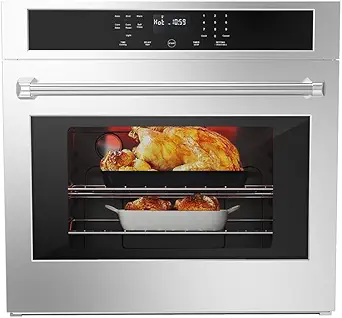 |
| Best Quality Built to a higher standard if you want something more solid | GE Profile PTS7000SNSS 30" Wall Oven |  |
| Best Value The sweet spot between price and what you get | Empava 24" Single Electric Wall Oven |  |
| Best Budget The cheapest option that still gets the job done reliably | AMZCHEF 24" Single Wall Oven | 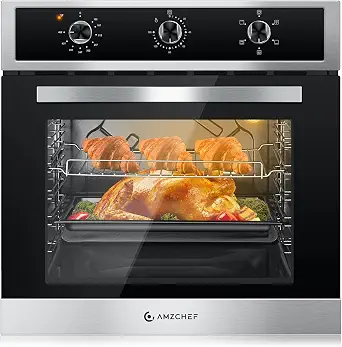 |
| Top Rated A top-rated pick with lots of positive feedback | Samsung 30" Smart Double Wall Oven |  |
| Most Popular A crowd favorite that many people choose with confidence | Empava 24" Single Wall Oven |  |
| Best Seller A high-volume bestseller chosen again and again | ThermoMate 24-Inch Electric Wall Oven |  |
EliteEdge 30-Inch Electric Wall Oven

| Heating Method | Convection |
|---|---|
| Fuel Type | Electric |
| Wattage | 3800 |
| Capacity | 4.8 cubic feet |
| Voltage | 240 |
This EliteEdge 30-inch electric wall oven is a built-in single oven aimed at handling family-sized meals and occasional entertaining. It uses a 3800W true convection system to circulate heat for even roasting and baking, and the 4.8 cu ft interior with six rack positions accommodates large pans or multiple racks of cookies. Controls are managed through an LED touch panel with timer, delay start, and an included temperature probe for more precise roasting. The oven supports broil, bake, and roast from 150°F to 550°F, and a pyrolytic self-clean cycle turns spills to ash for easy cleanup. Safety features include a lock and a double-layer Low-E glass door that stays cooler to the touch. The enamel interior is straightforward to wipe down and the gliding rack improves accessibility. Limitations to consider are the unit weight and the need for a 240V built-in installation, which means professional installation is likely required and it is not a simple drop-in replacement for freestanding ranges.
Best for: Home cooks who want a roomy, reliable built-in oven that delivers even results and easy cleanup for family meals and entertaining.
Less Ideal for: Renters, buyers who lack 240V built-in hookups, or those seeking extended manufacturer warranty coverage should consider other options.
- True convection with 3800W for more even heat distribution
- Large 4.8 cu ft capacity with six rack positions and a gliding rack
- Pyrolytic self-cleaning simplifies maintenance
- Digital LED touch controls with timer, delay start, and temperature probe for precise cooking
- Safety lock and double-layer Low-E glass door for cooler exterior and added safety
- Requires 240V built-in installation and professional fitting
- One month manufacturer warranty is short compared with typical appliance warranties
Verdict: Buy this EliteEdge if you want a roomy built-in electric oven with strong true convection and easy self-cleaning for dependable family meal cooking.
GE Profile PTS7000SNSS 30" Wall Oven

| Heating Method | Convection |
|---|---|
| Fuel Type | Electric |
| Wattage | 2850 watts |
| Capacity | 5 cubic feet |
| Additional Features | Self-clean, Touch Display, Wi-Fi |
The GE Profile PTS7000SNSS is a 30-inch built-in electric convection wall oven that combines a roomy 5.0 cubic-foot cavity with air fry capability and touchscreen controls. It is typically installed as a single built-in unit and used for everyday baking, roasting, and crisping without a separate fryer thanks to the no-preheat air fry setting. Convection heating and a 2850-watt output help deliver more even results across racks, while the large interior and intuitive touchscreen make multi-dish cooking straightforward. Built-in Wi-Fi and SmartHQ integration let you start or monitor cycles remotely and access presets. The oven also offers self-cleaning to reduce maintenance. Important trade-offs are that it requires a 240V hardwired installation and right-hand door orientation, and its stainless-steel finish and touchscreen will need regular wiping to stay pristine. For buyers seeking a performance-focused built-in that adds air-fry convenience and smart controls, this oven delivers strong, practical features in a modern package.
Best for: Buyers who prioritize cooking performance and modern controls and want a built-in oven that handles large meals, convection baking, and air-fry crisping with smart app integration.
Less Ideal for: Someone looking for a plug-and-play or portable oven solution, or who needs a left-hinged door or a lower-voltage installation option.
- Spacious 5.0 cu ft interior suitable for large roasts or multiple dishes.
- Convection heating with 2850 watts for more even, faster cooking.
- Integrated no-preheat air fry function adds crisping without extra appliances.
- Touchscreen controls and Wi-Fi with SmartHQ for remote monitoring and presets.
- Self-cleaning mode simplifies oven maintenance.
- Requires 240V hardwired installation and professional fitting.
- Right-hand door orientation limits placement flexibility.
Verdict: A performance-focused built-in oven with convection, large capacity, and built-in air fry for cooks who want capable, smart kitchen hardware.
Empava 24" Single Electric Wall Oven

| Fuel Type | Electric |
|---|---|
| Wattage | 2800 watts |
| Capacity | 2.3 cubic feet |
| Voltage | 240 volts |
| Additional Features | Broiling, Interior Light, Racks, Temperature Control, Timer |
This Empava 24" single electric wall oven brings professional-style features into a compact built-in package. It uses a true convection fan and 2800-watt heating to circulate heat for more even baking and faster roasts, and the seven cooking modes (including conv roast, conv broil, bake and pizza) cover most everyday and special-occasion recipes. The 2.3 cu ft ceramic interior resists stains and wipes clean easily, while a halogen interior light and a three-layer tempered glass door let you monitor progress without opening the oven. Controls are mechanical knobs, which are simple and durable but offer less precision than digital interfaces. The oven includes useful accessories such as a broiler pan and rack and is designed for 240V built-in installations. For kitchens that need a full-featured built-in oven in a smaller footprint, this model balances performance, easy cleaning and straightforward controls, though installers should confirm cut-out and electrical compatibility before purchase.
Best for: Buyers who want a capable, compact built-in oven that delivers even convection performance and easy cleaning without the complexity of advanced touchscreen controls.
Less Ideal for: Users seeking full touchscreen programmability, smart connectivity, or a larger-capacity oven for frequent big-batch cooking should look elsewhere.
- True convection fan for more even, faster cooking
- Seven cooking modes cover a wide range of recipes
- Ceramic interior with hidden elements makes wiping spills easier
- Triple-layer tempered glass door and halogen light for safe visibility
- Mechanical knob controls lack the fine programmability of digital interfaces
- Requires 240V built-in installation which needs appropriate wiring
Verdict: A compact built-in oven that delivers true convection performance and easy-to-clean ceramic interior for buyers who prioritize reliable cooking results and low-maintenance upkeep.
AMZCHEF 24" Single Wall Oven
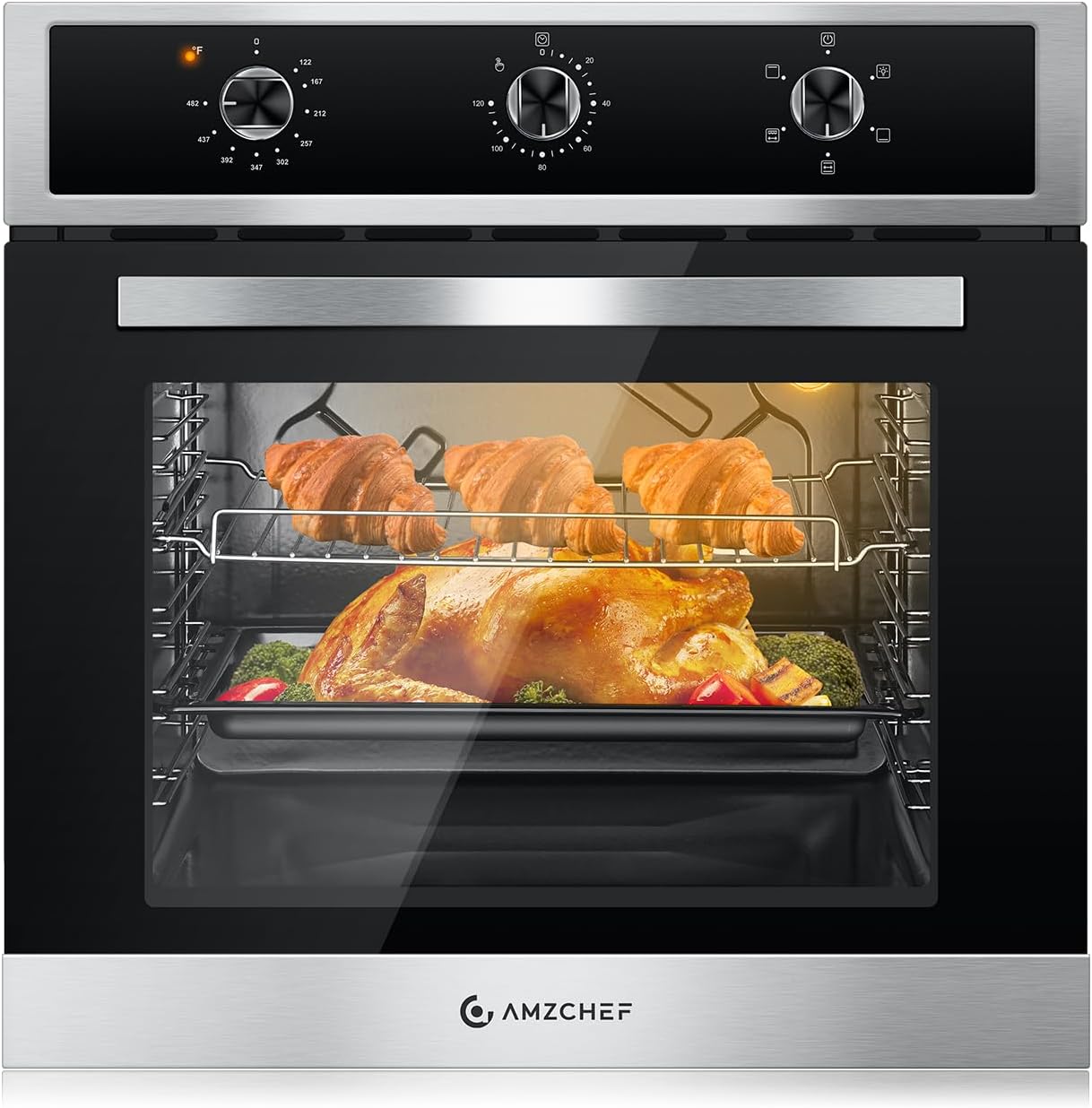
| Capacity | 2.65 Cu.ft. |
|---|---|
| Power | 2200W |
| Temperature Range | 122–482°F |
| Installation Type | Built-In |
| Additional Features | Rotisserie |
The AMZCHEF 24" Single Wall Oven is a compact built-in electric oven aimed at everyday home baking and roasting. It offers 2.65 cubic feet of cooking space and a 2200W heater with a 122 to 482F temperature range, plus a 360 degree rotating rotisserie for evenly roasted meats. Controls are simple mechanical knobs and the enamel interior with tempered glass door is designed for easier cleanup; five cooking modes cover basic baking, broiling, and roasting needs. Practical touches include five rack positions for flexible cooking layouts, an internal halogen light, and an auto-defrost function. Expect straightforward performance for casseroles, sheet-pan dinners, and whole-roast chickens rather than pro-level precision since this model lacks advanced digital controls or a convection fan. Installation requires a built-in space and 2200W electrical supply, so plan accordingly. For buyers seeking a budget-friendly built-in oven that covers the core functions and adds a rotisserie, this AMZCHEF is a solid value, but those wanting convection baking or touchscreen programming should look elsewhere.
Best for: Buyers on a tight budget who need a built-in oven that reliably handles roasts, sheet-pan meals, and everyday baking without premium digital features.
Less Ideal for: Serious home bakers or those who want convection cooking, precise digital controls, or advanced preset programs should consider higher-end models.
- Generous 2.65 cu ft capacity fits whole roasts and multiple racks
- 360° rotating rotisserie for evenly roasted poultry and meats
- Easy-to-use knob controls and five rack positions simplify everyday cooking
- Enamel inner liner and removable door make cleaning easier
- Wide temperature range (122–482°F) handles low-and-slow to high-heat roasting
- No convection fan, so baking may take longer and heat distribution is less even than convection models
- Mechanical knob controls lack precise digital programming and timers
Verdict: A budget-friendly built-in wall oven that delivers roomy capacity and a rotisserie for straightforward home roasting and baking.
Samsung 30" Smart Double Wall Oven

| Heating Method | Convection |
|---|---|
| Fuel Type | Electric |
| Installation Type | Built-In |
| Wattage | 9300 |
| Capacity | 5.1 cubic feet |
This Samsung 30" Smart Double Wall Oven is a built-in electric double oven that pairs large capacity with smart features for everyday cooking. It uses dual convection fans to circulate heat for more even and faster baking and roasting, and the Steam Cook mode adds controlled moisture to help achieve crisp exteriors with tender interiors. The oven connects to the SmartThings app for remote monitoring and supports voice control via common assistants, which is useful when multitasking. Practical touches include illuminated digital-analog controls that only light selectable options, a gliding rack for easier access, and a fingerprint-resistant stainless finish that reduces visible smudges. The oven also offers self-cleaning to simplify maintenance. Important considerations are its 240V installation requirement and sizeable cabinet footprint typical of built-in double ovens, so professional installation is recommended and space planning is essential. For cooks who want a feature-rich, high-capacity built-in oven, this model balances convenience and performance.
Best for: Buyers who prioritize a reliable, full-featured built-in oven that handles large meals and wants remote control and advanced cooking modes to simplify regular use.
Less Ideal for: People with very limited kitchen space or those seeking a plug-in countertop solution should look at smaller single ovens or ranges instead.
- Dual convection fans for faster, more even cooking
- Steam Cook mode for crisp exteriors and moist interiors
- SmartThings Wi-Fi connectivity and voice control for remote operation
- Large 5.1 cu. ft. capacity fits multiple dishes or large roasting pans
- Fingerprint-resistant stainless finish and self-clean cycle for easier upkeep
- Requires 240V built-in installation which may need professional setup
- Heavy and large footprint not suitable for small kitchens
Verdict: A dependable, feature-rich built-in double oven that combines large capacity, dual convection and smart/steam cooking for reliable everyday and holiday meal preparation.
Empava 24" Single Wall Oven

| Heating Method | Convection |
|---|---|
| Wattage | 3200 watts |
| Capacity | 2.3 cubic feet |
| Voltage | 240 volts |
| Additional Features | Rotisserie,Led,Touch |
The Empava 24" single wall oven is a compact built-in electric convection oven aimed at homeowners who need a full-featured unit in a smaller width. It offers 10 cooking functions including convection roast, broil and a 360° rotisserie, controlled through an LED touch display and a halogen interior lamp for monitoring. Practical touches include a forced cooling exhaust, two-layer tempered glass on the door and an enamel interior that wipes clean easily, plus five rack positions to handle larger trays or multi-rack cooking. The oven is designed for hard-wired 240V installation and delivers strong heating power for its size, making it suitable for roast, bake and broil tasks without needing a separate range. Important limitations are its modest 2.3 cu ft capacity and right-handed door orientation, which may constrain very large items or some kitchen layouts, and buyers should factor in the 240V wiring and 30A breaker recommendation during installation planning. For those who want a space-saving built-in with rotisserie and many functions, it packs a lot of capability into a 24" footprint.
Best for: Buyers who need a full-featured built-in oven in a compact 24" footprint and prioritize multiple cooking modes, rotisserie capability and an easy-to-clean interior.
Less Ideal for: Those who regularly cook very large items, need a left-hinged door, or want a plug-in appliance that does not require 240V hard-wiring should consider larger or different-fit options.
- Ten cooking functions including rotisserie and true convection broaden cooking flexibility.
- Touch LED controls and interior halogen lamp make operation and monitoring straightforward.
- Enamel inner tank and tempered glass door simplify cleaning and improve safety.
- Forced cooling exhaust and multiple rack positions support heavier use and versatile cooking setups.
- Requires 240V hard-wired connection and a 30A breaker, adding to installation complexity.
- 2.3 cu ft interior is smaller than full-size wall ovens, limiting very large roasts or multi-rack bakes.
Verdict: A compact built-in oven that delivers broad cooking versatility and a rotisserie option for buyers wanting full-featured performance in a 24" space.
ThermoMate 24-Inch Electric Wall Oven

| Capacity | 2.6 cubic feet |
|---|---|
| Wattage | 3100 watts |
| Voltage | 240 volts |
| Heating Method | Convection |
The ThermoMate 24-inch electric wall oven is a built-in convection oven aimed at households that want a feature-rich secondary oven without commercial size. It uses a 3100W convection system to circulate heat for faster preheating and more even results, and includes a sensor probe for internal-temperature monitoring and 12 cooking modes from defrost to rotisserie broil. The oven interior offers 2.6 cu ft and five shelf positions with two included racks and a rotisserie kit, so you can cook multiple items at once or roast poultry on the spit. The touch sensor controls, programmable timer and child lock make it straightforward to operate, and the three-layer tempered glass door plus halogen lamp improve visibility while limiting heat loss. Installation supports built-in or undercounter setups and the unit is ETL certified. Buyers should note the oven requires 240V and its thicker multi-layer door and power mean installation by a qualified electrician and proper built-in clearances are essential, and at this size it is best suited as a primary oven for smaller kitchens or as a secondary built-in in larger homes.
Best for: Buyers who prioritize a reliable, safety-certified built-in oven with precise temperature control and multiple cooking modes for everyday home cooking in kitchens where a 24-inch unit fits.
Less Ideal for: Households needing a very large single oven capacity or those without access to a 240V circuit should consider larger freestanding ranges or different models.
- Powerful 3100W convection system for faster preheating and more even cooking
- 12 cooking modes and a sensor probe for precise temperature control
- 2.6 cu ft interior with five shelf positions plus rotisserie and two racks included
- Three-layer tempered glass door and halogen lamp for clear viewing and better heat retention
- ETL certified for compliance with US and Canadian safety standards
- Requires 240V connection and likely professional installation
- Relatively heavy and occupies a compact 2.6 cu ft capacity that may be small for large families
Verdict: A compact, ETL-certified 24-inch built-in convection oven that delivers precise, even cooking with a wide set of modes for homeowners who want a dependable built-in unit.
Choosing the Right Built-In Oven: Key Factors to Consider
Heat Consistency and Temperature Accuracy
Even heat distribution affects the outcome of baking, roasting, and broiling. Ovens with reliable circulation and accurate thermostats reduce guessing on cook times and prevent hot spots that burn edges while leaving centers undercooked. Look for features that promote even heat across multiple racks, such as convection fans or multi-element designs.
Temperature accuracy also matters for recipes with tight tolerances, like custards or delicate pastries. If an oven's thermostat typically runs several degrees hot or cold, you will need to adjust time and temperature settings, which complicates consistent results.
Installation Requirements and Cavity Fit
Built-in ovens must match the kitchen cavity and available utilities. Correct cavity dimensions, the right electrical connection, and clearance for ventilation are essential to avoid retrofitting surprises. Some ovens require dedicated circuits, specific breaker sizes, or particular gas hookups, so verify your kitchen's existing infrastructure before buying.
Trim kits, flush-mount options, and door swing direction also impact final fit and cabinet aesthetics. Consider how much cabinet modification you are willing to accept and whether professional installation will be necessary to meet safety codes and maintain warranty coverage.
Cleaning Features and Interior Finish
How easy an oven is to clean affects long-term upkeep and user satisfaction. Self-clean cycles, catalytic liners, and enamel interiors reduce the time and effort needed to remove baked-on grease. Removable racks that are simple to slide out and dishwasher-safe components save work during heavy use.
Vent placement and crumb collection points matter because trapped food particles can burn and produce odors. Evaluate how the oven's design channels drips and whether surfaces are accessible for routine wiping without specialized tools.
Controls, Cooking Modes, and Usability
An intuitive control layout speeds meal prep and reduces mistakes. Clear labeling, tactile knobs or responsive touch panels, and logical menu structures help you select the right mode quickly. Useful cooking modes to look for include true convection, bake, broil, and proofing, as these cover most home cooking needs.
Timer accuracy, preset programs, and the ability to save or recall custom settings are helpful for repeat recipes. Consider whether display brightness, language, and feedback sounds fit your household preferences and accessibility needs.
Capacity and Rack Configuration
Internal capacity determines how much food you can cook at once and whether large items, like turkeys or baking sheets, fit easily. Look at usable cubic feet and the number of rack positions to estimate flexibility. Some ovens provide telescoping racks or glide systems, which make placing and removing heavy pans safer and more convenient.
Think about the types of dishes you prepare most often. If you frequently roast large cuts or bake multiple trays simultaneously, prioritize larger usable volumes and multiple rack levels.
Build Quality and Long-Term Support
Durable materials, solid door hinges, and quality seals reduce the likelihood of repairs and maintain consistent performance. Check for robust construction of the cavity, dependable door insulation, and corrosion-resistant finishes that stand up to daily use.
Warranty coverage and the availability of replacement parts influence total cost of ownership over time. Consider the typical expected lifespan of a built-in oven and whether the vendor or installer offers reasonable service options in your area.
Standard Dimensions and Planning for Replacement
Most built-in ovens follow a few common width and height standards, but small differences in trim and handle projection can affect whether an oven fits a cabinet opening without modification. Measure the width, height, and depth of the existing cavity and note adjacent cabinets, counters, and any obstructions that could interfere with door swing.
Factor in ventilation requirements and required clearances. Adequate airflow behind and around the oven prevents overheating and allows the unit to perform as intended. If you are doing a remodel, plan cabinet framing and electrical placement to match the appliance's installation guide.
- Confirm rough-in dimensions and compare to manufacturer specs.
- Note location of power source and gas line if applicable.
- Check door swing and clearance for drawers or islands.
Convection Vs Conventional Baking: When to Use Each
Convection uses a fan to circulate air and promote even browning and faster cook times. It is beneficial for multi-rack baking and roasting where uniform results matter. Conventional bake without fan can be preferable for delicate baked goods that rely on slow, gentle heat.
Some ovens offer a true convection mode with a third heating element that works with the fan to maintain temperature. Understanding how your oven's convection mode behaves helps you adapt recipes and achieve consistent outcomes.
- Use convection for roasting and multiple-tray baking.
- Use conventional modes for delicate pastries and custards.
Power and Utility Considerations
Built-in ovens may be electric or gas and each type has distinct installation needs. Electric ovens often require specific voltage and breaker sizes, while gas ovens need proper supply lines and ventilation. Confirm that your kitchen's utilities match the oven type before purchase to avoid additional labor.
Be aware of how energy use translates to operating cost and heat output in the kitchen. Some high-performance modes increase energy draw for short periods, which could affect household circuit capacity or indoor heat during summer months.
- Verify electrical panel capacity and breaker requirements.
- Ensure adequate gas supply and ventilation for gas units.
- Consider energy draw of high-heat modes during peak use.
Safety Features and Accessibility
Look for door-locking during self-clean cycles, cool-touch surfaces, and clear indicator lights that communicate when the oven is hot. Child lock options and delayed-start lockouts help prevent accidental activation in homes with children.
Accessibility extends to handle height, control placement, and whether controls are reachable when the oven is installed in wall cabinets. For users with limited mobility, side-hinge or drop-down door layouts and pull-out racks improve safe operation.
- Check for lockable controls and cooling indicators.
- Consider door style and rack accessibility for mobility needs.
Maintaining Performance Over Time
Routine maintenance keeps an oven performing reliably. Clean spills promptly, follow recommended self-clean schedules, and inspect door seals and gaskets for wear. Replace damaged seals to prevent heat loss and longer cook times.
If the oven has user-serviceable parts like filters or removable elements, confirm that replacements are accessible and straightforward to install. Proper upkeep reduces the risk of uneven heating and extends useful life.
- Wipe interiors after spills and run cleaning cycles as needed.
- Inspect door gaskets and hinges annually for wear.
- Keep service documentation and installation guides for technicians.
How We Chose the Best Built-In Oven
We selected built-in ovens that meet practical needs for home cooking and kitchen integration. Our evaluation prioritized measurable and verifiable specs rather than marketing claims. Key criteria included heat consistency and temperature accuracy, which determine how reliably the oven cooks across racks and recipes. We assessed installation and fit, covering cavity dimensions, electrical or gas requirements, and trim options so an oven can be integrated cleanly into cabinetry. Cleaning and maintenance were considered next, focusing on interior finishes, self-clean modes, and ease of removing racks and parts. Usability and controls were evaluated for clarity of interface, available cooking modes, and timer features that matter day to day. Finally, build quality and warranty aspects informed long-term ownership expectations. We excluded specialty professional-only ranges and compact countertop units to keep the list relevant to built-in installations. Models that required extensive custom cabinetry modifications or uncommon electrical services were also set aside. The products that made the cut offer a balance of consistent cooking performance, straightforward installation for standard kitchen cavities, practical cleaning features, and controls that homeowners can use confidently.
Our full evaluation process is outlined in our review methodology.
FAQ
Do built-in ovens require a different installation than slide-in ranges?
Yes. Built-in ovens are fitted into a cabinet cavity or wall and rely on specific rough-in dimensions and utility hookups. Installation typically focuses on securing the unit in a cabinet opening and ensuring proper ventilation and electrical or gas connections.
How important is a professional installer for a built-in oven?
Professional installation is usually recommended because proper electrical, gas, and ventilation hookups affect safety and warranty coverage. A pro can also ensure correct alignment, secure mounting, and compliance with local codes.
Can I use convection settings for all recipes?
Convection speeds cooking and improves browning, but it is not ideal for every recipe. Delicate items like souffles or certain pastries may do better with conventional heat. Many recipes include conversion notes for convection use.
How do I measure my kitchen to make sure a built-in oven will fit?
Measure the cabinet opening width, height, and depth, and note any trim or filler pieces. Check for obstructions such as adjacent cabinet doors or tall baseboards. Compare these measurements to the oven's required cavity dimensions before purchase.
What cleaning options should I prioritize?
Prioritize interiors that support easy cleaning, such as smooth enamel coatings, removable racks, and either catalytic liners or a reliable self-clean cycle. Consider how often you cook heavily soiled dishes when deciding how much cleaning automation you want.
Final Verdict
When choosing a built-in oven, prioritize the capabilities that most directly affect your cooking routine: consistent heat distribution, correct fit for your cabinetry and utilities, and cleaning features that match how often you cook. Tradeoffs are common: higher-end models may offer more precise controls and convection performance but can require careful installation, while simpler ovens may be easier to maintain. Focus on matching capacity and control layout to your typical meals, verify installation requirements before buying, and choose a unit with accessible support and durable construction for peace of mind.