
Note: This article contains affiliate links. If you click on these links and make a purchase, we may earn a small commission at no extra cost to you. This helps support our research and content. Read our full affiliate disclosure here.
Choosing the right built-in range hood matters for cooking performance and indoor air quality. A well-sized hood removes smoke, grease, and odors, keeps cooktop surfaces cleaner, and prevents lingering smells from spreading through the house. For homeowners fitting cabinetry or a custom surround, built-in units deliver a seamless look while handling heavy-duty ventilation needs. This guide shortlists the top built-in range hoods across common home kitchen setups and explains the key tradeoffs you should weigh. We evaluated airflow, noise levels, installation demands, and filtration to assemble practical picks for most kitchens. Read on for clear criteria and practical guidance before you decide.
Top Picks at a Glance
| Best Overall The best all-around choice for most situations | IKTCH IKB02-36 Insert Range Hood |  |
| Best Quality Built to a higher standard if you want something more solid | KOBE Brillia 30-Inch Range Hood |  |
| Best Value The sweet spot between price and what you get | Zomagas 30" Range Hood Insert |  |
| Best Budget The cheapest option that still gets the job done reliably | magicplux 30 in Built-in Range Hood |  |
| Best Seller A high-volume bestseller chosen again and again | IKTCH 30-inch Insert Range Hood |  |
IKTCH IKB02-36 Insert Range Hood

| Air Flow Capacity | 900 cfm |
|---|---|
| Noise | 65 db |
| Mounting Type | Insert Mount |
| Number of Speeds | 4 |
| Light Source | LED |
The IKTCH IKB02-36 is a built-in insert range hood designed to move large volumes of cooking air while fitting into a custom cabinet opening. It delivers up to 900 CFM through baffle filters, so it clears heavy smoke, grease and strong odors quickly, and the four-speed touch control panel plus remote and gesture sensing make it easy to change fan speed from the cooktop. Two adjustable 3W LED lamps provide focused lighting on the range while using comparatively little power, and the stainless steel construction and removable dishwasher-safe filters simplify cleaning. Noise ranges from a low quiet setting up to about 65 dB on high, so you get strong ventilation at the cost of audible fan noise when pushed. The unit supports both ducted and ductless setups but requires the right cabinet cutout and ducting or recirculation kit for proper installation. For someone replacing a built-in hood or finishing a kitchen remodel, it strikes a practical balance of performance and features, although installers should plan for ventilation routing and expect the higher-speed noise level.
Best for: Buyers finishing a kitchen remodel or replacing a built-in hood who want strong ventilation and practical controls in a stainless steel insert that balances power and usability.
Less Ideal for: People seeking an ultra-quiet luxury hood or those who need a plug-and-play countertop/under-cabinet unit without cabinet modification should consider other types.
- High 900 CFM airflow clears heavy smoke and odors quickly
- Four-speed touch controls with remote and gesture sensing for flexible operation
- Includes three removable stainless steel baffle filters that are dishwasher safe
- Two adjustable LED lamps provide bright, energy-efficient task lighting
- Stainless steel build fits standard insert installations and resists stains
- Top noise level reaches about 65 dB, which is noticeable on high fan speeds
- Requires proper cabinet cutout and ducting or a recirculation kit for ductless use
Verdict: Choose this insert hood if you need strong, code-capable ventilation and flexible controls in a stainless steel built-in for a remodeled kitchen.
KOBE Brillia 30-Inch Range Hood
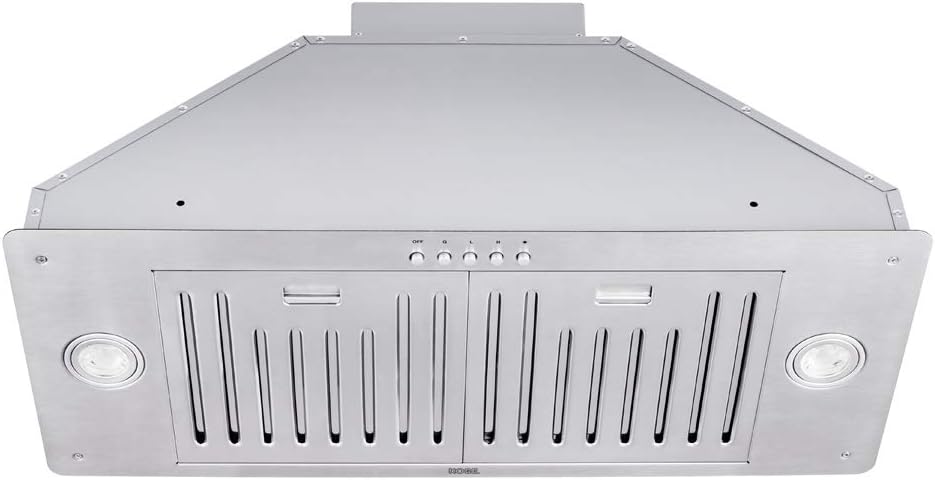
| Air Flow Capacity | 550 cfm |
|---|---|
| Number of Speeds | 3 |
| Light Source | LED |
| Filter Type | Baffle |
| Voltage | 120 volts |
The KOBE Brillia 30-inch built-in range hood is designed to move a lot of cooking air while staying relatively quiet. It uses a 550 CFM internal blower and three mechanical push-button speeds including a QuietMode for reduced noise, so it can handle heavy cooking and strong-smoke tasks without being excessively loud. The unit has two bright 3W LED lights to illuminate the cooktop and durable 18-gauge stainless steel construction with removable baffle filters for easier cleaning. Installation requires a top 6-inch round exhaust and it runs on standard 120V power. Practical benefits include strong ventilation for high-heat cooking, simple reliable controls, and commercial-style stainless durability, but buyers should note it is an insert design intended for built-in mounting and may need appropriate cabinetry or a liner for a finished install. There are no advanced digital controls or variable-speed blower options beyond the three mechanical speeds.
Best for: Home cooks who prioritize strong ventilation and low-noise operation for serious stove-top cooking and who plan to install a built-in hood as part of their cabinetry.
Less Ideal for: People looking for a plug-and-play or countertop hood replacement or those who need app control or fine-grained electronic fan speed adjustment.
- Powerful 550 CFM internal blower clears heavy smoke and odors quickly
- QuietMode reduces sound for lower-noise operation during light cooking
- Durable 18-gauge stainless steel with satin finish resists wear and cleans easily
- Removable baffle filters are designed for easier cleaning and grease capture
- Bright LED task lights provide clear illumination of the cooktop
- Three fixed mechanical speeds offer less control than variable-speed blowers
- Insert/built-in design requires compatible cabinetry and a 6-inch top vent for installation
Verdict: Choose this built-in hood if you want strong 550 CFM ventilation in a durable stainless insert that runs quietly for heavy cooking.
Zomagas 30" Range Hood Insert

| Air Flow Capacity | 600 cfm |
|---|---|
| Noise | 65 db |
| Mounting Type | Insert Mount |
| Number of Speeds | 3 |
| Light Source | LED |
This Zomagas 30" insert hood is built to sit inside a cabinet or custom surround and move a lot of air for its size. The 600 CFM motor and three-speed push-button control handle strong cooking fumes and smoke while listed noise tops out around 65 dB, so it is noticeable but not excessive. Two bright LED cooking lights illuminate the cooktop and the removable stainless steel baffle filters are dishwasher-safe, which makes grease cleanup easy. The unit can be vented outside through a 6" top duct or converted to recirculating operation with charcoal filters (sold separately), giving flexibility for different installation scenarios. Installation expects an insert-mount cutout and the control layout is intentionally simple mechanical buttons rather than touch or remote controls. Expect basic, functional performance without advanced smart features or ultra-quiet operation at high speed, but the hood delivers solid extraction, easy maintenance, and straightforward controls for a built-in application.
Best for: Buyers who want a straightforward, high-extraction built-in hood that focuses on reliable performance and easy maintenance for a busy kitchen.
Less Ideal for: If you need ultra-quiet operation, smart controls, or an included recirculating filter kit out of the box, look at other higher-end or fully featured models instead.
- Strong 600 CFM airflow suitable for heavy cooking
- Convertible ducted or ductless installation for flexible venting
- Dishwasher-safe stainless steel baffle filters simplify cleaning
- Energy-saving LED lights provide clear task illumination
- Simple, reliable push-button controls that work with wet hands
- Maximum noise around 65 dB can be noticeable on high fan speed
- Charcoal filter for ductless use is sold separately
Verdict: A practical, high-extraction insert hood that prioritizes strong ventilation and easy upkeep for built-in kitchen installs.
magicplux 30 in Built-in Range Hood
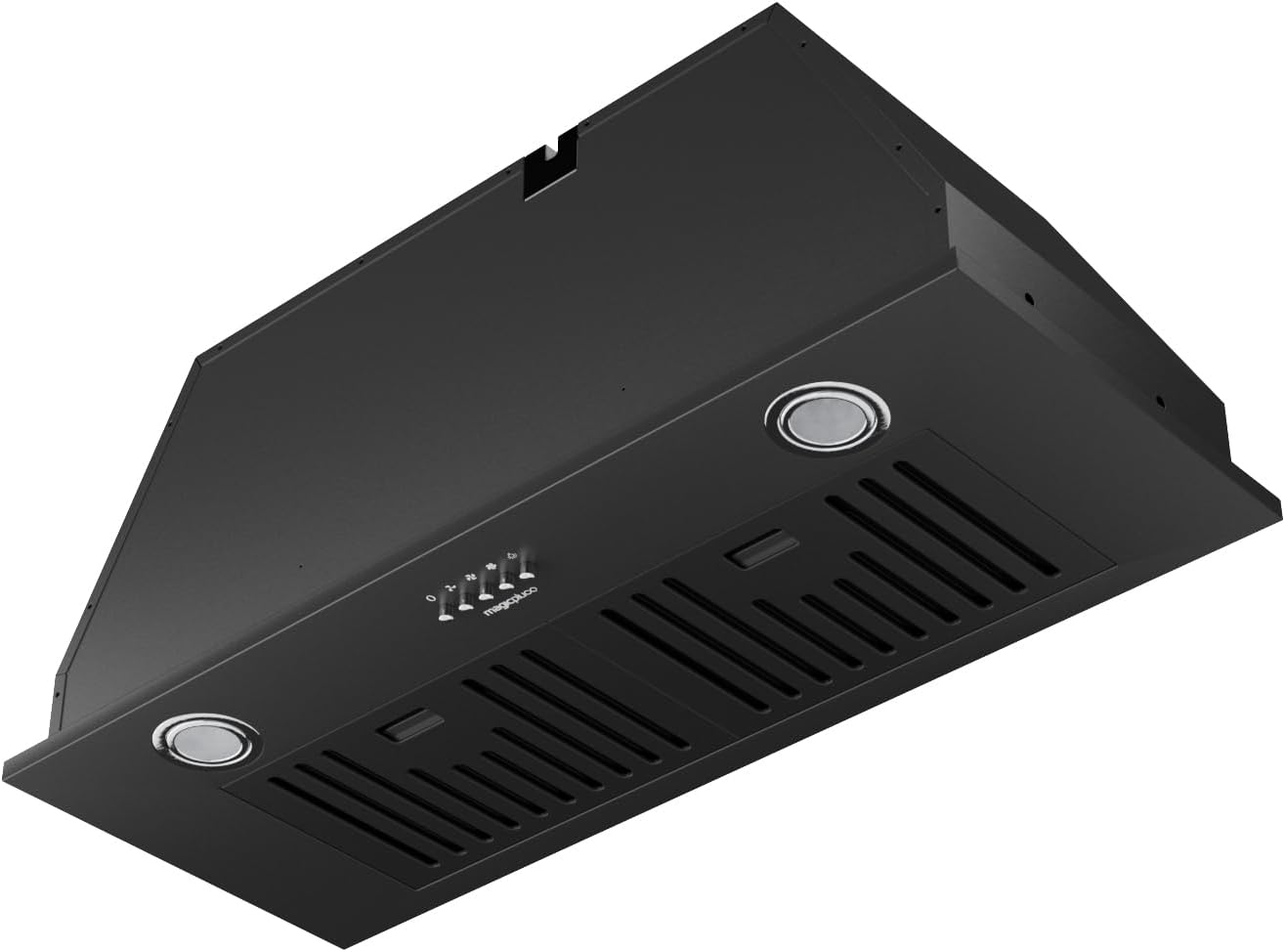
| Air Flow Capacity | 600 cfm |
|---|---|
| Number of Speeds | 3 |
| Noise | 55 db |
| Ventilation Type | Ducted/Vented, Ductless/Recirculating |
| Light Source | LED |
This magicplux 30-inch built-in range hood is designed to clear smoke, grease, and cooking odors from small to medium kitchens using a 600 CFM motor and three fan speeds. It installs as a ducted or ductless unit, so you can choose recirculating charcoal filtration where ducting is impractical, and the removable baffle and charcoal filters simplify cleaning or replacement. The hood uses bright LED lights for cooktop illumination and push-button controls for straightforward operation, while a brushed stainless-steel finish in black keeps the look low-profile in an insert application. At about 55 dB on the spec sheet it stays relatively quiet compared with more powerful commercial-style hoods, and the 193-watt motor provides strong suction for most home cooking tasks. Expect basic, functional performance without premium features like variable-speed digital controls or advanced filtration monitoring, but for the price it delivers solid extraction, simple maintenance, and flexible installation options.
Best for: Buyers seeking an affordable, no-frills built-in hood that reliably removes smoke and odors and can be installed ducted or recirculating in smaller kitchens.
Less Ideal for: Home cooks who want luxury features, precise variable-speed control, or a high-end designer finish should consider pricier models with advanced controls and filtration.
- 600 CFM airflow provides strong extraction for everyday cooking
- Supports both ducted and ductless installations for flexible fitment
- Bright LED lighting improves cooktop visibility
- Removable baffle and charcoal filters are easy to clean or replace
- Push-button controls and three fixed speeds lack finer speed adjustment
- No advanced features like digital displays or auto-sensing
Verdict: A budget-friendly built-in hood that delivers strong 600 CFM extraction and flexible ducted or recirculating installation for small to medium kitchens.
IKTCH 30-inch Insert Range Hood
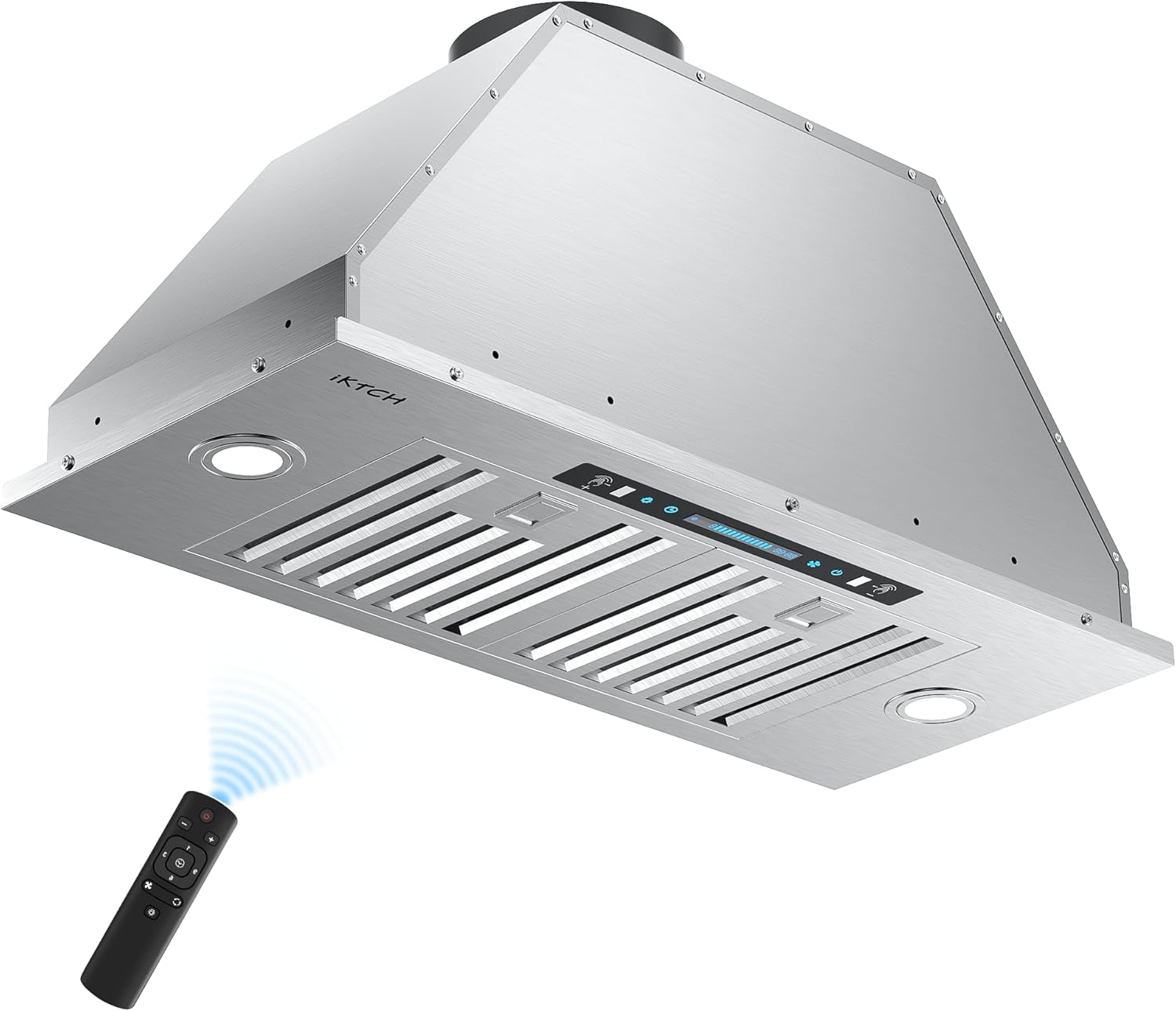
| Air Flow Capacity | 900 cfm |
|---|---|
| Noise | 60 db |
| Number of Speeds | 4 |
| Light Source | LED |
| Wattage | 230 watts |
The IKTCH 30-inch insert range hood is a built-in vent hood designed to clear heavy cooking smoke and odors with its high-capacity blower and user-friendly controls. It delivers up to 900 CFM airflow and offers four speed settings controlled via touch panel, remote, or gesture sensing for hands-free operation. The unit includes two dishwasher-safe stainless steel baffle filters and two adjustable LED lights to brighten the cooking area while saving energy. Installation is convertible for ducted or ductless setups and the motor and controls carry multi-year replacement coverage, which adds reassurance for long-term ownership. Noise ranges from quiet levels on low to noticeably louder at maximum blower speed, and the unit requires proper ducting or recirculation kit when used ductless. For built-in installations where high ventilation capacity and easy-to-clean filters are priorities, this hood performs well, though it is larger and more powerful than needed for very small cooktops or light stovetop use.
Best for: Buyers who want a factory-quality built-in range hood that handles heavy cooking and value long-term parts coverage and easy maintenance.
Less Ideal for: Not the best choice for minimal-cooking households or very small kitchens where high airflow and the physical footprint are unnecessary.
- High 900 CFM airflow effectively removes heavy smoke and odors
- Multiple control options: touch, gesture, and remote for flexible operation
- Dishwasher-safe stainless steel baffle filters that are easy to remove and clean
- Adjustable LED lights provide bright, energy-efficient task lighting
- Convertible ducted or ductless installation and included remote add installation flexibility
- Top-speed noise can be noticeable during heavy use
- Requires correct ducting or recirculation setup for optimal performance
Verdict: Choose this built-in insert when you need powerful, easy-to-control ventilation and durable, easy-to-clean filters for a busy kitchen.
Choosing the Right Built-In Range Hood: Key Factors to Consider
Airflow Capacity
Airflow capacity, measured in cubic feet per minute, directly determines how quickly a hood clears smoke, steam, and odors from the cooktop area. Higher CFM is important for high-BTU ranges, frequent frying, or open-concept kitchens where contaminants spread easily.
When considering airflow, look for published CFM at the hood outlet and whether the manufacturer specifies performance with typical duct runs. Real-world effectiveness also depends on duct length and bends, so match hood capacity to the practical ducting you can install rather than just the highest advertised number.
Noise Output
Noise output is usually reported in decibels at different fan speeds and strongly affects how comfortable the kitchen is during use. Quieter hoods make it feasible to run ventilation at higher speeds for longer without drowning out conversation or TV. If you cook often or have an open-plan layout, prioritize lower dB ratings at mid and high speeds.
Consider whether the blower is remote or internal. Remote blowers move noise out of the kitchen but add ducting requirements. Internal blowers are simpler to install but often run louder at equivalent airflow.
Installation Complexity and Fit
Built-in hoods are installed into cabinetry or a custom enclosure, so accurate measurements and compatible cutouts are essential. Installation complexity affects total project time and whether you need pro help. Check the required cabinet depth, cutout dimensions, and recommended clearances above the cooktop.
Duct type matters too. Decide between vertical or horizontal duct runs and whether you can use existing ductwork. Some built-in models allow recirculation with charcoal filters when ducting is not possible, but that reduces overall ventilation effectiveness.
Filtration and Maintenance
Grease and odor filtration determine how often you will clean the unit and replace filters. Metal baffle filters capture grease effectively and are typically dishwasher-safe, reducing maintenance time. Charcoal or carbon filters help with odors when recirculating but require periodic replacement and do not remove moisture or heat.
Consider accessibility for filter removal and cleaning frequency. Hoods with easy-to-remove filters and straightforward access to the blower save time and encourage regular upkeep, which preserves performance and extends service life.
Control Options and Convenience
Control layout and features influence daily usability. Basic push-button or rocker controls are durable and simple, while multi-speed electronic controls and remote or app-enabled options offer finer airflow management and convenience. Lighting type and brightness also matter for cooking visibility.
Think about whether you want delay-off timers, automatic boost settings tied to heat sensors, or variable-speed fans. These features can improve convenience but may add complexity during installation and repair.
Materials and Durability
Construction materials affect longevity and cleaning. Stainless steel is common for built-in hoods because it resists staining and is easy to wipe down. Thicker-gauge metal, well-sealed seams, and durable control hardware reduce the chances of premature wear in a greasy environment.
Inspect finish quality, seam treatment, and warranty support when possible. Robust materials reduce maintenance and maintain appearance in high-use kitchens.
Sizing Your Built-In Hood to the Cooktop
The hood should cover the primary cooking surface area. For most setups, choose a built-in hood at least as wide as your cooktop or slightly wider to ensure capture of rising smoke. Undersized hoods will struggle even with high blower speeds.
Mounting height above the cooktop affects capture efficiency. Follow recommended clearances for your cooktop type—higher placement reduces capture ability, while overly low installation can interfere with tall cookware. Match hood width and height recommendations to your kitchen layout when planning a built-in installation.
- Match hood width to cooktop width for best capture.
- Confirm cabinet cutout depth and height before purchase.
- Account for duct path and number of bends when evaluating required CFM.
Ducting: Best Practices for Peak Performance
Short, straight duct runs with smooth interior surfaces deliver the best airflow. Use the largest practical duct diameter recommended by the hood manufacturer to reduce resistance and noise. Avoid multiple tight bends and lengthy horizontal sections that degrade performance.
If external venting is impossible, recirculation kits with carbon filters can help, but expect reduced removal of heat and moisture. Consider upgrading to a more powerful blower if ducting limitations are significant.
- Prefer 6-inch or larger rigid ducting for high-CFM systems.
- Minimize elbows and long horizontal runs to maintain airflow.
- Seal joints and use proper exterior termination to prevent backdrafts.
Blower Types and Placement
Built-in range hoods may use internal blowers, externally mounted blowers, or inline blowers located in attic or crawl space. Internal blowers are easiest to install but can be louder in the kitchen. External or remote blowers remove noise from the living space but require longer ductwork and careful mounting.
Inline blowers strike a balance by positioning the motor in the duct run to reduce kitchen noise while keeping roof or wall penetrations simpler than a fully external unit. When selecting blower type, weigh noise reduction against installation complexity and cost.
- Internal blower: simpler install, more kitchen noise.
- External blower: quietest in-kitchen operation, needs separate mounting.
- Inline blower: moderate noise, flexible placement in duct run.
Lighting, Controls, and Convenience Features
Integrated lighting is an important everyday feature. Look for adjustable, bright lights that illuminate the entire cooktop surface. LED lighting is energy-efficient and long-lasting compared with older halogen bulbs.
Control placement and type impact usability. Easy-to-reach, durable controls make it simple to change fan speeds while cooking. Additional conveniences like delay-off, heat-sensing automatic boost, or wireless control can be helpful but are not essential for basic ventilation performance.
- Prefer LED lighting for durability and brightness.
- Choose intuitive control layouts that suit your cooking habits.
- Consider smart or automatic features only if you value convenience over simplicity.
Maintenance Tips to Keep Performance High
Regular cleaning of grease filters and the hood interior keeps airflow steady and reduces fire risk. Metal baffle filters should be cleaned monthly in heavy-use kitchens and can often be washed in a dishwasher. Replace charcoal filters on recirculation models per manufacturer guidance.
Inspect ductwork and exterior terminations annually to ensure there are no blockages or animal nests. Simple preventive maintenance preserves airflow and reduces the likelihood of costly repairs down the line.
- Schedule filter cleaning based on cooking frequency.
- Check exterior vent caps for obstructions each season.
- Wipe down surfaces with mild degreasers to prevent buildup.
How We Chose the Best Built-In Range Hood
We evaluated built-in range hoods by focusing on the specifications and real-world factors that most affect everyday kitchen performance. Primary evaluation criteria included measured airflow capacity at the hood outlet, which determines how effectively the unit clears smoke and odors; noise output at typical blower speeds, because quieter operation improves daily comfort; and filtration options and grease management, which influence maintenance frequency and long-term efficiency. We also considered installation complexity and compatibility with standard cabinet openings since built-in units require accurate fit and reasonable ducting work. Energy efficiency and blower type were assessed because they affect running cost and suction consistency. Excluded from consideration were units meant only for decorative or low-ventilation use and models that require extensive custom fabrication beyond standard cabinet sizes. We prioritized hoods with clear published specs and repeatable performance metrics over vague marketing claims. The resulting shortlist reflects a balance of strong airflow, controllable noise, practical installation, and accessible upkeep.
Our full evaluation process is outlined in our review methodology.
FAQ
What CFM do I need for a residential built-in range hood?
CFM needs depend on cooktop output and kitchen layout. For standard gas or electric cooktops, 300 to 600 CFM is often adequate. Higher-BTU ranges or open-concept kitchens usually require 600 CFM or more to clear smoke and odors effectively.
Can I use a recirculating kit if I cannot vent outside?
Yes, recirculating kits with charcoal filters are an option when external ducting is not possible. They reduce odors but do not remove heat or moisture as effectively as external venting, so they are best for moderate cooking loads.
How high should a built-in hood be mounted above the cooktop?
Recommended mounting heights vary by cooktop type and hood design but typically fall between 24 and 30 inches for most installations. Follow specific manufacturer clearance guidelines to balance capture efficiency and safety.
Are remote blowers worth the extra installation work?
Remote blowers reduce in-kitchen noise and can improve cooking comfort, especially in open-plan homes. They require additional ducting and separate mounting, so weigh the installation complexity and cost against the benefit of quieter operation.
How often should I clean or replace filters?
Dishwasher-safe metal filters should be cleaned roughly once a month with regular cooking. Charcoal filters in recirculation setups usually need replacement every 6 to 12 months depending on usage and manufacturer guidance.
Final Verdict
Prioritize airflow and noise balance when choosing a built-in range hood, since those two factors most strongly influence day-to-day performance and comfort. Match the hood size and CFM to your cooktop and ducting limitations, and factor in installation complexity when planning for a built-in unit. Focus on durable materials, accessible filters, and clear installation specifications to avoid surprises during fitment. By weighing airflow, noise, installation, and maintenance needs together, you can select a built-in range hood that performs reliably and blends with your kitchen design.