
Note: This article contains affiliate links. If you click on these links and make a purchase, we may earn a small commission at no extra cost to you. This helps support our research and content. Read our full affiliate disclosure here.
If you brew both espresso and pour over, picking the right burr coffee grinder makes a huge difference to extraction, taste clarity, and shot consistency. A grinder that handles fine, stable espresso settings plus slightly coarser pour-over grinds saves time and reduces wasted beans. This guide shortlists the top commercial-style and home grinders suited for those two brewing workflows and explains why each made the cut. We evaluated candidates for grind consistency, adjustment range, dosing options, and ease of use so you can match a grinder to your routine. Read on to see the best picks and the decision criteria used to choose them.
Top Picks at a Glance
| Best Overall The best all-around choice for most situations | Viesimple Gen4 Burr Grinder |  |
| Best Quality Built to a higher standard if you want something more solid | Breville Smart Grinder Pro BCG820BSS | 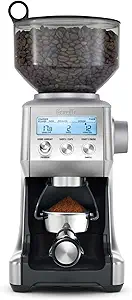 |
| Best Value The sweet spot between price and what you get | HAUSCAFE Conical Burr Grinder |  |
| Best Budget The cheapest option that still gets the job done reliably | CEVING Manual Coffee Grinder MCG-02 | 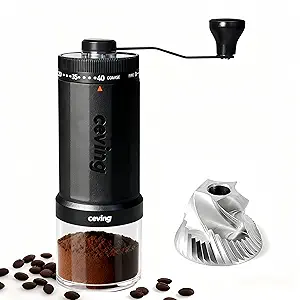 |
| Top Rated A top-rated pick with lots of positive feedback | Cusinice Conical Burr Coffee Grinder CG-182 |  |
| Most Popular A crowd favorite that many people choose with confidence | Ollygrin Burr Coffee Grinder BG702S |  |
| Best Seller A high-volume bestseller chosen again and again | OXO Brew Conical Burr Grinder |  |
Viesimple Gen4 Burr Grinder

| Capacity | 30 g |
|---|---|
| Voltage | 110 volts |
| Material Type | Aluminum |
The Viesimple Gen4 is a single-dose electric burr grinder built around 48 mm conical metal burrs and an all-metal housing, aimed at home espresso and manual brew use. It grinds into a magnetic dosing cup with a sealed lid and a blow-out funnel to reduce chaff and keep the counter tidy, and the anti-static design plus included spray bottle tip helps cut clumping and flyaway grounds. The motor runs at a relatively low speed to limit heat and preserve flavor, which means an 18 g espresso dose can take 30–40 seconds, but the company says that slow extraction protects delicate aromatics. Practical touches include a universal 100–240V adapter for worldwide power and a reportedly quiet operation under 50 dB. Trade-offs are the slow grind speed for small doses and the external adapter, which adds clutter behind an espresso machine, but the Gen4 aims to deliver consistent, low-retention grinding for espresso, pour-over and French press in a compact package.
Best for: Home brewers who want a compact, low-retention grinder that prioritizes grind consistency and flavor preservation across espresso and manual brew methods.
Less Ideal for: Users who need very fast throughput for many consecutive doses or who prefer integrated power supplies and a faster high-speed grind cycle.
- 48 mm conical metal burrs for uniform grind suited to espresso and manual brews
- Magnetic sealed dosing cup and blow-out funnel reduce mess and retention
- Anti-static coating and recommended misting method help prevent clumping and flyaway grounds
- Quiet, low-speed motor that minimizes heat transfer to preserve flavor
- Universal 100–240V adapter for use in multiple regions
- Single-dose workflow can be slower for multiple consecutive doses due to low grinding speed
- External power adapter adds bulk and needs hiding or routing behind equipment
Verdict: Choose the Viesimple Gen4 if you want a compact, low-retention metal-burr grinder that prioritizes consistent, flavor-preserving single-dose performance for espresso and pour-over.
Breville Smart Grinder Pro BCG820BSS

| Wattage | 165 |
|---|---|
| Capacity | 1.1 pounds |
| Voltage | 120 |
| Bean Hopper Capacity | 18oz |
The Breville Smart Grinder Pro is a precision conical-burr grinder designed to deliver repeatable doses for espresso through French press. It is typically used on a countertop where you select one of 60 grind settings, choose cups or shots mode, and set grind time in 0.2 second increments via the LCD to dose directly into a portafilter, airtight container, or filter basket. Key features include Dosing iQ for accurate digital timing, two portafilter cradles, a sealed grinds container, and a clear LCD that displays setting, time, and number of cups or shots. In practice it produces consistent, even grinds that make dialing in espresso and adjusting for pour-over straightforward, and the wide range of settings covers very fine to coarse grinds. Trade-offs are typical for this class: it is larger and heavier than simple blade or compact grinders, and precise dosing relies on getting the timing and grind setting right rather than an integrated scale. For home baristas who prioritize control and repeatability, this grinder is a strong choice for both espresso and manual brew methods.
Best for: Home brewers who want precise, repeatable control over grind size and dose for dialing in espresso and pour-over, and who value a broad range of grind settings to match multiple brew methods.
Less Ideal for: People seeking a lightweight, travel-friendly grinder or those who prefer an integrated weighing scale for dosing should look elsewhere.
- Wide 60-step grind range to cover espresso through French press
- Digital Dosing iQ lets you program grind time in 0.2 second increments for repeatable doses
- Grinds directly into portafilter or airtight container for flexible workflow
- Includes portafilter cradles and sealed grinds container to reduce mess
- Clear LCD shows grind setting, time, and selected cups or shots
- No built-in scale so dose depends on timed output rather than weight
- Relatively heavy and takes more counter space than compact grinders
Verdict: A feature-rich home grinder that gives performance-minded brewers precise, repeatable grind control across espresso and pour-over methods.
HAUSCAFE Conical Burr Grinder

| Wattage | 200 watts |
|---|---|
| Voltage | 120 volts |
| Material Type | Acrylonitrile Butadiene Styrene (ABS) |
The HAUSCAFE Conical Burr Grinder is a small, user-friendly burr grinder built for home espresso, pour over and French press brewing. It uses conical burrs and 38 adjustable grind settings to deliver consistent particle sizes across fine to coarse ranges while minimizing heat buildup that can affect flavor. Operation is simple: load beans into the removable hopper, press the one-touch control and collect grounds in the detachable container, and the included brush helps with routine cleaning. Its compact footprint makes it easy to fit on a crowded counter and the ABS housing keeps weight down for occasional storage. Expect good performance for daily home use and beginner baristas who want repeatable results without a steep learning curve. Limitations include modest motor power compared with higher-end grinders and a small capacity suited to single-serve or small-batch grinding rather than heavy household or commercial use.
Best for: Buyers who want a practical, space-saving burr grinder that delivers consistent grinds for home espresso and pour over without complicated controls.
Less Ideal for: Those who grind large daily volumes, need commercial-grade durability, or want a heavy-duty metal-bodied grinder for high-volume use.
- Conical burrs with 38 grind settings for fine to coarse control
- One-touch operation and removable hopper and grounds container for easy use
- Compact design that fits small kitchens and limited counter space
- Includes a cleaning brush and has removable parts for straightforward maintenance
- 200-watt motor is modest and not intended for very large batches
- Plastic (ABS) exterior may feel less premium than metal-bodied models
Verdict: A compact, easy-to-use conical burr grinder that gives practical, consistent control over grind size for home espresso and pour over brewing.
CEVING Manual Coffee Grinder MCG-02

| Capacity | 60 g |
|---|---|
| Adjustable settings | 40 |
| Burr material | Stainless steel conical burrs |
The CEVING MCG-02 is a handheld conical-burr grinder designed for people who want precise, repeatable grinds without electricity. It holds up to 60 g of beans so you can grind larger batches for pour-over or French press in one session, and the external click-ring offers 40 distinct settings that move from fine to coarse quickly. CNC stainless steel conical burrs provide uniform particles and faster grinding compared with cheaper blade or low-end burr mills, and the all-manual operation makes it quiet and usable while traveling or camping. The larger capacity and external adjustment make dialing in for espresso or pour-over straightforward, though hand grinding takes more time and effort than electric grinders and may be tiring if you need frequent double-shot espresso dosing. Build feels solid and portable, but users wanting the fastest single-dose prep or automatic dosing will prefer an electric model. For its price and feature set this grinder delivers precise, consistent grinds suitable for serious home brews and travel use.
Best for: Buyers on a budget who still want barista-level grind control and portability will appreciate this grinder for at-home espresso practice, pour-over, or travel brewing.
Less Ideal for: People who prioritize speed and convenience for high-volume or back-to-back espresso shots should consider an electric burr grinder instead.
- Large 60 g capacity reduces the need for multiple grind cycles
- 40 external click settings let you switch grind size quickly and repeatably
- CNC stainless steel conical burrs for uniform particle size and faster grinding than blades
- Portable and quiet manual operation ideal for travel or camping
- Manual operation is slower and requires physical effort compared with electric grinders
- Not ideal for users who need fast, frequent dosing for back-to-back espresso shots
Verdict: If you want precise, repeatable burr grinds on a budget and value portability over speed, this high-capacity manual grinder is a smart pick.
Cusinice Conical Burr Coffee Grinder CG-182

| Burr size | 40mm |
|---|---|
| Grind settings | 34 |
| Timer resolution | 0.1s |
| Capacity | 11.3 ounces |
| Power source | AC adapter |
This Cusinice conical burr grinder is built for repeatable home espresso and daily brewing routines. It uses a 40mm stainless steel conical burr and offers 34 grind settings so you can dial from fine espresso to coarse French press, while a 0.1s electronic timer and smart memory let you repeat precise doses by time or cup. The touchscreen makes switching modes straightforward, and the included portafilter holder lets you grind directly into a basket for cleaner espresso workflow. Anti-static design and detachable components reduce messy grounds and simplify cleaning. The 150W motor is sized for home use but is not silent, and the manufacturer warns against grinding spices or wet ingredients. For someone who prioritizes consistent dosing and a tidy counter, this grinder delivers practical features without professional-level complexity.
Best for: Home brewers who want consistent, repeatable dosing and a cleaner espresso workflow without the complexity of a commercial grinder.
Less Ideal for: Users seeking a near-silent or industrial-grade commercial grinder for heavy daily cafe use should consider higher-end models instead.
- 40mm stainless steel conical burr for more even, consistent grounds than blade grinders
- 0.1s electronic timer with smart memory enables repeatable dosing
- 34 grind settings cover espresso through French press and pour-over
- Anti-static design and detachable parts reduce mess and ease cleanup
- Portafilter holder supports direct-to-portafilter grinding for faster espresso prep
- 150W motor produces noticeable noise during grinding compared with quiet commercial models
- Not suitable for grinding spices, nuts, or wet ingredients which can damage the burr
Verdict: Choose this grinder if you want a reliable home espresso-ready burr grinder that prioritizes repeatable dosing and a tidy, direct-to-portafilter workflow.
Ollygrin Burr Coffee Grinder BG702S

| Burr size | 40 mm stainless steel conical burrs |
|---|---|
| Grind settings | 30 settings |
| Capacity | 10 ounces |
| Wattage | 150 watts |
| Voltage | 220 volts |
The Ollygrin Burr Coffee Grinder is a household conical-burr grinder designed to produce consistent grounds for espresso through coarser methods like pour-over and French press. It uses 40 mm stainless steel conical burrs, a gear-reduction motor to slow the grind and reduce heat, and a rotary one-button control that selects from 30 grind settings and 2–12 cup quantity presets. The 10-ounce removable hopper and grounded container make multiple doses convenient for mornings or small gatherings, while a friction clutch and built-in overheating protection guard the burrs and motor against damage. Cleaning is simplified by a lift-off upper burr and included brush. Expect solid flavor extraction and uniform particle size for a variety of brews, though the unit runs on 220 volts and its 150-watt motor means it is a standard home appliance rather than a heavy-duty commercial grinder. The grinder's safety features and straightforward controls make it a dependable choice for home espresso and pour-over routines, with the common trade-offs of consumer-grade build and voltage limitation for certain regions.
Best for: Buyers who value consistent grind quality and easy operation for home espresso and pour-over brewing and who look for products backed by many positive reviews and built-in safety features.
Less Ideal for: People needing a commercial‑level grinder for heavy daily use or those who require a 110/120V model for certain household outlets should look elsewhere.
- 40 mm stainless steel conical burrs for consistent, uniform grounds
- 30 adjustable grind settings covering espresso to French press
- Gear-reduction motor that grinds slowly to limit heat and protect flavor
- 10-ounce removable hopper and grounds container for convenient dosing and storage
- Built-in safety: friction clutch and overheating protection to prevent damage
- Designed for 220-volt operation which may not suit all household electrical systems
- Consumer-grade motor and components are not intended for heavy commercial use
Verdict: A reliable home burr grinder that delivers consistent, low-heat grinding across 30 settings, making it a strong pick for at-home espresso and pour-over fans who want predictable results and safety protections.
OXO Brew Conical Burr Grinder

| Capacity | 12 ounces |
|---|---|
| Burr type | Stainless steel conical burrs |
| Burr size | 40 mm |
| Grind settings | 15 settings plus micro adjustments |
| Voltage | 120 volts |
The OXO Brew Conical Burr Grinder is built to deliver consistent, usable grounds for espresso, pour‑over, and drip brewing without fuss. Its 40 mm stainless steel conical burrs and 15 grind settings (with additional micro adjustments) let you dial in from fine espresso to coarse French press, while the one‑touch start remembers the last setting for repeatable results. The large 12 ounce UV‑tinted hopper reduces trips to refill and helps keep beans shaded in sunny kitchens, and the DC motor is tuned for relatively low vibration and noise so early‑morning grinding is less disruptive. Practical features like a simple timer dial and removable hopper make daily use straightforward, though advanced users who want stepped doser control or integrated scale dosing will find those functions missing. For everyday home brewers who prioritize reliable, consistent grinds and easy operation, this grinder makes dialing in recipes simple; if you need pro café features or built‑in weighing, consider a different model.
Best for: Home brewers who want consistent, easy-to-achieve grind settings for espresso and pour‑over without complex setup or learning curves.
Less Ideal for: Buyers seeking a commercial‑grade grinder with built‑in weighing, timed doses by weight, or café throughput should look elsewhere.
- 40 mm stainless steel conical burrs produce uniform grounds for even extraction
- 15 grind settings plus micro adjustments let you fine‑tune for espresso through French press
- One‑touch timer remembers last setting for consistent, repeatable grinds
- Large 12 oz UV‑tinted hopper reduces refills and protects beans from light
- Relatively low vibration and quiet motor suitable for early morning use
- No built‑in scale or dosing by weight for precision single‑dose workflows
- Lacks stepped doser or commercial features found on pro grinders
Verdict: A reliable, easy-to-use home burr grinder that delivers consistent grounds for espresso and pour‑over without complexity.
Choosing the Right Burr Coffee Grinder for Espresso and Pour Over: Key Factors to Consider
Grind Consistency And Particle Distribution
Uniform particle size is the single most important factor for both espresso and pour over. Espresso needs a tight distribution with very fine particles to produce proper pressure and crema, while pour over benefits from a consistent medium-coarse bed for even extraction.
Inconsistent grind size leads to under- or over-extracted cups and makes dialing in recipes difficult. When evaluating grinders, consider how even the grounds look at different settings and whether the machine maintains the same distribution when switching between fine and coarse settings.
Adjustment Range And Resolution
You need a grinder that reaches the fine end for espresso and the coarser end for pour over without compromise. Adjustment range refers to how coarse-to-fine the grinder can go, and resolution means how small each incremental change is.
High-resolution adjustments let you micro-tune espresso dial-ins, while a broad range ensures you can dial in larger particle sizes for pour over. Look for stepless systems for infinite micro-adjustments or well-indexed stepped systems with close steps that are repeatable.
Dosing Method And Accuracy
How the grinder delivers grounds into your portafilter or brew vessel affects consistency and workflow. Timed dosing, weight-based dosing, and manual doserless deliveries are common methods, each with tradeoffs in repeatability and convenience.
Accurate dosing reduces wasted beans and helps reproduce recipes. Also consider whether the grinder has a removable doser, a catch cup that reduces retention, or features that simplify transferring grounds to a portafilter or pour-over cone.
Retention, Static, And Ease Of Cleaning
Retention is the amount of ground coffee that stays in the grinder between uses. High retention causes old grounds to mix with fresh ones and complicates small-batch brewing. Static cling can make grounds stick to the chute and dosing chamber, increasing mess and waste.
Choose grinders designed to minimize retention and static, and that offer easy access for cleaning the burrs and chute. Simple disassembly and available cleaning tools speed routine maintenance and preserve flavor over time.
Burr Type, Size, And Motor Control
Burr material and diameter affect grind speed, heat generation, and consistency. Larger burrs tend to grind faster and run cooler for the same grind fineness, which is helpful when you need both fine espresso and coarser pour-over settings.
Motor control, including torque and speed regulation, influences whether the grinder stalls on dark roasts and how much heat is transferred to the beans. Durable burr materials and well-matched motor control systems improve longevity and preserve bean flavor.
Noise, Footprint, And Daily Usability
Grinders vary widely in noise output and counter footprint, which matters for home kitchens or small cafes. A compact grinder with manageable noise may be preferable for home users who brew frequently throughout the day.
Consider ergonomics like hopper capacity, chute location, and the accessibility of adjustment controls. Daily usability factors determine whether you will actually use and maintain the grinder over time.
Dialing In For Dual Use
Finding a single setting range that works for both espresso and pour over requires a methodical approach. Start by identifying a reliable espresso baseline and note the adjustment steps required to reach a pour-over grind. Make small adjustments and record grind setting, dose, and extraction results for repeatable transitions.
Use test brews to map the grinder's behavior: pull an espresso at your chosen fine setting, then adjust gradually to obtain a 1:15 to 1:17 brew ratio for a pour-over sample. This mapping helps you understand how many adjustment clicks or turns separate the two brewing styles.
- Mark or note reference points for espresso and pour over.
- Make incremental changes and document results.
- Allow the grinder to purge a few grams when switching extremes.
Managing Retention When Switching Settings
Retention can lead to cross-contamination between espresso and pour-over grinds, which is especially problematic when moving from dark roast espresso to lighter pour-over beans. To manage this, purge an extra dose after changing settings or grind briefly into a container before your brew.
Routine cleaning of the chute and dosing area reduces buildup. For low-volume home use, choosing a grinder with low retention design or an easily removable catch cup simplifies transitions and keeps flavors pure.
- Purge 5 to 10 grams after setting changes.
- Use a brush to clean the chute weekly.
- Consider small batch adjustments when switching beans.
Practical Hopper And Dose Strategies
Hopper capacity affects bean freshness and convenience. If you use multiple beans, smaller hoppers or easily removable hoppers let you swap beans without wasting a large quantity. For single-bean users, a larger hopper reduces filling frequency.
When dosing, decide whether you prefer timed doses for speed, weight-based dosing for accuracy, or grinding directly into a portafilter for espresso. Each method changes workflow and cleanup, so match the dosing strategy to your routine and volume.
- Use smaller hoppers for frequent bean changes.
- Prefer weight-based dosing for consistent single-dose results.
- Keep a dedicated container for purged grounds when switching.
Maintenance Habits That Preserve Flavor
Regular maintenance keeps grind quality steady. Clean the burrs and hopper monthly or per manufacturer guidance, and inspect the grind chute for oil buildup. Replace or service burrs as recommended to maintain performance over time.
Routine checks of adjustment detents or stepless mechanisms help prevent drift. Proper maintenance reduces the need for repeated re-dialing and ensures both espresso and pour over extractions remain predictable.
- Brush burrs and chute weekly for heavy use.
- Deep clean the hopper and disassemble burrs per schedule.
- Keep a maintenance log to track burr replacement intervals.
Matching Grinder Features To Brewing Goals
Different users prioritize different features. Home enthusiasts who value precise espresso shots may prioritize high-resolution adjustments and low retention, while pour-over-focused users may prefer faster throughput and larger burrs for cooling. If you split time between both styles, balance resolution with range and choose an intuitive adjustment system.
Think about whether you need programmable doses, a timed paddle, or a weight-based puck. These choices influence daily speed and repeatability more than small differences in burr size for most home users.
- Prioritize adjustment precision if you mainly pull espresso.
- Choose larger burrs and better motor control for faster throughput.
- Select dosing features that match your workflow.
How We Chose the Best Burr Coffee Grinder for Espresso and Pour Over
We prioritized machines that deliver stable particle-size distribution across the range from fine espresso to medium-coarse pour over. Consistent particle size matters for predictable extraction and balanced flavor in both concentrated espresso and longer pour-over brews. Adjustment range and fineness steps were used to filter grinders that can reach true espresso fines while remaining usable for pour over. Dosing accuracy and retention were checked to ensure the grinder wastes minimal grounds and supports repeatable shots. We favored models with precise stepless or well-indexed stepped adjustments and measured dose delivery methods. Build quality and burr type were considered next, with emphasis on durable burr sets and motor control systems that minimize heat build-up and static. Noise, ease of cleaning, and maintenance access were included because these affect daily use and long-term reliability. We excluded grinders that could not reach consistent espresso fines, had poor retention, or lacked repeatable dosing. The final list balances grind quality, adjustment control, and practical user features relevant to both espresso and pour-over brewing.
Our full evaluation process is outlined in our review methodology.
FAQ
Can one burr grinder really handle both espresso and pour over?
Yes, many burr grinders can cover both ranges if they have a wide adjustment span and fine resolution. Success depends on the grinder's ability to reach true espresso fines and provide repeatable settings for coarser pours.
How often should I clean the burrs and chute?
Light cleaning of the chute and exterior is recommended weekly for regular use, with a deeper burr cleaning monthly or per usage level. More frequent cleaning is useful when switching bean types often.
Does burr size matter for home users who brew both styles?
Burr size affects speed and heat generation. Larger burrs can grind faster and stay cooler, which helps when alternating between fine espresso and coarser pour over. For many home setups, a mid-size to large burr set offers a good balance.
Should I prioritize a stepless or stepped adjustment system?
Stepless systems offer infinite micro-adjustments for fine dialing, which benefits espresso tuning. Stepped systems can be easier to return to known positions and may be preferable if you value repeatability and simple switching between preset points.
How do I reduce retention when switching from dark to light beans?
Purge a small dose after changing settings, clean the chute regularly, and consider grinding a quick disposable dose into a separate container. Using smaller hoppers or removing beans before switching also reduces leftover grounds.
Final Verdict
Choosing a burr coffee grinder for espresso and pour over is about balancing precise adjustment and a wide grind range. Prioritize grinders that produce consistent particle distribution at both fine and coarse settings, and that offer dosing options and low retention to support repeatable routines. Tradeoffs include burr size and motor power versus footprint and noise. Focus first on grind consistency and adjustment resolution that match your brewing priorities, then choose features that simplify daily use and maintenance for confident, repeatable cups.