
Note: This article contains affiliate links. If you click on these links and make a purchase, we may earn a small commission at no extra cost to you. This helps support our research and content. Read our full affiliate disclosure here.
Getting the grind right is essential when you want reliable espresso extraction, consistent crema, and repeatable shots. A Burr Coffee Grinder for Espresso Machine narrows grind distribution and lets you dial in dose and particle size, which matter more than flashy features when you are pulling shots regularly. This guide covers seven shortlisted grinders that suit home and small‑shop espresso setups, with attention to grind consistency, dose accuracy, and ease of adjustment. Read on for the decision criteria we used and practical tips to match a grinder to your espresso workflow.
Top Picks at a Glance
| Best Overall The best all-around choice for most situations | AMZCHEF Flat Burr Grinder FC6202 |  |
| Best Quality Built to a higher standard if you want something more solid | Breville Smart Grinder Pro BCG820BSS | 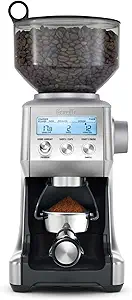 |
| Best Value The sweet spot between price and what you get | AMZCHEF Burr Coffee Grinder CG209 |  |
| Best Budget The cheapest option that still gets the job done reliably | SHARDOR Burr Coffee Grinder CG835B |  |
| Top Rated A top-rated pick with lots of positive feedback | Cuisinart Supreme Grind DBM-8P1 | 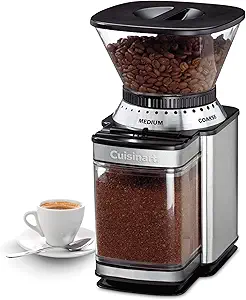 |
| Most Popular A crowd favorite that many people choose with confidence | OXO Brew Conical Burr Grinder | 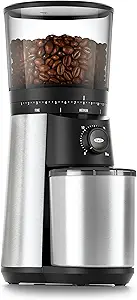 |
| Best Seller A high-volume bestseller chosen again and again | OXO Brew Compact Conical Burr Grinder |  |
AMZCHEF Flat Burr Grinder FC6202

| Burr size | 64 mm |
|---|---|
| Settings | 90 grind settings |
| Motor power | 200 watts |
| Capacity | 9.88 ounces |
| Voltage | 120 volts |
The AMZCHEF FC6202 is a purpose-built flat-burr grinder aimed at home espresso enthusiasts moving up from blade or capsule grinders. It uses 64mm flat burrs and a 90-step grind range that spans fine espresso through coarse methods like French press, letting you dial in shots with micro-step accuracy. The all-metal chamber and stainless steel housing reduce vibration and help heat dissipation while the included magnetic dosing cup and angled metal chute plus a negative-ion anti-static system keep grounds from flying everywhere. A bright LED touch panel with a 0.1-second timer and +/- controls makes single-dose or timed dosing straightforward for consistent puck weights. The 200W DC motor provides enough torque for fine espresso grinds and the dosing cup and holder accept 58mm portafilters for easy dosing. Expect a relatively heavy, durable appliance that favors stability and tone over lightweight convenience, and note that the portafilter is not included. For someone focused on repeatable espresso shots and cleaner counters, the FC6202 brings commercial-style burrs and useful dosing features to a home setup.
Best for: Home espresso enthusiasts who want a durable, repeatable grinder that delivers espresso-capable particle uniformity and tidy single-dose workflow.
Less Ideal for: Casual users who need a lightweight, compact grinder for travel or those who only make occasional brewed coffee and do not require fine espresso dosing.
- Large 64mm flat burrs for uniform particle size and clearer extraction
- Wide 90-step grind range covering espresso through coarse methods
- All-metal chamber and stainless steel body reduce vibration and heat transfer
- Triple anti-static system and magnetic dosing cup keep grounds contained and reduce mess
- LED touch panel with 0.1-second timer enables precise, repeatable dosing
- Relatively heavy unit that is less portable and takes more counter space
- Does not include a portafilter; buyers must supply a 58mm portafilter separately
Verdict: Choose the FC6202 if you want a sturdy, commercial-style flat-burr grinder that delivers precise, repeatable espresso dosing and minimal mess.
Breville Smart Grinder Pro BCG820BSS

| Capacity | 1.1 pounds |
|---|---|
| Wattage | 165 |
| Voltage | 120 |
The Breville Smart Grinder Pro is a compact conical burr grinder aimed at delivering consistent, repeatable doses for espresso and other brew methods. It grinds directly into a portafilter, airtight container, or filter basket and offers 60 stepped grind settings that span fine espresso to coarse French press, making it versatile for home use. The digital dosing system measures grind time in 0.2 second increments and the LCD shows grind setting, time, and number of shots or cups, which helps dial in recipes and reproduce them reliably. Included portafilter cradles and a sealed grounds container make switching between espresso and filter brewing straightforward. Practical limits are its single-hopper, consumer-grade motor that suits home volumes but is not intended for continuous commercial use, and stepped settings that may require experimentation to find the exact micro-adjustment some advanced users prefer. For performance-focused home baristas it offers a lot of control and predictable dosing without a steep learning curve.
Best for: Home baristas who prioritize repeatable, precise dosing and need a single grinder that handles espresso and other brew methods reliably.
Less Ideal for: Users seeking commercial-grade continuous use grinders or those who require stepless micrometric adjustment for very fine espresso profiling.
- Wide range of 60 grind settings for espresso through French press
- Precision digital dosing adjustable in 0.2 second increments
- Grinds directly into portafilter or airtight container for convenience
- Clear LCD that displays grind setting, time, and shots/cups
- Includes portafilter cradles and sealed grounds container
- Stepped grind adjustments limit ultra-fine micro-tuning compared with some stepless grinders
- Designed for home volumes and not for heavy commercial throughput
Verdict: A performance-minded home grinder that delivers consistent, programmable dosing and a wide grind range ideal for dialing in espresso and other brews.
AMZCHEF Burr Coffee Grinder CG209

| Grind settings | 48 |
|---|---|
| Burr size | 40 mm |
| Wattage | 150 watts |
| Capacity | 10.6 ounces |
| Voltage | 120 volts |
The AMZCHEF CG209 is a home-focused conical burr grinder built to cover everything from fine espresso to coarse French press with 48 stepped settings and 40 mm stainless steel burrs. You use the LED touchscreen to choose cup counts or set grind time precisely (0.5 s increments up to 40 s) and there is a manual mode to start and stop on demand, which makes dialing in doses straightforward for an espresso setup. The removable 10.6 oz hopper with UV tint and a trap door simplifies refilling and keeps beans fresher, and anti-static tech plus a stainless grounds cup reduces mess when transferring to a portafilter or brewer. A portafilter holder and detachable funnel stand are handy for home baristas pulling routine shots. Limitations include a manual operation mode rather than automated dosing by weight and possible clogging that triggers a pause requiring cleaning, so regular maintenance is needed for very fine espresso settings. For countertop use the stainless steel body looks durable, but expect to clear the outlet occasionally when changing grind ranges.
Best for: Home baristas who want a versatile, stepped burr grinder that can be finely adjusted for espresso shots while still handling coarser brew methods and who value a tidy, countertop-friendly design.
Less Ideal for: People who require automatic weight-based dosing or commercial throughput should look for a grinder with integrated scales and higher-duty commercial components.
- 48 discrete grind settings cover espresso through French press
- 40 mm stainless steel conical burrs for more uniform grounds
- Precise LED touchscreen timer with 0.5 second increments
- Removable 10.6 oz hopper with UV tint and trap door for easy refills
- Anti-static design and stainless grounds cup reduce mess
- No built-in scale for weight-based dosing
- Can pause for blockages and requires manual cleaning to resume
Verdict: A versatile home burr grinder that gives precise, repeatable stepped adjustments and low-static dosing, making it a practical choice for espresso-focused home users.
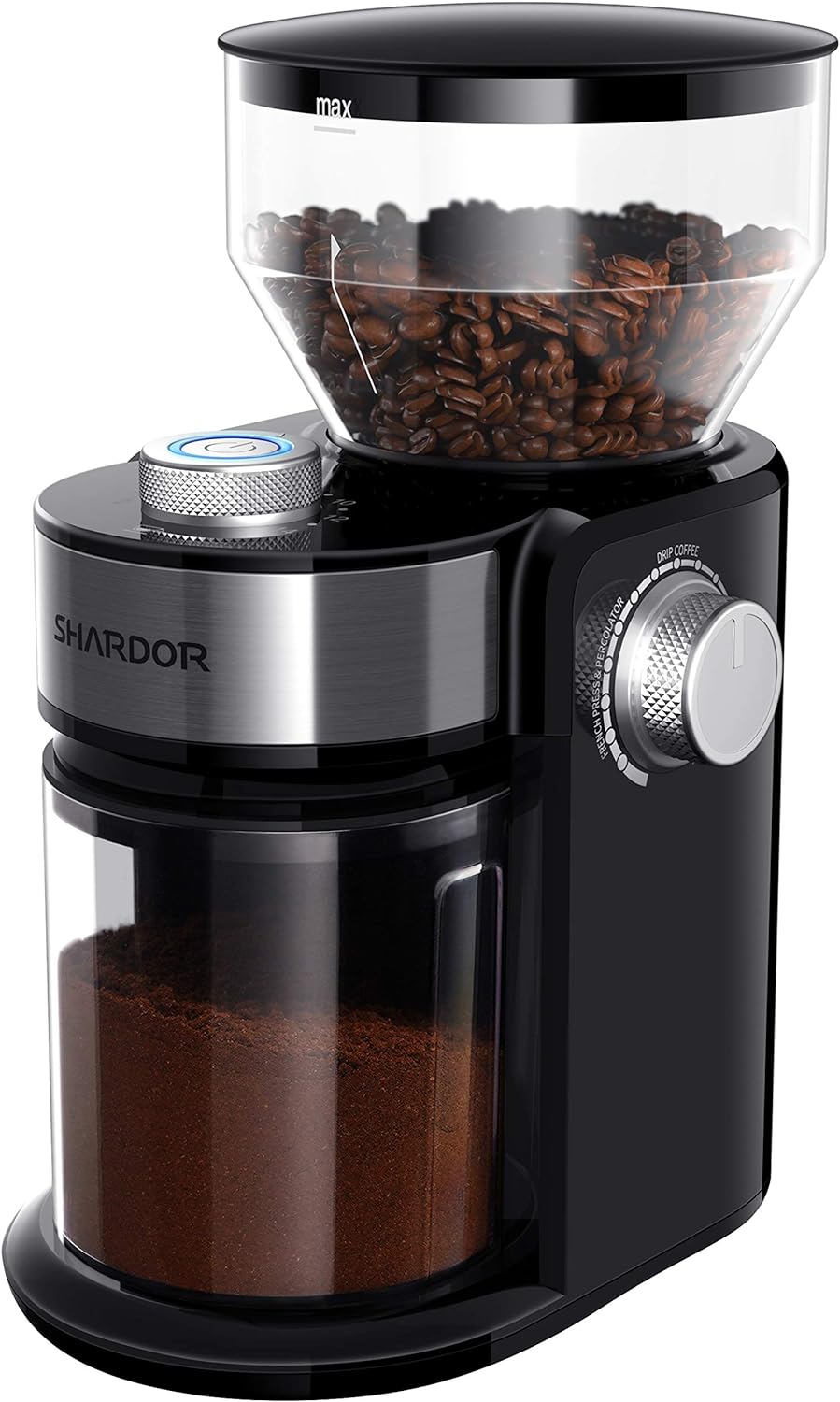
SHARDOR Burr Coffee Grinder CG835B
| Capacity | 8.5 ounces |
|---|---|
| Wattage | 150 watts |
| Voltage | 120 volts |
| Material Type | Stainless Steel |
The SHARDOR CG835B is a budget-friendly flat burr grinder aimed at home users who want more consistent grounds than a blade grinder. It uses a metallic flat burr to produce even particle size and offers 16 stepped grind settings that span fine for espresso up to coarse for French press, making it adaptable for different brew methods. A timed 2–14 cup selector and one-touch start with automatic stop make dosing straightforward for drip and batch brewing, while removable bean hopper, separable grind chamber, and included cleaning brush simplify upkeep. Safety features include a dual interlock so the motor only runs when parts are locked and built-in overheat protection for longer motor life. On the downside, the stepped 16 settings provide less micro-adjustability than higher-end steppers or stepless grinders preferred by precise espresso users, and the flat-burr design at this price point can be a bit noisier and produce slightly more fines than premium commercial grinders. For everyday home use and mixed brewing methods it delivers solid performance at a low price, but serious espresso hobbyists may want a more adjustable, higher-resolution grinder.
Best for: Buyers who want a reliable, low-cost burr grinder that improves consistency over blade grinders and can handle a range of brew methods for everyday home espresso and drip coffee.
Less Ideal for: Users seeking a precision, stepless grinder for competitive espresso dialing or those who need the lowest possible grind fines and noise for heavy daily cafe-level use.
- Flat burr mechanism provides more consistent grind size than blade grinders
- 16 grind settings cover espresso through French press for multiple brew methods
- 2–14 cup timer and one-touch operation make dosing quick and repeatable
- Removable hopper and grind chamber plus included brush make cleaning easy
- Dual safety lock and overheat protection improve day-to-day reliability
- Stepped 16 settings offer limited micro-adjustment for fine espresso dialing
- Not as quiet or low-fines as higher-end commercial or conical grinders
Verdict: A practical, budget burr grinder that gives home users consistent, versatile grinds across brew methods without a big investment.
Cuisinart Supreme Grind DBM-8P1

| Wattage | 500 |
|---|---|
| Capacity | 0.23 kg |
| Voltage | 110 volts |
The Cuisinart Supreme Grind DBM-8P1 is a compact electric burr grinder built for everyday home use and consistent results. It uses flat burrs and an 18-position grind selector to cover settings from ultra-fine to extra-coarse, and an internal timer with an automatic stop to deliver repeatable doses for drip or press methods. A removable 8 oz bean hopper and removable grind chamber make filling and cleaning straightforward, and cord storage plus an included scoop and brush tidy the counter. The motor and construction feel sturdy for routine use, and the 18 stepped settings let you dial in finer grinds for espresso-adjacent extraction, though true commercial espresso requires stepless adjustment and finer calibration than this stepped dial offers. For reliability-focused home users the DBM-8P1 provides predictable grinding and easy maintenance, but espresso purists seeking micro-adjustments or a high-speed commercial motor may find it limited.
Best for: Home coffee drinkers who prioritize a dependable, easy-to-maintain grinder that can produce consistent grinds across many brew methods and holds up to daily use.
Less Ideal for: Serious espresso technicians or shops that need stepless, micro-adjustable grinding and high-throughput commercial performance should choose a dedicated espresso grinder instead.
- 18-position flat burr selector covers a wide range of grind sizes
- Removable hopper and grind chamber for easier cleaning and refilling
- Automatic timer with one-touch power for consistent portioning
- Sturdy build and cord storage suited to daily home use
- Stepped grind settings limit micro-adjustment needed for precise espresso tuning
- Not designed as a commercial-grade high-speed espresso grinder
Verdict: A reliable, user-friendly flat-burr grinder that delivers consistent home espresso-adjacent grinds and simple upkeep for everyday use.
OXO Brew Conical Burr Grinder
| Burr size | 40 mm |
|---|---|
| Grind settings | 15 plus micro-adjustments |
| Bean hopper capacity | 12 oz |
| Wattage | 100 watts |
| Power | 120 volts |
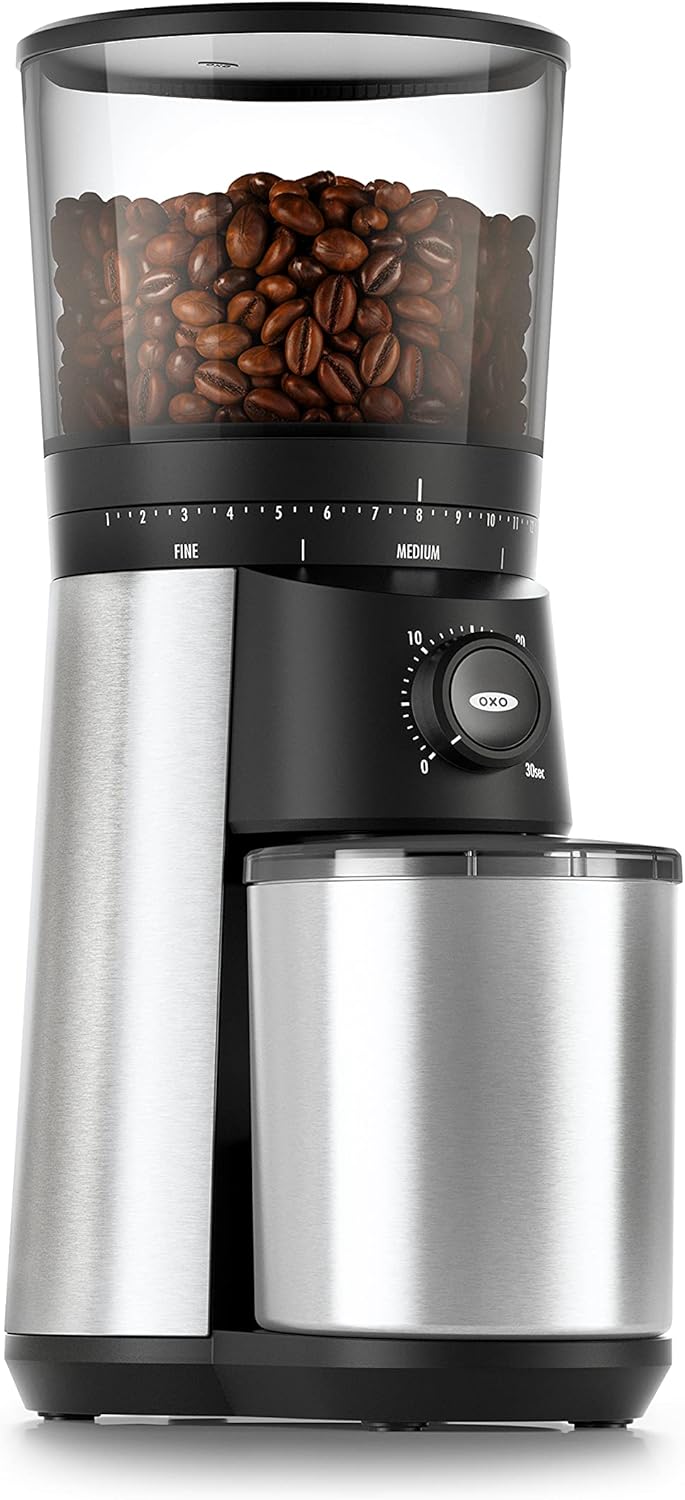
The OXO Brew Conical Burr Grinder is a compact electric grinder built to produce consistent, uniform grounds for a wide range of brew methods, including espresso to French press. It uses 40 mm stainless-steel conical burrs and a stepped dial with 15 grind settings plus micro-adjustments to fine-tune particle size, and a one-touch timer that remembers your last setting for repeatable results. The removable UV-tinted hopper holds up to 12 ounces of beans, and the motor is engineered for low vibration and relatively quiet operation suitable for early mornings. Practical benefits include consistent extraction, easy single-button operation, and a durable stainless-steel exterior that cleans up simply. Limitations to note for espresso-focused buyers are that its stepped settings and micro-adjustments may require dialing in for very fine espresso shots, and some professional users prefer larger commercial burrs or stepless grinders for the tightest control. For home espresso use it delivers reliable, repeatable performance without a steep learning curve.
Best for: Buyers who want a reliable, easy-to-use burr grinder that produces consistent grounds for home espresso and other brew methods and who value repeatability and straightforward controls informed by broad user feedback.
Less Ideal for: Professional baristas or advanced home users seeking stepless, commercial-style control or larger-capacity grinders for high-volume service should consider other options.
- 40 mm stainless-steel conical burrs for uniform grounds
- 15 grind settings plus micro-adjustments for flexible grind ranges
- One-touch timer that remembers last setting for repeatable results
- Large removable UV-blocking hopper holds up to 12 ounces of beans
- Quiet, low-vibration motor suitable for morning use
- Stepped settings may require extra dialing for very fine espresso preferences
- Not a stepless commercial-grade grinder preferred by advanced pros
Verdict: A dependable home burr grinder that balances consistent, repeatable grinds and easy one-touch operation, making it a strong choice for home espresso setups seeking reliable results.
OXO Brew Compact Conical Burr Grinder

| Capacity | 50 g |
|---|---|
| Voltage | 120 volts_of_alternating_current |
| Burr type | Stainless steel conical burrs |
| Settings | 15 settings, 29 micro-adjustments |
The OXO Brew Compact Conical Burr Grinder brings stainless steel conical burrs and fine control to a small footprint aimed at home coffee brewing. It offers 15 grind settings plus 29 micro-adjustments, so you can dial in a range from fine to coarse for drip, pour-over, and on some machines espresso-adjacent doses. A 50 g hopper holds enough beans for several cups, and the integrated spout and removable upper and lower burrs make it straightforward to empty and clean. The unit is powered by an AC adapter and stores neatly with cord wrap, which helps keep counters tidy. Because it is built to be compact, the hopper and grounds cup are plastic (Tritan Renew) rather than full metal, and capacity is modest compared with full-size grinders, so it may require more frequent refills for larger batches. This grinder is best when you want consistent, repeatable grinds from a reliable brand without taking up much counter space, but serious espresso users who need larger capacity or commercial-grade burrs may prefer a larger model.
Best for: Buyers who prioritize reliable, repeatable grind control in a compact, low-risk package for home brewing and occasional espresso practice.
Less Ideal for: Users who routinely grind large doses for multiple espresso shots or who need a heavy-duty, commercial-grade grinder for daily high-volume use.
- Stainless steel conical burrs for consistent grind quality
- Fine control with 15 settings and 29 micro-adjustments
- Removable upper and lower burrs for easier cleaning
- Compact footprint with cord wrap for tidy countertop storage
- 50 g hopper is small for high-volume brewing
- Plastic hopper and grounds container rather than full metal construction
Verdict: Choose this compact OXO conical burr grinder if you want consistent, easy-to-clean grind control for home espresso-adjacent brewing without taking up much counter space.
Choosing the Right Burr Coffee Grinder for Espresso Machine: Key Factors to Consider
Grind Consistency and Particle Distribution
Consistent particle size is the foundation of good espresso. A tight particle distribution reduces channeling and uneven extraction, which improves shot balance and crema. Finer settings amplify the effect of any inconsistency, so a grinder that holds a stable distribution at espresso grind sizes will make it easier to dial in and keep a recipe.
When evaluating grinders, think about burr geometry and build quality. Larger, well-machined burrs typically produce a more uniform grind and stay cooler under load, preserving flavor. Consistency matters more than the number of stepless clicks or marketing claims about speed.
Dose Accuracy and Retention
How accurately a grinder can deliver the same dose matters for repeatable shots. Timed dosers are simpler but can drift with motor load or slight burr wear. Weight‑based dosing or reliable timed mechanisms with low retention reduce variation between shots.
Retention is also important. High retention forces you to purge stale grounds between changes and complicates single‑dosing. Look for designs that minimize retention in the chute and burr chamber or that make purging quick and predictable.
Adjustment Range and Steppiness
Espresso requires very fine adjustments to burr gap to tune extraction. Some grinders offer stepless adjustment for micro‑tuning, others provide numbered steps for repeatability. The right choice depends on your preference: stepless lets you micro‑dial a setting, while stepped systems make it easier to return to a known position.
Also consider the total adjustment range. A grinder that can reach both fine espresso and coarser settings for other brew methods is more versatile, but ensure it still provides precise control where you need it most.
Burr Quality and Motor Torque
Burr diameter and material affect cutting performance and heat generation. Stainless steel burrs are common and durable; hardened steel or specialty profiles can improve longevity and grind quality. Larger burrs tend to cut more cleanly and run cooler, which helps preserve delicate espresso aromatics.
Motor torque matters when dosing finer grinds and when running back‑to‑back shots. Insufficient torque can cause the grinder to stall or have uneven output. Look for motors sized to handle expected daily use without strain.
Build, Serviceability, and Maintenance
A grinder you can clean and service lasts longer and performs more predictably. Consider how easy it is to remove the hopper, access burrs, and clear the chute. Quick disassembly for routine cleaning prevents buildup that degrades grind quality.
Parts availability and straightforward assembly reduce downtime. Even if you do not plan to repair the grinder yourself, designs that simplify cleaning and wear part replacement keep the grinder operating at peak performance.
Workflow Fit and User Interface
How a grinder integrates with your workflow affects daily satisfaction. Consider whether you prefer single‑dosing, timed dosing, or weight‑based workflows, and choose a grinder whose interface supports that method clearly. Controls should be intuitive and reliable to avoid wasting beans during adjustments.
Other workflow details include chute geometry for easy portafilter trimming, hopper capacity to match your usage, and noise level if you grind in a shared space. Small conveniences add up with frequent use.
Single‑Dosing Vs Hopper Use
Single‑dosing and using a hopper are both common with home espresso, but each approach has different implications. Single‑dosing minimizes stale beans and makes it easier to switch coffees, while a hopper is convenient when you pull many shots of the same roast.
Choose a grinder that supports your preferred routine. For single‑dosing, look for a wide chute and a burr chamber that is simple to clear. If you rely on a hopper, check that it locks securely, keeps beans from heating, and has an adequate capacity for your typical use.
- Single‑dosing reduces retention and freshness loss.
- Hoppers are convenient for repeated shots of one coffee.
- Some grinders offer removable funnels to bridge both workflows.
Cleaning and Routine Maintenance Tips
Regular cleaning preserves grind quality and flavor. Brush out the chute and hopper weekly if you grind often, and perform a deeper clean to remove fines every few months depending on volume.
Use manufacturer‑approved cleaning brushes and avoid harsh tools that could nick burrs. Reassemble carefully to maintain alignment and check for wear parts during routine maintenance.
- Purge a small dose after setting changes to clear old grounds.
- Remove the hopper before deep cleaning to prevent bean debris.
- Inspect burrs for wear and replace when performance declines.
Reducing Static and Mess
Static can cause fines to cling to the chute and make dosing uneven. Some grinders include anti‑static materials or ground‑chute designs that reduce cling, while other strategies involve brief purges or using a paper funnel.
If static is a recurring problem, try lowering the ambient humidity slightly or using a small anti‑static device. Routine cleaning also helps by removing stubborn fines that worsen static behavior.
- Purge between shots to clear clinged fines.
- Consider a short paper funnel to direct grounds into the portafilter.
- Wipe the chute periodically to prevent buildup.
Matching Grinder Output to Your Espresso Machine
Make sure the grinder can reach the fine settings your espresso machine requires without excessive effort. Some machines are more sensitive to dose variation and particle distribution, so a grinder with precise adjustment is especially important.
Assess how the grinder dispenses into a portafilter or dosing cup and whether the chute geometry requires a funnel for tidy dosing. A stable, centered stream of grounds simplifies leveling and tamping, improving shot consistency.
- Test grind distribution at the intended shot recipe.
- Check how much adjustment is needed to move one gram of dose.
- Prefer grinders that deliver a straight stream to the portafilter.
Weight‑Based Dosing and Third‑Party Scales
Weight‑based dosing reduces variability by stopping on target grams rather than time. Some grinders integrate scales, while others work smoothly with a third‑party scale that times the grinder run to a precise weight.
If you plan to use a scale, ensure the grinder can start and stop cleanly without lag. The combination of weight dosing and low retention will yield the most repeatable results for consistent espresso extraction.
- Integrated scales simplify workflow but add complexity.
- Third‑party scales offer flexibility across different grinders.
- Combine weight dosing with routine purging for best results.
How We Chose the Best Burr Coffee Grinder for Espresso Machine
We prioritized attributes that directly affect espresso extraction and everyday usability. Primary evaluation criteria included grind consistency at fine espresso settings, dose control and retention, burr quality and material, adjustment range and step resolution, and hopper and motor durability under typical home use. We favored grinders that maintain stable grind distribution across short back‑to‑back shots and that offer reliable, repeatable dosing methods whether by timed dosing, weight, or consistent single-dose workflows. Exclusions: we excluded blade grinders, grinders designed only for coarse brewing, and units lacking adequate burr diameter or adjustment range to reach a true espresso fine setting. We also filtered out models with known excessive static or retention issues that complicate dosing. Our approach balanced measurable specs such as burr size and motor torque with real-world considerations like ease of cleaning, user interface clarity, and serviceability. The final list reflects grinders that, in combination, cover different workflows—timed dosing, weight-based dosing, and single‑dosing—while keeping espresso‑specific performance at the center of selection.
Our full evaluation process is outlined in our review methodology.
FAQ
How fine should I set my grinder for espresso?
It depends on your machine, portafilter size, and recipe, but espresso requires a very fine setting that produces resistance during tamp and a steady 25–35 second extraction for typical recipes. Adjust in small increments and watch shot time and flow to find the right point.
Is a stepless or stepped adjustment better for espresso?
Stepless adjustment gives micro‑tuning control for precise dialing, while stepped systems make it easier to return to a known setting. Which is better depends on whether you prefer infinite tweaking or repeatable indexed steps.
Will a larger burr size improve shot quality?
Larger burrs often produce more uniform grinds and run cooler under load, which can benefit stability and flavor. However, burr profile and build quality also play major roles, so size is one of several important factors.
How often should I replace burrs?
Replacement frequency depends on volume and bean hardness, but home users typically see noticeable wear after several hundred pounds of coffee. Inspect grind quality and consistency; when you observe degraded performance or more retention, plan to replace burrs.
What causes excessive retention and how do I fix it?
Retention is caused by static cling, chute geometry, and dead spaces in the burr chamber. Fixes include purging before dosing, using a single‑dose funnel, choosing grinders with low‑retention designs, and cleaning the burr chamber regularly.
Can I use the same grinder for espresso and other brew methods?
Yes, if the grinder has a wide adjustment range and maintains good control at both fine and coarser settings. Be prepared to re‑dial and purge grounds when switching between methods to avoid cross‑contamination of particle sizes.
Final Verdict
Prioritize grind consistency and reliable dose control when choosing a Burr Coffee Grinder for Espresso Machine. Expect to trade convenience features for better burrs and tighter adjustment when espresso performance is the priority. Consider workflow details such as single‑dosing versus hopper use, ease of cleaning, and whether weight‑based dosing fits your routine. Make your decision based on how you prepare shots every day: select the grinder that best matches your dosing method and maintenance willingness, and you will get more consistent, repeatable espresso from the first pull to the last.