
Note: This article contains affiliate links. If you click on these links and make a purchase, we may earn a small commission at no extra cost to you. This helps support our research and content. Read our full affiliate disclosure here.
Picking a can opener on a budget does not mean you must accept flimsy performance or awkward handling. For everyday kitchens, the right affordable can opener will open smoothly, last through many cans, and stay safe to use and store. This guide shortlists seven top budget can openers chosen for practical durability, user comfort, and low maintenance. We evaluate each option for build quality, ease of use, and how simple it is to clean and store so you can pick one that fits how you cook and live. Read on for straightforward buying guidance and the top contenders.
Top Picks at a Glance
| Best Overall The best all-around choice for most situations | Amazon Basics 3-in-1 Can Opener |  |
| Best Quality Built to a higher standard if you want something more solid | EZ-DUZ-IT Deluxe Can Opener |  |
| Best Value The sweet spot between price and what you get | PAKITNER Premium Can Opener |  |
| Best Budget The cheapest option that still gets the job done reliably | Chef Craft Can Opener 6.5" |  |
| Top Rated A top-rated pick with lots of positive feedback | Zulay Kitchen Can Opener Z-3150 |  |
| Most Popular A crowd favorite that many people choose with confidence | Cuisinart Electric Can Opener CCO-50BKN |  |
| Best Seller A high-volume bestseller chosen again and again | KitchenAid Classic Can Opener |  |
Amazon Basics 3-in-1 Can Opener

| Material Type | Stainless Steel |
|---|---|
| Operation Mode | Automatic |
| Blade Material Type | Stainless Steel |
| Unit Count | 1 Count |
This Amazon Basics 3-in-1 electric can opener is a straightforward countertop appliance that automates opening standard cans and adds a bottle opener and knife sharpener in the same footprint. You place a can under the stainless steel blade and press the automatic start; the unit cuts the lid cleanly and the magnetic lid holder lifts the lid away to reduce mess. Its wide non-slip base keeps the opener steady during use and the on/off and release/lock controls are easy to operate, which makes it convenient for everyday kitchen tasks. The stainless steel blade and simple automatic mechanism deliver reliable performance for typical household cans, and the integrated bottle opener and sharpener are handy extras when space is limited. Downsides are a basic feature set without advanced trimming or smooth-edge claims and its 50W motor is designed for regular cans rather than heavy industrial lids, so very large or odd-shaped containers may need manual handling.
Best for: Buyers seeking an affordable, no-frills electric can opener that simplifies everyday kitchen tasks and also offers small extras like a bottle opener and sharpener.
Less Ideal for: People who need industrial-strength can opening, frequent commercial use, or specialty smooth-edge opening should look for higher-capacity or purpose-built models.
- Automatic operation with simple on/off and release controls for easy, one-handed use
- Stainless steel blade that cuts lids cleanly
- Magnetic lid holder keeps lids from falling and reduces mess
- Wide non-slip base provides stability on the countertop
- Includes bottle opener and knife sharpener for added utility in a small footprint
- No advanced smooth-edge or specialty can handling features for oversized or irregular cans
- Basic motor power suited to standard household cans rather than heavy-duty industrial lids
Verdict: A budget-friendly, easy-to-use electric can opener that handles everyday household cans reliably while adding a bottle opener and sharpener in one compact unit.
EZ-DUZ-IT Deluxe Can Opener

| Material Type | Steel |
|---|---|
| Blade Material Type | Carbon Steel |
| Operation Mode | Manual |
| Item Type Name | EZ-DUZ-IT Deluxe Can Opener with Black Grips |
The EZ-DUZ-IT Deluxe is a straightforward, performance-focused manual can opener built from heavy-gauge chromed steel with a hardened carbon steel cutting wheel and gear-driven mechanism for smooth operation. You use it like a traditional swing-style opener: clamp the jaws around a can, crank the handle, and the geared drive does most of the work so cutting feels easier and more controlled than budget pinch-style openers. The thick rubberized grips make extended use comfortable and the robust build suggests long life under frequent kitchen use. It is hand-wash only and a bit larger and heavier than compact travel models, but that heft contributes to stability while cutting. The opener is made in the USA and prioritizes reliable cutting performance over extra features like magnetic lids or detachable parts. If you want a no-nonsense, durable tool that keeps working can after can, this delivers; users who prefer automated or space-saving electric solutions will want a different type of opener.
Best for: Buyers who prioritize reliable, long-lasting manual performance and want a sturdy tool that handles frequent kitchen use without fuss.
Less Ideal for: Those seeking an electric opener or a very compact, travel-friendly model should consider other options.
- Gear-driven mechanism provides smooth, low-effort cutting
- Hardened carbon steel cutter designed for long-lasting sharpness
- Heavy-gauge chromed steel construction improves durability and stability
- Thick rubberized handles offer comfortable grip during repeated use
- Hand-wash only which requires more maintenance than dishwasher-safe models
- Heavier and bulkier than compact can openers, taking more drawer space
Verdict: A rugged, gear-driven manual can opener that delivers dependable, low-effort cutting for buyers focused on long-term performance.
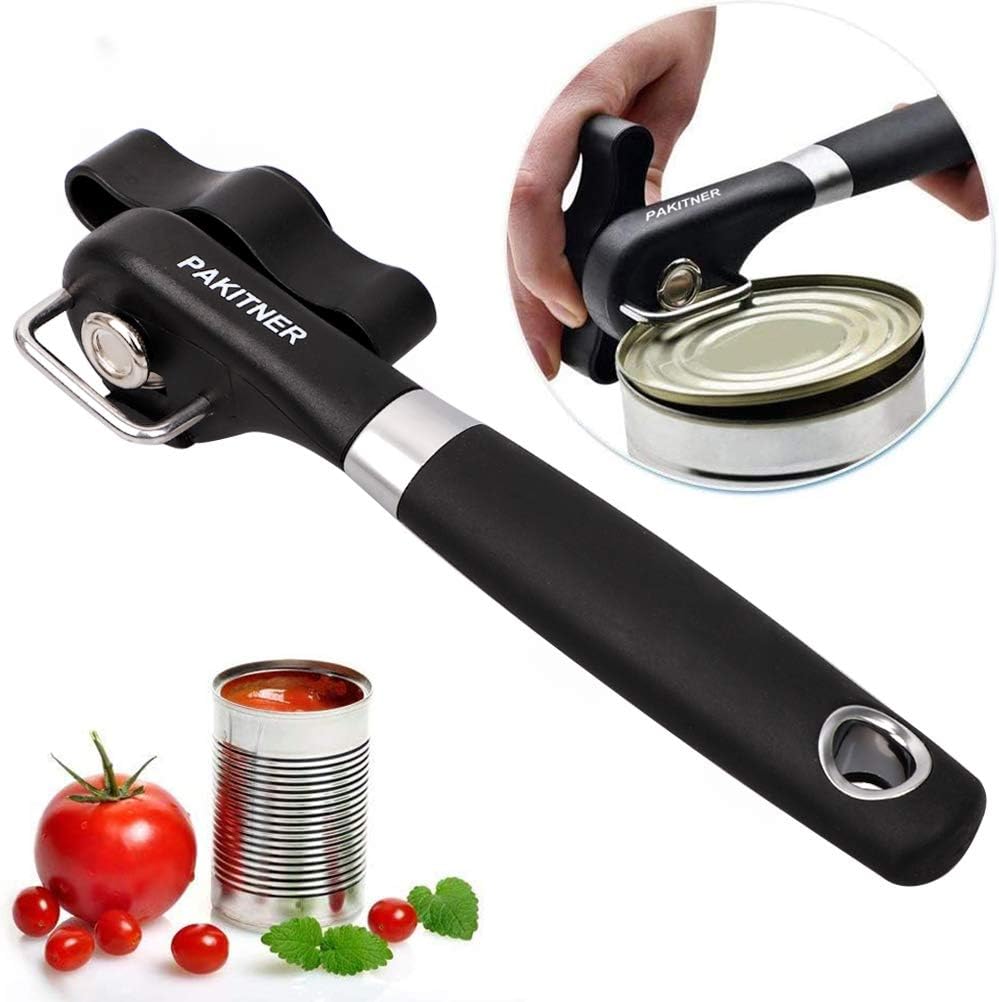
PAKITNER Premium Can Opener
| Material Type | Stainless Steel |
|---|---|
| Blade Material Type | Stainless Steel |
| Operation Mode | Manual |
| Unit Count | 1 Count |
The PAKITNER Premium Can Opener is a handheld, manual side-cut opener that severs the lid from the can at the folded edge so the removed lid has a smooth, non-jagged rim. You use it by positioning the opener on the can rim and turning the large knob clockwise to cut around the circumference, then reversing to lift the lid; the design keeps the cutting wheel from dropping metal shavings into food. Built from stainless steel with a sizable ergonomic crank and hanging hole, it feels lightweight and easy to store, and the manufacturer says it is dishwasher safe for cleanup. This style is practical for everyday pantry cans and for travel or camping because it is compact and simple to operate. Limitations are those of any manual side-cut opener: it requires some wrist effort on stiff cans and offers no electric or hands-free option, and longevity depends on cleaning and avoiding rust over long use despite stainless construction.
Best for: Buyers who want a dependable, no-frills manual opener that saves counter space and delivers safe, tidy lids for everyday pantry use and occasional travel.
Less Ideal for: People who need a hands-free or electric solution for frequent heavy-duty can opening or who cannot comfortably use a manual crank due to limited hand strength.
- Side-cut design produces a smooth, safe lid edge that prevents jagged cuts
- Stainless steel blade and handle resist corrosion and are easy to wash
- Large ergonomic turning knob reduces hand strain and improves control
- Compact, lightweight form with hanging hole for easy storage and travel compatibility
- Manual operation requires wrist strength for tougher or large cans
- No electric or assisted mechanism for users who prefer hands-free opening
Verdict: A simple, space-saving manual opener that reliably produces smooth, safe lids for budget-minded, practical buyers.
Chef Craft Can Opener 6.5"

| Material Type | Steel |
|---|---|
| Blade Material Type | Stainless Steel |
| Operation Mode | Manual |
| Included Components | Can Opener |
This compact manual can opener is a straightforward, no-frills tool for opening cans by hand. Its nickel-plated steel construction and stainless-steel blade give it a durable feel, and the included tapper on the handle removes sharp lid edges for safer handling. At 6.5 inches it tucks easily into a drawer or a camping kit and the dishwasher-safe finish makes cleanup quick. Because it is manual, it requires no power and is reliable in places without electricity, but it does demand a bit more wrist effort than a geared or electric opener, particularly on thicker cans. The design is basic but practical: easy to operate, easy to store, and built to last for routine kitchen or outdoor use without extra features that drive up cost.
Best for: Buyers looking for a low-cost, durable manual can opener for everyday kitchen use or camping who prioritize simplicity and reliability over extra features.
Less Ideal for: People who need a low-effort, ergonomic solution for frequent heavy-duty can opening or who prefer electric automatic openers.
- Durable nickel-plated steel construction with stainless-steel blade
- Integrated tapper on the handle for safe lid removal
- Compact 6.5-inch size stores easily in drawers or travel kits
- Dishwasher safe for easy cleanup
- Manual operation can require significant wrist force on large or thick cans
- Basic design lacks ergonomic grips found on higher-end manual openers
Verdict: A durable, no-frills manual can opener that delivers reliable performance for buyers on a tight budget.
Zulay Kitchen Can Opener Z-3150

| Material Type | Stainless Steel |
|---|---|
| Blade Material Type | Stainless Steel |
| Operation Mode | Manual |
| Unit Count | 1 Count |
The Zulay Kitchen Can Opener Z-3150 is a straightforward, heavy-duty manual opener built from stainless steel with comfortable, slip-resistant handles. You use it like a traditional rotary can opener: clamp the cutting wheel to the can rim and turn the knob to rotate around the lid, while the cushioned grips reduce hand strain for repeated use. The stainless cutting wheel and gears are positioned and tested for durability, and the top doubles as a bottle opener for added convenience. Its manual operation means no batteries or cords and simple maintenance; hand washing is recommended to preserve the finish. The design favors reliability and consistent performance rather than extra bells and whistles, so it is less suited to one-handed or electric operation and requires a bit of arm motion for very tight lids. For budget-minded kitchens needing a long-lasting basic opener, this model delivers solid real-world performance.
Best for: Buyers who prioritize a dependable, no-frills kitchen tool that will last through regular household use and value comfortable handling over powered convenience.
Less Ideal for: People who want an electric or one-handed automatic opener or who need a tool specifically designed for users with severe grip or mobility limitations should consider other options.
- Durable stainless steel cutting wheel and parts for long service life
- Soft, slip-resistant handles reduce hand fatigue and improve control
- Integrated bottle opener adds a handy second function
- Simple manual design requires no power and is easy to maintain
- Manual operation needs physical turning and is not ideal for limited hand strength
- Manufacturer recommends hand washing rather than dishwasher cleaning
Verdict: A rugged, comfortable manual can opener that delivers reliable, long-lasting performance for budget-conscious kitchens.
Cuisinart Electric Can Opener CCO-50BKN

| Operation Mode | Automatic |
|---|---|
| Wattage | 60 watts |
| Material Type | Stainless Steel |
This Cuisinart electric can opener is a simple countertop appliance that opens cans at the touch of a button. It is typically used for everyday meal prep when you want a hands-free option—press the lever, the motor cuts the lid, and a magnetic lid holder captures the top for safe disposal. Notable features include a 60-watt motor, a wide non-slip base for stability, and a detachable activation lever that makes the parts easy to rinse. The stainless steel cutting blade and automatic operation make it faster and less tiring than manual openers, which is helpful for those with limited hand strength. The unit is compact so it fits on most counters, but it is corded so it needs nearby power and must be cleaned periodically to avoid food buildup. It is a straightforward, reliable tool for routine kitchen use rather than a heavy-duty commercial solution.
Best for: Buyers who prioritize ease of use and reliable, low-effort can opening—especially those seeking a compact, user-friendly option backed by wide customer acceptance and proven performance.
Less Ideal for: People who need a heavy-duty or cordless solution for high-volume commercial use should consider more robust or battery-powered models instead.
- One-touch automatic operation for hands-free can opening
- Magnetic lid holder captures lids for safer disposal
- Wide non-slip base improves stability during use
- Detachable activation lever for easier cleaning
- Stainless steel cutting blade for consistent cuts
- Requires a power outlet since it is a corded electric unit
- Not designed for commercial or very high-volume opening tasks
Verdict: A compact, easy-to-use automatic can opener that makes everyday kitchen tasks faster and gentler on the hands.
KitchenAid Classic Can Opener

| Material Type | Stainless Steel |
|---|---|
| Blade Material Type | Stainless Steel |
| Operation Mode | Manual |
| Unit Count | 1 Count |
The KitchenAid Classic Can Opener is a straightforward manual opener built for everyday kitchen use. It uses a razor-sharp stainless steel cutting wheel to pierce and slice cans cleanly while an oversized turning knob gives a secure grip for steady operation. The soft, ergonomic handles make it comfortable to hold and reduce hand strain, which helps when opening several cans or for users with weaker grip strength. A built-in bottle opener adds convenience so you do not need a second tool. It is hand-washable and compact enough to store in a drawer. Limitations are typical of manual openers: it requires physical turning effort and will not be suitable for users who need an electric solution, and metal-on-metal parts may eventually wear with heavy commercial use. For buyers who want a durable, no-frills kitchen tool, this model balances comfort and cutting performance without extra features to complicate use.
Best for: A practical buyer who wants a reliable, easy-to-use manual can opener for daily home cooking and values comfort and simple, long-lasting performance.
Less Ideal for: People who prefer fully automatic, electric can openers or need a commercial-grade solution for high-volume foodservice environments should look elsewhere.
- Razor-sharp stainless steel cutting wheel for clean openings
- Oversized turning knob for easier, controlled operation
- Soft ergonomic handles reduce hand strain during use
- Integrated bottle opener adds two-in-one convenience
- Compact, drawer-friendly shape for simple storage
- Requires manual turning effort, not suitable for users needing an electric opener
- Not intended for heavy commercial use where motorized or industrial openers perform better
Verdict: A dependable, comfortable manual can opener that delivers clean cuts and simple two-in-one functionality for budget-conscious home kitchens.
Choosing the Right Can Opener on a Budget: Key Factors to Consider
Cutting Mechanism
The cutting mechanism determines how cleanly a can opener severs the lid and whether the edge left behind is safe. Smooth-turn wheel-and-gear mechanisms tend to produce consistent cuts, while poorly aligned cutters can slip, create jagged edges, or require repeated passes.
For budget models, look for can openers with stainless or plated cutting wheels and a solid gear engagement that does not wobble. A well-engineered cutting mechanism reduces hand effort by cutting on the first pass and prevents metal shavings from contaminating food.
Handle Comfort and Leverage
How a can opener feels in your hand directly affects usability, especially if you open many cans or have limited grip strength. Long handles with non-slip grips distribute pressure better and reduce wrist strain, while short thin handles concentrate force and tire users faster.
Also consider the lever action: smooth, low-resistance gearing reduces the number of rotations needed. For budget shoppers, a padded or textured handle and an efficient gear ratio are the highest-impact features for everyday comfort.
Material and Corrosion Resistance
Can openers are exposed to moisture and acidic foods, so materials that resist rust and corrosion extend product life. Stainless steel cutting wheels and rust-resistant body materials hold up better than plain steel or low-grade metals.
On inexpensive models this often appears as plated components or stainless key parts rather than a fully stainless body. Still, pay attention to joints and screws where rust commonly starts, and prefer designs that keep metal parts from sitting wet after use.
Cleaning and Maintenance
Routine cleaning prevents food buildup that dulls the cutting wheel and attracts bacteria. Simple designs with fewer crevices are easier to rinse, while models with removable cutting heads or dishwasher-safe parts simplify maintenance.
For budget can openers, inspect how exposed the cutting wheel and gears are and whether they can be rinsed under running water. Avoid designs that trap pulp in tiny spaces or require a brush every time you use them.
Safety Features
Safety matters because can lids can be sharp and mishandling can cause injury. Some can openers create smooth-edged lids, while others leave sharp rims. Models that cut from the side or have magnet attachments to lift the lid help reduce contact with sharp metal.
Check whether the opener design secures the lid during removal and whether it minimizes jagged edges. Even on a budget, basic safety-oriented features are worth prioritizing for households with kids or less dexterous users.
Storage Size and Design
How much space the can opener occupies affects kitchen organization, especially in small kitchens or crowded drawers. Compact manual openers tuck easily into utensil drawers, while larger heavy-duty models may need cabinet space or a hanging hook.
Consider whether the opener has a flat profile, a hanging hole, or a protective cover for the cutting wheel. These small design choices help keep the tool accessible and prevent accidental cuts when reaching into storage spaces.
Types of Budget Can Openers
Even on a budget you will see a few different styles: traditional hand-crank openers, side-cut models, and compact, pocket-friendly versions. Hand-crank openers are the most common and offer a balance of control and simplicity. Side-cut variants remove the lid by cutting along the side wall of the can, leaving a smoother edge and often easier lid removal. Compact openers sacrifice leverage for portability, which suits occasional use but can be harder for frequent tasks.
- Hand-crank: Widely available, reliable for everyday use, good leverage.
- Side-cut: Cleaner edge, often safer to handle after opening.
- Compact: Portable and space-saving but may require more effort.
Maintaining a Budget Can Opener for Longevity
Regular maintenance keeps even inexpensive can openers working well. After each use, rinse away food particles, wipe the cutting wheel and gears dry, and operate the unit a few times under running water if residue builds up. Periodically dry and lightly oil moving joints to prevent stiffness and rust.
Store the opener in a dry place and avoid leaving it in a damp sink or on a wet countertop. If the model has removable parts, disassemble them occasionally for a deeper clean according to the manufacturer instructions.
- Rinse and dry after each use to prevent corrosion.
- Operate under water to flush crumbs from gears when needed.
- Apply a drop of food-safe oil to pivot points every few months.
Ergonomic Tips for Easier Opening
If hand strength is a concern, choose a can opener with long handles and textured grips to increase leverage and reduce slippage. Positioning matters: hold the can steady on a flat surface and align the opener so the cutting wheel meets the lip cleanly before cranking.
For stubborn cans, steady them with your body rather than gripping tightly with one hand. Slow, even turns prevent the wheel from skipping and reduce the required force per rotation.
- Use a flat, stable surface to prevent slipping.
- Keep your non-dominant hand on the can base for stability.
- Turn slowly to maintain consistent cutting pressure.
When to Replace a Budget Can Opener
Budget can openers can last years with care, but there are clear signs it is time to replace them. If the cutting wheel slips, creates jagged edges, rust appears in critical moving parts, or the mechanism requires increasingly more force, replacement is better than risking food contamination or injury.
Also replace the opener if components bend or strip, or if the hygiene of the tool cannot be maintained because of trapped gunk. Replacing a worn can opener restores ease of use and safety more reliably than attempting repeated repairs on inexpensive units.
- Replace if cutting becomes inconsistent or jagged.
- Replace if rust compromises moving parts.
- Replace if gears or handles become bent or stripped.
Space-Saving Storage Solutions
Think about where the can opener will live before you buy. Slim, flat-bodied openers slide into utensil drawers, while units with hanging holes can be stored on hooks inside cabinets. Magnetic or lid-lifting features should be covered or protected when stored to avoid accidental cuts.
If drawer clutter is a concern, choose models with a low profile or a locking mechanism that keeps the handles closed for compact storage.
- Look for hanging holes or flat profiles for drawer storage.
- Choose a locking handle for compact stowage in drawers.
- Keep the cutting wheel covered or oriented away from other items.
How We Chose the Best Can Opener on a Budget
We selected can openers based on practical durability, ergonomic handling, cutting efficiency, maintenance needs, and storage convenience. First, we prioritized construction and materials that resist corrosion and maintain a sharp cutting wheel over time. Ergonomics was the next filter: can openers had to offer comfortable grips and efficient leverage so users with limited hand strength could operate them reliably. We also considered cutting system design and how cleanly and safely it severs lids, since messy cuts or sharp ragged edges increase risk and cleanup time. Ease of cleaning and corrosion resistance matter for long-term value, so we favored designs with exposed or removable components that are simple to rinse and dry. Finally, compactness and storage features were included to suit small kitchens and crowded drawers. We excluded specialty heavy-duty or commercial-grade openers that exceed typical household needs and luxury or multi-function units with added gadgets that complicate cleanup. The goal was to identify slimmed-down, well-made budget choices that perform the core task consistently and require minimal upkeep.
Our full evaluation process is outlined in our review methodology.
FAQ
Can I clean a manual can opener in the dishwasher?
Some manual can openers have dishwasher-safe components, but many budget models are not designed for regular dishwasher exposure because of potential rust. Check the product details and when in doubt, wash by hand and dry thoroughly to preserve parts.
Why does my can opener leave jagged edges?
Jagged edges usually indicate a dull or misaligned cutting wheel or worn gears. Regular cleaning and occasional replacement of the cutting wheel on models that allow it can fix this. If parts are corroded or bent, replacement is safer than continued use.
Are side-cut can openers safer than top-cut models?
Side-cut openers often leave a smoother lid edge and can reduce direct contact with sharp rims, which many users consider safer. However, they can be more expensive or less common in budget ranges, so weigh ease of use and safety together when choosing.
How do I open cans if I have limited hand strength?
Look for can openers with long handles, ergonomic non-slip grips, and low-resistance gearing. Side-cut designs reduce the number of turns and can be easier for some users. Also consider mounting or stationary openers if a handheld solution remains difficult.
Will oiling my can opener help if it feels stiff?
A small amount of food-safe oil on pivot points can restore smooth motion and reduce stiffness. Wipe away excess oil and wash the opener after a few uses to prevent buildup. If stiffness comes from corrosion rather than simple dryness, cleaning and part replacement may be required.
Final Verdict
When shopping for a can opener on a budget, prioritize a reliable cutting mechanism, corrosion-resistant materials, and comfortable handles. Those features have the biggest impact on day-to-day usability, safety, and how long an inexpensive unit will last. Accept small tradeoffs in features to get better durability and ergonomics, and replace the tool if cutting becomes inconsistent or parts show significant rust. Focus on the practical criteria covered here, and you can confidently pick a low-cost can opener that performs for years.