
Note: This article contains affiliate links. If you click on these links and make a purchase, we may earn a small commission at no extra cost to you. This helps support our research and content. Read our full affiliate disclosure here.
A can opener that won t break can save daily frustration and reduce waste from damaged lids or failed tools. Whether you open a few cans a week or rely on one for regular meal prep, durability and consistent operation matter more than bells and whistles. This guide highlights a curated shortlist of the most reliable can openers in the category, chosen for long-term performance and practical use. We evaluated candidates for structural strength, cutting reliability, ease of use, and how simple they are to maintain. Read on for the top durable can openers and clear guidance on which features make the difference in daily kitchen life.
Top Picks at a Glance
| Best Overall The best all-around choice for most situations | Graceliving Premium Can Opener |  |
| Best Quality Built to a higher standard if you want something more solid | OXO SteeL Can Opener 58081 |  |
| Best Value The sweet spot between price and what you get | Zulay Kitchen Can Opener Z-3150 |  |
| Best Budget The cheapest option that still gets the job done reliably | Ultrean Manual Can Opener |  |
| Top Rated A top-rated pick with lots of positive feedback | RayStead Heavy Duty Can Opener |  |
| Most Popular A crowd favorite that many people choose with confidence | KitchenAid Classic Can Opener |  |
| Best Seller A high-volume bestseller chosen again and again | Cuisinart Electric Can Opener CCO-50BKN |  |
Graceliving Premium Can Opener
| Material Type | Stainless Steel |
|---|---|
| Blade Material Type | Stainless Steel |
| Operation Mode | Manual |
| Unit Count | 1 Count |
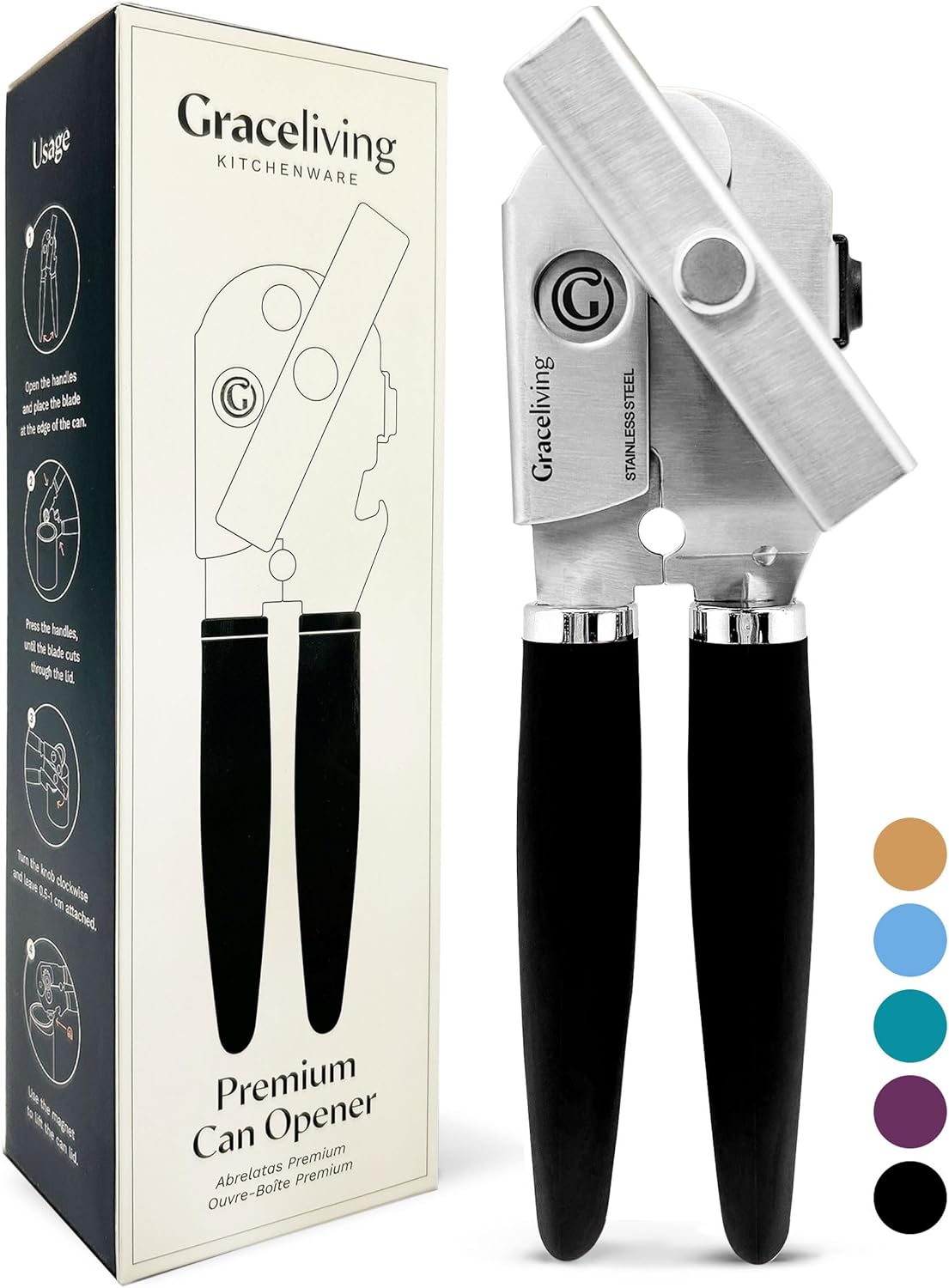
This Graceliving can opener is built for repeated kitchen use and emphasizes durability and user comfort. Its reinforced stainless steel body and precision gears pair with a high‑carbon blade to cut lids cleanly and resist wear; the product claims lab testing for 300+ uses, which positions it above typical consumer models. The oversized, smooth-turning knob and non-slip soft-touch handle make it easy to operate for longer tasks and for users with weaker grip strength. A strong built-in magnet lifts sharp lids away from hands and counters, improving safety and cleanup, and the integrated bottle opener adds a handy secondary function. Practical downsides are that it is a manual tool so opening many cans consecutively still requires effort, and its heavier, solid build means it takes up more hand‑strength to maneuver than ultra-light models. Overall it reads like a robust, no-nonsense replacement for flimsy openers and suits kitchens that need a long-lasting manual solution.
Best for: Buyers who want a durable, comfortable manual can opener that lasts through heavy home use and reduces the need for frequent replacements.
Less Ideal for: People who need an electric or fully hands‑free opener for limited hand strength or high‑volume commercial can opening should consider an electric model instead.
- Reinforced stainless steel construction and precision gears for longer lifespan
- High‑carbon, razor‑sharp blade for clean, jag‑free cuts
- Oversized, smooth-turning knob and ergonomic soft-touch handle for easier operation
- Strong magnetic lid lifter for touch‑free, safer lid removal
- Built‑in bottle opener adds a useful secondary function
- Manual operation still requires physical effort for frequent use
- Heavier, solid build may feel bulky for some users
Verdict: Choose this can opener if you want a durable, comfortable manual tool designed to outlast cheap openers and lift lids safely.
OXO SteeL Can Opener 58081

| Material Type | Stainless Steel |
|---|---|
| Blade Material Type | Stainless Steel |
| Operation Mode | Manual |
| Included Components | Can Opener |
The OXO SteeL Can Opener is a straightforward, performance-focused manual opener designed for regular kitchen use. It uses sharp stainless-steel blades and an oversized knob to make cutting can lids easier with less wrist strain, while the large handles with cushioned touch points give a secure grip and reduce hand pressure during repeated use. The built-in bottle opener is a useful extra, and the design works for both left- and right-handed users. Because it is fully manual and made of stainless steel, it feels durable and simple to maintain, but the manufacturer recommends hand washing only. For cooks who open a lot of canned goods, the efficient cutting action and ergonomic turning control translate to faster, less tiring work; however, it lacks any electric assist and will require physical turning force on very large or stiff lids. The overall construction and quality materials make it a reliable choice for buyers focused on a long-lasting, no-frills can opener.
Best for: Buyers who prioritize a durable, high-performance manual tool for frequent can opening and want ergonomic controls to minimize hand fatigue.
Less Ideal for: People who prefer automated convenience or need an electric can opener for minimal physical effort should consider powered models instead.
- Sharp stainless-steel cutting blades for consistent opening
- Oversized turning knob reduces wrist effort
- Cushioned, large handles improve grip and comfort
- Built-in bottle opener adds convenience
- Ambidextrous design suitable for left- and right-handed users
- Hand wash only; not dishwasher-safe
- Manual operation requires physical effort on very stiff lids
Verdict: A sturdy, ergonomically designed manual can opener built for reliable, long-term performance.
Zulay Kitchen Can Opener Z-3150

| Material Type | Stainless Steel |
|---|---|
| Blade Material Type | Stainless Steel |
| Operation Mode | Manual |
| Included Components | Can Opener |
This Zulay Kitchen manual can opener uses stainless steel blades and a geared turning mechanism to open cans with less effort than cheap models. It is designed for everyday kitchen use: clamp the cutting wheel to the can rim, rotate the knob to circle the lid, and lift the finished lid away. The soft, slip-resistant handles improve control and reduce hand strain when opening multiple cans, and the top doubles as a bottle opener for added utility. Because the blades are stainless steel and the unit is built for hand operation, it feels sturdier and more reliable than typical bargain openers, and the manufacturer recommends hand washing to preserve performance. The opener is simple and durable but lacks power-assist features, so users with very limited hand strength may prefer an electric model. For cooks who want a compact, no-frills tool that holds up under frequent use, this is a practical, long-lasting option.
Best for: Buyers who want a durable, no-frills manual opener that stands up to frequent use and values a comfortable grip and simple reliability.
Less Ideal for: People who need hands-free or motorized opening due to limited hand strength should consider an electric can opener instead.
- Stainless steel cutting blades for durability and corrosion resistance
- Soft, slip-resistant handles improve grip and reduce hand fatigue
- Integrated bottle opener adds secondary functionality
- Simple manual design with a reliable geared turning knob
- Manual operation may be difficult for users with very weak grip or arthritis
- Requires hand washing to preserve longevity rather than dishwasher-safe
Verdict: A sturdy, comfortable manual can opener built to last for everyday kitchen use.
Ultrean Manual Can Opener

| Blade Material Type | Stainless Steel |
|---|---|
| Operation Mode | Manual |
| Unit Count | 1 Count |
The Ultrean Manual Can Opener is a simple, no-frills hand tool for opening cans and bottles. It uses a stainless steel cutting wheel and an oversized easy-turn knob to cut lids cleanly while its soft-touch, ergonomic handle makes repeated use more comfortable. The design focuses on a smooth-edge finish that reduces sharp lid edges and a rust-resistant finish intended to extend life in a busy kitchen. It is compact and lightweight so it tucks into a drawer or travel kit for picnics and camping. Because it is fully manual, it requires no power and is straightforward to maintain, but it does depend on sharpness and correct technique to avoid jamming; the product notes advise releasing and repositioning if the wheel sticks. For buyers on a tight budget who want a durable, basic opener that avoids complex parts, this is a practical pick, though those seeking hands-free or electric convenience will want a different solution.
Best for: Buyers who need a reliable, low-cost manual opener for occasional household use or travel and prioritize simplicity and durability over electric convenience.
Less Ideal for: Users who open large numbers of cans frequently or who prefer one-handed or automatic operation should consider an electric or hands-free opener instead.
- Stainless steel cutting wheel for cleaner cuts and rust resistance
- Soft-touch ergonomic handle and oversized knob for easier turning
- Compact, lightweight design suitable for drawers, camping, and travel
- Manual operation requires no power and has simple maintenance
- Manual mechanism can stick and requires reletting and repositioning if jamming occurs
- Not as fast or effortless as electric can openers for high-volume use
Verdict: A sturdy, budget-friendly manual can opener that delivers clean cuts and simple, long-lasting performance for everyday household use.
RayStead Heavy Duty Can Opener

| Material Type | Carbon Steel |
|---|---|
| Blade Material Type | High Carbon Steel |
| Operation Mode | Manual |
| Unit Count | 1 Count |
This RayStead heavy-duty manual can opener is built around durability and ease of use. Its extra-long ergonomic handles and soft-grip surfaces reduce hand strain so a single smooth turn opens most cans with minimal squeeze, which is helpful for seniors or anyone with weak grip. The oversized crank and heavy-duty all-steel frame with metal gears make it suited to frequent use and large #10 cans as well as standard sizes, and the high-carbon cutting wheel is designed to leave smooth, burr-free edges. It also includes a magnet lid lifter and a bottle-cap hook, which add convenience in a busy kitchen or for camping. The opener is manual only, so it requires physical effort unlike electric models, and it may be bulky for very small cans like single-serve tuna. For buyers prioritizing a rugged, long-lasting tool that resists bending or failure, this model focuses on reliable mechanical construction rather than gadgets or power assistance.
Best for: Buyers who want a mechanically robust, no-frills can opener that will hold up to frequent use and make opening large cans easier without relying on power.
Less Ideal for: If you need an automatic, touchless opener or a very compact tool for tiny cans and limited storage, this heavy-duty manual model is not the best choice.
- Commercial-grade all-steel frame and metal gears for long-term durability
- Extra-long ergonomic soft-grip handles reduce hand strain during use
- High-carbon steel cutting wheel designed to leave smooth, burr-free edges
- Oversized crank handles large cans including #10 sizes and standard cans
- Built-in magnet lid lifter and bottle-cap hook add practical convenience
- Manual operation requires physical effort compared with electric openers
- Large extra-long design may be awkward for very small cans or compact storage
Verdict: Choose this RayStead opener if you want a rugged, factory-quality manual can opener built to withstand heavy daily use.
KitchenAid Classic Can Opener

| Material Type | Stainless Steel |
|---|---|
| Blade Material Type | Stainless Steel |
| Operation Mode | Manual |
| Unit Count | 1 Count |
The KitchenAid Classic Can Opener is a simple, well-made manual opener built for routine kitchen tasks. It uses a razor-sharp stainless steel cutting wheel that pierces cans cleanly and rolls around the rim for smooth cutting, while an oversized turning knob and soft ergonomic handles reduce hand strain during use. The integrated bottle opener adds convenience so you do not need a separate tool. In practice it feels solid in hand, moves consistently from small to large cans, and is easy to rinse and dry after use. Because it is manual there are no batteries or motors to fail, and the stainless steel construction should resist corrosion with proper care. Limitations are typical of hand openers: it requires some wrist motion to operate and will not perform as fast as an electric model for high-volume opening tasks. Overall it is a dependable, low-maintenance choice for everyday home kitchens where durability and straightforward performance matter.
Best for: Buyers who prioritize a reliable, no-frills kitchen tool backed by strong user feedback and want a durable manual opener for everyday home use.
Less Ideal for: People who open large quantities of cans frequently or who need a hands-free electric solution should consider an electric can opener instead.
- Razor-sharp stainless steel cutting wheel for clean, smooth cuts
- Oversized turning knob and soft ergonomic handles reduce hand strain
- Integrated bottle opener adds dual functionality
- Simple manual design with no electronics reduces failure points
- Requires manual wrist motion and effort compared with electric openers
- Not ideal for very high-volume or commercial use
Verdict: A sturdy, easy-to-use manual can opener that delivers dependable, long-lasting performance for everyday kitchens.
Cuisinart Electric Can Opener CCO-50BKN

| Material Type | Stainless Steel |
|---|---|
| Blade Material Type | Stainless Steel |
| Operation Mode | Automatic |
| Wattage | 60 watts |
The Cuisinart CCO-50BKN is a straightforward electric can opener that automates the chore of opening cans with a single push of a button. It sits on the counter and uses a sturdy motor and stainless steel cutting mechanism to handle a range of can sizes while a wide nonslip base keeps it stable during use. The unit includes a detachable activation lever for easier cleaning and a magnetic lid holder that keeps cut lids secure and out of the way. At 60 watts it delivers reliable, consistent performance suited to daily meal prep, and the compact footprint makes it practical for small kitchens. The design emphasizes simplicity and durability rather than extra features, so you will not find rechargeable batteries or advanced electronics to fail. Backed by a three-year limited warranty, it is a low-risk choice for buyers who want a dependable, no-frills countertop can opener, though those seeking cordless portability or multifunction gadgets should look elsewhere.
Best for: Buyers who prioritize a dependable, easy-to-use countertop appliance and want a durable, low-maintenance can opener that minimizes failures and upkeep.
Less Ideal for: People who need a cordless, travel-friendly can opener or want a multiuse kitchen gadget that combines several functions into one device should consider other options.
- One-touch automatic operation simplifies opening cans with minimal effort
- Stainless steel cutting mechanism for consistent, sharp performance
- Wide nonslip base provides stability during use
- Detachable activation lever and magnetic lid holder make cleaning and lid removal tidy
- Backed by a three-year limited warranty for added peace of mind
- Corded design means no cordless or portable operation
- Basic feature set without advanced convenience extras like battery operation or multi-function tools
Verdict: A simple, well-built automatic countertop can opener that delivers consistent, low-risk performance for everyday use.
Choosing the Right Can Opener That Won T Break: Key Factors to Consider
Construction Materials
The materials used in a can opener determine how long it will last under repeated use. Metal components such as stainless steel are far more resistant to bending, corrosion, and wear than thin stamped alloys or lower-grade metals. Plastic parts are often used for handles or housings, but when drive gears, axles, or cutting wheels are plastic they can wear or strip over time.
Choosing units with solid metal gears, sealed bearings, or replaceable cutting wheels increases the chance the opener will function for years. Also consider whether finishings such as chrome or nickel plating are applied where moisture exposure is common to slow corrosion.
Cutting Mechanism Design
How the opener engages and cuts the lid affects both user effort and longevity. Side-cut designs that separate the lid from the can body can leave a smoother edge and reduce stress on the cutting wheel, while top-cut styles that pierce and rotate can place more concentrated wear on a single blade.
Look for mechanisms with robust drive systems, stable wheel alignment, and accessible cutting parts. Durable cutters are often replaceable or serviceable, which extends usable life compared with sealed single-use mechanisms.
Ergonomics and Required Force
Even the most durable opener is only useful if you can operate it comfortably. Ergonomic handle shape, length, and surface grip reduce the force needed and lower fatigue. Lever designs and gear ratios that provide mechanical advantage will reduce stress on both the tool and your hands.
For people with limited hand strength or arthritis, choose openers with larger, cushioned handles and smooth-turning mechanisms. These reduce overexertion that can damage internal parts over time and lessen the chance of slippage that leads to bent components.
Maintenance and Serviceability
Routine maintenance directly affects how long a can opener lasts. Openers with exposed gears or detachable cutting wheels are easier to clean and lubricate, helping prevent food buildup and corrosion. Sealed or integrated designs can be low-maintenance but may be impossible to service if a component fails.
Consider whether cutting wheels are replaceable, whether fasteners are accessible, and if the design allows periodic cleaning around the axle and gear mesh. A product that is easy to maintain will typically remain reliable longer than one that cannot be cleaned or repaired.
Corrosion Resistance
Can openers repeatedly encounter moisture and acidic residue from canned foods, so corrosion resistance is essential. Stainless steel parts, corrosion-resistant coatings, and nonmetal components in less-exposed areas limit rust formation. Corrosion can lead to stiff movement, degraded cutting edges, and eventual mechanical failure.
Evaluate the type of metal and any protective treatments. Even small design details such as rubber seals around joints or raised fasteners that keep water from pooling can extend service life.
Warranty and Support
A meaningful warranty and available customer support can indicate a manufacturer's confidence in durability. Extended warranties or explicit replaceability policies suggest the product was designed with longevity in mind. Support availability matters if you need replacement parts or guidance on repairs.
When manufacturers provide spare wheels, gear kits, or documented repair steps, the lifecycle of the opener can extend well beyond typical disposable units. Consider warranty length and what it covers when assessing long-term reliability.
Why Some Can Openers Fail Quickly
Many breakages are caused by repeated stress on a small number of components: the cutting wheel, drive gear, and axle. Poor material choices or thin construction concentrate wear and lead to stripped gears or warped frames.
Design choices that reduce manufacturing cost—such as light-gauge stamped metal or plastic drive gears—show up as failures after months of typical household use. Water and food residue accelerate degradation when designs trap moisture around moving parts.
- Thin cutting wheels lose sharpness faster and can warp under force
- Plastic gears can strip or deform under heavy loads
- Poor seals or crevices collect food and moisture, causing corrosion
Manual Vs Electric: Longevity Tradeoffs
Manual openers have fewer failure points and are often simpler to repair, which can increase lifespan if built with quality materials. They rely on mechanical advantage from handles and gears rather than motors, so the focus is on robust construction and comfortable operation.
Electric openers reduce hand effort but introduce motor wear, switches, and batteries or power supplies that can fail. For longevity, look for models with durable motors, accessible drive mechanisms, and straightforward maintenance procedures.
- Manual: simpler internals, easier to service
- Electric: less hand effort, more potential electronic or motor failures
- Assess maintenance access and replaceable parts regardless of type
Cleaning and Care to Extend Lifespan
Regular cleaning prevents food residue from gumming up gears and causing rust. Wipe down surfaces after use, rinse detachable parts when possible, and allow all components to dry fully before storage. Lubricate moving metal parts with food-safe oil if the design permits.
Avoid soaking openers with sealed motors or integrated bearings that are not rated for immersion. Inspect the cutting wheel and drive gear periodically for wear and replace parts if replacements are supported.
- Wipe and dry after each use to prevent corrosion
- Clean under the cutting wheel where food collects
- Use food-safe lubricant on exposed metal joints when recommended
Features That Predict Long-Term Performance
Replaceable cutting wheels, metal gears, sealed bearings, and robust handle attachments are all signs of a product engineered to last. A heavier, well-balanced body reduces flexing under load and keeps moving parts aligned.
Good ergonomics reduce operator force and prevent early component stress. Models that provide clear service access to fasteners or spare part channels are more likely to be usable for years rather than months.
- Replaceable parts versus sealed single-use components
- Metal drive gears and reinforced axle assemblies
- Ergonomic handles that reduce operator strain
Who Benefits Most From a Heavy-Duty Can Opener
Households that open multiple cans per week, those preparing large batches, and people with limited hand strength benefit most from durability and low-operating force. A reliable opener reduces interruptions during meal prep and lowers the chance of injury from slipping tools.
People who prefer low-maintenance kitchenware will appreciate models that resist corrosion and require minimal cleaning, while those willing to perform routine upkeep can get long service life from openers designed to be serviced.
- Frequent users should prioritize metal gears and replaceable cutters
- Users with limited strength should look for high mechanical advantage and cushioned grips
- Low-maintenance households should prioritize corrosion-resistant finishes
How We Chose the Best Can Opener That Won T Break
We prioritized measurable, user-focused attributes that predict long-term reliability. Primary evaluation criteria included construction materials and build quality, assessing whether components resist bending, rust, and wear under normal household use. We also tested mechanical design and cutting consistency, favoring mechanisms that provide clean, complete cuts without frequent jamming or slipping. Ease of use was measured by ergonomic handle design, required hand force, and accessibility for users with limited grip strength. Maintenance needs were considered, including how easily moving parts can be cleaned and whether the design prevents food trapping. Finally, we examined warranty coverage and manufacturer support as indicators of expected longevity. We excluded novelty or single-use openers and any designs known primarily for low initial cost over durability. Products with fragile plastic drive gears, exposed rust-prone components, or unserviceable sealed mechanisms were deprioritized. The shortlist reflects items that scored well across these concrete, category-specific metrics and that are likely to remain functional through frequent household use.
Our full evaluation process is outlined in our review methodology.
FAQ
How often should I clean my can opener to keep it working?
You should wipe and dry the opener after each use and do a more thorough rinse or disassembly when the design allows every few weeks. Regular cleaning prevents food buildup that leads to rust and mechanical binding.
Are electric can openers more likely to fail than manual ones?
Electric openers introduce motors, switches, and power components that can fail, so there are more potential points of failure. However, a well-built electric unit with serviceable parts can still provide many years of reliable use.
Can I sharpen the cutting wheel on a can opener?
Most cutting wheels are not designed to be sharpened. If an opener supports replaceable cutting wheels, replacing the wheel is the recommended option. Trying to sharpen small, hardened wheels can change tolerances and worsen performance.
What maintenance extends a manual can opener's life?
Periodic cleaning, drying, and applying a small amount of food-safe lubricant to exposed metal joints will extend life. Inspect for loose fasteners and tighten or replace them when accessible.
Is stainless steel always the best choice for durability?
Stainless steel offers excellent corrosion resistance, but design and thickness matter too. Thin stainless parts can still bend. Combine stainless steel with robust construction and reinforced joints for the best durability.
Final Verdict
Prioritize construction materials, cutting mechanism design, and ergonomics when choosing a can opener that will last. Durable metal gears, replaceable cutting parts, and comfortable handles reduce failure risks and make maintenance practical. Keep in mind the tradeoff between simplicity and convenience: manual openers often offer easier long-term service, while electric units deliver less exertion but more potential failure points. Choose the features that match how often you use the tool and how much upkeep you will perform to confidently pick a long-lasting can opener.