
Note: This article contains affiliate links. If you click on these links and make a purchase, we may earn a small commission at no extra cost to you. This helps support our research and content. Read our full affiliate disclosure here.
A central vacuum cleaner changes how you manage cleaning across a whole house by moving heavy machinery out of living spaces and delivering quieter, more powerful suction at wall inlets. The right system reduces noise, simplifies daily pickup, and lowers allergen recirculation compared with portable vacuums. This guide covers the top shortlisted central systems for whole-home use and highlights the features that matter most for long-term convenience and performance. Below you will find our picks plus the evaluation criteria we used to assess suction, filtration, installation, and maintenance needs.
Top Picks at a Glance
| Best Overall The best all-around choice for most situations | Imperium CV300 Central Vacuum |  |
| Best Quality Built to a higher standard if you want something more solid | Drainvac AP5501 Central Vacuum |  |
| Best Value The sweet spot between price and what you get | OVO 700 Central Vacuum |  |
| Best Budget The cheapest option that still gets the job done reliably | OVO Central Vacuum 630 |  |
| Top Rated A top-rated pick with lots of positive feedback | Dirt Devil Central Vacuum 9880 |  |
| Most Popular A crowd favorite that many people choose with confidence | Prolux CV12000 Central Vacuum |  |
Imperium CV300 Central Vacuum
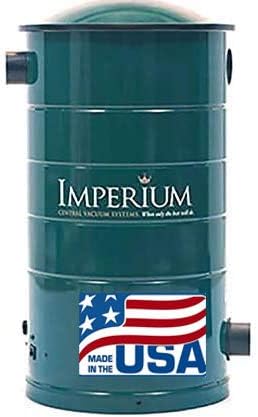
| Wattage | 740 watts |
|---|---|
| Capacity | 23.65 liters |
| Noise Level | 58 db |
| Power Source | 120 V |
The Imperium CV300 is a midrange central vacuum power unit intended for permanent home installation and routine whole-house cleaning. It delivers 740 watts (advertised as 740 air watts) and a two-speed setup that handles carpets, hard floors, rugs, and upholstery while running at about 58 dB for relatively quiet operation. The unit is all-steel construction and ships with paper bags, mounting hardware, and a utility inlet so you can use the inlet at the power unit during installation or service. Practical benefits include a large 23.65 liter (roughly 6.25 gallon) bagged dirt capacity for less frequent emptying and a 10-year motor warranty that suggests long-term reliability. Limitations to consider are the bagged collection system if you prefer bagless cyclonic models, and the need for professional or DIY installation of piping and inlets which adds cost and effort beyond the unit itself. For homes up to the recommended coverage area, it provides substantial suction and quiet performance for the price.
Best for: Homeowners who want a quiet, durable central vacuum for whole-house cleaning and value long motor warranty coverage and a large dirt capacity.
Less Ideal for: Renters, or buyers who need a portable or plug-and-play vacuum solution, and those who prefer bagless systems to avoid ongoing bag purchases.
- Strong 740-watt motor for robust suction
- Large 23.65 liter bag capacity reduces frequency of emptying
- Relatively quiet operation at about 58 dB
- Includes paper bags, mounting hardware, and a utility inlet for installation
- Backed by a 10-year motor warranty
- Uses bagged collection rather than bagless cyclonic system
- Requires piping and inlet installation which adds complexity and cost
Verdict: Choose the Imperium CV300 if you want a solid, quiet, factory-quality central vacuum with strong suction and a large bagged capacity backed by a long motor warranty.
Drainvac AP5501 Central Vacuum
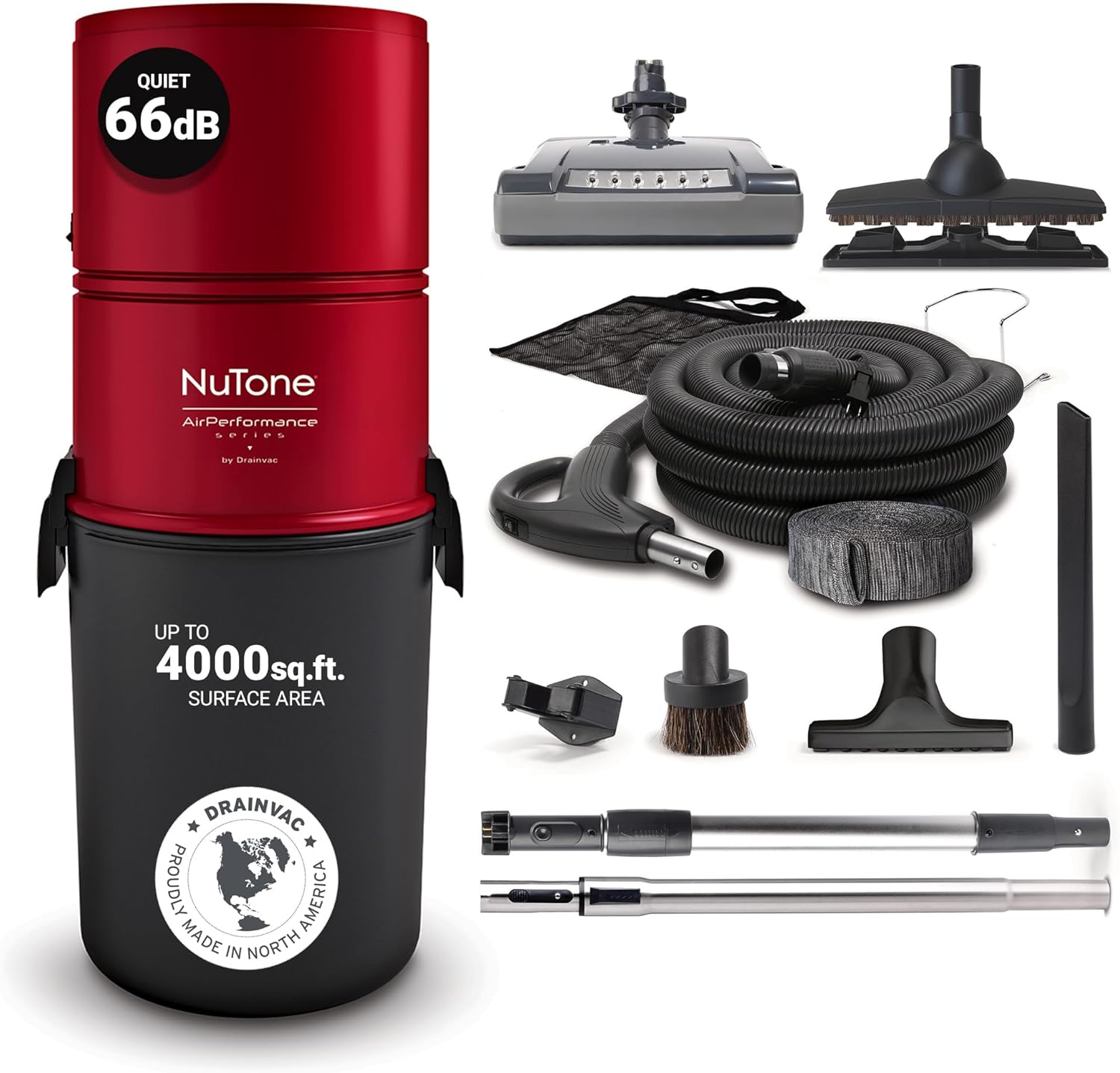
| Air performance | 550 air watts |
|---|---|
| Hose length | 35 feet |
| Filtration | HEPA Filter |
| Power source | Corded Electric |
| Voltage | 120 volts |
The Drainvac AP5501 is a corded central vacuum package built around a 550 air-watt motor and a premium electric power brush for everyday whole-house cleaning. It ships with a 35-foot hose, telescopic wands, a mesh storage bag and a disposable canister bag, so you get a ready-to-use setup for carpet and hard-floor maintenance in homes roughly 1,000 to 4,000 sq ft. Notable features include HEPA filtration for finer dust capture, anti-vibration mounts and oversized canister handles that make emptying and handling easier. The electric powerhead helps lift embedded pet hair and dirt from many carpets while the large bag reduces how often you need to change consumables. Trade-offs are that it is a corded central unit designed for fixed piping installations rather than portable spot cleaning, and higher-performance electric powerheads can still outperform air-driven brushes on very deep pile carpet. Installation into new construction or adding in-wall piping will likely require pro help for best results.
Best for: Buyers who prioritize powerful, whole-house cleaning performance and want a complete central vacuum package that tackles pet hair and fine dust with minimal ongoing fuss.
Less Ideal for: People who need a portable or quick spot-cleaning vacuum or homeowners unwilling to install in-wall piping without professional help should consider other options.
- Strong 550 air-watt suction suitable for whole-house cleaning
- Includes premium electric power brush and 35 ft hose for extended reach
- HEPA filtration captures fine dust and pet dander
- Anti-vibration mounts and sound-reducing structure for quiet operation
- Large disposable bag reduces frequency of bag changes
- Designed for fixed central systems so not a portable standalone vacuum
- Air-driven brushes may be less effective than dedicated electric heads on very deep-pile carpet
Verdict: Choose the Drainvac AP5501 if you want a powerful, ready-equipped central vacuum system built for quiet, whole-home cleaning and strong dust and pet hair pickup.
OVO 700 Central Vacuum

| Capacity | 35 liters |
|---|---|
| Noise Level | 62 db |
| Wattage | 700 watts |
| Voltage | 120 volts |
| Filter Type | Cloth |
The OVO 700 is a heavy-duty central vacuum designed for whole-house use, rated at 700 airwatts and driven by a 2-stage motor that delivers strong airflow for large homes. It uses hybrid filtration so you can run it with disposable bags for easier disposal or with the included washable permanent cloth filter, and the 35 liter bottom-load bin simplifies emptying. Built-in muffling and foam in the motor compartment keep noise near 62 dB, while touch controls and soft start/stop motor technology aim to extend motor life. The unit is intended for fixed installation and can cover large areas and multiple inlet ports. Expect a bulky canister that requires wall-mounting space and basic central-vac plumbing and installation; the 700-watt motor and cloth filter approach are powerful but may need periodic filter care if used bagless. This is a straightforward, no-frills central vac that prioritizes suction and durability over fancy extras.
Best for: Buyers who want a durable, high-suction central vacuum for whole-house cleaning and who prioritize long motor life and flexible filtration over extra smart features.
Less Ideal for: If you need a plug-and-play portable vacuum, only occasional spot-cleaning, or minimal installation work, this fixed central system is not a good fit.
- Strong 700 airwatts suction suitable for large homes
- Hybrid filtration supports disposable bags or the included washable cloth filter
- Large 35 L (9.25 gal) bottom-load dust bin for less frequent emptying
- Soft start/stop motor and integrated muffler reduce noise and prolong motor life
- Touch controls for simple operation
- Requires central vacuum piping and professional or DIY installation
- Cloth filter option will need regular washing when used bagless
Verdict: Choose the OVO 700 if you want a powerful, installation-ready central vacuum with flexible bagged or washable filtration for large homes.
OVO Central Vacuum 630

| Capacity | 25 liters |
|---|---|
| Maximum Suction | 130 inches |
| Noise Level | 65 db |
| Wattage | 630 watts |
| Power Source | Corded Electric |
The OVO Central Vacuum 630 is a corded canister system aimed at whole-home cleaning that delivers strong suction and flexible filtration. It produces 630 watts (listed as 630 airwatts) and a 130" water-lift rating, which translates to firm pickup on carpet, hardwood, and pet hair. The unit uses hybrid filtration: a permanent washable cloth filter is included and it also accepts disposable bags when you want easier debris disposal. Noise control measures and an integrated muffler help keep operation around the listed 65 dB. The 25 L bottom-load canister gives a large dirt capacity suitable for multi-room or large houses and the manufacturer rates it for up to eight inlet points. Practical limitations include the need for installed inlet piping and a dedicated central system layout, and the machine is not suitable for picking up liquids. The unit is relatively heavy to handle during installation and it requires a power connection and occasional filter maintenance if used without bags. For buyers replacing or installing a budget-focused central vacuum, it balances power and filtration options without premium frills.
Best for: Buyers installing or replacing a permanent whole-home vacuum who want strong suction and a low-cost filtration choice between washable filters or disposable bags.
Less Ideal for: Renters, apartment dwellers, or anyone needing a portable plug-and-play vacuum or liquid-capable machine should consider other types of vacuums.
- High suction reported (630 airwatts / 130" water lift) for strong pickup on carpets and pet hair
- Hybrid filtration: includes permanent washable filter and supports disposable bags for easier disposal
- Large 25 L bottom-load canister reduces how often you need to empty during whole-house cleaning
- Built with noise-reduction measures to keep operating noise near 65 dB
- Not for wet pickup; not rated for liquids
- Requires in-home central vacuum piping and installation, so not plug-and-play
- Relatively heavy for a canister when moving or installing
Verdict: If you need a budget-friendly central vacuum that delivers strong suction and lets you choose between washable filtration or disposable bags, this OVO 630 is a practical pick.
Dirt Devil Central Vacuum 9880
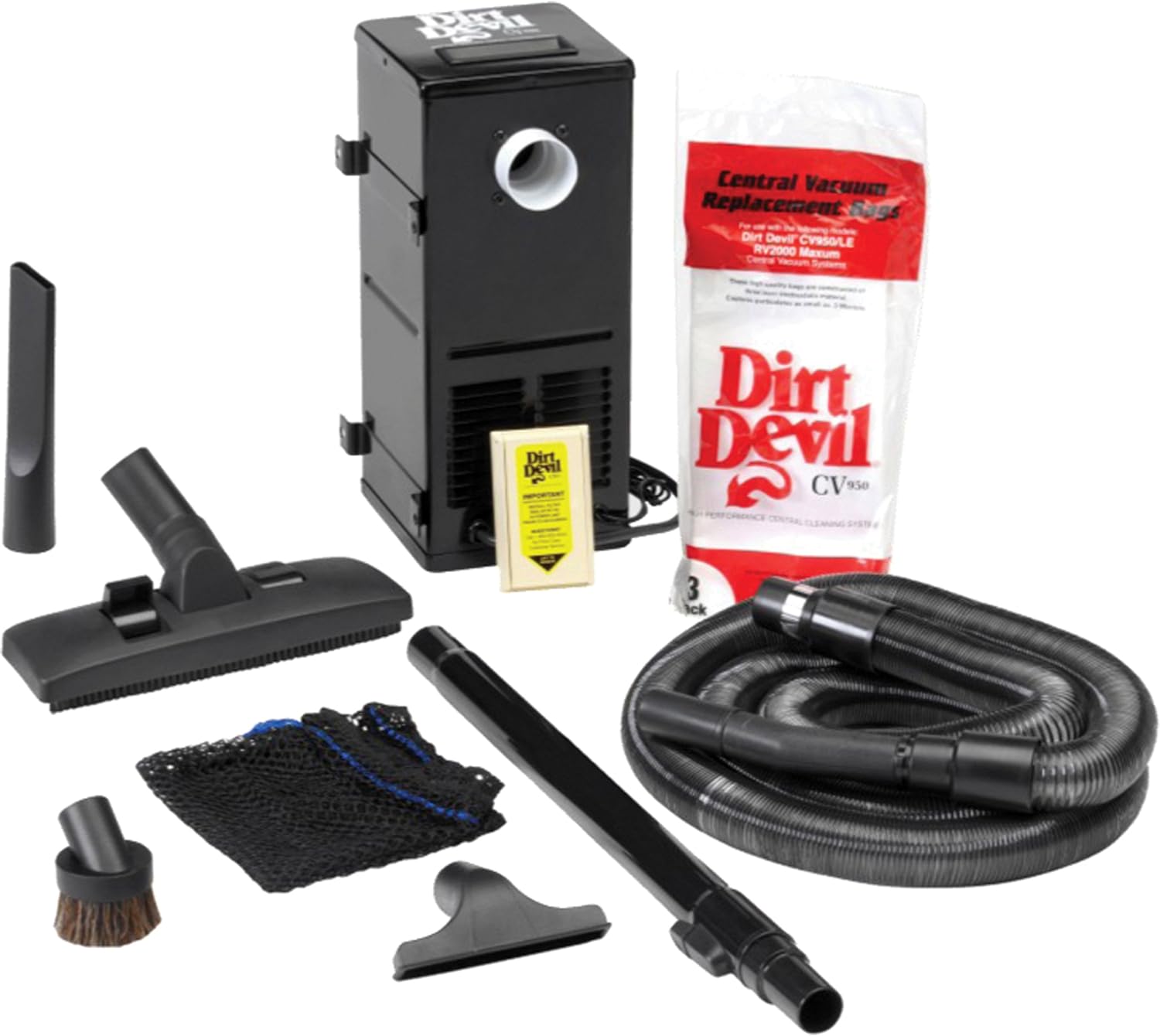
| Capacity | 1 gallons |
|---|---|
| Maximum Suction | 100 feet |
| Voltage | 120 volts |
| Wattage | 120 watts |
| Included Components | HEPA Filter |
The Dirt Devil Central Vacuum 9880 is a compact built-in canister system intended to provide whole-home cleaning without a bulky portable unit. It uses cartridge HEPA filtration and a one-gallon dirt tank, and is powered by a 120-volt, 120-watt motor that delivers about 100 CFM of airflow and long hose reach for flexible cleaning. Typical use is permanent installation in a garage or utility space with inlets throughout the home and a long hose for carpets, upholstery, and crevices; included tools cover floors, upholstery, dusting, and tight spots. The factory-style design saves floor space and reduces trip-and-carry tasks, while the HEPA filter helps trap fine particles. Limitations include a modest dirt capacity that needs more frequent emptying than larger central units and a relatively low listed wattage that suggests this is best for routine household debris rather than heavy-duty industrial cleaning. Installation requires planning for inlet placement and hose routing, and replacement filters should be factored into maintenance.
Best for: Buyers who prioritize a dependable, space-saving whole-house cleaning solution and want factory-style filtration and simple maintenance for routine household cleaning.
Less Ideal for: Homes that need heavy commercial-grade suction, very large dirt capacity, or extensive continuous deep-cleaning sessions should consider higher-capacity central systems instead.
- Built-in canister saves living space compared with portable vacuums
- HEPA cartridge filtration captures fine dust and allergens
- Includes a range of cleaning tools for floors, upholstery, and crevices
- Long expandable hose for flexible reach during cleaning
- Compact one-gallon tank is simple to empty and maintain
- One-gallon dirt capacity requires more frequent emptying than larger central systems
- 120-watt power suggests lighter-duty cleaning compared with higher-capacity central units
Verdict: Choose this compact Dirt Devil central vacuum if you want a reliable, space-saving built-in system with HEPA filtration for routine whole-home cleaning.
Prolux CV12000 Central Vacuum

| Maximum Suction | 142 feet |
|---|---|
| Surface Recommendation | Multi-Surface |
| Capacity | 14.2 liters |
| Noise Level | 70 db |
| Power Source | Corded Electric |
The Prolux CV12000 is a wall‑mounted central vacuum built to deliver sustained suction for whole‑home cleaning. It installs on a standard U.S. inlet with a simple wall plate and hang‑on bracket and is intended to connect to an existing central system or serve as a new hub for up to eight inlet ports. The unit uses a two‑stage tangential bypass motor and dust‑repellent filter tech so dirty air does not pass through the motor, which helps keep suction strong and reduces routine maintenance. It supports both bagged and bagless operation, includes a HEPA filter and a spare bag, and is rated for large homes up to about 8,000 square feet. Practical benefits are long service promises (25‑year body, 10‑year motor), quieter operation thanks to an insulated motor chamber and muffler, and strong airflow and water lift for effective carpet and hard‑floor cleaning. Limitations to note are the need to buy hose and accessory kits separately for a complete system and the requirement of wall mounting and existing ducting or plumbing for proper installation.
Best for: Buyers who prioritize durable, low‑maintenance whole‑house cleaning and want a central unit that keeps suction consistent over many years.
Less Ideal for: Renters or apartments without central vacuum piping and buyers seeking an out‑of‑the‑box portable vacuum solution should look elsewhere.
- Designed to mount to standard U.S. central vacuum inlets for easy integration
- Two‑stage tangential bypass motor keeps motor isolated from dust for longer life
- Supports bagged or bagless operation with included HEPA filter and spare bag
- High airflow and water lift for strong cleaning performance across surfaces
- Long service promise (25‑year body, 10‑year motor) and North American manufacturing
- Hose, power nozzle, and full accessory kits are sold separately
- Requires wall mounting and connection to ducting so installation may need a pro
Verdict: Choose the Prolux CV12000 if you want a heavy‑duty, low‑maintenance central vacuum built to maintain strong suction and provide long service life.
Choosing the Right Central Vacuum Cleaner: Key Factors to Consider
Suction Power and Airflow
Suction power determines how effectively a central vacuum cleaner removes dirt from carpets and hard floors, but airflow and sustained CFM under load are the practical measures of cleaning performance.
Higher suction and good sustained airflow help pull debris from deep pile carpets and move it through long tubing runs without significant dropoff. When evaluating options, consider published airflow or suction loss over distance if available, and factor in typical home layout and tubing length because longer runs reduce inlet suction unless the system is sized accordingly.
Filtration and Allergen Control
A central vacuum's filtration system impacts indoor air quality by trapping fine dust and allergens in a collection canister or filter assembly rather than recirculating them back into living spaces.
Look for multi-stage filtration or high-efficiency filters that capture submicron particles. Consider how easy filters are to access, clean, or replace, and whether the system uses disposable bags or washable canisters, since each approach affects ongoing maintenance and disposal of captured contaminants.
Noise Level in Living Spaces
One of the main advantages of a central vacuum cleaner is reduced noise in the rooms where people live. The unit is typically installed in a garage, utility room, or basement, but motor noise can still transmit through walls or down ducts.
Check manufacturer noise ratings and plan placement to minimize disturbance. Insulation around the mounting area, vibration isolation brackets, and locating the unit away from frequently used rooms all reduce perceived sound during operation.
Installation Requirements and Flexibility
Installation complexity affects cost and feasibility. Some systems require professional installation with wall and floor inlet placements, while others suit DIY installs with straightforward tubing runs and clear instructions.
Consider house construction, attic and wall access, and the total length and number of inlet locations needed. Systems that offer flexible inlet placement, standard tubing sizes, and thorough installation guides reduce the likelihood of costly rework or compatibility problems during fitting.
Maintenance, Serviceability, and Parts Access
Long-term ownership depends on easy maintenance and access to replacement components. Consider how often the canister needs emptying, whether filters are user-serviceable, and how simple it is to reach the motor and seals for repairs.
Systems with modular designs, clear maintenance intervals, and widely available replacement parts tend to cost less to own and keep running reliably. Also evaluate how straightforward common tasks are, such as clearing clogs from tubing or replacing belts and brushes on powered attachments.
Sizing a System for Your Home
Choosing the right system size starts with assessing total square footage, number of inlet points, and expected tubing run lengths. Systems are rated to perform across specific ranges; oversizing slightly can preserve suction over long tubing and many inlets, while undersizing leads to weak performance in distant rooms.
Plan inlet placement around natural cleaning zones like hallways and main living areas to minimize hose run length. Keep inlets on each floor where practical to improve reach without extending tubing runs excessively.
- Measure probable tubing routes and total length before selecting a unit
- Place inlets in central locations to serve multiple rooms with minimal hose extension
- Account for future additions such as an extra bedroom or finished basement
Choosing Between Bag and Bagless Canisters
Bagged systems collect debris in disposable bags that can simplify allergen containment when changing bags if done carefully. Bagless canisters avoid ongoing bag purchases but require more careful emptying and filter cleaning to prevent dust exposure.
Consider household allergy sensitivity and willingness to perform maintenance. Bag systems are often tidier for people with allergies, while bagless units can be more economical over time if regular cleaning is acceptable.
- Bagged: cleaner disposal, recurring bag supply needed
- Bagless: lower consumable cost, more frequent hand maintenance
Maintenance Routines That Extend Lifespan
Regularly emptying the collection container, inspecting seals, and cleaning or replacing filters per the manufacturer schedule preserves suction and motor life. Schedule quick checks after heavy jobs such as renovation cleanup to clear any abrasive debris that can accelerate wear.
Keep the tubing and inlets clear of obstructions by running a hose-mounted brush or an inline cleaning tool periodically. A short seasonal inspection is often enough to catch worn seals, loose mounting hardware, or minor clogs before they lead to failures.
- Empty or replace bags before they become overly full to maintain airflow
- Clean washable filters monthly during heavy use seasons
- Inspect mounting points and vibration isolators annually
Accessory Selection and Practical Attachments
The right attachments turn a central system into a whole-home cleaning solution. Look for a powered floor tool for deep-pile carpets, an extendable wand for high ceilings, and specialized brushes for upholstery and stairs.
Confirm that the system supports standard accessory fittings to maintain flexibility. Accessories with quality seals and smooth internal passage reduce suction loss at the tool end and improve cleaning efficiency.
- Choose a motorized floor head for carpets
- Include narrow crevice and dusting tools for corners and trim
- Consider a powered stair tool or lightweight hose for frequent use areas
Locating and Reducing Noise
Place the central unit in an isolated area like a garage, mechanical room, or utility closet to minimize sound transfer into living spaces. Install vibration isolators and consider sound-absorbing mounts or enclosures if noise is a concern.
Remember that long tubing runs and many elbows increase resistance and can require a more powerful unit to compensate. Planning for a slightly stronger system allows quieter operation because you can run at a lower motor speed for the same cleaning result.
- Choose a remote location away from bedrooms
- Use rubber mounts to dampen vibration
- Plan straighter tubing routes to reduce airflow resistance
How We Chose the Best Central Vacuum Cleaner
We shortlisted systems that deliver reliable whole-house performance and realistic installation options for typical single-family homes. Our evaluation prioritized measurable technical and practical dimensions: sustained suction at the inlet under load, filtration efficiency for fine dust and allergens, noise level in occupied rooms, durability of key components such as the motor and seals, and the clarity and completeness of installation documentation and accessory compatibility. We excluded one-off experimental units, products intended only for light spot cleaning, and systems with unverified filtration claims or poor documented support. We also filtered out options that require unusual home modifications beyond standard inlet and tubing runs. The result is a selection focused on systems that balance strong continuous suction, manageable maintenance, straightforward installation paths, and serviceability over time.
Our full evaluation process is outlined in our review methodology.
FAQ
How do I know if my home is a good fit for a central vacuum cleaner?
Most single-family homes with a garage, basement, or utility room that can house the central unit are suitable. Evaluate wall cavity access and likely tubing routes; homes with open access to basements and attics are easiest to retrofit.
Can I install a central vacuum system myself?
Many homeowners can complete a DIY install if they are comfortable cutting inlet holes, running tubing through joists or walls, and mounting the unit. Complex layouts, multi-level homes, or limited access may require professional installation to ensure optimal performance.
How often do I need to empty the canister or replace bags?
Frequency depends on household size and cleaning frequency. Typical use in a medium household often requires checking monthly, with more frequent emptying during heavy use or after renovation work. Follow the manufacturer's maintenance schedule for filters and bags.
Will a central vacuum reduce allergens in my home?
Yes, systems that exhaust to a remote canister and use high-efficiency filtration reduce recirculation of fine dust and allergens compared with many portable vacuums. Filtration quality and proper maintenance determine how effectively allergens are contained.
Are replacement parts and accessories easy to find?
Most systems use standard tubing sizes and common accessory fittings, making replacement tools and parts widely available. Choose systems with easily accessible service parts and clear documentation to simplify long-term upkeep.
Final Verdict
Prioritize sustained suction and practical installation when choosing a central vacuum cleaner. Balance filtration performance with maintenance needs based on household allergy sensitivity and cleaning frequency. Consider unit placement, tubing layout, and accessory compatibility early in the decision to avoid compromises after installation. With attention to these tradeoffs, you can select a system that provides quiet, powerful whole-home cleaning and straightforward upkeep for years of service.