
Note: This article contains affiliate links. If you click on these links and make a purchase, we may earn a small commission at no extra cost to you. This helps support our research and content. Read our full affiliate disclosure here.
When you run a busy café, restaurant, or specialty coffee bar, a reliable coffee grinder for commercial use is one of the most important purchases you will make. The right grinder affects espresso extraction, shot consistency, and how quickly baristas can serve customers during rush periods. This guide shortlists the top commercial coffee grinders that balance build quality, grind consistency, and daily throughput. Below we cover the practical strengths of each shortlisted grinder and the evaluation criteria we used so you can pick the unit that fits your workflow and service volume. Read on for quick decision help before the product list.
Top Picks at a Glance
| Best Overall The best all-around choice for most situations | Baratza Virtuoso+ | 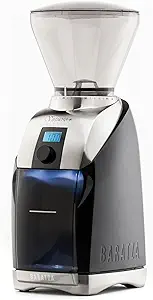 |
| Best Quality Built to a higher standard if you want something more solid | Baratza Forte AP |  |
| Best Value The sweet spot between price and what you get | Breville Smart Grinder Pro BCG820BSS | 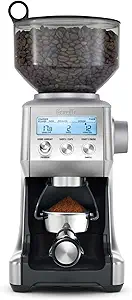 |
| Best Budget The cheapest option that still gets the job done reliably | SHARDOR Burr Coffee Grinder CG835B |  |
| Top Rated A top-rated pick with lots of positive feedback | OXO Brew Conical Burr Grinder | 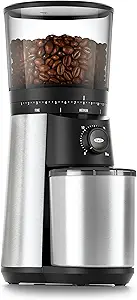 |
| Most Popular A crowd favorite that many people choose with confidence | Ollygrin Burr Coffee Grinder BG702S |  |
| Best Seller A high-volume bestseller chosen again and again | Cuisinart Supreme Grind DBM-8P1 | 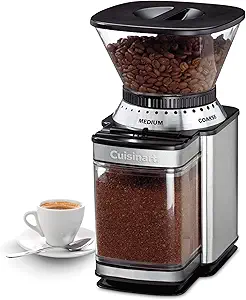 |
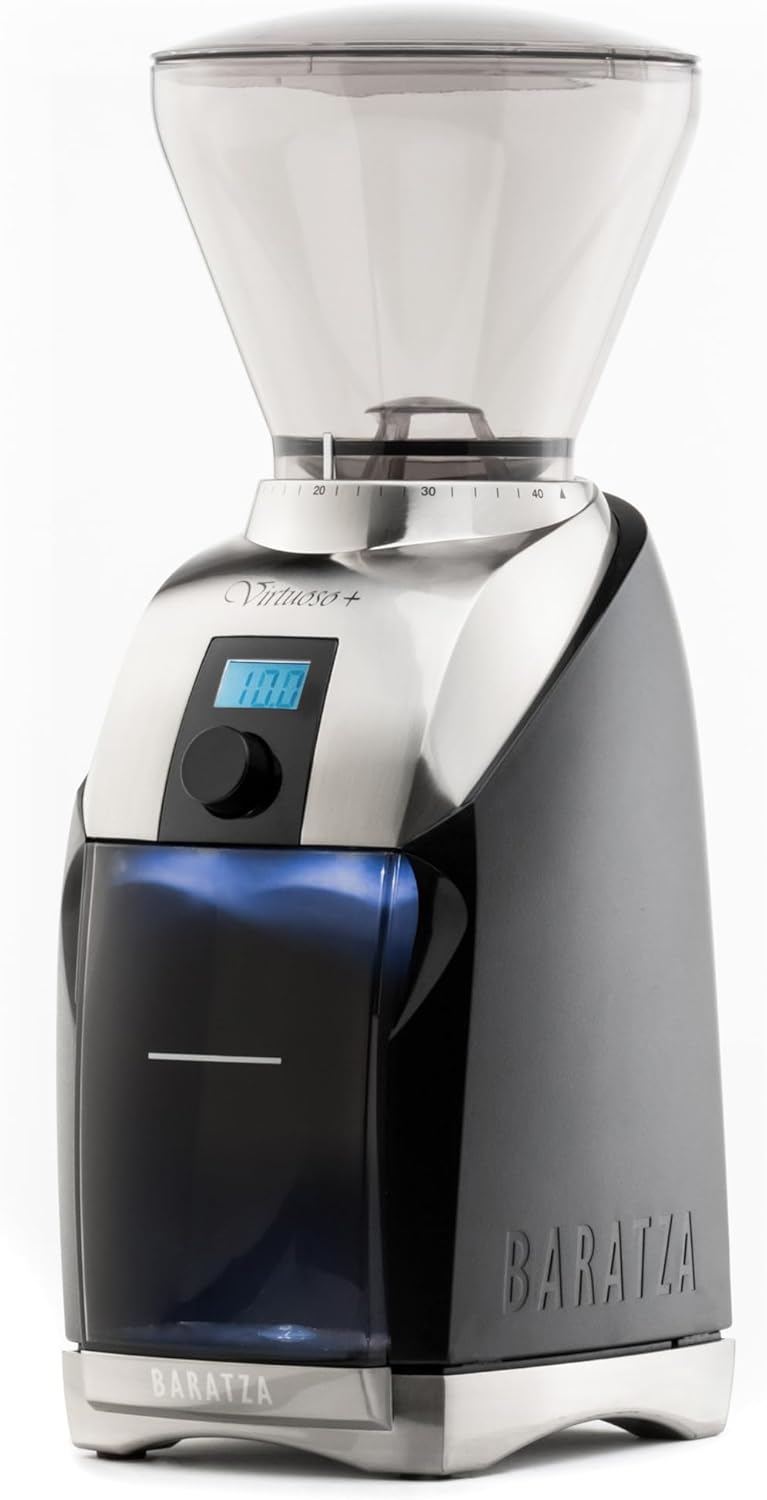
Baratza Virtuoso+
| Capacity | 230 g |
|---|---|
| Wattage | 70 watts |
| Voltage | 230 volts |
The Baratza Virtuoso+ is a mid‑size conical burr grinder aimed at users who need consistent, repeatable grinds across a wide range of brew methods. It uses commercial‑grade hardened steel burrs and a DC motor to deliver steady performance for espresso through French press, and a 40‑setting stepped grind selector makes it easy to find and return to preferred settings. A digital timer with a tenth‑of‑a‑second adjustment and a backlit grounds bin help you dial in accurate doses for busy shifts or high‑volume home use. The build combines a sculpted metal top and base with a straightforward user experience that is durable enough for frequent daily use, though the unit is not a heavy commercial grinder and its 70W motor and 230V rating reflect that consumer/prosumer class. Expect quieter operation and consistent particle distribution, but if you need industrial throughput or integrated dosing for a full cafe service, a larger commercial model would be a better fit.
Best for: Buyers who want a reliable, durable grinder that delivers consistent, repeatable grinds for a variety of brew methods and moderate daily volume.
Less Ideal for: Large coffee shops or environments that need very high throughput, integrated dosing systems, or industrial‑scale grinders.
- Commercial‑grade conical steel burrs provide consistent grind quality across 40 settings
- Digital timer adjustable to a tenth of a second for repeatable dosing
- Backlit grounds bin improves visibility when dosing in low light
- Sturdy metal top and base offer a durable, attractive design suitable for frequent use
- Not designed for high‑throughput commercial environments compared with true commercial grinders
- Voltage listed at 230 volts may limit direct use without appropriate local power compatibility
Verdict: Choose the Virtuoso+ if you need a durable, pro‑quality burr grinder that delivers consistent, repeatable dosing for a range of brew methods in moderate commercial or prosumer settings.
Baratza Forte AP

| Wattage | 130 watts |
|---|---|
| Capacity | 10 ounces |
| Voltage | 120 volts |
The Baratza Forté AP is a small-footprint, commercial coffee grinder built to handle everything from espresso to press pot. It uses 54 mm flat ceramic burrs and provides both time-based and weight-based dosing via a grounds bin and a portafilter holder, so you can grind straight into a portafilter or dose by weight for consistent shots. Its all-metal construction and intuitive control panel make it durable and easy to operate in a café or office setting, and the hopper and bin capacities suit moderate-volume use. Grinding speed is respectable for its class and the ceramic burrs deliver precise, low-heat grinds that preserve flavor. The machine is not the fastest heavy-duty grinder and its hopper capacity is mid-sized, so very high-volume shops may need a larger model, but for cafés, roaster demos, or dedicated single-origin/decaf grinders it offers repeatable performance and solid build quality.
Best for: Buyers who prioritize precise, repeatable grind quality and flexible dosing in a compact commercial grinder for cafés, roaster demos, or specialty stations.
Less Ideal for: Large, high-volume coffee shops that need maximum hopper capacity and the fastest throughput should consider larger commercial grinders built for continuous heavy use.
- 54 mm flat ceramic burrs for consistent, low-heat grinding
- Supports both time and weight dosing plus a portafilter holder for direct grinding
- Compact commercial-grade metal construction with intuitive controls
- Suitable grind range from coarse to fine for all brew methods
- Hopper and grounds bin capacities are moderate and may require frequent refills in very busy shops
- Not the fastest grinder for very high-throughput commercial environments
Verdict: Choose the Forté AP when you want a compact, durable commercial grinder that delivers precise, repeatable grinds and flexible dosing for specialty café or demo use.
Breville Smart Grinder Pro BCG820BSS

| Wattage | 165 |
|---|---|
| Voltage | 120 |
| Capacity | 1.1 pounds |
| Bean Hopper Capacity | 18oz |
The Breville Smart Grinder Pro is a programmable conical burr grinder built around precision dosing and a wide range of grind settings. It is typically used to grind beans directly into a portafilter, airtight container, or filter basket and is most helpful when you need repeatable doses for espresso, filter, and French press. Key features include 60 grind settings, a clear LCD that shows grind time and number of shots or cups, and Dosing iQ with 0.2-second incremental time adjustments for consistent dosing. The stainless steel construction and included portafilter cradles make it convenient for direct-to-machine use, and the 18 oz hopper supports frequent grinding without constant refills. Trade-offs are that it is designed primarily for precision dosing rather than high-volume continuous commercial throughput, and the motor and burr size reflect a balance for prosumer or light commercial settings rather than heavy-duty cafe production. For buyers who value consistent, programmable dosing and flexibility across brew methods, this grinder delivers reliable daily performance.
Best for: Buyers who prioritize precise, repeatable dosing and a wide range of grind settings for espresso and specialty brew methods in a small shop or busy home setup.
Less Ideal for: High-volume cafes or operations that require nonstop, heavy-duty grinding throughout a long service day should consider dedicated commercial grinders instead.
- Sixty discrete grind settings for fine control across espresso to French press
- Digital dosing with 0.2-second increments for repeatable portioning
- Clear LCD that displays grind setting, time, and shots/cups for quick setup
- Grinds directly into portafilter or container with included cradles
- Large 18 oz bean hopper reduces refill frequency during busy periods
- Not engineered for continuous high-volume cafe throughput compared with commercial burr grinders
- Motor wattage and burr size are better suited to prosumer or light commercial use rather than heavy-duty service
Verdict: Choose this grinder when you need precise, programmable dosing and a broad range of grind settings for consistent shots in a small shop or busy home environment.
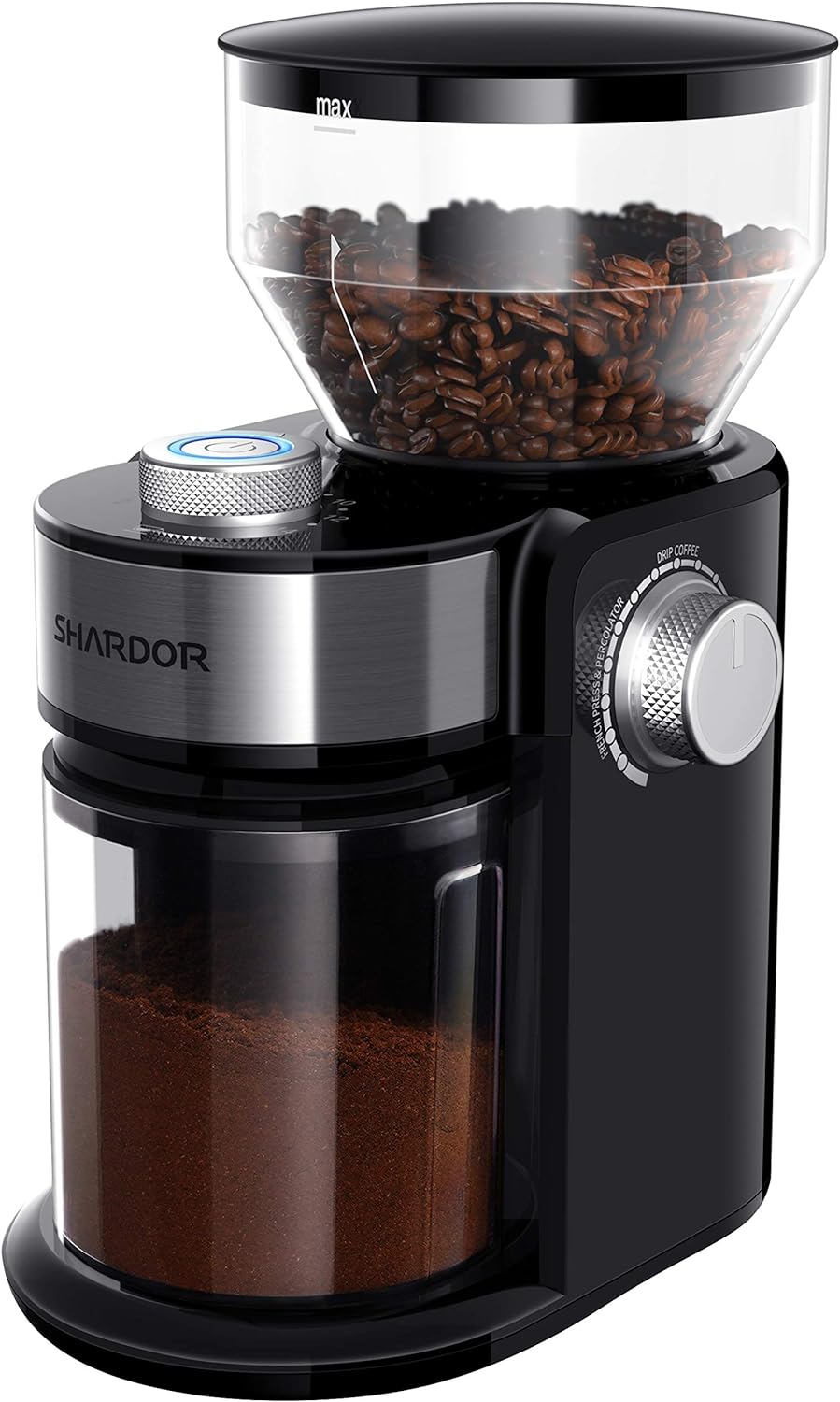
SHARDOR Burr Coffee Grinder CG835B
| Capacity | 8.5 ounces |
|---|---|
| Wattage | 150 watts |
| Voltage | 120 volts |
| Grind settings | 16 settings |
The SHARDOR CG835B is a small flat-burr grinder designed to give consistent grounds across 16 settings, from fine for espresso to coarse for French press. It is typically used by home or light-duty users who want repeatable grinds without fuss: load the removable hopper, set the cup selector (2 to 14 cups), and press the one-touch start while safety locks are engaged. The flat stainless steel burrs and adjustable micro-settings help deliver more uniform particle size than blade grinders, and the timer auto-stops to reduce waste. Practical touches include an overheat protection system, detachable top burr and grind chamber for easier cleaning, and a brush included for maintenance. Important limitations for the commercial context are its small 8.5-ounce capacity and cup-timer design, which are geared to single-batch home use rather than continuous high-volume grinding; the motor and build are compact and not engineered for heavy back-to-back loads. For shops needing daily, high-throughput performance, this model performs well as a low-cost backup or for limited-service stations but not as a primary commercial grinder.
Best for: Shops or operations seeking an inexpensive, space-saving grinder for occasional service stations, test batches, or as a backup unit will appreciate this model's consistent flat-burr grind and simple controls.
Less Ideal for: High-volume cafes or commercial kitchens that grind continuous batches and require robust motors, large hoppers, and weight-based dosing should choose a purpose-built commercial grinder instead.
- Flat metallic burrs provide more uniform grind than blade grinders for better extraction.
- Sixteen micro-adjustable grind settings let you dial in grind size for espresso, drip, and French press.
- Removable hopper and detachable burr/chamber make cleaning straightforward.
- Auto-stop cup timer and one-touch operation simplify single-batch grinding.
- Small hopper and 8.5-ounce capacity limit continuous or high-volume use.
- Cup-based timer control is less precise than weight- or time-based dosing for commercial workflow.
Verdict: A budget-friendly flat-burr grinder that delivers consistent home‑style grinds and works well as a compact backup or limited-use unit in light commercial settings.
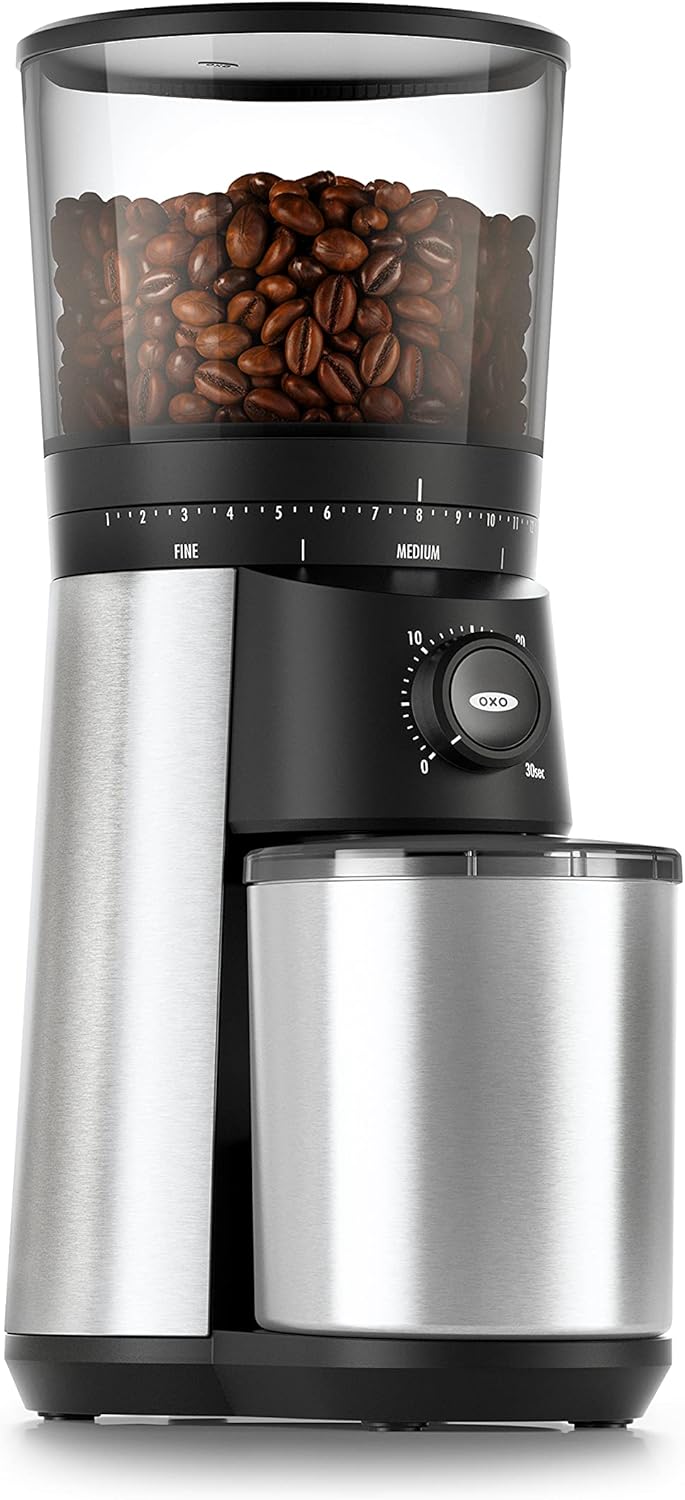
OXO Brew Conical Burr Grinder
| Burr size | 40 mm |
|---|---|
| Grind settings | 15 with micro-adjustments |
| Whole bean capacity | 12 oz (0.34 kg) |
| Wattage | 100 watts |
| Voltage | 120 volts |
The OXO Brew Conical Burr Grinder uses 40mm stainless steel conical burrs and a stepped dial with micro-adjustments to produce uniform grounds from fine espresso to coarse French press. It is typically used in kitchens or small commercial settings to grind whole beans on demand; the large removable hopper holds up to 12 ounces and the one-touch timer remembers your last setting for repeatable results. Notable features include 15 primary grind settings with additional micro adjustments, a low-vibration motor engineered for quieter operation, and a UV-tinted hopper to protect beans from light. In practice those features translate to steady extraction, easy repeatability for consistent batches, and less mess thanks to a static-reducing grounds cup. Important limitations are that it is sized for small-batch grinding rather than high-throughput commercial use, and the 100-watt motor and timed dose system are best for measured batches rather than continuous heavy-duty operation.
Best for: Buyers who prioritize consistent, repeatable grinding and low-maintenance reliability for small-batch or light commercial service will appreciate its predictable performance and simple controls.
Less Ideal for: Not a good fit for high-volume cafes or operations that need continuous, heavy-duty grinding and precise weight-based dosing for every shot.
- 40mm stainless steel conical burrs for uniform, consistent grounds
- 15 grind settings plus micro-adjustments for precise tuning
- Removable 12 oz hopper with UV tint preserves bean freshness
- One-touch timer that remembers last setting for fast repeatable dosing
- Low-vibration motor reduces noise during early-morning or front-of-house use
- Designed for small-batch dosing rather than continuous high-volume commercial grinding
- Timed dosing can be less precise than weight-based dosing for very consistent single-dose workflows
Verdict: A reliable, easy-to-use conical burr grinder that delivers consistent small-batch performance and repeatable dosing for light commercial or backbar use.
Ollygrin Burr Coffee Grinder BG702S

| Wattage | 150 watts |
|---|---|
| Capacity | 10 ounces |
| Voltage | 220 volts |
| Material Type | Stainless Steel |
The Ollygrin BG702S is a mid‑range electric conical burr grinder built for regular, small‑batch use. It grinds with 40 mm stainless steel conical burrs and a gear‑reduction motor that runs slowly to limit heat and protect coffee flavor, and offers 30 grind settings that span fine espresso to coarse French press. A 10‑ounce removable hopper and 2–12 cup dosing options make it convenient for preparing single cups or several servings at once, and the auto‑locking hopper plus removable grounds container simplify filling and cleanup. Safety features include a friction clutch to protect gears from debris and built‑in thermal cutoff to prevent motor overheating. Practical downsides for heavy commercial use are its 150 W motor and 10‑ounce hopper, which limit throughput compared with purpose‑built commercial grinders, and the unit runs on 220 V which may require electrical matching. Overall it is a solid, flavor‑focused grinder for light commercial or high‑use home environments where consistent grind and low heat matter more than industrial speed.
Best for: Shops or small commercial settings that need consistent, low‑heat grinding for multiple brew styles and value reliability backed by many user reviews.
Less Ideal for: High‑volume cafes or busy commercial kitchens that require very fast throughput and larger hopper capacity should choose a dedicated commercial grinder instead.
- 40 mm stainless steel conical burrs for uniform grounds and improved flavor extraction
- Wide 30‑step grind range from fine to coarse for multiple brew methods
- Gear reduction motor for slower grinding that reduces heat and preserves aroma
- 10‑ounce removable hopper and removable grounds container for easy refills and cleanup
- Safety protections including friction clutch and overheating cutout to protect internal parts
- 150 watt motor and 10‑ounce hopper limit throughput for true commercial high‑volume use
- Voltage specification is 220 V which may not match all commercial outlets without conversion
Verdict: Choose the Ollygrin BG702S when you want a flavor‑focused burr grinder that delivers consistent low‑heat grinding for small commercial or high‑use settings.
Cuisinart Supreme Grind DBM-8P1

| Wattage | 500 |
|---|---|
| Capacity | 0.23 kg |
| Voltage | 110 volts |
The Cuisinart Supreme Grind DBM-8P1 is a simple electric flat-burr grinder built for straightforward daily use. It offers an 18-position grind selector that covers ultra-fine to extra-coarse settings, an automatic timer that stops the motor when the selected grind is reached, and a removable 8 oz bean hopper and grind chamber for cleaning. In practice it is easy to operate with a one-touch power bar and provides consistent, uniform grinds for drip, pour-over, and press methods at home or in a small office. The motor and metal burrs handle moderate volume reliably, and cord storage plus the included scoop/brush keep the counter tidy. It is not a commercial heavy-duty machine, so it will show limits under continuous, high-volume use and does not offer professional features like stepless adjustment or dosing control. For buyers who want predictable grinding, easy maintenance, and broad grind range without a complicated interface, this grinder delivers solid, low-risk performance; high-volume commercial shops should consider a purpose-built commercial grinder instead.
Best for: Buyers who prioritize reliable, low-complexity grinding and easy maintenance for small-scale environments such as home kitchens, offices, or low-volume cafés.
Less Ideal for: High-volume commercial cafés or specialty shops that need continuous duty, precise dosing, or stepless grind control should choose a commercial-grade grinder instead.
- Wide 18-position grind selector covering ultra-fine to extra-coarse
- Removable 8 oz bean hopper and grind chamber for easy cleaning
- Automatic timer and one-touch power make operation simple and consistent
- Includes cord storage and scoop/cleaning brush for tidy setup
- Not engineered for continuous, high-volume commercial use
- Lacks professional features like stepless grind adjustment and precise dosing controls
Verdict: A dependable, easy-to-use flat-burr grinder that delivers consistent daily performance for low- to moderate-volume settings.
Choosing the Right Coffee Grinder for Commercial Use: Key Factors to Consider
Grind Consistency and Particle Distribution
Uniform particle size is essential for consistent extraction in espresso and brewed coffee. A grinder that produces a tight distribution reduces channeling and extraction variance, which translates directly to cup-to-cup consistency during busy service.
When evaluating consistency look beyond a single setting. Consider how the grinder behaves across the range from fine espresso to coarser filter settings. Machines that maintain a stable distribution after extended runs are preferable because they reduce the need for repeated adjustments during shifts.
Throughput and Duty Cycle
Throughput measures how much ground coffee a grinder can produce per hour without overheating or stalling. In commercial environments, the grinder must sustain high volumes during peak periods while maintaining consistent quality. Choose equipment rated for the shop's busiest service hours rather than average traffic.
Duty cycle and thermal management matter because prolonged grinding generates heat that can alter grind performance and roast flavor. Models with better cooling, heavier-duty motors, or duty-rated design endure longer high-volume sessions with fewer interruptions.
Burr Type, Size, and Replacement
The material, diameter, and profile of the burrs determine grind quality and longevity. Larger burrs generally cut more consistently at scale and run cooler under load, which helps maintain flavor integrity. Steel and ceramic materials each have tradeoffs in wear and maintenance.
Consider how easy it is to source replacement burrs and how frequently they will need changing given daily throughput. A grinder that accepts common burr sizes or has readily available replacements reduces downtime and lifetime operating cost.
Dosing Controls and Workflow Integration
Accurate and repeatable dosing saves time and reduces waste. Commercial grinders offer timed doses, weight-based dosing, or manual options. Choose a dosing system that fits your service model and staff skill level so dosing stays consistent under pressure.
Also consider hopper capacity and how the grinder fits into your bar layout. Larger hoppers reduce refill frequency but can increase stale coffee risk if turnover is low. Look for dosing interfaces that are intuitive and durable for repeated use.
Serviceability and Parts Accessibility
Commercial equipment will need periodic maintenance, such as burr replacement, cleaning, and occasional motor service. Grinders designed for commercial use should provide straightforward access to wear parts, clear instructions, and available spare components.
Factor in whether typical maintenance can be done on-site with basic tools or requires specialized service. Machines that minimize downtime through quick-change parts or modular components keep operations running smoothly.
Noise, Vibration, and Operator Comfort
High-volume grinders can be loud and produce vibration that affects barista comfort and workspace acoustics. Noise levels are particularly important in small cafés, open-concept spaces, or areas with multiple grinders.
Look for machines with damping, solid mounting options, or quieter motor designs. Reduced vibration also helps maintain mechanical tolerances over time, which can contribute to more consistent grinding.
Match Grinder Capacity to Your Service Volume
Estimate peak hourly demand before selecting a commercial grinder. A unit that barely keeps up will cause bottlenecks, slow service, and inconsistent shots during busy periods. Calculate how many grams of ground coffee you need per hour and choose a grinder rated to handle at least that much with headroom.
If you run a high-volume espresso bar, prioritize grinders with higher throughput and larger motors. For lower-volume specialty shops where precision matters more than speed, a grinder with excellent grind control and smaller batch handling may be preferable.
- Measure busiest 1-hour period to size throughput requirements
- Account for multiple baristas sharing a single grinder
- Allow 20 to 30 percent headroom above typical peak demand
Setting Up for Consistent Shots Across Shifts
Standardize dosing and maintenance routines so each shift reproduces the same results. Use simple calibration steps and visual checks for burr wear and grind distribution. Clear documentation and an easy-to-use dosing interface reduce operator variability.
Train staff on how grind adjustments affect extraction and how to read tamp and shot parameters. Regular checks during service and a quick calibration protocol at shift change can prevent creeping drift in grind settings.
- Create a short calibration checklist for shift handoffs
- Log burr replacements and grinding hours to predict maintenance
- Keep spare burr sets on hand if throughput is high
Maintenance Schedule and Common Service Tasks
Establish a routine cleaning and inspection schedule to preserve grind quality. Typical tasks include emptying and wiping the hopper, vacuuming grounds from the chute and doser, cleaning burr surfaces, and checking burr alignment. Perform heavier maintenance during slower hours to avoid downtime.
Track cumulative grinding hours to determine replacement intervals for burrs and brushes. Regular preventive maintenance extends motor life and keeps dosing consistent. Ensure replacement parts are accessible from your supplier or service network.
- Daily: wipe hopper and clear grind chute
- Weekly: deep clean doser and exterior components
- Monthly: inspect burrs for wear and check motor cooling
Installation, Space, and Noise Considerations
Plan the grinder location to minimize noise impact and vibration transfer. Place grinders on a stable, solid surface and consider isolating pads to reduce transmitted vibration. Ensure the location provides good ventilation for motor cooling.
Allow space for hopper removal, front access to burrs, and comfortable barista movement. Good placement reduces accidental collisions during busy service and simplifies routine maintenance.
- Allow clearance above hopper for refilling
- Provide ventilation to avoid heat buildup
- Use anti-vibration pads for stability and noise reduction
Adapting Grinder Settings for Different Coffees
Different roast profiles and bean densities require different grind settings. In a commercial setting where menus may include espresso, batch brew, and filter options, choose a grinder with a wide, stable adjustment range. Look for incremental adjustment controls that let baristas fine-tune quickly without losing baseline settings.
Consider using multiple grinders or scheduled regrinds if your menu frequently switches between very different brew methods. That approach reduces the need for major field adjustments and keeps consistency for each beverage type.
- Log preferred settings for common beans to speed transitions
- Use recallable stepped adjustments if available
- Avoid wide swings in settings during peak service
How We Chose the Best Coffee Grinder for Commercial Use
We focused on characteristics that directly affect performance in commercial settings. Key evaluation criteria included grind consistency at espresso and filter settings, hourly throughput to handle service peaks, motor durability and thermal management for continuous use, and hopper capacity plus dosing controls for efficient workflow. We also considered ease of maintenance and parts accessibility because grinders in commercial use need routine burr alignment, cleaning, and occasional burr replacement without extended downtime. We excluded consumer-grade and travel-focused grinders and any models intended strictly for home use. We prioritized machines with serviceable components and documented commercial duty ratings. Our selection favors grinders with replacement burr availability and clear maintenance procedures. We screened for units that provide predictable grind distributions, reliable dosing mechanisms, and mechanical or electronic features that reduce variance between shifts or operators. Overall, we selected grinders that combine robust hardware, predictable output across grind ranges, and practical serviceability for high-volume environments.
Our full evaluation process is outlined in our review methodology.
FAQ
How often should burrs be replaced in a commercial grinder?
Replacement frequency depends on throughput and burr material. High-volume shops may need new burrs every few months, while lower-volume operations can go longer. Monitor grind performance and replace when you notice increased fines or inconsistent extraction.
Can a single commercial grinder handle both espresso and filter coffee?
Many commercial grinders cover a broad range, but switching between very fine and very coarse settings can require re-tuning and disrupt workflow. Some operations prefer dedicated grinders for espresso and filter to maintain consistency and speed.
What maintenance tasks should staff perform daily?
Daily tasks usually include emptying and wiping the hopper, clearing the grind chute, and a quick visual check of the burrs. These simple steps prevent stale grounds buildup and keep dosing more consistent between deeper weekly cleanings.
How important is hopper capacity for a busy service?
Hopper capacity affects how often you need to refill during service. Larger hoppers reduce refill frequency but can increase the risk of beans sitting too long if turnover is low. Choose a size that matches your bean turnover rate and service patterns.
Does motor wattage predict grinder quality?
Motor wattage indicates available power but is not the sole quality marker. Thermal management, duty cycle rating, and gearbox or drive design also determine how well a grinder performs under continuous commercial use.
Final Verdict
Prioritize consistent grind distribution, throughput capacity, and serviceability when choosing a coffee grinder for commercial use. Match the grinder to your busiest service patterns and ensure staff can maintain and calibrate the unit quickly. Tradeoffs are inevitable: machines with the highest throughput may require more frequent burr maintenance, while grinders optimized for precision may need slower handling during peak periods. Choose based on which attributes matter most for your operation—speed and durability for high-volume service, or precision and adjustability for specialty-focused shops—and plan maintenance and workflows to protect consistency over time.