
Note: This article contains affiliate links. If you click on these links and make a purchase, we may earn a small commission at no extra cost to you. This helps support our research and content. Read our full affiliate disclosure here.
If you brew both espresso and pour-over, a single grinder that handles fine espresso settings and coarser pour-over doses will simplify your routine and improve cup-to-cup consistency. You want a grinder that preserves flavor, delivers even particle distribution, and makes switching between settings fast and repeatable. This guide shortlists the top picks for home brewers who need both high-resolution adjustment for espresso and reliable coarser grinds for drip or manual brew methods. Below are the best coffee grinders for espresso and pour over chosen for consistency, adjustability, and durability, plus clear guidance on what matters when choosing a grinder for dual brewing styles.
Top Picks at a Glance
| Best Overall The best all-around choice for most situations | Breville Smart Grinder Pro BCG820BSS | 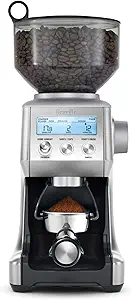 |
| Best Quality Built to a higher standard if you want something more solid | Baratza Virtuoso+ | 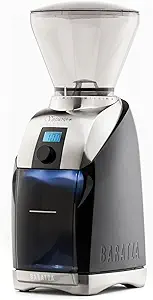 |
| Best Value The sweet spot between price and what you get | Ollygrin Burr Coffee Grinder BG702S |  |
| Best Budget The cheapest option that still gets the job done reliably | HAUSCAFE Conical Burr Grinder |  |
| Top Rated A top-rated pick with lots of positive feedback | Fellow Ode Gen 2 Grinder |  |
| Most Popular A crowd favorite that many people choose with confidence | Cuisinart Supreme Grind DBM-8P1 | 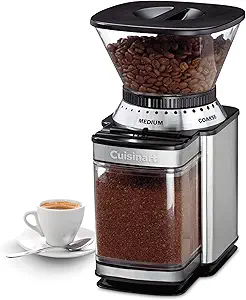 |
| Best Seller A high-volume bestseller chosen again and again | OXO Brew Conical Burr Grinder |  |
Breville Smart Grinder Pro BCG820BSS

| Capacity | 1.1 pounds |
|---|---|
| Wattage | 165 |
| Voltage | 120 |
The Breville Smart Grinder Pro is a versatile conical burr grinder built for accurate, repeatable dosing across a wide range of brew methods. It grinds directly into a portafilter, airtight container or filter basket and offers 60 discrete grind settings plus a clear LCD that shows grind setting, time and the selected number of shots or cups. Dosing iQ lets you program grind time in 0.2 second increments so you can fine tune dose for espresso or larger amounts for pour over and French press. Included portafilter cradles and a sealed grounds container make switching between espresso and filter workflows straightforward, while the stainless steel finish feels durable on a countertop. The grinder is not the quietest and its hopper and burrs require occasional cleaning to avoid stale buildup, but for a home user seeking consistent results for both espresso and pour over it delivers precise, repeatable grinds and flexible dosing options.
Best for: Home brewers who want one grinder that reliably handles espresso and manual brew methods and value precise, programmable dosing over the simplest operation.
Less Ideal for: Users seeking an ultra-quiet or maintenance-free grinder or those who only need a single coarse setting for batch grinding.
- Sixty grind settings cover espresso through French press for fine control
- Digital dosing with 0.2 second increments enables consistent, repeatable doses
- Grinds directly into portafilter or airtight container for flexible workflow
- Clear LCD displays grind setting, time and shots/cups for easy adjustments
- Requires regular cleaning to prevent buildup in burrs and hopper
- Motor and grind noise can be noticeable during operation
Verdict: Choose this grinder if you want precise, programmable dosing and a wide range of grind settings that handle both espresso and pour-over well.
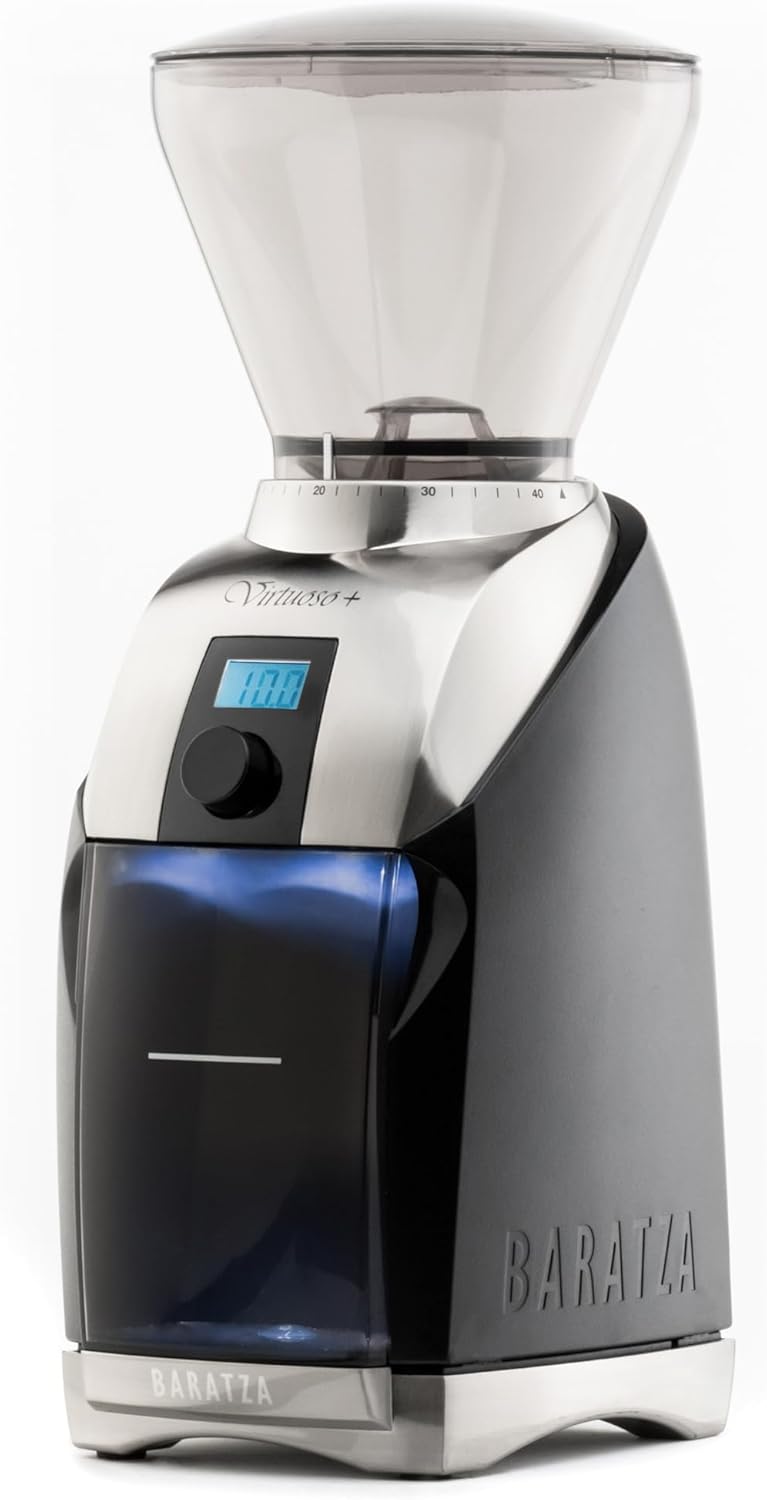
Baratza Virtuoso+
| Capacity | 230 g |
|---|---|
| Wattage | 70 watts |
| Voltage | 230 volts |
The Baratza Virtuoso+ is a compact conical-burr grinder built for daily home use when you want consistent, repeatable doses for espresso and pour-over. It uses commercial-grade hardened steel burrs and a DC motor to produce stable particle size across 40 settings, and the front-mounted digital timer lets you dial in dosing to a tenth of a second so shots and pours are more consistent. The backlit grounds bin and sculpted metal housing make it easy to use and clean, and the 230 g capacity handles several doses before refilling. Practical limits include a 70 W motor and a stepped setting system that may require some trial-and-error to find the exact setting for a particular coffee and extraction; it is not a prosumer flat-burr or heavy-duty commercial mill. For home baristas who prioritize grind consistency and repeatable dosing for espresso and pour-over, the Virtuoso+ strikes a strong balance of precision and everyday usability.
Best for: Home brewers who want precise, repeatable dosing and consistent grind quality for espresso and pour-over without investing in a commercial grinder.
Less Ideal for: Users who need high-volume, continuous commercial grinding or those seeking the absolute finest pro-level flat-burr performance should look elsewhere.
- Commercial-grade conical steel burrs provide consistent particle distribution across many grind sizes
- Digital timer adjustable to a tenth of a second for precise, repeatable dosing
- Wide 40-setting range covers espresso through French press and pour-over
- Sturdy metal top and base improve stability and durability during grinding
- Stepped grind settings require testing to find the exact setting for a specific coffee
- 70-watt motor and conical burrs are less suited to heavy commercial throughput compared with larger pro grinders
Verdict: Choose the Virtuoso+ if you want a reliable, repeatable home grinder that delivers precise dosing and consistent grinds for both espresso and pour-over brewing.
Ollygrin Burr Coffee Grinder BG702S

| Wattage | 150 watts |
|---|---|
| Capacity | 10 ounces |
| Voltage | 220 volts |
| Material Type | Stainless Steel |
The Ollygrin burr coffee grinder is a countertop electric grinder built around 40 mm stainless steel conical burrs and a gear-reduction motor to produce consistent, low-heat grounds for espresso through French press. It is used by filling the removable hopper with beans, choosing one of 30 grind settings, and using the simple rotary/button control to grind for 2 to 12 cup servings. Notable features include a large 10-ounce bean hopper, an auto-locking system for safe hopper removal, an upper burr lift for easier cleaning, a included brush, and built-in protections such as a friction clutch and overheating cutoff to protect the motor and gears. In practice it delivers steady, uniform particle size and keeps friction heat down, which helps preserve flavor and aroma for delicate pour-over and fine espresso grinds. The unit runs on 150 watts and 220 volts, so it is a solid option for home users who want more control than a blade grinder, though its 220V rating means checking compatibility with local outlets or using appropriate power setup where needed.
Best for: Home brewers who prioritize flavor retention and consistent particle size for espresso and pour-over and who value an easy-to-clean, durable burr grinder for daily use.
Less Ideal for: Users who need a battery-powered or low-voltage unit for travel or who require integrated digital dosing and weight-based dosing features.
- 40 mm stainless steel conical burrs for uniform grounds
- Wide 30-step grind adjustment from espresso to French press
- Large 10-ounce removable hopper for multiple servings
- Gear-reduction motor reduces heat buildup and protects flavor
- Safety features include friction clutch and overheating protection
- Rated for 220 volts which may require adapter or local compatibility check
- No explicit dosing timer or digital display for repeatable weighed dosing
Verdict: A durable, flavor-focused burr grinder that gives home espresso and pour-over fans wide grind control and low-heat performance.
HAUSCAFE Conical Burr Grinder

| Wattage | 200 watts |
|---|---|
| Voltage | 120 volts |
The HAUSCAFE conical burr grinder is a small, user-friendly grinder aimed at everyday home brewing. It uses conical burrs to produce relatively uniform grounds with less heat than blade grinders, and the 38 grind settings let you dial in textures for espresso, pour over, drip or French press. Operation is simple: load the removable hopper, press the single button and collect grounds in the detachable container, and the included brush makes routine cleaning straightforward. At 200 watts it grinds quickly for single- to small-batch use, and its compact footprint fits neatly on crowded countertops. Expect good flavor improvement over blade grinders and enough grind range for most home methods, though it is optimized for light to moderate home use rather than high-throughput or commercial workloads. The plastic housing keeps weight and cost down but may not feel as durable as higher-end metal models. For home baristas on a budget this grinder balances performance, space savings, and convenience.
Best for: Home brewers who want a budget-friendly burr grinder that can handle espresso and pour over with consistent results and a small countertop footprint.
Less Ideal for: Users who need a heavy-duty, commercial-capacity grinder or who prioritize premium metal construction and ultra-fast high-volume grinding.
- Conical burrs provide more consistent grind and less heat buildup than blade grinders
- Wide 38-step grind range covers espresso through French press
- Compact footprint fits small kitchens and crowded countertops
- One-touch operation with removable hopper and grounds container for easy use and cleaning
- Plastic housing may feel less robust than metal-bodied grinders
- Designed for small-batch home use rather than heavy daily demand
Verdict: A compact, affordable conical burr grinder that gives home espresso and pour over brewers a wide grind range and better flavor than blade grinders.
Fellow Ode Gen 2 Grinder

| Burr size | 64 mm |
|---|---|
| Grind settings | 31 |
| Capacity | 100 g |
| Wattage | 140 watts |
| Voltage | 120 volts |
The Fellow Ode Gen 2 is a single-dose burr grinder built specifically for brewed coffee methods rather than espresso, offering a focused feature set for pour-over, drip, French press, and cold brew. It uses professional-grade 64 mm flat stainless-steel burrs and a two-stage grinding geometry to produce consistent particle size across its 31 grind settings, and an auto-stop button that grinds a set dose and shuts off for hands-off use. Anti-static tech, a built-in knocker, and a magnetic catch cup reduce retention and mess, while the compact footprint and relatively quiet motor make it counter-friendly in home kitchens. The 100 g single-dose bin encourages grinding only what you need, which helps freshness but limits large-batch grinding. Practical limitations include that it is not designed for espresso grind extraction and the single-dose design means repeated small batches for multiple cups. For buyers prioritizing consistent, low-retention grounds and dependable daily performance for brewed coffee, the Ode Gen 2 is a strong, well-engineered choice.
Best for: Home brewers who want a reliable, repeatable single-dose grinder that produces consistent grounds for pour-over, drip, French press, and cold brew and value low retention and simple operation.
Less Ideal for: People who need an all-in-one grinder for espresso or who regularly grind large batch volumes for multiple pots or gatherings should consider a different style of grinder.
- Professional 64 mm flat burrs deliver consistent particle size for even extraction
- Anti-static technology and built-in knocker reduce grind retention and mess
- Auto-stop single-dose workflow for repeatable, hands-off grinding
- Compact, relatively quiet operation suited to countertop use
- Not intended for espresso-level fines or pressurized espresso machines
- 100 g single-dose bin limits efficiency when grinding large batches
Verdict: Choose the Ode Gen 2 if you want a dependable single-dose grinder that consistently produces low-retention, high-quality grounds for brewed coffee.
Cuisinart Supreme Grind DBM-8P1

| Wattage | 500 |
|---|---|
| Capacity | 0.23 kg |
| Voltage | 110 volts |
The Cuisinart Supreme Grind DBM-8P1 is a countertop flat burr grinder that offers 18 grind settings from ultra-fine to extra-coarse, letting you dial in grind size for espresso through coarser pour-over styles. It accepts beans in an 8 oz removable hopper and deposits grounds into a removable chamber sized to make about 4 to 18 cups, which is convenient for batch brewing and storing leftover grounds. The one-touch power bar and built-in timer automate grind cycles so you get consistent results without babysitting the machine, and cord storage plus a included scoop and brush keep the counter tidy. Practical limitations include a heavier, bulkier build compared with slim grinders and a motor that can be louder during longer grind cycles; also true espresso users may prefer a stepless micro-adjustable grinder for finer incremental control. For home brewers who value simple, repeatable settings and easy cleaning, this grinder delivers reliable performance across brewing methods.
Best for: Buyers who want a dependable, easy-to-use burr grinder that produces consistent grinds for both espresso-adjacent fine settings and coarser pour-over cups without a steep learning curve.
Less Ideal for: Users seeking a compact travel-friendly grinder or experienced espresso hobbyists who need stepless, micro-adjustable grind control.
- 18-position grind selector covers ultra-fine to extra-coarse for multiple brew methods
- Removable 8 oz bean hopper and grind chamber make loading and cleaning straightforward
- Programmable one-touch power with internal timer produces consistent grind amounts
- Includes cord storage and cleaning accessories to reduce countertop clutter
- Bulkier and heavier than many modern home grinders
- Not stepless; lacks micro-adjustments preferred by dedicated espresso users
Verdict: Choose the Cuisinart Supreme Grind DBM-8P1 if you want a straightforward, programmable burr grinder that reliably covers grind sizes for both pour-over and espresso-style brewing.
OXO Brew Conical Burr Grinder

| Capacity | 12 ounces |
|---|---|
| Burr type | 40 mm stainless steel conical burrs |
| Grind settings | 15 settings plus micro-adjustments |
| Power source | DC power supply |
| Voltage | 120 volts |
The OXO Brew Conical Burr Grinder is a countertop electric grinder built to deliver consistent, tunable grounds for espresso through coarse methods. It uses 40 mm stainless steel conical burrs and offers 15 main grind settings with additional micro-adjustments, so you can dial in fine espresso or coarser pour-over and French press grinds. A large removable hopper holds up to 12 ounces of beans and has a UV-blocking tint to help preserve freshness, while the one-touch start and memory of the last setting make daily use simple. The DC motor is designed for low vibration and quieter operation, which helps for early-morning grinding. Practical limits include its single-dose timer control rather than weight-based dosing, so you may need a scale for precise espresso dosing, and the unit is a typical counter size for a dedicated coffee station. For risk-averse buyers it feels like a reliable, no-frills grinder that balances performance and everyday usability.
Best for: Home brewers who want consistent, tunable grounds for espresso and pour-over and prefer a straightforward, reliable grinder that remembers settings and is easy to use daily.
Less Ideal for: Users seeking a grinder with built-in weight-based dosing or commercial throughput should consider pro-focused models instead.
- 40 mm stainless steel conical burrs for uniform grounds
- 15 grind settings plus micro-adjustments for precise tuning
- Large 12 oz removable hopper with UV tint to keep beans fresher
- One-touch start with memory for easy, repeatable use
- DC motor engineered for low vibration and quieter operation
- Timer-based dosing rather than integrated weight-based dosing
- Not specifically optimized for built-in scale dosing or commercial volumes
Verdict: A dependable, user-friendly conical burr grinder that delivers consistent, adjustable grounds for espresso and pour-over at home.
Choosing the Right Coffee Grinder for Espresso and Pour Over: Key Factors to Consider
Grind Range and Consistency
A grinder intended for both espresso and pour-over must cover a wide grind range while maintaining uniform particle size distribution. Espresso calls for very fine, narrowly distributed particles to support proper extraction and crema, whereas pour-over benefits from a coarser, even bed that allows water to flow consistently.
Inconsistent grinds can cause channeling with espresso and uneven extraction with pour-over, producing sour or bitter flavors. Look for burr designs and tolerances known to hold distribution across settings, and check whether the grinder maintains consistent output when moving between very different grind sizes.
Adjustment Mechanism and Repeatability
How you change grind size affects how quickly you can switch between espresso and pour-over and how reliably you return to a preferred setting. Stepless systems allow micro-adjustments which are useful for dialing espresso, while indexed or stepped systems make it faster to jump between preset positions for different brew methods.
Repeatability matters when you dial in a shot or pour-over recipe. Clear markings, detents, or digital readouts reduce guesswork. Consider whether the adjustment mechanism is easy to fine-tune under typical kitchen conditions and whether it will hold calibration over time.
Burr Type, Size, and Longevity
Burrs are the heart of the grinder. Conical and flat burrs each have trade-offs in terms of heat generation, speed, and particle distribution. Larger burrs typically cut faster and stay cooler under load, which helps preserve flavor during long grind sessions for pour-over. Burr material and manufacturing quality affect how long they maintain sharpness and consistent performance.
Regular cleaning and correct maintenance extend burr life, but initial burr choice determines baseline durability. For a dual-purpose grinder, choose burrs that balance fine capability for espresso with the capacity to produce clean coarser settings without excessive retention.
Retention and Cleanability
Grind retention is the amount of coffee left inside the grinder between uses. Low retention is especially important when switching from espresso to pour-over because leftover fines can alter a coarser brew. High retention forces you to purge extra grounds or waste doses to avoid flavor crossover.
Cleanability ties into retention: grinders with removable burrs, accessible chambers, and simple hoppers are easier to keep free of old grounds and oils. Consider how often you plan to switch modes and whether the grinder's design supports quick cleaning to reduce flavor contamination.
Dosing Options and Capacity
Home routines vary. Some brewers prefer timed dosing or single-dose grinding, while others want a larger hopper to reduce daily refills. Timed dosing and programmable shot sizes add convenience for espresso users. Single-dose workflows reduce retention and let you change beans quickly without emptying a hopper.
Capacity also affects how often you grind and how fresh the coffee stays. If you brew multiple cups or hosts guests frequently, a larger hopper or quick refill design may be beneficial. Balance capacity with the desire to keep beans fresh and minimize stale inventory in the hopper.
Noise, Heat, and Practical Use
Noise level matters in kitchens where quiet operation is preferred. High-speed grinders can be louder, but they often produce more heat, which can alter volatile flavors during extended grinding. Low-speed or geared grinders tend to run cooler and quieter, protecting delicate aromatics in lighter roasts used for pour-over.
Think about where you will use the grinder and whether noise and heat will affect your routine. Also evaluate how easy the grinder is to operate daily, including bean loading, switching settings, and cleaning, since ergonomics influence long-term satisfaction.
Single-Dose Vs. Hopper Workflows
Single-dose grinding is popular among home brewers who want minimal retention and maximum bean freshness. It requires measuring beans before each brew and usually means smaller, more frequent grinding sessions.
Hopper workflows suit households that brew multiple cups daily and prefer the convenience of not measuring each time. If you choose a hopper-fed grinder, look for anti-static and sealed-hopper designs to preserve freshness and reduce mess.
- Single-dose: lower retention, better freshness control, more prep time
- Hopper: convenience, larger capacity, potential for stale beans if not used frequently
Dialing In Espresso with a Dual-Purpose Grinder
Espresso dialing requires small, consistent adjustments. With a dual-purpose grinder, start with an established baseline setting for espresso and make incremental changes while noting shot time and taste. Expect to test a few back-to-back shots to find the sweet spot, especially when swapping beans or roast levels.
Use a purge or a small blank shot when switching from a coarser setting to fine espresso to clear retained larger particles. Digital timers or dose counts accelerate testing and help you map settings for specific beans.
- Make small adjustments and keep notes for repeatability
- Purge between large setting changes to avoid contamination
- Use consistent tamping and dosing when comparing shots
Managing Static and Mess
Static can send grounds scattering and make dosing inconsistent. Anti-static burr finishes, lower-speed motors, and proper humidity in the kitchen reduce static buildup. Wiping the portafilter or receiving cup with a dry cloth before use also helps control stray fines.
For tidier operation, choose grinders with enclosed doser boxes or portafilter holders. Regularly clean chutes and dosing chambers to prevent clogs and uneven dosing caused by accumulated oily residue.
- Lower-speed grinding reduces static
- Anti-static finishes and periodic cleaning minimize mess
- Keep a small brush handy for quick chute cleanouts
Maintenance and Burr Replacement
Routine maintenance extends the life of a grinder and preserves performance. Weekly light brushing to remove loose grounds and monthly deeper cleans that remove the burrs and clear the chamber will keep retention low and flavors consistent.
Burr replacement intervals vary by volume and bean type. Track grind quality over time and replace burrs when you notice wider particle distribution, slower cutting, or increased heat during grinding. Factor replacement accessibility into your buying decision.
- Brush daily or weekly depending on use
- Schedule deeper cleaning monthly for regular users
- Inspect burrs periodically for wear and replace as needed
How Grind Taste Differs Between Espresso and Pour-Over
Espresso emphasizes body, concentration, and crema, which demands a fine, uniform grind to extract solubles quickly under pressure. Pour-over highlights clarity and acidity, benefiting from a coarser grind and even extraction across the filter bed.
Understanding these differences explains why a one-size-fits-all grinder must be flexible. Small deviations in particle size distribution can change perceived sweetness or bitterness more dramatically in espresso than in pour-over, so precision is more critical for fine settings.
- Fine grinds concentrate flavors quickly under pressure
- Coarser grinds for pour-over support clarity and nuanced acidity
- Consistency matters for both methods but is more sensitive for espresso
How We Chose the Best Coffee Grinder for Espresso and Pour Over
We focused on attributes that matter when one grinder must reliably serve both espresso and pour-over brewing styles. Key evaluation criteria included grind consistency across the full range of settings, fineness adjustment resolution and ease of use, hopper and dose capacity for typical home routines, build quality and burr durability, and noise and heat control during extended grinding. We also considered retention and cleanability because leftover grounds and static can affect flavor and make switching between brew methods harder. Products were excluded if they lacked the grind range or adjustment precision needed for both fine espresso and coarser pour-over settings, if their construction suggested short lifespan for regular home use, or if they relied on blades rather than burrs. We prioritized machines with proven burr types and clear stepless or stepless adjustment mechanisms, measurable retention characteristics, and user-focused features such as timed dosing, removable hoppers, and accessible burrs for cleaning. The list reflects practical performance, reliability, and day-to-day usability for home espresso and manual-brew enthusiasts.
Our full evaluation process is outlined in our review methodology.
FAQ
Can one grinder handle both espresso and pour-over effectively?
Yes, many modern burr grinders can cover the range needed for both methods. Success depends on the grinder's adjustment resolution, burr quality, and retention characteristics. Expect to spend time dialing in settings and purging between large range changes.
Should I pick a stepless or stepped adjustment for dual use?
Stepless systems let you micro-tune espresso settings, while stepped systems make it faster to jump between preset positions for pour-over. If you prioritize precise espresso dialing choose stepless; if you value repeatable presets and speed choose stepped.
How often do burrs need replacement for home use?
Burr lifespan depends on volume and bean type but typically ranges from several hundred to a few thousand pounds of coffee. For most home users, expect to evaluate performance after a year or two of regular use and replace when grind quality noticeably declines.
How do I reduce retention when switching brew methods?
Use single-dose practices, purge several grams before pulling an espresso shot, or opt for a grinder with low-retention geometry and removable chambers. Regular cleaning also reduces buildup that increases retention over time.
Does grinder speed matter for flavor?
Speed affects heat generation and static. High-speed grinders can be faster but may warm the grounds and cause more static, which can affect aroma. Low-speed or gear-reduced grinders often run cooler and quieter, preserving volatile aromatics for lighter roasts used in pour-over.
Final Verdict
Choosing the right coffee grinder for espresso and pour-over is about balancing range, precision, and daily usability. Prioritize consistent grind distribution across the full setting range, a reliable and repeatable adjustment mechanism, and burrs that stay sharp under normal home use. Also consider retention, ease of cleaning, and how dosing fits your routine. Tradeoffs are inevitable: faster high-speed grinders offer speed but can increase heat and static, while slower, gear-driven designs are quieter and cooler. Decide which factors matter most for your brewing style and pick a grinder that aligns with those priorities to get the most consistent results for both espresso and pour-over brewing.