
Note: This article contains affiliate links. If you click on these links and make a purchase, we may earn a small commission at no extra cost to you. This helps support our research and content. Read our full affiliate disclosure here.
If you use a moka pot, the grinder you pair with it has an outsized influence on the coffee you get. A too-fine or uneven grind can over-extract and taste bitter, while a coarse or inconsistent grind makes the brew weak and underdeveloped. This guide focuses on grinders suited specifically for moka pot brewing, highlighting models that make it easier to dial in the relatively fine, even grind that this method needs. We shortlisted top options that emphasize grind consistency, dose control, and durability. Below you'll find clear criteria we used to evaluate each choice plus practical notes to help you match a grinder to your routine and here are the picks we tested against those standards.
Top Picks at a Glance
| Best Overall The best all-around choice for most situations | OXO Brew Compact Conical Burr Grinder |  |
| Best Quality Built to a higher standard if you want something more solid | 1Zpresso J Manual Coffee Grinder |  |
| Best Value The sweet spot between price and what you get | Bodum Bistro Blade Grinder |  |
| Best Budget The cheapest option that still gets the job done reliably | CEVING Mini Manual Coffee Grinder MCG-01 | 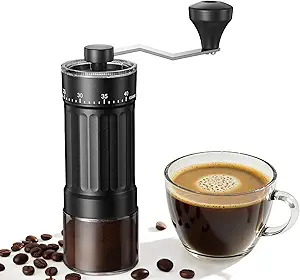 |
| Top Rated A top-rated pick with lots of positive feedback | TIMEMORE Chestnut C3S | 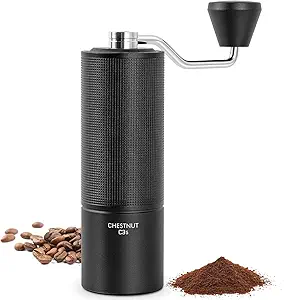 |
| Most Popular A crowd favorite that many people choose with confidence | Hamilton Beach Fresh Grind 80335R |  |
| Best Seller A high-volume bestseller chosen again and again | BLACK+DECKER Coffee Grinder CBG110S |  |
OXO Brew Compact Conical Burr Grinder

| Capacity | 50 g |
|---|---|
| Burr type | Stainless steel conical burrs |
| Grind settings | 15 settings, 29 micro-adjustments |
| Power source | AC adapter |
| Recommended uses | Grinding Coffee |
The OXO Brew Compact Conical Burr Grinder brings conical stainless steel burrs and a wide range of grind adjustments into a small footprint for countertop or cabinet storage. It offers 15 main settings and 29 micro-adjustments so you can dial in grind size from fine to coarse, which is useful for brewing methods that need specific particle distributions. The 50 g hopper holds enough beans to prepare about six cups, and the removable upper and lower burrs simplify cleaning. The grounds container has an integrated spout for neater transfer and the chuteless design makes the burrs and grind path easy to access. It is powered by an AC adapter and uses Tritan Renew components for the hopper and container. The grinder is best for home use where space is limited and precise manual adjustment matters, though its smaller capacity means you will refill more often for larger batches and it is not intended for heavy commercial use.
Best for: Buyers who want a space-conscious grinder that still offers precise, repeatable grind control for home brewing and care about neat, easy cleanup.
Less Ideal for: Those who need high-volume grinding for large households or light commercial use should choose a larger-capacity or heavier-duty grinder instead.
- Consistent stainless steel conical burrs for uniform grind quality
- 15 settings plus 29 micro-adjustments for precise grind control
- Compact footprint that stores easily on counters or in cabinets
- Removable burrs and chuteless design make cleaning straightforward
- Integrated spout on grounds container for tidy transfer
- 50 g bean capacity requires frequent refills for multiple servings or large batches
- Plastic body may feel less durable than full-metal models
Verdict: A compact, precise home burr grinder that gives Moka pot brewers fine-tuned control in a small countertop package.
1Zpresso J Manual Coffee Grinder

| Burr size | 48 mm stainless steel conical |
|---|---|
| Adjustment | 30 clicks per rotation (internal) |
| Capacity | 35 g |
| Handle | Foldable crank |
| Cleaning | Tool-free disassembly |
The 1Zpresso J is a performance-focused manual grinder built around a large 48mm stainless steel conical burr and a 30‑click internal adjustment that makes dialing in grind size straightforward. It grinds quickly for a hand grinder and is aimed at pour-over and other filter methods, but its consistent particle distribution also works well for Moka pot dosing when you need a slightly finer, even grind. The foldable handle and compact profile make it easy to pack for travel or to store in a small kitchen, and the tool-free disassembly simplifies cleaning and maintenance. Factory-calibrated burr stability and a magnetic catch cup help reduce wobble and mess during use. Expect a modest capacity of about 35 g, so you will refill for multiple cups, and grinding remains manual work rather than instant like an electric grinder. For someone focused on grind quality and control without electricity, the J delivers precise, repeatable results in a durable package.
Best for: Buyers who prioritize grind consistency and control for stovetop brewing and want a durable, portable manual grinder they can precisely adjust for Moka pot and filter brews.
Less Ideal for: If you need rapid, hands-free grinding for many cups or a built-in dosing hopper, choose an electric grinder instead.
- Large 48mm stainless steel conical burr for consistent, efficient grinding
- 30-click internal adjustment for precise, repeatable grind settings
- Tool-free disassembly for fast cleaning and maintenance
- Foldable handle and compact design for easy travel and storage
- Magnetic catch cup reduces spills and simplifies dosing
- 35 g capacity requires multiple fills for larger servings
- Manual operation is slower and more effort than electric grinders
Verdict: For a performance-minded Moka pot user who values consistent, adjustable grinds and portability, the 1Zpresso J delivers factory-quality burr performance in a compact manual package.
Bodum Bistro Blade Grinder

| Wattage | 150 watts |
|---|---|
| Capacity | 56.6 g |
| Material Type | Stainless Steel |
| Power Source | Electric |
The Bodum Bistro is a small, no-frills blade grinder that turns whole beans into anything from coarse to fine grounds using a 150W motor and stainless steel cutting blade. You use it by adding beans to the chamber, securing the transparent lid, and tapping the red safety button for pulse or holding for continuous grind; the lid lets you watch progress so you can stop when you reach the coarseness you want. Its compact footprint and cord storage make it easy to keep on a counter or stow in a cabinet, and the pulse option gives short bursts that help avoid overheating. Limitations are typical of blade grinders: grind size is less uniform than a burr grinder, which can affect extraction consistency for delicate brews, and the 56.6 g capacity means you may need multiple batches for larger servings. For moka pot use you can achieve an adequate fine-to-medium-fine grind if you pulse carefully and monitor time, but it will not match the consistency of a burr grinder optimized for stovetop espresso-style extraction.
Best for: Buyers who want an affordable, compact grinder that produces usable fine-to-medium grounds quickly and values simplicity and convenience over absolute grind uniformity for moka pot brewing.
Less Ideal for: Users seeking precise, repeatable grind consistency for high-extraction stovetop espresso or those who regularly grind large batches should consider a burr grinder instead.
- Powerful 150W motor and stainless steel blade that grind beans quickly
- Transparent lid with safety lock lets you monitor grind without opening
- Compact size with cord storage for easy countertop or cabinet storage
- Push-button pulse and continuous modes give simple control over grind time
- Blade design produces less uniform particle size compared with burr grinders
- Small 56.6 g capacity requires multiple batches for larger servings
Verdict: A compact, easy-to-use blade grinder that delivers quick, serviceable fine-to-medium grounds for moka pot users who prioritize convenience and speed over burr-level consistency.
CEVING Mini Manual Coffee Grinder MCG-01

| Capacity | 30 g |
|---|---|
| Material Type | Ceramic |
| Power Source | manual winding |
| Adjustable Settings | 40 |
The CEVING Mini Manual Coffee Grinder is a portable hand mill built for small, precise batches and on-the-go use. It uses ceramic conical burrs and an external adjustment ring with 40 settings to let you dial in grind size for moka pot, pour-over, French press, or espresso prep. With a 30 g capacity and three detachable parts the grinder is simple to load, clean with a brush, and stash in luggage or a drawer. Ceramic burrs tend to produce consistent particles while keeping heat low, which helps preserve flavor in short-brew methods like the moka pot. Because it is manually powered, grinding takes more time and effort than an electric grinder and is best for single cups or two servings rather than bulk grinding. The compact capacity and manual operation make it a sensible budget pick for travelers or anyone who wants better-than-blade grinding without the cost or footprint of an electric model.
Best for: Buyers who want an inexpensive, portable way to get consistent burr-ground coffee for moka pot and travel use without buying an electric grinder.
Less Ideal for: Those who routinely grind for multiple cups, entertain frequently, or prefer hands-free, fast grinding should choose a dedicated electric grinder instead.
- 40 external grind settings allow precise control for moka pot and other brew methods
- Ceramic conical burrs give a uniform grind and low heat generation
- Compact, lightweight design is easy to pack for travel or camping
- Detachable three-part design is simple to disassemble and clean
- 30 g capacity limits it to single-cup or small-batch grinding
- Manual winding requires physical effort and is slower than electric grinders
Verdict: A low-cost, travel-friendly burr grinder that delivers precise, low-heat grinds ideal for moka pot users who only need small batches.
TIMEMORE Chestnut C3S

| Capacity | 25 g |
|---|---|
| Material Type | Aluminum |
The TIMEMORE Chestnut C3S is a portable hand grinder built around a patented S2C steel conical burr and an all-aluminum body, designed to deliver consistent grinds for home brewing. You use it by loading up to about 25 g of beans, setting the stepless adjustment to the desired coarseness, and turning the handle; the dual-bearing support helps keep the burrs aligned for even particle size. Practical benefits include a durable metal construction with no internal plastic parts, a compact footprint that is easy to hold and carry, and a fine-to-coarse range suitable for espresso, pour over, French press and, importantly, moka pot grind settings. Cleaning is straightforward with the supplied brush and the grinder is small enough to fit into travel kits. Limitations are its modest 25 g capacity, which means repeated batches if you need coffee for several people, and the manual effort required for larger doses; it also requires careful adjustment to hit exact moka pot fineness. For a reliability-minded buyer who wants a durable, consistent manual grinder for single-cup moka pot brewing, the C3S is a sensible choice.
Best for: Buyers who prioritize a dependable, build-quality grinder for single-cup brewing and want a handheld tool they can rely on for consistent moka pot grinds.
Less Ideal for: People who regularly brew multiple cups at once or want an electric grinder with hands-free operation should look elsewhere.
- Patented S2C steel conical burr for consistent, uniform grind particles
- All-metal aluminum body with dual-bearing design for long-term durability
- Stepless grind adjustment lets you dial in moka pot and other brew sizes
- Compact and portable 25 g capacity suitable for single-cup use
- Small 25 g capacity requires multiple fills for more than one cup
- Manual cranking is slower and more effort for larger doses
Verdict: A rugged, all-metal manual grinder that delivers reliable, consistent grinds ideal for single-cup moka pot brewing.
Hamilton Beach Fresh Grind 80335R

| Capacity | 4.5 ounces |
|---|---|
| Wattage | 125 watts |
| Voltage | 110 |
The Hamilton Beach Fresh Grind is a simple, no-frills electric blade grinder built for everyday kitchen use. It grinds whole coffee beans into a range of coarse-to-fine textures by varying grind time, and the removable stainless steel grinding bowl and dishwasher-safe lid make cleanup quick. Its 125-watt motor powers the stainless blades well enough for coffee, herbs, seeds, and spices, and cord storage under the base keeps the unit tidy on a countertop. The unit can grind enough beans for up to a 12-cup pot in one session, making it convenient for households that brew multiple cups. As a blade grinder, it cannot reproduce the uniform particle size of a burr grinder, so extraction consistency for very fine moka pot grinds may require short, controlled pulses and some experimentation. The compact footprint and straightforward one-touch operation suit a low-maintenance routine, but buyers seeking precision dosing or ultra-consistent fine grinds should consider a burr model instead.
Best for: Buyers who prioritize ease of use, low-maintenance cleanup, and a compact grinder for everyday home brewing, especially those who value products with strong user approval and proven reliability.
Less Ideal for: Users seeking precise, repeatable grind settings for espresso or exact moka pot extraction should look at small burr grinders instead.
- Removable stainless steel grinding bowl that is dishwasher-safe for easy cleanup
- Compact footprint with built-in cord storage to reduce countertop clutter
- 125-watt motor and stainless steel blades handle coffee beans, spices, and seeds
- Can grind enough beans in one batch to brew up to 12 cups
- Blade grinder design produces less uniform particle size compared with burr grinders
Verdict: A dependable, easy-to-clean compact blade grinder that suits everyday home brewing and users who want a simple, well-reviewed option.
BLACK+DECKER Coffee Grinder CBG110S

| Capacity | 56.6 g |
|---|---|
| Wattage | 130 |
| Voltage | 110 volts |
| Power Source | Electric |
This BLACK+DECKER blade grinder is a small, straightforward appliance for quick home grinding of coffee beans, spices, and small grains. It uses stainless steel blades in a removable bowl and runs from a simple one-touch push-button, with a lid-lock safety that prevents operation unless the lid is secured. For moka pot users it can deliver a usable grind when you pulse short bursts to avoid overheating and over-fining the grounds; the unit is best for coarser to medium-fine results rather than precise espresso-fine grind. The 56.6 g capacity fits a few moka pot refills, and the compact footprint stores easily on a counter. Limitations are that blade grinders do not produce the uniform particle size of burr grinders and can warm beans with extended runs, so achieving consistent extraction for stovetop brews requires brief pulses and visual checks. For buyers who prioritize ease of use, safety, and a reliable basic grinder for occasional moka pot brewing, this is a practical, low-risk choice.
Best for: Buyers who want an easy, low-friction grinder for occasional moka pot brewing and value safety and simple operation over precision grind control.
Less Ideal for: Users seeking consistently uniform, professional-level grind sizes for repeated stovetop or espresso-style brewing should opt for a burr grinder instead.
- One-touch push-button operation for simple, repeatable use
- Stainless steel blades and bowl for durability and easy cleaning
- Lid-locking safety feature prevents accidental starts
- Compact size with a capacity suitable for several moka pot fills
- Blade design produces less uniform particle size than burr grinders
- Can heat beans or create fines if run continuously instead of pulsed
Verdict: A simple, safe, and compact blade grinder that reliably handles occasional moka pot grinding when you pulse to control grind size and heat.
Choosing the Right Coffee Grinder for Moka Pot: Key Factors to Consider
Grind Consistency at Fine Settings
Moka pots require a relatively fine grind that sits between espresso and drip. Uniform particle size matters because fines extract faster and can cause over-extraction, while large particles under-extract. You should look for burr grinders known for producing narrow particle distributions at the target setting.
Check for conical or flat burr geometries designed to stay consistent when dialed fine. Consistent grinds reduce wasted coffee and make dialing in taste faster, especially when switching beans or roast levels.
Adjustment Precision and Repeatability
A grinder that offers fine, repeatable adjustments saves time and frustration. Stepped adjustments with tight indexing can work, but stepless systems or very fine-stepped mechanisms give the most control when chasing the small changes that affect moka pot extraction.
Repeatability matters if you want to recreate a favorite setting. Look for clearly marked increments, locking mechanisms to prevent drift, or micro-adjust features that keep the burrs aligned between sessions.
Dosing Method and Control
How the grinder delivers ground coffee affects dose accuracy and workflow. Some grinders have timed electronic dosing, others use a portafilter-style holder or a catch cup for single dosing. For moka pots, target a grinder that minimizes clumping and allows you to measure a consistent weight or volume per brew.
Single-dose workflows reduce retention and let you switch beans quickly, while timed dosing is convenient for repeatability. Consider whether the grinder makes it easy to empty grounds into the moka pot funnel without mess.
Burr Material and Durability
Burr composition affects lifespan, heat transfer, and cutting behavior. Hardened steel burrs are common and durable, while higher-end options use treated steel for longer life. Ceramic burrs resist wear but can be brittle.
Durable burrs maintain sharpness and consistency longer, which matters if you grind daily. Also consider how easy the burrs are to replace and whether the manufacturer provides compatible spares.
Retention, Static, and Cleanability
Grind retention and static cling can cause uneven dosing and complicate cleanup. High retention means stale grounds can mix with fresh ones, affecting flavor. Static can scatter fines and make dosing messy.
Choose grinders designed to minimize retention with accessible chambers and removable catch cups. Materials and finishes that reduce static, and simple disassembly for cleaning, will improve daily usability.
Size, Noise, and Countertop Fit
Practical considerations like footprint, noise level, and power consumption affect whether the grinder suits your kitchen routine. A compact grinder can be stored away, but very small motors may heat up faster during long grinding sessions.
If you brew in the morning while others sleep, pay attention to decibel levels and duty cycle. Countertop fit also includes the ease of transferring grounds to the moka pot without spills.
Why Moka Pot Grind Differs From Espresso and Drip
Moka pots use pressurized steam to force water through coffee, which means extraction speed and pressure differ from both espresso machines and pour-over brewers. The required grind sits finer than most drip settings but coarser than a typical espresso puck, and particle distribution affects how evenly the water extracts flavor.
Because the brewing time is short and temperature fluctuates, small changes in grind size or distribution produce noticeable differences in taste. That is why a grinder that performs well for moka pot use must offer precise control and low variability between doses.
- Extraction speed is intermediate between drip and espresso
- Grind particle distribution strongly affects bitterness and body
- Repeatable settings speed up dialing for different beans
Manual Vs Electric Grinders for Moka Pot
Manual grinders can produce excellent results and are useful if you want a portable or low-noise option. The best manual designs for moka pots have robust gear ratios and burrs capable of consistent fine grinding. However, they require more effort and time to grind multiple doses.
Electric grinders are more convenient for daily use and can offer better consistency at scale. Look for models with stable motors and cooling characteristics to avoid heat-induced changes to the grind during successive runs.
- Manual: low noise, portable, single-dose friendly
- Electric: faster, hands-off, better for multiple daily brews
Single-Dose Workflow Tips
A single-dose approach reduces retention and speeds bean switching. To use it well, measure beans by weight and grind directly into a small catch cup or the moka pot funnel. This minimizes stale grounds and helps you track extraction results more accurately.
If you use single dosing, invest in a grinder that is easy to disassemble for quick cleaning and that has a stable adjustment that does not shift when you remove the hopper or lid.
- Weigh beans before grinding for consistent results
- Grind directly into a funnel or catch cup to reduce transfer loss
- Clean the burr chamber regularly to prevent buildup
How to Dial In Grind Size for a Moka Pot
Start with a grind slightly finer than what you use for a regular drip brewer, then brew and taste. If the coffee tastes sour or weak, move one step finer. If it tastes harsh or bitter, move one step coarser. Make only one small adjustment at a time and record the setting.
Also pay attention to dose and tamping level in the basket. While moka pots do not require a firm tamp like espresso, evenly distributing the grounds and avoiding overpacking helps flow and extraction consistency.
- Make incremental adjustments and test between changes
- Keep dose and distribution consistent when tasting
- Note roast level changes: darker roasts extract faster
Maintenance and Burr Care
Regular cleaning maintains grind consistency and prevents old oils from affecting flavor. Brush out fines from the burr chamber each week and deep-clean every few months according to the manufacturer or standard care practices.
Inspect burrs for wear periodically. If cuts feel dull or you notice increased retention and inconsistent particle size, consider servicing or replacing the burrs if the design allows it.
- Brush out the grind chamber weekly
- Perform a full disassembly and deep clean periodically
- Replace burrs based on wear rather than time alone
How We Chose the Best Coffee Grinder for Moka Pot
We focused on attributes that materially affect moka-pot brewing and everyday usability. Primary filters included grind consistency at fine settings, stable burr geometry, and the ability to hold repeatable doses. We prioritized grinders with stepless or well-indexed adjustments that let you micro-tune grind size for the narrow range moka pots require. Build quality and burr material were assessed because durability and heat resistance influence long-term grind stability. We also evaluated dosing options and user controls, favoring models that offer precise grounds output — either through timed dosing, reliable single-dose workflow, or accurate catch-cup arrangements. Noise and retention were considered as secondary factors since they affect the daily experience and waste between grinds. We excluded blade grinders and designs that are explicitly optimized only for coarse extraction methods. Manual grinders were included only if their mechanism supported consistent fine grinding suitable for moka pots.
Our full evaluation process is outlined in our review methodology.
FAQ
What grind size should I start with for a moka pot?
Begin with a grind a bit finer than drip but coarser than espresso. Make incremental adjustments based on brew taste, moving finer if the coffee is weak or sour and coarser if it tastes bitter.
Can a manual grinder produce a good moka pot grind?
Yes. A well-built manual grinder with quality burrs and a good gear ratio can deliver consistent, fine grinds suitable for moka pots. It requires more effort and is best for single-dose routines.
How often should I clean the grinder when using a moka pot daily?
Brush out the burr chamber weekly to remove fines and oils, and perform a deeper clean every few months. More frequent cleaning helps maintain flavor consistency, especially with oily or dark roasts.
Does grind retention affect moka pot brewing?
Yes. Retained grounds can stale and alter dose accuracy, which impacts flavor. Choosing a grinder with low retention or using a single-dose workflow minimizes these issues.
Should I weigh beans or grounds for moka pot consistency?
Weighing beans before grinding is the most consistent method. It ensures repeatable dose and reduces variability from different grind densities between roasts or beans.
Final Verdict
Prioritize a grinder that delivers narrow particle distribution at the fine settings moka pots require, along with precise adjustment and reliable dosing. Balance those technical factors against practical concerns like size, noise, and ease of cleaning to match your daily routine. With those tradeoffs in mind, you can confidently pick a grinder that helps you extract cleaner, more balanced moka pot coffee every morning.