
Note: This article contains affiliate links. If you click on these links and make a purchase, we may earn a small commission at no extra cost to you. This helps support our research and content. Read our full affiliate disclosure here.
If you brew pour over coffee, a reliable grinder is one of the most important upgrades you can make. The right coffee grinder for pour over produces uniform grounds and precise grind-size control so you can dial in extraction, flavor clarity, and brew time without guessing. This guide reviews seven shortlisted grinders that are well suited to pour over brewing. We focused on machines that offer repeatable grind distribution, user-friendly adjustments, and practical daily use features. Below you will find our evaluation criteria and decision factors to help you pick the best option for your brewing style and budget.
Top Picks at a Glance
| Best Overall The best all-around choice for most situations | Breville Smart Grinder Pro BCG820BSS | 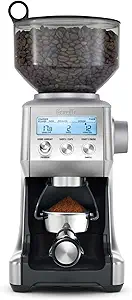 |
| Best Quality Built to a higher standard if you want something more solid | Fellow Ode Gen 2 Coffee Grinder |  |
| Best Value The sweet spot between price and what you get | Hamilton Beach Fresh Grind 80335 |  |
| Best Budget The cheapest option that still gets the job done reliably | CEVING Mini Manual Coffee Grinder MCG-01 | 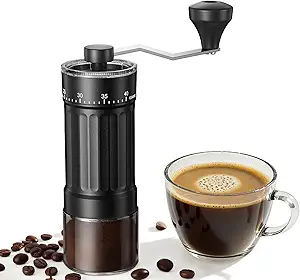 |
| Top Rated A top-rated pick with lots of positive feedback | TIMEMORE C5 ESP PRO Grinder |  |
| Most Popular A crowd favorite that many people choose with confidence | Cuisinart Supreme Grind DBM-8P1 | 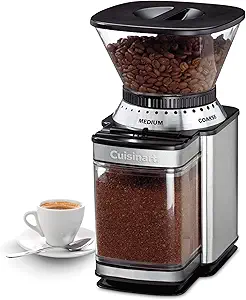 |
| Best Seller A high-volume bestseller chosen again and again | BLACK+DECKER Coffee Grinder CBG110S |  |
Breville Smart Grinder Pro BCG820BSS

| Wattage | 165 |
|---|---|
| Capacity | 1.1 pounds |
| Voltage | 120 |
The Breville Smart Grinder Pro is a countertop conical burr grinder designed to give consistent, repeatable grinds across a wide range of brew methods. It is typically used to grind directly into a portafilter, airtight container, paper filter, or gold-tone basket, and the clear LCD shows grind setting, grind time and number of shots or cups selected. notable features include 60 unique grind settings, a Dosing iQ system that programs grind time in 0.2-second increments, and included portafilter cradles and a sealed grounds container. In practice the grinder makes dialing in a pour-over or filter brew straightforward because you can micro-adjust time for a precise dose and switch settings without swapping burrs. Trade-offs are that it is a midweight countertop unit that requires a small footprint and periodic burr cleaning, and those who need ultra-fast commercial throughput may find the 165 W motor and dosing approach geared more to home use. For pour-over drinkers the combination of fine-grained adjustment and the ability to grind to a filter receptacle makes it easy to chase clarity and extraction.
Best for: Buyers who want precise, repeatable grind control for home brew routines and who value dialing in dose and particle distribution for pour-over and specialty coffee.
Less Ideal for: People who need a very small, travel-friendly grinder or high-volume commercial grinding should look elsewhere.
- Very wide range of 60 grind settings for everything from espresso to French press
- Digital dosing with 0.2-second increments for repeatable portion control
- Can grind directly into portafilter or airtight container for flexible workflow
- Clear LCD that displays grind setting, time and shot/cup count
- Includes portafilter cradles and sealed grounds container for neat operation
- Requires occasional burr cleaning and maintenance to keep consistent performance
- Larger countertop footprint and heavier body compared with compact home grinders
Verdict: If you want micro-adjustable, repeatable grinds for pour-over and other manual brew methods, this grinder delivers precise dosing and a very wide range of grind settings.
Fellow Ode Gen 2 Coffee Grinder

| Burr size | 64 mm |
|---|---|
| Grind settings | 31 |
| Capacity | 100 g |
| Wattage | 140 watts |
| Voltage | 120 volts |
The Fellow Ode Gen 2 is a purpose-built single-dose burr grinder for brewed coffee methods like pour-over, drip, French press, and cold brew. It uses professional-grade 64 mm flat stainless steel burrs and a two-stage grinding geometry to produce consistent particle size across 31 grind settings, and anti-static tech plus a built-in knocker reduce retention and mess. The 100 g single-dose bin keeps beans fresh between brews and a magnetic catch cup makes collecting grounds tidy, while the automatic stop and quiet motor simplify routine use. Practical benefits include precise, repeatable grind profiles suited to pour-over dialing, an easy-to-clean layout, and a compact footprint that fits on most counters. Limitations are that it is designed for brewed coffee rather than espresso and the single-dose design may feel slower for households wanting to grind large batches at once.
Best for: Serious pour-over and brewed-coffee drinkers who prioritize precise, repeatable grind quality and low retention for single-dose brewing sessions.
Less Ideal for: Users who need a grinder for regular high-volume batching or who require espresso-grade fine grinding should look at different models.
- 64 mm flat burrs with two-stage geometry for consistent particle distribution
- 31 grind settings tailored for pour-over, drip, French press, and cold brew
- Anti-static technology and built-in knocker reduce retention and mess
- Magnetic catch cup and automatic stop for tidy, hands-off operation
- Single-dose 100 g bin is not ideal for grinding large volumes quickly
- Not intended for espresso-level fine grinding
Verdict: An excellent single-dose grinder for pour-over lovers who want precise, low-retention grinds and easy, repeatable results.
Hamilton Beach Fresh Grind 80335

| Capacity | 4.5 ounces |
|---|---|
| Wattage | 125 watts |
| Voltage | 110 |
| Power Source | AC |
The Hamilton Beach Fresh Grind is a simple, countertop blade coffee grinder meant for everyday home brewing and light kitchen tasks. It uses stainless steel blades and a removable grinding bowl that cleans in the dishwasher, and the bowl size is intended to grind enough beans for up to a 12-cup pot. Operation is one-touch: press and hold to grind and release to stop, which makes it quick for small batches and seasoning jobs like peppercorns or seeds for smoothies. Hidden cord storage keeps the base tidy and the 125-watt motor handles beans and softer spices easily, though blade grinders produce less uniform particle size than burr units so they require care for pour-over extraction. The unit is compact and quiet relative to many competitors, making it easy to store on a busy counter. If you want a low-cost, low-fuss way to grind fresh beans for daily drip or occasional pour-over and also handle spices, this grinder does the job, but don't expect the precision of a dedicated burr grinder for advanced pour-over technique.
Best for: Buyers who prioritize a compact, easy-to-use grinder for everyday home brewing and occasional spice or seed grinding and who value simple cleanup and storage.
Less Ideal for: Users seeking precise, consistent grind sizes for advanced pour-over technique or those who regularly grind large volumes should consider a burr grinder instead.
- Dishwasher-safe removable grinding bowl for easy cleanup
- Compact footprint with hidden cord storage for neat counter storage
- Simple one-touch operation for quick small-batch grinding
- Stainless steel blades that handle coffee, spices, and seeds
- Blade grinding yields inconsistent particle sizes compared with burr grinders
- Limited capacity intended for single small batches rather than large-volume grinding
Verdict: A no-frills, easy-clean blade grinder that’s ideal for practical home brewers who want quick fresh grounds and minimal cleanup.
CEVING Mini Manual Coffee Grinder MCG-01

| Capacity | 30 g |
|---|---|
| Material Type | Ceramic |
| Power Source | manual winding |
| Adjustable Settings | 40 |
This compact manual grinder uses ceramic conical burrs and an external adjustment ring to offer 40 distinct grind settings, making it versatile enough for pour-over, French press, and finer brews. You wind the handle to grind up to about 30 g of beans at a time, then detach the three main parts for quick brushing and reassembly. The ceramic burrs reduce heat and help preserve flavor while producing a more uniform particle size than blade grinders, and the external adjuster makes switching grind sizes fast and tidy. Its small, lightweight build is ideal for travel, camping, or small kitchens, but the 30 g capacity means you may need multiple batches for larger servings. Cleaning should be done dry to avoid flavor issues, and manual operation requires more effort and time than an electric grinder. For pour-over fans who want fresh grounds on the go, this grinder balances precision and portability at a budget-friendly scale.
Best for: Buyers looking for an inexpensive, portable grinder to dial in pour-over grinds when traveling or brewing single cups at home who prioritize control and low cost.
Less Ideal for: People who need to grind large daily volumes, want hands-free electric operation, or prefer a high-capacity countertop grinder.
- External 40-step adjustment ring for precise grind control
- Ceramic conical burrs that limit heat and promote uniform grind
- Compact, lightweight design suited to travel and small kitchens
- Simple three-piece construction for easy disassembly and brushing
- Small 30 g capacity requires multiple batches for larger servings
- Manual winding is slower and more effortful than electric grinders
Verdict: A budget-friendly, highly adjustable portable burr grinder that gives pour-over enthusiasts precise control when brewing small batches.
TIMEMORE C5 ESP PRO Grinder

| Burr size | 42 mm |
|---|---|
| Capacity | 30 g |
| Material Type | Aluminum |
The TIMEMORE C5 ESP PRO is a full-metal hand grinder built for precise, small-batch brewing. Its patented 42mm S2C burrs and 10 macro plus 50 micro adjustments produce stable particle sizes suitable for pour-over, AeroPress, and espresso dialing, while 0.015mm click increments let you fine-tune extraction. The wider 53mm body with diamond-pattern grip makes steady, low-fatigue grinding easier than narrow-barrel manual grinders, and the 30 g hopper handles daily single-cup doses without frequent refills. Because it is entirely metal and includes a clean brush, it feels durable and serviceable for regular use and travel. Expect manual effort typical of hand grinders—it is not instantaneous for larger batches—and the 30 g capacity limits throughput if you brew for multiple people. For pour-over fans who value repeatable grind control and a robust build, this grinder offers a reliable, accurate tool for dialing recipes at home or on the go.
Best for: Buyers seeking a durable, precision manual grinder to consistently dial pour-over recipes for single-cup brewing and occasional travel.
Less Ideal for: Those who regularly make coffee for several people or want quick, hands-free grinding should choose an electric or larger-capacity grinder instead.
- 42mm S2C stainless steel burrs for consistent particle size and cleaner extraction
- 50 micro and 10 macro steps with 0.015mm clicks for precise, repeatable grind adjustments
- All-metal construction and wider 53mm body for durability and a stable, comfortable grip
- 30 g capacity suitable for single-cup pour-over and travel sessions
- Small 30 g capacity makes grinding multiple cups slow
- Manual operation requires physical effort compared with electric grinders
Verdict: Choose the TIMEMORE C5 ESP PRO if you want a rugged, highly adjustable manual grinder that delivers consistent pour-over-ready grounds for single-cup brewing.
Cuisinart Supreme Grind DBM-8P1

| Wattage | 500 |
|---|---|
| Voltage | 110 volts |
| Capacity | 0.23 kg |
The Cuisinart Supreme Grind DBM-8P1 is a straightforward electric flat-burr grinder aimed at home coffee drinkers who want repeatable grinds without fuss. It uses a flat burr mechanism with an 18-position selector to cover settings from very fine to extra-coarse, and an internal timer with an automatic stop that makes one-touch grinding simple. The removable 8 oz. bean hopper and grind chamber make it easy to switch beans and clean, and the unit stores cords and includes a brush and scoop for maintenance. In practice it reliably produces consistent grounds for drip, pour-over, and press methods when you choose the right setting, though flat burrs can produce a bit more fines than conical burrs at some settings. The 500 W motor is robust for home use but the machine is relatively large and better suited to a dedicated counter spot. For buyers focused on dependable, easy-to-use grinding and a wide range of grind sizes, this model offers a solid, no-nonsense option with familiar Cuisinart ergonomics.
Best for: Buyers who prioritize consistent, easy-to-repeat grinds and want a simple programmable grinder backed by many user reviews and a recognizable brand.
Less Ideal for: Those seeking the most uniform professional-level pour-over grind or the most compact travel-friendly grinder should consider other specialized conical-burr or compact models.
- 18-position grind selector covers ultra-fine to extra-coarse settings
- Removable 8 oz bean hopper and grind chamber for easier cleaning and bean switching
- Automatic timer with one-touch power bar for consistent, repeatable grind cycles
- Includes cord storage and cleaning tools to keep the counter tidy
- Flat burrs can produce more fines than conical designs at certain settings
- Relatively bulky footprint that needs a dedicated counter space
Verdict: A dependable, easy-to-use flat-burr grinder with a wide 18-step grind range that suits home pour-over drinkers who want consistent, repeatable results without complexity.
BLACK+DECKER Coffee Grinder CBG110S

| Capacity | 56.6 g |
|---|---|
| Wattage | 130 |
| Voltage | 110 volts |
| Power Source | Electric |
The BLACK+DECKER CBG110S is a small, no-frills blade grinder designed for quick kitchen use. It uses stainless steel blades and a stainless steel grinding bowl to break down coffee beans, herbs, spices, and grains with a one-touch push-button control and a lid-locking safety feature. In typical use you fill the bowl, press the button while holding the lid secure, and pulse until you reach the desired coarseness; the grinder is best for short, manual bursts rather than continuous use. Its compact footprint and simple controls make it convenient for occasional pour-over brews or grinding single servings, and the metal bowl and blades are durable compared with plastic alternatives. Limitations include the inherent inconsistency of blade grinders versus burr models, so achieving an even, reproducible medium-fine grind for pour over requires care and short pulses, and the 56.6 g capacity means you may need multiple batches for larger servings.
Best for: Buyers who want a simple, reliable grinder for occasional single-cup pour-over brewing and small kitchen use, prioritizing ease of use and safety over precise grind consistency.
Less Ideal for: Users who need highly consistent, adjustable grind sizes for regular pour-over brewing or larger batch grinding should consider a burr grinder with larger capacity.
- Stainless steel blades and bowl improve durability and reduce flavor transfer
- One-touch push-button makes short grinding jobs fast and easy
- Lid-locking safety feature prevents operation unless secured
- Compact size fits small kitchens and is easy to store
- Blade grinder produces less uniform grinds than burr grinders, which can affect pour-over extraction
- Small 56.6 g capacity requires multiple batches for more than one or two cups
Verdict: A compact, safe, and easy-to-use blade grinder that works well for occasional single-cup pour-over users who value simplicity over precision.
Choosing the Right Coffee Grinder for Pour Over: Key Factors to Consider
Grind Consistency and Particle Distribution
Uniform particle size is the most important factor for pour over brewing. Even extraction requires a narrow particle distribution so water flows predictably through the coffee bed. Large amounts of fines or oversized particles can cause channeling, under-extraction, or bitter over-extraction.
Look for burr grinders rather than blade types because burrs produce a far more consistent grind profile. Conical and flat burr geometries each have tradeoffs, but both can yield excellent consistency when well designed. Consider how the grinder's burr size and tolerances influence the distribution for the typical daily batch you brew.
Adjustment Range and Repeatability
Pour over brewing benefits from small, repeatable changes to grind size as you experiment with dose, water temperature, and pour technique. A grinder that offers fine incremental steps or a stepless adjustment with clear referencing helps you return to known settings.
Evaluate whether the adjustment mechanism is indexed or graduated and how easy it is to record a setting. If you brew different pour over recipes, ensure the grinder covers the full range from medium-fine to medium-coarse with consistent progression between steps.
Heat Management and Grind Speed
High-speed grinding can heat the beans and accelerate flavor loss during grinding. For pour over, preserving volatile aromatics is important, so grinders that operate at moderate speeds or have design features to limit heat transfer are preferable.
Also consider how quickly the grinder processes your typical dose. Extremely slow grinders can be impractical for daily use, while very fast grinders may compromise flavor. A balanced motor speed that minimizes heat while providing a reasonable throughput is ideal.
Build Quality, Footprint, and Hopper Capacity
The grinder should match your kitchen space and brewing volume. Sturdily built machines stay calibrated longer and handle daily wear better. Materials, motor mounting, and burr housing affect long-term stability and repeatability.
Hopper capacity matters if you buy beans in bulk or prefer not to refill often. Conversely, smaller hoppers reduce stale-bean exposure between batches. Consider footprint and noise too, especially if you brew early in shared living spaces.
Ease of Cleaning and Maintenance
Regular cleaning preserves flavor and extends burr life. Grinders with easily removable burrs and accessible chambers simplify maintenance. Look for models that allow quick disassembly without special tools and that include simple instructions for routine cleaning.
Also consider replacement part availability for burrs or other wear items. A design that keeps grounds from accumulating in hard-to-reach places reduces the frequency of deep cleans and helps maintain consistent performance.
Why Burr Geometry Matters for Pour Over
Conical and flat burrs shape particle distribution differently. Conical burrs often produce a slightly wider distribution with more retained aroma at lower speeds, while flat burrs can yield a tighter distribution favored by brewers seeking greater uniformity. Either geometry can perform well for pour over if the burrs are high quality and properly aligned.
When choosing a grinder, consider how its burr geometry aligns with your taste goals. If you favor clarity and sweetness, a grinder known for producing a clean, narrow profile can make delicate pour overs sing. If you enjoy more body and texture, a grinder that produces some additional fines may complement certain roast styles.
- Conical: typically quieter, less heat, forgiving for home use
- Flat: often tighter particle distribution, preferred for precision
- Burr size affects throughput and consistency
Stepped Vs Stepless Adjustment: Which Suits You?
Stepped adjustment uses indexed clicks that make it easy to repeat settings. This is helpful if you want quick recall between different pour over recipes. Stepless systems allow micro-adjustments for fine-tuning, but they require more careful noting of where you set the grinder.
If you are just starting to dial in pour over grind size, a stepped system with clearly marked ranges reduces trial-and-error. More experienced brewers who chase marginal gains often prefer stepless settings for infinite control.
- Stepped: better for repeatability and beginners
- Stepless: better for nuanced control and experimentation
- Consider whether the adjustment mechanism locks or drifts under use
Managing Dose, Retention, and Wasted Grounds
Grind retention is the amount of coffee that remains trapped in the grinder after a dose. High retention can waste beans and make precise dosing harder, especially for small pour over doses. Some grinders are engineered with low-retention ports or straightforward purge routines to minimize waste.
Pay attention to how the grinder dispenses grounds into your brew device or portafilter. A clear spout alignment and minimal retention reduce the need to run extra grounds through the burrs, saving beans and time.
- Low retention improves dose consistency
- Easier dosing reduces mess and cleanup time
- Consider if the grinder allows you to grind directly into a dripper or a catch cup
Noise, Speed, and Everyday Use
Noise matters if you brew early morning around sleeping household members. Conical burr grinders and those with insulated housings are often quieter. Balanced speed reduces heat but may increase noise; check user-focused noise considerations if that is important in your routine.
Also assess how quickly the grinder handles your normal batch size. For one to two cups of pour over, many home-focused grinders will be suitably fast. If you frequently grind for larger groups, look for machines with higher throughput that still manage heat and consistency.
- Quieter grinders suit shared living spaces
- Throughput should match your typical brew batch
- Consider placement and vibration damping to reduce countertop noise
Maintenance Tips to Preserve Flavor
Clean the hopper and burrs regularly to prevent stale oil buildup that can taint fresh beans. Use a brush and occasional food-safe cleaners designed for grinders. Periodically disassemble the burr set according to the manufacturer guidance to remove trapped particles.
Rotate burr replacements when wear reduces grind quality. Keep a simple schedule for light cleanings after heavy use and deeper cleans monthly depending on volume. Proper maintenance keeps your pour over brews tasting bright and consistent over time.
- Brush out grounds after each use
- Perform a deep clean on a monthly schedule
- Replace burrs when performance or consistency declines
How We Chose the Best Coffee Grinder for Pour Over
We narrowed candidates based on criteria that matter for pour over brewing and everyday use. First, grind consistency was a primary filter because pour over depends on even particle distribution to avoid over- or under-extraction. We prioritized burr designs and tolerances known to produce uniform particle size over blade-style mechanisms. Second, we evaluated the range and precision of grind adjustment. For pour over you need fine control from medium-fine to medium-coarse; click-stepped or stepless mechanisms that allowed repeatable settings scored higher. Third, speed and heat generation were considered because high-speed burrs can heat beans and alter flavor during high-volume grinding. Moderate-speed grinders that limit heat buildup were preferred. We also assessed build quality and hopper capacity to balance home use needs with footprint and durability. Ease of cleaning and maintenance was another key factor, since regular burr cleaning preserves flavor. Finally, we excluded grinders designed exclusively for espresso or industrial commercial volumes, plus any units lacking true burr grinding or sufficient adjustment range. The final picks reflect these practical, performance-focused filters.
Our full evaluation process is outlined in our review methodology.
FAQ
What grind setting is best for pour over?
Pour over typically uses a medium-fine to medium-coarse setting depending on brew method and filter type. Adjust in small steps until the brew time and taste balance between acidity, sweetness, and body meet your preference.
How often should I clean the grinder?
Light brushing after each use is recommended, with a more thorough cleaning of the burrs and hopper about once a month for regular home use. Frequency increases with higher daily volume or oily beans.
Do I need to grind fresh for every pour over?
Grinding fresh just before brewing yields the best aroma and flavor because volatile compounds dissipate once grounds are exposed. If convenience requires pre-grinding, store grounds in an airtight container and use them quickly for best results.
Are manual grinders good for pour over?
Manual burr grinders can produce excellent, consistent grounds for pour over when they have quality burrs and stable adjustment. They are a good option for low-volume brewers or those who prefer a quieter, portable solution.
How much does grind retention affect dosing?
Retention can impact dose accuracy, especially for small pours. If your grinder retains several grams, you may need to purge or account for that retained amount when measuring beans to achieve consistent doses.
Final Verdict
Selecting the right coffee grinder for pour over comes down to prioritizing consistent particle distribution, precise and repeatable adjustment, and practical daily features like manageable noise and easy cleaning. Expect tradeoffs between throughput, heat control, and footprint. Decide which of those tradeoffs matter most based on how you brew, how often you make pour overs, and how much space you have. Focus on grinders that deliver narrow particle distributions, let you reliably return to favored settings, and are simple to maintain. That approach will give you the best chance of achieving cleaner, more balanced pour over cups without unnecessary fuss.