
Note: This article contains affiliate links. If you click on these links and make a purchase, we may earn a small commission at no extra cost to you. This helps support our research and content. Read our full affiliate disclosure here.
If you want café-style cappuccinos and lattes without leaving home, the right coffee maker makes all the difference. A good machine delivers consistent espresso, easy milk steaming or frothing, and controls that match your skill level so you can repeat great results. This guide shortlists seven top coffee makers for cappuccino and latte preparation. We evaluated machines that produce stable espresso shots, create textured milk suitable for microfoam, and offer practical day-to-day reliability. Read on to see which features matter most and which machines fit different drink preferences and kitchen routines.
Top Picks at a Glance
| Best Overall The best all-around choice for most situations | Breville Bambino BES450BSS | 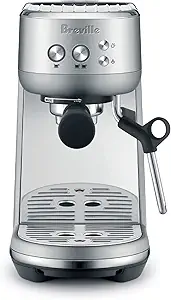 |
| Best Quality Built to a higher standard if you want something more solid | Breville Barista Express BES870XL |  |
| Best Value The sweet spot between price and what you get | Chefman CraftBrew Espresso Machine | 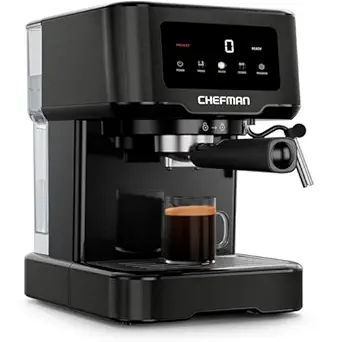 |
| Best Budget The cheapest option that still gets the job done reliably | SHARDOR 3.5 Bar Espresso Machine 4-Cup |  |
| Top Rated A top-rated pick with lots of positive feedback | Ninja Specialty Coffee Maker CM401 |  |
| Most Popular A crowd favorite that many people choose with confidence | Keurig K‑Café K-Cafe |  |
| Best Seller A high-volume bestseller chosen again and again | Ninja Luxe Café Premier ES601 |  |
Breville Bambino BES450BSS

| Operation Mode | Semi-Automatic |
|---|---|
| Wattage | 1560 watts |
| Power Source | AC adapter |
| Coffee Input Type | Ground |
| Capacity | 47 fluid ounces |
The Breville Bambino is a compact semi-automatic espresso machine built to deliver café-style espresso and milk-based drinks at home. It uses a ThermoJet heating system with PID temperature control to reach extraction temperature in about three seconds, so you can pull shots with minimal wait. The 54mm portafilter and low-pressure pre-infusion help produce balanced espresso, while the manual steam wand textures milk into fine microfoam for latte art. Its small footprint makes it easy to fit on crowded countertops, and the machine includes single- and dual-wall filter baskets, tamper, milk jug, and cleaning tools to get started. Expect a learning curve for dialing in grind size and tamping pressure if you want consistent results, and the manual operation means more hands-on work than fully automatic machines. The Bambino is not a built-in grinder model, so you will need a separate grinder for best results. For buyers who want a fast, capable machine that makes quality cappuccinos and lattes without taking much counter space, the Bambino strikes a good balance of speed, performance, and simplicity.
Best for: A buyer who wants a compact, fast machine that produces café-style espresso and textured milk while keeping hands-on control and countertop space to a minimum.
Less Ideal for: People who want a fully automatic, push-button single-step latte maker or an integrated grinder/espresso combo should look elsewhere.
- Very fast heat-up with ThermoJet system (about 3 seconds)
- PID temperature control for more consistent extraction
- Manual steam wand produces fine microfoam suitable for latte art
- Compact footprint fits small kitchens
- Includes essential accessories (filter baskets, tamper, milk jug) to start brewing
- No built-in grinder so a separate grinder is required for best espresso
- Manual operation requires practice to dial in consistent shots
Verdict: Choose the Bambino if you want a small, fast, hands-on machine that reliably makes high-quality espresso and steam-textured milk for cappuccinos and lattes.
Breville Barista Express BES870XL

| Wattage | 1600 watts |
|---|---|
| Voltage | 120 |
| Coffee Input Type | whole_beans |
| Filter Type | Reusable |
| Capacity | 1 cups |
The Breville Barista Express BES870XL is a hands-on semi-automatic espresso machine that grinds, doses, and brews espresso in one compact unit while giving you manual control over tamping and steaming. It uses an integrated conical burr grinder with 16 grind settings to deliver freshly ground beans straight into the 54mm portafilter, and a thermocoil PID heating system to stabilize brew temperature for more consistent extractions. The steam wand produces high-pressure steam for manual microfoam so you can texture milk for latte art. Practical touches include single and dual-wall filter baskets, a large removable water tank, and included tools such as a razor dose trimming tool and integrated tamper to help dial in shots. Because it is manual, you get excellent control over shot quality but must invest time learning grind, dose, and steam technique. It is not an automatic, push-button milk system, so daily use rewards a user who wants performance and customization rather than set-and-forget convenience.
Best for: Buyers who prioritize shot quality and hands-on control and are willing to learn grinding, dosing, and steaming to produce cafe-style lattes and cappuccinos at home.
Less Ideal for: People who want a fully automatic, low-effort machine with one-touch milk drinks or those seeking a compact travel-sized unit.
- Integrated conical burr grinder with adjustable grind settings for fresh, dose-controlled shots
- 54mm stainless steel portafilter and dual/single-wall baskets for professional-style extraction
- Thermocoil heating and PID temperature control for stable, accurate brewing temperature
- Powerful steam wand capable of producing microfoam suitable for latte art
- Includes tools (razor dose trimming, tamper, milk jug) that help dial in technique
- Manual operation requires practice to consistently pull great shots and texture milk
- No automatic milk frothing system, so steaming is fully hands-on
- Relatively large and heavy compared with basic espresso makers
Verdict: Choose the Barista Express if you want a single machine that grinds and steams to deliver café-quality espresso and microfoam while keeping full manual control.
Chefman CraftBrew Espresso Machine

| Output Pressure | 15 bar |
|---|---|
| Power | 1350 watts |
| Coffee Input Type | Ground |
| Capacity | 1.5 liters |
| Operation Mode | Semi-Automatic |
The Chefman CraftBrew is a countertop semi-automatic espresso maker designed to deliver café-style espresso, cappuccinos, and lattes at home. It uses a 15-bar pump and two shot baskets to pull single or double shots, while the built-in steam wand froths milk for creamy cappuccinos and lattes. The touch control panel and programmable shot volume let you adjust extraction for ristretto, standard espresso, or a longer lungo. A 1.5 liter removable water reservoir makes multiple drinks between refills and is easy to clean, and the stainless black finish keeps the unit looking tidy on the counter. At 1350 watts it heats quickly, though like other compact semi-automatic machines it requires some practice to dial in shot timing and milk texture. The machine is a good match for users who want control over shot volume and steaming without the footprint or complexity of prosumer equipment, but it is not a fully automatic bean-to-cup system and will need regular cleaning and occasional descaling.
Best for: Buyers who want a compact machine that gives hands-on control to make espresso, cappuccino, and latte drinks at home without pro-level size or complexity.
Less Ideal for: People who want a fully automatic bean-to-cup machine with integrated grinding or those unwilling to learn manual dosing and milk-steaming techniques.
- 15-bar pump provides sufficient pressure for espresso extraction
- Built-in steam wand and milk frother for cappuccinos and lattes
- Removable 1.5 L water reservoir simplifies refilling and cleaning
- Programmable shot volume via touch controls for customizable extraction
- Semi-automatic operation requires hands-on tamping, dosing, and steaming practice
- No built-in grinder so fresh grinding must be done separately
Verdict: A compact semi-automatic that delivers café-style espresso and reliable milk steaming for home cappuccinos and lattes while keeping counter footprint and complexity low.
SHARDOR 3.5 Bar Espresso Machine 4-Cup

| Output Pressure | 3.5 bar |
|---|---|
| Wattage | 800 watts |
| Operation Mode | Semi-Automatic |
| Coffee Input Type | Ground |
| Capacity | 4 cups |
The SHARDOR 3.5 Bar Espresso Machine is a small, budget-friendly semi-automatic unit designed to make espresso-style shots and milk drinks at home. It uses an 800W heating system and a die-cast aluminum boiler to reach brewing temperature quickly, and a 3.5-bar output extracts a lighter espresso with a thin crema that suits everyday drinking rather than café‑style shots. Controls are simple: a one‑knob selector switches between brewing and steaming, and the adjustable steam wand produces froth ranging from light foam to creamier texture for cappuccinos and lattes. The machine takes ground coffee and includes a reusable filter, carafe, and milk frother so you can start making drinks right away. Its compact footprint saves counter space, and safety features like overheat and overpressure protection are useful for regular use. Limitations are the modest pump pressure and plastic-heavy construction, which mean it will not deliver barista-level extraction or the durability of higher-end machines, but it covers daily milk-based drinks at a very accessible price point.
Best for: Buyers who want an inexpensive, space-saving machine that reliably makes espresso-style coffee and milk drinks at home without a steep learning curve.
Less Ideal for: Those seeking true barista-level pressure and extraction, a heavy-duty metal build, or advanced programmability should consider higher-end machines instead.
- Fast 800W heating with die-cast aluminum boiler for quick warm-up
- Adjustable steam wand that can produce light to creamy milk froth
- Reusable filter and included carafe and milk frother for immediate use
- Compact footprint that fits small kitchens, dorms, or office counters
- Built-in safety features such as overheat and overpressure protection
- 3.5-bar output is lower than standard commercial espresso pumps, producing a milder extraction
- Predominantly plastic construction may feel less durable than metal-bodied machines
- Limited capacity (4-cup) and basic controls for users seeking advanced adjustments
Verdict: A compact, wallet-friendly espresso machine that quickly makes approachable espresso-style shots and workable milk foam for everyday cappuccinos and lattes.
Ninja Specialty Coffee Maker CM401
| Wattage | 1550 watts |
|---|---|
| Power Source | Corded Electric |
| Filter Type | Reusable |
| Coffee Input Type | Ground |
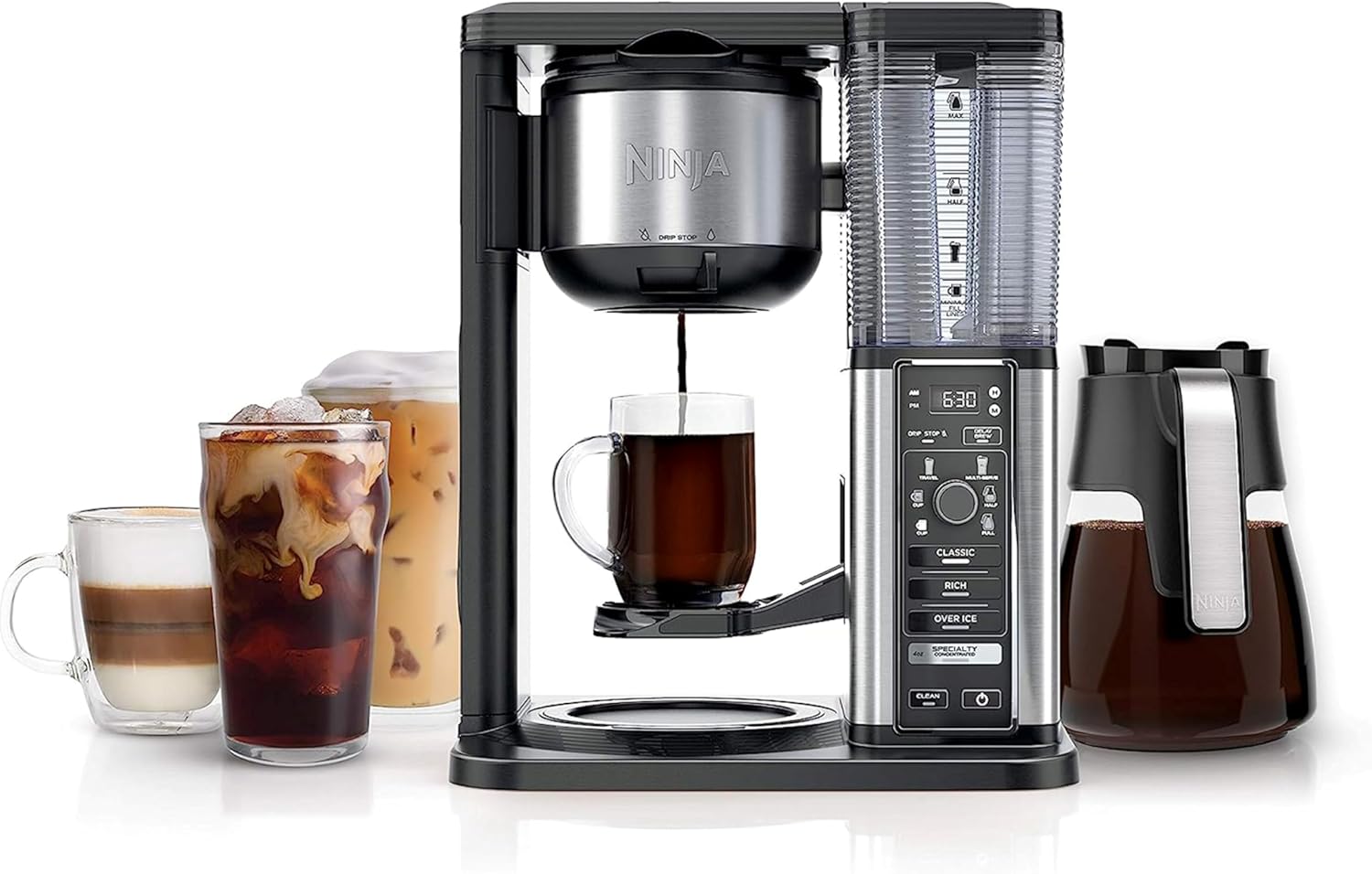
The Ninja CM401 is a versatile drip coffee maker aimed at home users who want coffeehouse-style drinks without pods. It offers four brew styles—Classic, Rich, Over Ice, and Specialty Brew—and six serving sizes from a single cup up to a 50-oz (10-cup) carafe, so you can make anything from an espresso-style concentrate to a full pot. The built-in fold-away frother handles hot or cold milk and milk alternatives for lattes and cappuccinos, and the removable 40-oz water reservoir makes refilling convenient. Many parts including the glass carafe, frother whisk, permanent filter, and reservoir are top-rack dishwasher safe, which simplifies cleanup after daily use. At 1550 watts it heats quickly and includes an automatic one-hour shutoff for safety. Limitations are that it is a drip system rather than a pressure espresso machine, so it cannot produce true espresso crema, and the glass carafe and removable parts require counter space and occasional care to avoid breakage.
Best for: Buyers who prioritize a reliable, repeatable way to make coffeehouse-style lattes and cappuccinos at home without needing a separate espresso machine and who prefer straightforward, durable features over specialty gear.
Less Ideal for: If you want authentic espresso with crema or need a compact pod-based single-serve machine, this drip-based system is not the best choice.
- Multiple brew styles including a Specialty Brew for concentrate useful in milk-based drinks
- Built-in fold-away frother for hot or cold milk and non-dairy alternatives
- Removable 40-oz water reservoir for easy sink filling
- Dishwasher-safe carafe, frother whisk, filter, and reservoir for low-effort cleaning
- Six brew sizes from single cup to full 10-cup carafe for flexible serving
- Not a pump-driven espresso machine so it will not produce true espresso crema
- Glass carafe and removable components add breakage risk and need storage space
Verdict: Pick the Ninja CM401 when you want a dependable, easy-to-use home brewer that reliably produces rich concentrate and froths milk for café-style lattes and cappuccinos without an espresso machine.
Keurig K‑Café K-Cafe

| Wattage | 1500 watts |
|---|---|
| Voltage | 120 volts |
| Coffee Input Type | K-Cup Pods |
| Filter Type | Reusable |
| Capacity | 60 oz removable reservoir |
The Keurig K‑Café is a single‑serve K‑Cup brewer designed to make regular coffee and coffeehouse‑style lattes and cappuccinos with minimal fuss. It brews 6, 8, 10, or 12 oz cup sizes and offers a SHOT button to produce a concentrated espresso‑style shot from any K‑Cup pod, then uses the included milk frothing cup to produce hot or cold frothed milk for lattes and cappuccinos. The frother is dishwasher safe, which simplifies cleanup, and the machine has simple button controls, Strong Brew for bolder flavor, and a 60 oz removable reservoir so you can brew multiple cups before refilling. Practical limitations include that it uses K‑Cup pods rather than true espresso extraction, so you get a concentrated brewed shot rather than pressure‑extracted espresso, and froth texture can vary depending on the milk used. For buyers prioritizing convenience, quick specialty drinks, and easy maintenance, the K‑Café delivers consistent, repeatable results without the learning curve of a manual espresso machine.
Best for: Buyers who want quick, low‑effort coffeehouse drinks at home and value proven performance and easy cleanup over learning a manual espresso workflow.
Less Ideal for: Coffee enthusiasts seeking authentic, pressure‑extracted espresso or barista‑level microfoam should consider a dedicated espresso machine instead.
- Makes lattes and cappuccinos using a built‑in dishwasher‑safe milk frother with hot and cold settings
- SHOT button brews a concentrated coffee shot from any K‑Cup pod for specialty drinks
- Large 60 oz removable water reservoir reduces how often you need to refill
- Simple button controls and programmable auto‑off make daily use easy and energy conscious
- Does not produce true pressure‑extracted espresso, so crema and flavor differ from an espresso machine
- Froth quality depends on the milk type and may be inconsistent with non‑dairy or low‑fat milks
Verdict: Choose the K‑Café if you want an easy, reliable single‑serve brewer that makes quick lattes and cappuccinos from K‑Cup pods with minimal cleanup.
Ninja Luxe Café Premier ES601

| Operation Mode | Fully Automatic |
|---|---|
| Wattage | 1650 watts |
| Coffee Input Type | Ground, Whole Bean |
| Filter Type | Reusable |
The Ninja Luxe Café Premier ES601 combines an integrated conical burr grinder, assisted tamper, and an automated dual-froth system to deliver café-style espresso, lattes, and cappuccinos with minimal skill required. It guides you through grinding, weight-based dosing, and tamping using Barista Assist technology, and the self-cleaning steam wand plus hands-free frother produce consistent microfoam for milk drinks. The machine also handles single-cup or pitcher drip coffee and a rapid cold brew or cold-pressed espresso option, so it covers hot and cold preparations without extra gadgets. Practical conveniences include a 70 oz removable water reservoir, built-in accessory storage, and a suite of included tools for cleaning and testing water hardness. At 1650 watts and fully automatic controls, it is designed for daily home use rather than pro shop throughput, and its size and weight mean it needs a dedicated countertop spot. Users who want full manual control or a commercial-grade espresso head may find the assisted features less adjustable, but for people who prioritize reliability and guided results this unit substantially reduces the learning curve.
Best for: Home buyers who want consistent, café-style cappuccinos and lattes without mastering full manual espresso technique and who prefer guided, low-risk operation.
Less Ideal for: Experienced baristas or users seeking a compact travel-friendly unit or a commercial-grade machine with full manual control and serviceability.
- Built-in conical burr grinder with 25 settings for on-demand fresh grinding
- Barista Assist with weight-based dosing and assisted tamper reduces user error
- Dual Froth System and self-cleaning steam wand deliver consistent milk texture hands-free
- 3-in-1 functionality supports espresso, drip coffee, and rapid cold brew in one machine
- Large removable 70 oz water reservoir and onboard accessory storage improve daily convenience
- Large and heavy countertop footprint requires dedicated space
- Not intended for commercial-level continuous use or deep manual tuning
Verdict: If you want reliable, guided espresso and hands-free milk frothing for consistent cappuccinos and lattes at home, the Ninja Luxe Café Premier ES601 makes it easy.
Choosing the Right Coffee Maker for Cappuccino and Latte: Key Factors to Consider
Espresso Extraction Consistency
Consistent espresso extraction is the foundation of good cappuccinos and lattes. Machines that deliver stable pressure and even water distribution produce shots with predictable flavor and crema, which affects how well milk layers and integrates with the espresso.
When extraction varies from shot to shot you will need to compensate with grind and tamp adjustments, which adds time and frustration. For home use, choose a machine known for repeatable extraction or one with controls that let you fine-tune brew parameters without complex calibration.
Milk Frothing and Steam Control
Milk texture defines the difference between a flat milk beverage and a proper cappuccino or latte. A powerful, responsive steam wand or an effective automatic frother will let you create microfoam for lattes and drier foam for cappuccinos.
Look for machines with adjustable steam pressure, a wand that accepts different pitcher sizes, and good heat control so you can reach the right milk temperature without scalding. Also consider whether the frothing system is manual or automatic, as this affects consistency and the learning curve.
Temperature Stability and Heat-Up Time
Stable brew and steam temperatures matter because espresso extraction and milk steaming have narrow ideal ranges. A machine that stabilizes temperature quickly reduces wait time between steaming and pulling shots, which helps preserve crema and improves milk integration.
Faster heat-up times are convenient for multiple drinks in sequence. Conversely, machines with long recovery times or wide temperature swings will make it harder to produce consistent results across several cappuccinos or lattes in a row.
User Controls and Customization
Different users prefer different levels of control. Some want simple one-touch milk drinks, while others want manual control over shot volume, pressure, and steam. Machines that offer adjustable shot size, pre-infusion or pressure profiling, and variable steam settings let you tailor drinks to taste.
Consider your comfort level with tuning espresso parameters. More customization can yield better drinks but often requires time learning. If you value convenience, look for intuitive interfaces that still allow a few meaningful tweaks.
Ease of Cleaning and Daily Maintenance
Coffee makers that steam milk require regular cleaning to prevent residue and ensure hygiene. Removable drip trays, accessible steam wands, and washable frothing components simplify daily upkeep and reduce long-term maintenance needs.
Also factor in descaling procedures and how often routine service is needed. Machines with fewer fiddly parts for cleaning will save time and make it more likely you maintain the equipment properly.
Size, Counter Fit, and Usability
Kitchen space and how you use the machine influence which model fits best. Machines with a larger footprint may offer better boilers or steam capacity but can be cumbersome in small kitchens. Consider water reservoir capacity, portafilter clearance for taller cups, and how the controls are oriented for your typical workflow.
A machine that is physically easy to access and operate encourages more frequent use and reduces setup friction when making multiple drinks.
Manual Vs Automatic Milk Systems
Decide whether you want direct control over milk texturing or prefer an automated frothing system. Manual steam wands give the most flexibility and let skilled users produce superior microfoam, but they require a learning curve and steady technique.
Automatic or assisted frothers simplify the process and produce consistent cups with minimal effort. These systems are good for routine convenience, but they may not match the fine control possible with a skilled hand and a standalone steam wand.
- Manual steam wand: more control, steeper learning curve.
- Automatic frother: consistent results, faster for novices.
- Consider hybrid systems that combine a manual wand with automatic presets.
Water Quality and Its Effect on Flavor
Water composition strongly affects extraction and the taste of espresso. Hard water accelerates scale buildup and can dull delicate flavor notes. Machines that allow inline filtering or have replaceable water filters help maintain both flavor and longevity.
If you live in a hard-water area, plan for regular descaling and consider filtration to protect internal components. Using filtered water also reduces the frequency of maintenance and keeps steam performance more consistent over time.
- Use filtered water for best flavor and less scaling.
- Follow descaling intervals recommended by the manufacturer scope.
- Monitor for changes in steam power or unusual tastes as signs to service the machine.
Routine Maintenance Tasks That Improve Longevity
Daily and weekly maintenance tasks keep a coffee maker performing well. Wiping the steam wand after every use, backflushing if the machine supports it, and emptying drip trays prevent buildup and clogs. Regularly check seals and gaskets for wear.
Schedule descaling based on your water hardness and usage. Replacing removable water filters and cleaning detachable components on a regular cadence reduces repair risk and maintains consistent beverage quality.
- Wipe and purge the steam wand after each use.
- Backflush or clean the brew group if supported every few weeks.
- Descale according to local water hardness and machine recommendations.
Dialing in Grind and Dose for Milk Drinks
Milk-forward drinks mask some espresso characteristics, so dialing in grind and dose still matters. A slightly different grind setting or dose can change how the espresso cuts through milk and how the crema interacts with textured milk.
Start with your machine maker's baseline settings and adjust incrementally. Consistent tamp pressure and regular grinder calibration are easier ways to improve repeatability than chasing wide changes on the machine itself.
- Adjust grind in small steps to fine-tune extraction.
- Keep tamp pressure consistent to reduce shot variability.
- Check shot time and taste against expected ranges when changing beans.
Milk Alternatives and Temperature Considerations
Non-dairy and alternative milks steam and froth differently from dairy milk. Some milk alternatives foam well and create acceptable microfoam, while others need different steam technique and lower final temperatures to avoid separation.
Experiment with lower steaming temperatures and slightly different aeration techniques when using alternatives. Machines with adjustable steam power and precise temperature control make adapting to different milks easier.
- Try different barista-specific non-dairy milks for better foam.
- Avoid overheating milk alternatives which can separate or become grainy.
- Use a thermometer until you learn the right target temperatures for each milk type.
How We Chose the Best Coffee Maker for Cappuccino and Latte
We focused on machines that reliably produce espresso-strength shots and milk texture suitable for cappuccino and latte drinks. Evaluation prioritized espresso extraction consistency, milk-frothing capability, temperature stability, and ease of daily use. We also considered build quality and available user controls that let home baristas dial in shot strength and milk microfoam. Concrete evaluation criteria included extraction consistency measured by portafilter or brew system stability, steam wand or frother performance and milk texture control, temperature control and heat-up time, and user experience covering cleaning and routine maintenance. Durability and material quality were also factored into selections. Excluded were single-serve pod-only units that cannot produce true espresso or machines without any milk-texturing option. Very large commercial units and purely manual lever machines were filtered out as unsuitable for most home kitchens. The list favors models that balance performance, repeatability, and manageable upkeep for everyday use.
Our full evaluation process is outlined in our review methodology.
FAQ
Do I need a dedicated steam wand for good cappuccinos and lattes?
A dedicated steam wand gives the most control over milk texture and temperature, which helps create traditional cappuccinos and lattes. Automatic frothers can produce consistent results, but a wand is preferred if you want fine microfoam and latte-art capability.
How important is grind size for milk-based espresso drinks?
Grind size remains important because it affects extraction and crema, which interact with milk. Even though milk softens flavor perception, incorrect grind produces under- or over-extracted shots that taste thin or bitter when combined with milk.
Can I use plant-based milk in these coffee makers?
Many coffee makers can handle plant-based milks, but foaming behavior varies. Barista-formulated alternatives usually foam better. You may need to adjust steam power and final temperature to avoid separation or graininess.
How often should I descale a machine used for regular milk drinks?
Descaling frequency depends on water hardness and usage. With regular milk steaming, check steam performance and follow the machine-specific descaling guidance; in hard-water areas, descaling every 2 to 3 months is common, while softer water may allow longer intervals.
Is a dual-boiler or single boiler better for cappuccinos and lattes?
Dual-boiler systems maintain independent brew and steam temperatures and provide faster recovery between shots and steaming, which helps for back-to-back milk drinks. Single-boiler machines can work well but may require more waiting or compromise between brewing and steaming cycles.
Final Verdict
Prioritize a machine that produces stable espresso shots and gives you the milk-texturing control that matches your skill level. If you want maximum flexibility and latte-art potential, favor machines with a responsive steam wand and good temperature stability. If convenience is the priority, choose a model with reliable automatic frothing and intuitive controls. Balance the level of customization against how much maintenance you are willing to perform. Focus on extraction consistency, steam performance, and ease of upkeep to get repeatable, café-style cappuccinos and lattes at home.