
Note: This article contains affiliate links. If you click on these links and make a purchase, we may earn a small commission at no extra cost to you. This helps support our research and content. Read our full affiliate disclosure here.
If you want café-style cappuccinos without a daily commute, the right coffee maker can make the difference between weak coffee and rich, frothy cups. A good cappuccino machine combines consistent espresso extraction with a milk system that produces velvety microfoam, and it fits into your morning routine without complex setup. This guide covers seven shortlisted coffee makers for cappuccino that excel at those essentials. We evaluated machines on extraction consistency, milk-frothing performance, build and maintenance needs, and real-world usability to help you pick the best fit for your kitchen. Read on for the decision factors we used and what matters most when making cappuccinos at home.
Top Picks at a Glance
| Best Overall The best all-around choice for most situations | De'Longhi All‑in‑One COM532M |  |
| Best Quality Built to a higher standard if you want something more solid | Breville Barista Express BES870XL |  |
| Best Value The sweet spot between price and what you get | CASABREWS CM5418 Espresso Machine |  |
| Best Budget The cheapest option that still gets the job done reliably | IMUSA 4-Cup Espresso Maker |  |
| Top Rated A top-rated pick with lots of positive feedback | Ninja Specialty Coffee Maker CM401 |  |
| Most Popular A crowd favorite that many people choose with confidence | Keurig K-Cafe K-Cafe |  |
| Best Seller A high-volume bestseller chosen again and again | PHILIPS 5500 Series EP5544/94 | 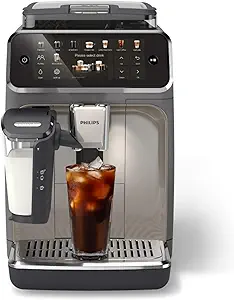 |
De'Longhi All‑in‑One COM532M
| Capacity | 47 fluid ounces |
|---|---|
| Output Pressure | 15 bar |
| Operation Mode | Fully Automatic |
| Coffee Input Type | pods_and_ground_coffee |
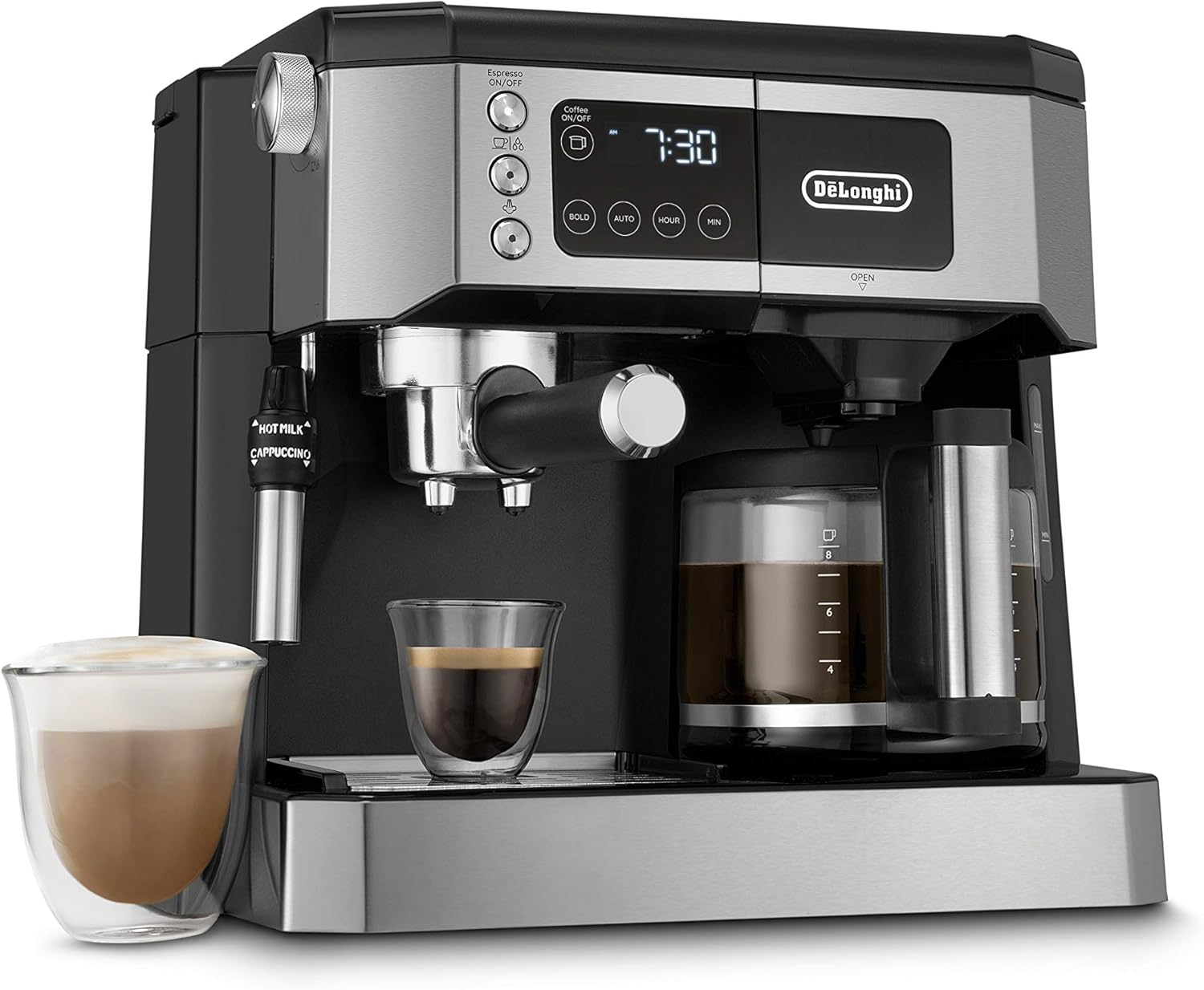
The De'Longhi All-in-One COM532M combines a drip carafe and espresso machine in one countertop unit so you can make 10-cup drip coffee and single or double espressos without swapping machines. It uses a dual heating system that lets you brew drip coffee and pull espresso at the same time, and a 15‑bar pump delivers the pressure needed for richer espresso extractions. The machine accepts both pods and ground coffee via a 2-in-1 portafilter and includes a manual steam wand with micro-foam and cappuccino settings for frothing milk. Practical touches include a digital touchscreen with a 24‑hour programmable timer, a spill-proof carafe and a carafe warmer for keeping brewed coffee hot. The COM532M is a space-saving option for cooks who want both beverage styles in one unit, but its combination design means servicing and tuning both functions requires learning one machine rather than separate dedicated units, and it is larger and heavier than single-purpose machines. For daily cappuccinos at home it delivers good milk texture and authentic pressure-based espresso when dialed in.
Best for: Buyers who want one machine that reliably makes both full‑pot drip coffee and pressure‑based cappuccinos at home and value convenience over owning separate specialty machines.
Less Ideal for: Users who prefer a compact, single‑purpose espresso machine or a dedicated high-end espresso setup for precision tuning and professional-level crema.
- Dual heating system allows brewing drip coffee and espresso simultaneously
- 15‑bar pressure pump for authentic espresso extraction
- 2‑in‑1 portafilter supports pods and ground coffee for flexibility
- Advanced steam wand with micro-foam and cappuccino settings for good milk froth
- Digital touchscreen with 24‑hour timer and spill‑proof carafe for convenience
- Combination unit is bulkier and heavier than single-function machines
- Manual steam wand requires practice to achieve consistent latte art or microfoam
Verdict: Choose this De'Longhi if you want a single countertop machine that brews full-pot drip coffee and makes cappuccinos with a capable steam wand.
Breville Barista Express BES870XL

| Wattage | 1600 watts |
|---|---|
| Voltage | 120 |
| Coffee Input Type | whole_beans |
| Filter Type | Reusable |
| Capacity | 1 cups |
The Breville Barista Express is a countertop semi-automatic espresso machine that grinds beans and pulls shots in a single workflow, aimed at home users who want café-style espresso and milk drinks. It combines an integrated conical burr grinder with 16 grind settings and a 54mm portafilter so you can dose fresh grounds directly for single or double shots, while a Thermocoil heating system and PID-like temperature control help deliver consistent extraction. The steam wand produces manual microfoam suitable for cappuccinos and latte art, and the machine includes dual and single-wall filter baskets and a range of accessories for tamping and dosing. Practical benefits include fast espresso preparation from beans to cup, precise grind control, and high steam power for textured milk. Limitations are that it requires hands-on skill for consistent results, regular cleaning and maintenance, and it is a single-boiler style workflow so steaming and brewing cannot be done simultaneously without a short heat-up step.
Best for: Buyers who prioritize café-quality espresso and want control over grind, dose, and milk texturing for home cappuccinos.
Less Ideal for: People who want a fully automatic or hands-off machine that makes drinks with minimal technique or who need simultaneous brew-and-steam convenience.
- Integrated conical burr grinder with adjustable grind settings for fresh dosing
- Thermocoil heating and temperature control for stable extraction
- Powerful steam wand that textures milk for cappuccinos and latte art
- Includes 54mm portafilter and multiple filter baskets plus dosing tools
- Requires learning and manual technique to get consistent shots and microfoam
- Single-boiler workflow means brief wait between brewing and steaming
Verdict: Choose the Barista Express if you want a grinder-integrated, performance-focused home machine that delivers café-quality espresso and microfoam for cappuccinos with skilled hands.
CASABREWS CM5418 Espresso Machine

| Operation Mode | Semi-Automatic |
|---|---|
| Wattage | 1350 watts |
| Output Pressure | 20 bar |
| Coffee Input Type | Ground |
| Capacity | 34 fluid ounces |
The CASABREWS CM5418 is a countertop semi-automatic espresso maker aimed at home users who want café-style cappuccinos and lattes without a large footprint. It uses a 20-bar Italian pump and built-in pressure gauge to help dial in extraction, and the machine includes a steam wand capable of producing microfoam for milk-based drinks. Practical features include a removable 34 oz water tank for multiple brews between refills, a cup warming tray, and one- and two-cup buttons for adjustable shot volumes. The machine warms up quickly and includes basic accessories such as single and double filter baskets, a tamper, and a portafilter. Expect a learning curve: dialing grind size, dose, and tamping are necessary to get consistent shots, and the unit requires a short cool-down after steaming to avoid over-temperature protection. The stainless steel body is compact and easy to clean, making it a sensible choice for daily cappuccino making at home, provided you are comfortable doing some basic barista adjustments and routine maintenance.
Best for: Buyers who want a compact, café-capable machine for daily cappuccinos and are willing to learn basic dial-in techniques to improve extraction and milk texture.
Less Ideal for: People seeking a fully automatic, hands-off espresso experience or those who need back-to-back commercial-level throughput should look elsewhere.
- 20-bar pump with built-in pressure gauge for visual extraction feedback
- Powerful steam wand capable of producing creamy microfoam for cappuccinos and lattes
- Removable 34 oz water tank allows multiple cups before refilling and is easy to clean
- Compact stainless steel chassis with cup warmer and removable drip tray for convenience
- Single boiler design requires waiting after steaming before brewing to avoid overheating
- Semi-automatic operation needs manual grinding, dosing, and tamping for best results
Verdict: A compact home espresso machine that delivers café-style cappuccinos when you want control over grind, dose, and milk texture.
IMUSA 4-Cup Espresso Maker

| Capacity | 4 cups |
|---|---|
| Wattage | 800 watts |
| Operation Mode | Semi-Automatic |
| Other Special Features | Milk Frother, Permanent Filter |
The IMUSA 4-Cup Espresso Maker is a compact countertop machine aimed at home baristas who want basic espresso and cappuccino capability without a large footprint or complicated controls. It uses a semi-automatic operation with a 3-position selector and produces up to 5 bar pressure to extract espresso into a glass carafe while an attached steam nozzle froths milk for cappuccinos and lattes. Notable features include a permanent filter basket, removable drip tray for easier cleaning, and a cool-touch carafe handle for safer pouring. At 800 watts the unit heats quickly for frequent short sessions, and its matte black finish keeps it visually low-key. Limitations to note are the modest 5 bar pressure compared with higher-end machines, a small four-cup capacity that suits singles or small households, and predominantly plastic construction that may feel less durable than metal-bodied units. For a budget-friendly coffee maker focused on everyday cappuccinos and simple espresso shots, it provides a straightforward, easy-to-use option.
Best for: Buyers on a tight budget who want a simple, compact machine to brew espresso and froth milk at home without learning advanced settings or using bulky equipment.
Less Ideal for: People seeking professional-grade espresso, high pump pressure, or a heavy-duty metal machine for long daily commercial-style use should consider higher-end alternatives.
- Built-in steam nozzle for milk frothing to make cappuccinos and lattes
- Permanent filter and removable drip tray simplify daily cleaning
- Compact footprint fits small kitchens and countertops
- 800-watt heating gives quick warm-up for short brewing sessions
- Maximum pressure is 5 bar, lower than many dedicated espresso machines
- Mostly plastic construction may feel less sturdy over time
Verdict: A compact, budget-friendly espresso maker that delivers basic espresso and milk-frothed cappuccinos for home users who want simplicity over advanced performance.
Ninja Specialty Coffee Maker CM401
| Wattage | 1550 watts |
|---|---|
| Power Source | Corded Electric |
| Filter Type | Reusable |
| Coffee Input Type | Ground |
| Capacity | 50 oz. (10-cup) |
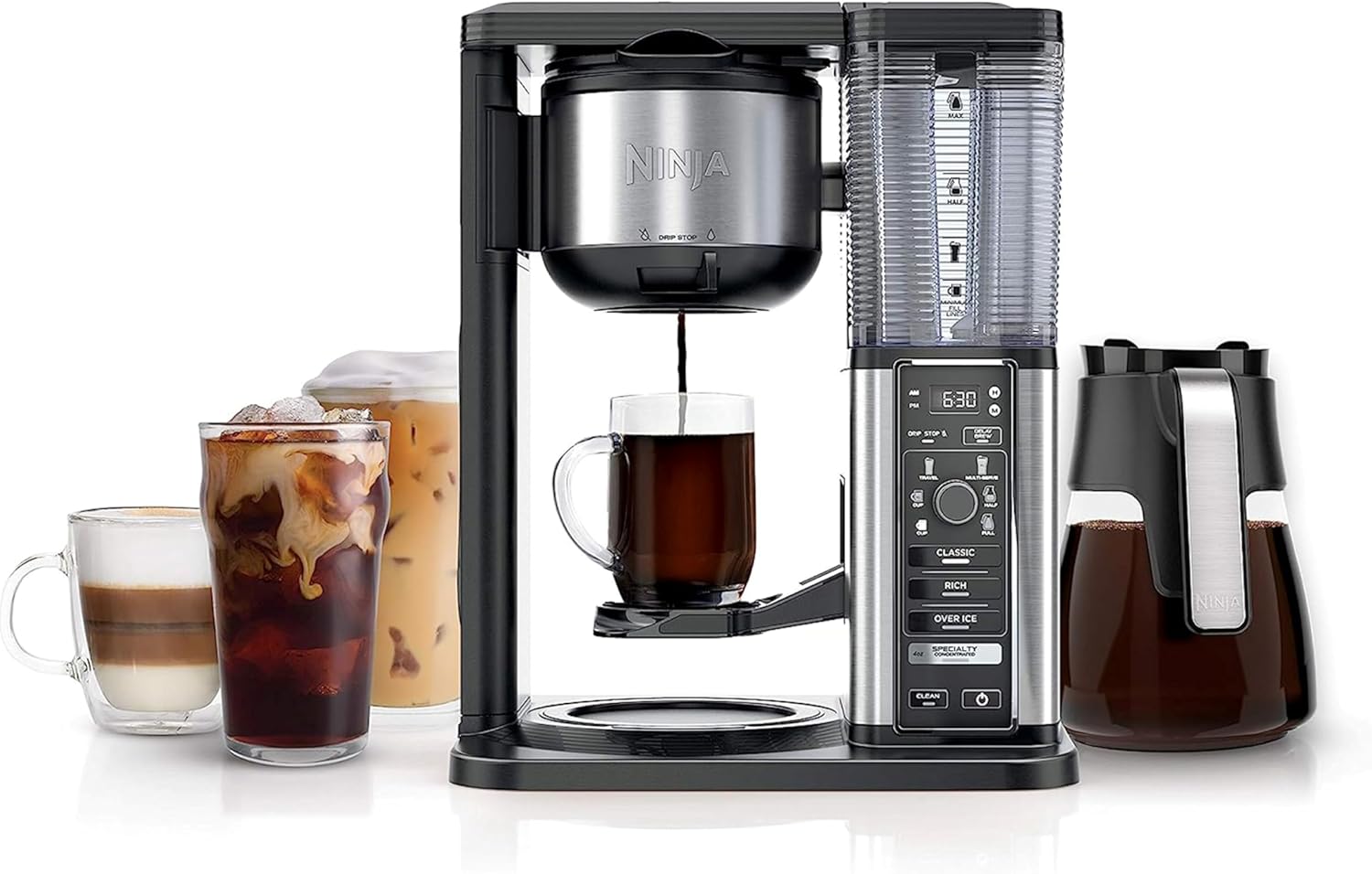
The Ninja CM401 is a versatile drip brewer that aims to reproduce coffeehouse-style drinks at home by combining four brew styles with a built-in fold-away frother. You select Classic, Rich, Over Ice, or Specialty Brew and choose from six serving sizes ranging from a single cup to a full 50-oz glass carafe; Specialty Brew produces a concentrated extraction intended for mixing with frothed milk for lattes and cappuccinos. The unit includes a removable 40-oz water reservoir for easier filling, a gold-tone permanent filter and dishwasher-safe components that simplify cleanup, and a one-hour automatic shutoff for peace of mind. In practice the machine steers toward consistency and convenience rather than barista-level precision: it will make reliably flavorful coffee and acceptable milk-based drinks quickly, but it does not offer pressure-based espresso extraction. Expect good results for everyday cappuccinos made from concentrated drip coffee and frothed milk, with the benefit of easy maintenance and durable reusable components.
Best for: Buyers who prioritize a dependable, low-maintenance machine that produces consistent drip-concentrate coffee and froths milk for daily cappuccinos without needing espresso-level equipment.
Less Ideal for: Users seeking a true espresso machine with high-pressure extraction, compact single-serve setups, or professional-grade milk steaming should consider other options.
- Multiple brew styles including Specialty and Over Ice for concentrated and iced coffee options
- Built-in fold-away frother that froths hot or cold milk for lattes and cappuccinos
- Removable 40-oz water reservoir for convenient filling
- Dishwasher-safe carafe, frother whisk, reservoir and permanent filter for easy cleaning
- Not an espresso machine so it cannot produce true pressurized espresso shots
- Glass carafe and many parts require counter space and careful handling to avoid breakage
Verdict: Choose the Ninja CM401 if you want a reliable drip brewer that consistently makes concentrated coffee and froths milk for everyday cappuccinos without the complexity of an espresso machine.
Keurig K-Cafe K-Cafe

| Wattage | 1500 watts |
|---|---|
| Voltage | 120 volts |
| Coffee Input Type | K-Cup Pods |
| Filter Type | Reusable |
| Capacity | 3.8 pounds |
The Keurig K-Cafe is a single-serve brewer designed to make regular coffee plus latte and cappuccino-style drinks with minimal fuss. It brews any K-Cup pod, offers a SHOT button for a concentrated espresso-style shot, and pairs that shot with a separate dishwasher-safe milk frother that supports hot and cold frothing. Use the machine to brew 6, 8, 10, or 12 oz servings, select Strong Brew for bolder flavor, and froth fresh milk to create creamy specialty beverages without manual steaming. Practical benefits include a 60 oz removable reservoir for multiple brews between refills, simple button controls, and a top-rack dishwasher-safe frother for easy cleanup. Limitations are that it does not produce true pressure-based espresso like a pump espresso machine, frothing results vary with milk type, and it only accepts standard K-Cup pods rather than other Keurig formats. For buyers who value convenience and consistent single-serve specialty drinks, the K-Cafe delivers an approachable way to make lattes and cappuccinos at home; those seeking barista-level espresso extraction or broader pod compatibility should consider other styles of machines.
Best for: Buyers who want an easy, low-effort way to make coffeehouse-style lattes and cappuccinos at home using K-Cup pods and who prioritize convenience, simple cleanup, and consistent results backed by broad user feedback.
Less Ideal for: Those who want authentic, pressure-extracted espresso or need a machine that supports multiple pod formats or advanced milk-steaming controls.
- Makes coffee, latte, and cappuccino-style drinks from any K-Cup pod using a concentrated SHOT and milk frother
- Dishwasher-safe milk frother with hot and cold settings for easy cleanup and iced drinks
- Large 60 oz removable water reservoir reduces refill frequency
- Simple button controls and multiple cup sizes (6, 8, 10, 12 oz) for quick single-serve brewing
- Not a pump espresso machine so it cannot produce true high-pressure espresso extraction
- Frothing performance depends on milk type and may be inconsistent with some plant milks or nonfat varieties
- Accepts only standard K-Cup pods, not other Keurig pod formats
Verdict: If you want a convenient single-serve brewer that reliably makes easy lattes and cappuccinos from K-Cup pods, the Keurig K-Cafe is a practical, low-fuss choice.
PHILIPS 5500 Series EP5544/94
| Operation Mode | Fully Automatic |
|---|---|
| Wattage | 1500 watts |
| Output Pressure | 15 bar |
| Capacity | 1.8 liters |
| Coffee Input Type | Ground, Whole Bean |
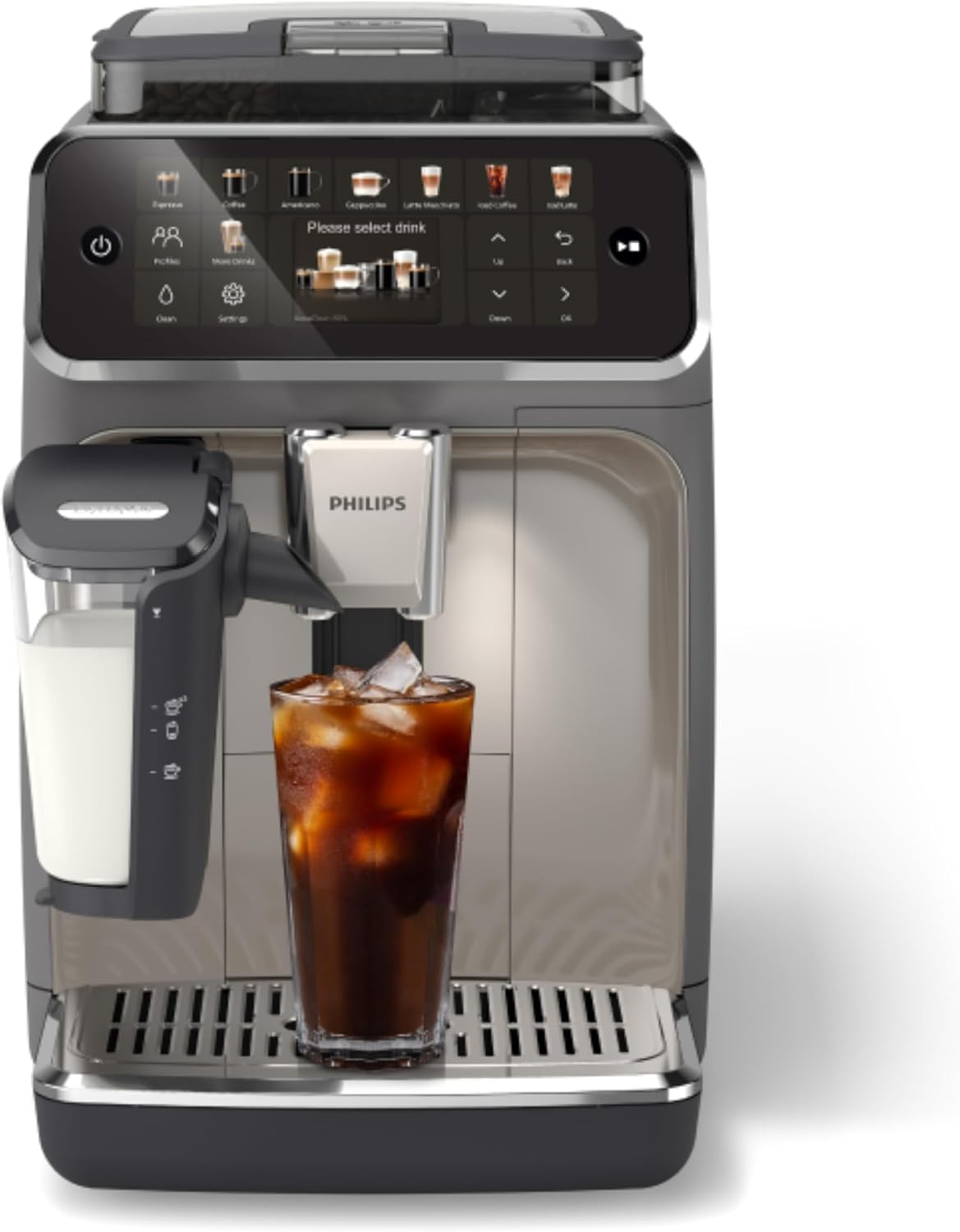
The PHILIPS 5500 Series is a super-automatic espresso machine that grinds, tamps, brews and textures milk at the push of a button, making cappuccinos and other milk drinks nearly hands-off. It offers 20 presets including hot and iced options, an intuitive color touchscreen to adjust strength, volume and milk froth, and saves user profiles for repeat drinks. The LatteGo milk system produces smooth, cafe-style froth and is simple to clean with only three parts and no hidden tubing, and the built-in ceramic grinder and 15-bar pump aim to extract consistent flavor. QuickStart brings the machine to brew-ready in about three seconds and SilentBrew reduces noise during grinding and extraction. Important trade-offs are that the unit requires periodic cleaning and descaling like any super-automatic, and while very capable it is larger and more complex than a simple pump espresso machine, so owners should expect some maintenance and an initial learning curve when dialing in preferences.
Best for: Buyers who want reliable, cafe-style cappuccinos at home with minimal barista skill and who prioritize quiet operation and easy milk cleanup.
Less Ideal for: Those who prefer a simple, compact manual or traditional pump machine or who want a no-maintenance single-serve device.
- Fully automatic workflow grinds, tamps and brews in one cycle for consistent single-touch drinks
- LatteGo milk system creates smooth froth and disassembles into three dishwasher-safe parts for fast cleaning
- 20 presets plus adjustable strength, volume and milk levels let you customize common coffee and milk drinks
- QuickStart and SilentBrew deliver fast warm-up and noticeably quieter grinding and brewing
- Requires regular cleaning, descaling and occasional filter replacement to maintain performance
- More complex and larger than basic espresso machines, which may be overkill for casual coffee drinkers
Verdict: If you want effortless, customizable cappuccinos with fast warm-up and an easy-to-clean milk system, the PHILIPS 5500 Series is a strong, risk-averse choice.
Choosing the Right Coffee Maker for Cappuccino: Key Factors to Consider
Espresso Extraction
Extraction quality is the foundation of a good cappuccino. A concentrated, well-extracted shot supplies the body and flavor balance that cut through milk. Machines that deliver stable pressure and consistent water temperature produce shots with better crema and balanced acidity.
When evaluating extraction, consider whether the machine allows tamping or dose control, whether it uses a pump with consistent pressure, and how repeatable the shot parameters are. If you prefer a hands-on workflow, a machine with adjustable settings will let you dial in grind and dose. If you want simple consistency, look for preprogrammed shot profiles that reliably reproduce the same extraction parameters.
Milk-Frothing Performance
Milk texture defines a cappuccino. Traditional cappuccinos need dense, velvety microfoam that blends smoothly with espresso. Steam wands give the most control for creating latte art and precise foam density, while automatic milk systems offer convenience with less skill required.
Assess frothing power, wand reach and motion, and whether the machine produces fine microfoam or coarse bubbles. For frequent cappuccino drinkers, a reliable frothing system that heats milk evenly and creates a silky mouthfeel is worth prioritizing. Also consider whether milk components are easy to clean and whether the system allows temperature control to avoid scalding.
Temperature Stability
Consistent water and steam temperature are critical to extraction and milk texturing. Fluctuating temperatures can result in sour or underextracted shots and unpredictable foam quality. Machines with good thermal systems or PID temperature control will hold brew temperature steady between shots.
Temperature also affects milk sweetness and foam consistency. A machine that recovers steam pressure quickly keeps you moving through multiple drinks without long waits, which is important if you make several cappuccinos back to back or want consistent results across consecutive shots.
Ease of Use and Controls
How you interact with the machine impacts daily satisfaction. Clear controls, programmable shot sizes, and straightforward frothing routines make it easier to produce cappuccinos consistently. Some buyers prefer manual devices that allow full control, while others want one-touch operation for speed.
Consider the learning curve and whether the control layout fits your routine. Machines that allow saving preferred brew and milk settings reduce repeated adjustments. Indicators for water level, maintenance reminders, and intuitive feedback speeds up workflow and reduces mistakes during the morning rush.
Cleaning and Maintenance
Milk handling increases maintenance demands, and neglecting cleaning leads to hygiene and performance problems. Look for removable drip trays, accessible group heads or brew units, and milk components that disassemble for washing. Auto-clean cycles for steam circuits are helpful but not foolproof.
Also consider the frequency of descaling and how easy it is to access internal water pathways. Machines with dishwasher-safe milk parts or simple detachable milk containers reduce friction. Plan for a realistic cleaning routine that matches how often you will use the machine and who will be responsible for upkeep.
Size, Footprint, and Water Capacity
Kitchen space often dictates what machine will fit on your counter. Larger machines may offer better boilers or more robust steam systems but require more countertop space. Water tank capacity affects how often you refill between drinks, which matters for households that make multiple cappuccinos daily.
Think about where you will place the machine and whether you need a built-in drain or a portable reservoir. If you entertain or make several drinks in succession, a larger water reservoir and a quick-recovery boiler will save time. Conversely, smaller units are better for limited counters and occasional use.
Manual Versus Automatic Milk Systems
Choosing between a steam wand and an automatic milk frother comes down to control versus convenience. Steam wands require some technique but let you fine-tune foam density and temperature for classic cappuccinos and latte art. Automatic systems simplify the process and deliver repeatable results with minimal skill, but they offer less manual control over foam texture.
If you enjoy practicing barista skills and want the ability to customize every cup, a machine with a powerful steam wand is the better choice. If speed and consistency are higher priorities, an automated frothing system that produces reproducible microfoam will reduce setup time.
- Steam wands offer variable control and better microfoam for art
- Automatic frothers are faster and more consistent for beginners
- Consider cleaning differences: wands require manual wiping and purging
The Role of Grinder Quality
A consistent, properly dialed-in grind is essential for espresso extraction. Some coffee makers include integrated grinders, which simplify the workflow but vary widely in grind uniformity. A quality burr grinder produces even particle size, which improves shot consistency and reduces channeling.
If the machine lacks a built-in grinder, pairing it with a reliable separate grinder is important. Adjustable grind settings and the ability to make fine changes matter most for achieving balanced extraction that complements the milk.
- Burr grinders outperform blade grinders for espresso
- Integrated grinders save counter space but check for adjustment range
- Finer adjustments help tune extraction for different beans
Routine Care for Milk Systems
Because milk residues can harbor bacteria and impact taste, daily cleaning of milk paths is essential. Wiping and purging a steam wand after every use prevents buildup. Automatic milk systems often require regular disassembly and thorough rinsing according to the manufacturer schedule.
Establish a short daily routine and a deeper weekly maintenance plan. Rinsing detachable milk components immediately after use and running brief steam cycles to clear lines will keep the system hygienic and performing well.
- Wipe and purge steam wands after each use
- Rinse detachable milk parts immediately to avoid crusting
- Follow descaling and deep-clean schedules to preserve performance
Workflow Tips for Faster Morning Cappuccinos
Set up a consistent workflow to cut time without sacrificing quality. Preheat the machine and your milk container to reduce steam lag. Use freshly ground coffee and pre-measure doses to speed tamping and extraction. If your machine has programmable shot volumes, store your preferred settings for single-step brewing.
Organize tools—tamper, milk pitcher, and cloth—within easy reach. For multiple drinks, sequence steaming between shots in a way that lets the boiler recover while you prepare cups. Small process tweaks reduce variability and help you produce café-quality cappuccinos faster.
- Preheat equipment and measure doses ahead of time
- Use saved settings for repeatable shot timing
- Sequence steaming and brewing to match boiler recovery
How We Chose the Best Coffee Maker for Cappuccino
We focused on features that directly affect cappuccino quality and daily usability. Key evaluation dimensions included espresso extraction consistency, milk-frothing capability and control, temperature stability, ease of use and cleaning, and build reliability. For extraction we prioritized machines that allow stable pressure and repeatable dose control or preprogrammed consistency. For milk we looked at both steam wand performance and automatic frothing systems that can create fine microfoam suitable for cappuccino. We also considered how easy machines are to maintain because milk handling increases cleaning needs. Usability filters included intuitive controls, heat-up time, and whether the machine supports manual adjustments for experienced users. We excluded machines that lack a dedicated milk system or cannot produce a true espresso shot consistently. Models that only make brewed coffee without espresso-level pressure were not considered. The final picks balance brew quality, milk performance, and day-to-day practicality for making cappuccinos at home.
Our full evaluation process is outlined in our review methodology.
FAQ
Can I make a proper cappuccino without a steam wand?
Yes, many automatic frothers can create sufficient microfoam for a cappuccino, especially for everyday drinking. However, a steam wand gives finer control over foam texture and temperature, so it is preferred by users seeking traditional milk texture and latte art.
How often should I clean the milk system?
Daily wiping and purging or rinsing of milk components is recommended to prevent buildup and off flavors. Deeper cleaning or disassembly should follow the machine's schedule, often weekly, and descaling depends on local water hardness and usage.
Does water quality affect cappuccino taste?
Yes. Minerals in water influence extraction and machine longevity. Using filtered water improves flavor clarity and reduces scale buildup, which helps maintain consistent temperature and steam performance over time.
Do integrated grinders matter for cappuccinos?
Integrated grinders add convenience and can yield good results if they use high-quality burrs with fine adjustment. For maximum control and consistency, a separate dedicated grinder is usually superior, but integrated options can be a good compromise for limited counter space.
What milk type makes the best cappuccino foam?
Whole milk generally produces the creamiest, most stable microfoam because of its higher fat and protein content. Lower-fat or plant-based milks can foam but often require different technique and may produce larger bubbles or less stable foam, depending on the formulation.
Final Verdict
Prioritize a machine that balances reliable espresso extraction with a milk system that matches your skill and time preferences. If you value control and craftsmanship, favor a model with a powerful steam wand and adjustable extraction settings. If convenience and speed are most important, an automatic frothing system with programmable shots will deliver consistent cappuccinos with less effort. Be realistic about maintenance: milk systems require regular cleaning, and boilers need descaling to sustain performance. Weigh tradeoffs between control, convenience, and upkeep to choose the coffee maker that fits your daily routine and cappuccino expectations.