
Note: This article contains affiliate links. If you click on these links and make a purchase, we may earn a small commission at no extra cost to you. This helps support our research and content. Read our full affiliate disclosure here.
Picking the right coffee maker for espresso changes how you approach daily brewing and affects shot quality, consistency, and maintenance time. Whether you want quick, repeatable single shots or full control over tamping and temperature, the machine you choose determines flavor, workflow, and how much hands-on work is required. This guide shortlists seven top coffee makers for espresso across common home use cases and skill levels. We evaluate extraction consistency, temperature stability, ease of use, milk-frothing capability, and maintenance needs so you can match a machine to your brewing priorities. Read on for practical guidance before the product details.
Top Picks at a Glance
| Best Overall The best all-around choice for most situations | Breville Bambino BES450BSS | 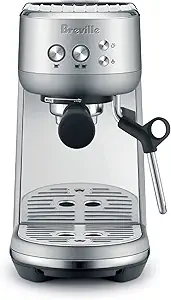 |
| Best Quality Built to a higher standard if you want something more solid | Breville Barista Express BES870XL |  |
| Best Value The sweet spot between price and what you get | CASABREWS 3700 Essential |  |
| Best Budget The cheapest option that still gets the job done reliably | DITOSH 3-Cup Moka Pot |  |
| Top Rated A top-rated pick with lots of positive feedback | Bialetti Moka Express 6-Cup |  |
| Most Popular A crowd favorite that many people choose with confidence | Primula Classic Stovetop Espresso |  |
| Best Seller A high-volume bestseller chosen again and again | CASABREWS CM5418 Espresso Machine |  |
Breville Bambino BES450BSS

| Operation Mode | Semi-Automatic |
|---|---|
| Wattage | 1560 watts |
| Coffee Input Type | Ground |
| Filter Type | Reusable |
| Capacity | 47 fluid ounces |
The Breville Bambino is a compact semi-automatic espresso machine aimed at home users who want café-style shots without a large footprint. It uses a ThermoJet heating system and PID temperature control to reach extraction temperature in about 3 seconds, so you can pull espresso quickly, and the 54mm portafilter accepts up to 18–19 g for fuller shots. Low-pressure pre-infusion followed by a 9-bar extraction helps produce balanced flavor, while the manual steam wand textures milk into microfoam suitable for lattes and basic latte art. The machine includes single- and double-shot baskets, a tamper, and a milk jug, so it is ready to use out of the box. Its stainless steel body looks durable and fits small countertops, but its reservoir size and single boiler arrangement mean it is best for moderate home use rather than heavy commercial volumes. Beginners will appreciate the fast heat-up and simple button controls, while more experienced users can practice dialing in grind and tamping to improve shot quality.
Best for: Buyers who want a space-saving machine that delivers near-professional espresso and the capability to steam milk for lattes, with quick heat-up and straightforward controls for everyday home use.
Less Ideal for: Those who need a heavy-duty machine for frequent entertaining or fully automatic one-touch drink programs should consider other options.
- Very fast heat-up using ThermoJet system for near-instant readiness
- 54mm portafilter supports larger dose for fuller, more complex shots
- PID temperature control and low-pressure pre-infusion for consistent extraction
- Manual steam wand produces fine microfoam for lattes and cappuccinos
- Compact stainless steel design that fits small countertops
- Designed for moderate home use so not ideal for high-volume brewing
- Manual steaming requires some practice to master microfoam technique
Verdict: A compact, fast-heating home espresso machine that delivers café-quality shots and workable steam performance for buyers seeking balanced everyday espresso and milk drinks.
Breville Barista Express BES870XL

| Wattage | 1600 watts |
|---|---|
| Voltage | 120 |
| Coffee Input Type | whole_beans |
| Filter Type | Reusable |
| Capacity | 1 cups |
The Breville Barista Express BES870XL is a hands‑on semi‑automatic espresso machine that takes you from whole beans to espresso using its built‑in conical burr grinder and 54mm portafilter. You grind directly into the portafilter with adjustable grind settings and dose control, then extract using the thermocoil PID temperature control and low‑pressure pre‑infusion for more balanced shots. The steam wand produces microfoam for lattes and cappuccinos, and the included accessories such as the integrated tamper, dosing razor, and stainless milk jug make it practical for daily home use. Typical use involves dialing in grind size and dose, steaming milk by hand, and cleaning the reusable filter baskets after each session. The machine is powerful and fast but requires hands‑on technique and regular cleaning to maintain consistency, so it rewards users who want control over extraction rather than a push‑button convenience model. Its stainless steel build feels durable, though size and weight make it better suited to a dedicated countertop spot.
Best for: Home users who prioritize drink quality and control and are willing to learn manual grinding, dosing, and steaming to achieve café‑style espresso.
Less Ideal for: People who want fully automatic, fuss‑free one‑touch espresso with no hands‑on brewing or minimal maintenance.
- Integrated conical burr grinder with 16 grind settings for fresh dosing
- Thermocoil PID temperature control and low‑pressure pre‑infusion for balanced extractions
- Powerful steam wand capable of creating microfoam for latte art
- Includes practical accessories (tamper, dosing razor, milk jug, cleaning tools)
- Requires manual technique and regular cleaning to get consistent results
- Large and heavy footprint takes dedicated counter space
Verdict: Buy this if you want a durable, performance‑focused home machine that grinds, extracts, and textures milk for café‑quality espresso with hands‑on control.
CASABREWS 3700 Essential

| Output Pressure | 20 bar |
|---|---|
| Wattage | 1350 watts |
| Operation Mode | Semi-Automatic |
| Coffee Input Type | Ground |
| Capacity | 43.9 fluid ounces |
The CASABREWS 3700 Essential is a compact semi-automatic espresso machine aimed at home users who want café-style drinks without a complex commercial setup. It brews with a 20-bar Italian pump and uses PID temperature control to keep extraction temperatures stable, which helps produce consistent shots and good crema. A powerful steam wand creates microfoam for lattes and cappuccinos, and the machine includes one- and two-cup stainless steel filters plus a 51mm portafilter for single or double shots. The 43.9 ounce removable water tank and removable drip tray make refilling and cleaning straightforward, and the stainless-steel housing feels durable on a kitchen counter. Expect a short warm-up time and programmable cup volume via the one-cup and two-cup buttons, but remember this is a single-boiler design so steaming and brewing cannot happen simultaneously and very frequent back-to-back drinks may require brief waits. For the price and size, it delivers practical home-barista features with a few limitations typical of compact single-boiler machines.
Best for: Buyers who want a compact, practical home espresso setup that prioritizes consistent shots and easy maintenance over commercial-level throughput.
Less Ideal for: People who need to make many milk-based drinks back-to-back or who require pro-level features like dual boilers, integrated grinders, or advanced pressure readouts.
- 20-bar pump with PID temperature control for consistent extraction and improved crema
- Powerful steam wand capable of producing velvety microfoam for milk drinks
- Removable 43.9 oz water tank and drip tray for easy refilling and cleaning
- Includes single- and double-shot stainless steel filters and a 51mm portafilter for flexible dosing
- Stainless-steel housing is durable and gives a compact, attractive footprint
- Single-boiler design prevents simultaneous steaming and brewing, slowing consecutive drink prep
- No built-in pressure gauge for monitoring extraction pressure
Verdict: A compact, feature-rich home espresso machine that delivers consistent shots and good milk steaming for buyers who want practical café-style drinks at home.
DITOSH 3-Cup Moka Pot

| Capacity | 3 cups |
|---|---|
| Material | Aluminum |
| Filter Type | Reusable |
| Recommended Uses For Product | Backpacking, Camping, Cycling, Fishing, Hiking, Home Use, Traveling |
This compact DITOSh 3-cup moka pot is a simple manual stovetop brewer that produces concentrated, espresso-style coffee by forcing steam through ground coffee in about 3 to 5 minutes. It is made from cast aluminum with a reusable filter, a flip-top lid, and a heat-resistant handle and knob, and it is intended for use on gas or ceramic cooktops. The pot is portable and light, which makes it handy for small kitchens, travel, or camping, and the aluminum body provides quick, even heat transfer for consistent extraction when you watch the flame and remove it as soon as the coffee stops flowing. Expect a strong, aromatic cup rather than the crema of a machine espresso; grind size and heat control matter for flavor. The parts are removable for cleaning and the top components are dishwasher-safe, though hand washing the aluminum body is recommended to preserve the finish. If you want a no-frills, inexpensive way to make strong stovetop coffee, this cover-to-cover basic moka pot does the job but will not replace a pump espresso machine.
Best for: Buyers wanting an inexpensive, portable way to brew strong, espresso-style coffee by hand for home, travel, or outdoor use and who prioritize simplicity over machine features.
Less Ideal for: People who need a true pump espresso machine, those who require induction-compatibility, or buyers who want automated controls and built-in milk frothing.
- Compact, portable design suitable for travel and small kitchens
- Cast aluminum body gives fast, even heat transfer for consistent extraction
- Reusable metal filter avoids paper waste and is easy to replace
- Includes basic spare components: body, filter, gasket, and funnel
- Aluminum construction can discolor and requires gentle hand washing to maintain finish
- Not compatible with induction cooktops
- Will not produce true espresso crema compared with pump machines
Verdict: An affordable, portable stovetop moka pot that reliably makes strong espresso-style coffee for budget-minded users who want a simple manual brewer.
Bialetti Moka Express 6-Cup

| Coffee Maker Type | Moka Pot |
|---|---|
| Capacity | 270 ml |
| Material | Aluminum |
| Power Source | stovetop |
| Filter Type | Reusable |
The Bialetti Moka Express is a time-tested stovetop espresso-style maker that produces a strong, concentrated coffee by forcing boiling water through ground coffee into the upper chamber. You use it on gas, electric, or with an induction adapter plate by filling the lower boiler with water up to the safety valve, adding ground coffee to the filter basket without tamping, and heating until the characteristic gurgle signals extraction is complete. Its aluminum body and ergonomic handle make it lightweight and easy to handle while the built-in safety valve and reusable filter are practical everyday features. Cleaning is simple since it only requires rinsing with water and avoiding detergents or the dishwasher to preserve flavor. The main limitations are manual operation and the need to monitor heat to avoid over-extraction or burning, and aluminum construction can stain or show wear over many years compared with stainless options. For those who want a reliable, no-frills way to make strong coffee on the stovetop, this remains a solid choice.
Best for: Buyers who prioritize a durable, proven brewing method and want a low-maintenance, manual way to make strong stovetop coffee for daily use.
Less Ideal for: People who need automatic programming, consistent pressure-based espresso with crema, or who prefer a hands-off coffee maker for high-volume cafe-style drinks.
- Classic, simple design that reliably produces concentrated stovetop coffee
- Reusable filter and built-in safety valve for everyday practical use
- Lightweight aluminum construction and ergonomic handle for easy handling
- Easy to clean by rinsing with water without detergents
- Manual operation requires attention to heat to avoid bitter or burned coffee
- Aluminum body can show wear and is less durable-looking than stainless steel
- Not a true pump espresso machine so it lacks crema and pressure control
Verdict: A reliable, no-frills stovetop moka pot that delivers strong, Italian-style coffee using a simple, long-proven design.
Primula Classic Stovetop Espresso

| Coffee Maker Type | Moka Pot |
|---|---|
| Capacity | 6 cups |
| Material | Aluminum |
| Filter Type | Reusable |
| Operation Mode | Manual |
The Primula Classic Stovetop Espresso is a straightforward moka pot that delivers six demitasse-style servings of strong, espresso-like coffee without an electric machine. You fill the lower chamber with water, pack the reusable filter with ground coffee, and heat it on gas, electric, or ceramic stovetops until brewed espresso fills the top chamber. Made from cast aluminum, the pot heats evenly and has a safety-release valve to regulate pressure, plus a flip-top lid and heat-resistant knob for safer pouring. It is portable and simple to clean by rinsing, which makes it convenient for home kitchens and camping. The manual operation means you control brew strength but also requires attention to heat and timing to avoid bitter over-extraction. As an affordable, no-frills option it produces consistent, concentrated coffee for lattes, Americanos, or Cuban-style drinks, though it will not match the crema and pressure of pump-driven espresso machines.
Best for: Buyers who want a reliable, low-cost way to make strong espresso-style coffee at home or on the go and who value proven, widely recommended products.
Less Ideal for: People seeking true barista-level espresso with high pump pressure or automatic extraction features should choose a dedicated espresso machine instead.
- Produces concentrated, espresso-style coffee without electricity
- Cast aluminum body gives even heat distribution for consistent extraction
- Includes reusable filter and safety-release valve for controlled pressure
- Portable and compatible with gas, electric, ceramic, and propane stovetops
- Manual brewing requires monitoring to avoid over-extraction and bitterness
- Will not produce the same crema or pressure as pump espresso machines
Verdict: A simple, durable moka pot that reliably makes concentrated espresso-style coffee for buyers who prefer manual, well-reviewed stovetop brewing.
CASABREWS CM5418 Espresso Machine
| Output Pressure | 20 bar |
|---|---|
| Wattage | 1350 watts |
| Operation Mode | Semi-Automatic |
| Coffee Input Type | ground_coffee |
| Filter Type | Reusable |
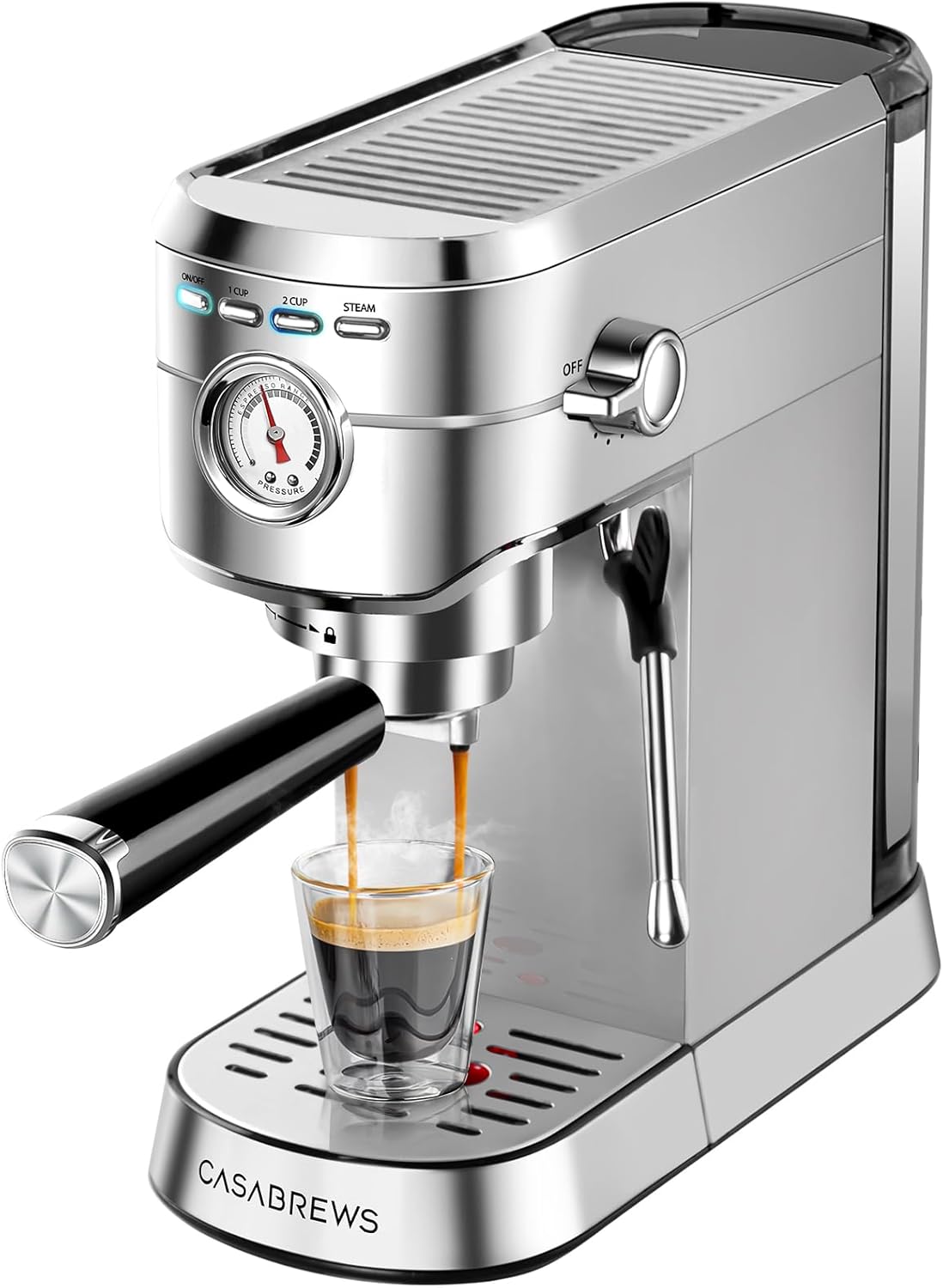
The CASABREWS CM5418 is a small counter espresso maker aimed at home users who want café-style drinks without a commercial footprint. It uses a stable 20-bar Italian pump and a built-in pressure gauge to help dial in extraction, and a pre-infusion feature that promotes more even flavor. The machine accepts ground coffee via a 51mm portafilter and offers single- and double-shot controls plus adjustable volume, while the powerful steam wand creates microfoam suitable for lattes and cappuccinos. Practical touches include a removable 34 oz tank for easy refills, a removable drip tray that fits taller cups, and a top cup-warming tray. Real-world downsides are the single-boiler design, which requires a cooldown between steaming and brewing, and sensitivity to grind and tamp that means newcomers will need to learn dosing for consistent shots. Regular descaling and filter maintenance are necessary to avoid slow extraction. For buyers who prefer a compact stainless steel machine with hands-on control and a strong steam wand, the CM5418 delivers solid performance for daily home use.
Best for: Buyers who want a compact, hands-on espresso machine that produces café-style espresso and textured milk at home and prefer a straightforward, machine-level way to monitor extraction pressure.
Less Ideal for: People who need fast back-to-back brewing and steaming without cooldown time or buyers who want a fully automatic, push-button bean-to-cup experience.
- 20-bar pump with built-in pressure gauge for visible extraction feedback
- Powerful steam wand capable of producing smooth microfoam for milk drinks
- Removable 34 oz water tank and drip tray for easier refilling and cleaning
- Compact stainless steel body with cup warmer fits small kitchens
- Single-boiler system requires cooling time between steaming and brewing
- Performance depends on correct grind, dose, and tamping which adds a learning curve
Verdict: A compact, user-controlled espresso machine that gives visible pressure feedback and strong steaming ability for reliable café-style drinks at home.
Choosing the Right Coffee Maker for Espresso: Key Factors to Consider
Extraction Consistency
Consistency in extraction determines whether successive shots taste alike and whether you can reliably dial in flavors. Machines with steady pump performance, stable pressure profiles, and minimal flow variability make it easier to achieve repeatable results.
For home brewing, consistent extraction reduces time spent re-tuning grind size or dosing between shots and helps you learn a reliable routine. If you plan to pull multiple shots for guests or for milk drinks, prioritize machines that minimize shot-to-shot variation.
Temperature Control
Brew temperature affects acidity, sweetness, and crema production. Machines that maintain stable brew temperature—through well-designed boilers, PID controllers, or heat-exchange systems—produce more predictable flavor and a fuller-bodied shot.
Consider whether you need precise temperature adjustment or simply reliable stability. Casual users benefit from consistent factory settings, while enthusiasts may want adjustable temperature to fine-tune extraction for different beans.
Steam Power and Milk Texture
If you make milk-based drinks, steam output and wand control are essential. A powerful steam system shortens steaming time and creates finer microfoam for latte art, while a responsive wand helps you position and stretch milk correctly.
Look for machines with sufficient steam pressure for your typical cup size and a wand that allows easy purging and cleaning. Poor steaming performance often delays workflow and yields inconsistent milk texture.
User Controls and Workflow
Controls and workflow shape how enjoyable the machine is to use. Intuitive interfaces, clear brew buttons, and accessible portafilters speed up routines. Consider whether you want volumetric presets, manual paddle control, or a simple one-button experience.
Workflow also covers how the machine fits into your counter space and daily steps: grinder placement, water reservoir access, and cup clearance. A machine that matches your preferred ritual saves time and reduces frustration.
Ease of Cleaning and Maintenance
Routine cleaning and occasional servicing influence total ownership effort. Machines with removable drip trays, accessible group heads or brew paths, and straightforward descaling procedures are easier to keep in top condition.
Evaluate how often parts need attention and whether routine tasks require special tools. Reducing maintenance friction keeps performance consistent and prolongs the machine's useful life.
Size, Capacity, and Kitchen Fit
Physical dimensions, water reservoir capacity, and portafilter clearance determine how the machine integrates with your kitchen. A compact unit may fit small counters but could have smaller water capacity, increasing refill frequency.
Consider how many daily drinks you make and whether you need room for taller cups or pitchers under the group head. Matching machine footprint to your space prevents recurring inconveniences.
Manual Vs Semi-Automatic Vs Automatic Controls
Espresso machines for home fall on a spectrum from hands-on manual control to one-touch convenience. Manual-style machines give you direct control over extraction timing but demand more technique and attention. Semi-automatic models automate pump control while leaving dosing and tamping to you, offering a balance between control and convenience. Fully automatic machines handle dosing and shot volume using presets, which reduces the learning curve but limits how much you can fine-tune shots.
Match control style to how involved you want to be. If you enjoy ritual and experimentation, a manual or semi-automatic machine is rewarding. If speed and repeatability during busy mornings are higher priorities, look to machines with programmable shot volumes and simplified interfaces.
- Manual: maximum control, steeper learning curve.
- Semi-automatic: good balance of control and usability.
- Automatic: easiest daily operation, fewer tuning options.
Built-In Grinder Vs Separate Grinder
Some espresso machines include an integrated grinder, which simplifies setup and saves counter space. Integrated grinders can be convenient for compact kitchens and streamline dosing, but they may not match the performance of a high-quality dedicated grinder.
Using a separate grinder often yields better grind consistency and greater flexibility for dialing in different beans. If you prioritize shot quality and have room for two appliances, a dedicated grinder is usually the better long-term choice.
- Integrated grinder: space-saving, simpler workflow, potential compromise in grind quality.
- Separate grinder: better grind control, more customization, requires more counter space.
Water Quality and Filtration
Water chemistry directly affects flavor and machine longevity. Hard water causes mineral buildup and can accelerate scale formation, harming boilers and heating elements. Many machines benefit from inline or onboard filtration to extend service intervals and maintain consistent taste.
Check whether the machine supports a replaceable filter cartridge or if a countertop filtration solution is advisable. Regular descaling is still necessary, but filtration lowers the frequency and reduces the risk of mineral-related failures.
- Use filtered water when possible to protect internal components.
- Follow manufacturer guidelines for descaling intervals based on local water hardness.
Noise, Heat, and Energy Use
Pump noise, steam boiler heat, and standby energy consumption affect how the machine fits into your household. Some machines operate quietly and have efficient standby modes; others produce noticeable pump sounds or heat that can be intrusive in small spaces.
If you make espresso early in the morning while others sleep, prioritize quieter pumps and quicker heat-up times. For occasional heavy use, consider machines with robust boilers that maintain temperature under load, even if they consume more energy.
- Look for stated heat-up times and boiler types to estimate readiness.
- Consider standby and auto-shutoff features to reduce energy use.
Accessories and Long-Term Costs
Ownership includes more than the machine itself. Replacement gaskets, replacement filters, and portafilter baskets are wear items. Some machines also accept optional accessories like different baskets, steam pitchers, or dosing tools that improve usability.
Factor in availability and cost of replaceable parts when choosing a machine. A model with easily sourced spare parts and common accessory standards will be simpler to maintain and customize over time.
- Verify the availability of common replacement parts.
- Consider whether included accessories cover your desired workflow or if you will need additional purchases.
How We Chose the Best Coffee Maker for Espresso
Our selection process prioritized features and performance factors that matter most for home espresso brewing. We focused on extraction consistency by looking for machines with stable water delivery and controllable brew pressure. Temperature control and boiler design were next, since shot temperature directly affects taste and crema. Ease of use and workflow came with attention to interface clarity, dosing and dosing aids, and the included or compatible portafilter type. Milk-frothing capability was assessed for steam power, wand articulation, and the ability to produce smooth microfoam for lattes and cappuccinos. Long-term upkeep guided choices about serviceability: accessible water paths, removable drip trays, and straightforward descaling and cleaning procedures. We excluded niche or commercial-only machines that require dedicated plumbing or a trained technician to operate. The final list balances machines that produce quality espresso with those that fit typical home kitchens, daily routines, and maintenance expectations.
Our full evaluation process is outlined in our review methodology.
FAQ
Do I need a separate grinder for good espresso?
Often a separate grinder produces more consistent and uniform particle size than many built-in grinders, which helps with stable extraction. For many home users a quality dedicated grinder improves dialing in shots, though integrated grinders can be convenient for tight spaces.
How often should I descale a home espresso machine?
Descaling frequency depends on local water hardness and filtration, but many home users descale every 2 to 3 months with hard water and every 6 to 12 months with soft or filtered water. Regular maintenance schedules and a filter can extend intervals.
Is a machine with a steam wand necessary?
If you frequently make milk-based drinks like lattes or cappuccinos, a steam wand is important for producing proper microfoam and heating milk quickly. If you only drink straight espresso, a steam function is less critical.
What type of maintenance do espresso machines require?
Routine tasks include backflushing with a cleaner for machines that support it, wiping the group head and steam wand after use, replacing water filters, and descaling on a schedule. The exact tasks vary by machine design, but regular care preserves performance and flavor.
Can I use tap water in a coffee maker for espresso?
You can use tap water, but mineral content affects both taste and equipment longevity. Using filtered or softened water helps protect boilers and reduces scaling, while also producing a cleaner-tasting shot.
Final Verdict
Choosing the right coffee maker for espresso comes down to balancing control, convenience, and maintenance. Prioritize extraction consistency and temperature stability if shot quality is your main goal. If you make milk drinks often, give equal weight to steam power and wand control. Consider how much hands-on work you want in dosing, tamping, and cleaning, and match those preferences to the machine's workflow and serviceability. With the factors above in mind, pick the machine that fits your daily routine and space so you can consistently produce the espresso style you prefer.