
Note: This article contains affiliate links. If you click on these links and make a purchase, we may earn a small commission at no extra cost to you. This helps support our research and content. Read our full affiliate disclosure here.
If you use an induction hob, choosing the right coffee maker is about more than looks. Induction-compatible pots and stovetop brewers need magnetic bases and stable heat transfer to brew consistently on flat glass cooktops. The wrong cooker can heat unevenly, overextract, or simply fail to work. This guide shortlists seven top coffee makers that are built to work with induction hobs. We focus on durability, heat transfer, ease of use, and how each option performs in everyday home brewing. Read on to understand what matters for induction brewing and which features will match the way you make coffee at home.
Top Picks at a Glance
| Best Overall The best all-around choice for most situations | GROSCHE Milano Induction Moka Pot |  |
| Best Quality Built to a higher standard if you want something more solid | Alessi Pulcina Moka Pot |  |
| Best Value The sweet spot between price and what you get | Bialetti New Venus Induction 4-Cup |  |
| Best Budget The cheapest option that still gets the job done reliably | DITOSH 2-Cup Moka Pot |  |
| Top Rated A top-rated pick with lots of positive feedback | Bialetti Moka Express 3-Cup |  |
| Most Popular A crowd favorite that many people choose with confidence | Ninja CE251 Coffee Brewer |  |
| Best Seller A high-volume bestseller chosen again and again | Primula Classic Stovetop Espresso |  |
GROSCHE Milano Induction Moka Pot

| Capacity | 5 fluid ounces |
|---|---|
| Coffee Maker Type | Moka Pot |
| Power Source | heat |
| Filter Type | Reusable |
The GROSCHE Milano Induction Moka Pot is a manual stovetop brewer that delivers rich, espresso-style coffee in small batches and is sized to produce about three espresso shots. It works on gas, electric, and induction cooktops thanks to its stainless steel base and uses a reusable filter and ground coffee for a classic moka experience. Notable touches include an ergonomic soft-touch handle with a burn guard and a certified safety valve for pressure release, which improve safety and handling during brewing. The aluminum upper chamber helps transfer heat quickly for fast extraction while the stainless steel bottom adds durability and induction compatibility. The pot is hand-wash only, so it requires a little more care than dishwasher-safe models, and its 5-ounce capacity is best for solo or two-cup servings rather than larger households. For everyday stovetop espresso lovers who appreciate a compact, induction-ready moka pot, the Milano balances performance, safety, and build quality.
Best for: Buyers who want a compact, induction-compatible moka pot that produces strong espresso-style coffee for one or two people and value safety features and solid build quality.
Less Ideal for: Those who need larger batch brewing or prefer dishwasher-safe convenience should consider other brewer types.
- Compatible with induction, gas, and electric cooktops via stainless steel base
- Certified safety valve and burn-guard handle improve brewing safety
- Reusable filter uses ground coffee for traditional moka flavor
- Compact 5 fl oz capacity ideal for single or double servings
- Hand-wash only which increases cleaning effort
- Aluminum upper chamber may require careful maintenance to avoid discoloration or flavor changes over time
Verdict: A compact, well-built induction-ready moka pot that delivers classic strong coffee with safety-minded features for daily solo or two-cup use.
Alessi Pulcina Moka Pot

| Coffee Maker Type | Moka Pot |
|---|---|
| Capacity | 15 centiliters |
| Material | Aluminium |
| Filter Type | Reusable |
| Operation Mode | Manual |
The Alessi Pulcina is a high-end stovetop moka pot designed for induction cooking and everyday espresso-style coffee at home. It works like a traditional moka: fill the boiler with water, add ground coffee to the funnel filter, then screw on the upper chamber and heat on an induction hob until extraction finishes. Two design details set it apart: a geometry intended to interrupt extraction at the right moment for a less bitter cup, and a V-shaped spout that reduces dripping when pouring. The body is cast aluminum with a PA handle and knob, so it feels solid and is recyclable, and the reusable filter keeps ongoing costs low. Because it is manual, control is in the user's hands and it requires attention during brewing, but that also means you can fine-tune brew times and grind for stronger or milder results. If you want a simple, durable induction-compatible moka that prioritizes extraction quality and a tidy pour, Pulcina is a strong choice, though it lacks temperature automation or pressure-based brewing found in electric machines.
Best for: Buyers who want a hands-on induction-compatible moka that prioritizes extraction quality and a tidy pour rather than automated convenience.
Less Ideal for: People who need push-button consistency, integrated temperature control, or true espresso pressure extraction should consider electric or pump-driven machines instead.
- Induction-compatible cast aluminum body for use on modern cooktops
- V-shaped spout design that minimizes dripping when pouring
- Geometry that helps stop extraction at an optimal time for cleaner flavor
- Reusable filter reduces waste and ongoing costs
- Manual operation requires close attention during brewing and offers no temperature control
- Aluminum body can show wear over time compared with stainless steel alternatives
Verdict: Choose the Pulcina if you want a well-designed, induction-ready moka that improves extraction and pours cleanly for better stovetop espresso-style coffee.
Bialetti New Venus Induction 4-Cup

| Capacity | 4 cups |
|---|---|
| Material | Stainless Steel |
| Power Source | Induction |
| Filter Type | Reusable |
| Operation Mode | Manual |
The Bialetti New Venus is a stainless steel stovetop coffee maker built specifically to work on induction as well as gas and electric hobs, producing about four small espresso-style cups per brew. It uses the classic moka pot method: fill the lower chamber with water, add ground coffee to the filter basket, assemble, and heat until the characteristic gurgle signals extraction. The 18/10 stainless construction should resist staining and last longer than aluminum moka pots, and the reusable filter keeps ongoing costs low. Because it is manual, you control grind, tamping, and heat, so you can tune strength and flavor, but it also means consistent results depend on technique. The pot is not dishwasher safe and Bialetti recommends rinsing only, which adds simple maintenance but reduces convenience. For kitchens with induction hobs this Venus model provides a durable, compact way to get concentrated stovetop coffee without electronics, though it requires hands-on operation and a bit of practice to hit the ideal brew every time.
Best for: Buyers who want a durable, no-frills induction-compatible moka pot and are comfortable dialing in grind and heat for stovetop espresso-style coffee.
Less Ideal for: Those seeking push-button convenience, automatic temperature control, or a brewmaker that can be cleaned in the dishwasher should look elsewhere.
- 18/10 stainless steel construction better resists corrosion and lasts longer than aluminum
- Compatible with induction, gas, and electric hobs for wide stovetop use
- Reusable filter reduces waste and ongoing filter costs
- Compact four-cup capacity is good for singles or small households
- Requires manual operation and practice to achieve consistent results
- Not dishwasher safe and should be rinsed only, which is less convenient for some users
Verdict: A durable, induction-ready stainless steel moka pot for buyers who prefer a hands-on, long-lasting stovetop espresso solution.
DITOSH 2-Cup Moka Pot

| Material | Aluminum |
|---|---|
| Capacity | 2 cups |
| Power Source | Stovetop Heat |
| Filter Type | Reusable |
This DITOSH 2-cup moka pot is a basic, portable stovetop espresso maker built from cast aluminum with a classic octagonal profile and heat-resistant handle and knob. It works by filling the lower chamber with water, packing the funnel filter with ground coffee, and heating on a gas or ceramic burner until the brewed coffee rises to the top. The aluminum construction gives fast, even heat transfer so extraction finishes in about 3 to 5 minutes, and the reusable filter keeps waste down. Because this model is aluminum it is lightweight and inexpensive, but it is not induction compatible unless you use a separate induction adapter plate. It is dishwasher-safe for some internal parts but hand washing the body is recommended to preserve the finish and prevent discoloration. For a budget buyer who wants a compact, traditional moka pot for occasional espresso-style shots at home or camping, it delivers straightforward performance, though those needing induction-ready cookware or larger batches should consider other options.
Best for: Buyers looking for an inexpensive, traditional stovetop moka pot to make small espresso-style servings on gas or ceramic stovetops and who prioritize low upfront cost and portability.
Less Ideal for: People who need a moka pot that works directly on induction hobs or who routinely brew larger quantities for multiple people.
- Cast aluminum body provides quick, even heat and fast brewing
- Compact 2-cup capacity is portable for travel or small servings
- Reusable funnel filter reduces ongoing consumable costs
- Heat-resistant handle and knob make pouring safer
- Not induction compatible without a separate adapter plate
Verdict: A very affordable, compact moka pot that reliably makes small espresso-style brews on gas or ceramic stoves but requires an adapter for induction use.
Bialetti Moka Express 3-Cup

| Material | Aluminum |
|---|---|
| Capacity | 711 ml |
| Coffee Input Type | Ground |
| Filter Type | Reusable |
| Operation Mode | Manual |
The Bialetti Moka Express is a timeless stovetop espresso maker that uses steam pressure to force hot water through ground coffee and deliver a strong, concentrated brew. Typical use is simple: fill the lower chamber with water up to the safety valve, add ground coffee to the filter without tamping, assemble, and place on a gas, electric, or propane cooktop until the telltale gurgle signals extraction is complete. Notable features include the patented safety valve, ergonomic handle, reusable filter, and longtime aluminum construction that heats quickly and evenly on conventional burners. Practical benefits are straightforward: it is durable, easy to clean with water only, highly portable for travel or camping, and built to a design with a long expected service life. Important limitations for the induction-focused shopper are that the aluminum body is not induction-compatible by itself and requires Bialetti's induction adapter plate for use on induction hobs, and the pot should never be cleaned in a dishwasher to avoid damage to the finish and flavor.
Best for: Buyers who prioritize a proven, durable brewing method and want a low-maintenance stovetop coffee maker that will last for years.
Less Ideal for: People who need native induction compatibility or want a fully dishwasher-safe coffee maker should consider other options.
- Patented safety valve improves safe operation and easy cleaning
- Durable aluminum construction with long expected service life
- Reusable filter eliminates disposable waste and simplifies brewing
- Compact and portable design suited to travel and outdoor use
- Aluminum base is not induction-ready without a separate adapter plate
- Not dishwasher-safe and requires hand rinsing only
Verdict: Choose the Bialetti Moka Express if you want a simple, long-lasting stovetop brewer that delivers classic Italian coffee and reliable daily performance.
Ninja CE251 Coffee Brewer
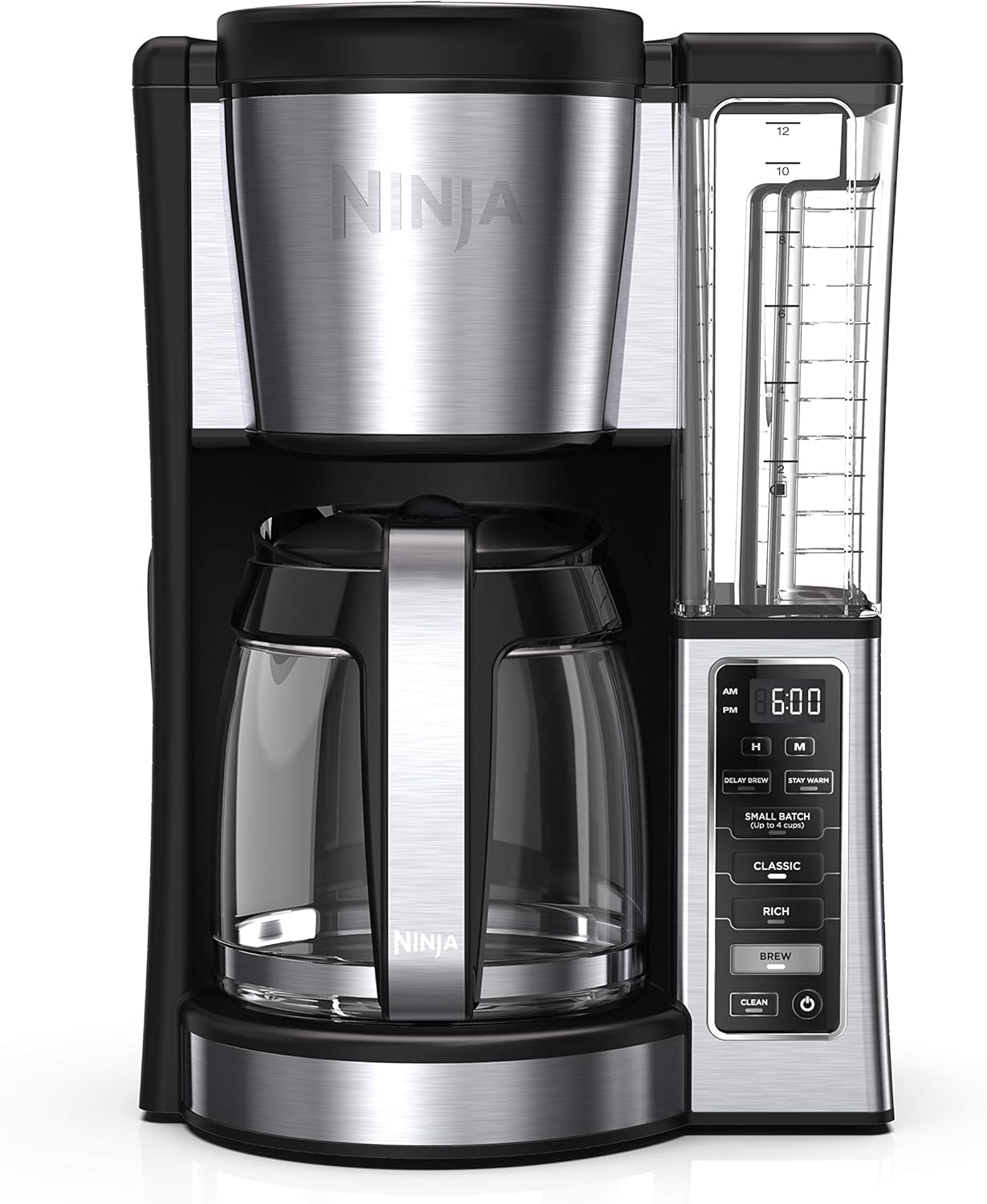
| Capacity | 12 cups |
|---|---|
| Wattage | 1100 watts |
| Power | 120 volts |
| Filter Type | Reusable |
| Reservoir | 60 oz removable |
The Ninja CE251 is a programmable 12-cup drip coffee brewer aimed at delivering consistent, flavorful coffee from small batches up to a full carafe. It offers two brew styles, Classic and Rich, plus a Small Batch setting so one to four cups are brewed without dilution. Hotter Brewing Technology is designed to improve saturation and temperature control, and the machine includes a removable 60-oz water reservoir, a 12-cup glass carafe, an adjustable warming plate that keeps coffee warm for up to four hours, and a mid-brew pause for pouring a cup before the cycle finishes. You can delay brew up to 24 hours and use the one-touch Clean setting for descaling. Practical limitations include its plastic components and 1100-watt power draw that require a standard household outlet, and it is a drip brewer rather than an espresso machine so it will not produce espresso-style drinks. For buyers focused on reliable, no-fuss brewed coffee with programmable convenience, the CE251 covers the essentials with extra small-batch flexibility.
Best for: Buyers who value dependable, programmable drip coffee with flexibility for small and large batches and who rely on peer reviews and established brands when choosing kitchen appliances.
Less Ideal for: Those who need espresso pressure or steam-based milk frothing, or buyers seeking a fully metal commercial-style brewer.
- Two brew strength options plus a Small Batch setting for 1–4 cups
- Removable 60-oz water reservoir for easy refilling
- 24-hour programmable delay brew and mid-brew pause for convenience
- Adjustable warming plate keeps coffee hot up to four hours
- Permanent reusable filter reduces paper filter waste
- Plastic construction for some internal components may feel less durable than all-metal units
- Drip brewer cannot make espresso or steam milk for specialty drinks
Verdict: Choose the Ninja CE251 if you want a versatile, programmable 12-cup drip brewer that delivers hotter, customizable coffee for both small and full-batch use.
Primula Classic Stovetop Espresso

| Coffee Maker Type | Moka Pot |
|---|---|
| Capacity | 6 cups |
| Material | Aluminum |
| Filter Type | Reusable |
The Primula Classic Stovetop Espresso maker is a manual moka pot that produces six demitasse-sized servings of strong, espresso-style coffee by forcing steam through a reusable filter. You use it by filling the lower chamber with water, packing ground coffee into the filter basket, and placing the pot on a stovetop until brewed coffee rises into the upper chamber. Made from cast aluminum, the pot is lightweight, portable, and designed for even heat distribution; it also includes a safety-release valve and a flip-top lid with a heat-resistant knob and handle for safer pouring. Because it is manual and compact, it is fast to heat and easy to clean by rinsing components after use. Important limitations: the aluminum base is not compatible with induction cooktops without an induction adapter plate, and aluminum can discolor if scrubbed with abrasive cleaners, so it requires basic care to maintain appearance and performance.
Best for: Buyers who prioritize a simple, proven manual brewing method and want a reliable, no-frills moka pot for stovetop or camping use and value ease of use and quick extraction.
Less Ideal for: Those whose primary stovetop is induction and who do not want to use an adapter should look for a stainless steel or induction-ready moka pot instead.
- Brews six demitasse-style servings of strong, espresso-style coffee quickly.
- Cast aluminum construction offers even heat distribution and lightweight portability.
- Includes a reusable filter and a safety-release valve for controlled pressure.
- Flip-top lid and heat-resistant handle make pouring safer and convenient.
- Simple to operate and easy to rinse clean after use.
- Not compatible with induction cooktops without a separate induction adapter plate.
- Aluminum body can discolor or scratch if cleaned with abrasive materials.
Verdict: Choose this Primula moka pot if you want a lightweight, easy-to-use six-cup stovetop brewer for fast espresso-style coffee and are prepared to use an induction adapter if needed.
Choosing the Right Coffee Maker for Induction Hobs: Key Factors to Consider
Induction-Ready Base and Materials
An induction-ready coffee maker must have a magnetic base or be constructed from materials that respond to electromagnetic cooktops. Without a flat, magnetic base, the unit will not heat or will heat inconsistently, which causes underextraction or overextraction.
Look for manufacturers that specify induction compatibility or for appliances that use stainless steel or other ferromagnetic alloys on the contact surface. Where a layered base is used, ensure the contact surface is continuous and flat so the brewer sits stably on the hob. This factor determines whether the coffee maker will work at all on an induction surface and influences the consistency of each brew.
Heat Transfer and Distribution
How heat moves from the hob into the brewer affects extraction, crema formation, and brewing time. Some designs concentrate heat in one spot while others spread warmth across the whole chamber. On induction hobs, rapid temperature changes are common, so materials and base geometry that promote even conduction matter.
Choose brewers with a wide, flat contact area and good internal geometry so the water or brew mass sees even heating. Uneven heat can create hotspots that scorch coffee or leave underextracted pockets, especially in small-volume stovetop brewers.
Seals, Handles, and Safety Features
Stovetop brewing involves pressure and hot liquids, so durable seals and heat-resistant handles are essential. On induction hobs, rapid heating can stress gaskets and threads. Silicone, rubber, or metal seals should be rated for repeated exposure to high temperatures and steam.
Handles should be ergonomically placed and made from materials that stay cool or resist heat transfer. Safety valves and pressure relief mechanisms are important for stovetop espresso-style devices. This factor affects daily usability and the long-term reliability of the brewer in a busy kitchen.
Capacity and Brew Style
Capacity determines how many cups you can make in a single session and influences the brewer form factor. Small stovetop brewers are ideal for single-serve or two-cup routines, while larger pots suit households or entertaining. Brew style also matters: some induction-ready devices are built for espresso-style pressure extraction, while others are better for stovetop drip or immersion.
Match capacity and style to your typical mornings. Picking the wrong volume means repeatedly brewing multiple batches or wasting coffee. Consider how often you want to brew and whether you prefer concentrated or milder extractions.
Maintenance and Cleaning
Residue, oils, and mineral buildup affect taste and appliance longevity. Easier-to-disassemble designs reduce time spent on cleaning and help preserve gaskets and internal parts. For induction use, also check that finishes or coatings in contact with the hob tolerate direct heat and cleaning agents.
Dishwasher-safe parts are convenient but not always necessary. Regular descaling schedules and access to internal surfaces for cleaning influence how the brewer performs over months and years.
Stability and Footprint on the Hob
Induction hobs work best when cookware sits flat and centered. A coffee maker with a narrow or warped base risks wobbling, uneven heating, or tripping safety sensors. The brewer should match the hob zone size reasonably well so power delivery is stable during the brew cycle.
Consider how the brewer sits alongside other cookware and whether its footprint fits your typical cooktop layout. Stability affects both safety and extraction quality when brewing on glass or ceramic induction surfaces.
Which Brew Styles Work Best on Induction Hobs
Not every coffee brewing method translates perfectly to induction heat. Stovetop pressure brewers and small Moka-style devices are common choices because they are compact and designed to sit directly on a burner. Immersion or pour-over methods can also work if you use a separate induction-ready kettle for hot water and then use a dripper placed on a heatproof stand.
When selecting a brew style for induction, prioritize designs that place the brewing chamber directly on the cooktop. That ensures efficient, direct heating. If you prefer pour-over, focus on an induction-compatible kettle with precise temperature control instead of placing the dripper on the hob.
- Moka and stovetop espresso styles: compact and sit directly on the hob
- Small percolators: can be used if base is flat and magnetic
- Pour-over: use an induction kettle for precise temperature control
- Immersion brewers: work if you preheat water with an induction-compatible pot
Adapting Your Technique for Induction
Induction hobs heat very quickly and can change power delivery based on pan detect and cookware size. To avoid sudden temperature spikes, start at medium power and watch how the brewer responds. For stovetop pressure brewers, a gentle ramp prevents excessive pressure buildup and reduces the risk of scorched coffee.
If your induction hob reduces power because the brewer is small relative to the zone, reposition the unit so it is centered and uses the most responsive sensor area. For pour-over routines, heat water to the target temperature off the hob if necessary and finish on low power to maintain heat without aggressive fluctuations.
- Begin on medium power and monitor the first few brews
- Center the brewer on the induction zone for stable power
- Lower heat earlier than you would on gas to avoid overextraction
- Use a thermometer for repeatable temperature control when dialing in a recipe
Materials and Finish: What Lasts
Stainless steel and other ferromagnetic alloys that are properly machined and finished tend to outlast thin-coated or decorative units when used on induction. Coatings that look attractive but are thin can blister or wear where they contact the hob, especially if they trap heat or are scraped during placement.
Solid, machined bases and stainless interiors tolerate repeated heating and simple cleaning. Pay attention to how joins and welds are finished; gaps or poor seams near the base can trap coffee oils and make descaling and cleaning harder.
- Prefer solid stainless or layered magnetic bases over thin coatings
- Check seams and joins for tight finishes
- Avoid brewers with delicate surface treatments on the contact area
- Look for corrosion-resistant internal surfaces for longevity
Kitchen Setup Tips for Induction Coffee Brewing
Optimize the layout of your hob and preparation area so the brewer is easy to center and remove. Keep a towel or silicone mat handy to protect the cooktop from drips and to set down a hot brewer without scratching the surface. Plan for a small area to rest the hot lid or handle during extraction.
Consider using a dedicated small zone or a flexible multi-zone hob setting for coffee so other cookware does not interfere. A stable, clean cooking surface reduces the chance of slippage or sensors misreading the load, which keeps the brew consistent from day to day.
- Use a silicone mat to protect the hob when setting down hot parts
- Reserve a single hob zone for brewing when possible
- Keep descaling supplies and a soft brush nearby for maintenance
- Avoid dragging the brewer across the glass surface to prevent scratches
How We Chose the Best Coffee Maker for Induction Hobs
We selected candidates that are explicitly designed to function on induction hobs or use construction techniques known to work reliably with induction heat. Our filters prioritized proven induction compatibility, consistent heat distribution, and materials that withstand repeated thermal cycling. Evaluation criteria included base design and magnetically responsive materials, how evenly the unit conducts heat across the brewing chamber, the quality and longevity of handles and seals under stovetop conditions, and how straightforward cleaning and maintenance are. We also considered brew control features such as adjustable steam or pour characteristics where relevant for stovetop or small-countertop brewers. Items were excluded if their manufacturer guidance discouraged use on induction surfaces, if they relied on irregular bottoms that do not sit flat, or if they used fragile finish details likely to degrade with direct hob contact. We favored options that deliver repeatable results for common home routines such as morning espresso-style shots, stovetop Moka extraction, or simple drip-style immersion methods adapted to induction.
Our full evaluation process is outlined in our review methodology.
FAQ
Can any stovetop coffee maker be used on an induction hob?
Not automatically. The brewer needs a magnetic, flat base to activate the induction element. Some stovetop designs use aluminum or other nonmagnetic materials and will not heat on induction without a disk adapter. Check manufacturer guidance for induction compatibility.
How do I know if the coffee maker will sit flat on my induction hob?
Inspect the base visually and by feel. A flat, even rim without warping is ideal. On a stable surface, the brewer should not rock. Manufacturers that list induction compatibility typically ensure a flat contact surface to match cooktop sensors.
Is there a risk of damaging the hob with a coffee maker?
Damage risk is low if you avoid dragging the brewer and do not place abrasive or dirty bases on the glass. Sharp edges and grit can scratch the surface, and spilled sugars or syrups that caramelize can be difficult to remove. Use care when placing and removing hot parts.
Do I need to change my grind size or technique when brewing on induction?
Maybe. Because induction heats quickly, you may need to slightly adjust grind size or heat settings to avoid rapid overextraction. Start with your usual grind and watch the first few brews, then make small changes to grind or power level until the extraction timing matches your preference.
Can I use a heat diffuser or adapter plate with my induction hob?
A diffuser or adapter plate can help if your brewer is slightly undersized for the induction zone or has a nonmagnetic bottom. However, a diffuser reduces direct heat transfer and can change brew dynamics. Use one only if necessary and retune your technique accordingly.
Final Verdict
When you need a coffee maker that performs reliably on an induction hob, prioritize a flat, magnetic base and materials that tolerate rapid temperature changes. Heat distribution, durable seals and handles, and maintenance access will determine how consistent and long-lasting the brewer is in daily use. Balance capacity and brew style with how you make coffee each morning. Focus on induction compatibility first, then evaluate durability and ease of cleaning to find an option that delivers repeatable results and safe operation on your cooktop.