
Note: This article contains affiliate links. If you click on these links and make a purchase, we may earn a small commission at no extra cost to you. This helps support our research and content. Read our full affiliate disclosure here.
If you want cafe-style lattes at home, the right coffee maker for latte makes all the difference. You need consistent espresso extraction, strong steaming power, and intuitive controls so you can hit the same taste and texture every time. This guide shortlists the top picks across common home setups and walks through the practical pros and cons of each option. We evaluate machines by how well they extract shots, how they steam milk, how easy they are to maintain, and how they fit into everyday routines. Read on to find the coffee maker that matches the kind of latte you want to make and the time you have each morning.
Top Picks at a Glance
| Best Overall The best all-around choice for most situations | PHILIPS 3300 Series EP3341/50 |  |
| Best Quality Built to a higher standard if you want something more solid | Breville Barista Touch BES880BSS |  |
| Best Value The sweet spot between price and what you get | Chefman CraftBrew Espresso Machine | 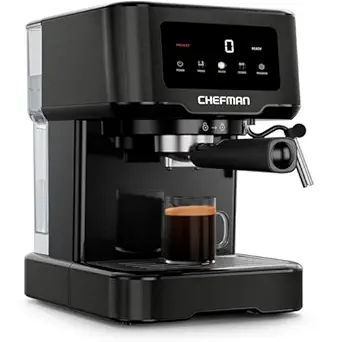 |
| Best Budget The cheapest option that still gets the job done reliably | Imusa 4-Cup Espresso Maker |  |
| Top Rated A top-rated pick with lots of positive feedback | Breville Barista Express BES870XL |  |
| Most Popular A crowd favorite that many people choose with confidence | Keurig K-Café SMART |  |
| Best Seller A high-volume bestseller chosen again and again | atatix EM3111 Espresso Machine |  |
PHILIPS 3300 Series EP3341/50

| Operation Mode | Fully Automatic |
|---|---|
| Output Pressure | 15 bar |
| Human Interface Input | Touchscreen |
| Coffee Input Type | whole bean |
| Capacity | 1.8 liters |
The Philips 3300 Series EP3341/50 is a fully automatic espresso machine that grinds, tamps, brews, and froths milk with minimal user effort, making it well suited for daily latte drinkers. Use the color touchscreen to pick one of six presets — espresso, coffee, iced coffee, cappuccino, latte macchiato, or hot water — then adjust strength, volume, and milk level to taste. The LatteGo milk system produces smooth milk froth automatically and is designed to be quick to rinse or put in the dishwasher, which cuts routine cleaning time. SilentBrew technology reduces operating noise compared with prior models, and the ceramic grinder preserves bean flavor. Practical benefits include the AquaClean filter that extends the time between descaling cycles and a removable brew group for easier internal cleaning. Limitations are that the machine is a countertop appliance with a single integrated milk system rather than a separate steam wand for manual texturing, and fully automatic machines give less control for users who want barista-style technique. For buyers who prioritize convenience and consistent lattes, this model delivers a strong, low-effort experience.
Best for: Buyers who want café-style lattes at home with minimal fuss and consistent results, valuing one-touch convenience and easy maintenance over manual barista control.
Less Ideal for: People who want full manual control over milk steaming and shot extraction or who prefer a machine that supports advanced barista techniques.
- One-touch presets for hot and iced drinks simplify daily use
- LatteGo milk system produces consistent, smooth milk and is fast to clean
- Ceramic grinder preserves bean flavor and offers adjustable strength
- AquaClean filter reduces need for frequent descaling
- Quiet operation thanks to SilentBrew technology
- No separate steam wand for manual milk texturing
- Fully automatic workflow limits hands-on control for experienced users
Verdict: If you want consistent, café-style lattes with one-touch convenience and easy cleaning, the Philips 3300 Series delivers that with its LatteGo system and automated brewing.
Breville Barista Touch BES880BSS

| Operation Mode | Fully Automatic |
|---|---|
| Wattage | 1680 watts |
| Human Interface Input | Touchscreen |
| Coffee Input Type | whole_beans |
| Filter Type | Reusable |
The Breville Barista Touch BES880BSS is a countertop espresso machine that combines an integrated conical burr grinder, touchscreen recipe controls, and an automatic milk texturing system to simplify making cafe-style lattes at home. You load whole beans into the built-in grinder, pick a preset or manually adjust grind and dose with the Razor trimming tool, and the 9-bar extraction system delivers espresso with pre-infusion for fuller flavor. The Auto MilQ steaming wand textures milk to a silky microfoam suitable for latte art while the ThermoJet heating system brings the machine to temperature quickly. Practical benefits include one-touch drink programs, a reusable filter, and a stainless steel milk jug and cleaning kit included for routine maintenance. The machine is performance-oriented and rewards users who want control over grind and extraction while reducing repetitive steps with automated milk steaming. Limitations are its footprint and weight for smaller counters, and it requires regular cleaning and occasional manual tamping for best consistency compared with fully commercial machines.
Best for: Buyers who prioritize cafe-quality latte performance and want precise control over grind and extraction while benefiting from automated milk texturing to speed daily drink preparation.
Less Ideal for: People seeking the smallest, lightest machine for occasional coffee or buyers who prefer a purely manual or very inexpensive single-use brewer.
- Built-in conical burr grinder with 30 grind settings and dose control for consistent extraction
- Touchscreen presets and adjustable controls simplify repeatable espresso drinks
- Auto MilQ steam wand produces fine microfoam for latte texture and latte art
- ThermoJet heating system rapidly reaches brewing temperature
- Includes portafilter, stainless steel jug, Razor dosing tool and cleaning kit for out-of-box use
- Relatively large and heavy for small kitchens
- Requires regular cleaning and maintenance to keep steam and grinder performance optimal
Verdict: If you want a performance-focused home machine that combines a precision grinder, touch controls, and reliable automatic milk texturing for cafe-quality lattes, the Barista Touch is a top choice.
Chefman CraftBrew Espresso Machine

| Output Pressure | 15 bar |
|---|---|
| Capacity | 1.5 liters |
| Wattage | 1350 watts |
| Power Source | AC adapter |
| Coffee Input Type | Ground |
The Chefman CraftBrew is a countertop semi-automatic espresso machine aimed at home baristas who want cappuccinos and lattes without a large footprint. It uses a 15-bar pump and two shot baskets to pull single or double shots of espresso while a built-in steam wand lets you froth milk for cappuccinos and lattes. Controls include a digital panel and adjustable shot volume so you can make ristretto, standard espresso, or a longer lungo, and the 1.5 L removable reservoir is convenient for multiple servings and easy refilling. Practical touches include a metallic exterior that wipes clean and a programable descale alert after many cycles. Expect typical semi-automatic maintenance such as regular cleaning of the portafilter, descaling, and manual milk texturing—there is no automatic milk system. The machine is powerful at 1350 watts but compact, so it fits small kitchens though it does not offer advanced pressure profiling or integrated grinders that some higher-end units include.
Best for: Buyers who value a compact, no-frills machine to pull quality espresso shots and manually steam milk for lattes and cappuccinos while keeping routine maintenance simple and predictable.
Less Ideal for: Users who want a fully automatic or one-touch latte maker with built-in grinding and automated milk frothing should consider other machines.
- 15-bar pump provides consistent extraction for espresso-style shots
- Built-in steam wand enables manual milk frothing for cappuccinos and lattes
- 1.5 L removable water reservoir is large enough for several drinks and easy to refill
- Digital touch controls and adjustable shot volume let you customize pull strength
- No integrated grinder so you need a separate grinder for fresh beans
- Manual steam wand requires some skill to texture milk compared with automatic milk systems
Verdict: Choose this machine if you want a compact, capable semi-automatic espresso maker that delivers true espresso extraction and manual milk steaming for café-style lattes at home.
Imusa 4-Cup Espresso Maker

| Capacity | 4 cups |
|---|---|
| Wattage | 800 watts |
| Operation Mode | Semi-Automatic |
| Filter Type | Permanent |
The Imusa 4-Cup Espresso Maker is a compact semi-automatic machine designed to brew up to four small espressos and froth milk for cappuccinos and lattes. It uses a three-position selector and delivers around 5 bar pressure with an 800-watt heater to produce concentrated shots directly into the included glass carafe, while the steam nozzle turns regular milk into a creamy foam for cafe-style drinks. The removable drip tray and permanent filter basket simplify cleanup and avoid recurring paper filter costs, and the cool-touch carafe handle improves safe pouring. Because it is intentionally small and uses modest pressure, it will perform well for basic espresso-style beverages but will not match higher-pressure pump machines for very fine crema or professional steam power. The sturdy plastic matte exterior keeps it lightweight and countertop-friendly, making it a practical choice for everyday home use where space and budget matter.
Best for: Buyers looking for an affordable, space-saving machine to make simple espressos and frothy milk drinks at home without the complexity of professional equipment.
Less Ideal for: Those who want cafe-level espresso shots, heavy daily commercial use, or advanced temperature and pressure controls should consider higher-end pump machines instead.
- Compact footprint fits small counters
- Built-in steam nozzle milk frother for cappuccinos and lattes
- Permanent filter basket reduces ongoing filter costs
- Removable drip tray and cool-touch carafe for easier cleaning and safe pouring
- 5 bar pressure is lower than commercial espresso machines, so crema and extraction are limited
- Plastic exterior and modest steam power limit durability and professional-grade frothing
Verdict: A budget-friendly, compact espresso machine that makes everyday lattes and cappuccinos at home with a built-in frother and low running costs.
Breville Barista Express BES870XL

| Wattage | 1600 watts |
|---|---|
| Voltage | 120 |
| Coffee Input Type | whole_beans |
| Filter Type | Reusable |
| Capacity | 1 cups |
The Breville Barista Express BES870XL is a hands‑on semi‑automatic espresso machine that grinds, doses, extracts, and steams milk to produce café‑style espresso drinks at home. It uses an integrated conical burr grinder with 16 grind settings to deliver freshly ground beans directly into the 54mm portafilter, and a thermocoil heating system with digital temperature control for stable extraction. The steam wand produces strong steam for manual microfoam, letting users texture milk for lattes and cappuccinos and practice latte art. Practical features include single and double wall filter baskets, an included tamper and razor dose trimming tool, and a removable water tank for easy refills and cleaning. Because it is manual, achieving consistent shots requires learning basic dosing and tamping technique, and the unit is larger and heavier than many entry machines which matters for limited counter space. The Barista Express is best for users who want direct control over the brewing process and a built‑in grinder without stepping up to commercial equipment.
Best for: Home coffee lovers who prioritize consistent, café‑quality lattes and prefer a reliable machine that gives direct control over grinding, dosing, extraction, and milk texturing.
Less Ideal for: Buyers who want fully automatic one‑touch latte drinks or a compact countertop footprint should consider simpler or automated alternatives.
- Integrated conical burr grinder with 16 grind settings for on‑demand fresh grounds
- Thermocoil heating and digital temperature control for stable extraction
- Powerful steam wand capable of producing microfoam for latte art
- Includes 54mm portafilter, tamper, razor dose trimming tool, and multiple filter baskets
- Manual workflow requires practice to get consistently repeatable shots
- Relatively large and heavy, which can be limiting for small kitchens
Verdict: Choose the Barista Express if you want a reliable, grinder‑equipped machine that lets you craft cafe‑quality lattes with hands‑on control.
Keurig K-Café SMART

| Wattage | 1200 watts |
|---|---|
| Power Source | AC adapter |
| Coffee Input Type | K-Cup Pod |
| Capacity | 1100 ml |
| Filter Type | Reusable |
The Keurig K-Café SMART is a single-serve brewer designed to reproduce coffeehouse drinks at home using K-Cup pods. It brews standard cup sizes from 6 to 12 ounces plus two espresso-style shots and pairs with a built-in hot and cold frother for lattes, cappuccinos, and macchiatos. Wi‑Fi connectivity and the Keurig app unlock BrewID recommendations, Barista Mode step-by-step recipes, remote scheduling, and saved favorite settings, while MultiStream Technology aims to extract fuller flavor from pods. Users can tailor strength and temperature across multiple levels and brew over ice for cold beverages. Practical benefits include fast one-touch drink prep, an included reusable filter, and a removable reservoir for multiple servings without frequent refills. Limitations are inherent to any pod-based system: you are tied to K-Cup format for brew convenience, and flavor control is less flexible than with a traditional espresso machine or manual milk steaming; the app-dependent advanced features require a Wi‑Fi connection and occasional setup. The unit is best when you want quick, consistent café-style drinks with minimal learning curve rather than pro-level espresso control.
Best for: Buyers who want reliable, café-style lattes and cappuccinos at home with minimal fuss and value app-guided recipes and social-proof features that simplify drink consistency.
Less Ideal for: Those seeking a traditional espresso machine with high-pressure extraction and manual steam wand control or shoppers who prefer full control over every extraction variable.
- Built-in hot and cold milk frother with multiple speeds for creamy lattes and cold foam.
- Wi‑Fi with BrewID and app features for recipe guidance, remote brewing, and saved preferences.
- MultiStream Technology designed to extract fuller flavor from K-Cup pods.
- Multiple strength and temperature settings plus six brew sizes including two shot sizes.
- Removable water reservoir and reusable filter for convenience and reduced waste.
- Uses K-Cup pods only, limiting coffee selection to pod-compatible blends and formats.
- Does not offer the pressure or manual steam control of a dedicated espresso machine for true café-quality espresso.
Verdict: Choose the K-Café SMART if you want fast, app-guided café-style lattes and cappuccinos from K-Cup pods with convenient frothing and saved recipes.
atatix EM3111 Espresso Machine

| Operation Mode | Semi-Automatic |
|---|---|
| Wattage | 1350 watts |
| Output Pressure | 20 bar |
| Filter Type | Reusable |
The atatix EM3111 is a small semi-automatic espresso machine aimed at making espresso-based drinks like lattes, cappuccinos, and macchiatos at home or in an office. It uses a 20-bar pump with dual-wall filters to stabilize extraction and a PID-controlled NTC temperature system to hold extraction temperatures in the 90–96°C range, which helps produce consistent shots and good crema. A powerful steam wand produces dense microfoam suitable for latte art, and the stainless steel top can preheat cups. The unit accepts whole-bean ground coffee via a portafilter and includes one- and two-cup filter baskets, a tamper, and a removable water tank and drip tray for easier cleaning. Practical benefits are quick preheat (about 30 seconds), a compact footprint for small counters, and reusable filters to reduce waste. Limitations include modest water capacity relative to heavy daily use and the learning curve of dialing in manual extraction times if you want to fine-tune single vs double shots.
Best for: Buyers who want a compact, user-serviceable machine that produces cafe-style lattes at home but prefer stable temperature control and a strong steam wand over fully automatic convenience.
Less Ideal for: People who need a high-capacity machine for frequent heavy use or those who want push-button one-touch drink automation and bean-to-cup convenience.
- PID temperature control for more consistent shot extraction
- Powerful steam wand that creates dense microfoam for lattes
- Compact stainless steel body with removable water tank and drip tray for easy cleaning
- Includes portafilter, single and double baskets, tamper, and measuring scoop
- Water tank capacity is limited for high-volume use
- Semi-automatic operation requires practice to consistently dial in manual extraction times
Verdict: Choose the atatix EM3111 if you want a compact, temperature-stable semi-automatic machine that can steam milk to cafe-quality microfoam for home lattes.
Choosing the Right Coffee Maker for Latte: Key Factors to Consider
Espresso Pressure and Shot Quality
Consistent pressure and stable extraction determine the espresso base for a latte. A machine that holds steady pressure produces evenly extracted shots with a balanced flavor and crema, which helps the milk blend harmoniously.
When evaluating shot quality, consider whether the machine allows you to control dose and extraction time. Machines that lock in shot parameters or offer manual control let you fine-tune strength and mouthfeel, which is important if you like to dial in different beans.
Steam Power and Milk Texture
The steam system shapes the latte experience. A powerful, responsive steam wand or an effective automatic milk frother produces microfoam with small, even bubbles for silky latte texture. Steam speed affects how quickly you can heat milk without scalding it, which matters for morning routines.
Different steam systems give different levels of control. Manual wands require skill but yield the most texture control. Automatic milk systems are easier for beginners but vary in how fine and consistent the foam is.
Temperature Control and Stability
Temperature stability during both brewing and steaming keeps flavor consistent across drinks. Fluctuations can cause sour or bitter shots and milk that overheats or fails to reach the ideal serving temperature.
Look for machines with reliable boiler systems or good heat-exchange designs. Features like PID control or dual boilers help hold stable temperatures when pulling a shot and steaming milk consecutively.
Ease of Cleaning and Maintenance
Daily cleaning burdens affect how often the machine stays in use. Removable drip trays, accessible water reservoirs, and easy-to-disassemble steam wands reduce friction in upkeep. Machines with automatic rinses or simple descaling routines lower the chance of performance degrading over time.
Consider whether the milk path is sealed or removable, as hidden milk lines require more thorough cleaning to avoid residue buildup and off flavors.
Control Layout and Automation
Controls determine how repeatable your lattes will be. Machines with clear presets, programmable shot volumes, or precise temperature and pressure settings let you reproduce a drink. Touch panels and one-touch latte options simplify the process, while manual paddle-style controls offer more hands-on adjustment.
Think about whether you want a machine that does everything automatically or one that gives you room to learn barista techniques. Both approaches can produce excellent lattes, but they demand different skill levels and maintenance habits.
Size, Footprint, and Daily Workflow
A machine that fits your counter space and routine is more likely to be used regularly. Larger machines with dual boilers or built-in milk modules offer higher performance but require more space and potentially more maintenance. Compact machines save space but may trade off steam power or water capacity.
Factor in how often you make lattes, how many drinks you prepare in a session, and whether you need quick turnaround for steaming successive milk pitchers. Tank capacity and boiler recovery time influence whether the machine keeps up with your pace.
Manual Steam Wands Versus Automatic Milk Systems
Manual steam wands give you direct control over milk texture and temperature, which is ideal if you plan to practice frothing technique. They require more hands-on skill but reward you with finer microfoam and better latte art potential. Expect a steeper learning curve and slightly more cleanup because you will be steaming directly from a milk pitcher.
Automatic milk systems simplify the process with one-touch frothing or closed milk containers. They produce consistent results for users who want a simple routine and less technique. However, they limit how much you can control foam density and may require regular deep cleaning of the milk path to maintain hygiene and taste.
- Manual wands: more control, better texture, more skill and cleanup.
- Automatic systems: repeatable results, easier use, potential hidden cleaning needs.
How Temperature Stability Affects Flavor
Temperature swings during extraction can make shots taste sour or over-extracted. Machines with robust thermal systems maintain stable brew temperature even when you steam milk immediately before or after pulling a shot. Stability is particularly important for lattes because the espresso and steamed milk need to combine without either component overwhelming the other.
If you plan to pull multiple shots in a row or serve several lattes in succession, look for features that support quick temperature recovery. Smaller boilers may struggle with back-to-back steaming, while larger or dual-boiler designs handle continuous use more comfortably.
- Stable temps = consistent espresso flavor.
- Better recovery supports multiple drinks in succession.
Daily Cleaning Routines That Keep Flavor Fresh
A practical cleaning routine prevents milk residue and mineral buildup that can taint flavor. Wiping and purging the wand after each use, rinsing removable milk units, and scheduling periodic descaling will keep a coffee maker for latte performing well. Choose a machine with accessible parts to make these tasks faster.
Some machines offer automated cleaning cycles for milk systems and group heads, which can reduce hands-on time. Even with automation, occasional manual checks are necessary to ensure seals and hoses remain sanitary.
- Wipe and purge the steam wand after every use.
- Rinse removable milk components daily if applicable.
- Follow manufacturer descaling intervals to protect heating elements.
Programming and Presets for a Repeatable Latte
Programmed shot volumes and milk presets make it easy to reproduce the same latte every morning. Machines that let you save custom profiles for shot yield, milk temperature, and foam level reduce variability introduced by different doses or steaming times. This is especially useful if multiple people use the same machine and prefer different drink strengths.
When evaluating presets, consider whether they allow incremental adjustments. The best systems balance simplicity with enough tweakability to refine the beverage to your taste.
- Save custom profiles for consistent drinks.
- Look for incremental adjustments rather than fixed, non-adjustable presets.
Counter Space and Kitchen Integration
Think about how the machine fits into your kitchen workflow. A taller steam wand or removable milk container may need extra clearance. Clearance above and around the machine affects pitcher access and cleaning. Choose a unit whose footprint and service access match your countertop layout.
Consider whether the machine's water tank is front- or top-loading to ensure it is easy to refill where you plan to place the appliance.
- Measure counter depth and height for pitcher clearance.
- Prefer front-access tanks for tight spaces.
How We Chose the Best Coffee Maker for Latte
We evaluated machines that are explicitly aimed at producing lattes and similar milk-based espresso drinks. Our selection filters prioritized devices that combine dependable espresso extraction with capable milk steaming or milk-handling systems. We excluded single-serve pod-only machines without true steam or milk-texturing capability, and we did not consider pure drip brewers or appliances that cannot produce espresso-like pressure. Key evaluation criteria included espresso extraction consistency, steam wand or milk system performance, temperature stability during brewing and steaming, ease of cleaning and maintenance, and user controls or presets for milk drinks. We also considered build quality and daily usability factors such as water tank access, portafilter ergonomics, and whether automated milk systems offer sufficient control for latte texture. Machines were only included if they reliably supported making lattes at home rather than casual milk-warmed coffee. These criteria align with the scoring metrics used in the product scorecards below.
Our full evaluation process is outlined in our review methodology.
FAQ
Do I need a dedicated espresso grinder to make good lattes?
A quality grinder helps you get consistent shot extraction, which directly affects latte flavor. While some entry-level machines include grinders, a separate burr grinder gives finer control over grind size and dose, making it easier to dial in the espresso used for lattes.
Can I steam non-dairy milk as easily as dairy milk?
Many steam systems can texture plant-based milks, but results depend on the milk type. Barista-specific non-dairy milks and stronger steam power typically produce better microfoam. You may need to adjust steaming times and technique for different milk compositions.
How often should I descale or clean the steam system?
Descale intervals depend on local water hardness and machine usage, but a regular check every few months is common for moderate use. Wiping and purging the wand after each use and rinsing any removable milk parts daily will help prevent buildup between deeper cleaning sessions.
Is a dual-boiler machine necessary for lattes?
Dual-boiler designs provide simultaneous optimal temperatures for brewing and steaming, which speeds up workflow and improves consistency for back-to-back drinks. They are not strictly necessary for occasional latte makers, but they are helpful if you regularly prepare multiple milk drinks in one session.
What makes latte milk texture different from cappuccino foam?
Latte microfoam is finer and silkier with smaller bubbles, creating a smooth mouthfeel and better integration with espresso. Cappuccino foam is typically thicker and drier with larger bubbles. The steaming technique and steam power determine which texture you can achieve reliably.
Final Verdict
Prioritize machines that balance reliable espresso extraction with a steam system capable of producing fine microfoam. If you value hands-on control and latte art, choose a machine with a responsive manual wand and opportunity to adjust shot parameters. If convenience matters more, an automated milk system with good cleaning accessibility can deliver consistent lattes with less skill required. Consider your counter space, daily volume, and willingness to maintain the machine when making a final choice so you end up with a coffee maker that fits both your taste and routine.