
Note: This article contains affiliate links. If you click on these links and make a purchase, we may earn a small commission at no extra cost to you. This helps support our research and content. Read our full affiliate disclosure here.
If you run a busy kitchen, choosing the right commercial can opener matters for speed, reliability, and safe food handling. A heavy-duty opener reduces downtime during service, simplifies prep, and lowers the chance of contamination from jagged can edges. This guide shortlists the top commercial can openers built for frequent use in professional environments and evaluates them on durability, cleaning, and real-world usability. Read on to understand the features that make an opener suitable for heavy daily cycles and what to prioritize when matching an opener to your operation.
Top Picks at a Glance
| Best Overall The best all-around choice for most situations | NUFR Heavy-Duty Can Opener |  |
| Best Quality Built to a higher standard if you want something more solid | Edlund Old Reliable #1 Can Opener |  |
| Best Value The sweet spot between price and what you get | Chef Master Commercial Can Opener 90056 | 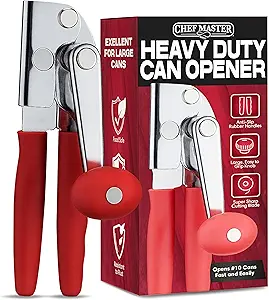 |
| Best Budget The cheapest option that still gets the job done reliably | TENGJINGMEIER Manual Can Opener US-G001 |  |
| Top Rated A top-rated pick with lots of positive feedback | Wadoy Commercial Can Opener |  |
| Most Popular A crowd favorite that many people choose with confidence | UHIYEE Commercial Can Opener K122BK |  |
| Best Seller A high-volume bestseller chosen again and again | Graceliving Premium Can Opener GR001 |  |
NUFR Heavy-Duty Can Opener

| Material Type | Stainless Steel |
|---|---|
| Blade Material Type | Stainless Steel |
| Operation Mode | Manual |
| Unit Count | 1 Count |
This NUFR manual can opener is built like a small commercial unit, with a sturdy stainless steel body, long rubber-coated handles for grip, and a rotating crank to cut through large cans. You use it by squeezing the handles to engage the rim and turning the crank to roll the cutting wheel around the lid; the extended handles and cushioned coating make repeated openings easier on the hands and wrists. The stainless cutting wheel is described as sharp for smooth, consistent cuts and the unit includes a side hook that doubles as a bottle and jar opener, so it serves multiple tasks at a prep station. Practical benefits include durability for frequent use, comfortable leverage for users with weaker grip, and a compact footprint that stores in a drawer when not in use. Limitations are that it is fully manual so opening many cans will still take time and physical effort compared with electric models, and there is no mounting hardware or suction base included for hands-free operation in a busy commercial setup.
Best for: Buyers who want a durable, no-frills manual opener that stands up to frequent kitchen or light commercial use and prioritizes comfortable leverage and reliability.
Less Ideal for: Those who need fast, hands-free, or high-volume automated opening should consider an electric or mounted commercial can opener instead.
- Commercial-grade stainless steel construction for durability
- Long, rubber-coated handles provide comfortable leverage and better grip
- Sharp cutting wheel for smooth, consistent lid removal
- Built-in hook doubles as a bottle and jar opener for extra utility
- Manual operation requires physical effort for high-volume use
- No mounting or hands-free hardware included
Verdict: A tough, ergonomic manual opener built for frequent use when buyers want commercial-grade durability without electricity.
Edlund Old Reliable #1 Can Opener

| Material Type | Stainless Steel |
|---|---|
| Operation Mode | Manual |
| Size | 11" tall |
| Included Components | Can opener |
The Edlund Old Reliable #1 is a heavy‑duty manual can opener built for commercial kitchens and high-volume use. It mounts to a counter via a plated steel base and uses a reversible two-sided stainless steel blade that extends service life and keeps cuts consistent over thousands of uses. Typical use is straightforward: secure the opener to the prep counter, clamp the can against the arbor, and rotate the handle to cut—rated to handle many cans per day with parts that are serviceable and replaceable. The construction emphasizes durability with nickel-plated cast aluminum components, a rust-resistant arbor, and options for base type to suit sanitation needs. Maintenance is practical for a busy environment since blades and wear parts are designed for replacement and cleaning. The unit is manual, so it requires staff effort and steady mounting surface; it also lacks powered automation that some kitchens prefer for peak throughput. For kitchens prioritizing reliability and long blade life, this is a workhorse; for fully automated lines, a power opener may be a better fit.
Best for: Kitchen managers and operators who need a dependable, serviceable manual opener that can withstand daily heavy use and simplify maintenance in a busy commercial setting.
Less Ideal for: Operations that require hands-free, high-speed automation or mobile setups without a fixed mounting surface should consider powered or portable alternatives.
- Commercial-grade construction built for high-volume use
- Reversible two-sided stainless steel blade increases blade life and consistency
- Plated steel base provides stable mounting and sanitation-friendly option
- Designed for easy maintenance and straightforward parts replacement
- Manual operation requires physical effort and is slower than powered openers
- Requires secure mounting to a countertop for safe operation
Verdict: A rugged, serviceable manual can opener built to deliver dependable, long-lasting performance in busy commercial kitchens.
Chef Master Commercial Can Opener 90056

| Material Type | Rubber, Stainless Steel |
|---|---|
| Blade Material Type | Stainless Steel |
| Operation Mode | Manual |
| Unit Count | 1 Count |
This Chef Master heavy-duty manual can opener is built for commercial kitchens and heavy home use, offering an oversized turning handle and anti-slip rubber grip that make one-handed operation easier and more comfortable. Its stainless steel cutting wheel and industrial-strength construction deliver a smooth, reliable cut and a safer no-rust finish for frequent use with large cans. The design favors durability and simple cleaning, since there are no complex mechanisms to trap food, and the razor-sharp cutting disc reduces wrist effort compared with cheap handheld openers. It is sized and shaped for mounting or countertop use in restaurants, bars, and food trucks where speed and longevity matter. Expect a sturdy, loud mechanical feel rather than a delicate consumer device, and know that operation still requires manual crank power so it is not suited to users who need an electric solution.
Best for: Kitchen operators and home cooks who need a robust, long-lasting manual opener for frequent use and prioritize durability and ease of cleaning over automation.
Less Ideal for: Buyers who prefer hands-free or electric can openers, or those who need an ultra-quiet, lightweight consumer-style device.
- Commercial-grade stainless steel construction built for frequent use
- Large ergonomic turning handle with anti-slip rubber grip for comfort
- Razor-sharp cutting wheel provides smooth, clean cuts and minimal effort
- Simple design is easy to clean and resists rust in busy kitchens
- Manual crank requires physical effort and is not suitable for users wanting an electric opener
- Louder, heavier mechanical operation compared with consumer-grade models
Verdict: Choose this Chef Master opener when you need a durable, commercial-quality manual can opener that stands up to heavy daily use.
TENGJINGMEIER Manual Can Opener US-G001

| Material Type | Stainless Steel |
|---|---|
| Blade Material Type | High Carbon Steel |
| Operation Mode | Manual |
| Included Components | Manual Can Opener with Folding Crank Handle |
This TENGJINGMEIER manual can opener is a robust, stainless steel hand tool intended for heavy use in kitchens that need a simple, reliable opener. It uses a high-carbon steel cutting wheel and long crank arm to slice lids smoothly while the built-in magnet lifts the cut lid away for cleaner handling. Rubber-coated, ergonomic handles and an extra-long crank make it easier to grip and turn, which helps reduce wrist strain during repetitive opening tasks. The folding crank saves drawer space and the included bottle opener adds convenience. Because it is fully manual, it needs no power and is quick to rinse and dry after use, but it does require occasional hand cleaning and care to prevent corrosion over time. For demanding environments, its sturdy construction should hold up well, though it lacks any mounting hardware or powered operation that some commercial settings prefer.
Best for: Small commercial kitchens or budget-focused buyers who need a durable, no-frills manual opener that stands up to frequent use and is easy to store.
Less Ideal for: Large-volume operations that need rapid automated opening or wall-mounted industrial openers for continuous heavy throughput.
- Heavy-duty stainless steel construction and high-carbon cutting blade for durable, long-lasting use
- Built-in magnet lifts lids for cleaner, safer disposal
- Ergonomic rubber-coated handles and long crank arm reduce hand fatigue
- Folding crank design for compact storage and included bottle opener adds utility
- Manual operation may be slower than wall-mounted or electric commercial can openers
- Requires hand washing and immediate drying to maintain finish
Verdict: A rugged, low-cost manual can opener built for frequent use where a simple, durable hand tool is preferred over powered commercial equipment.
Wadoy Commercial Can Opener

| Size | 18.5 in (For cans up to 11") |
|---|---|
| Material Type | Cast Steel |
| Blade Material Type | Stainless Steel |
| Operation Mode | Manual |
This cast-steel tabletop can opener is built for repeat use in restaurants, bars, and busy kitchens where durability and speed matter. It mounts to a counter or table and uses a rotating stainless steel blade to cut can lids; the smooth swivel handle and ergonomic design let one person open multiple cans per minute with less hand fatigue. The unit ships with a spare blade, mounting screws, and gloves for setup and maintenance, and the plated steel base resists rust for a longer service life. Because it is manual, it does not rely on power and keeps operations simple and repairable, though installation requires screwing the base down and occasional blade replacement once it dulls. Metal shavings can be produced during use, so operators should follow hygiene practices and the supplier notes that replacement/returns are available if that is a concern. For high-throughput kitchens this is a straightforward, heavy-duty solution that trades electrical automation for rugged, low-maintenance mechanics.
Best for: Operators who prioritize a rugged, repairable tool that handles high daily volumes without relying on electricity and who value long-term reliability in a commercial kitchen.
Less Ideal for: Small households that rarely open cans or kitchens that prefer automated, electric solutions for faster, hands-off operation.
- Cast steel construction for long-term durability in commercial environments
- Sharp stainless steel blade with a spare included for quick replacement
- Plated steel base designed to be screwed to a countertop for stable, hands-free operation
- Ergonomic swivel handle that reduces hand fatigue and speeds up repetitive opening tasks
- Manual operation requires physical effort and is slower than electric can openers
- May produce metal shavings during cutting which requires attention to food safety practices
Verdict: A simple, heavy-duty tabletop opener built for busy kitchens that need a reliable, low-maintenance way to open large cans.
UHIYEE Commercial Can Opener K122BK

| Material Type | Stainless Steel |
|---|---|
| Blade Material Type | 420 J2, High Carbon Steel, Stainless Steel |
| Operation Mode | Manual |
| Included Components | Can opener |
This UHIYEE commercial can opener is a sturdy manual unit intended for frequent kitchen use and large cans. It uses an all-steel frame and a hardened high-carbon 420 J2 cutting wheel with gear-driven operation to slice lids smoothly, while the extra-long soft-grip handle and oversized knob give strong leverage for extended prep. The built-in magnet lifts lids away for safer disposal and the side hook doubles as a bottle opener, making it a compact multipurpose tool at the prep station. It is sized and reinforced to handle #10 and other large cans reliably, though the manufacturer notes it is not ideal for very small cans. The opener is simple to clean by hand and feels durable under repeated use, but being fully manual it requires physical effort and a fixed-mount or countertop setup for best stability. Overall it performs like a no-nonsense commercial can opener that emphasizes durability and leverage for busy kitchens.
Best for: Buyers who want a reliable, heavy-duty manual opener for commercial kitchens or high-volume home use and value durability and ease of repeated operation.
Less Ideal for: Those who need a hands-free or fully electric solution, or who primarily open small grocery-size cans, should choose a different model.
- All-steel construction and hardened high-carbon cutting wheel for long-lasting durability
- Extra-long soft-grip handle and oversize knob provide strong leverage and reduce hand fatigue
- Built-in magnet lifts lid for safe, clean disposal
- Gear-driven mechanism delivers smooth, consistent cutting action
- Integrated bottle opener adds small extra utility at the prep station
- Manual operation requires physical effort and is slower than electric openers
- Not recommended for very small cans like tuna-style goods
Verdict: A rugged, gear-driven manual can opener built for heavy use that delivers reliable leverage and clean lid removal for commercial kitchens.
Graceliving Premium Can Opener GR001
| Material Type | Stainless Steel |
|---|---|
| Blade Material Type | Stainless Steel |
| Operation Mode | Manual |
| Unit Count | 1 Count |
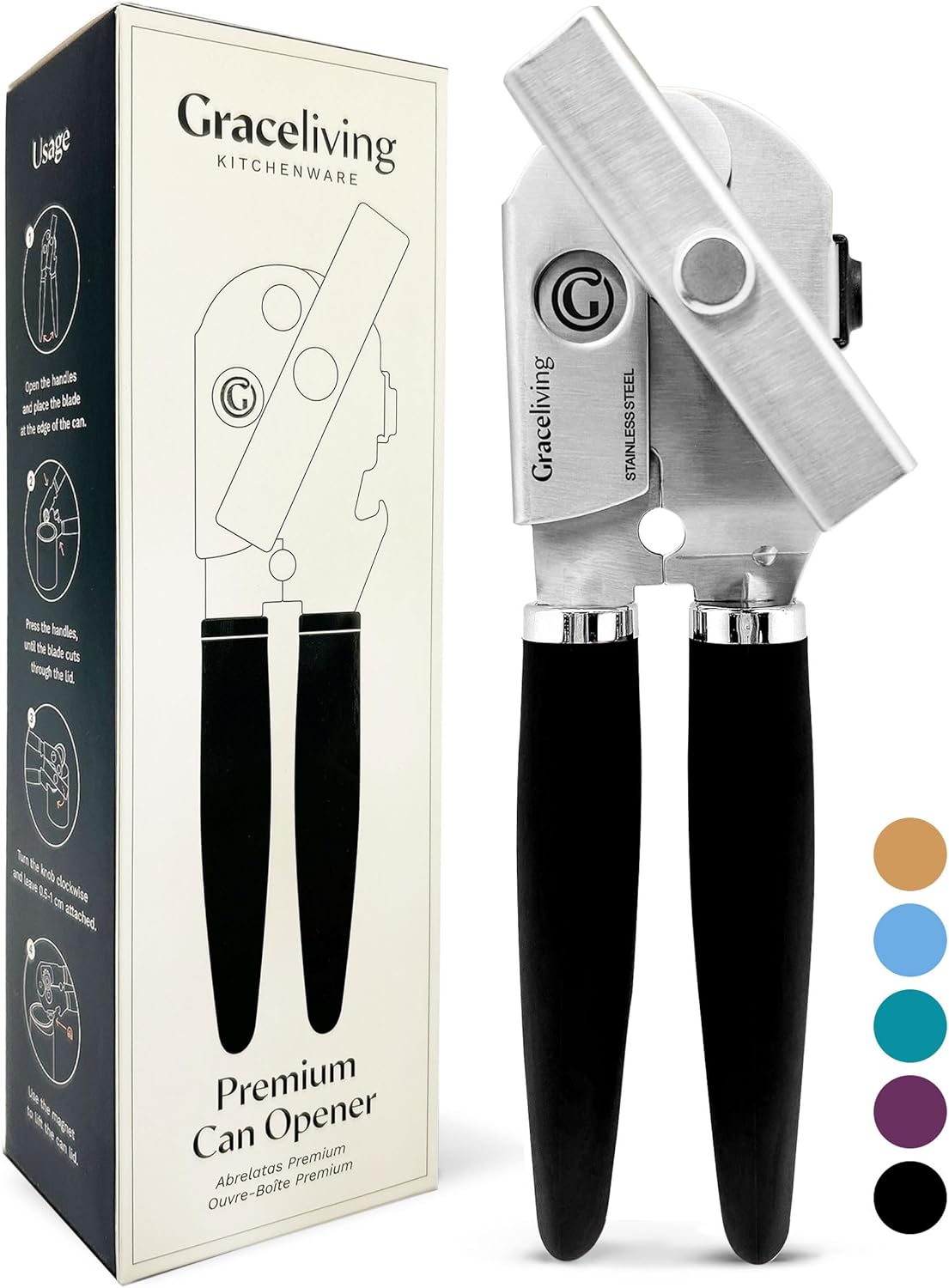
This Graceliving manual can opener is built like a small commercial tool, using reinforced stainless steel components, precision gears, and a high-carbon blade for clean, jag-free cuts. In practice it works as a straightforward handheld opener: position the cutter, crank the oversized easy-turn knob and the weighted head plus sharp blade roll through the lid smoothly. The soft-touch ergonomic handle gives a secure grip and the strong magnet lifts lids away for touch-free removal, which reduces mess and fingertip contact. Extras like the built-in bottle opener and lab-tested durability claim make it feel versatile and long-lived for frequent kitchen use. It is manual so it relies on user turning rather than electric automation, which may be less convenient for users who prefer push-button operation, and the product is a single-piece utensil rather than a bench-mounted commercial opener. For anyone wanting a durable, safety-minded manual opener that mimics commercial reliability, this is a sensible choice.
Best for: Buyers who want a reliable, long-lasting manual can opener that emphasizes safety and comfortable use and who prefer proven, sturdy tools over novelty or cheap replacements.
Less Ideal for: Commercial kitchens that need high-speed, hands-free bench or wall-mounted openers or individuals who require an electric, push-button solution.
- Reinforced stainless steel body and precision gears for durability
- High-carbon razor-sharp blade for clean, jag-free cuts
- Oversized smooth-turn knob and soft-touch ergonomic handle for comfortable operation
- Strong magnetic lid lifter provides touch-free, safer lid removal
- Built-in bottle opener adds a useful secondary function
- Manual operation requires physical turning rather than offering electric convenience
- Not a bench-mounted commercial opener, so less suited to very high-volume kitchens
Verdict: A heavy-duty, safety-focused manual can opener that delivers commercial-style durability and clean cuts for buyers who prioritize reliability and touch-free lid removal.
Choosing the Right Commercial Can Opener: Key Factors to Consider
Build Materials and Corrosion Resistance
Commercial can openers spend long hours in humid, acidic, and greasy kitchen environments. Materials matter because a thicker, corrosion-resistant housing and stainless or treated steel cutting components last longer under heavy use and regular washdowns. Choosing corrosion-resistant metals reduces the risk of rusted blades or housings that can seize or shed particles into food.
Higher-grade materials often translate to more consistent performance and lower replacement frequency. Consider how the opener's finish and fasteners will stand up to routine cleaning agents used in commercial kitchens.
Cutting Mechanism and Blade Access
The cutting mechanism determines whether lids come off cleanly and safely. Reliable gears, hardened cutting wheels, and solid drive systems reduce the chance of slipping or jagged edges. Easy access to the cutting wheel for inspection and replacement shortens downtime when blades dull.
Inspect whether the design allows blade changes without special tools and how often replacement parts are expected to be needed in a high-volume setting. A straightforward mechanism also lowers the learning curve for staff training.
Cleaning, Sanitation, and Food Safety
Commercial foodservice equipment must meet strict sanitation standards. Openers with exposed crevices or permanently enclosed cutting chambers can trap food and bacteria, making them harder to sanitize. Models designed for easy wipe-downs or partial disassembly speed routine cleaning and help maintain compliance with health codes.
Look for smooth surfaces, removable components that can be sanitized, and minimal seams where debris can accumulate. Consider how cleaning procedures fit into existing kitchen cleaning schedules and whether the opener can be cleaned quickly between prep tasks.
Mounting Style and Stability
Mounting affects how stable the opener is during rapid use. Counter-mounted and wall-mounted units provide fixed leverage and reduce wobble, making fast, repetitive opening safer and quicker. Portable or tabletop units can work for lower-volume stations but may shift during heavy use unless clamped securely.
Assess available mounting space, proximity to prep stations, and whether the chosen style supports the expected opening volume without increasing operator fatigue or risk of tipping.
Ergonomics and Staff Workflow
In a commercial kitchen, staff will open many cans during a shift. Ergonomic design reduces wrist strain and speeds operation. Consider handle design, turning resistance, and whether the opener allows two-handed or single-handed operation depending on your kitchen workflow. Quieter, smoother mechanisms are preferable in busy environments to reduce fatigue.
Also think about how the opener integrates with staff routines: can it be used while multi-tasking, is it intuitive for new employees, and does it require precise alignment that slows throughput?
Maintenance and Parts Availability
Regular maintenance like blade sharpening or replacement keeps performance consistent. Evaluate how easy it is to obtain replacement cutting wheels, gears, and mounting hardware, and whether common tools suffice for service tasks. Some designs let you replace wear parts without removing the entire unit, which speeds repairs.
Consider the long-term operational cost of parts and the expected interval between service events in a high-use commercial setting.
Counter-Mounted Vs Wall-Mounted Openers
Counter-mounted and wall-mounted commercial can openers both offer fixed stability but differ in footprint and installation. Counter-mounted units are typically bolted to a work surface and are convenient when you want the opener near a specific prep area. Wall-mounted units save counter space and can be installed at a height that matches staff comfort and workflow.
Installation choice should reflect your kitchen layout, available mounting surfaces, and how often the opener must be accessed during service. Consider professional installation if you must reinforce a surface or run mounting hardware through thick countertops.
- Counter-mounted: easier to relocate if bolted into a movable prep counter
- Wall-mounted: frees counter space and can be positioned out of the way
- Both: require secure fastening to withstand repetitive force
Sanitation Best Practices
Establish a regular cleaning routine that fits into your kitchen's sanitation schedule. Wipe down housings after each shift and disassemble reachable components for deep cleaning on a set cadence.
Use approved sanitizers and avoid harsh chemicals that could damage protective finishes on metal parts. If an opener has removable cutting wheels or gear covers, clean and inspect them for residue and wear during each deep-clean cycle.
- Wipe exposed surfaces daily and sanitize removable parts weekly or as required
- Inspect for trapped food around the blade and drive gear after heavy use
- Keep a spare cutting wheel on hand to minimize downtime during service
Training Staff for Safe, Efficient Use
Brief staff on proper procedure for mounting a can, engaging the cutting wheel, and removing lids safely. Demonstrate how to handle lids to avoid contact with sharp edges and how to dispose of or retain lids per food safety rules.
Make blade-change and cleaning steps part of onboarding so everyone knows how to perform basic maintenance. Quick refresher sessions help reduce misuse and extend the life of the equipment.
- Teach correct hand positioning and body posture to reduce strain
- Label mounting hardware and routine maintenance checks in the prep area
- Rotate operator tasks to avoid repetitive strain injuries from continuous can opening
When to Replace Vs Repair
Frequent performance issues like slipping, jagged edges, or excessive wobble often point to worn cutting wheels or misaligned gears that are repairable. If wear is limited to replaceable components, a timely part swap can restore performance at lower cost than replacement.
Replace the entire unit if the main housing is corroded, mounting points are compromised, or repairs become frequent. Long-running commercial operations benefit from tracking service intervals; replace units proactively before they fail during peak service times.
- Repair when issues are limited to blades, gears, or bearings
- Replace when structural integrity or mounting strength is compromised
- Keep service records to spot patterns and plan replacements during slow periods
Sizing Your Opener for Volume
Estimate daily can-opening volume to choose a unit rated for that workload. High-volume kitchens should prioritize heavy-duty models with hardened gears and higher-rated duty cycles. Lower-volume operations can opt for simpler machines that still offer reliable daily performance.
Consider future growth. An opener that slightly exceeds current needs can provide headroom and a longer service life if your operation scales up.
- Map peak service periods to expected can-opening counts
- Match duty cycle ratings to your busiest shift demands
- Factor in staff rotation and potential increases in prep volume
How We Chose the Best Commercial Can Opener
We focused on attributes that affect performance and uptime in professional kitchens. Primary evaluation criteria included build durability, cutting mechanism reliability, ease of cleaning and sanitation, user ergonomics and speed, and serviceability for routine maintenance. Durability assessment prioritized materials and construction appropriate for high-cycle commercial use and resistance to corrosion from kitchen conditions. Cutting mechanism reliability examined whether the opener consistently produces clean, safe lids without excessive resistance or frequent blade changes. Cleaning and sanitation evaluated how easily parts that contact cans can be accessed, disassembled if applicable, and wiped or sanitized to meet health-code expectations. Ergonomics and speed considered how quickly staff can open cans with minimal strain during long shifts. Serviceability addressed availability of replaceable blades and straightforward adjustment or repair. We excluded lightweight home-grade models and any units intended for occasional household use. The final shortlist reflects products that meet the demands of continuous, professional kitchen workflows and align with the scoring criteria above.
Our full evaluation process is outlined in our review methodology.
FAQ
How often should I replace the cutting wheel on a commercial can opener?
Replacement frequency depends on volume and can material. In high-volume kitchens, inspect the cutting wheel weekly and plan replacement when you notice burrs, slipping, or rough edges. Lower-volume operations may require replacement less often, but regular inspection is still important.
Can commercial can openers be sanitized with standard kitchen chemicals?
Most commercial-grade units tolerate common foodservice sanitizers, but always follow manufacturer cleaning guidance for compatible agents. Avoid highly acidic or abrasive cleaners that could damage finishes or accelerate corrosion.
Is professional installation required for wall-mounted can openers?
Professional installation is recommended when mounting requires reinforcing walls or when exact placement is critical for workflow. For sturdy walls and accessible mounting points, experienced staff can install unit securely using appropriate hardware.
What are signs that an opener is unsafe or failing?
Look for excessive wobble, slipping during cutting, jagged lid edges, unusual noises, or visible corrosion on mounting points. These issues indicate the unit needs inspection, repair, or replacement to maintain safe operation.
Are there openers suitable for continuous, all-day use?
Yes. Openers rated for heavy-duty commercial use are designed for continuous cycles. Choose models with hardened cutting components, robust drive mechanisms, and easy access for maintenance to support all-day service.
Final Verdict
Prioritize durability, cutting reliability, and ease of cleaning when selecting a commercial can opener for a professional kitchen. Match the mounting style and duty-cycle rating to your daily volume, and factor in maintenance access and parts availability to minimize downtime. Focus on models that make sanitation straightforward and reduce operator strain. With these priorities in mind, you can select an opener that keeps service flowing and requires minimal interruptions for repair or cleaning.