
Note: This article contains affiliate links. If you click on these links and make a purchase, we may earn a small commission at no extra cost to you. This helps support our research and content. Read our full affiliate disclosure here.
If you run a busy cafe, office, or event venue, a commercial coffee maker plumbed to a water line can remove one of the day-to-day hassles of brewing. A fixed water feed eliminates constant refilling, reduces downtime during rush periods, and helps maintain consistent brew strength across back-to-back batches. This guide covers five shortlisted commercial coffee makers with water line connections that are built for frequent use and high output. We evaluate capacity, plumbing and installation demands, build durability, and serviceability to help you pick a machine that fits your workflow and space. Read on for the key factors that mattered in our selection and how to match a machine to your service volume.
Top Picks at a Glance
| Best Quality Built to a higher standard if you want something more solid | Brew Express BE-110 BS 10-Cup |  |
| Best Value The sweet spot between price and what you get | NUPANT Dual Drip Commercial Coffee Maker |  |
| Best Budget The cheapest option that still gets the job done reliably | NUPANT CB-01 12-Cup Coffee Maker |  |
| Top Rated A top-rated pick with lots of positive feedback | Keurig K-2500 Coffee Maker | 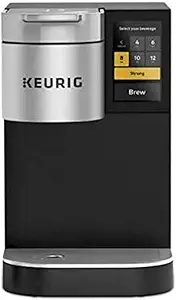 |
| Most Popular A crowd favorite that many people choose with confidence | VEVOR 12-Cup Commercial Drip Coffee Maker |  |
Brew Express BE-110 BS 10-Cup

| Capacity | 10 cups |
|---|---|
| Wattage | 1400 watts |
| Operation Mode | Fully Automatic |
| Human Interface Input | Touchscreen |
| Filter Type | Reusable |
The Brew Express BE-110 BS is a built-in, wall-mountable 10-cup drip brewer designed to tie into a home or commercial water line so you do not need to refill a reservoir. It is fully programmable with a touchscreen and offers adjustable cup selection from a single cup to a full carafe, plus an infrared pause-and-brew sensor so you can remove the carafe mid-cycle without spills. The unit is intended for permanent installation and hard wiring to power, and its self-filling water feed and 1400-watt heater deliver faster brews and consistent water distribution for repeatable results. Practical touches include a reusable filter, soft-blue nightlight, and an improved thermal carafe for better heat retention when serving away from the unit. Limitations are its built-in installation requirement and need for a rough-in box and mounting plate for retrofit, which makes it less suitable for casual counter use or temporary setups.
Best for: Buyers who need a high-throughput, permanently installed brewer that delivers consistent, faster drip coffee for offices, small cafes, or busy home kitchens and value hands-off water management.
Less Ideal for: People who want a portable, plug-and-play countertop machine or who cannot install a dedicated water line and hard-wired power connection.
- Self-filling water feed eliminates manual refilling once plumbed to a supply line
- Fully programmable touchscreen timer lets you schedule a brew from single cup to full carafe
- 1400-watt heater and even water distribution brew faster and more consistent coffee
- Reusable filter and pause-and-brew infrared sensor reduce waste and mess
- Thermal carafe design improves heat retention for serving away from the machine
- Requires hard wiring and a dedicated water line plus rough-in box for installation
- Not portable or suitable for temporary counter placement without additional retrofit parts
Verdict: Choose the Brew Express BE-110 BS when you want a permanently plumbed, programmable 10-cup brewer that delivers fast, consistent drip coffee with hands-off water filling.
NUPANT Dual Drip Commercial Coffee Maker

| Wattage | 3220 watts |
|---|---|
| Voltage | 120 volts |
| Coffee Input Type | ground |
| Filter Type | Paper |
| Capacity | 3.6 liters |
The NUPANT Dual Drip Commercial Coffee Maker is a countertop, fully automatic drip brewer built for busy commercial settings that need continuous hot coffee. It brews a combined 3.6 liters (two 1.8 L stations) and delivers a full brew in about seven minutes while four glass carafes sit on individual warmer plates so fresh batches stay ready for service. The unit supports direct-plumbed auto-filling via a 1.04-inch hose to eliminate manual refilling but also offers a manual fill option when plumbing is not available. Construction uses 304 stainless steel for the housing, funnel, and boiler, and the included paper and stainless filters simplify cleanup. Practical features include separate warmer controls, an overheat protection cutoff, and clear status panels for simple operation. Limitations to note are the exposed glass decanters and hot warmer surfaces that require careful handling, and the machine has no automatic shutoff for the warmers so the operator must turn them off to save energy and reduce risk.
Best for: Operators who prioritize steady high-volume service and workflow efficiency in restaurants, cafeterias, or busy offices and want a simple, plumbable brewer that keeps multiple pots ready.
Less Ideal for: Small low-volume sites or owners who need thermal-insulated dispensers for long off-counter holding should consider other brewers or airpot solutions.
- High-volume output that brews 3.6 L in about seven minutes for fast turnaround
- Direct-plumbed auto-fill option removes manual refilling and keeps water supply steady
- Four individually controlled warmer plates and four decanters let staff keep multiple batches ready
- 304 stainless steel construction and removable filters make cleaning and daily use practical
- No automatic shutoff for warming plates or machine, requiring manual attention to save energy
- Glass decanters are useful for serving but are breakable and require careful handling
Verdict: Choose this brewer when you need a rugged, plumbable dual-station machine that delivers fast, continuous batches and keeps multiple pots hot for busy commercial service.
NUPANT CB-01 12-Cup Coffee Maker

| Capacity | 1.8 liters |
|---|---|
| Wattage | 1620 watts |
| Voltage | 120 volts |
| Filter Type | Paper |
| Human Interface Input | Touchscreen |
The NUPANT CB-01 is a stainless steel commercial drip brewer built for small cafes, offices, and event use where a plumbed water line is helpful but portability is still desired. It brews up to 1.8 liters (12 cups) and can run in automatic fill mode when connected to a water line or in manual pour-over mode when mobility is needed. The illuminated LCD touchscreen offers simple selection between brew modes and two individually controlled warming plates keep two glass decanters hot for serving. Practical touches include a larger basket-style filter and multi-stream spray head for fuller extraction, an anti-drip pour spout, and an overheat protection circuit. At 1620 watts it brews quickly—advertised at about five minutes per full pot—which suits back-to-back service. Limitations to note are the lack of an automatic shutoff, relatively thin glass decanters compared with insulated dispensers, and a reminder to manually turn off warmers to save energy and avoid high surface temperatures.
Best for: Buyers who need a low-cost commercial brewer that can be plumbed into a water line or used portably and who prioritize quick brewing and simple touchscreen controls for moderate-volume service.
Less Ideal for: Operations that require fully automatic safety features, insulated thermal servers, or very high-volume continuous brewing should consider larger or feature-rich commercial brewers instead.
- Plumbed or manual water fill gives flexibility for countertop or hard‑plumbed setups
- Dual individually controlled warming plates for keeping two decanters ready to serve
- Large basket-style filter and multi-stream spray head for stronger extraction
- Touchscreen LCD with selectable brew modes simplifies operation and cleaning
- Glass decanters are not insulated so held coffee can lose heat or freshness faster than thermal dispensers
- No automatic shutoff so operator must manually turn off warmers and machine to save energy and for safety
- Surface of warming plates can reach high temperatures and requires caution during use
Verdict: If you want an affordable, small commercial brewer that can be plumbed or used manually and keeps two pots warm for quick service, this unit delivers practical flexibility for budget-minded operations.
Keurig K-2500 Coffee Maker

| Wattage | 1500 watts |
|---|---|
| Coffee Input Type | K-Cups |
| Capacity | 12 ounces |
| Filter Type | Reusable |
The Keurig K-2500 is a commercial single-serve brewer built for high-use locations and flexible installation. It accepts K-Cup pods, offers five cup sizes up to 12 ounces, and includes a STRONG setting for bolder flavor; a touchscreen makes selection quick and the unit can produce hot or Brew Over Ice beverages in under a minute. This model supports plumbed water for continuous service or an optional 110 oz reservoir when plumbing is not available, and it uses a reusable filter to reduce pod runoff. At 1500 watts and with serviceable modules, it is aimed at easy maintenance and steady performance in offices or break rooms. Trade-offs are that it is a single-serve, pod-based system so it is not suitable for large carafes or full-immersion coffee styles, and routine maintenance and descaling are still required in hard-water environments even with plumbed water. The stainless and ABS construction and commercial rating mean it is built for frequent use, and the touch interface plus fast cycle time make it practical where speed and reliability matter most.
Best for: Buyers who prioritize consistent, high-throughput brewing for offices or small commercial settings and want a unit that can be plumbed in or run from a large reservoir for continuous service.
Less Ideal for: Homes or venues that need multi-cup carafes, specialty espresso or non-pod brewing methods should consider other equipment.
- Plumbed water option for continuous use or optional large reservoir for non-plumbed setups.
- Fast brew time under one minute, useful during busy service periods.
- Touchscreen controls and five cup sizes provide quick, repeatable beverage customization.
- Commercial-rated build with stainless and ABS materials and serviceable modules for easier maintenance.
- Single-serve pod system cannot brew carafes or non-pod brewing methods.
- Requires regular maintenance and descaling in areas with hard water despite plumbed option.
Verdict: Choose the K-2500 when you need a fast, commercial-grade single-serve brewer that can be plumbed for continuous, reliable service.
VEVOR 12-Cup Commercial Drip Coffee Maker

| Capacity | 2.8 liters |
|---|---|
| Operation Mode | Fully Automatic |
| Voltage | 110 volts |
| Filter Type | Reusable |
| Coffee Input Type | ground_coffee |
This VEVOR commercial drip coffee maker is built for small cafés, offices, or light restaurant use where multiple carafes and continuous hot coffee are needed. It uses an automatic water intake system and simple mechanical controls to brew roughly 12 to 13 cups in about six minutes, then keeps brewed coffee warm on three independent warming plates while holding it in three glass carafes. The stainless steel housing and removable stainless steel funnel make cleaning straightforward and improve durability compared with plastic-bodied units, and the reusable filter reduces ongoing consumable costs. Practical limitations are the glass carafes and exterior plates, which require careful handling and regular monitoring to avoid burning or breakage, and the unit is large and heavy compared with single-carafe brewers so it needs a dedicated counter area and 110 V power. Reported customer feedback raises concerns about reliability, so buyers should plan for routine maintenance and check installation of the water intake line.
Best for: Buyers who prioritize fast, high-volume drip brewing and continuous hot coffee service for a small commercial setting and who will inspect user feedback and plan for routine maintenance.
Less Ideal for: People needing a compact, portable brewer or those who want a maintenance-free, heavily reliable industrial-grade system for high-traffic locations.
- Brews a full 12–13 cup pot in about six minutes for quick large-batch brewing
- Three warmer plates and three glass carafes provide continuous hot coffee service
- Stainless steel body and removable stainless steel funnel simplify cleaning and resist wear
- Automatic water intake streamlines refilling when plumbed to a water line
- Glass carafes and exposed warmer plates increase risk of breakage and require careful handling
- Reported reliability issues from user feedback suggest some units may need extra maintenance
- Large, heavy footprint needs a dedicated counter and limits portability
Verdict: Choose this machine if you need fast, multi-carafe drip brewing with built-in warming plates and a plumbable water intake for steady service in a small commercial space.
Choosing the Right Commercial Coffee Maker with Water Line: Key Factors to Consider
Brew Capacity and Recovery Time
Capacity determines how much coffee a machine can produce per hour and directly affects whether you can serve peak demand without delays. Look at both batch size and how quickly the brewer can recover to make the next full batch. Faster recovery matters for continuous-service environments such as busy cafes and conferences.
Also consider whether the machine supports multiple brew cycles at once or staggered brewing. Recovery performance depends on boiler size, heating element power, and pump design, so verify rated throughput and real-world testing data where available.
Water-Line Compatibility and Installation Requirements
A permanent water connection changes installation scope and operating workflow. Check inlet fitting types, required supply pressure, and whether a backflow preventer or pressure regulator is necessary for your local code. Some units need a nearby drain or condensate line depending on boiler or steam use.
Installation complexity affects total cost of ownership. Confirm whether the brewer can be plumbed into existing supply lines without extensive rerouting, if a certified plumber is required, and what clearances are needed for service access.
Build Quality and Commercial-Duty Components
Commercial machines see continuous, repeated use so materials and component quality matter. Metal bodies, stainless-steel brewing assemblies, and industrial-grade pumps and valves last longer under heavy cycles. Prefer machines with replaceable wear parts and rugged controls built for frequent handling.
Durable components reduce unexpected downtime and lower long-term maintenance outlays. Inspect warranty coverage for commercial use and whether consumables like filters are standard sizes that are easy to source.
Ease of Cleaning and Sanitation
Regular cleaning is essential for taste and safety in commercial settings. Machines that allow tool-free access to brew baskets, spray heads, and internal tubing make daily sanitation faster and more reliable. Consider how frequently deep cleaning is required and whether the design minimizes dead legs where coffee oils and scale can accumulate.
Look for clear cleaning cycles or automated rinse options, and verify whether the brewer supports simple descaling procedures compatible with common commercial descalers.
Serviceability and Parts Accessibility
Even the most reliable machines need servicing. Machines designed for easy field repairs speed downtime recovery. Check for modular assemblies, widely available replacement parts, and clear service manuals. Local or regional service networks are an advantage for businesses that cannot tolerate extended outages.
Also confirm whether routine service tasks like pump or gasket replacement can be performed by on-staff technicians or require factory service, and factor in lead times for common replacement parts.
Water Filtration and Flavor Control
Plumbing a brewer directly to a supply line increases the importance of water quality. Hard or heavily chlorinated water shortens component life and negatively affects flavor. Evaluate compatibility with commercial water-filtration systems, including inline filters or softeners, and whether space is available to install filtration upstream.
Proper filtration stabilizes extraction and reduces scale buildup, which lowers maintenance frequency and preserves flavor consistency across service shifts.
Plumbing Basics for a Water-Line Coffee Maker
Hardwiring a commercial brewer requires planning around supply pressure, shutoff valves, and backflow prevention. Most commercial units specify the inlet pressure range and fitting type. Verify local code for required backflow prevention devices and whether an air gap or vacuum breaker is necessary.
You will typically need a dedicated shutoff valve and an accessible service point to isolate the machine for maintenance. If the machine produces steam or has an automatic flush, check whether a drain or condensate line is required and plan routing accordingly.
- Confirm inlet pressure and water quality before selecting a machine
- Install a shutoff valve and accessible service port
- Plan for a drain if the unit requires condensate or automatic flushing
Sizing a Brewer to Your Service Volume
Estimate peak service loads by counting number of hot beverages per hour during busiest shifts. Match peak demand to a brewer's hourly output rather than average daily use. A machine that just meets average demand will create bottlenecks during rushes.
Also consider whether you need continuous brewing or staggered batches. For high-turnover service, choose a brewer with faster recovery and larger boilers. For lower-volume sites, a smaller machine with easier cleaning may be a better fit.
- Measure peak drinks per hour, not daily totals
- Factor in prep time and staff workflows when selecting capacity
Maintenance Routines That Keep Machines Running
Set up a daily and weekly cleaning schedule that includes backflushing, filter replacement, and descaling as dictated by water hardness. Document who is responsible for each task and keep cleaning supplies and replacement parts on hand to avoid service interruptions.
Track maintenance history and component wear to anticipate planned downtime. Preventive maintenance is usually less disruptive and less expensive than emergency repairs in a commercial setting.
- Daily: rinse groups, wipe surfaces, empty grounds
- Weekly: inspect seals, clean spray heads, check filtration
- Monthly: descale if required and verify pump pressure
Space, Ventilation, and Utility Considerations
Commercial brewers with boilers or steam systems generate heat and may require ventilation clearance. Ensure the installation site provides enough clearance for service access and heat dissipation. Keep the unit on a stable, level surface to protect internal seals and pumps.
Utility planning should include not only the water line but also electrical capacity and, where applicable, a condensate drain. Verify that existing electrical circuits meet the brewer's rated requirements to avoid tripped breakers during peak operation.
- Allow manufacturer-recommended clearances for service and ventilation
- Confirm electrical circuit capacity and breaker sizing
- Place brewer on a level, stable surface near water and drain access
Water Filtration Options for Consistent Flavor
Inline carbon filters, sediment filters, and softeners all address different water problems. Carbon filtration reduces chlorine and off-flavors, while scale control systems protect boilers and heating elements. Choose a filtration strategy based on local water tests.
Plan filtration placement so it is easy to maintain. Filters that are difficult to access tend to be neglected, which undermines both flavor and equipment lifespan.
- Test local water hardness and chlorine levels before choosing filtration
- Place filters upstream of the brewer with easy access for replacement
How We Chose the Best Commercial Coffee Maker with Water Line
We prioritized machines designed for continuous service and straightforward plumbing because a hardwired water feed changes how a commercial brewer is used day to day. Key evaluation criteria included brew capacity and recovery time, which determines how often staff must wait between batches; water-line compatibility and installation complexity, which affects upfront cost and required trades work; long-term durability and component quality, especially boilers, pumps, and commercial-grade fittings; ease of cleaning and routine maintenance, since frequent sanitation reduces downtime; and serviceability and parts availability, because rapid repairs keep a business running. We excluded consumer-grade or portable models without dedicated plumbing options and any machines that lack clear commercial-duty specifications. We also filtered out units that require specialized, proprietary consumables that are impractical for high-volume locations. The final picks reflect a balance of throughput, plumbing friendliness, and maintainability suitable for cafes, offices, or catering operations. These are the dimensions we used to score each candidate for inclusion in this guide.
Our full evaluation process is outlined in our review methodology.
FAQ
Do commercial coffee makers with water lines need a water filter?
Often yes. Water filtration protects internal components from scale and removes chlorine or off-flavors. The exact filtration needed depends on local water hardness and quality.
Can I connect a commercial brewer to a standard building water line myself?
Usually a licensed plumber should perform the final connection to comply with code and install required backflow prevention. Some preparatory steps can be done by staff, but final hookup and pressure testing are typically handled by a professional.
How often should I descale a commercial brewer on a water line?
Descaling frequency depends on water hardness and filtration. In hard-water areas, monthly descaling is common. With effective softening or scale-reduction systems, descaling intervals may be extended.
What maintenance tasks should staff perform daily?
Daily tasks usually include rinsing brew heads, emptying and cleaning grounds receptacles, wiping exterior surfaces, and checking filter indicators. These routines preserve flavor and reduce the need for deeper service.
Will a plumbed brewer reduce downtime during busy periods?
Yes. Eliminating manual refilling reduces interruptions between batches and supports more consistent throughput. However, plumbing does not replace proper capacity planning and recovery considerations.
Final Verdict
When choosing a commercial coffee maker with water line, prioritize machines that match your peak service volume and offer straightforward plumbing compatibility. Balance high throughput with maintainability by selecting equipment with durable components, accessible service points, and filtration that suits your water supply. Remember that installation logistics and routine maintenance will strongly influence total operating uptime. Focus on verified capacity, easy cleaning, and local serviceability to make a confident, long-term choice for a busy commercial environment.