
Note: This article contains affiliate links. If you click on these links and make a purchase, we may earn a small commission at no extra cost to you. This helps support our research and content. Read our full affiliate disclosure here.
If you plan to grind large quantities of meat at home or want restaurant-style control over texture and grind size, selecting a commercial-grade meat grinder for home use matters. Commercial units bring higher motor power, metal construction, and better feed systems than typical consumer models, but not every heavy-duty grinder suits a home kitchen. This guide shortlists the top options that bridge professional capability and domestic practicality, and explains the specifications that affect performance, cleanup, and long-term reliability. Below you will find curated picks and clear evaluation criteria to help you decide which commercial grinder best fits your home workflow.
Top Picks at a Glance
| Best Overall The best all-around choice for most situations | LEM BigBite #22 Meat Grinder |  |
| Best Quality Built to a higher standard if you want something more solid | Weston Pro Series #12 Meat Grinder |  |
| Best Value The sweet spot between price and what you get | STX Turboforce II 4000 Meat Grinder |  |
| Best Budget The cheapest option that still gets the job done reliably | CHEFFANO Meat Grinder AZ-MG091DG |  |
| Top Rated A top-rated pick with lots of positive feedback | LEM BigBite #8 Meat Grinder |  |
| Most Popular A crowd favorite that many people choose with confidence | STX Turboforce 3000 Meat Grinder |  |
| Best Seller A high-volume bestseller chosen again and again | Aiheal Electric Meat Grinder MG-2430RB |  |
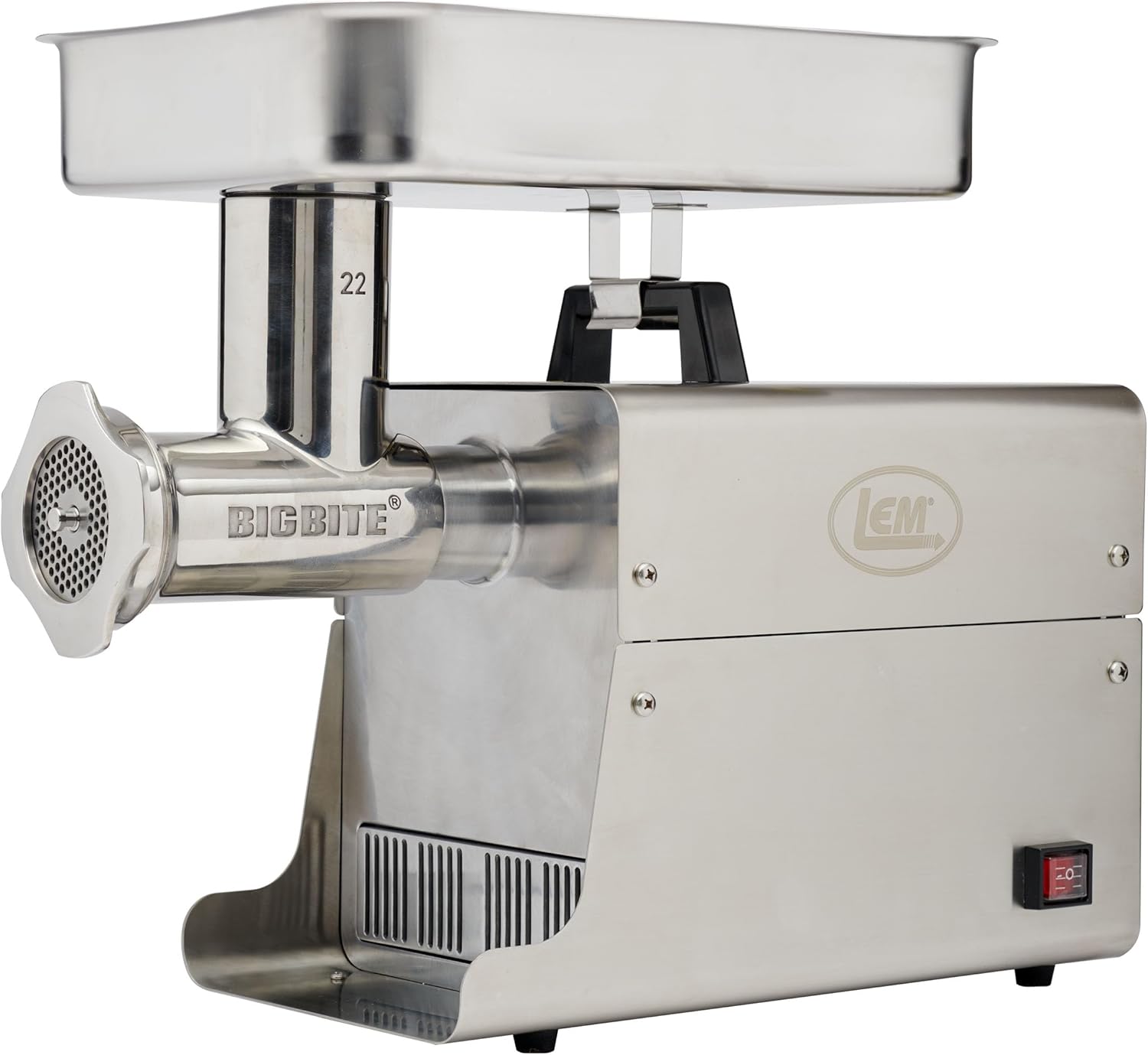
LEM BigBite #22 Meat Grinder
| Power source | Corded Electric |
|---|---|
| Motor | 1.0 HP |
| Capacity | 13 pounds per minute |
| Material Type | Stainless Steel |
The LEM BigBite #22 is a heavy‑duty, stainless steel electric meat grinder built to bring commercial-style capacity into a home kitchen. With a 1.0 HP motor and large-diameter throat the auger pulls big cuts through quickly, making it suited for processing bulk batches of beef, pork, lamb, venison and even raw chicken bones. It ships with useful accessories — coarse and fine plates, a knife and stuffing tubes — and a built-in storage drawer keeps plates and bits handy. Permanently lubricated motor parts and mostly stainless construction simplify operation and cleaning since the head disassembles for washdown. Practical benefits include a high throughput (up to 13 lb/min), quieter operation thanks to noise-dampening design, and included sausage-stuffing capability. The machine is heavy and intended for stationary use, so it is best for serious home butchers, hunters, or cooks who will grind large quantities regularly rather than occasional countertop use, and it requires sufficient space and a solid surface to run safely.
Best for: Buyers who process large volumes of meat regularly—hunters, home butchers, or cooks buying in bulk—who want commercial performance and built-in sausage making capability.
Less Ideal for: If you only grind small, occasional batches or need a lightweight, portable countertop appliance, this industrial‑scale grinder is overkill and a poor fit.
- Commercial‑grade stainless steel construction for durability and food safety
- 1.0 HP motor and BigBite throat for high throughput and efficient feeding of large cuts
- Includes plates, knife, stomper and stuffing tubes for burgers and sausage making out of the box
- Permanently lubricated motor and disassemblable head make maintenance and cleaning straightforward
- Noise-dampening design reduces operating sound compared with similar heavy-duty grinders
- Heavy, bulky unit intended for a permanent spot rather than frequent countertop moving
- Designed for high volume use which is more than most casual cooks need
Verdict: Choose the LEM #22 BigBite if you need true commercial‑style grinding capacity and sausage‑making features in a durable home machine.
Weston Pro Series #12 Meat Grinder

| Wattage | 750 watts |
|---|---|
| Capacity | 9 pounds |
| Voltage | 120 volts |
| Power Source | Corded Electric |
The Weston Pro Series #12 is a heavy-duty electric meat grinder built to handle frequent, high-volume grinding at home or small commercial settings. Its air-cooled, permanently lubricated 1 hp (750 watt) motor and rifled-head, offset throat design push meat through quickly—about 6 to 9 pounds per minute—while stainless steel construction and precision steel gears keep operation quiet and durable. The unit includes practical accessories: coarse and fine plates, a grinder knife, a patented auger-grabbing stomper, a storage tray with cover, and a sausage stuffer kit with four funnel sizes for making links and snack sticks. Built-in conveniences like the knife sharpener and nested storage make prep and cleanup easier, and the grinder disassembles for cleaning and storage. Trade-offs are the machine s bulk and weight which require a dedicated counter or cart and the corded design that limits placement to near an outlet. For anyone wanting fast, factory-quality grinding and integrated sausage-making tools, this model delivers robust, reliable performance.
Best for: Buyers who prioritize robust, high-throughput grinding and want an integrated sausage-making solution for frequent home or small-scale commercial use.
Less Ideal for: People with very limited counter space or those who need a lightweight, portable grinder for occasional use should consider smaller, more compact models.
- Powerful 1 hp (750 W) motor for continuous, high-volume grinding
- Includes coarse and fine stainless steel plates, knife, and sausage stuffer kit with four funnel sizes
- Rifled-head and offset throat design grinds quickly (6–9 lbs/min)
- Built-in knife sharpener, patented auger-grabbing stomper, and nested storage improve usability and cleanup
- Heavy and bulky, requiring a dedicated workspace or cart
- Corded design limits placement and mobility
Verdict: Choose this grinder when you need a factory-quality, high-output machine with built-in sausage-making accessories for heavy home or small commercial use.
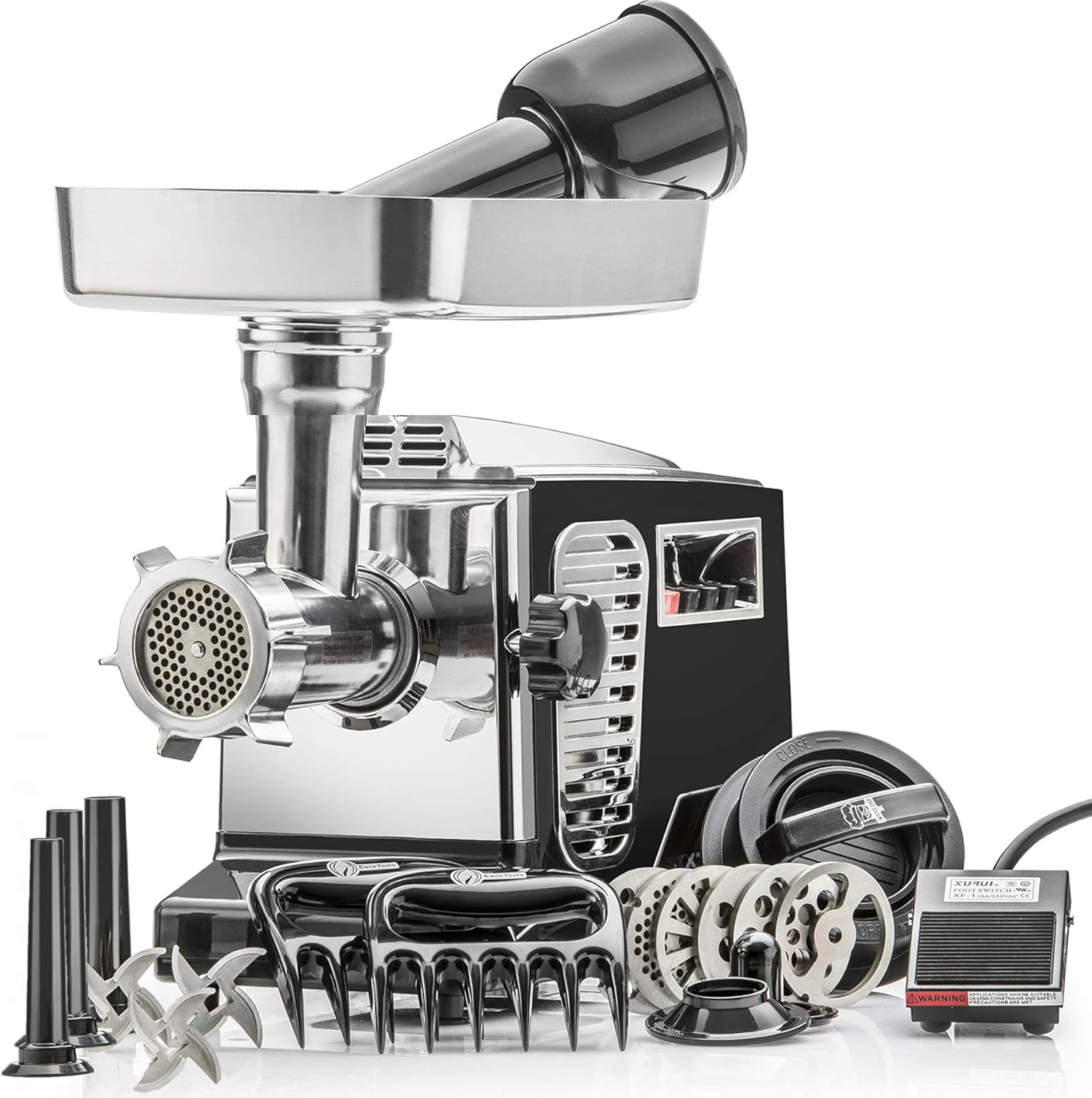
STX Turboforce II 4000 Meat Grinder
| Wattage | 2000 watts |
|---|---|
| Capacity | 3 pounds |
| Voltage | 120 volts |
The STX Turboforce II 4000 is a high-capacity electric meat grinder built for home users who want near-commercial throughput. Its 2000-watt motor and patented air-cooled design drive a size No.12 grinding head and a large tray that holds about 3 pounds, enabling continuous grinding rates advertised around 220–260 pounds per hour depending on plate choice and meat. The unit includes multiple grinding plates, three stainless cutting blades, sausage stuffing tubes, a kubbe attachment, a foot pedal for hands-free operation, meat claws and a patty press so you can go from coarse grind to stuffed links or formed patties without extra purchases. Practical features like a circuit breaker and heavy-gauge metal head reduce overheating and wear during long runs, while the ability to process soft bones expands its use beyond just muscle meat. Trade-offs are its substantial size and weight compared with countertop hobby grinders and the learning curve to disassemble and clean many metal parts after heavy use. For buyers wanting a robust, near-commercial grinder for frequent large batches, this provides factory-quality power and accessories in a home package.
Best for: Home cooks who grind frequently or in large batches and want near-commercial power plus built-in sausage and patty accessories to streamline meal prep.
Less Ideal for: Casual users who only grind small amounts occasionally or need a compact, lightweight unit for easy storage.
- High 2000-watt motor for fast, continuous grinding
- Size No.12 metal grinding head with multiple plates for coarse-to-fine control
- Includes wide accessory set: sausage tubes, kubbe attachment, meat claws, patty press and foot pedal
- Patented air-cooled system and circuit breaker reduce overheating during long runs
- Larger and heavier than small countertop grinders which affects storage and portability
- Multiple metal parts require regular disassembly and thorough cleaning after each use
Verdict: Choose the STX Turboforce II 4000 if you need near-commercial grinding speed and a full set of sausage and burger accessories for heavy home use.
CHEFFANO Meat Grinder AZ-MG091DG

| Material Type | Stainless Steel |
|---|---|
| Power Source | Corded Electric |
| Capacity | 180 pounds |
| Included Components | Sausage maker, food pusher, 2 kubbe attachments, 2 blades, 3 cutting plates |
The CHEFFANO AZ-MG091DG is a heavy-duty-style home meat grinder that combines a stainless steel body with a copper motor and a full accessory kit to handle regular at-home grinding tasks. It ships with three cutting plates (fine, medium, coarse), two blades, sausage tubes, kubbe attachments and a food pusher so you can grind, stuff sausages and form kibbe without buying extras. The manufacturer rates the motor at 350W continuous with advertised peaks up to 2800W, and the updated auger design aims to reduce heat buildup and keep meat texture fresher while grinding roughly 3 pounds per minute. Controls include a forward and reverse function for clearing jams, and most removable parts are hand-washable for easier cleaning. Practical downsides are that it is not dishwasher-safe and the peak wattage claim is a momentary figure rather than continuous power, so expect household-scale throughput rather than commercial continuous operation. For home cooks who want a robust grinder with a full attachment set, it delivers good capability for the price.
Best for: Home cooks looking for a budget-friendly, well-equipped grinder that handles regular batch grinding, sausage making, and kibbe preparation without buying separate accessories.
Less Ideal for: People who need a true commercial continuous-duty grinder for high-volume or restaurant use should choose a purpose-built commercial machine instead.
- Includes three stainless steel cutting plates, two blades and sausage and kubbe attachments for multiple uses
- Stainless steel construction and food-grade parts that are removable for cleaning
- Forward and reverse controls help clear jams quickly
- Updated auger design reduces heat buildup to preserve meat texture
- Not dishwasher-safe, so attachments require hand washing and drying
- Peak wattage is a short-term value rather than continuous commercial power
Verdict: A cost-conscious home cook's choice for a full-featured stainless steel grinder that handles grinding, sausage stuffing and kibbe making without extra accessories.
LEM BigBite #8 Meat Grinder

| Horsepower | 0.50 HP |
|---|---|
| Capacity | 7 pounds per minute |
| Material Type | Stainless Steel |
| Power Source | electric |
The LEM BigBite #8 is a heavy-duty stainless-steel electric grinder built for regular home use and small-batch commercial-style jobs. It uses a 0.5 HP motor to grind about 7 pounds per minute, and includes three plates, blade, stomper, and sausage stuffing tubes so you can make burgers, sausage, pet food, or process game. The machine disassembles for cleaning and its permanently lubricated motor and noise-dampening design make operation smoother and quieter than many consumer models. Because the body and grinding parts are stainless steel, the unit feels durable and is straightforward to maintain. Limitations include the 0.5 HP motor which is sized for small to medium batches rather than continuous heavy commercial throughput, and the unit is not intended for grinding bones. At its weight and footprint it is best set on a dedicated prep station rather than moved frequently. If you want a robust, long-lasting grinder for frequent home use and occasional larger batches, this model delivers the core features you need without commercial-level complexity.
Best for: Buyers who prioritize a reliable, workhorse grinder for regular home use or processing game and bulk meat want a durable, serviceable machine they can depend on over years of use.
Less Ideal for: Those needing high-capacity continuous commercial production or who must frequently move a lightweight unit between locations should consider a different model.
- Stainless-steel construction for durability and easy cleaning
- Includes three grinding plates, knife, stomper, and sausage stuffing tubes for versatile use
- 0.5 HP motor capable of about 7 pounds per minute for steady small-to-medium batches
- Noise-dampening design and permanently lubricated motor for smoother, lower-maintenance operation
- Not designed for grinding bones or continuous heavy commercial throughput
- Relatively heavy and sizable, so it is not ideal for frequent relocation
Verdict: A rugged, stainless-steel grinder built to provide dependable, long-lasting performance for regular home and small-batch commercial-style meat processing.
STX Turboforce 3000 Meat Grinder

| Wattage | 1800 watts |
|---|---|
| Capacity | 3 pounds |
| Voltage | 110 volts |
The STX Turboforce 3000 is a heavy-duty home meat grinder built to process large batches of ground meat for sausages, burgers, and kubbe. It pairs a size #12 aluminum grinding head and an extra-large hopper with a high-torque motor that runs between about 800–1200W under load but is rated to 3000W peak, allowing the unit to grind an estimated 180–240 pounds per hour when meat is prepped correctly. The package includes three stainless cutting blades, five grinding plates, three stuffing tubes, a kubbe attachment, claws for handling meat, and a burger press, so you can switch between fine/coarse grinds and make sausages or kibbe without buying extras. Practical limits: the manufacturer explicitly warns against grinding bones, tendons, or non-meat items, and the unit is intended for home rather than commercial continuous use. Expect a sizable footprint and weight consistent with a robust cast-aluminum build, so plan counter space accordingly. For home cooks who prepare large quantities or make charcuterie and sausages, the Turboforce offers a lot of capacity and useful accessories in one kit.
Best for: Buyers who need a rugged, high-capacity home grinder for frequent batch grinding, sausage making, and hobby charcuterie and who prioritize proven customer feedback and durable accessories.
Less Ideal for: People who need a grinder for commercial continuous production or those who want to process bones, hard connective tissue, or non-meat ingredients.
- Large hopper and size #12 head for high-volume grinding
- Includes multiple grinding plates, stuffing tubes, kubbe attachment and burger press for versatile projects
- Stainless steel cutting blades and aluminum grinding head for durability
- High-torque motor providing strong performance under load
- Not designed to grind bones, tendons, or non-meat items
- Intended for home use and not built for continuous commercial operation
Verdict: A rugged, high-capacity home meat grinder that bundles the plates and sausage/kubbe attachments needed to grind large batches and make sausages at home.
Aiheal Electric Meat Grinder MG-2430RB

| Capacity | 44 pounds |
|---|---|
| Material Type | Stainless Steel |
| Power Source | ELECTRIC |
| Included Components | 2 Blades, 3 Plates, 3 Sausage Tubes, 1 Pusher |
This Aiheal grinder is a heavy-duty home unit that pairs a compact stainless steel housing with a high-torque motor (300W nominal, 3200W peak locked power) to handle regular batch grinding and sausage making. It ships with three grinding plates (2mm, 5mm, 7mm), two cutting blades, and three sausage tubes so you can grind fine to coarse meat and fill casings without buying extras. Use it for beef, pork, chicken, venison or fish; the pusher and an R unclogging button simplify feeding and clearing jams. Safety features include an overload protection that shuts the unit off if it overheats. The removable cutting head and plates make cleaning straightforward, though the manufacturer advises hand washing rather than the dishwasher. For buyers seeking near-commercial throughput in a home kitchen, this unit delivers strong performance and useful accessories, but expect some noise and the need to portion meat to fit the feed throat and avoid frequent clogs on very fatty mixes.
Best for: Buyers who want a robust, near-commercial-capacity grinder for regular home use and who prioritize durability, safety features, and the ability to make sausages and varied grind sizes.
Less Ideal for: Those who need a whisper-quiet unit, fully dishwasher-safe parts, or an inline commercial machine rated for continuous industrial use should consider other options.
- Powerful motor with high locked peak power for faster batch grinding
- Includes three plates and three sausage tubes for versatile grind sizes and sausage making
- Stainless steel construction and removable parts for durability and easier cleaning
- Built-in overload protection and an unclogging function for safer operation
- Not dishwasher-safe; parts must be hand dried after washing
- Can be noisy during heavy use
Verdict: Aiheal's grinder is a durable, feature-packed home unit that gives near-commercial grinding speed and versatile sausage-making accessories for cooks who value reliability and safety.
Choosing the Right Commercial Meat Grinder for Home Use: Key Factors to Consider
Motor Power and Continuous Duty
A grinder's motor rating determines how much meat you can push through and how well the unit handles dense or partially frozen cuts. Higher horsepower motors with continuous-duty specifications run longer without overheating, which matters if you plan frequent batch grinding or processing large roasts. For home use, choose a motor that matches your typical batch size; excessively large motors add weight and power requirements, while undersized motors will stall or overheat.
Also consider the motor type and cooling design. Units with better ventilation or thermal protection will tolerate longer runs and are easier to service. If you plan to use the grinder for sausage making or long continuous sessions, continuous-duty ratings and thermal cutouts are essential to avoid frequent stops and potential damage.
Build Materials and Gear Construction
Materials affect longevity, food safety, and cleaning. Stainless-steel housings, trays, and feed tubes resist corrosion and are easier to sanitize than painted or plated parts. Metal gears and augers are more robust under repeated loads than plastic components and reduce the chance of premature wear or stripping.
Pay attention to the finish and weld quality on contact surfaces. Smooth, well-machined components minimize places where meat and fat can lodge, making routine cleaning more effective. Robust construction also improves stability during operation and reduces vibration that can accelerate wear.
Throughput, Feed Design, and Versatility
Throughput is how much meat the grinder can process per minute. Higher throughput saves time when processing large batches but usually requires a wider feed throat and stronger motor. Feed design, including the size and angle of the feed tray and pusher, affects how easily meat is fed into the auger without clogging.
Versatility considerations include the availability of different plate sizes, sausage stuffing attachments, and reverse functions to clear jams. If you expect to switch between coarse grind for chili and fine grind for sausages, confirm the grinder supports the plate sizes you need and that accessory changes are straightforward.
Ease of Cleaning and Maintenance
Grinding raw meat generates fat and small particles that can trap bacteria if not cleaned thoroughly. Removable, tool-free components speed cleaning and reduce the time meat sits on contact surfaces. Parts that are dishwasher-safe or have smooth surfaces reduce the risk of residual buildup.
Maintenance also includes access to replaceable parts like blades and plates, and the ability to lubricate or inspect gears. A design that allows quick disassembly without specialized tools suits home users who prefer minimal downtime between batches.
Safety Features and Stability
Safety features lower the risk of injury and damage. Features to look for include overload protection, thermal cutoffs, and a reverse function to clear jams. Well-designed guards and a secure feed pusher reduce the chance of accidental contact with cutting elements.
Stability is part of safety. Non-slip feet, a low center of gravity, and a solid mounting or clamping system prevent the unit from moving during high-load grinding. For home kitchens, units that remain put on counters and that do not require permanent installation are preferable.
Size, Power Requirements, and Kitchen Fit
Commercial-style grinders vary in footprint and electrical requirements. Larger models may need dedicated circuits or higher voltages, which can limit placement in a typical home kitchen. Check cabinet clearance, countertop weight capacity, and cord length before purchase.
Compact but capable designs are often the best compromise for home use, offering commercial features in a smaller footprint. Consider storage needs and whether the grinder will remain on the counter or be stored between uses.
How to Match Grinder Capacity to Your Needs
Estimate how much meat you process in a typical session and how often you plan to use the grinder. Casual users who grind occasionally may be fine with smaller-capacity commercial-style units, while hunters or those preserving whole cuts will want higher throughput and larger hoppers.
Also factor in future needs. If you expect to process larger volumes seasonally, choose a grinder with a bit more capacity than your current average so you will not be strained during peak use.
- Small households: prioritize compact size and easy cleaning
- Regular batch processors: prioritize motor power and throughput
- Occasional heavy users: prioritize durability and spare parts availability
Setting Up and Using a Commercial Grinder at Home
Place the unit on a sturdy, level surface and confirm the electrical supply matches the grinder's requirements. Keep the work area cold and avoid letting meat sit at room temperature while feeding it into the grinder to minimize bacterial growth and to make grinding easier.
Cut meat into consistent, small strips and remove large bones and excessive sinew before grinding. Use the reverse function if the auger jams, and never use hands to clear the throat while the motor is powered.
- Pre-chill meat and equipment for cleaner cuts
- Feed meat in uniform pieces for consistent grind
- Use the pusher; never use fingers to press meat into the feed
Cleaning Routine for Food Safety
Disassemble all food-contact parts immediately after use and rinse with warm water to remove fat and residue. Wash components with soap and hot water, and sanitize according to food-safety recommendations before reassembly.
Dry and store parts thoroughly to prevent rust on metal components. Periodically inspect blades, plates, and seals for wear and replace them when they show dulling or distortion to maintain grind quality and safety.
- Rinse immediately to avoid hardened residue
- Sanitize and air-dry parts before storage
- Inspect cutting surfaces regularly for damage
Common Upgrades and Accessories Worth Considering
Plates in multiple hole sizes expand versatility between coarse, medium, and fine grinds. Sausage stuffing funnels and different auger designs can make specialized tasks easier and reduce manual work.
Spare cutters and plates, a dedicated cleaning brush, and replacement gaskets are small investments that keep a grinder running smoothly. Consider a dedicated stand or clamp if you want added stability on less stable counters.
- Multiple plate sizes for varied textures
- Sausage funnels for charcuterie projects
- Spare blades and gaskets for quick maintenance
Troubleshooting Jams and Performance Drops
Jams usually result from overly large pieces, sinew, or partially frozen meat. Stop the motor, use the reverse function to clear the blockage, and then feed smaller pieces. Avoid forcing the feed; repeated stalls can overstress the motor.
If output quality declines over time, check for dull blades or warped plates. Replace consumable cutting elements and inspect gears for play or damage. Regular cleaning and correct assembly are often the simplest fixes.
- Use reverse to clear jams safely
- Trim sinew and connective tissue before grinding
- Replace dull blades and check plate alignment
How We Chose the Best Commercial Meat Grinder for Home Use
We focused on machines built to handle frequent or high-volume grinding while remaining manageable in a home kitchen. Our selection prioritized motor power and continuous-duty ratings so units can process larger batches without overheating. Build materials and construction were assessed because stainless-steel housings and metal gears improve durability and food safety. Feed system design and throughput mattered for efficient grinding and consistent texture, especially when switching between sausage making, coarse, and fine grinds. Ease of cleaning and disassembly was a key filter since operators cleaning at home need tools that break down quickly and resist rust. Safety features and stable mounting were also considered to reduce the risk of jams and mishandling. We excluded lightweight hobby grinders and purely commercial floor models that require dedicated electrical or plumbing infrastructure incompatible with typical home kitchens. The final list emphasizes units that combine commercial-class components with sizes, voltages, and serviceability appropriate for domestic use.
Our full evaluation process is outlined in our review methodology.
FAQ
Can a commercial grinder run continuously at home?
Many commercial-style grinders have continuous-duty motors, but continuous running depends on the unit's rating and cooling. For frequent long sessions choose a grinder explicitly rated for continuous duty and monitor temperature to avoid overheating.
How often should I sharpen or replace the cutting blade?
Blade sharpness depends on use frequency and the types of meat processed. With regular use, inspect blades every few months and replace or sharpen when you notice increased effort, inconsistent grind, or tearing rather than cutting.
Are stainless-steel components essential?
Stainless-steel components are not strictly required but are highly recommended for corrosion resistance, easier cleaning, and improved food safety. Non-stainless parts may require more careful drying and maintenance to avoid rust.
Is it safe to grind partially frozen meat?
Partially frozen meat grinds more cleanly than fully thawed meat and can yield better texture, but large frozen chunks can jam the auger and strain the motor. Trim to small, firm pieces and feed slowly to avoid stalls.
How do I know if a grinder will fit my kitchen?
Check the unit's footprint, height, and cord length against your countertop space. Confirm electrical requirements so the grinder works with standard home outlets and ensure there is room to disassemble and clean parts nearby.
Final Verdict
Selecting a commercial meat grinder for home use is a balance between power, durability, and practical kitchen fit. Prioritize motor capacity and continuous-duty ratings if you process large batches, and favor stainless-steel construction and easy disassembly for food safety and long-term reliability. Consider throughput and accessory options based on the types of recipes you prepare. By weighing these tradeoffs, you can choose a grinder that delivers professional-style results while remaining manageable in a home kitchen.