
Note: This article contains affiliate links. If you click on these links and make a purchase, we may earn a small commission at no extra cost to you. This helps support our research and content. Read our full affiliate disclosure here.
If you have limited counter space but still want café-style espresso, choosing the right compact espresso machine matters. A well-designed compact espresso machine balances size, extraction quality, and everyday usability so you can pull consistent shots without sacrificing a usable kitchen layout. This guide shortlists the top compact models that fit small kitchens and apartments and evaluates them on factors that matter for daily use, including extraction consistency, steaming capability, and routine upkeep. Read on to find the compact espresso machine that matches how you drink and maintain espresso at home.
Top Picks at a Glance
| Best Overall The best all-around choice for most situations | Breville Bambino BES450BSS | 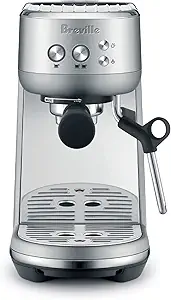 |
| Best Quality Built to a higher standard if you want something more solid | Breville Barista Express BES870XL |  |
| Best Value The sweet spot between price and what you get | AERCANA ST-699B Espresso Machine |  |
| Top Rated A top-rated pick with lots of positive feedback | Aromaster AREM26 Espresso Machine |  |
| Most Popular A crowd favorite that many people choose with confidence | CASABREWS CM5418 Espresso Machine |  |
| Best Seller A high-volume bestseller chosen again and again | Gevi 20 Bar Espresso Machine ECMG0 | 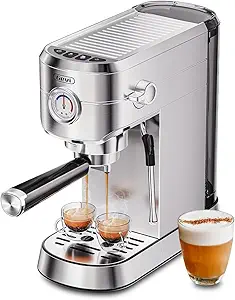 |
Breville Bambino BES450BSS

| Operation Mode | Semi-Automatic |
|---|---|
| Wattage | 1560 watts |
| Coffee Input Type | Ground |
| Capacity | 47 fluid ounces |
| Filter Type | Reusable |
The Breville Bambino is a compact semi-automatic espresso machine aimed at delivering café-style shots and milk drinks on a small countertop. It uses a ThermoJet heating system and PID temperature control to reach extraction temperature in about 3 seconds, so you can pull shots almost immediately. The 54mm portafilter accepts a full-size dose for richer extraction and the machine offers low-pressure pre-infusion followed by 9-bar extraction for balanced flavor. A manual steam wand produces microfoam suitable for latte art once you learn the technique, and included single- and dual-wall filter baskets plus tamper and milk jug make it usable out of the box. Because it is small, it fits tight kitchens while still offering serious brewing features, but it lacks an integrated grinder so you will need a separate grinder for best results. The water capacity is modest and the unit is aimed at one to two daily users rather than heavy commercial-style throughput. For buyers who want fast heat-up, precise temperature control, and a real steam wand in a compact package, the Bambino is a strong choice.
Best for: Buyers who want a compact machine that prioritizes quick heat-up, precise temperature control, and real steam-wand milk texturing for everyday café-style drinks at home.
Less Ideal for: People who want an all-in-one appliance with a built-in grinder or those who need high-volume output for large households or frequent entertaining.
- Very fast ThermoJet heat-up time for near-instant readiness
- PID temperature control for more consistent extraction
- 54mm portafilter supports fuller 18–19g dosing for richer shots
- Manual steam wand capable of producing microfoam for latte art
- Compact footprint that fits small countertops
- No built-in grinder so a quality grinder is required separately
- Limited water reservoir capacity for multiple back-to-back drinks
Verdict: The Bambino gives compact, near-instant barista-quality espresso and true steam-wand microfoam for home users who value speed and precise temperature control.
Breville Barista Express BES870XL

| Wattage | 1600 watts |
|---|---|
| Voltage | 120 |
| Coffee Input Type | whole_beans |
| Filter Type | Reusable |
| Capacity | 1 cups |
The Breville Barista Express BES870XL combines a built‑in conical burr grinder, 54mm portafilter, PID temperature control, and a powerful steam wand into a compact countertop machine for serious home baristas. You grind fresh beans directly into the portafilter using one of 16 grind settings, dose and tamp with the included tools, then extract espresso using low‑pressure pre‑infusion for more balanced flavor and a Thermocoil heating system for consistent brew temperature. The steam wand produces fine microfoam for lattes and cappuccinos, but it is manually operated so there is a learning curve to texturing milk well. Practical benefits include precise grind and dose control, reusable filters, and robust stainless steel construction that handles daily use. The machine is compact enough for small kitchens but still requires routine cleaning and occasional descaling; integrated grinder maintenance and the manual tamping workflow add steps compared with push‑button superautomatics. For buyers prioritizing control and espresso quality in a relatively small footprint, the Barista Express delivers café‑grade results once you learn the technique.
Best for: Home users who want hands‑on control over grind, dose, and milk texturing to produce café‑quality espresso in a compact counter footprint and are willing to learn barista techniques.
Less Ideal for: People who want push‑button, maintenance‑free espresso or fully automatic milk steaming should consider fully automatic machines instead.
- Integrated conical burr grinder with 16 grind settings for fresh, dose‑controlled shots
- PID digital temperature control and Thermocoil heating for stable extraction temperature
- 54mm stainless steel portafilter and single/dual wall filter baskets for flexible dosing
- Powerful steam wand capable of creating microfoam for latte art
- Durable stainless steel build and included barista tools (razor, tamper, scoop)
- Manual tamping and steam wand require practice to master milk texturing and shot consistency
- Built‑in grinder increases cleaning and maintenance compared with grinderless machines
Verdict: Choose the Barista Express if you want a compact, performance‑focused machine that grinds, doses, and steams to deliver café‑quality espresso at home.
AERCANA ST-699B Espresso Machine

| Output Pressure | 20 bar |
|---|---|
| Wattage | 1450 watts |
| Operation Mode | Semi-Automatic |
| Capacity | 1 liters |
| Coffee Input Type | Ground |
The AERCANA ST-699B is a compact semi-automatic espresso maker designed to deliver café-style shots and steamed milk on a small countertop. It uses a 20-bar pro-pump and visible pressure gauge to extract crema-rich espresso from ground coffee, and a 1450 W rapid-heating system that reaches brewing temperature quickly. Typical use is single-serve espresso, americano, or milk-based drinks; the steam wand produces dry steam for frothing microfoam and latte art, while the removable 34 oz tank and detachable drip tray make refilling and cleaning straightforward. Notable extras include an auto shut-off, cup warmer, and hot water dispenser. Practical benefits are quick heat-up for busy mornings and a small footprint that fits tight kitchens or office desks. Important limitations are that it is a semi-automatic unit so shots require manual dosing tamping and extraction control, and users seeking precise temperature profiling or integrated grinders will need a more advanced machine. The stainless steel surfaces wipe clean but the machine still requires routine descaling and wand maintenance to keep steam performance consistent.
Best for: Buyers who want a compact, countertop-friendly espresso machine that delivers quick, crema-forward shots and capable milk frothing without taking up much space or time.
Less Ideal for: Home baristas who want an all-in-one setup with an integrated grinder or users who need programmable temperature control and automated dosing.
- 20-bar pump with visible pressure gauge for consistent extraction
- Powerful steam wand that creates fine microfoam for lattes and cappuccinos
- Rapid 1450 W heating system that preheats in seconds
- Removable 34 oz water tank and detachable drip tray for easy filling and cleaning
- Semi-automatic operation requires manual dosing and tamping, which adds a learning curve
- No built-in grinder or programmable temperature controls for advanced users
Verdict: Choose the AERCANA ST-699B if you want a small, fast-heating semi-automatic espresso machine that consistently produces crema-rich shots and reliable milk froth on a compact countertop.
Aromaster AREM26 Espresso Machine

| Power | 1400W |
|---|---|
| Pump Pressure | 20-Bar |
| Water Tank Capacity | 37 fluid ounces |
| Special Features | PID Temperature Control, Pre-Infusion, One-Touch Descaling |
The Aromaster AREM26 is a compact semi-automatic espresso machine intended for daily home use where reliable, café-style drinks are wanted without a large footprint. It brings a 20-bar pump, PID temperature control and fast 1400W heat-up together to produce consistent espresso shots with good crema, while a 360° swivel steam wand makes steaming milk for lattes and cappuccinos straightforward. Practical touches include a removable 37 oz water tank for easy refilling, one-touch descaling for maintenance, pre-infusion for more even extraction, and a cup warmer on top. The machine supports back-to-back brewing thanks to its dual-circuit design, so making multiple drinks in succession is practical. On the downside, it is a semi-automatic unit so you will need to manage dosing and tamping yourself, and its compact size limits the steam capacity compared with larger prosumer machines. Noise is reported low, and safety features such as anti-dry burn protection and auto shut-off add peace of mind for everyday reliability.
Best for: Buyers who prioritize a dependable, compact espresso machine that delivers consistent shots and easy upkeep for everyday home or small-office use.
Less Ideal for: Those wanting a fully automatic, push-button milk system or a high-volume prosumer machine for heavy commercial use should look elsewhere.
- PID temperature control and low-pressure pre-infusion for consistent extraction and flavor
- Fast 1400W heat-up and dual-circuit design allow quick transitions between shots and drinks
- Removable 37 oz water tank and one-touch descaling make regular maintenance simple
- 360° swivel steam wand with heat-resistant grip simplifies milk frothing and latte prep
- Built-in safety features including anti-dry burn protection and auto shut-off
- Semi-automatic operation requires manual dosing and tamping, which has a learning curve
- Compact capacity limits steam output and may be slower for many consecutive milk drinks
Verdict: Aromaster AREM26 is a compact, reliability-focused espresso machine that delivers consistent shots and easy maintenance for daily home use.
CASABREWS CM5418 Espresso Machine
| Operation Mode | Semi-Automatic |
|---|---|
| Wattage | 1350 watts |
| Output Pressure | 20 bar |
| Coffee Input Type | ground_coffee |
| Filter Type | Reusable |
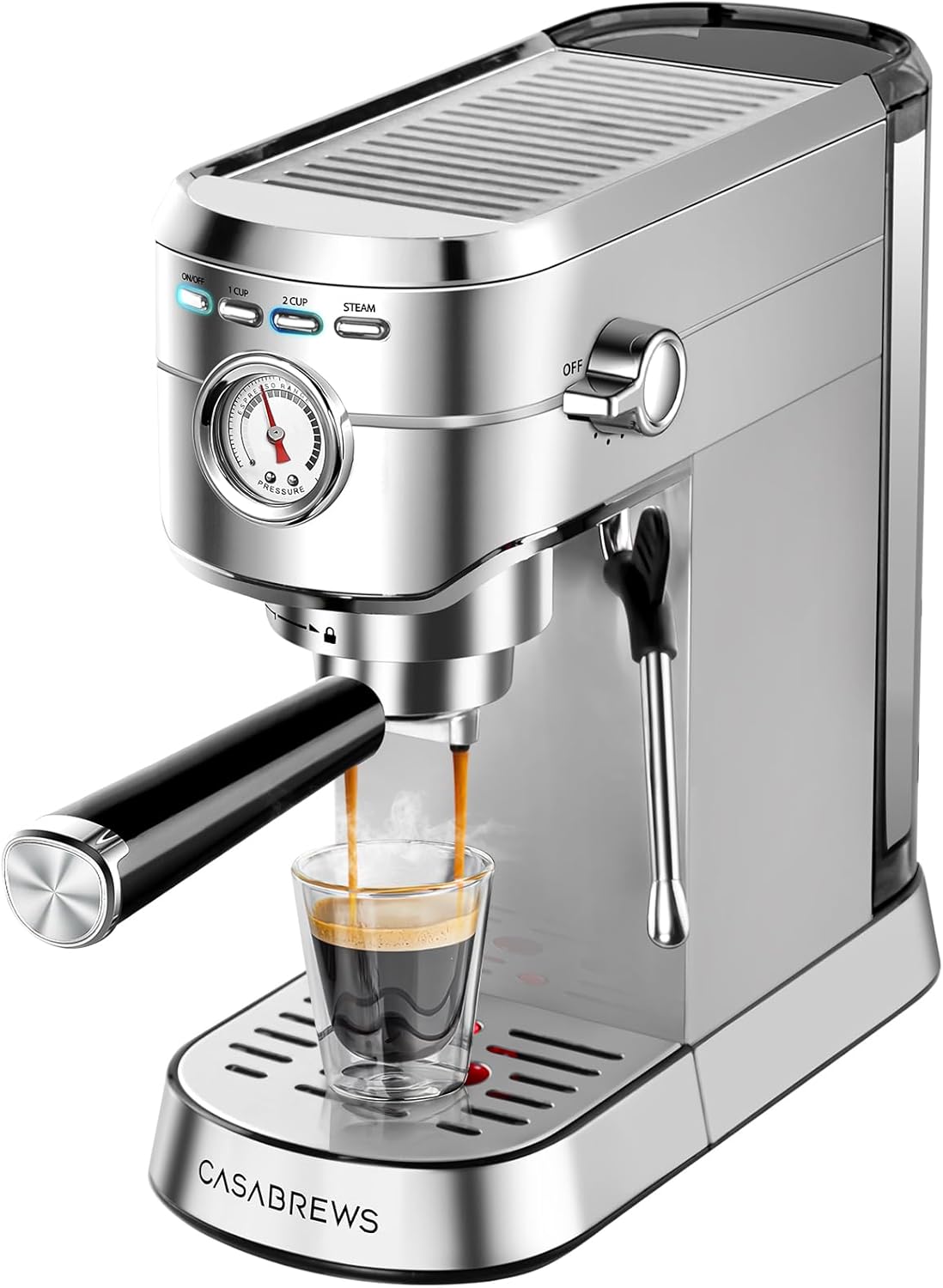
The CASABREWS CM5418 is a countertop semi-automatic espresso maker aimed at home users who want café-style drinks without a lot of bulk. It uses a 20-bar Italian pump and a built-in pressure gauge to help dial in extraction, and the machine offers pre-infusion and adjustable shot volume for single or double servings. The steam wand froths milk into microfoam suitable for lattes and cappuccinos, and a removable 34 oz tank lets you brew several cups before refilling. The stainless steel body, cup warmer, and removable drip tray make everyday use and cleaning straightforward. Expect a short warm-up time and clear troubleshooting guidance in the manual and instructional videos, though the single boiler design means you should allow the unit to cool between steaming and brewing to avoid overheating protection. For buyers who value compact size and hands-on control, the CM5418 delivers strong extraction and milk texture for the price, but it requires some learning and routine maintenance to keep shots consistent.
Best for: Buyers who want a compact, hands-on machine that produces café-style espresso and steamed milk at home while relying on community-tested settings and guides to refine shots.
Less Ideal for: People who need fully automatic one-touch drinks, high-volume service, or a machine that lets you steam milk and pull shots consecutively without pauses.
- 20-bar pump with built-in pressure gauge for visible extraction feedback
- Powerful steam wand capable of producing microfoam for latte and cappuccino textures
- Compact stainless steel body with removable 34 oz water tank for easy refills
- Includes 51mm portafilter, single and double filters, and a tamper for complete out-of-box use
- Single-boiler system requires cooling between steaming and brewing which slows back-to-back drink preparation
- Semi-automatic operation needs manual tamping and grind/shot adjustments to achieve consistent results
Verdict: A compact, gauge-equipped semi-automatic that gives home baristas café-level extraction and milk texture in a small footprint, ideal for buyers who prefer hands-on control backed by social proof.
Gevi 20 Bar Espresso Machine ECMG0
| Output Pressure | 20 bar |
|---|---|
| Operation Mode | Semi-Automatic |
| Wattage | 1350 watts |
| Power Source | AC adapter |
| Capacity | 1 liters |
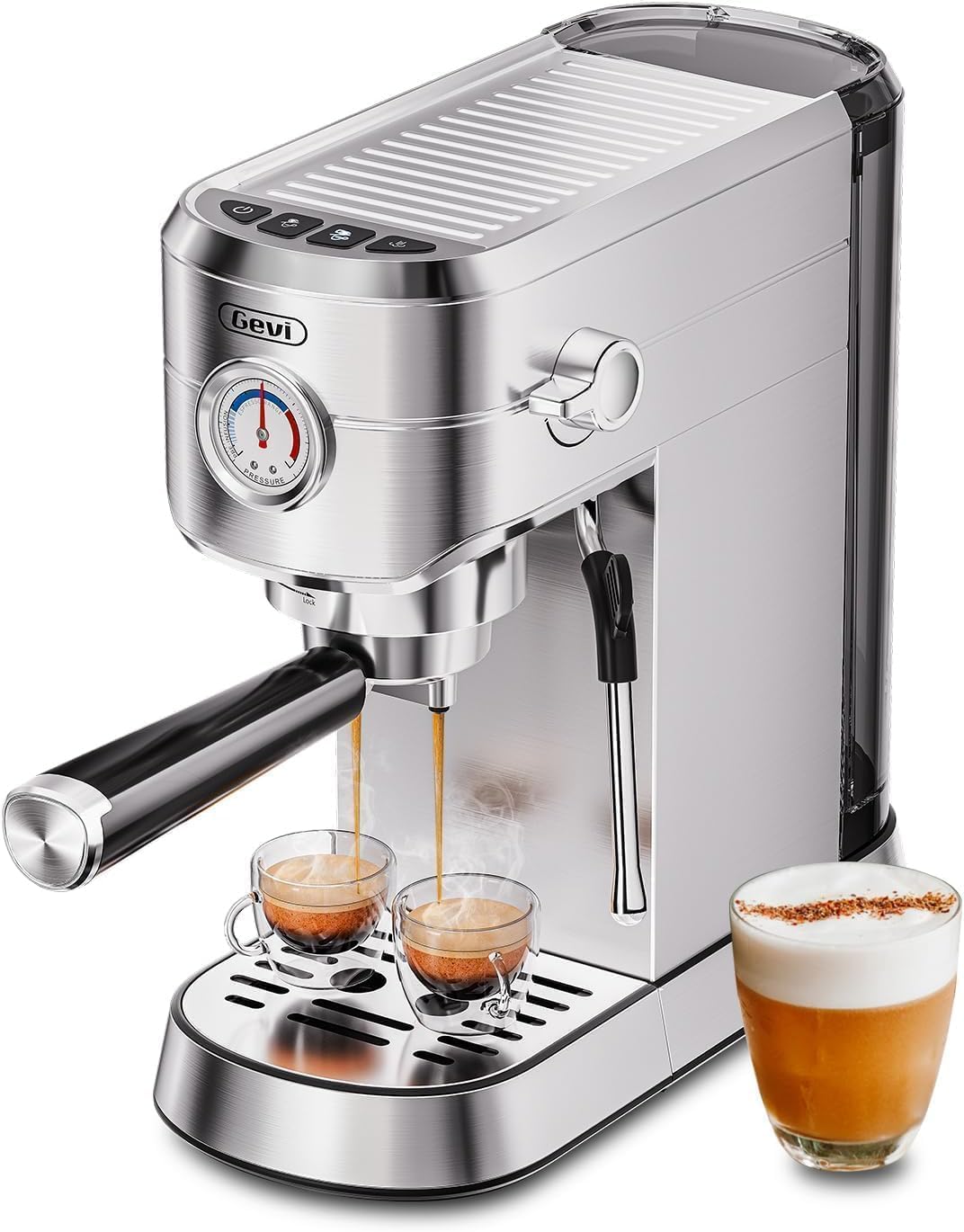
The Gevi 20 Bar Espresso Machine is a countertop semi-automatic brewer designed to deliver café-style espresso and milk drinks at home. It uses a 20-bar pump, NTC temperature control, and a built-in pressure gauge to help stabilize extraction, and includes pre-infusion and adjustable shot volume for finer control over flavor. Typical use is straightforward: fill the removable 34 oz tank, tamp ground coffee into the 51 mm portafilter, brew espresso, and steam milk with the powerful steam wand or use the automatic milk frother accessory. The stainless steel housing, cup warmer, and removable drip tray keep maintenance practical for daily use, and reusable filters reduce waste. Expect some pump noise and mild vibration during operation due to the high-pressure pump. Cleaning the portafilter and filters requires hand washing and acidic cleaners are not recommended, and the machine lacks an integrated grinder so you will need a separate grinder for best results. For a compact machine that balances control features with an accessible workflow, this model works well in small kitchens or offices.
Best for: Buyers who want a reliable, compact machine that gives some barista-style controls and consistent extraction without taking much counter space, and who prefer a straightforward, lower-risk purchase with included accessories.
Less Ideal for: Those who want an all-in-one, fully automatic machine with a built-in grinder or users who need a completely hands-off single-button experience.
- 20-bar pump with built-in pressure gauge and pre-infusion for improved extraction control
- Powerful steam wand and removable froth nozzle that produce smooth milk microfoam
- Compact stainless steel build with removable water tank and cup warmer for countertop convenience
- Includes portafilter, multiple filter baskets, tamper and cleaning tools so it is ready to use out of the box
- No built-in grinder so a separate grinder is required for consistent results
- Portafilter parts are not dishwasher-safe and require manual cleaning
Verdict: A compact, factory-quality semi-automatic espresso machine that delivers controllable, café-style shots and reliable milk steaming for small kitchens and offices.
Choosing the Right Compact Espresso Machine: Key Factors to Consider
Extraction Consistency
Reliable extraction is the heart of any espresso machine. For compact units, the boiler design, temperature control, and grouphead stability determine how consistently you will get balanced shots. In practice this affects crema, flavor clarity, and how forgiving the machine is to small variations in grind and tamp.
When evaluating compact machines, consider models that maintain stable brew temperature and offer a consistent water flow. Machines that use simple, repeatable dosing or clear extraction indicators reduce the time you spend dialing in shots in a small kitchen environment.
Steam Performance and Milk Texture
If you make milk-based drinks, the steam system matters more than raw steam power. Compact machines often use smaller boilers or thermoblocks, so look for effective steam delivery and a wand or automatic frothing system that produces smooth microfoam.
Good steam performance shortens frothing time and reduces frustration when preparing lattes or cappuccinos in quick succession. Consider the wand reach and swivel, as cramped counter space can limit how you position a pitcher when steaming milk.
Counter Footprint and Ergonomics
A compact espresso machine must fit your available counter area while leaving room to work. Check the machine's width, depth, and height relative to other kitchen items and the space you need for placing cups and portafilter access.
Ergonomics include the location of controls, water reservoir accessibility, and portafilter clearance. Machines that require lifting off large reservoirs or have hidden controls can be inconvenient in tight spaces, so prioritize layouts that support one-handed access and simple daily workflows.
Ease of Cleaning and Maintenance
Frequent cleaning keeps shots tasting fresh and prevents clogs. Compact machines should offer easy access to removable drip trays, accessible water reservoirs, and simple backflushing or grouphead cleaning procedures when applicable.
Because compact units often compress components, pay attention to how serviceable the machine is for routine descaling and gasket replacement. Models that expose key parts and provide straightforward cleaning steps reduce the chance of downtime in a small apartment.
Water Supply and Reservoir Design
Compact machines generally rely on onboard reservoirs rather than direct plumbing. Reservoir capacity, placement, and ease of refill matter more in small kitchens where you may not have space to store extra water.
A top- or side-mounted reservoir that is easy to remove and refill will be less disruptive to your workflow. Also consider filter compatibility if you have hard water; integrated filtration or straightforward filter access helps protect internal components without adding complexity.
Noise and Heat Management
Smaller machines can run hotter or noisier because components are packed tightly. For apartment or small-kitchen use, lower operational noise and efficient heat dissipation improve the experience when brewing early morning shots or entertaining guests.
Look for machines with insulated boilers or vibration-reducing pumps and consider whether the operational noise level will be acceptable where you live. Heat management also affects where you can place the machine safely on a counter.
Small-Kitchen Setup Tips
Position the espresso machine where you have at least a few inches of clearance on either side for maneuvering the portafilter and placing cups. Keep the water reservoir accessible so you can refill it without moving surrounding items.
Place the machine near an outlet and on a stable, heat-resistant surface. Use a compact knock box and a small tamper tray to keep the workflow tidy without taking up much additional space.
- Keep a small scale and tamper nearby for consistent dosing
- Use a short, heat-resistant silicone mat under the machine
- Store cleaning supplies in a nearby cabinet for quick maintenance
Grind and Dose Strategies for Compact Machines
Compact machines can be less forgiving of inconsistent grind size. Use a burr grinder and target a dose and grind range that yields balanced extraction without clogging the filter. Aim for reproducible doses to cut down on adjustments.
If the machine has a single-boiler or thermoblock, allow a short warm-up time between steaming and brewing to stabilize temperatures. Consistent dosing paired with disciplined tamping produces the most repeatable results on smaller machines.
- Weigh doses to +/- 0.2 grams for reliable repeatability
- Dial grind adjustments in small increments when tuning shots
- Purge the group briefly to stabilize temperature before pulling a shot
Maintenance Routine for Longevity
Set a simple weekly and monthly cleaning routine to keep a compact machine performing well. Empty and rinse the drip tray and portafilter baskets after each session and backflush or run cleaning cycles as required by the machine design.
Descale according to local water hardness and manufacturer guidance. Even in compact units, mineral buildup degrades performance and can lead to inconsistent water flow or reduced steam quality.
- Daily: wipe steam wand and purge after each use
- Weekly: clean removable parts and check seals
- Monthly: descale if water hardness requires it and inspect gaskets
Optimizing Milk Textures in Tight Spaces
Use smaller pitchers that fit under the steam wand and fit comfortably in your available counter area. Tilt the pitcher slightly and keep the wand tip near the surface for microfoam, then deepen the wand to heat the milk.
If the machine has limited steam power, work in short bursts and swirl the milk between bursts to build texture without overworking the boiler. A fridge-side frothing pitcher kept nearby speeds up the workflow.
- Start with cold milk and chilled pitchers for better foam control
- Use 120–140 ml pitchers for single or small double drinks
- Swirl milk after steaming to integrate foam and remove large bubbles
When to Consider a Compact Machine Vs. Alternatives
Choose a compact espresso machine when counter space is a priority and you want true espresso extraction rather than a pod or capsule approach. Compact machines deliver more control and better espresso quality per dose than most single-serve appliances while keeping a smaller footprint.
If you frequently need simultaneous steam and brew or make high volumes for guests, a compact single-boiler unit may limit throughput. Understand your daily drink habits and choose a machine that matches your typical volume and drink styles.
- Good for solo home baristas and couples
- Less ideal for serving large groups quickly
- Balances quality and space savings for everyday espresso
How We Chose the Best Compact Espresso Machine
We focused on machines designed specifically for small counters and limited kitchen footprints, selecting models that pack the key features of larger machines into a compact chassis. Editorial filters prioritized consistent espresso extraction, steam or milk-frothing capability, build quality and materials, user-focused controls, and serviceability for routine maintenance. Usability criteria included intuitive controls, a manageable learning curve for home baristas, and accessible components for cleaning. We excluded full-size commercial or prosumer units that exceed small-kitchen dimensions or require dedicated plumbing. We also filtered out machines lacking basic temperature stability or that make routine maintenance impractical in an apartment setting. The final shortlist favors machines that balance shot quality, steam performance, and low-effort upkeep while keeping a minimal counter footprint.
Our full evaluation process is outlined in our review methodology.
FAQ
How much counter space do compact espresso machines usually need?
Compact machines typically require less width and depth than full-size units, often fitting on a 12 to 16-inch-wide section of counter. Check both height and depth to ensure clearance for the water reservoir and portafilter access.
Can a compact machine produce cafe-quality crema?
Yes, many compact machines can produce rich crema if they offer stable brew temperature and consistent water flow. Achieving good crema also depends on grind quality, fresh beans, and proper dosing.
Are compact machines harder to maintain than larger models?
Not inherently. Compact machines can be easier to maintain if they provide removable parts and simple access for cleaning. However, tightly packed components can make some service tasks more involved, so choose models with user-friendly maintenance design.
Will a compact machine steam milk well enough for lattes?
Many compact machines can steam milk sufficiently for lattes and cappuccinos, but performance varies. Machines with dedicated boilers or higher-pressure steam systems produce better, more consistent microfoam than very small thermoblock designs.
How often should I descale a compact espresso machine?
Descaling frequency depends on water hardness and usage, but a common schedule is every 2 to 3 months for moderate use with hard water, or less frequently with softened or filtered water. Follow the machine's maintenance guidance and watch for changes in flow or taste.
Final Verdict
For small kitchens and apartments, prioritize machines that deliver consistent extraction, manage steam performance for the drinks you make, and offer straightforward maintenance without a large counter footprint. Expect tradeoffs between throughput and compactness: the smallest units save space but may require more deliberate technique for steaming and temperature stability. Focus on extraction consistency, ergonomics, and ease of cleaning when deciding to ensure you get reliable shots and low-maintenance ownership.