
Note: This article contains affiliate links. If you click on these links and make a purchase, we may earn a small commission at no extra cost to you. This helps support our research and content. Read our full affiliate disclosure here.
If your home supplies only cold water to the kitchen, you still need a dishwasher that cleans effectively and runs reliably. Choosing the right dishwasher for cold water matters because some units depend on a hot-water feed for optimal detergent activation and sanitizing cycles, while others have built-in heating or specialized wash sequences that compensate. This guide shortlists the top local options and explains the features that matter most for cold-water installations. We evaluated wash performance, cycle adaptability, energy use, and practical installation considerations so you can pick a model that fits your hookup and cleaning needs. Read on to see the top picks and what to look for when selecting a cold-water-compatible dishwasher.
Top Picks at a Glance
| Best Overall The best all-around choice for most situations | Midea Portable Countertop Dishwasher |  |
| Best Quality Built to a higher standard if you want something more solid | GE Profile Compact Dishwasher PZF560 |  |
| Best Value The sweet spot between price and what you get | BLACK+DECKER Countertop Dishwasher BCD6SD |  |
| Best Budget The cheapest option that still gets the job done reliably | SHIPUNAYE Countertop Dishwasher |  |
| Top Rated A top-rated pick with lots of positive feedback | EUHOMY Countertop Dishwasher DW002-5 |  |
| Most Popular A crowd favorite that many people choose with confidence | COMFEE' Countertop Dishwasher CDC22P1BBB | 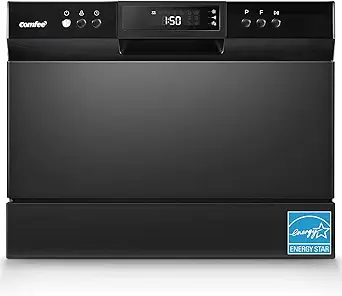 |
| Best Seller A high-volume bestseller chosen again and again | AIRMSEN Countertop Dishwasher TDQR03 |  |
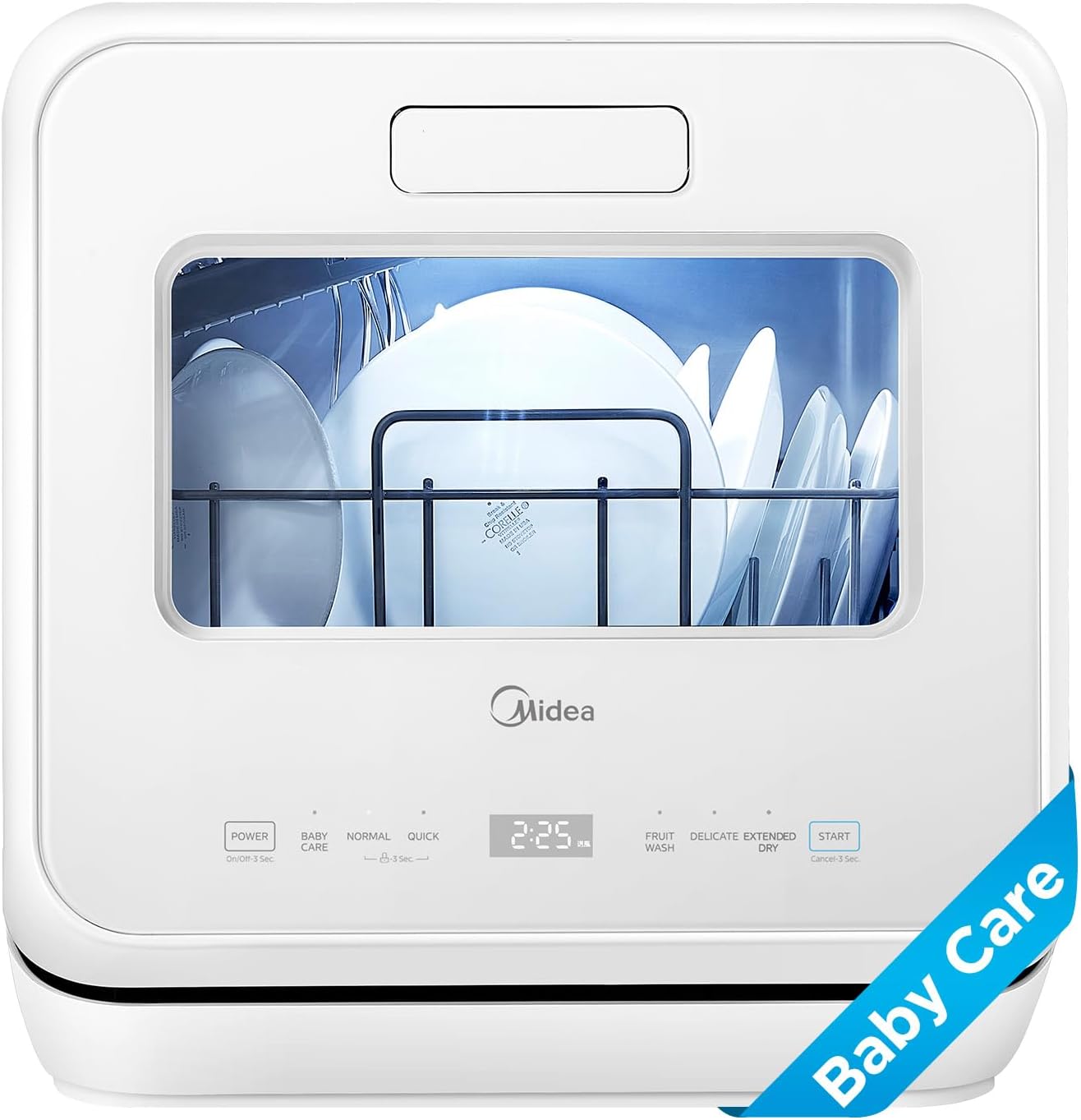
Midea Portable Countertop Dishwasher
| Installation Type | Countertop |
|---|---|
| Capacity | 1.32 gallons |
| Cycle Options | Babycare, Delicate, Fruit Wash, Normal, Rapid |
| Noise | 62 db |
| Display | LED |
The Midea portable countertop dishwasher is a compact unit designed for apartments, dorms, and RVs where tap hookup is not always available. It uses a 1.32 gallon built-in tank so you can load water manually or attach the included hose to a faucet, and offers five program options plus an extra drying mode targeted at baby bottles and delicate items. Practical features include LED controls, a high-temperature wash option, a baby-bottle holder, and an upgraded dual drying system that improves drying for utensils and bottles. The machine is relatively quiet for its class and aims to save water compared with full-size dishwashers. Important limits are its small two-place capacity and plastic interior components, which mean it is best for light loads, daily glassware, and baby items rather than large pots or heavily soiled cookware. Expect to refill the tank for multiple cycles and to plan loads around the smaller basket layout.
Best for: Buyers who need a space-saving countertop dishwasher that can run without a direct water connection and who prioritize cleaning baby bottles, glassware, and light daily loads.
Less Ideal for: People who regularly wash large pots, pans, or bulky cookware or who need a full-size dishwasher for family-sized loads.
- Built-in 1.32 gallon tank allows use without a permanent water hookup
- Specialized baby-care cycle and bottle holder for hygienic cleaning of infant items
- High-temperature wash plus dual drying improves drying results for cutlery and bottles
- Compact countertop footprint suitable for small kitchens, dorms, and RVs
- Small two-place capacity limits load size and requires frequent refilling for multiple cycles
- Mostly plastic interior components may not match longevity or performance of stainless steel tubs
Verdict: Choose this if you want a portable, water-saving countertop dishwasher that excels at hygienic cleaning of baby bottles and small daily loads without a permanent hookup.
GE Profile Compact Dishwasher PZF560

| Installation Type | Countertop |
|---|---|
| Capacity | 6 load |
| Noise | 52 db |
| Cycle Options | Delay Start, Normal, Rapid, SaniWash, Sensor Wash |
| Energy Consumption | 155 kilowatt hours per year |
The GE Profile Compact Dishwasher is a space-saving countertop unit designed to handle everyday loads where a full-size machine will not fit. It accepts a faucet hookup or can be installed as a built-in or under-sink model, and its interior fits six place settings or up to 24 bar glasses. The unit offers six wash cycles including AutoSense, a 30-minute quick wash, sanitizing Baby Care, and delay-start scheduling, while SmartHQ WiFi lets you start cycles and monitor status remotely. Practical benefits include ENERGY STAR efficiency, a claimed 75% water reduction versus handwashing, and a quiet 52 dBA operation that works in open-plan or small living spaces. Auto Open Dry helps dishes air-dry without extra energy. Limitations are inherent to its size: it cannot match full-size capacity or handle bulky cookware and relies on a faucet connection unless you use the optional trim kits for built-in installation; cycle times and water temperatures may be constrained by available cold-water supply, which is relevant for homes with very cold feed water.
Best for: Buyers who need a high-performance, water- and energy-efficient dishwasher for small kitchens, apartments, RVs or bars and prioritize smart controls and sanitizing cycles over full-size capacity.
Less Ideal for: Households that regularly wash large batches, oversized cookware, or need a full-size integrated dishwasher should consider larger built-in models instead.
- Three installation options including countertop or built-in for flexible placement
- Fits six place settings and 24 bar glasses in a compact footprint
- Six wash cycles with AutoSense and a 30-minute quick wash for different soil levels
- ENERGY STAR rated and designed to cut water use by over 75% versus handwashing
- WiFi with SmartHQ for remote control and monitoring
- Limited to small loads and cannot accommodate large pots or oversized pans
- Requires faucet hookup for countertop use unless built into cabinetry with optional kits
- Performance can be affected by low incoming water temperature or low hot-water availability
Verdict: If you need a compact, efficient dishwasher with smart controls and a strong sanitizing feature set for small spaces, this GE Profile unit delivers performance without a full-size footprint.
BLACK+DECKER Countertop Dishwasher BCD6SD

| Installation Type | Countertop |
|---|---|
| Number of settings | 6 |
| Noise | 60 db |
| Voltage | 110 volts |
| Included Components | Dishwasher, User Manual |
The BLACK+DECKER BCD6SD is a freestanding countertop dishwasher designed for small kitchens, apartments, and RVs where plumbing changes are not possible. It connects to a faucet via a quick-connect assembly and holds up to six place settings including plates up to 10 inches, bowls, glasses, and utensils. Controls are electronic with an LED display and touch buttons, and the unit offers six wash cycles plus delayed start options for flexible scheduling. A stainless steel interior and removable cutlery basket make loading, cleaning, and drying more effective, while the three-part filter assembly helps trap food debris. Noise is listed at 60 dB, so it is noticeable but not overly loud in a typical kitchen. Key limitations are the smaller capacity compared with built-in machines and the need to drain to a nearby sink after use, which makes it less convenient for larger households or continuous heavy-duty use. The compact footprint and quick-connect setup make it practical for renters or anyone seeking a non-permanent, space-saving dishwashing solution.
Best for: Buyers who prioritize space savings and a no-permanent-installation dishwasher for apartments, RVs, or small kitchens and who value flexible wash cycles and easy setup.
Less Ideal for: Users who need high-capacity or fully plumbed dishwashers for frequent heavy use or large households should consider larger built-in models instead.
- Compact countertop design fits under cabinets and stores easily
- Quick-connect faucet hookup requires no permanent plumbing
- Stainless steel interior improves drying and resists stains
- Six distinct wash programs plus delayed start options for flexible cycles
- Removable cutlery basket and slide-out rack simplify loading and cleaning
- Limited six-place capacity is small for larger families
- Requires manual drain routing to a sink rather than hard-plumbed drainage
Verdict: If you need a compact, no-plumbing countertop dishwasher that delivers multiple wash cycles and easy faucet hookup, this BLACK+DECKER model is a practical space-saving choice.
SHIPUNAYE Countertop Dishwasher

| Installation Type | Countertop |
|---|---|
| Capacity | 6 liters |
| Controls Type | Touch |
| Cycle Options | Standard Wash, Quick Wash, Fruit & Vegetable Wash |
| Voltage | 110 volts |
The SHIPUNAYE countertop dishwasher is a small, portable unit intended for kitchens with limited space or no hot‑water hookup. It packs a 6‑liter (1.59 gallon) built‑in water tank, touch controls, and three cycle options: Standard Wash, Quick Wash, and a Fruit & Vegetable wash. The 360° rotating spray outlets and the enclosed wash chamber make it suitable for everyday plates, glassware and light pots, and the fruit wash gives a cold‑water option for rinsing produce without heating. Installation is simple because it can run from its internal tank, so it works in apartments, dorms, boats or RVs. Limitations include a small capacity—about 4–5 place settings—and modest power that may not match heavier soils or large cookware, and reported customer feedback suggests variable long‑term reliability. Noise is listed very low but real‑world sound may vary. For buyers on a tight budget who need a self‑contained countertop dishwasher that can operate without a hot water line, this unit is a practical entry option.
Best for: Buyers who need a low‑cost, self‑contained countertop dishwasher that can run without a hot water connection and fits small kitchens, dorms, or RVs.
Less Ideal for: Homes that need to clean large cookware, heavy soiling, or full dinnerware sets in a single cycle should consider a larger built‑in or full‑size dishwasher instead.
- Built‑in 6 L water tank lets the unit run without a hot water hookup
- 360° rotating spray outlets for all‑around rinsing
- Three cycle options including a cold fruit & vegetable wash
- Touch controls make operation straightforward and compact design fits small spaces
- Small capacity suitable for about 4–5 place settings, not for large loads
- May struggle with heavy, baked‑on soils compared with full‑size dishwashers
- Mixed customer feedback on durability and long‑term reliability
Verdict: A budget-friendly, self-contained countertop dishwasher that provides cold‑wash produce cycles and simple operation for small households without a hot water hookup.
EUHOMY Countertop Dishwasher DW002-5

| Installation Type | Countertop |
|---|---|
| Capacity | 5 liters |
| Noise | 40 db |
| Voltage | 120 volts |
| Number of settings | 8 |
The EUHOMY countertop dishwasher is a standalone mini unit designed for apartments, RVs, and small kitchens where a faucet hookup is impractical or cold incoming water is common. It offers an internal 5 liter tank plus an option to connect to a faucet, touch controls with an LED display, and eight programs including a high-temperature Baby Care mode that reaches up to 167°F and a quick 29-minute cycle for light loads. Dual rotating spray arms provide 360 degree coverage and the machine includes a self-clean mode, child lock, and delayed start for flexible scheduling. At 40 dB the noise level is modest for countertop use and the automatic water cutoff when the door opens adds safety. Limitations include a small interior that suits about 30 items but not large pots or oversized pans, and the need to buy a faucet adapter if your faucet does not match the supplied G3/4 fitting. For households needing reliable cleaning with limited space and intermittent cold water, this unit handles dishes efficiently while conserving water via its tank option.
Best for: Buyers who prioritize dependable cleaning in tight spaces and want a self-contained appliance that works even when hot water or a direct hookup is unreliable.
Less Ideal for: Large households or cooks who need to wash big pots, baking sheets, or a full load of large dinnerware should consider a full-size or larger portable dishwasher instead.
- Built-in 5L water tank for standalone use when hot water or a hookup is unavailable
- Eight wash programs including a 29-minute quick cycle and a high-temp baby/strong mode up to 167°F
- Dual spray arms with 360° coverage for more complete cleaning of small loads
- Quiet operation rated at 40 dB suitable for countertop placement
- Touch LED controls plus delay start and child lock for easy, safe operation
- Interior capacity is limited and will not accommodate large pots or oversized cookware
- May require a separate faucet adapter if household faucet size differs from the included G3/4 fitting
Verdict: If you need a compact, self-contained dishwasher that reliably cleans small loads without a constant hot-water hookup, this EUHOMY countertop model is a solid choice.
COMFEE' Countertop Dishwasher CDC22P1BBB

| Installation Type | Countertop |
|---|---|
| Capacity | 6 liters |
| Number of settings | 8 |
| Noise | 52 db |
| Voltage | 120 volts |
This COMFEE' countertop dishwasher is a portable, plug-and-play unit intended for small kitchens, dorms, and RVs where full plumbing may not be available. It holds up to six place settings and offers eight programs including Heavy, Normal, Baby-Care, ECO, Glass, Speed, Rinse and Mini-Party, with an extra-dry function and LED touch controls. The unit uses a built-in 5 liter water tank and can also connect to a faucet with the supplied adapter, making setup straightforward. Practical benefits include a powerful Heavy cycle with 12 nozzles and a 360 degree spiral spray plus wash temperatures up to 154°F for removing grease, while the Speed program finishes a load in about 45 minutes to save time. It is Energy Star rated and designed to use low water per cycle for efficiency. Limits to consider are its small capacity compared with full-size machines, countertop footprint, and 52 dB operating noise which is noticeable in very quiet rooms; expect some manual loading constraints for larger cookware.
Best for: Buyers who want a tested, space-saving countertop dishwasher that installs quickly and reliably for everyday small household loads and occasional fast cycles.
Less Ideal for: Not a good fit for households that need to wash large cookware, high-volume family loads, or require a fully built-in undercounter unit.
- Compact six-place capacity fits small households and apartments
- Multiple specialized cycles including Baby-Care, Glass, ECO and a 45-minute Speed cycle
- Built-in water tank plus faucet adapter allows use without permanent hookup
- High-temperature Heavy cycle with 360° spray and 12 nozzles for stronger cleaning
- Energy Star rating and low water usage for efficient operation
- Smaller capacity limits large pots, pans, and full cookware sets
- Noise level around 52 dB can be audible in quiet spaces
Verdict: A compact, Energy Star portable dishwasher that delivers strong high-temperature cleaning and flexible hookup options for small households seeking a reliable countertop solution.
AIRMSEN Countertop Dishwasher TDQR03

| Installation Type | Countertop |
|---|---|
| Capacity | 1.2 gallons |
| Number of settings | 6 |
| Noise | 50 db |
| Energy Consumption | 950 watts |
The AIRMSEN TDQR03 is a portable countertop dishwasher designed for spaces without a dedicated water hookup. It uses a 5 liter built-in tank or an included faucet hose to run six programs — Normal, Speed, Glass, Baby Care, Fruit and a delicate option — and relies on 14 spray nozzles plus upper and lower spray arms to clean from multiple angles. The tub reaches high wash temperatures and offers an extra 60-minute heated dry plus a 72-hour ventilated storage mode to keep dishes hygienic between uses. Controls are touch-based with an angled LED display and the transparent double-layer door and interior light make it easy to monitor cycles. At roughly 50 dB it is reasonably quiet for countertop use, and claimed water use is low compared with handwashing. Important limitations are its small footprint and 5L tank, which limit load size and require occasional refilling when not hooked to a faucet, and the unit is heavier than some countertop models so placement may need one person to lift it into position.
Best for: Someone who wants a ready-to-use countertop dishwasher that avoids plumbing changes and values hygienic, high-temperature washing for small households or RV living.
Less Ideal for: Large households or users who need to wash full dinnerware sets frequently without refilling or who require a lighter, ultra-portable unit for frequent moving.
- Built-in 5L water tank lets it run without a faucet hookup
- Six preset programs including Baby Care and Glass for delicate loads
- Heated drying plus 72-hour ventilated storage keeps dishes dry and ready
- Angled LED touch display and interior light make cycles easy to monitor
- 5 liter tank and compact capacity mean multiple loads for larger households
- Relatively heavy for a countertop unit which can make placement awkward
Verdict: Choose the AIRMSEN TDQR03 when you need a no-plumbing countertop dishwasher that delivers hygienic high-temperature washes and convenient heated drying for small households.
Choosing the Right Dishwasher for Cold Water: Key Factors to Consider
Internal Heating Capability
An internal heating element can raise wash and rinse temperatures when your dishwasher is fed with cold water. This matters because many detergents and sanitizing cycles rely on elevated temperatures to dissolve soils and activate enzymes. Models with robust internal heaters will usually deliver more consistent cleaning across a broader range of cycle choices.
Consider the wattage and stated maximum temperature of the heater when evaluating options. Higher wattage heaters typically reach target temperatures faster, which shortens cycle time and improves detergent activation. If you have frequent heavy soils or sticky residues, prioritize dishwashers with explicit internal heating specifications.
Wash Cycle Adaptability
Dishwashers that offer flexible cycle programming let you choose modes optimized for cold-water starts. Look for cycles labeled for low-temperature washes, enzyme-friendly programs, or options that prolong soak time and mechanical action rather than relying on heat alone.
Adaptive cycles that combine longer pre-washes, multiple spray patterns, and extended rinse steps can compensate when inlet water is cold. The ability to customize or delay-heating sequences is useful so you can prioritize mechanical cleaning when needed and use heating only on tougher loads.
Soil Sensing and Spray Effectiveness
Soil sensors and strong spray systems matter more when wash water starts cold because mechanical removal becomes a larger part of the cleaning equation. Reliable sensors adjust spray intensity and cycle duration based on soil level, which helps cut through stuck-on food without high temperatures.
Evaluate pump and spray arm design, as well as user feedback on stubborn residues. Look for multiple spray zones, targeted jets, and a solid pump rating to ensure consistent spray pressure across racks even with lower inlet temperatures.
Detergent Compatibility and Rinse Aids
Not all detergents perform identically in cold water. Enzyme-based detergents can be more sensitive to temperature, while some formulations are engineered to work at lower wash temperatures. Rinse aids help with drying and spotting and can offset temperature-related drying issues.
When choosing a dishwasher for cold-water use, check the manufacturer's guidance on detergent temperature ranges and whether the machine supports boost cycles that assist detergent performance. Plan to test a couple of detergent types to find the best combination for your water hardness and temperature.
Installation Flexibility and Plumbing Considerations
Cold-only installations can impose constraints on placement and plumbing. Some dishwashers are engineered to operate exclusively from a cold inlet and include documentation and fittings to simplify that setup. Others assume a hot-water feed and may require changes to plumbing or supplemental hardware.
Confirm the installation requirements before buying. Check that the unit's inlet, hoses, and recommended hookups match your kitchen and that electrical demands for internal heaters are acceptable. Also consider whether the dishwasher allows easy access to serviceable parts since cold-water operation can stress heating elements and seals differently over time.
Energy Use and Cycle Time Tradeoffs
Using internal heating increases electricity draw and can lengthen cycles as the machine brings water to target temperatures. Conversely, relying on mechanical action and longer soak times may extend cycle duration but reduce electricity consumption.
Balance your priorities between energy efficiency and cleaning speed. If you pay attention to utility costs or have limits on circuit load, choose a dishwasher with efficient heating controls or strong cold-water-oriented cycles that minimize the need for extended electrical heating.
How Cold Water Affects Dishwasher Performance
Cold inlet water changes the balance between chemical and mechanical cleaning. With cooler incoming water, detergents that depend on heat-activated enzymes may work more slowly, so the machine's spray action, soil detection, and cycle length become more important.
Understanding this tradeoff helps set expectations for cycle times and final results. Dishwashers designed with internal heaters or cycles tailored for cold starts address the problem differently than those that assume a hot-water connection.
- Cold water can hinder detergent dissolution and enzyme action
- Mechanical spray pressure and soil-sensing compensate for lower temperatures
- Internal heaters can bridge the gap but may increase energy use
Installation Checklist for Cold-Only Hookups
Before you buy, verify that the dishwasher supports a cold-only inlet or provides clear installation instructions for that setup. Confirm hose length, valve types, and whether an electrical circuit is rated to support internal heating.
Also inspect under-sink space and access panels. Units that are tougher to service or have cramped plumbing requirements can make cold-water installation slower and more expensive if you need an electrician or plumber to adapt the feed.
- Confirm cold-only compatibility in the installation manual
- Check electrical circuit amperage if internal heating is used
- Ensure sufficient hose length and service access
Maximizing Cleaning Without Hot Water
To get the best results on a cold-water-fed dishwasher, use cycles designed for tougher soils, load items to maximize spray exposure, and pre-rinse only when absolutely necessary. Place heavily soiled items face-down toward spray arms and avoid overloading the racks.
Adjusting detergent type and dose can also make a measurable difference. Try enzyme-friendly or low-temperature formulations and use rinse aid to reduce spotting and improve drying when wash temperatures are lower.
- Use enzyme-friendly detergents rated for low-temperature washes
- Position items to maximize spray coverage and avoid blocking nozzles
- Run stronger cycles or extended wash options for heavy soils
Energy and Maintenance Considerations
Internal heating increases electricity usage, so factor energy draw into your decision. Some models allow you to toggle boost heating only when needed, which helps keep operating costs down while still offering high-temperature cycles for sanitary rinses.
Regular maintenance is also more important for cold-water systems because heating elements and seals can experience different stress profiles. Follow recommended cleaning intervals for filters and spray arms to maintain spray performance over time.
- Use boost heating selectively to manage energy use
- Clean filters and spray arms regularly to preserve spray power
- Monitor seals and heating components during routine maintenance
When to Consider Professional Installation
If your kitchen plumbing or electrical setup is unusual, or if the dishwasher requires an electrical upgrade to support internal heating, hire a qualified installer. Professionals can verify that inlet fittings, valves, and circuit capacity meet the unit's specifications.
Professional installation reduces the chance of warranty exclusions related to improper hookup. It also ensures the dishwasher's heating and control systems are configured correctly for cold-water operation.
- Hire a pro if electrical circuit upgrades are needed
- Get verification that inlet fittings and valves are compatible
- Consider a pro when space or access complicates installation
How We Chose the Best Dishwasher for Cold Water
We focused on features and performance attributes that directly affect how well a dishwasher cleans when only cold water is available. Our selection criteria prioritized measurable, product-level capabilities rather than brand reputation or optional accessories. Key evaluation dimensions included wash-system heating and booster design, cycle variety and temperature control, soil-sensing and spray effectiveness, energy and water efficiency under cold-water conditions, and installation flexibility for cold-only hookups. We examined manufacturer specifications and user-focused documentation to verify whether a dishwasher incorporates an internal heater or enzyme-compatible cycles and whether it provides reliable temperature ramping from a cold inlet. We excluded units that explicitly require a hot-water supply for warranty compliance or for basic cycle operation. We also filtered out models lacking clear cycle-temperature data or those that do not offer adjustable or abbreviated heating options. The result is a focused list of models that are practical choices for homes with cold-water kitchen hookups.
Our full evaluation process is outlined in our review methodology.
FAQ
Can I run any dishwasher on cold water?
Many dishwashers will operate with a cold-water feed, but not all are optimized for it. Check the installation instructions and cycle options to confirm whether the unit uses an internal heater or offers low-temperature cycles suitable for cold inlet water.
Will cleaning performance suffer with cold-water hookups?
Cleaning can be affected because some detergents and sanitizing cycles depend on higher temperatures. However, models with internal heating, strong spray systems, and adaptive cycles can achieve comparable results by relying on mechanical action and controlled heating.
Do I need a special detergent for cold-water dishwashers?
Using a detergent formulated to work at lower temperatures often helps. These formulations emphasize surfactants and enzymes that activate at cooler temperatures. Rinse aids also improve drying and reduce spotting when wash temperatures are lower.
Does internal heating increase electrical costs significantly?
Internal heating uses more electricity during heated cycles, but the impact depends on how often you use boost or sanitize modes. Using mechanical or low-temperature cycles for everyday loads can minimize additional energy use.
Are there installation rules specific to cold-only hookups?
Yes. Some manufacturers specify cold-only compatibility and recommend particular inlet fittings or anti-scald configurations. Verify the manual and ensure hoses, valves, and electrical connections meet the dishwasher's stated requirements.
Final Verdict
If your kitchen supplies only cold water, prioritize dishwashers with explicit internal heating capability, flexible low-temperature cycles, and strong spray and soil-sensing systems. Expect tradeoffs between energy use and cycle time: using internal heat shortens cycles and improves detergent activation but increases electricity draw, while relying on mechanical action can lengthen runs but save energy. Decide based on how often you need high-temperature sanitizing cycles, your tolerance for longer wash times, and your electrical capacity. With the right combination of heater, cycle adaptability, and installation planning, you can get consistently clean results from a dishwasher on a cold-water hookup.