
Note: This article contains affiliate links. If you click on these links and make a purchase, we may earn a small commission at no extra cost to you. This helps support our research and content. Read our full affiliate disclosure here.
If your dishwasher leaves glasses spotted or you hand-dry plates after every cycle, choosing a unit focused on superior drying can save time and reduce frustration. A dishwasher with better drying improves table-ready results, reduces the need for follow-up drying, and can shorten the overall kitchen workflow. This guide lists seven shortlisted dishwashers that excel at removing moisture without excessive energy penalties. We evaluated each model for real-world drying effectiveness, cycle design, and energy considerations so you can pick a machine that fits how you actually run your kitchen. Read on for the criteria we used and the factors to weigh before you buy.
Top Picks at a Glance
| Best Overall The best all-around choice for most situations | Sharp SDW6757ES Dishwasher |  |
| Best Quality Built to a higher standard if you want something more solid | LG LDTS5552S Dishwasher |  |
| Best Value The sweet spot between price and what you get | NOVETE Countertop Dishwasher TDQR01 |  |
| Best Budget The cheapest option that still gets the job done reliably | EUHOMY Countertop Dishwasher DW001-5A |  |
| Top Rated A top-rated pick with lots of positive feedback | AIRMSEN Countertop Dishwasher TDQR03 |  |
| Most Popular A crowd favorite that many people choose with confidence | COMFEE' Countertop Dishwasher CDC22P1BBB | 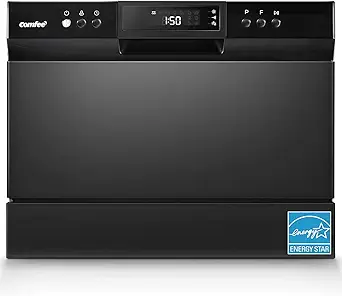 |
| Best Seller A high-volume bestseller chosen again and again | Midea 18-Inch Built-in Dishwasher |  |
Sharp SDW6757ES Dishwasher

| Noise | 45 db |
|---|---|
| Cycle Options | Heated Dry, Normal, Rapid |
| Display | LED |
| Water Consumption | 3.5 gallons |
| Controls Type | Touch |
The Sharp SDW6757ES is a 24-inch built-in dishwasher designed to handle everyday loads and occasional heavy cookware. It offers six wash cycles and seven options including a heated dry mode that speeds drying compared with condensation-only systems, plus a half-load setting for small runs. The adjustable upper rack and an adjustable third rack help fit tall stemware and flat utensils while smooth-glide rails make loading and unloading easier. Smart soil sensors tune cycle performance so heavily soiled items get extra cleaning, and a Power Wash sprayer targets pots and pans for tougher grime. At 45 dBA the unit runs quietly and the LED interior lights improve visibility when loading. Practical limitations include a standard pocket handle and a hidden control panel that may be less convenient for quick program changes, and the unit uses about 3.5 gallons per cycle which is typical but not the lowest in class. For buyers who prioritize better drying and flexible rack configurations, this dishwasher balances cleaning power and convenience in most kitchens.
Best for: Buyers who want a balanced built-in dishwasher that emphasizes dependable drying performance and flexible loading for a variety of dishware and cookware.
Less Ideal for: If you need the absolute lowest water consumption or prefer a front-facing, always-visible control panel, consider other models that target those priorities.
- Heated dry option delivers faster, more reliable drying than condensation-only cycles
- Adjustable third rack and movable upper rack increase loading flexibility
- Soil sensors and Power Wash sprayer improve cleaning on heavily soiled dishes and cookware
- Quiet operation at 45 dBA suitable for open-plan homes
- LED interior lighting makes loading and unloading easier in low light
- Water use listed at 3.5 gallons per cycle which is not the most water-efficient option
- Hidden control panel may be harder to use for quick program changes
Verdict: Choose the Sharp SDW6757ES when you want a quiet, flexible built-in dishwasher that delivers better-than-basic drying and solid cleaning performance.
LG LDTS5552S Dishwasher

| Installation Type | Built-In |
|---|---|
| Noise | 46 db |
| Cycle Options | Turbo Cycle, Express Cycle |
| Display | LED |
| Handle Type | Towel Bar |
The LG LDTS5552S is a built-in, top-control dishwasher designed to deliver strong cleaning and improved drying for everyday use. QuadWash uses four multi-directional spray arms to reach dishes from multiple angles, which helps remove stuck-on food without lengthy pre-rinsing, while TrueSteam reduces water spots on glassware and boosts drying performance. Dynamic Dry with Auto Air automatically circulates fresh air and opens the door at cycle end to accelerate drying, and the adjustable 3rd rack adds flexible space for utensils and small items. At 46 dBA the unit runs quietly enough for open-plan kitchens and late-night loads. The PrintProof stainless finish resists fingerprints so the exterior stays clean longer. Limitations include a modest set of control options and no detailed smart connectivity listed, so users wanting app monitoring or many cycle customizations may find it basic compared with higher-end models. Installation requires a standard built-in cutout and the unit is focused on core cleaning and drying performance rather than extensive specialty cycles.
Best for: Buyers who prioritize reliable cleaning and noticeably better drying performance in a quiet, built-in dishwasher and want straightforward, practical features rather than extensive smart controls.
Less Ideal for: Shoppers seeking advanced app integration, extensive programmable cycles, or highly customizable wash settings should consider other models with richer connectivity and controls.
- QuadWash four-arm system for more thorough cleaning coverage
- TrueSteam reduces water spots and helps improve drying results
- Dynamic Dry with Auto Air opens the door at cycle end to boost drying
- Adjustable 3rd rack increases loading flexibility for utensils and small items
- Quiet 46 dBA operation suitable for open-concept kitchens
- No smart app connectivity or advanced remote monitoring mentioned
- Control set is relatively simple with limited cycle customization
Verdict: Choose the LDTS5552S if you want a quiet built-in dishwasher that focuses on powerful cleaning and improved drying with practical, easy-to-use features.
NOVETE Countertop Dishwasher TDQR01

| Installation Type | Countertop |
|---|---|
| Capacity | 1.3 gallons |
| Cycle Options | Baby Care/Heavy, Heated Dry, Normal, Soft/Fruit, Speed |
| Noise | 50 db |
| Water Consumption | 5 liters |
The NOVETE countertop dishwasher is a space-saving portable unit designed for apartments, dorms, and RVs that handles up to four full place settings. It can run from its built-in 5 L water tank or connect to a faucet via the included inlet hose, and the LED touch panel makes selecting one of five cycles simple. Notable features include a Baby Care/Heavy cycle that reaches up to 167°F, a dedicated Dry mode that adds 60 minutes of hot-air drying, and an automatic ventilation/storage routine that runs every 75 minutes for up to 72 hours to keep dishes dry and odor-free. The machine uses about 5 liters of water per cycle and claims lower electricity use compared with hand washing. Practical limitations are its countertop footprint and 1.3 gallon capacity, which restricts load size compared with full-size dishwashers, and the interior is mainly plastic, so heavy cookware may not fit or clean as effectively. Noise is rated around 50 dB, so expect moderate operating sound in small kitchens.
Best for: Buyers who want a practical, space-saving dishwasher that minimizes manual dishwashing and prioritizes reliable drying and storage for a small household or rental space.
Less Ideal for: Households that regularly need to wash large pots, full loads, or a high daily dish volume should choose a full-size built-in model instead.
- Built-in 5 L water tank for use without a faucet hookup
- Heated dry mode plus 72-hour ventilated storage to keep dishes dry and odor-free
- High-temperature Baby Care/Heavy cycle (up to 167°F) for sanitizing baby items and greasy dishes
- Compact footprint fits under most cabinets while still holding 4 place settings
- Includes inlet and drain hoses plus racks and cutlery basket so it is ready to use out of the box
- Smaller capacity and interior space limit larger pots, pans, and big plates
- Inner materials are mostly plastic which may not suit heavy cookware or very hot repeated cycles
- Not a replacement for a full-size dishwasher when you need large load capacity
Verdict: Choose this NOVETE model if you need a compact countertop dishwasher that adds effective heated drying and ventilated storage for consistently dry, ready-to-use dishes.
EUHOMY Countertop Dishwasher DW001-5A

| Installation Type | Countertop |
|---|---|
| Capacity | 5 liters |
| Number of settings | 6 |
| Noise | 40 db |
| Water Consumption | 1.32 gpm |
The EUHOMY countertop dishwasher is a compact portable unit designed to wash small loads without a permanent hookup by using either a built-in 5L water tank or an included inlet hose for faucet connection. It cleans up to roughly 30 items using dual 360° spray arms and six program choices that include Normal, Quick (29 minutes), ECO, Baby Care/Strong (167°F), Fruit, and Dry. The unit emphasizes drying: it offers 60 minutes of hot-air drying plus an extended fresh-air ventilation cycle lasting up to 73 hours to help prevent odors. Controls are touch-operated with an LED display and a timer delay for flexible scheduling. Practical benefits include low water use (about 1.32 gallons per fill), a dedicated cutlery basket, and compact dimensions that suit apartments, RVs, or dorms. Limitations are the small internal capacity compared with full-size machines, the need for occasional pre-scraping of heavy residue for best results, and potential faucet-adapter purchases if your tap is not G3/4" compatible. Noise is rated at about 40 dB, so it runs quietly for countertop use.
Best for: Buyers who need a low-water, installation-free dishwasher to handle daily small loads in apartments, RVs, or dorms and who prioritize machines that dry dishes thoroughly.
Less Ideal for: Large households that run full kitchen loads or anyone seeking the raw capacity and cycle variety of a built-in full-size dishwasher.
- Dual 360° spray arms for comprehensive coverage across dishes
- Built-in 5L tank plus faucet hookup option for installation-free use
- Hot-air drying plus up to 73 hours of ventilation to reduce odors
- Quiet operation around 40 dB suitable for small living spaces
- Small interior limits load size compared with full-size dishwashers
- May require a faucet adapter if the sink connection is not G3/4"
- Heavily soiled or burnt-on residue may need pre-scraping for good results
Verdict: Choose this compact EUHOMY model if you want a budget-friendly, installation-free countertop dishwasher that prioritizes effective drying and low water use for small daily loads.
AIRMSEN Countertop Dishwasher TDQR03

| Installation Type | Countertop |
|---|---|
| Capacity | 1.2 gallons |
| Number of settings | 6 |
| Noise | 50 db |
| Energy Consumption | 950 watts |
This AIRMSEN countertop dishwasher is a ready-to-use portable unit that cleans and dries everyday dishes without a permanent water hookup. It uses a 5 L built-in water tank or an included faucet hose for flexibility and offers six settings—Normal, Speed, Glass, Baby Care, Fruit and a drying-enhancement option—controlled through an angled LED touch panel. Cleaning is assisted by dual spray arms and 14 nozzles plus high-temperature wash cycles up to 167°F, which helps with stubborn food and baby items, while the machine adds up to 60 minutes of heated drying and a 72-hour ventilation feature to keep dishes stored hygienically. Practical benefits include compact footprint for small kitchens or RVs, visible progress via the glass door and interior LED, and lower water use versus hand washing. Trade-offs are typical of countertop models: capacity is aimed at 2–4 people so it may require multiple loads for larger households, and noise sits around 50 dB so it is noticeable in very quiet rooms.
Best for: Buyers who prioritize a dependable, plug-and-play countertop dishwasher with effective heated drying and hygienic wash options for small households, apartments, or RVs.
Less Ideal for: Large households that run full-size loads frequently or users seeking an ultra-quiet, full-capacity built-in dishwasher.
- Built-in 5 L water tank allows operation without faucet hookup
- Heated drying plus an extra 60-minute dry mode and 72-hour ventilated storage
- Multiple wash programs including Baby Care and Glass for delicate or sanitary cleaning
- 14 washing nozzles with dual spray arms and high-temperature cycles for thorough cleaning
- Compact countertop design fits small kitchens, apartments, and RVs
- Limited capacity so larger families may need repeated loads
- Noise level around 50 dB may be noticeable in quiet spaces
- Uses 950 watts which can be higher than some ultra-efficient portable models
Verdict: Choose this model if you need a portable countertop dishwasher that reliably cleans and uses heated drying to leave dishes ready to store without a faucet hookup.
COMFEE' Countertop Dishwasher CDC22P1BBB

| Capacity | 6 liters |
|---|---|
| Number of settings | 8 |
| Noise | 52 db |
| Voltage | 120 volts |
| Energy Consumption | 174 kilowatt hours per year |
The COMFEE' countertop dishwasher is a compact, plug-and-play unit designed for small kitchens, dorms, and RVs that need a full wash cycle without a built-in hookup. It cleans up to six place settings using eight programs — Heavy, Normal, Baby-Care, ECO, Glass, Speed, Rinse, and Mini-Party — and its Heavy cycle uses 12 nozzles and a 360° spray with water heated up to 154°F for tougher soils. The machine includes an extra-dry function and a Speed program that can finish in about 45 minutes, which is useful when you need dry dishes quickly. Installation is straightforward: it can connect to a faucet with the included adapter or sit on a counter with its built-in tank option, giving flexible placement. Practical limits are its compact capacity that suits 2–3 people rather than larger households and a reported noise level around 52 dB that is noticeable in very quiet spaces. Expect good cleaning and noticeably better drying than typical portable units, but plan cycles around a smaller load size.
Best for: Buyers who prioritize reliable cleaning and faster drying in a compact, easy-to-install dishwasher for small households, apartments, or RVs and who value evidence of solid real-world performance.
Less Ideal for: Large families or households that need to wash many plates and pots at once or anyone seeking a fully built-in, high-capacity machine.
- Multiple wash programs including Baby-Care and Heavy for versatile cleaning needs
- Heated wash up to 154°F plus 12 nozzles and 360° spray for thorough cleaning
- Extra-dry function and a 45-minute Speed cycle for faster, drier dishes
- Flexible installation with faucet adapter or countertop placement for plug-and-play use
- Small 6-place capacity not suitable for larger families
- Noise level around 52 dB can be noticeable in quiet rooms
Verdict: Choose this compact COMFEE' model when you need a portable countertop dishwasher that cleans thoroughly and delivers better-than-average drying for small kitchens.
Midea 18-Inch Built-in Dishwasher

| Place settings | 8 Place Settings |
|---|---|
| Number of programs | 6 Programs |
| Noise | 52 db |
| Water Consumption | 15.5 gph |
| Voltage | 120 volts |
This compact Midea built-in dishwasher is designed for small kitchens and under-counter installs while still fitting eight place settings. It provides six wash programs including Heavy, Normal, ECO, Delicate, Quick and Rinse plus functions for heated dry, high-temperature sanitize and a one-hour quick wash for faster turnarounds. The stainless steel tub and integrated handle give a clean look and the LED digital controls are simple to operate; adjustable top-rack features and a removable cutlery basket help fit taller plates and pots. Noise is rated at 52 dB which is reasonably quiet for apartment and open-plan kitchens. Water consumption is listed at 15.5 gph and the unit is Energy Star certified, which helps running cost-conscious buyers avoid surprises. Limitations include its narrow 18-inch form factor, which reduces total load compared with full-size models, and some advanced features like smart connectivity or multiple rack tiers are absent. Installation requires standard built-in plumbing and the unit ships with a one-year manufacturer warranty.
Best for: Buyers who prioritize reliable cleaning and thorough drying in compact kitchens and want a straightforward, energy-efficient built-in unit that minimizes hassle.
Less Ideal for: Large households or users who need full-size capacity and advanced features like Wi-Fi control or third-level cutlery trays should consider larger models instead.
- Slim 18-inch footprint that fits small kitchens and under-counter spaces
- Heated dry and high-temperature sanitize cycles for better drying and hygienic cleaning
- Six wash programs including a quick one-hour cycle for flexible use
- Stainless steel tub improves durability and drying performance
- LED digital controls and adjustable racks make loading and operation straightforward
- Smaller 8-place capacity cannot match full-size dishwashers for large households
- No smart/home connectivity or advanced multi-rack adjustments
Verdict: Choose this Midea 18-inch built-in if you need an energy-efficient, compact dishwasher that emphasizes reliable cleaning and effective heated drying in small kitchens.
Choosing the Right Dishwasher with Better Drying: Key Factors to Consider
Drying System Type
Different dishwashers use different approaches to drying, such as heated drying, condensation drying, fan-assisted drying, or boosted heat with vents. The method matters because it affects both the end result and energy use. Heated-element drying typically finishes dishes faster but uses more electricity, while condensation-style drying can be gentler on plastics but may leave more residual moisture.
Fan-assisted systems or models that combine condensation with active airflow often produce the most consistently dry dishes, especially for plastics and shallow bowls. Consider whether the dishwasher offers specialized modes for plastics or intensive drying cycles that you can select when needed.
Cycle Options and Sensors
Cycle flexibility determines how well a dishwasher adapts to different loads. Look for models with a dedicated heavy-dry or sanitize-dry option and those that offer automatic sensors to detect load soil and residual moisture. Sensor-driven cycles end when items are sufficiently dry, which saves energy compared with always running a long, high-heat dry.
Being able to choose a stronger drying setting for mixed loads or plastics and a lower setting for glassware gives you control over both results and operating cost. A quick-boost dry option can be useful when you need dishes ready immediately after a cycle.
Rack Layout and Water Drainage
How water drains from dishes during the final spin or rinse has a big impact on drying outcomes. Racks with thoughtful tilt on holders for glasses and bowls, generous spacing to prevent nesting, and plastic-safe placements reduce trapped water. Many effective drying designs include micro-drain channels or elevated tines that let water run off instead of pooling.
Consider whether the dishwasher has adjustable racks to accommodate tall items and whether the utensil basket design prevents water retention. Small details in rack design often explain why two otherwise similar machines dry differently in everyday use.
Energy and Runtime Tradeoffs
Better drying often means more heat or longer run times, which increases energy use. Check the estimated energy consumption of drying-intensive cycles and whether the model uses efficient technologies like condensation drying or heat-recovery to offset extra energy. Some dishwashers offer an eco-dry mode that reduces heat but relies more on internal insulation and cycle timing to finish drying.
Balance your expectations for dry-to-touch dishes against your willingness to accept modest increases in cycle time or energy usage. If you frequently need immediate, bone-dry results, expect higher consumption; if you can allow a short airing period after the cycle, you can save energy.
Interior Materials and Finish
Interior materials affect heat retention and moisture behavior. Stainless steel interiors hold and radiate heat differently than plastic tubs, often aiding condensation-based drying by creating a temperature differential. Plastic tubs can cool faster and sometimes make drying plastics more difficult unless fan or heating assistance is provided.
Also consider coating finishes on racks and utensil holders that reduce spotting and sticking, and whether the dishwasher includes anti-corrosion treatments. The overall material choices influence durability as well as drying performance.
How Drying Technology Works
Drying in modern dishwashers happens in a few common ways. Heated drying uses an electric element or boosted water temperature to evaporate moisture, while condensation drying relies on cooler interior surfaces to pull moisture from dishes during a cool-down phase. Fan-assisted drying adds airflow to speed moisture removal, and hybrid systems combine these approaches for better results across different load types.
Understanding the basic mechanisms helps you evaluate marketing claims. For example, a shorter cycle with high heat can dry faster but may not be ideal for heat-sensitive plastics. Condensation methods are gentler but often need more time and benefit from stainless steel tubs that facilitate temperature differentials.
- Heated-element drying: fast but energy intensive
- Condensation drying: energy efficient, gentler on plastics
- Fan-assisted: improves plastic drying and reduces spotting
- Hybrid systems: balance speed and efficiency
Practical Tips to Improve Drying Results
Placement and spacing matter more than many people expect. Load glasses at an angle, avoid nesting bowls, and ensure utensils are positioned so water can drain freely. Running the heated drying option only when you have mixed loads or plastics will save energy over always-on high-heat drying.
Use cycle selections strategically. When you need dishes immediately, pick a dedicated high-dry mode. For routine loads, consider sensor-driven or eco-dry settings and open the door slightly after the cycle ends to let residual steam escape if the model permits.
- Angle glasses and cups to avoid trapped water
- Separate plastics into areas with active airflow
- Run high-dry only when necessary to conserve energy
- Open the door a crack after the cycle if the manual allows
When Plastics and Insulated Items Are on the Load
Plastics and double-walled insulated cups are the hardest items to dry because they do not retain heat the way ceramic or glass does. If you often wash these items, prioritize machines with fan-assisted drying or a plastic-specific boost setting. Alternatively, hand-drying or placing those items on the top rack where heat and airflow are typically stronger can improve results.
Be prepared to accept tradeoffs: aggressive drying cycles that handle plastics well will usually increase electricity use. If you want a balance, look for models that offer a targeted plastic program rather than forcing high heat across every cycle.
- Top-rack placement often yields better plastic drying
- Plastic boost or targeted cycles can reduce residual moisture
- Expect higher energy with aggressive plastic drying
Maintenance Habits That Affect Drying
Regular maintenance improves drying outcomes. Clean filters and spray arms to ensure efficient water removal and proper rinse performance. Residue build-up can interfere with the final rinse and leave more water to evaporate during drying.
Wipe seals and check that vents are clear. If your dishwasher uses a condenser or vents for drying, obstructed vents will lengthen dry times and reduce effectiveness. Periodic inspections and basic cleaning keep drying performance consistent over the appliance lifespan.
- Clean filters and spray arms monthly or per manual guidance
- Inspect door seals and vents for blockages
- Use rinse aid to reduce spotting and help drying
- Avoid overloading which can trap water and block airflow
Noise and Cycle Time Considerations
Drying-focused cycles can add to both runtime and audible noise if fans or higher heating elements are engaged. If your dishwasher is in an open-plan space or you run cycles overnight, check noise specifications for drying modes and consider quieter fan-assisted systems.
Longer cycles may be acceptable for overnight loads but inconvenient when you need dishes immediately. Think about when you typically run full cycles and whether slightly longer, energy-efficient drying is preferable to a faster, louder option.
- Fan-assisted drying can be noisier but more effective on plastics
- Heated drying may increase cycle time slightly when combined with sanitize cycles
- Match cycle timing to your household schedule to avoid disruptions
How We Chose the Best Dishwasher with Better Drying
We prioritized features and performance metrics that directly affect how dry dishes are at the end of a cycle. Key evaluation points included drying system design, how well the dishwasher clears water from typical wash loads, and cycle flexibility that lets you tune drying intensity. We also weighed energy consumption for drying-focused cycles and the presence of sensors or adaptive cycles that adjust heat and time based on actual load moisture. Practical usability mattered: rack layout and material choices that prevent pooling, ease of toggling drying options, and how much follow-up hand drying a typical user would still need. Noise and cycle length were considered because aggressive drying can increase both. We excluded units that rely solely on generic heat without any dedicated drying features or that lack meaningful user control over drying. We focused on dishwashers that balance effective drying with sensible energy use and user-configurable cycles. Our selection reflects machines that perform well across varied load types rather than specialty or single-use models.
Our full evaluation process is outlined in our review methodology.
FAQ
Do dryers use a lot more energy than standard cycles?
It depends on the drying method. Heated-element drying typically increases energy use compared with condensation or sensor-based cycles. Models with targeted boost settings let you run stronger drying only when needed, which limits extra consumption.
Will using rinse aid improve drying performance?
Often yes. Rinse aid reduces surface tension and helps water sheet off dishes, which speeds drying and reduces spotting. It is particularly useful when you want faster results without continually running high-heat drying cycles.
Can I improve drying by unloading differently?
Usually. Unloading the bottom rack first prevents water from dripping onto clean items below, and angling glasses and bowls during loading helps water run off. Proper spacing so air can circulate improves overall results.
Are stainless steel interiors better for drying?
Stainless steel tubs often aid condensation-style drying because the metal holds and radiates heat in a way that promotes moisture transfer. Plastic tubs can still dry well with fan or heated technologies, but stainless interiors tend to be more forgiving for energy-efficient drying cycles.
Should I run a high-heat drying cycle every time?
Not usually. Running high-heat drying continually raises energy use and can stress heat-sensitive items. Reserve high-heat or boost options for mixed loads, plastics, or when you need dishes ready immediately.
Final Verdict
Prioritize drying performance based on the items you wash most often. If plastics and insulated mugs are frequent, choose a model with fan assistance or a dedicated plastic-boost cycle. If energy efficiency and quieter operation matter more, look for condensation-based or sensor-adaptive drying that balances results with lower consumption. Weigh drying effectiveness against runtime, noise, and interior design. Focus on rack layout and cycle options that let you tailor drying intensity rather than relying on a single always-on approach. That balance will deliver the best real-world results for most kitchens.