
Note: This article contains affiliate links. If you click on these links and make a purchase, we may earn a small commission at no extra cost to you. This helps support our research and content. Read our full affiliate disclosure here.
Picking the right DIY outdoor security camera matters because it is the frontline of home surveillance and often the first tool you rely on after a security incident. You want a solution that provides clear video, dependable motion detection, and straightforward setup so you can monitor your property without ongoing technical headaches. This guide shortlists seven top DIY outdoor security cameras that balance image quality, detection accuracy, and installation simplicity. Below we evaluate each option against the criteria that matter most to everyday homeowners, including video performance, connectivity, power options, and weather resistance. Read on to find the camera that fits your mounting situation and monitoring priorities.
Top Picks at a Glance
| Best Overall The best all-around choice for most situations | Arlo Essential Battery 3rd Gen 3-Pack |  |
| Best Quality Built to a higher standard if you want something more solid | eufy SoloCam E42 4-Cam Kit | 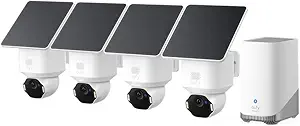 |
| Best Value The sweet spot between price and what you get | Tapo SolarCam C402 KIT |  |
| Best Budget The cheapest option that still gets the job done reliably | ZOSI 1080P Bullet Camera 1AC-2116E |  |
| Top Rated A top-rated pick with lots of positive feedback | REOLINK RLC-520A 5MP Dome |  |
| Most Popular A crowd favorite that many people choose with confidence | Tapo C500 Outdoor Pan/Tilt Camera | 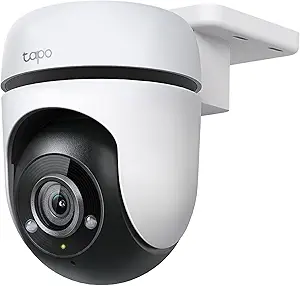 |
| Best Seller A high-volume bestseller chosen again and again | Blink Outdoor 4 Camera |  |
Arlo Essential Battery 3rd Gen 3-Pack

| Video Capture Resolution | 1440p |
|---|---|
| Field Of View | 130 degrees |
| Night Vision Range | 25 feet |
| Power Source | Battery Powered |
| Connectivity Technology | Wireless (Wi-Fi) |
The Arlo Essential Battery (3rd Gen) 3-pack is a straightforward DIY outdoor camera set that focuses on easy, wire-free installation and reliable day/night monitoring. Each camera records at 2K resolution with a 130 degree field of view and color night vision, so you can make out vehicle and clothing color after dark, and the 12x zoom helps with closer inspection of distant activity. These run on rechargeable batteries and mount with simple screws, making placement flexible around doors, driveways, and yards; Dual-Band Wi-Fi supports stable connections without a hub. The cameras include two-way audio, an integrated siren and spotlight for on-demand deterrence, and app alerts for person, vehicle, package, and pet detections when paired with Arlo Secure. Practical limits to expect are battery upkeep for active sites and the dependence on Arlo cloud features for advanced AI and 60-day history after the trial expires. For a buyer wanting a reliable, easy-to-install system for general outdoor coverage, this kit balances image quality, convenience, and sensible smart features.
Best for: Buyers who want a simple, no-hub DIY outdoor camera kit that balances good image quality, flexible placement, and basic smart alerts for everyday home monitoring.
Less Ideal for: Users who need continuous local recording or extended cloud history without subscriptions or who prefer a fully hardwired, maintenance-free surveillance solution.
- 2K resolution with 130 degree field of view and color night vision for clear daytime and nighttime footage
- Rechargeable, wire-free design enables flexible screw-in outdoor installation without a hub
- Built-in spotlight, two-way audio, and siren provide live deterrence and interaction
- Works with Alexa, Google Assistant, Apple Home (with compatible hub), and IFTTT for smart home integration
- Advanced AI detections and extended 60-day cloud history require a paid Arlo Secure subscription after the trial
- Battery-powered operation means regular recharging or removal for high-activity locations
Verdict: A practical, easy-install 2K wireless camera kit that delivers clear day/night coverage and essential smart alerts for DIY outdoor security.
eufy SoloCam E42 4-Cam Kit

| Power Source | Battery Powered |
|---|---|
| Battery Power | 55.98 watt-hours |
| Video Capture Resolution | 4k |
| Connectivity Protocol | Wi-Fi |
The eufy SoloCam E42 4-Cam Kit is a performance-focused outdoor security package that combines 4K resolution, 360-degree pan and tilt, and SolarPlus 2.0 charging to deliver continuous, high-detail coverage with minimal maintenance. Typical use is perimeter monitoring of yards, driveways, and entryways where clear identification and active deterrence matter; the kit pairs four E42 cameras with HomeBase 3 for built-in storage and optional continuous recording. Notable features include BionicMind AI for person/vehicle/face recognition and automatic tracking, a bright strobe light and siren for instant deterrence, two-way audio, and Wi-Fi connectivity for phone alerts. Practical benefits are excellent image detail (4K and 8x zoom for distant license plates), cross-camera tracking to follow targets across angles, and expandable local storage without mandatory cloud subscriptions. Limitations to weigh: peak performance leans on using the included HomeBase 3 or direct power for 24/7 recording, and full continuous-record functionality requires additional hard drive or compatible direct-power accessories; also effective solar charging requires adequate daily sunlight and appropriate mounting locations.
Best for: Buyers who prioritize high-resolution, proactive perimeter surveillance and want local storage and integrated deterrence without relying on monthly cloud subscriptions.
Less Ideal for: People who need a purely battery-only setup in heavily shaded locations or who prefer turnkey cloud-only recording and subscription-based features.
- True 4K UHD video with 8× zoom for clear identification at distance
- SolarPlus 2.0 enables near-continuous operation with minimal maintenance
- BionicMind AI with auto-tracking and cross-camera tracking reduces false alerts
- Built-in HomeBase 3 storage with expandability up to 16TB and no mandatory subscription
- Instant deterrence via bright strobe lights and siren plus two-way audio
- 24/7 continuous recording requires direct power mode or HomeBase 3 with added hard drive
- Solar charging performance depends on mounting location and available sunlight
Verdict: If you want high-resolution, solar-assisted outdoor surveillance with advanced AI tracking and local storage to avoid subscription fees, this kit delivers strong performance for DIY perimeter security.
Tapo SolarCam C402 KIT

| Video Capture Resolution | 1080p |
|---|---|
| Frame Rate | 30 frames_per_second |
| Viewing Angle | 125 degrees |
| Night Vision Range | 30 feet |
| Power Source | Battery Powered |
The Tapo SolarCam C402 KIT is a DIY-friendly outdoor security camera that combines a rechargeable battery camera with an included solar panel so you can place it where traditional power is inconvenient. It captures 1080p/30fps video with a 125-degree field of view, color night vision up to about 30 feet, and a built-in spotlight and two-way audio for live interaction. The camera uses 2.4 GHz Wi‑Fi and integrates with the Tapo app plus Alexa and Google Assistant for live view and voice checks. Motion and person detection with configurable activity zones cut down false alerts, and you can store footage on a microSD card (up to 512 GB) or opt for the vendor cloud service. Practical touches include an IP65 waterproof rating and a long solar-panel cable for flexible mounting. Expect battery life and solar charging to vary with sunlight, usage patterns, and settings, and know that full feature performance depends on a stable 2.4 GHz Wi‑Fi connection and occasional app tuning.
Best for: Buyers who want a low-maintenance, DIY outdoor camera that can be sited away from outlets and prioritizes easy setup, reliable daytime video, and simple local storage options.
Less Ideal for: Those needing multi-camera professional systems, wired PoE setups, or guaranteed continuous recording without dependence on solar conditions or home Wi‑Fi should look elsewhere.
- Includes solar panel and long cable for flexible, low-maintenance outdoor placement
- 1080p live video with color night vision and built-in spotlight for clearer night footage
- Free person detection and configurable activity zones reduce false alerts
- Supports local microSD storage up to 512 GB plus optional cloud backup
- Two-way audio and voice assistant integration for remote interaction
- Relies on 2.4 GHz Wi‑Fi and signal strength can limit placement or require a stronger router or extender
- Actual battery life and solar charging performance vary significantly with sunlight and usage patterns
Verdict: A practical, no-fuss outdoor camera kit that pairs battery power with an included solar panel to deliver reliable DIY coverage and easy local storage.
ZOSI 1080P Bullet Camera 1AC-2116E

| Video Capture Resolution | 1080p |
|---|---|
| Video Capture Format | TVI/AHD/CVI/CVBS |
| Night Vision Range | 80 feet |
| Waterproof Rating | IP66 |
| Power Source | 12 volts |
This ZOSI bullet camera is a budget-friendly wired surveillance camera designed to add a single outdoor or indoor feed to an analog DVR system. It supports 4-in-1 video outputs (TVI, AHD, CVI, and CVBS/960H) and includes an OSD joystick so you can switch formats to match your DVR in about five seconds. The 3.6mm lens and 90 degree field of view deliver clear 1080p images during the day, while 24 IR LEDs and automatic IR-cut give usable black-and-white night footage to roughly 80 feet. The metal, weatherproof housing is vandal resistant and mounts with a three-axis bracket for flexible aiming. Because it is a hard-wired BNC camera, installation requires separate coax and a 12V power supply and it will not record without a compatible DVR. Frame rates up to 60 fps and image enhancements like DWDR and 3D-DNR help with contrast and low-light noise, but advanced features such as built-in recording, PoE, or wireless connectivity are not available on this model.
Best for: DIYers putting together a low-cost wired DVR system who prioritize clear 1080p footage and reliable outdoor weatherproofing over wireless convenience.
Less Ideal for: People who want a plug-and-play wireless camera, PoE simplicity, or built-in cloud/SD recording should look at IP or Wi‑Fi camera options instead.
- Supports TVI/AHD/CVI/CVBS outputs for wide DVR compatibility
- True 1080p capture with 90° field of view for clear daytime detail
- 80 ft IR night vision with 24 LEDs for usable nocturnal coverage
- Metal, weatherproof IP66 housing and vandal-resistant build for outdoor use
- Built-in OSD joystick makes switching video modes quick without extra tools
- Requires separate BNC coax cable and 12V power supply; cables not included
- No PoE or onboard recording so a compatible DVR is required to record footage
- Wired-only design needs basic CCTV installation skills and tools
Verdict: A practical, budget-friendly wired 1080p bullet camera for DIY DVR setups that need weatherproof outdoor coverage and wide analog format compatibility.
REOLINK RLC-520A 5MP Dome

| Video Resolution | 5 MP (2560 x 1920) at 25fps |
|---|---|
| Power Source | Power Over Ethernet (IEEE 802.3af) or 12V DC |
| Night Vision Range | 100 feet |
| Weatherproof Rating | IP67 |
| MicroSD Support | Up to 512GB |
The REOLINK RLC-520A is a wired PoE outdoor dome camera designed for DIY installs that need reliable, high-resolution footage. It records 5MP video at 25 fps and supports continuous or motion-triggered recording to microSD, Reolink NVR, FTP, or NAS, while PoE simplifies wiring by delivering power and data over one cable. The camera includes smart detection for people, vehicles, and animals to reduce false alerts, push notifications and email alerts with snapshots, plus a built-in microphone for ambient sound. Night vision with IR delivers usable black-and-white images to about 100 feet and Reolink also advertises night color performance. The unit is weatherproof to IP67 and supports standard browsers and the Reolink apps for remote viewing and multi-user access. Expect a straightforward, stable connection when used with a Reolink PoE switch, injector, or NVR but note third-party NVRs are not supported for smart features, and you must manage firmware updates to enable the pet detection capability. The result is a dependable choice for homeowners who want clear footage and robust motion filtering without relying on Wi-Fi.
Best for: Homeowners or DIY installers who prioritize a stable wired connection and clear, high-resolution footage for outdoor monitoring and want built-in analytics to reduce nuisance alerts.
Less Ideal for: Users who need a camera that integrates with third-party NVRs or cloud services for advanced features, or those who prefer a wireless/Wi-Fi setup.
- 5MP resolution at 25 fps for detailed daytime footage
- Power over Ethernet reduces cabling and improves connection stability
- Smart person/vehicle/animal detection cuts down false alerts
- IP67 weatherproof rating for outdoor durability
- Multiple recording options including microSD (up to 512GB) and Reolink NVR
- Smart detection and advanced playback work best only with Reolink NVR/software rather than third-party NVRs
- Animal detection requires a firmware update to enable
Verdict: Choose the RLC-520A if you want a dependable wired outdoor camera with crisp 5MP video, PoE convenience, and smart detection to cut false alarms.
Tapo C500 Outdoor Pan/Tilt Camera

| Video Capture Resolution | 1080p |
|---|---|
| Viewing Angle | 360 degrees |
| Night Vision Range | 30 meters |
| Waterproof Rating | IP65 |
| Memory Storage Capacity | 512 GB |
The Tapo C500 is a wired outdoor dome camera built for DIY perimeter coverage. It pans and tilts to provide 360° horizontal and 130° vertical viewing ranges, and streams 1080p video at up to 15 fps to the Tapo app over 2.4 GHz Wi‑Fi. Smart motion tracking and person detection let the camera follow moving subjects and trigger customizable sound and light alarms, while two‑way audio makes it easy to speak through the camera from a phone. Night vision reaches roughly 98 feet using IR illumination, and recordings can be saved to an installed microSD card (up to 512 GB) or Tapo Care cloud. The camera is IP65 weather resistant for outdoor mounting and includes a mounting template, power adapter, and screws. Practical limits to expect are a corded power requirement and a modest 15 fps frame rate, which is acceptable for general surveillance but not ideal for fast action capture, and reliance on a 2.4 GHz network for connectivity. For buyers who want wide-area coverage without complex setup, the C500 is a straightforward, feature-rich option.
Best for: Buyers who want an easy DIY outdoor camera that covers wide areas and uses app-based smart detection for reliable everyday surveillance and social proof from established user ratings.
Less Ideal for: Users who need battery-powered or completely wireless placement options or who demand high‑frame‑rate video for fast action or professional evidence capture.
- 360° horizontal and 130° vertical pan/tilt coverage eliminates blind spots
- 1080p video with smart person detection and motion tracking for focused alerts
- Sharp IR night vision up to about 98 feet for reliable low‑light monitoring
- Supports large local storage via microSD (up to 512 GB) plus optional cloud
- IP65 weather resistance and included mounting hardware for outdoor installation
- Requires corded power which limits placement flexibility
- Frame rate is 15 fps, which may miss very fast motion details
Verdict: A practical wired outdoor pan/tilt camera that gives full perimeter coverage with smart motion tracking and flexible local or cloud storage for DIY home security.
Blink Outdoor 4 Camera

| Video resolution | 1080p HD |
|---|---|
| Night vision | Infrared |
| Connectivity | Wireless |
| Included power | AA Energizer lithium batteries |
| Sync module | Sync Module Core included |
The Blink Outdoor 4 is an entry-level wireless camera designed for simple DIY outdoor monitoring. It streams 1080p HD video with infrared night vision and offers two-way talk through the Blink app, making it practical for checking driveways, porches, and yards. The system includes a Sync Module Core and ships with two AA Energizer lithium batteries claimed to deliver up to two years of battery life, which reduces maintenance for homeowners who do not want constant recharging. Enhanced dual-zone motion detection and optional person-detection via Blink subscription help cut down on needless alerts, and native Alexa integration makes voice access and multi-camera live view convenient. Limitations include lack of built-in local storage with the included Sync Module Core and reliance on cloud storage for easy clip saving unless you add a different Sync Module variant or external storage devices sold separately. For buyers who prefer minimal setup and long battery life over advanced on-device features, this is a sensible, straightforward option.
Best for: Homeowners who want a low-effort, battery-powered outdoor camera system that is easy to install and minimizes upkeep while providing basic live view and motion alerts.
Less Ideal for: Users who need built-in local storage or advanced on-device analytics without a subscription or additional hardware should consider other systems with native local recording.
- Long battery life with included AA Energizer lithium batteries and Sync Module Core for reduced maintenance
- 1080p HD live view with infrared night vision for day and night monitoring
- Two-way audio lets you speak through the camera from the app
- Dual-zone enhanced motion detection helps focus alerts on important areas
- Works with Alexa for voice commands and multi-camera live view
- Sync Module Core does not include local storage, so cloud subscription or a different sync module is needed for easy clip backup
- Advanced person-detection and CV features require an optional subscription
Verdict: Choose the Blink Outdoor 4 if you want an easy-to-install, low-maintenance wireless outdoor camera with long battery life and straightforward app control.
Choosing the Right DIY Outdoor Security Camera: Key Factors to Consider
Video Resolution and Low-Light Performance
Higher resolution provides more detail for identifying faces, license plates, and other critical features. For outdoor cameras, 1080p is a practical minimum, while 2K or higher improves clarity at longer distances.
Low-light performance matters because many incidents happen at dawn, dusk, or night. Check for true night-vision capabilities such as infrared illumination or high-sensitivity sensors rather than image-brightening algorithms that introduce noise. Better night performance reduces the chance you miss important details in dim conditions.
Motion Detection and False Alarm Control
Accurate motion detection reduces unnecessary alerts and helps you focus on real events. Look for cameras with configurable detection zones and sensitivity settings so you can ignore predictable motion like nearby trees or passing cars.
Advanced motion analytics, such as human or vehicle detection, can further cut down false positives. Evaluate how the camera handles repeated motion and whether it groups events intelligently to avoid alert fatigue.
Connectivity and Remote Access
Reliable network performance determines whether video streams smoothly and notifications arrive promptly. Most DIY cameras use Wi-Fi, so assess the camera's supported bands and whether it handles weaker signals well.
The companion app and cloud service experience is crucial for daily use. A clear, responsive app with easy playback, event search, and sharing options saves time. Also consider whether local recording options such as microSD or a network video recorder are available if you prefer not to rely exclusively on cloud storage.
Power Options and Installation Ease
Power flexibility affects where you can place the camera. Battery-powered models offer placement freedom but require periodic recharging or battery swaps. Wired cameras eliminate battery maintenance but may need more complex installation.
Solar-capable cameras or those with long battery life reduce maintenance. Consider how easy it is to mount the camera, whether the unit supports common mounting surfaces, and whether simple tools suffice for most installations.
Weather Resistance and Longevity
Outdoor cameras must withstand rain, wind, heat, and cold. Look for weather-resistant ratings and corrosion-resistant materials. Durable housings and quality seals prevent moisture intrusion and electronics failure.
Long-term reliability also depends on firmware update support and replacement-part availability. A camera that receives regular software updates is less likely to develop security or performance problems over time.
Privacy, Storage, and Data Control
How video is stored and who can access it matters for privacy. Some cameras default to cloud storage while others allow local backup options. Determine whether footage is encrypted in transit and at rest, and what controls you have over sharing or deleting video.
Understand the retention policies of any included cloud service and whether you can manage storage costs or choose a pay-as-you-go plan. Local recording offers maximum control but requires planning for backup and retrieval.
Installation Tips for DIY Outdoor Cameras
Plan camera placement to cover likely approaches to your property without pointing directly at neighbors windows. Mount higher than head height to reduce tampering and to widen the field of view. Consider line of sight for typical angles and test the camera feed before finalizing the mount.
When running wiring, protect cables with conduit or routed channels and use weather-rated connectors. For battery cameras, install them where sunlight reaches a solar panel if you use one. If relying on Wi-Fi, test the signal at the planned mounting spot; a small mesh node or Wi-Fi extender can eliminate dead zones.
- Tip: mark and test drill holes before installing the bracket.
- Tip: use foam weather seals around cable pass-throughs.
- Tip: point cameras slightly downward to reduce lens flare and sky exposure.
Managing Alerts and Reducing False Positives
Start with conservative sensitivity settings and a single detection zone to learn typical activity patterns. Review alerts for several days and tighten zones or lower sensitivity around frequent non-threat motion sources like branches or busy streets.
Enable human or vehicle detection if available to filter out pet and insect triggers. Use schedule-based arming to mute notifications during predictable activity windows, such as daytime yard work or scheduled deliveries.
- Use smart schedules to limit overnight alerts to high-priority zones.
- Create geofencing rules where the camera arms when you leave the property.
Power Maintenance and Battery Care
For battery models, monitor battery health in the app and set low-battery alerts. Rotate spare batteries or schedule recharges during low-activity periods to avoid gaps in coverage. Consider solar panels or extended-life batteries for remote locations.
Wired cameras reduce maintenance but may need surge protection in lightning-prone areas. Use weatherproof junction boxes and ensure connections are tightened and sealed to prevent moisture entry.
- Check battery contacts periodically for corrosion.
- Avoid placing solar panels in shaded areas even for brief parts of the day.
Privacy and Local Storage Strategies
Decide whether to use cloud storage, local storage, or both. Local recording via microSD or a network video recorder keeps footage under your control but requires planning for redundancy and periodic backups. Cloud storage simplifies off-site retention but review the provider's retention policies and privacy terms.
Limit who has access to live feeds and recorded clips by using strong, unique account passwords and enabling multi-factor authentication if available. Regularly audit shared links and user permissions.
- Rotate passwords every few months and remove access for former household members.
- Keep a local backup of critical footage in case a cloud account is compromised.
Positioning for Best Identification
To capture identifiable images, place cameras at an angle that frames faces or license plates rather than at extreme distances. A location near porch lights or street lamps can help but avoid direct backlighting that silhouettes subjects.
Adjust field of view and zoom settings where possible to prioritize key approaches such as driveways, front doors, and side gates. Test recordings at different times of day to confirm consistent identification capability.
- Aim for coverage that captures people at chest height rather than from above.
- Use a second camera to cover blind spots if a single camera cannot provide both wide coverage and close-up detail.
How We Chose the Best DIY Outdoor Security Camera
We focused on attributes that meaningfully affect day-to-day use for DIY outdoor security cameras. Primary criteria included video resolution and low-light performance, because clear footage is essential for identification; motion detection accuracy and configurable alerts, since false alarms waste attention; and connectivity and app usability, which determine how reliably video streams and notifications reach you. Power and installation flexibility were scored to reflect whether cameras suit wired, battery, or solar setups and how easy mounting is for a typical homeowner. Finally, weather resistance and build quality were assessed to ensure long-term durability outdoors. We excluded devices that require professional installation or are primarily intended for commercial or enterprise deployments. We also filtered out cameras that lack basic remote access or that depend on obscure or deprecated networking standards. The shortlist therefore emphasizes practical DIY fitment, straightforward network compatibility, and robust outdoor performance.
Our full evaluation process is outlined in our review methodology.
FAQ
Do DIY outdoor cameras work without a subscription?
Many DIY outdoor cameras offer basic live view and local recording without a subscription. Advanced features like cloud storage, extended event history, or enhanced analytics often require a paid plan. Local storage options such as microSD cards let you retain footage without ongoing fees, but check retention limits.
How do I improve Wi-Fi for an outdoor camera?
Improve Wi-Fi by placing the router or a mesh node closer to the camera, using a weatherproof access point, or adding a dedicated outdoor extender. Test signal strength at the mounting location and consider switching to a 2.4 GHz band for better range when coverage is marginal.
Can battery-powered cameras handle cold weather?
Battery performance typically declines in cold conditions, so check the operating temperature range and battery management features. Some cameras offer cold-weather battery kits or recommend insulated housings. For very low temperatures, wired power or a heated enclosure may be more reliable.
Is local recording more private than cloud storage?
Local recording keeps footage under your physical control and reduces dependence on third-party retention policies. However, local storage can be lost if the camera is stolen or damaged. A combined approach using both local and encrypted cloud backups provides the best mix of privacy and redundancy.
How often do outdoor cameras need firmware updates?
Manufacturers release firmware updates irregularly, typically to patch security issues or add features. Check for updates at least quarterly and enable automatic updates if the option is available to ensure the camera remains secure and compatible with your network.
Final Verdict
When choosing a DIY outdoor security camera, prioritize clear video and dependable motion detection because those features determine how useful footage will be during an incident. Balance power and installation needs with your site constraints: battery models offer placement flexibility while wired cameras reduce maintenance. Consider connectivity and storage tradeoffs between local control and cloud convenience, and invest a little time in placement and alert tuning to minimize false alarms. Focus on the evaluation criteria outlined earlier to match a camera to your coverage, maintenance, and privacy priorities and you can confidently choose a reliable DIY surveillance solution.