
Note: This article contains affiliate links. If you click on these links and make a purchase, we may earn a small commission at no extra cost to you. This helps support our research and content. Read our full affiliate disclosure here.
If you want coffee that tastes closer to beans and worry about plastic contacting your brew, selecting a drip coffee maker with minimal or no plastic parts matters. A no-plastic drip brewer reduces the risk of off-flavors and exposure to heat-warped plastics and often uses glass or stainless components that feel more durable in daily use. This guide highlights the top picks we shortlisted for people seeking drip coffee makers that avoid plastic in water paths, brew baskets, and carafes. We evaluated each option for brew quality, material integrity, ease of cleaning, and day-to-day reliability. Read on for concise buying guidance and what to expect from plastic-free brewing choices.
Top Picks at a Glance
| Best Quality Built to a higher standard if you want something more solid | Simply Good Coffee The Brewer |  |
| Best Value The sweet spot between price and what you get | Fellow Stagg XF Pour-Over Set |  |
| Best Budget The cheapest option that still gets the job done reliably | Obsoorth Glass Pour Over Coffee Maker |  |
| Top Rated A top-rated pick with lots of positive feedback | Chemex Classic Series 8-Cup |  |
| Most Popular A crowd favorite that many people choose with confidence | Bodum Pour Over 17oz |  |
Simply Good Coffee The Brewer

| Wattage | 1560 watts |
|---|---|
| Capacity | 8 cups |
| Coffee input type | Ground |
| Operation mode | Fully Automatic |
| Other special features | Auto Shut-Off |
The Simply Good Coffee The Brewer is a pour-over style drip machine built to avoid any plastic contact with water and to reproduce pour-over flavor at home. It heats water to the recommended 195°F–205°F range and brews up to eight cups in roughly six minutes, using a glass carafe and stainless steel body. Operation is simple: one-button brewing with an optional bloom cycle for better extraction, plus a hot plate to keep coffee warm. The machine includes a removable mixing tube and dishwasher-safe parts for easier cleanup. Practical benefits are its focus on flavor extraction, quick cycle time for an 8-cup batch, and a compact footprint that fits most counters. Important limitations are a relatively high wattage requirement and the lack of advanced controls like strength, programmable scheduling, or built-in grinder, so it favors straightforward performance over customization. For buyers prioritizing a plastic-free water path and reliable extraction, it delivers a clean, consistently flavorful cup with minimal fuss.
Best for: Buyers who prioritize brew quality and a plastic-free water path and want a fast, straightforward machine that reproduces pour-over style extraction without fuss.
Less Ideal for: Users who want heavy customization, programmable timers, or an integrated grinder should consider other machines that offer advanced controls and features.
- Plastic-free water path and stainless steel plus glass construction reduce taste-impacting materials
- Heats water in the recommended 195°F–205°F range for optimal extraction
- Optional bloom feature improves saturation for better flavor from fresh beans
- Brews up to 8 cups in about six minutes with a hot plate to keep coffee warm
- Simple one-button operation and removable dishwasher-safe parts for easy use and cleaning
- No programmable brew scheduling or strength controls for customization
- Higher wattage requirement and basic controls mean fewer advanced features for power users
- Does not include a built-in grinder, so fresh-ground coffee requires a separate device
Verdict: If you want a fast, plastic-free drip brewer that focuses on proper temperature and pour-over style extraction with minimal hassle, this is a solid choice.
Fellow Stagg XF Pour-Over Set
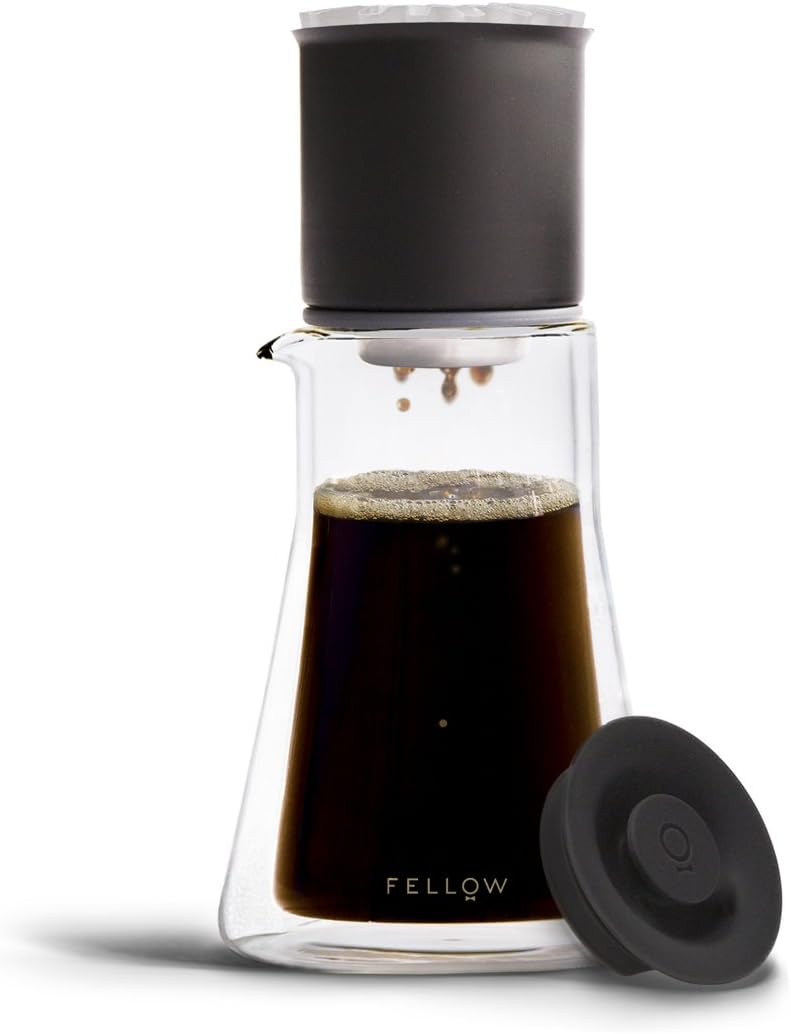
| Capacity | 600 ml |
|---|---|
| Material | Borosilicate Glass Silicone Stainless Steel |
| Filter Type | Paper |
| Operation Mode | Manual |
The Fellow Stagg XF Pour-Over Set is a compact manual brewing kit designed to make a clean, bright cup with minimal fuss. The stainless steel flat-bottom dripper uses a steep slope and built-in ratio aid so you can pour, fill, and walk away to brew 1–2 servings without precise weighing, and the included paper filters are shaped to match the dripper for consistent extraction. Coffee brews directly into the 20-ounce double-wall borosilicate glass carafe, which keeps the drink insulated while allowing you to monitor color and volume. This set is aimed at everyday use—quick morning pours, small-batch cold brew, or steeping tea—and its all-stainless-steel/drilled-metal dripper and glass carafe avoid plastic contact with the brew. The advantages are predictable extraction, easy cleanup, and a compact footprint for countertop use, while the manual process means you still control pouring technique and hot water source. If you want automatic brewing or larger batch capacity, this small 1–2 cup kit will feel limited, but for someone optimizing for practical, low-plastic brewing it delivers consistent results and durable materials.
Best for: Buyers who prioritize low-plastic, durable materials and want a simple, repeatable pour-over routine for one or two cups without complicated scales or gadgets.
Less Ideal for: If you regularly brew for several people, need fully automatic scheduling, or want higher daily volume, this small manual set is not the best choice.
- Stainless steel dripper reduces plastic contact with brewed coffee
- Built-in ratio aid guides dosing for repeatable 1–2 cup brews
- Double-wall borosilicate carafe insulates while letting you see the brew
- Includes custom-shaped paper filters for optimized extraction
- Compact kit is simple to clean and store
- Limited to small 1–2 serving batches, not suited for brewing for larger groups
- Manual pour technique still affects consistency compared with automated brewers
Verdict: A compact, low-plastic pour-over kit that makes reliable 1–2 cup brews with simple, repeatable dosing guidance.
Obsoorth Glass Pour Over Coffee Maker
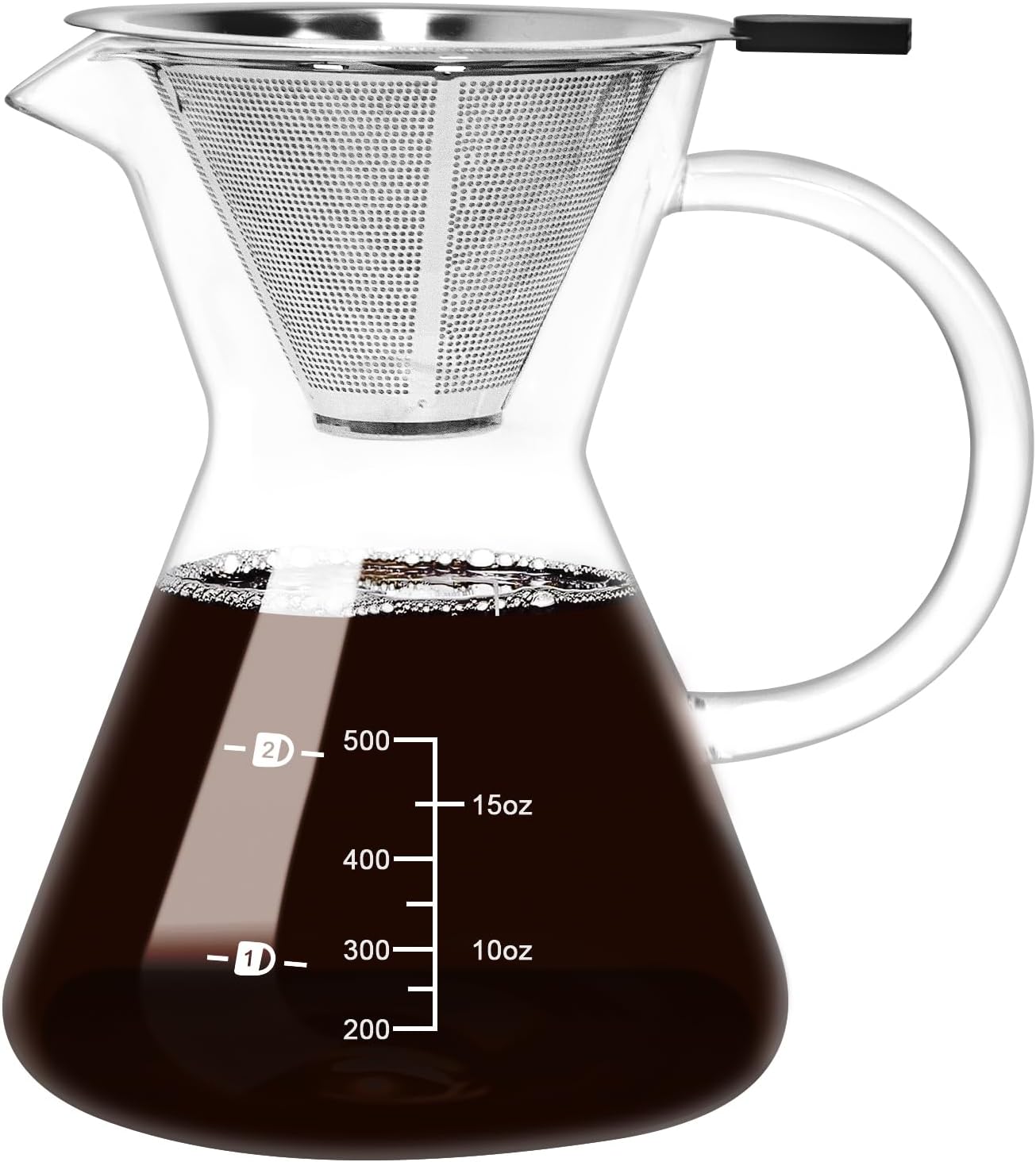
| Capacity | 17oz/500ML |
|---|---|
| Material | Stainless Steel, Borosilicate Glass |
| Filter Type | Reusable double-layer stainless steel |
| Coffee Maker Type | Pour Over |
This Obsoorth pour-over brewer is a simple, plastic-free option for making filtered coffee by hand. The 17oz borosilicate glass carafe has clear graduated markings and an ergonomic glass handle, so it is easy to measure, pour, and serve up to about four small cups per brew. Instead of paper, the included 304 stainless steel double-layer filter traps grounds while letting oils through for a fuller cup and removes the recurring cost and waste of disposable filters. The wide mouth and removable metal filter make rinsing or dishwashing straightforward, and the glass is rated for heat resistance so it can be used with near-boiling water and taken camping. Expect a manual ritual rather than automated speed: you will need a kettle and a little technique to get consistent extraction. Also the 17oz capacity is modest for larger households, and metal filters let more sediment through than fine paper, which some drinkers may notice. For buyers avoiding plastic and paper filters on a budget, this unit delivers a durable, easy-to-clean pour-over setup.
Best for: Buyers seeking an affordable, plastic-free pour-over that removes the ongoing cost of paper filters and supports a hands-on brewing ritual.
Less Ideal for: People who want large-batch automatic brewing or perfectly sediment-free cups should consider other options.
- Plastic-free construction with borosilicate glass and stainless steel
- Reusable double-layer stainless steel filter eliminates paper filters
- Clear volume markings and ergonomic handle for controlled brewing
- Dishwasher-safe components and stovetop-safe glass for easy cleaning and versatility
- 17oz capacity is small for serving multiple people at once
- Metal filter allows more fine sediment and oils through compared with paper
Verdict: A budget-friendly, plastic-free pour-over that replaces paper filters with a reusable stainless steel system for simple, low-waste brewing.
Chemex Classic Series 8-Cup

| Capacity | 40 fluid ounces |
|---|---|
| Material | Borosilicate Glass |
| Filter Type | Paper |
| Operation Mode | Manual |
The Chemex Classic Series 8-Cup is a straightforward, all-glass pour-over brewer designed for manual drip brewing without plastic contact with the brew. You set a bonded paper filter into the wide top, add ground coffee, and pour hot water in a controlled spiral to extract flavors while the non-porous borosilicate glass carafe preserves coffee clarity and avoids off-flavors. Its 40-ounce capacity suits multi-cup batches for households or small gatherings and the simple glass form is dishwasher safe for easy cleaning. Because it is manual, brewing requires a steady pour and basic timing technique, so it is best for users who enjoy hands-on preparation rather than push-button convenience. Filters are not included and the unit relies on specific Chemex-style bonded papers to achieve the clean, sediment-free cup the design is known for. There are no electrical parts or plastic in the brewing path, which keeps the coffee tasting pure but means you will need a separate kettle if you want temperature control or a gooseneck for precision pours.
Best for: Buyers who prioritize long-term reliability and an all-glass, plastic-free brewing path and who are comfortable with manual pour-over technique for daily or batch brewing.
Less Ideal for: People who want an automated, one-touch brewer or who prefer an all-in-one appliance with built-in temperature control and no manual pouring.
- Non-porous borosilicate glass prevents flavor transfer and is easy to clean
- All-glass brew path with paper filters avoids plastic contact with coffee
- Large 40 fl oz capacity suitable for serving multiple cups at once
- Dishwasher-safe carafe simplifies cleanup and maintenance
- Requires practice and a steady pour for consistent extraction
- Does not include filters or a kettle so additional purchases are needed
Verdict: Choose the Chemex 8-Cup if you want a reliable, all-glass pour-over that delivers a clean, plastic-free cup for multi-cup brewing.
Bodum Pour Over 17oz

| Capacity | 500 ml |
|---|---|
| Filter Type | Stainless Steel Filter |
| Material | Glass, Cork |
| coffee_filter_size | #4 |
The Bodum Pour Over is a simple, plastic-free pour-over brewer built around a heat-resistant borosilicate glass carafe and a permanent stainless steel mesh filter. You add coarsely ground coffee to the cone-shaped filter, pour hot water in a slow circular motion, and the coffee drips into the carafe in about 3 to 4 minutes. The reusable steel filter preserves oils and flavor that paper filters can trap while eliminating paper waste, and the cork sleeve keeps the carafe comfortable to pour when hot. The carafe and filter are dishwasher safe, though the cork band should be hand-cleaned. Because it is manual and compact, it is best for single-serve or two small cups rather than large batches. There is no temperature control or automated pour profile, so consistent results rely on kettle technique and grind size. For buyers focused on simple, low-waste brewing and clean materials, this is a reliable, attractive option that performs like a classic pour-over without plastic contact with the brew.
Best for: Buyers who prioritize low-waste, plastic-free brewing and want a simple manual brewer that emphasizes flavor extraction and easy cleanup backed by strong user reviews.
Less Ideal for: People who need large-volume brewing, hands-off automatic brewing, or precise temperature and pour control should choose a different style of coffee maker.
- Borosilicate glass carafe resists thermal shock and preserves flavor.
- Reusable stainless steel filter keeps natural coffee oils and eliminates paper waste.
- Cork sleeve provides a comfortable, nonplastic grip and an attractive look.
- Dishwasher-safe carafe and filter simplify cleaning.
- No built-in temperature control or pouring aid, so consistent brewing depends on user technique.
- Small 500 ml capacity limits it to one to two cups per brew.
Verdict: A compact, low-waste pour-over that delivers fuller-flavored cups without paper filters, ideal for buyers who want a plastic-free manual brewer backed by positive social proof.
Choosing the Right Drip Coffee Maker No Plastic: Key Factors to Consider
Construction Materials
Look beyond marketing phrases and inspect which parts actually contact water and hot coffee. Stainless steel and glass resist heat-related leaching and preserve flavor better than many plastics. A glass carafe and a stainless or ceramic filter basket cut plastic contact at the two most critical touchpoints: the brewed coffee and the grounds.
Also consider internal water lines and the tank interior. Some brewers use plastic externally but route water through stainless or glass paths. If you are avoiding plastic for health or taste reasons, prioritize machines that specify metal or glass water paths and avoid those that rely on plated or coated plastics as a substitute.
Brew Temperature And Extraction
Temperature matters for extraction and flavor. A machine that holds water in a narrow acceptable range will extract coffee more evenly and produce a fuller flavor profile. Plastic components near the heating element can change temperature behavior by insulating or altering heat transfer.
Choose a brewer that documents stable brew temperature and has features that promote even saturation of the grounds, such as showerhead-style water distribution or pour-over-inspired delivery. These mechanical design choices often matter more for extraction than simply having a hotter heater.
Cleaning And Maintenance
A no-plastic machine can still be high maintenance if parts are hard to access or fragile. Look for wide openings, removable showerheads, and glass carafes with durable handles that make routine cleaning simple. Dishwasher-safe glass or stainless parts reduce the friction of upkeep.
Also think about descaling access. Machines that require disassembly to descale or clean hidden channels will create more friction in ownership. Prefer designs with user-accessible water tanks, easily removable brew baskets, and straightforward paths for cleaning solutions.
Capacity And Daily Use
Consider how many cups you brew regularly and choose a capacity that matches your routine. Brewing too little in a very large carafe can leave coffee sitting and degrading; brewing too frequently with a small brewer can be inconvenient. Glass carafes show liquid level at a glance and can help you judge how much to make.
Also evaluate programmability and timer features if you want ready coffee in the morning. A fully mechanical brewer can be simpler and longer-lived, while a programmable unit adds convenience but introduces more electronic parts you should inspect for proximity to water paths.
Replacement Parts And Longevity
A machine that is easy to repair extends the practical life of your investment and reduces waste. Check whether common wear items such as gaskets, carafe lids, and showerheads are replaceable and whether replacement parts are straightforward to install.
Durable materials like stainless fittings and tempered glass carafes usually last longer than thin molded parts. A design that lets you disassemble for maintenance without special tools will be easier to keep in good working order over years of use.
Why Minimizing Plastic Matters For Coffee
Plastic can introduce flavors when heated and may change the sensory profile of a brewed coffee. Minimizing plastic contact keeps the cup tasting more like the beans and less like the container.
Beyond flavor, many buyers choose low-plastic designs to avoid repeated exposure to heated polymers. Choosing glass or stainless components addresses both sensory and material concerns in one design decision.
- Glass preserves flavor neutrality and lets you watch pour and level.
- Stainless interior passages reduce thermal degradation over time.
- Avoiding plastic in the hot path is more important than in external trim.
Common No-Plastic Design Approaches
Manufacturers reduce plastic use in different ways. Some supply glass carafes and stainless filter baskets while still using plastic for external housings. Others reroute the water path through stainless tubing and use metal showerheads to limit hot water contact with plastic.
Understand which approach matters most for you. If your priority is no plastic in the brewed coffee itself, focus on carafe and filter materials. If your priority also includes hot water reservoirs and piping, verify the listed construction details.
- Glass carafe plus stainless filter basket: common and effective.
- Stainless-lined water path: reduces internal plastic exposure.
- Ceramic components: good for flavor but heavier and more fragile.
How To Test Brew Temperature At Home
You can assess temperature behavior with a simple thermometer. Brew a full cycle and measure the temperature immediately after the coffee exits the showerhead or collects in the carafe. Target brew temperatures for good extraction typically fall between 195 and 205 degrees Fahrenheit, though exact ranges vary by roast and grind.
If you do not have a thermometer, look for visual cues: rapid, even flow through the grounds and quick heat-up of the carafe usually indicate adequate heater performance. Repeated cool brews or under-extracted tasting notes suggest the machine may not maintain appropriate temperatures.
- Measure at the brew outlet for the most accurate reading.
- Run a few blank cycles when new to stabilize internal components.
- Adjust grind size and dose to compensate for cooler or hotter brews.
Keeping A Plastic-Free Setup Clean
Glass and stainless are easy to clean but show stains and mineral buildup more visibly. Regular descaling and hand-washing removable parts prevents residue from changing flavor and performance. Use mild cleaners and avoid abrasive pads that can scratch glass or metal finishes.
Replace worn seals promptly. Even a largely metal brewer will use gaskets or small connectors that wear with time. Maintaining those parts preserves the intended plastic-minimal experience and keeps the brewer reliable.
- Run a vinegar or citric acid descale periodically based on water hardness.
- Hand-wash glass carafes to avoid chips from repeated dishwasher cycles.
- Inspect seals for cracking and replace when elasticity declines.
Design Tradeoffs With No-Plastic Brewers
Eliminating plastic often increases cost, weight, or fragility. Glass carafes are heavier and can break if dropped. Stainless-lined components can make the machine heavier and sometimes louder when heating.
Weigh the sensory and material benefits against these tradeoffs. For many buyers, the improved flavor neutrality and peace of mind about heated plastics justify a slightly heavier or more carefully handled brewer.
- Expect heavier components and a potentially higher upfront cost.
- Consider how you handle and store the carafe to avoid chips.
- Balance convenience features against the strictness of no-plastic goals.
How We Chose the Best Drip Coffee Maker No Plastic
We focused on machines that minimize or eliminate plastic contact with water and hot coffee. Our selection filters prioritized construction materials and how they affect flavor and safety, then layered in practical usability factors buyers encounter daily. We evaluated five category-specific criteria: the extent of metal or glass in the water path and carafe, consistent brew temperature and extraction, clarity of controls and programmability, ease of cleaning and maintenance, and long-term durability of fittings and seals. We favored models with permanent stainless filters or glass carafes and clearly documented user-accessible parts for cleaning. We excluded any brewer that relies on hidden plastic-lined water tanks or disposable-only parts that force repeated plastic contact. Other considerations were serviceability and replacement part availability for routine wear items like gaskets and carafes. We did not include devices that primarily functioned as single-serve pod systems because their construction and use pattern differ from household drip brewers. The final picks represent machines that balance reduced plastic exposure with reliable brewing performance and straightforward upkeep.
Our full evaluation process is outlined in our review methodology.
FAQ
Can a drip coffee maker be completely plastic-free?
Fully plastic-free models are rare because many brewers include small plastic parts like handles or external trim. However, you can find designs that keep hot water and brewed coffee away from plastic by using glass carafes and stainless internal paths.
Does a glass carafe improve coffee flavor?
Glass does not add flavor and preserves the natural profile of the coffee. It also lets you monitor color and level. Flavor improvement depends more on brew temperature and extraction than just carafe material, but glass reduces the risk of off-notes from heated plastics.
How often should I descale a low-plastic drip brewer?
Descale frequency depends on local water hardness and usage. For typical household water, descaling every 2 to 3 months is common. Hard water areas may need monthly descaling to prevent mineral buildup that affects flow and temperature.
Are stainless filters better than paper for flavor?
Stainless filters allow more oils and fine particles through, producing a fuller-bodied cup. Paper filters remove some oils and sediment for a cleaner cup. The choice depends on whether you prefer body and texture or a cleaner mouthfeel.
Will a no-plastic brewer be harder to repair?
Not necessarily. Repairability depends on overall design. Machines that use standard fasteners and have accessible components are easier to service. Choosing models with replaceable gaskets and readily available carafes improves long-term serviceability.
Final Verdict
Prioritize where the coffee actually touches materials. Focus on carafe and filter materials first, then inspect the water path and heating components to ensure minimal plastic contact. Balance convenience features like programmability and capacity with the stricter material goals that reduce plastic exposure. If you value flavor neutrality and material durability, choose a brewer with glass and stainless in the hot path and confirm that common wear parts are replaceable. That approach gives you cleaner-tasting coffee and a machine that is easier to maintain over time.