
Note: This article contains affiliate links. If you click on these links and make a purchase, we may earn a small commission at no extra cost to you. This helps support our research and content. Read our full affiliate disclosure here.
If you cook on a gas stove, a properly installed ducted range hood makes a major difference in indoor air quality and kitchen comfort. A hood that vents outdoors removes combustion byproducts, grease, and odors more effectively than recirculating units, reducing buildup on cabinets and lowering humidity after high-heat cooking. This guide focuses on the top shortlisted ducted range hoods for gas stoves, chosen for their airflow, noise characteristics, filtration and grease-handling, and ease of installation. Below are the top picks across different venting setups and kitchen sizes, followed by detailed buying factors and practical guidance to help you match a hood to your stove and ductwork. Use the evaluation criteria to weigh tradeoffs and find the best fit for your cooking habits.
Top Picks at a Glance
| Best Overall The best all-around choice for most situations | Cosmo Vista 30 in. Range Hood |  |
| Best Quality Built to a higher standard if you want something more solid | Hauslane UC-PS18 Range Hood |  |
| Best Value The sweet spot between price and what you get | Zomagas 30-inch Under Cabinet Range Hood |  |
| Best Budget The cheapest option that still gets the job done reliably | SNDOAS 30-Inch Under Cabinet Range Hood | 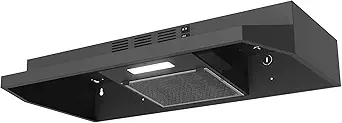 |
| Top Rated A top-rated pick with lots of positive feedback | FlyPine 30" Range Hood FNP |  |
| Best Seller A high-volume bestseller chosen again and again | COMFEE' 30" Under Cabinet Range Hood |  |
Cosmo Vista 30 in. Range Hood

| Air Flow Capacity | 380 cfm |
|---|---|
| Noise | 45 db |
| Controls Type | Touch |
| Light Source | LED |
| Filter Type | Baffle |
The Cosmo COS-63175S Vista 30-inch range hood is a budget-friendly wall-mount canopy designed to move cooking fumes out of the kitchen with a 380 CFM motor and three fan speeds. It is intended for ducted installation (top vent 6-inch duct) but can be converted to ductless with a separately purchased carbon filter kit, offering flexibility depending on your kitchen. Soft-touch controls and bright energy-efficient LED lighting make everyday use straightforward, while the stainless steel ARC-FLOW baffle filters are permanent and dishwasher-safe for simple maintenance. The unit ships with an adjustable stainless chimney, installation kit, and a backdraft damper, which helps with typical retrofit installs. Expect a practical, quiet operation at lower speeds with noise around 45 dB under optimal conditions, though peak noise rises on high. The hood provides solid removal for most home gas stoves but does not match premium hoods with higher CFM or professional-grade capture; installation requires proper rigid ducting to achieve the lowest noise and best performance.
Best for: Home cooks who want an affordable, practical ducted wall hood that handles routine gas-stove cooking and is easy to maintain.
Less Ideal for: Homes that need commercial-level ventilation for heavy-duty or high-BTU cooking should look at higher-CFM, professional-grade hoods instead.
- 380 CFM airflow suitable for everyday gas stove cooking
- Soft-touch controls and bright, energy-efficient LED lights
- Stainless steel permanent baffle filters that are dishwasher-safe
- Includes adjustable chimney, backdraft damper, and installation kit for easier setup
- Top performance depends on using rigid ducting and proper installation
- Lower CFM than higher-end professional hoods for heavy commercial-style cooking
Verdict: A cost-conscious ducted wall hood that delivers reliable 380 CFM ventilation, easy-to-clean permanent filters, and simple controls for everyday gas-stove kitchens.
Hauslane UC-PS18 Range Hood

| Air Flow Capacity | 860 cfm |
|---|---|
| Number of Speeds | 6 |
| Noise | 7 sones |
| Ventilation Type | Ducted |
| Light Source | LED |
The Hauslane UC-PS18 is a heavy-duty 36" under-cabinet ducted range hood built for serious cooking on gas stoves. It delivers up to 860 Cfm through a dual-motor design and six selectable speeds so you can ramp suction for searing and frying or dial it back for low-heat simmering. Touch controls, a delay shut-off timer, and swappable GU10 LED bulbs make day-to-day use straightforward, and the stainless steel baffle filters are dishwasher-safe for easier maintenance. Three-way venting (6" round or two rectangular options) simplifies installation into existing ductwork and helps preserve kitchen cabinetry and walls from grease and smoke. Noise is listed at 7 sones at peak, so expect noticeable sound under full power even though the design aims to be quieter than comparable heavy-duty hoods. The controls and high wattage make it responsive, but the unit is substantial and requires proper professional mounting and duct planning. For gas-cooking environments that need strong extraction and reliable filtration, this model provides a robust, serviceable solution.
Best for: Buyers who prioritize strong extraction and reliable performance for heavy stovetop cooking and want a range hood that handles smoke, grease, and high-heat cooking without compromise.
Less Ideal for: Those seeking an ultra-quiet, low-profile unit for light cooking or renters without ducting options should consider quieter or ductless alternatives instead.
- High maximum airflow rated at 860 CFM for effective smoke and odor removal on gas stoves
- Six-speed touch controls plus delay shut-off let you balance power and runtime
- Three-way venting adapters included for common duct configurations
- Dishwasher-safe stainless steel baffle filters simplify cleaning
- Swappable GU10 LED bulbs provide adjustable lighting color temperature
- Rated noise up to 7 sones at high speed can be loud during heavy use
- Requires professional-grade mounting and compatible ductwork due to its size and power
Verdict: Choose the Hauslane UC-PS18 when you need powerful, ducted extraction for serious gas-stove cooking and easy, maintainable filtration.
Zomagas 30-inch Under Cabinet Range Hood

| Air Flow Capacity | 280 cfm |
|---|---|
| Noise | 55 db |
| Mounting Type | Under Cabinet Mount |
| Number of Speeds | 2 |
| Light Source | LED |
This Zomagas 30-inch under-cabinet hood is a slim, practical vent for kitchens that need basic, reliable exhaust. It installs under a cabinet and can be set up for ducted venting through the top 7-inch outlet or as ductless using the included aluminum mesh and activated carbon filter. Controls are simple rocker buttons with two fan speeds and a single 2W LED light for task illumination. The stainless steel body and three-layer grease filter make routine cleaning straightforward, and the hood runs at a reported 55 dB on standard settings so it stays reasonably quiet while pulling up to 280 CFM on high. Limitations are its basic control set and modest lighting and filtration compared with higher-end models, and it requires a separate junction box for hardwiring. For someone prioritizing a compact, effective ducted option for a gas stove, it delivers the essentials without extra features.
Best for: Buyers who want a straightforward, space-saving under-cabinet hood that provides effective ducted ventilation for everyday gas-stove cooking without extra smart features.
Less Ideal for: If you need powerful multi-speed control, brighter integrated lighting, or advanced touch/remote features, a higher-end model would be a better choice.
- Convertible ducted or ductless installation adapts to different kitchen setups
- 280 CFM maximum airflow suitable for typical home gas stove ventilation
- Brushed 430 stainless steel surface is heat resistant and easy to clean
- Three-layer grease filter (aluminum mesh plus carbon) helps capture grease and odors
- Quiet operation rated around 55 dB and simple two-speed rocker controls for easy use
- Single 2W LED provides limited lighting compared with multi-bulb hoods
- Only two fan speeds and basic rocker controls limit fine airflow adjustment
- Requires separate junction box for hardwired installation
Verdict: A compact, no-frills 30-inch under-cabinet hood that gives dependable 280 CFM ducted ventilation for practical gas-stove kitchens.
SNDOAS 30-Inch Under Cabinet Range Hood

| Air Flow Capacity | 230 cfm |
|---|---|
| Mounting Type | Under Cabinet Mount |
| Number of Speeds | 2 |
| Light Source | LED |
| Ventilation Type | convertible |
This SNDOAS 30-inch under-cabinet hood is a budget-friendly ventilation option for small kitchens and apartments that need basic ducted performance. It offers a convertible design so you can install it as a ducted top or rear exhaust or run it ductless using the included carbon composite filter, and the rocker switch lets you pick between two fan speeds. The unit delivers a moderate 230 CFM airflow, which handles everyday frying and stovetop cooking in a single-cooktop or modest gas range setup but may struggle with heavy commercial-style use. Practical touches include an energy-efficient LED light for cooking visibility and a three-layer aluminum mesh filter that captures grease before the motor. Installation requires hardwiring unless you buy an optional power-cord kit, and if you choose ducting you must decide vent orientation before assembly because the outlet cover is not reversible. For the price you get straightforward functionality, slim styling, and user-replaceable filters, though high-demand gas cooking will benefit from a more powerful hood.
Best for: Buyers who want an affordable, space-saving under-cabinet hood that offers basic ducted ventilation and simple controls for everyday home cooking.
Less Ideal for: Homes with large or high-BTU gas ranges or cooks who do heavy frying and need high-extraction performance should choose a more powerful commercial-style hood.
- Convertible ducted or ductless installation with included carbon composite filter
- Energy-efficient integrated LED light for better cooktop visibility
- Slim 4.7-inch profile saves cabinet space and fits under cabinetry
- Three-layer aluminum mesh filter helps capture grease and is replaceable
- 230 CFM airflow is moderate and may be underpowered for heavy, multi-burner gas cooking
- Hardwired installation by default; power cord sold separately
Verdict: A low-cost, slim under-cabinet hood that provides convertible ducted ventilation and basic extraction for budget-minded kitchens with moderate gas cooking needs.
FlyPine 30" Range Hood FNP

| Air Flow Capacity | 900 cfm |
|---|---|
| Noise | 39 db |
| Mounting Type | Wall Mount |
| Controls Type | Touch, Remote |
| Ventilation Type | Convertible |
This FlyPine 30-inch wall-mounted range hood is built around a strong 900 CFM blower and four fan speeds, so it is designed to clear heavy smoke and grease from gas stoves while remaining relatively quiet. Controls are available on a touch LCD panel and a remote, and the unit includes LED task lighting and a 1–15 minute auto shut-off timer for convenience. Dishwasher-safe baffle filters and a stainless steel body make routine cleaning straightforward, and the convertible venting plus included 6-inch ducting and adapter simplify installation for ducted setups. The hood claims a low noise floor around 39 dB at lighter speeds, though higher speeds are louder, and the unit runs on standard 120V power with the option to hardwire. Overall it feels like a practical, durable choice for busy kitchens that need high extraction from a ducted configuration, with sensible service features like removable filters and ETL certification to back it up.
Best for: Buyers who prioritize consistent, factory-quality extraction for gas cooking and want a durable, serviceable hood that handles heavy smoke and grease.
Less Ideal for: Small kitchens or cooks who only need occasional light ventilation may prefer a lower-capacity, more compact model to save space and reduce noise.
- High 900 CFM airflow suitable for heavy-duty range ventilation on gas stoves
- Touch panel plus remote control offers flexible operation from the cooktop or across the kitchen
- Dishwasher-safe stainless steel baffle filters and removable parts simplify cleaning
- Includes 6-inch ducting, adapter, and necessary hardware for straightforward ducted installation
- ETL certified with a long motor warranty (10 years) for added reliability
- Noise increases noticeably on higher fan speeds despite a low reported minimum
- Large physical depth may require checking cabinet clearance during installation
Verdict: Choose this hood if you need a robust, ducted-capable extractor that reliably removes heavy smoke and grease from a gas stove.
COMFEE' 30" Under Cabinet Range Hood

| Air Flow Capacity | 200 cfm |
|---|---|
| Noise | 71 db |
| Number of Speeds | 2 |
| Light Source | LED |
| Voltage | 120 volts |
The COMFEE' 30-inch under-cabinet range hood is a slim stainless steel vent hood designed to clear cooking smoke and odors with a 200 CFM motor and two exhaust speeds. It installs under a cabinet or can be converted to ductless using the included aluminum mesh and activated carbon composite filter, and the touch controls and LED light make everyday use straightforward. The detachable aluminum mesh filter is dishwasher-safe for easier cleaning and the unit ships with an exhaust pipe connector and basic mounting hardware for typical installations. At its top speed the hood is effective for most home gas stoves in condos or smaller kitchens, but the published noise level of 71 dB means the fan is noticeably loud on high. The hood is compact and space-saving, so it fits where a low-profile under-cabinet model is needed, though buyers who need very high extraction for heavy commercial-style cooking may want a more powerful model.
Best for: Buyers who want a reliable, space-saving under-cabinet hood that handles routine gas-stove cooking and prioritizes easy installation and maintenance.
Less Ideal for: Not the best choice for serious home chefs or large open kitchens that require very high ventilation capacity or quieter high-power operation.
- Convertible ducted or ductless setup for installation flexibility
- 200 CFM airflow suitable for most home gas stoves and everyday cooking
- Detachable aluminum mesh filter is dishwasher-safe for easier maintenance
- Slim stainless steel design fits under cabinets and saves space
- Touch controls and integrated LED light simplify operation
- High setting can be loud at the listed 71 dB
- 200 CFM may be underpowered for very heavy or professional cooking tasks
Verdict: A compact, convertible 30-inch hood that offers dependable 200 CFM extraction and easy maintenance for everyday gas-stove kitchens.
Choosing the Right Ducted Range Hood for Gas Stoves: Key Factors to Consider
Airflow Capacity Relative to Stove Output
Airflow capacity, measured in cubic feet per minute, determines how quickly a hood removes smoke, steam, and combustion byproducts produced by gas burners. Higher CFM is important for large burners, frequent high-heat cooking, or heavy frying. For smaller kitchens or light cooking, a lower-capacity hood may be adequate, but undersizing increases the risk of lingering odors and grease deposition on cabinets.
When evaluating airflow needs, consider the stove's total burner output and your typical cooking style. Factor in duct run length and number of bends because long or convoluted ducting reduces effective airflow. A hood with higher rated CFM gives more margin to handle real-world installation losses and occasional heavy cooking sessions.
Noise and Usability
Noise output affects whether you will actually run the hood at the speeds needed for effective ventilation. Loud hoods discourage continuous use, so balance maximum airflow against sound levels across common operating speeds. Manufacturers list noise in sones or decibels, and lower values are more comfortable for family kitchens.
Also consider multi-speed fans and intermediate settings; a hood that is acceptably quiet at a medium setting but still offers a high boost for heavy use is often the most practical choice. Duct placement can change perceived noise, so note that remote-mounted blowers typically reduce cabin noise further.
Grease Filtration and Capture Efficiency
Gas cooking produces greasy aerosols that can coat ducts, fans, and cabinets. Effective grease capture reduces fire risk and long-term maintenance needs. Look for metal baffle or high-quality mesh filters that trap oil droplets while allowing adequate airflow. Filter design affects how often you need to remove and clean them and how well they maintain performance over time.
Consider how filters are accessed and whether they are dishwasher-safe or require hand cleaning. A design that channels grease into accessible trays or that has replaceable components will simplify upkeep and keep ventilation working at peak efficiency.
Ducting and Installation Compatibility
A ducted hood's performance depends on proper venting to the exterior. Check available duct sizes, direction of the exhaust (top or rear), and whether the hood supports common duct materials. Short, straight runs with larger diameter ducting maintain airflow and reduce noise. Many kitchens have constraints like limited attic access or studs that make some hoods harder to install.
Evaluate whether you need a hood that can accommodate flexible change in duct orientation, has straightforward electrical requirements, or supports a remote blower. Consider whether your installation will require professional help and factor that into your planning because improper installation can drastically reduce effectiveness.
Controls, Lighting, and Usability Features
Controls and lighting influence daily usability. Intuitive fan controls and clearly labeled speed settings make it easier to select the right extraction level while cooking. Built-in task lighting should provide even illumination over the cooktop without glare; LED lighting offers energy efficiency and long life.
Additional convenience features such as delay-off timers, heat sensors, or indicator lights for filter cleaning improve long-term user satisfaction. Evaluate whether the control placement and style match your kitchen layout and personal preferences to ensure comfortable everyday use.
Serviceability and Long-Term Maintenance
Consider how easy it is to access motors, fans, and filters for periodic maintenance. Units designed with user-accessible service points reduce the time and cost of upkeep. Durable finishes resist staining from grease and high heat, reducing the need for frequent deep cleaning.
Also look for standard parts and common fasteners so repairs are simpler. A hood that is straightforward to clean and maintain will perform better over its service life and reduce the likelihood of clogged ducts or degraded fan performance.
Sizing a Hood for Your Cooking Style
Match hood capacity to how you cook. Light cooking with occasional simmering needs much less extraction than frequent high-heat searing or stir-frying. For the heaviest gas cooking, prioritize higher airflow and consider hoods designed to handle intense grease loads.
Placement matters. A hood that sits at the correct height above the cooktop captures rising smoke and steam more efficiently. If you have a high-output professional-style burner, a wider hood that overhangs the range by several inches will improve capture efficiency.
- For frequent high-heat cooking, choose higher CFM and a wider capture area.
- Maintain recommended mounting height to balance capture and noise.
- Account for duct losses when calculating required CFM.
Duct Routing and Why It Changes Performance
Duct length, diameter, and the number of bends change real-world airflow. Every elbow and restrictive transition reduces effective extraction, so plan the most direct route to the exterior when possible.
Use rigid ducting where feasible because it minimizes resistance compared with flexible duct. If routing constraints force a longer run, increase the hood's rated airflow to compensate.
- Aim for the shortest, straightest duct run to the outdoors.
- Larger diameter ducts reduce static pressure and maintain flow.
- Avoid unnecessary transitions and tight bends.
Inline and Remote Blowers: Tradeoffs
Inline or remote blowers mount away from the hood, often in attic or outside locations, and can drastically lower noise in the kitchen. They also allow for higher extraction without raising cabin sound levels. However, they add installation complexity and typically require longer duct runs and additional mounting considerations.
In-hood blowers are simpler to install and can be more cost-effective for straightforward duct paths. If noise at the cooktop is a primary concern, consider remote options, provided the building layout supports practical installation.
- Remote blowers = lower kitchen noise, higher installation complexity.
- In-hood blowers = simpler installation, more cabin noise at high speeds.
- Consider blower location early in planning to avoid retrofit surprises.
Controls and Lighting That Make Cooking Easier
Look for simple fan-speed selection and reliable lighting that illuminates the work surface without casting shadows. Variable speed controls let you run the hood quietly on low for simmering and increase power for grease-heavy jobs. Quality LED lighting gives clear color rendering and lasts longer with less maintenance.
Useful extras include timed fan shutoffs, heat-sensing automatic speed adjustments, and filter-clean indicators. These convenience features reduce the chance that you will under-ventilate during busy cooking sessions.
- Choose hoods with multiple fan speeds and clear labeled controls.
- Prefer energy-efficient, well-positioned LED task lighting.
- Consider timers or heat sensors for hands-off operation.
Practical Steps for Post-Installation Performance
After installation, verify the hood's airflow at the cooktop and listen for unusual vibration or rattles that indicate loose fittings. Run the hood at different speeds and note how long it takes to clear steam or cooking smells to confirm expected performance.
Regular filter cleaning and periodic duct inspections preserve airflow. If performance seems reduced, check for clogged filters, crushed duct runs, or blocked exterior caps before concluding the unit is underpowered.
- Test extraction with boiling water to visualize steam removal.
- Inspect filters monthly during heavy use and clean as recommended.
- Check exterior vent caps for obstructions or animal nests.
How We Chose the Best Ducted Range Hood for Gas Stoves
We selected ducted range hoods for gas stoves by applying practical, kitchen-focused filters that reflect real-world installation and use. First, we prioritized measured or stated airflow capacity because gas cooking produces heat, moisture, and combustion byproducts that require higher extraction rates than low-output electric cooking. Second, we evaluated noise output at typical fan speeds since a hood that is too loud will reduce use and compromise ventilation effectiveness. Third, we considered grease management features and capture efficiency to limit buildup on ductwork and kitchen surfaces. Fourth, we looked at installation compatibility including available duct sizes, mounting options, and electrical requirements to ensure realistic fitment in common kitchen layouts. Fifth, we assessed build and serviceability details such as access to filters and ease of cleaning. We excluded non-ducted or recirculating-only units because they do not provide consistent outdoor exhaust for gas combustion products. Units that required specialized or uncommon ductwork were deprioritized. Final selections balanced airflow, noise, grease capture, and straightforward installation to reflect what most gas-stove owners need in practical home settings.
Our full evaluation process is outlined in our review methodology.
FAQ
How much CFM do I need for a typical four-burner gas stove?
It often depends on cooking habits. For light to moderate use, a hood in the mid CFM range may suffice. For frequent high-heat cooking or large burners, choose higher CFM to ensure rapid clearing of smoke and combustion byproducts.
Can I vent a ducted hood through the wall instead of the roof?
Yes. Wall venting is a common and effective option when roof runs are impractical. Keep the duct run as short and straight as possible and use the appropriate backdraft damper and exterior hood to maintain proper airflow.
Do I need a professional to install a ducted range hood?
Professional installation is often recommended because proper duct sizing, secure mounting, and safe electrical connections affect performance and safety. DIY installation is possible for straightforward setups, but complex routes or structural modifications usually require a pro.
How often should I clean or replace filters in a ducted hood?
Frequency depends on cooking volume and methods. For typical home cooking, clean metal baffle or mesh filters every 1 to 3 months. If you fry often or cook greasy foods frequently, check and clean filters more often. Replace non-washable filters as manufacturer guidance indicates.
Will a ducted hood remove gas odors and combustion byproducts completely?
A properly sized and installed ducted hood greatly reduces odors and combustion byproducts but may not remove every trace immediately. It is most effective when run at appropriate speeds during and after cooking and when ducting is correctly sized and unobstructed.
Final Verdict
Select a ducted range hood for gas stoves by balancing extraction power with acceptable noise and realistic installation constraints. Prioritize sufficient airflow for your cooking intensity, effective grease capture, and a duct plan that minimizes losses. If noise is a concern, factor remote blowers into the decision even if installation is more involved. The best hood for your kitchen will meet your airflow needs, fit your ducting and mounting options, and be straightforward to service. Focus on these tradeoffs and you will end up with a ventilation solution that keeps air cleaner and cooking more comfortable for years.