
Note: This article contains affiliate links. If you click on these links and make a purchase, we may earn a small commission at no extra cost to you. This helps support our research and content. Read our full affiliate disclosure here.
If you bake frequently or prepare multiple dishes at once, choosing the right electric double oven affects consistency, timing, and kitchen workflow. A purpose-built electric double oven for baking helps you run two different temperatures simultaneously, hold delicate items at steady heat, and increase total tray capacity so you can scale recipes without crowding. This guide covers the top shortlisted double ovens for baking, with picks selected for steady temperature control, usable rack space, and features that matter in real-world baking. Below you will find our evaluation criteria and the best options for different baking needs, followed by practical buying guidance.
Top Picks at a Glance
| Best Overall The best all-around choice for most situations | Forno Vomero 30" Double Wall Oven |  |
| Best Quality Built to a higher standard if you want something more solid | Samsung 30" Smart Double Wall Oven |  |
| Best Value The sweet spot between price and what you get | ZLINE 30 in. Double Wall Oven WAD-30 |  |
| Best Budget The cheapest option that still gets the job done reliably | PYY Double Decker Pizza Oven |  |
| Top Rated A top-rated pick with lots of positive feedback | Ninja Double Oven Pro DCT801BL |  |
Forno Vomero 30" Double Wall Oven

| Capacity | 10 cubic feet total (5.0/5.0) |
|---|---|
| Wattage | 7100 watts |
| Installation Type | Built-In |
| Heating Method | Convection (upper) / Traditional (lower) |
| Voltage | 240 volts |
The Forno Vomero 30" double wall oven pairs a 5.0 cu ft convection upper cavity with a 5.0 cu ft conventional lower cavity to give serious home bakers and cooks a versatile built-in solution. The upper oven uses a 50W fan plus dedicated broil and hidden bake elements to speed cooking and encourage even browning, while the lower oven's fan-less design provides steady, directional heat for delicate baking and roasting. Both cavities include multiple adjustable chrome racks and bright halogen lighting for easy monitoring, and the hidden bake elements plus enamel interiors make wipe-downs straightforward. Controls are mechanical dials, which many users will find simple and reliable but they lack digital precision timers or programmable presets. At 7100W total output the unit preheats and recovers heat quickly, but installation requires a 240V dedicated hookup and a sizable cabinet cutout. This oven is a practical choice when you need to run different cooking methods at once and want heavy-duty racks and a wipe-clean interior rather than touchscreen bells and whistles.
Best for: Bakers and home cooks who need large, flexible oven capacity and want to run convection and traditional baking simultaneously while preferring straightforward, tactile controls.
Less Ideal for: Buyers who need smart features, programmable precision timers, or a plug-and-play countertop solution should consider other models.
- Dual 10.0 cu ft total capacity with two independent cavities for cooking different dishes at once.
- Upper convection fan plus strong broil and bake elements gives faster, more even browning and reduced cook times.
- Hidden bake elements and enamel interior simplify cleaning and maximize usable interior space.
- Six adjustable rack positions and heavy-duty chrome racks support large pans and stoneware.
- Bright halogen lighting and large viewing windows make it easy to monitor progress without opening doors.
- Mechanical dial controls lack digital timers, presets, or precise programmable functions.
- Requires 240V built-in installation and substantial cabinet space, limiting placement options.
Verdict: Choose the Forno Vomero if you want a high-capacity built-in double oven that combines convection speed upstairs with a traditional lower oven for precise baking.
Samsung 30" Smart Double Wall Oven

| Heating Method | Convection |
|---|---|
| Fuel Type | Electric |
| Installation Type | Built-In |
| Wattage | 9300 |
| Size | 5.1 cubic feet |
This Samsung 30" Smart Double Wall Oven is built for serious home cooks who bake and roast frequently. It pairs dual convection fans with a Steam Cook mode so you can speed up bake times while retaining moisture in breads and roasts, and the 5.1 cu ft capacity handles multiple racks or large pans at once. SmartThings Wi‑Fi connectivity and voice control let you monitor and adjust temperatures and timers from your phone, which is handy during long bakes, and illuminated digital-analog controls make selections easy to see. The oven also includes a glide rack for safer access to heavy dishes and a self-clean cycle to remove baked-on residue. Expect a large built-in unit that needs a 240V connection and professional-style installation, and know that the unit is heavy and sized for full-depth cabinetry. For bakers prioritizing even heat distribution, moisture control, and remote control features, this oven delivers strong performance in a family kitchen.
Best for: Bakers and roast-focused home cooks who want even, reliable results and value faster bake times plus remote control for multi-dish cooking sessions.
Less Ideal for: People with limited kitchen space, renters, or anyone unwilling to arrange a 240V built-in installation should consider smaller or countertop ovens instead.
- Dual convection fans for faster, more even baking across racks
- Steam Cook mode helps produce crisp exteriors and moist interiors
- 5.1 cu ft capacity fits multiple pans or large roasting dishes
- Wi‑Fi and voice control via SmartThings for remote monitoring and adjustments
- Self-clean function and glide rack improve maintenance and usability
- Requires professional installation and a 240V connection
- Large, heavy built-in unit may not fit smaller kitchens or retrofit openings
Verdict: A performance-focused built-in double oven that speeds and evens out baking with dual convection and steam while adding smart remote controls for busy bakers.
ZLINE 30 in. Double Wall Oven WAD-30

| Capacity | 10 cubic feet |
|---|---|
| Material Type | Stainless Steel (Exterior) |
| Power Requirement | 240V, 60Hz, 40-amp (hardwired) |
This ZLINE 30 in. double wall oven pairs two 5.0 cu. ft. cavities to let you bake multiple dishes at once while keeping precise temperature control. The upper oven offers true convection modes and a dedicated air fry setting with an included basket, which lets you crisp foods without added oil and speeds roast and bake jobs. Touchscreen controls, a digital display, and a built-in temperature probe make it straightforward to dial in consistent results for breads and layered bakes, and the oven includes self-clean and Sabbath mode for low-effort maintenance and special-use situations. Two cooling fans and a stainless exterior aim to preserve performance and a professional look in a built-in installation. Installation requires a hardwired 240V 40-amp circuit, so expect an electrician for hookup, and there is no standard plug; buyers should confirm cabinet fit and electrical compatibility before purchase. For serious home bakers who need simultaneous bake space and faster, even heat distribution, this model offers practical features without excessive complexity.
Best for: Bakers who prioritize efficient, reliable results and need the capacity to run several recipes simultaneously will appreciate the dual ovens and convection-driven consistency.
Less Ideal for: People living in homes without a 240V hardwired circuit or those who need a plug-and-play countertop or freestanding oven should look elsewhere.
- Two 5.0 cu. ft. ovens for baking multiple dishes at once
- True convection in the upper oven for more even heat and faster browning
- Air fry mode with a removable basket for oil-free crisping
- Digital touchscreen and temperature probe for precise control
- Self-clean function and cooling fans reduce maintenance and overheating risk
- Requires a dedicated 240V 40-amp hardwired connection and professional installation
- Large built-in size requires careful cabinet planning and fitment
Verdict: If you need professional-style dual oven capacity with true convection and an air fry option for consistent baking across multiple dishes, this ZLINE built-in double oven is a practical, performance-focused choice.
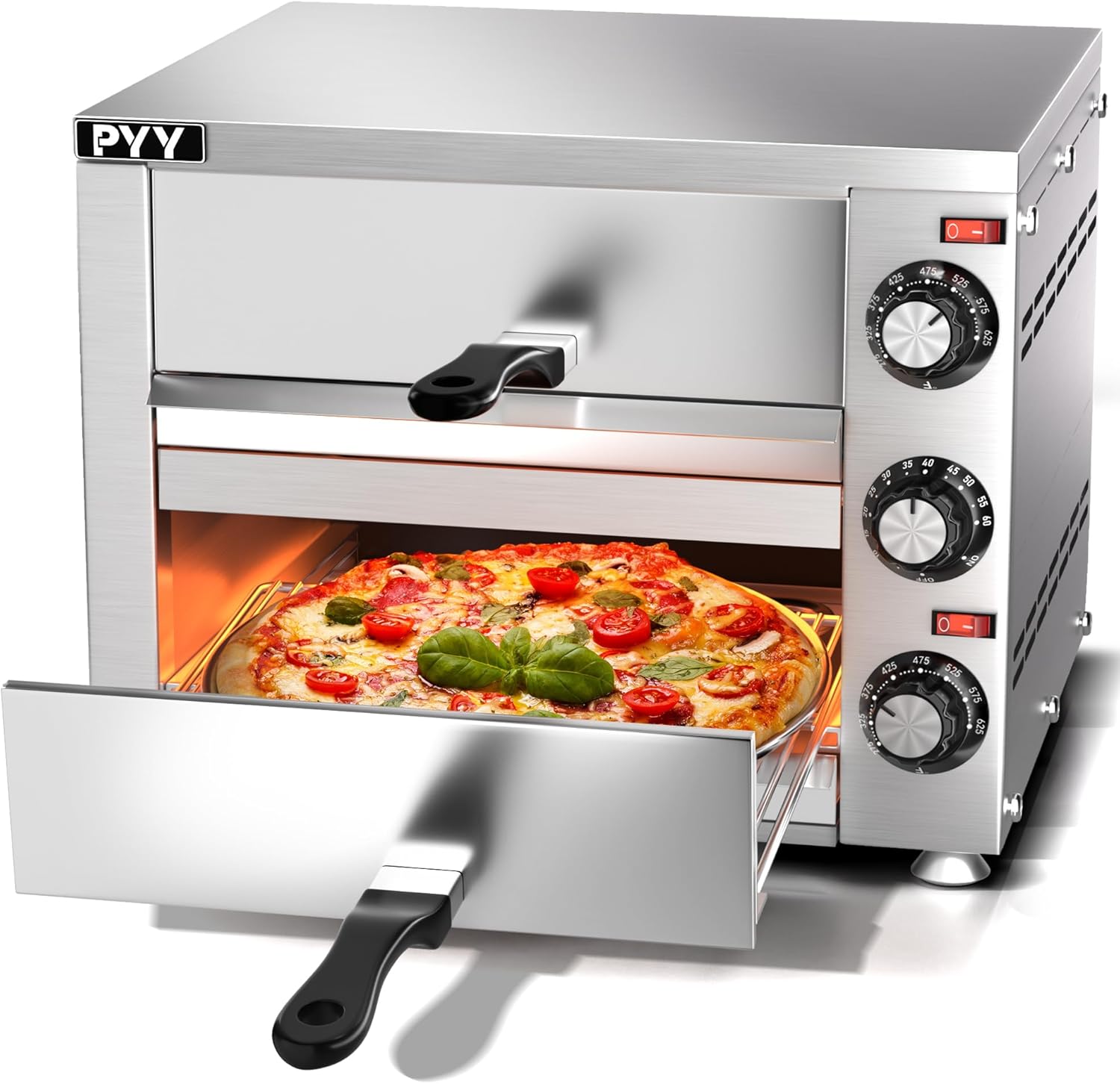
PYY Double Decker Pizza Oven
| Wattage | 1300 watts |
|---|---|
| Control Type | Knob Control |
| Temperature Range | 122-572 °F |
| Number of Shelves | 2 |
| Material | Stainless Steel |
This PYY double-decker pizza oven is a compact countertop unit designed to bake two 12-inch pizzas or multiple smaller items at once. It uses upper and lower heating tubes with independent trays to deliver more even browning, and each layer is powered to cut bake time compared with a single-shelf toaster oven. Controls are simple: temperature and time knobs plus a timer alarm that notifies you when the set time elapses but does not cut power. The stainless steel exterior and removable crumb tray make cleanup straightforward for busy kitchens, and the unit covers a wide temperature range up to 572°F for high-heat pizza finishes or baking breads and pastries. Expect a reasonably heavy, commercial-style footprint and no automatic shutoff from the timer, so it is best used where you can monitor it during long bakes. For budget-minded cooks who need to bake multiple items quickly, this oven packs useful performance into a small footprint.
Best for: Home cooks on a tight budget who need more baking capacity than a single-shelf toaster oven and want a straightforward, high-heat countertop solution for pizzas and baked goods.
Less Ideal for: People who need fully unattended operation or automatic shutoff features, or buyers seeking a lightweight, highly portable oven for occasional use.
- Two independent shelves let you bake two pizzas or separate items at once to increase throughput.
- High maximum temperature (up to 572°F) suitable for crisping pizzas and finishing crusts.
- Stainless steel construction with removable crumb tray simplifies cleaning and durability.
- Simple knob controls and a timer alarm make operation quick and intuitive.
- Timer is only an alarm and does not automatically shut off power.
- Relatively heavy and bulky for a countertop appliance, which limits portability.
Verdict: A budget-friendly double-decker countertop pizza oven that delivers high-heat baking and doubled throughput for cooks who need to bake more at once.
Ninja Double Oven Pro DCT801BL

| Capacity | 28 liters |
|---|---|
| Wattage | 1800 watts |
| Number of Shelves | 2 |
| Control Type | Button Control |
The Ninja Double Oven Pro is a countertop dual-cavity convection oven and air fryer built to handle family-sized baking and weeknight meals. The top and bottom ovens operate independently so you can roast in the bottom while the top uses QuartzHeat for faster, even heating, or sync both with Smart Finish and DualZone to have two dishes complete at the same time. It offers 12 cooking modes including convection bake, air fry, roast, toast and dehydrate, and comes with two sheet pans, racks and an air fry basket for versatile baking tasks. Practical benefits include faster preheat and cook times from QuartzHeat, a roomy interior that fits a 4.5 lb chicken or family sheet-pan meals, and straightforward button controls for repeatable results. Trade-offs are its substantial countertop footprint and weight compared with single-cavity countertop ovens, and the 1800-watt power draw that may require attention to circuit loading in small kitchens. For bakers who need reliable, repeatable results and the ability to finish multiple dishes together, this appliance delivers consistent performance and flexible baking modes.
Best for: Home bakers and busy cooks who value dependable, repeatable results and want to bake full family meals or multiple dishes at once without juggling oven timing.
Less Ideal for: Those with very limited counter space, light solo-cook needs, or households that cannot accommodate an 1800-watt appliance on their kitchen circuit.
- Two independent oven cavities let you bake two different items at different temps or sync them to finish together.
- QuartzHeat top oven delivers fast, even heating useful for quick bakes and reheats.
- Includes sheet pans, wire racks and air fry basket so you can start baking right away.
- Wide 12-mode cooking selection covers common baking needs from convection bake to proof-style low-heat tasks like dehydrate.
- XL capacity handles family-size sheet-pan meals and whole roasts.
- Large and heavy for a countertop unit, requiring significant counter space and a sturdy surface.
- High 1800-watt power draw can be taxing on small kitchen circuits during heavy use.
Verdict: If you need a reliable, family‑sized countertop oven that can bake two dishes simultaneously with consistent, factory-quality results, this Ninja Double Oven Pro is a top choice.
Choosing the Right Electric Double Oven for Baking: Key Factors to Consider
Temperature Accuracy and Stability
Accurate temperature control is critical for baking because even small deviations change rise, crumb structure, and browning. Look for ovens that maintain set temperatures over long bakes and recover quickly after the door is opened.
Stability matters more than absolute top temperature. A model that holds a steady 350 degrees F is usually preferable to one that fluctuates between 340 and 365. Features that help include independent thermostats for each cavity, preheat indicators, and convection options that reduce hot spots.
Heat Distribution and Convection Performance
Even heat distribution prevents uneven browning and undercooked centers when baking multiple trays. Convection modes with well-placed fans can significantly improve circulation, but fan speed and design affect results differently between batters, cookies, and artisan breads.
Consider whether the oven allows disabling convection for delicate pastries or lowering convection intensity. Look for designs that advertise multiple heating elements and thoughtful airflow paths rather than relying on a single fan to compensate for poor element layout.
Usable Interior Capacity and Rack Flexibility
Total cubic feet is less helpful than usable layout. Manufacturers often quote gross capacity, but what matters is how many full-size baking sheets or pans fit on each rack and how many rack positions are practical.
Check for truly full-width racks, adjustable or removable shelf supports, and whether one cavity is deep enough for tall roasts or multi-level cake pans. If you frequently bake multiple trays, prefer ovens that let you place racks closer together without interfering with airflow or heat distribution.
Controls, Timers, and Programmability
Consistent baking benefits from reliable controls. Look for precise temperature dials or digital setpoints, reliable timers, and memory programs that store common bake profiles. Dual-cavity units should allow independent timers for each oven so you can manage different recipes concurrently.
Intuitive controls reduce mistakes during busy baking sessions. Features like delayed start, probe thermometers, and audible alerts help with multi-dish workflows and long bakes such as bread or custards.
Door Design and Access Safety
How the door opens and how easy it is to slide racks in and out affects both safety and baking consistency. A heavy or awkward door can make removing hot trays risky, while well-designed doors and smooth gliding racks let you check and rotate pans without dramatic temperature loss.
Insulated doors and sturdy hinges reduce heat loss when opened briefly. Look for features like soft-close hinges or telescoping rack options if you frequently handle heavy sheet pans.
Cleaning and Maintenance
Regular baking produces spills, drips, and grease that alter flavor and create smoke. Self-cleaning cycles can save time, but check how effective they are and whether they require high-temperature cycles that may stress seals or finishes.
Removable racks, shallow crumb trays, and accessible heating elements simplify day-to-day cleanup. Consider the finish of the interior surface and whether coatings are durable and easy to wipe down.
Why Double Ovens Matter for Serious Bakers
Double ovens let you run two different temperatures at once, which is useful when baking items that require different heat profiles or timings. This flexibility reduces the need to compromise recipes or juggle batches and can cut total bake time when preparing multiple items for the same event.
For bakers who produce multiple trays—cookies, sheet cakes, or large batches of bread—the ability to dedicate one cavity to slow, low-temperature bakes and the other to high-heat finishes or warming is a practical workflow improvement.
- Run two recipes at different temperatures simultaneously
- Keep finished items warm without overbaking others
- Reduce scheduling conflicts when producing many trays
Sizing Your Kitchen and Electrical Considerations
Electric double ovens require appropriate cabinet space and dedicated electrical capacity. Before choosing a model, measure the cutout and verify that your kitchen wiring meets the oven's amperage and circuit requirements.
If you are replacing an existing built-in oven, confirm that the new unit matches the mounting dimensions and that the power connector type is compatible with your existing supply. Planning for ventilation and clearance also helps with heat management in tight kitchen layouts.
- Confirm cabinet cutout dimensions and clearances
- Check electrical circuit amperage and connection type
- Allow space for ventilation and door swing
Practical Baking Features to Look For
Beyond raw capacity and temperature specs, small features greatly improve the baking experience. Interior lighting, full-extension racks, integrated temperature probes, and easy-to-read displays reduce mistakes and make multi-step recipes simpler to execute.
Also consider whether the oven supports low-temperature modes for proofing or gentle cooking, and how straightforward it is to disable convection for delicate pastries.
- Full-extension racks for safe tray handling
- Interior probe support for precise doneness
- Dedicated proofing or low-temperature settings
Managing Energy Use When Using Both Cavities
Running both ovens at once uses more power, so consider how often you will need simultaneous operation when evaluating energy needs. Some designs use more efficient insulation and segmented heating elements to reduce draw when only one cavity is active.
If you frequently use only one oven, look for models with efficient single-cavity operation or the ability to power down the unused cavity to conserve energy without sacrificing readiness.
- Check rated energy consumption for single versus dual-cavity use
- Prefer insulation and targeted heating for lower standby loss
- Plan cooking schedules to minimize peak electrical load
Installation and Ongoing Maintenance Tips
Have a professional confirm electrical connections and secure mounting during installation. Proper leveling and secure attachment prevent long-term misalignment of racks and doors, which affects heat sealing and performance.
Regularly check door seals and replace worn gaskets. Worn seals allow heat to escape and cause temperature swings that harm baking consistency. Clean spills promptly to prevent smoke and degradation of interior finishes.
- Use a qualified electrician for hookups
- Inspect and maintain door gaskets and hinges
- Clean spills soon after cooling to preserve interiors
How We Chose the Best Electric Double Oven for Baking
We shortlisted electric double ovens for baking by focusing on the technical and practical features that most directly affect baking outcomes. Key evaluation points included temperature accuracy and stability during long bakes, usable interior capacity and rack flexibility for multiple trays, heat distribution and convection performance, and controls and programmability for repeatable results. We also evaluated ease of cleaning, oven door design for safe rack access, and energy efficiency during simultaneous use of both cavities. Excluded from consideration were ovens without independent upper and lower temperature control or models lacking essential baking features such as convection modes. We prioritized ovens that provide measurable, repeatable temperature performance and flexible rack layouts. The final list represents units that balance precise heat management, practical capacity for baking, and user controls that simplify multi-tray schedules.
Our full evaluation process is outlined in our review methodology.
FAQ
Do I need a dedicated circuit for an electric double oven?
Yes. Electric double ovens typically require a dedicated high-amperage circuit. The exact amperage varies by model, but shared circuits can trip breakers or cause unsafe conditions, so confirm your kitchen wiring meets the specified requirements.
Can I use convection when baking cakes or pastries?
Often convection is helpful for even browning and faster bakes, but it can dry out delicate cakes or pastries. Many ovens let you disable convection or run it at a lower setting for sensitive recipes.
How do I know if a cavity will fit full-size baking sheets?
Measure the interior width and compare it to the dimensions of your sheet pans, accounting for clearance on both sides. Check rack positions to ensure you can place multiple trays while preserving air circulation.
Are self-clean cycles safe for ovens with multiple cavities?
Self-clean cycles can be effective, but they expose seals and finishes to very high temperatures. Use these cycles sparingly and follow the manufacturer's guidance to avoid long-term wear on gaskets or control panels.
Will running both ovens at once increase my energy bill significantly?
Running both cavities will increase energy usage because you are heating more volume. How much depends on insulation and how long both ovens run. Efficient models and conservative scheduling can reduce additional consumption.
Final Verdict
When selecting an electric double oven for baking, prioritize temperature accuracy, usable rack layout, and consistent heat distribution above raw capacity numbers. Controls and programmability matter for repeatable results, while door design and cleaning features affect daily convenience. Balance the need for simultaneous two-cavity operation against your kitchen electrical capacity and maintenance preferences. Focus on models that deliver steady temperatures and flexible interior layouts to make multi-tray baking predictable and efficient.